Yo, let’s get real for a second. You’ve probably seen it, whether you were scrolling through the ‘gram or actually wandering the backstreets of a Tokyo neighborhood like Shimokitazawa or Kichijoji. You walk into a shop. It’s not a big chain store. It’s not a dusty antique shop. It’s… something else. The space is flooded with a soft, warm light. On wooden shelves and rustic tables, you see an almost overwhelming collection of stuff. A perfectly weighted ceramic mug next to a tiny, elegant brass paperclip holder. A set of linen hand towels in muted, earthy tones. A strangely adorable hedgehog-shaped scrubbing brush. A notebook with a cover so beautifully simple it almost hurts. None of it is essential. You don’t need a wooden spoon with a hand-carved smiling face on the handle. You don’t need a miniature glass bottle for a single flower stem. But you want it. You feel an inexplicable pull towards these objects. This, my friend, is the world of “Zakka.”
On the surface, the word “Zakka” (雑貨) is mad basic. It literally just translates to “miscellaneous goods” or “sundries.” But that’s like saying a Michelin-star tasting menu is just “some food.” In modern Japan, Zakka isn’t a category of products; it’s a full-blown cultural aesthetic, a lifestyle philosophy, a vibe. It’s the art of elevating the mundane, of finding small, quiet moments of joy in the everyday objects that surround you. It’s a deeply personal curation of your life, one tiny, thoughtfully designed object at a time. But here’s the real tea: this obsession with cute, crafty, and slightly nostalgic stuff isn’t just a random trend. It’s a quiet, almost subconscious rebellion. It’s a cultural pushback against the very forces that built modern Japan: the soulless efficiency of mass production, the crushing pressures of a conformist society, and the frantic pace of urban life. To really get why Japan is like this, why these little shops full of charmingly “useless” things are so important, you have to look at the ghost in the machine of Japan’s recent history. It’s a whole mood, a low-key revolution fought with linen tea towels and ceramic bowls.
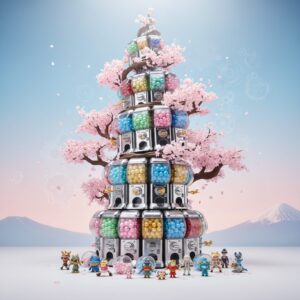
This quiet rebellion in cuteness shares a similar cultural DNA with Japan’s enduring obsession with capsule toys, where the joy is found in the small, whimsical, and collectible.
The Ghost in the Machine: How Post-War Japan Lost Its Soul (and Found It in a Teacup)
To grasp the zen-like tranquility of a Zakka shop, you first need to understand the chaotic noise it emerged from. The story of Zakka is essentially the story of modern Japan’s identity crisis—a journey from total devastation to economic stardom and the spiritual hangover that followed.
From Ashes to Assembly Lines: The Hidden Cost of the Economic Miracle
Imagine Japan in 1945, completely devastated. The nation’s singular, all-consuming mission was to rebuild. And rebuild they did, with a speed and intensity never before seen. This was the era of the Japanese Economic Miracle. The focus was on efficiency, productivity, and growth. “Made in Japan” transformed from a joke into a global standard of quality in cars, electronics, and technology. It was an incredible achievement, a testament to collective national will. Yet, this miracle came with a hidden cost—a spiritual toll paid in the loss of individuality and personal expression.
The symbol of this era was the “salaryman,” the corporate soldier clad in a dark suit, dedicating his life to his company. His home was often a tiny apartment in a vast poured-concrete housing complex called a “danchi.” These danchi were marvels of efficiency, built to house millions of workers migrating to the cities. They were standardized, functional, and devoid of character. Life itself became standardized. The aim was to create a homogeneous, stable, and productive middle class. Everything—from the design of the apartment to its appliances—was crafted for maximum utility and minimal fuss. The aesthetic, if it could be called that, was plastic, laminate, and chrome. It celebrated the new, the machine-made, the uniformly perfect. There was little space for the old, the handmade, or the flawed. The home wasn’t a sanctuary for the soul; it was a functional unit fueling the economic machine. This relentless push for progress created a void. People had security and appliances but lived in identical boxes, following identical routines. Beneath this prosperous, conformist society, a deep yearning for something more personal and human quietly took root.
The Bubble Bursts and the Search for Meaning Begins
Then came the 1980s and the Bubble Economy. If the post-war era had been about laying a strong foundation, the bubble was a neon-lit, shoulder-padded party built on top of it. The Japanese yen was strong, and credit was cheap. It was an era of extreme, almost delirious consumerism. But this wasn’t about personal expression; it was about status. Success was signaled by the brands you owned—the logo on your handbag, the German car in your garage, the Swiss watch on your wrist. It was external validation through expensive, globally recognized luxury goods. This loud, flashy pursuit was ultimately hollow. The coveted objects were, once more, mass-produced symbols—only pricier ones. The focus lay entirely on others’ perceptions, not on how one’s personal space felt.
Then, in the early 1990s, the bubble didn’t just burst; it vanished. The stock market crashed, real estate prices collapsed, and Japan entered the “Lost Decade.” The party was over. This economic stagnation prompted a nationwide moment of reflection. The flashy brands and status symbols suddenly seemed tacky and meaningless. With lifetime employment no longer guaranteed and the promise of endless growth shattered, people began questioning the value system they had grown up with. They looked inward for security and happiness, rather than outward toward jobs or possessions. Their attention turned to their immediate environment—their homes, hobbies, and daily routines.
From this fertile ground, the modern Zakka movement emerged. It was the perfect antidote to the twin pressures of post-war functionality and bubble-era materialism. It rejected the cold, impersonal nature of the former and the shallow, brand-obsessed spirit of the latter. Zakka presented a third way: valuing not utility or status, but small, personal, affordable, soulful objects that bring quiet joy and comfort to private life. It was about reclaiming a sense of self—not through what you showed the world, but through the little world you created for yourself. The rebellion began softly, not with a bang, but with the gentle clink of a ceramic spoon against a handmade bowl.
Decoding the Zakka Aesthetic: It’s Not Just “Cute,” It’s a Vibe
Step into any genuine Zakka-ya, and you’ll immediately sense it. There’s a coherent visual language unfolding, a carefully cultivated atmosphere that is both soothing and inspiring. It’s easy to dismiss everything as simply “cute” or “random stuff,” but that completely misses the essence. The Zakka aesthetic is a rich tapestry woven from multiple cultural influences, each responding to the pressures of modern Japanese life. It’s a philosophy you can both see and touch.
The Holy Trinity: Simplicity, Nostalgia, and “Wabi-Sabi” Lite
To truly grasp the Zakka vibe, you need to understand the three foundational pillars it rests upon. These principles go beyond mere appearance; they relate to the emotions they evoke and the meanings they carry in a world often marked by chaos and disposability.
Simplicity (and a Strong Scandinavian Influence)
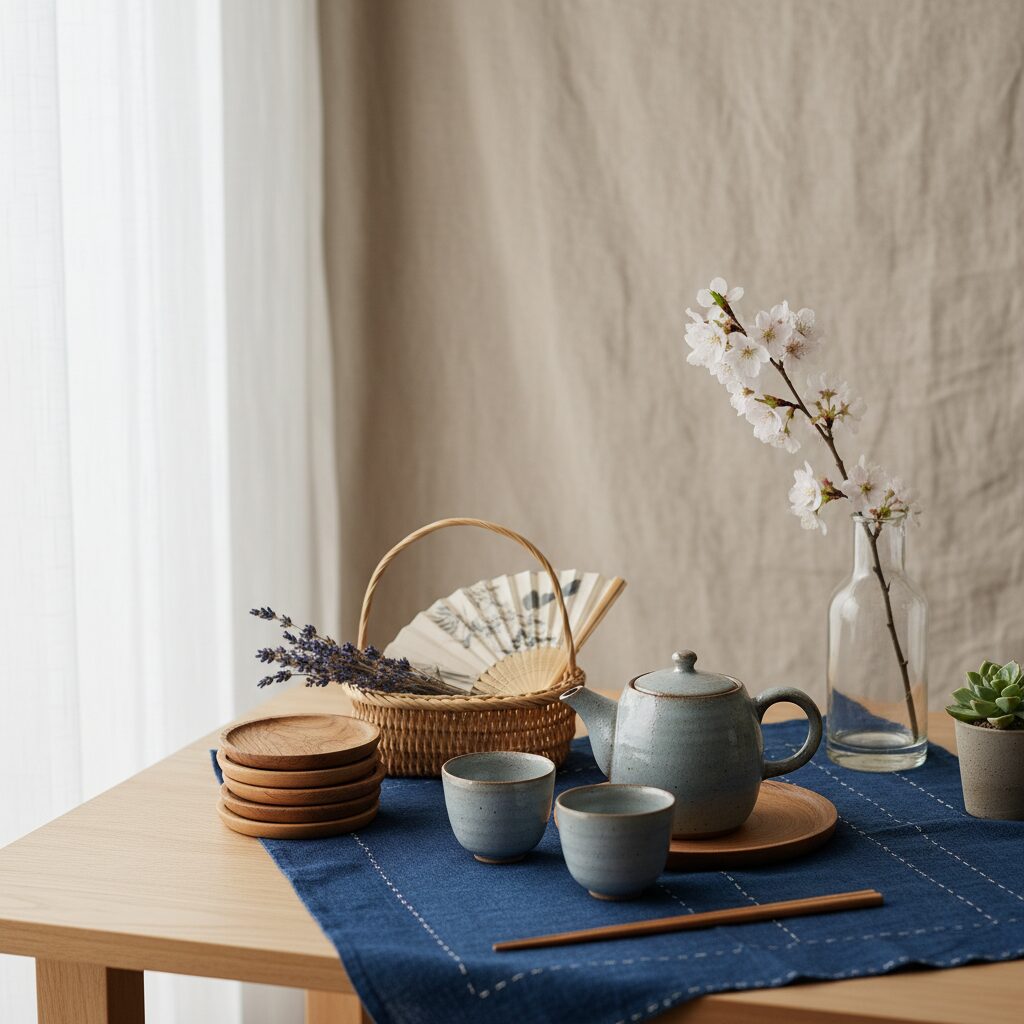
At its core, Zakka is about simplicity. Its visual palette emphasizes natural materials: unfinished wood, linen, cotton, bamboo, glass, and ceramics. The colors are typically muted and inspired by nature—creamy whites, soft beiges, earthy browns, and grayish blues. The forms are clean and uncluttered. This isn’t the cold, sterile minimalism of a high-tech lab; it’s a warm, organic minimalism that feels approachable and human. This aesthetic serves as a direct response to the visual overload of a Japanese city like Tokyo—with its flashing neon signs, crowded trains, and nonstop advertising. A simple wooden bowl or a plain linen cloth becomes a small visual refuge, a moment to reset your senses.
You can’t discuss this simplicity without giving a big nod to Scandinavian design. Japan has long admired the Scandi aesthetic, and it’s easy to understand why. Brands like Marimekko, Arabia, and Iittala are highly regarded. Both cultures share a deep respect for craftsmanship, natural materials, and functional beauty. Yet, Zakka is not a mere copy of Scandinavian design. It’s a reinterpretation through a uniquely Japanese perspective. It takes the clean lines and naturalism of Nordic style and infuses them with warmth, a touch of whimsy, and a layer of nostalgia that makes objects feel less like designer pieces and more like cherished treasures. Think of it as a cultural dialogue: the Japanese brand Muji embodies the purest expression of this shared simplicity, but Zakka builds on that Muji-inspired base by adding crucial layers of personality and story.
Nostalgia (The Showa Retro Craze)
Stepping into a Zakka shop can feel like a gentle voyage through time. You might see amber-colored patterned glass cups reminiscent of a 1960s kissaten (old-fashioned coffee shop) or floral fabrics that evoke memories of a grandmother’s kitchen. This is a purposeful nod to the Showa Era (1926–1989), especially its mid-century years. For many Japanese, this period is romanticized as a simpler, more hopeful time, before the economic bubble and modern anxieties. It symbolizes community, stability, and analog charm.
This “Showa Retro” aspect is vital to the Zakka aesthetic. It acts as a comforting anchor to a past that feels more authentic and human-scale. In a digital world dominated by sleek black-glass smartphones and cold, minimalist technology, an old wooden radio or a clunky mechanical pencil offers a tactile, emotional connection to something genuine. It’s not about being old-fashioned for nostalgia’s sake; it’s a form of escapism. Such objects serve as portals to collective memories, offering warmth and stability amid rapid change. It’s the aesthetic equivalent of comfort food, a subtle rejection of relentless futurism that shaped much of late 20th-century Japan.
“Wabi-Sabi” Lite (The Beauty of Imperfection)
The final and perhaps most profound pillar of the Zakka aesthetic is an accessible, everyday take on the traditional Japanese philosophy of wabi-sabi. At its essence, wabi-sabi values the beauty found in imperfection, impermanence, and incompleteness. It celebrates profound, melancholic beauty in natural processes like growth, decay, and wear.
Zakka brings this lofty idea down to earth—this is “wabi-sabi lite.” It shows in the preference for handmade ceramics, where each piece varies slightly. One mug may bear a faint fingerprint from the potter in its glaze; another might have an uneven rim. These are never seen as flaws but rather as marks of character, proof of the human hand behind creation. You see it in furniture crafted from reclaimed wood, proudly showing nail holes and weathered grain. You find it in a linen tea towel that softens and deepens in beauty with every wash. This embodies Zakka’s quiet rebellion against mass production. A factory-made plastic cup is flawless, identical, and soulless. It tells no story. A handmade Zakka item, with its imperfections, carries a story from the moment it exists. It feels alive. Choosing such objects means valuing the human over the machine, the unique over the uniform, and the meaningful over the sterile.
Kawaii, But Make It Grown-Up
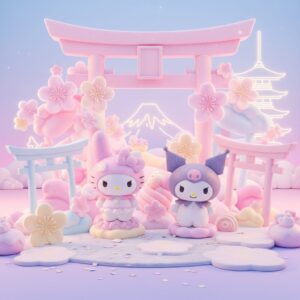
Now, addressing the obvious: cuteness. Much of Zakka is undeniably cute. You’ll find panda-shaped staplers, soy sauce dishes that reveal a cat’s face when filled, and bath mats resembling slices of toast. It’s easy for Western observers to lump this in with the more exaggerated “kawaii” culture of Harajuku girls and anime characters. But that’s a misunderstanding. The cuteness in Zakka operates on a different wavelength.
This isn’t the loud, eye-catching kawaii of pop culture. It’s quieter, more restrained, and often whimsical. You might call it “grown-up kawaii.” Motifs typically draw from nature—animals, forests, flowers—rendered in a simple, almost folk-art style. The aim isn’t to join a subculture or make a bold fashion statement; it’s to add a small, surprising moment of joy or a tiny smile to an otherwise routine day. It’s a form of “iyashi,” a uniquely Japanese concept meaning “healing” or “soothing comfort.” That hedgehog-shaped brush makes dishwashing less tedious. That charming paperclip holder lightens the gloom of paperwork. It’s a small, private act of resistance against the seriousness and stress of adult life. Unlike the performative cuteness of Harajuku, which is for the “soto” (outside world), Zakka’s cuteness is for the “uchi” (inside world). It’s a private joke, a personal comfort, a secret source of cheer just for you.
The Zakka Lifestyle: Curating Your Personal Sanctuary
The key point to grasp about Zakka is that it’s not truly about the objects themselves. It’s about the way you engage with those objects. Zakka serves as a gateway to a broader lifestyle philosophy—a conscious decision to live more deliberately and mindfully. In a society that values efficiency and productivity above all else, the Zakka lifestyle quietly reclaims one’s time, attention, and personal space.
Beyond Possessions: The Practice of “Teinei na Kurashi” (A Mindful Life)
Zakka physically embodies the concept of “teinei na kurashi,” which means “a life lived with care” or “a mindful life.” This movement gained significant popularity in Japan, particularly among women, following the Lost Decade and the 2011 earthquake and tsunami. It emphasizes paying close attention to the small details of everyday life and performing daily tasks with intention and appreciation. It stands in direct contrast to the contemporary fixation on life hacks, multitasking, and constant optimization.
Rather than grabbing a disposable coffee on your way to work, practicing “teinei na kurashi” involves taking the time to brew coffee at home slowly, using a beautiful ceramic dripper and your favorite mug. Instead of microwaving convenience store food, it’s about arranging a simple meal artfully on a set of mismatched but cherished plates. Instead of sending a quick text, it’s about sitting down to write a short note to a friend on lovely stationery with a smooth-flowing pen. From a purely practical standpoint, these actions are “inefficient.” But that’s exactly the point. The value lies precisely in that inefficiency. Using these thoughtfully chosen Zakka items transforms ordinary chores into small, meditative rituals. It’s a form of resistance against a culture that constantly pushes you to speed up and do more. It’s a radical act of self-care asserting that your time and sensory experiences truly matter. The Zakka objects act as tools supporting this mindful existence, turning a home from merely a place to live into a stage for a more intentional, beautiful life.
The Home as Sanctuary: Escaping the Demands of the “Soto” (Outside World)
To truly understand why meticulously curating the home is so important in Japan, you must grasp the fundamental social notion of “uchi-soto” (内 Soto, outside). This cultural distinction divides life into two spheres: the “uchi” (inside) group—your family and home—and the “soto” (outside) group—which includes everyone and everywhere else, such as your workplace, school, and public spaces.
In the “soto” world, Japanese society is governed by a complex system of rules, hierarchies, and expectations. There is intense pressure to conform, remain polite, prioritize the group over the individual, and maintain your “tatemae” (建前), which is your public facade. This environment can be extremely rigid and mentally draining. You are always performing, continuously aware of your role and responsibilities toward others.
In sharp contrast, the “uchi” world—your home—is the only place where you can shed that mask. It is a sanctuary where you can freely express your true self, your “honne” (本音), your sincere feelings and desires. Given the enormous pressure from the outside world, it’s no surprise that so much cultural energy goes into making the home a perfect refuge. The home is more than a place to sleep; it’s a fortress of solitude and a restorative haven designed to heal the stresses of public life.
This is why Zakka is so deeply centered on domestic items. It’s about enriching this private sphere. The selection of kitchenware, stationery, linens, and small decorative pieces is far from a frivolous act of decoration. It is a profoundly serious endeavor to create a personal environment that mirrors your true “honne.” The particular Zakka you choose—the quirky, the simple, the nostalgic—makes a powerful statement about your inner identity, an identity you might not freely express in the “soto” world. In this light, surrounding yourself with objects that bring you joy is not merely pleasant; it is an essential psychological survival strategy.
Where to Find the Real Deal: Navigating the Zakka Landscape
So you grasp the philosophy, catch the vibe, and now you want to experience it firsthand. The world of Zakka retail is as varied as the items themselves, spanning from tiny, owner-curated treasure troves to large, mainstream chain stores. Navigating this landscape reveals much about how a subculture evolves and how its core principles can be both celebrated and diluted as they gain popularity.
It’s Not a Store, It’s a Worldview: The Indie Zakka-ya
The essence of the Zakka movement lies in the independent “Zakka-ya” (Zakka shops). These hidden gems are often tucked away on quiet backstreets in creative neighborhoods like Tokyo’s Kichijoji, Jiyugaoka, Daikanyama, or Kyoto’s Teramachi Street. They are not typically found in major tourist areas.
Stepping inside is a full sensory experience. The space is usually small and intimate, filled with the scent of wood, dried flowers, or a faintly burning candle. Every item on the shelves feels personally chosen by the owner. The shopkeeper is more than a salesperson; they’re a curator and tastemaker who has assembled a collection reflecting their unique worldview. You might find handmade pottery by a local artist alongside vintage glassware from a European flea market, paired with artisanal soy sauce and beautifully wrapped senbei crackers. Though the collection might seem eclectic at first, there’s a cohesive narrative behind it. The experience encourages a slow pace—you’re invited to wander, touch, and feel the weight and texture of items. In an indie Zakka-ya, you don’t come with a shopping list; you embark on a discovery, hoping a particular object will “speak” to you. It’s the opposite of the efficient, impersonal experience of a big-box store. Shopping here becomes a form of therapy and self-expression.
The Chain Gang: Muji, Natural Kitchen, and the Mainstreaming of an Aesthetic
As the Zakka aesthetic grew popular, it was only a matter of time before larger companies adapted it for the mass market. This paved the way for several well-known chain stores offering a more accessible and often more affordable take on the Zakka vibe.
The philosophical inspiration for this movement is Muji (Mujirushi Ryohin, or “No-Brand Quality Goods”). Muji’s minimalist, anti-brand philosophy—emphasizing simple forms and quality materials—laid the foundation for the Zakka trend. Yet, for some purists, Muji lacks the warmth, personality, and uniqueness that true Zakka embodies. It’s a beautifully designed minimalist base, but the color is left to you.
Then there are chains that fully embrace the Zakka style. Stores like “Afternoon Tea Living” offer a romantic, slightly European-inspired approach with floral patterns and delicate teacups. “Francfranc” presents a more colorful, trendy, and pop-infused version. Among the most famous is “Natural Kitchen,” a 100-yen-shop-style store where nearly everything is priced affordably, making the rustic, natural Zakka look widely accessible. Here lies the central irony of the modern Zakka scene: a movement that originated as a rebellion against mass-produced, soulless goods has itself become a mass-produced, marketable style. These chains excel in accessibility and have introduced millions to the aesthetic, but it’s often Zakka-lite. The items mimic a handmade feel but are factory-made. The rebellion has been commercialized. It still looks appealing, but discerning eyes may sense that some of the original soul is missing.
The Creator’s Touch: Handmade Markets and “Kurafuto” Fairs
To find the pure, undiluted spirit of Zakka, you must go straight to the source: the makers themselves. Across Japan, handmade markets, craft fairs (“kurafuto fea”), and pottery markets are frequently held at local shrines, parks, or event spaces. These are events where artisans—potters, woodworkers, textile artists, glassblowers—sell their work directly to the public.
This is where the anti-mass-production ethos shines most brightly. Here, you can meet the person who crafted the bowl you’re considering, talk with them about their process, and feel their passion. You can choose between similar but distinct mugs, selecting the one whose glaze or subtle curve resonates with you. These events powerfully highlight Japan’s deep folk craft history, known as “mingei.” Championed by Soetsu Yanagi in the early 20th century, the mingei movement celebrated the beauty of everyday, utilitarian objects crafted by anonymous artisans. Today’s Zakka and craft fair scene is a direct descendant of this philosophy. It continues a vital Japanese cultural value: profound respect for the skill, soul, and human touch of the artisan. Purchasing at one of these fairs isn’t just a transaction—it’s an act of connection and appreciation for a living tradition.
The Final Take: Is Zakka Just… Hoarding Cute Junk?
Let’s be honest. After all this, a doubtful voice might still whisper, “Isn’t this just a fancy justification for hoarding cute, overpriced stuff?” From a strictly practical, utilitarian perspective, that criticism isn’t entirely unfounded. You don’t need any of these things to survive. And yes, taken to an extreme, a love for Zakka can definitely result in a cluttered home.
But viewing it that way misses the whole cultural point. Zakka isn’t about accumulating for accumulation’s sake. It’s the opposite of mindless consumerism. It’s a highly selective, deeply personal process of curation. Think of it as Marie Kondo’s famous “spark joy” approach, but flipped. Rather than simply discarding things that don’t spark joy, Zakka is about deliberately inviting only things that bring joy into your life from the start. Each item is chosen to fulfill an emotional or aesthetic role, not just a practical one. That slightly imperfect, handmade ceramic mug doesn’t just hold coffee; it carries a story, offers a tactile pleasure, and serves as a small daily reminder to slow down and appreciate the imperfect beauty of things.
Ultimately, Zakka is a fascinating and revealing cultural indicator. It’s a quiet but potent response to the unique pressures of modern Japanese life—the demand for conformity, the legacy of impersonal mass production, and the stress of a hyper-efficient urban world. It uncovers a deep, collective craving for personality, humanity, nostalgia, and small, controlled moments of beauty and peace in an often chaotic and overwhelming world. It’s a quiet, domestic, and deeply personal revolution, waged one handcrafted coffee mug, one quirky paperclip, and one linen hand towel at a time. It’s not just stuff; it’s a way of living more humanely in an increasingly inhuman world. And in the end, that’s a vibe we can probably all embrace.