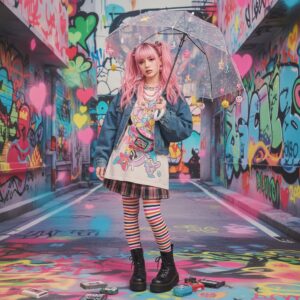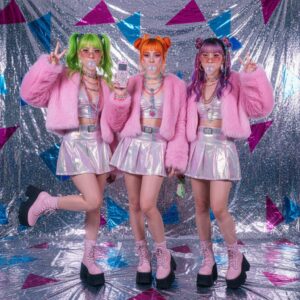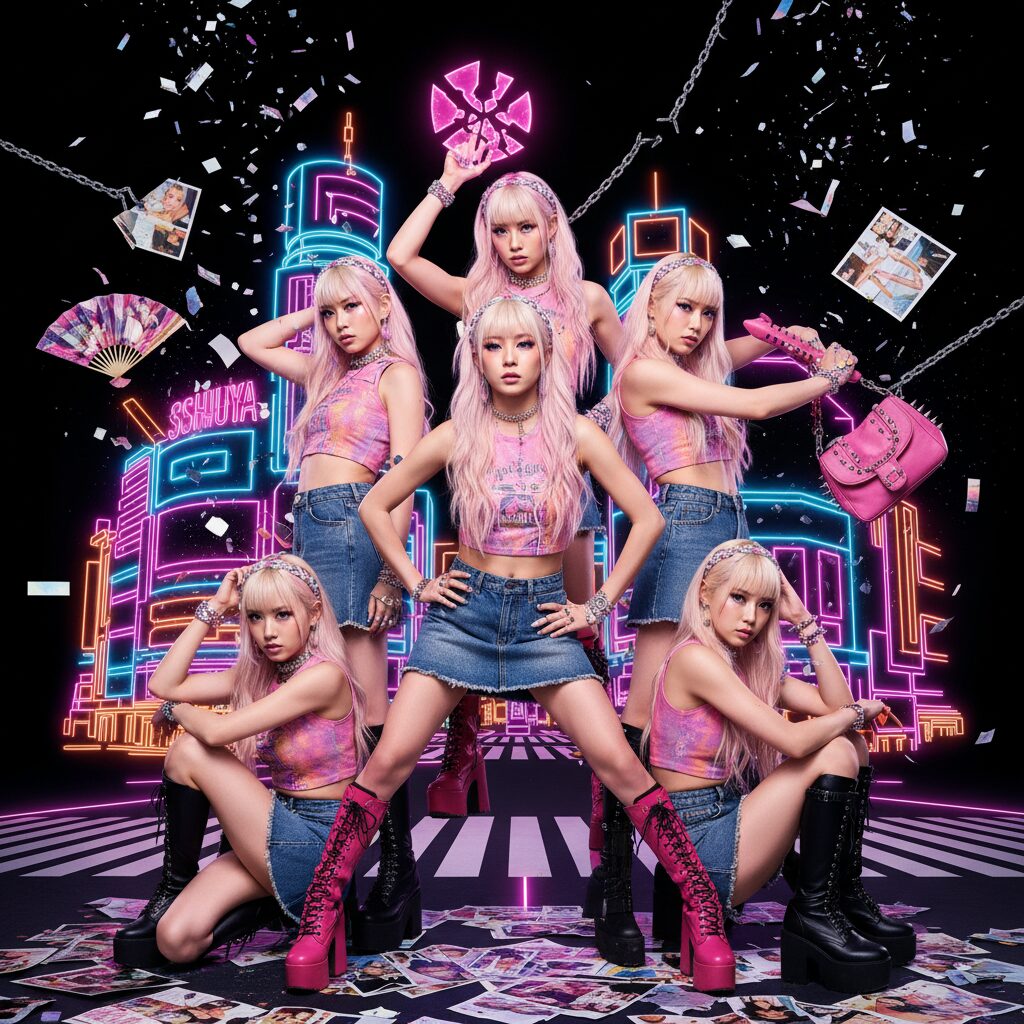
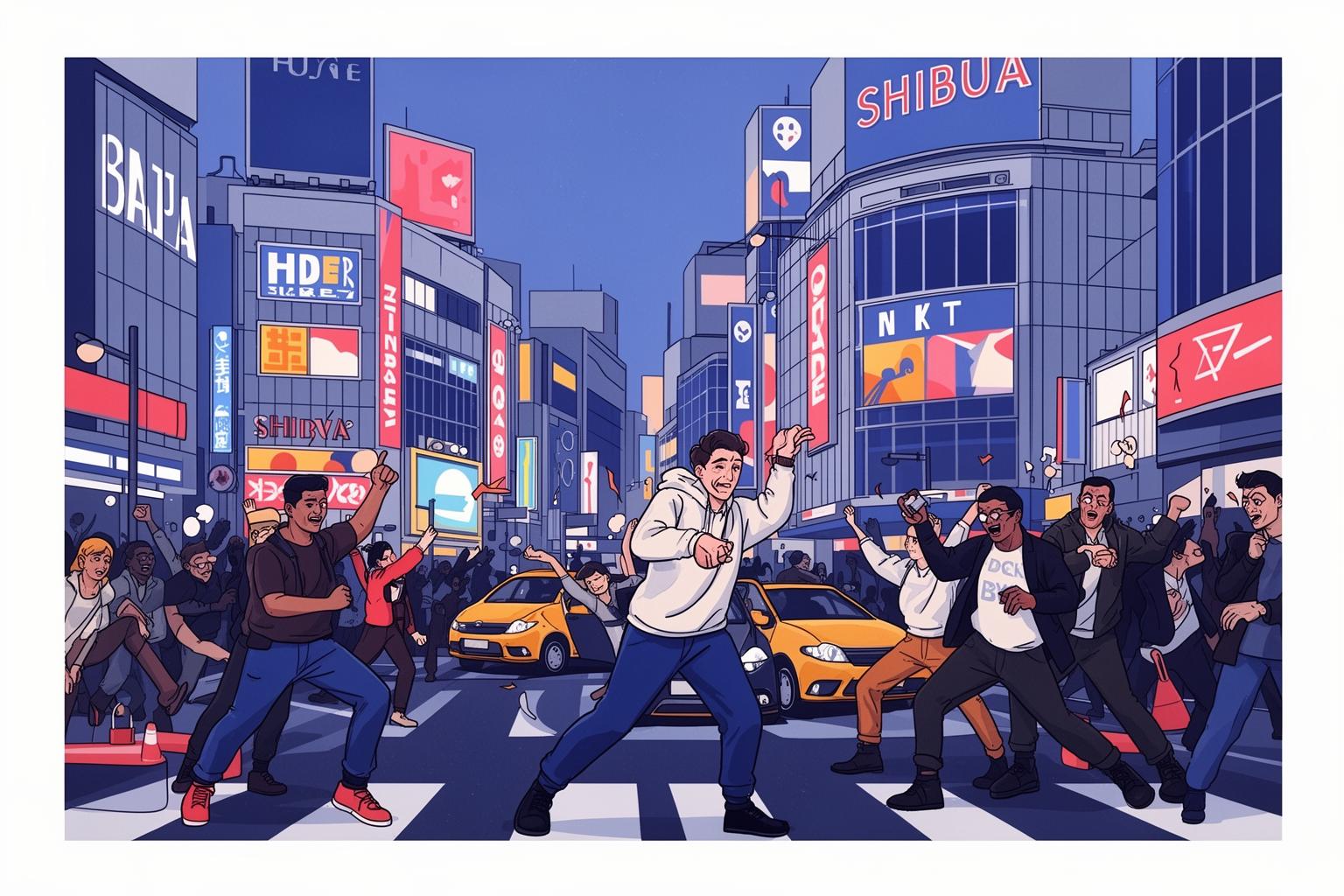
Yo, what’s up. Keiko here. Let’s get into it. You’ve probably seen the pictures online, scrolling through some retro Japanese aesthetic feed. The impossibly tanned skin, the bleached-out hair, the white lipstick, and platform boots that look like they could double as weapons. It’s a look that screams, and it usually comes with a geotag: Shibuya, 1990s. And for real, the first reaction is usually a mix of fascination and total confusion. You’re thinking, “Okay, but why? Why did Japanese high school girls decide to look like this? Was it just a wild fashion phase, a fever dream cooked up in the Tokyo heat?” It’s a valid question. Because when you stack that image up against the more common perceptions of Japan—the serene temples, the polite society, the minimalist aesthetics—it just doesn’t compute. It feels like a glitch in the matrix. But that “glitch” was one of the most significant youth-led cultural rebellions in modern Japanese history. This wasn’t just about clothes. It was a full-blown declaration of identity, a visual scream from a generation of young women who looked at the path laid out for them and said, “Nah, I’m good.” They were the Gyaru, and their playground, their battlefield, and their sanctuary was Shibuya. Before we dive deep into the how and the why, let’s ground ourselves in the epicenter of it all. This is where the magic, the madness, and the movement happened.
To understand how this visual rebellion was part of a broader shift in youth expression, consider how their generation also redefined storytelling through keitai shousetsu.
The Bubble Bursts: Setting the Scene for Rebellion
To understand why Gyaru emerged, you need to connect with what Japan was like just before it. The 80s marked the “Bubble Economy” era, characterized by Gucci, brand-new Toyotas, and corporate employees charging extravagant sushi dinners to expense accounts. The national mood was one of pure confidence. The formula was clear: study hard, get into a reputable university, join a large company, and your future was secure. Lifetime employment was the guarantee. Conformity wasn’t merely encouraged; it was the entire strategy. Your identity revolved around your company, and your purpose was to contribute to Japan Inc. The aesthetic of the time reflected this: subtle, refined, and serious. Everything was about demonstrating that you were a respected member of a prosperous society.
Then, in the early 90s, the bubble didn’t just deflate—it burst. The stock market and real estate values plummeted, plunging Japan into what is now known as the “Lost Decade.” That promise of lifetime security? Vanished. The generation coming of age in the 90s, the youths who would become the first Gyaru, witnessed their parents—who had followed all the rules—being laid off. They saw that the corporate loyalty their fathers had devoted their lives to meant absolutely nothing. The system was broken. The future their parents and teachers had promised was a lie. So, if the old way was a dead end, what was the point of playing by the rules? This sense of disillusionment was crucial. It created a vast cultural void. And into that emptiness stepped a generation of teens with a bold new philosophy: if the future is a scam, the only thing that matters is the present. This moment. This outfit. This circle of friends. It was a dramatic shift from collective responsibility to radical individualism. And that individualism demanded a uniform.
Birth of a Subculture: Gyaru 101
So, what exactly is a “Gyaru”? The term itself is simply a Japanized pronunciation of the English word “gal.” However, it came to represent a new tribe of young women who rejected nearly every traditional Japanese value imaginable. They were loud when they were expected to be quiet. They were flashy when modesty was the norm. They prioritized fun, friends, and fashion over studying for entrance exams. This movement was grounded in pure, unapologetic self-expression.
The very first wave was called `Kogyaru`, meaning “high school gal.” This is where the aesthetic rebellion truly began, starting in the one place where conformity was most strictly enforced: the school uniform.
The Uniform Rebellion: Loose Socks and Short Skirts
Consider this: the Japanese school uniform embodies the collective ideal. Everyone looks identical. It suppresses individuality for the sake of group harmony. So, the first act of defiance for a `Kogyaru` was to alter that uniform. It was a daily, subtle protest. They’d roll down the waistbands of their skirts, making them illegally short. They’d replace standard navy socks with huge, scrunched “loose socks” (`ruusu sokkusu`) held up by a special glue called “sock touch.” They’d wear oversized beige Ralph Lauren cardigans instead of the school-issued ones. They’d accessorize with designer bags, hanging dozens of keychains and mascots from them. Every single change was a deliberate middle finger to the establishment. Teachers wielded rulers to measure skirt lengths, and moral committees condemned their disrespect. But that was exactly the point. By customizing the uniform, they reclaimed their identity from the system that tried to erase it.
The Beauty Standard Flip: Tanned Skin and Blonde Hair
Here, Gyaru shifted from cheeky school rebels to a full-blown cultural counter-attack. For centuries, the ideal of Japanese beauty was `bihaku`, literally “beautiful white.” Pale, porcelain skin symbolized class and refinement, seen in everything from ancient woodblock prints to modern skincare ads. Hair was expected to be dark, straight, and natural. Gyaru rejected this longstanding beauty ideal entirely. They began going to tanning salons, aiming for a deep, sun-kissed bronze that contrasted sharply with `bihaku`. They dyed their hair not just brown, but bright blonde, orange, or even silver. This was far more than a style choice. It was a radical denial of what it meant to “look Japanese.” They deliberately made themselves appear “other,” embracing a California beach babe aesthetic inspired by Western media. It was a statement: “I refuse to be judged by your outdated, traditional beauty standards. I’m creating my own.” This was the foundational act of defiance that later evolved into more extreme styles, but it all began with a bottle of bleach and a tanning bed membership.
The Shibuya Epicenter: 109 and Center Gai
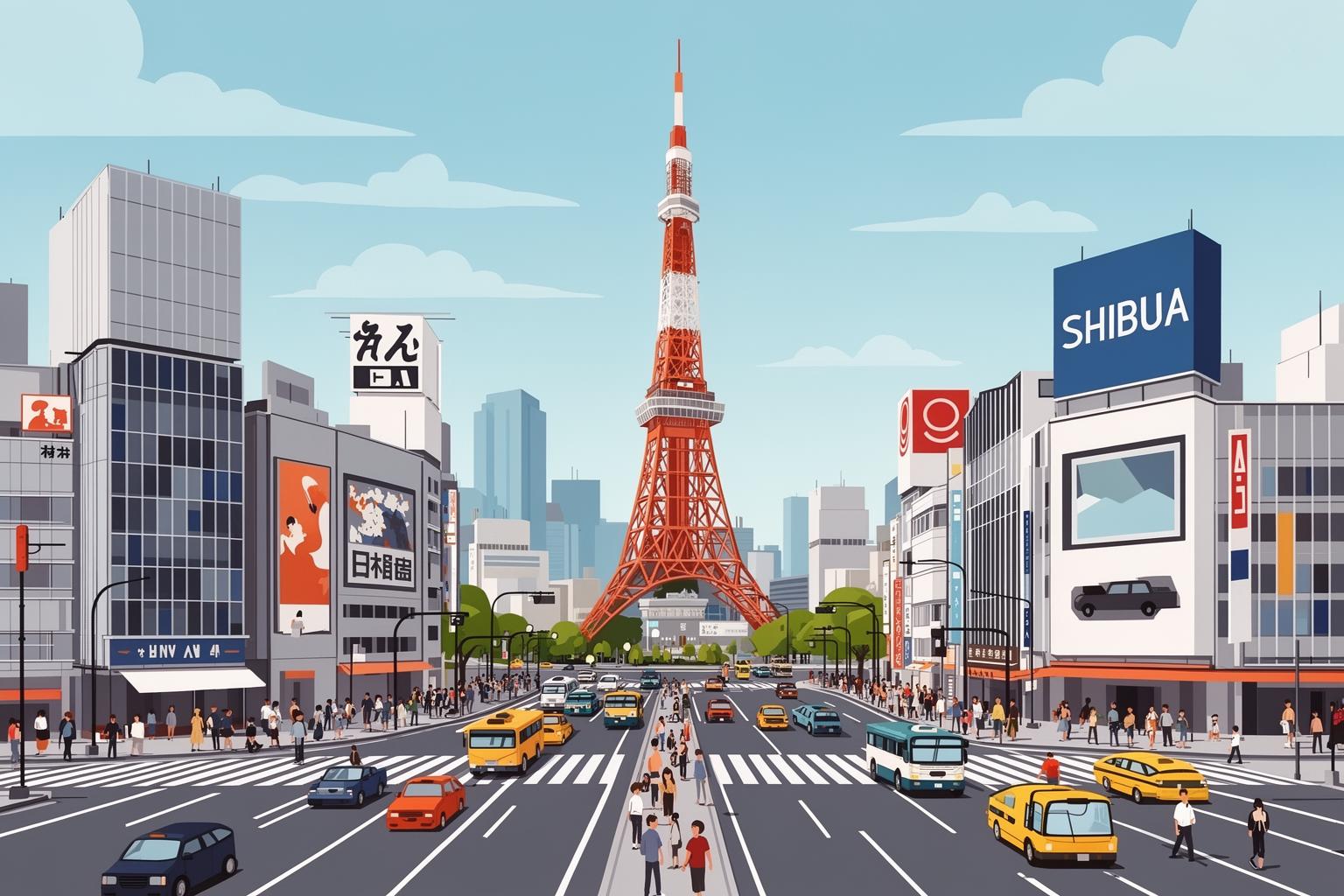
You can’t talk about Gyaru without mentioning Shibuya. It wasn’t just a neighborhood; it was their own sovereign nation. While areas like Harajuku were known for their artsy and eclectic styles, Shibuya was raw, loud, and commercial. It served as the perfect stage for the Gyaru’s unapologetic energy. They claimed it. The famous Scramble Crossing was their daily runway, and the narrow, crowded streets of Center Gai (now officially called Basketball Street, though no one uses that name) were their living room. This was the place to see and be seen, check out the latest trends, meet up with friends, and simply exist, free from the judgmental eyes of adults.
At the heart of this nation stood its temple: the Shibuya 109 building. This cylindrical tower was more than just a shopping mall; it was the ultimate mecca of Gyaru culture. The brands inside were not found in typical department stores. They were created by Gyaru, for Gyaru. Stores like Alba Rosa with its hibiscus logo, EGOIST, moussy, and Cecil McBee were iconic. The shop staff were often charismatic Gyaru themselves, serving as style icons known as `karisuma tenin`. Visiting 109 wasn’t simply shopping; it was a pilgrimage. Eurobeat music blasted at deafening volumes, staff energetically shouted `irasshaimase!`, and every floor was crowded with girls dressed in the latest fashions. It was an ecosystem. The brands in 109 observed trends on the streets of Center Gai, produced them, and sold them back to the very girls who created those trends. It was a perfect, self-sustaining cultural feedback loop, and 109 was its power source.
The Evolution and Extremes: From Kogyaru to Ganguro
The Gyaru look was never static. It was a constantly evolving phenomenon that grew increasingly extreme throughout the 90s. What began with a tan and a short skirt fragmented into a wild variety of sub-styles, each more visually shocking than the last. It became a contest of one-upmanship, with everyone trying to push the boundaries further.
Kogyaru: The High School Rebels
As previously mentioned, this was the origin. The `Kogyaru` style, though rebellious, still retained a sense of cuteness. The emphasis was on appearing fashionable and desirable within their peer group. They were obsessed with trends, following pop icons like Namie Amuro, who popularized the tanned skin, mini-skirt, and platform boots look on a national level. She was their idol. The `Kogyaru` vibe focused on being the most popular girl in school—the one always ahead of the trends. It was defiant, but not yet meant to be ugly or monstrous by mainstream standards.
Ganguro: The Black Faces of Defiance
By the late 90s, things intensified significantly. This is where `Ganguro` emerged. The term literally means “black face,” which, naturally, is quite shocking to a Western audience. However, it is vital to understand that the context here is entirely different. It had nothing to do with minstrelsy or mimicking Black people. Instead, it was all about one goal: becoming as un-Japanese as possible. The `Ganguro` aesthetic exaggerated the `Kogyaru` tan to an extreme, resulting in a deep, leathery brown. This was then contrasted with dramatic makeup: thick white concealer used as lipstick and eyeshadow, framed by bold black eyeliner. Their hair was bleached platinum blonde or silver. The overall look was shocking and, to many adults, grotesque—and that was precisely the point. They no longer aimed to be cute. They wanted to be intimidating, to create a look so alien and extreme that mainstream society couldn’t ignore or accept it. It was visual armor declaring, “You can’t touch me. You don’t even understand me.”
Yamanba and Manba: The Mountain Witch Fantasy
Just when it seemed like it couldn’t get any wilder, it did. The ultimate expressions of the Gyaru evolution were the `Yamanba` and `Manba` styles. They took the `Ganguro` look and dialed it up to an entirely new level. The tan was even darker, hair was dyed in a rainbow of neon hues, often styled wildly and messily. Their signature “panda makeup” involved white concealer applied not only on lips and eyelids but in large circles around the eyes, with the surrounding areas left dark. They adorned their faces with `purikura` photos and brightly colored stickers, called `kao shiru` (face seals). Their outfits featured clashing, brightly colored layers, accessorized with leis and numerous bracelets. The name `Yamanba` directly references a “mountain witch” from Japanese folklore—a wild, untamed, and often frightening female demon living in the mountains. This was intentional. These girls styled themselves after a symbol of female power and chaos. They completely rejected societal pressure to be submissive, delicate, or cute. They chose to be monsters. And in a society that tightly controls female appearance, that was perhaps the most radical statement of all.
Gyaru Tech and Media: Pagers, Purikura, and Popteen
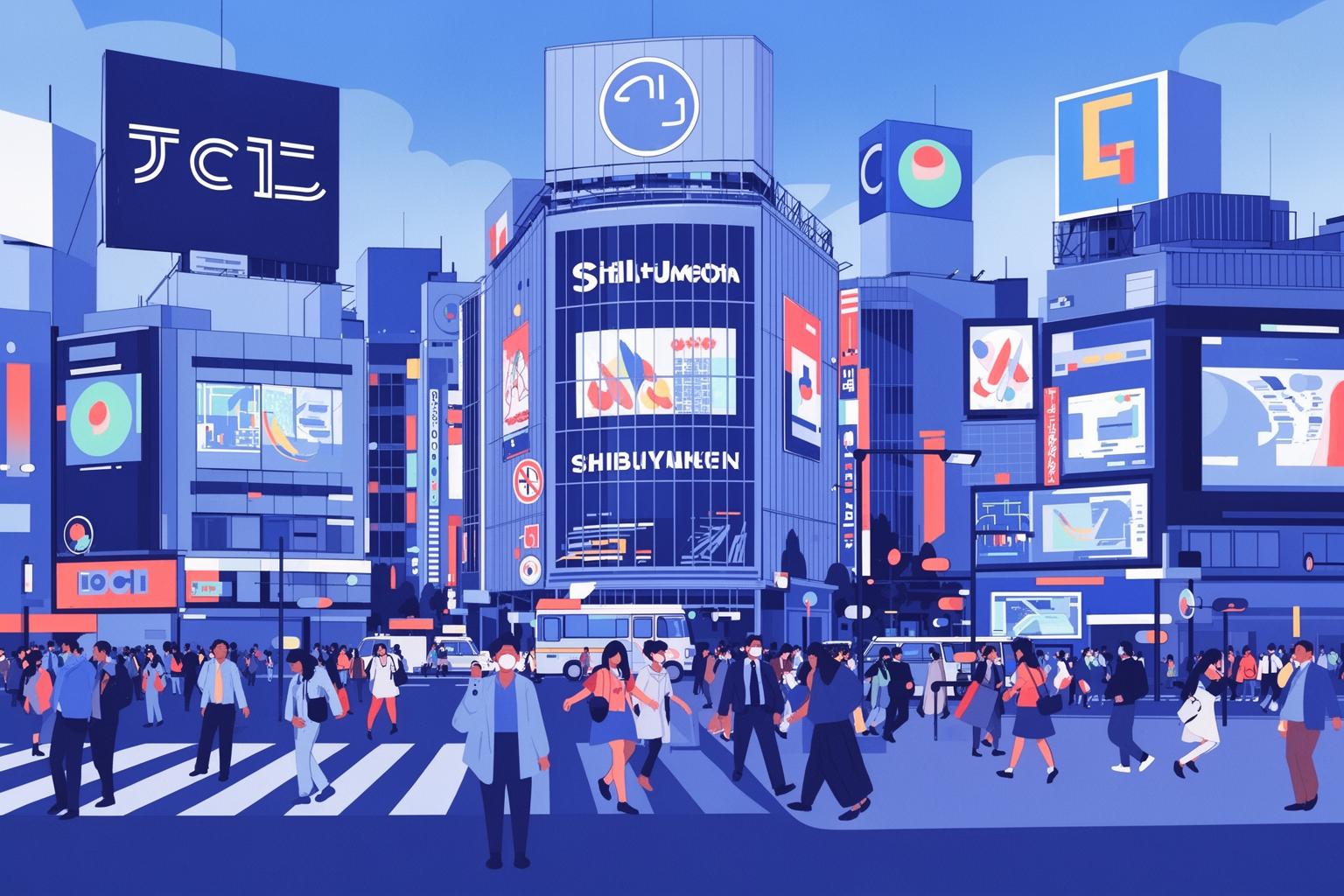
This entire subculture didn’t simply exist in isolation on the streets of Shibuya. It thrived within its own distinctive media and technology ecosystem. They created a world deliberately designed to be nearly impenetrable to adults. It formed a closed loop of communication and validation that made the community extraordinarily close-knit.
The Language of Pagers: Gyaru-moji
Before smartphones became widespread, pagers, or `pokeberu`, were the preferred communication tool for teens in the 90s. You couldn’t send long messages, only brief numerical codes. However, Gyaru, with their boundless creativity, developed a secret language to text on these limited devices. When cell phones with text messaging grew common, they created `Gyaru-moji`, or “gal characters.” This was a wildly complex written language that deconstructed and reassembled Japanese characters using various other symbols, characters, and English letters. For instance, the hiragana character ‘け’ (ke) might be represented as ‘lナ’ (a lowercase L and a katakana ‘na’). Entire sentences written in `Gyaru-moji` were completely indecipherable to outsiders. It acted as a linguistic firewall, allowing them to talk about boys, plans, and gossip openly without parents or teachers understanding a word.
The Purikura Sanctuary
If Shibuya 109 was their church, then `purikura` booths were their confessionals and photo studios. Short for “print club,” `purikura` are photo booths that print pictures on small sticker sheets. For Gyaru, this was central to their ritual. Groups of friends would cram into a booth, strike perfected poses (the peace sign being just the start), and then spend a long time decorating their photos on a digital screen before printing them. They’d add text, sparkles, and playful icons. Importantly, the machines had filters that would enlarge their eyes, smooth their skin, and create a cuter, more idealized version of themselves. This was selfie culture, 15 years before the iPhone. The printed sticker sheets became social currency—they were traded with friends and stuck on phones and notebooks. Keeping a thick binder full of `purikura` sheets signaled a rich social life. It was a way to document friendships, outfits, and youth, forming a tangible archive of their fleeting moments of rebellion.
The Gyaru Bible: Egg and Popteen
Mainstream media didn’t understand them, so they turned to their own. Magazines like `egg`, `Cawaii!`, and `Popteen` served as the Gyaru subculture’s bibles. Unlike high-fashion magazines with professional models, these publications focused on street snaps. Photographers roamed Shibuya capturing real Gyaru. The most stylish and charismatic could become `dokusha moderu`, or “reader models.” This changed everything—it meant fame and influence were within reach. You didn’t need to be a scouted professional model; you could become a style icon just by having the best look on Center Gai. These magazines taught girls how to apply makeup, which brands to buy, and slang to use. They published articles ranking the most popular guys from various high schools (`ikemen rankingu`) and featured detailed profiles of top reader models. Rather than merely reporting on the culture, the magazines actively shaped and cultivated it, creating a sense of a vast, nationwide community.
The Social Backlash: Moral Panic and Misunderstanding
So, how did the rest of Japan react to a generation of teenage girls painting their faces white, dyeing their hair blonde, and communicating in a secret code? To say the least, they were not fans. The backlash was fierce. Mainstream society was swept up in a moral panic. TV news programs aired segments portraying Gyaru as the decline of Japanese society. They were characterized as lazy, foolish, and materialistic, and were frequently linked to delinquency and crime. Schools launched rigorous crackdowns, with teachers policing everything from sock styles to hair color at the school gates.
The most harmful association was with `enjo-kōsai`, or “compensated dating,” where high school girls would accompany older men in exchange for money to buy the costly clothes and accessories demanded by the subculture. While this was indeed a social issue at the time, the media generalized as if every single Gyaru was involved. For the vast majority of girls merely expressing themselves through fashion, this was a deeply unfair and damaging stereotype. It was an easy excuse for adults to dismiss their entire culture. Instead of trying to understand why these young women felt compelled to rebel so visually, society simply labeled them as morally corrupt and moved on. This misunderstanding and judgment, naturally, only made the Gyaru dig in their heels further. The more society rejected them, the more they embraced their outsider identity. The backlash became a symbol of pride.
The Legacy: How 90s Gyaru Echoes Today
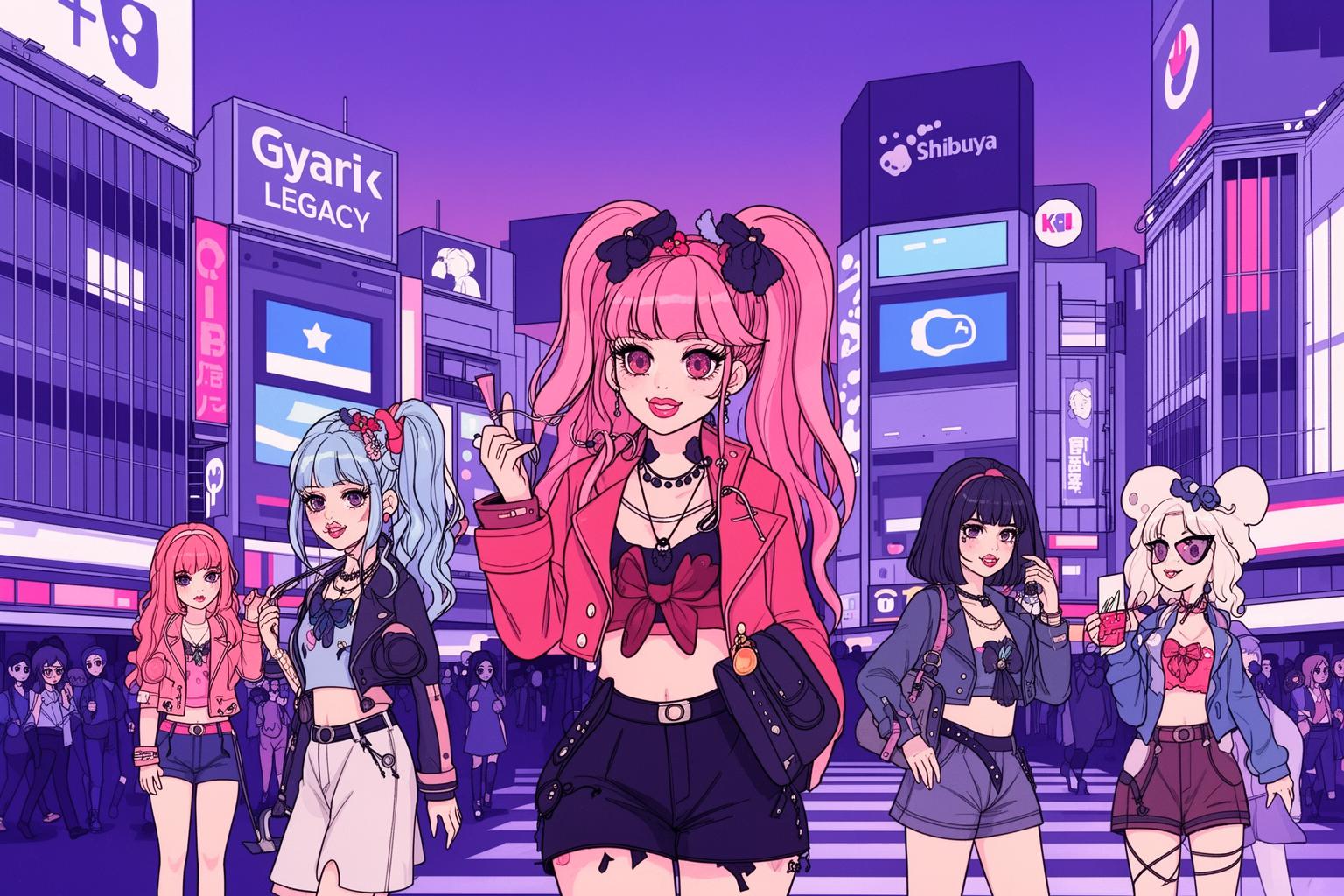
Like all intense youth subcultures, the extreme Gyaru era was never going to last forever. By the mid-2000s, the `Ganguro` and `Manba` styles had faded, making way for more subdued and arguably more approachable interpretations of the look, such as the `Shiro-Gyaru` (“white gal”), who retained the flashy clothes and big hair but abandoned the deep tan. The economy stabilized somewhat, new trends emerged, and the original Gyaru simply matured. Yet to claim that Gyaru is “dead” is to completely miss the point. Its spirit and innovations are deeply embedded throughout modern Japanese and even global youth culture.
Consider this: the fixation on dramatic eye makeup? The false lashes, circle lenses that enlarge the irises, and intricate eyeliner styles—that’s pure Gyaru DNA. The whole culture of selfies, photo editing apps, and crafting a distinct online persona on Instagram descends directly from the `purikura` booth. They were filtering their lives and perfecting their digital selves long before most of us. The concept of subcultures shaping their own aesthetics, slang, and media ecosystems serves as a model for how online fandoms and communities function today.
The pop-kawaii aesthetic, now one of Japan’s biggest cultural exports, has often been softened for global audiences. But its rebellious, look-at-me-now energy has strong roots in the loud, provocative, and unapologetic world that Gyaru created in Shibuya. They were trailblazers who tore apart the rigid social contracts of their parents’ generation. Using their bodies and fashion as a canvas, they expressed their dissatisfaction and desire for a life that was brighter, louder, and more joyful than the one offered to them.
So, no, it was never just about a tan and platform shoes. It was a full-throated roar from a generation of young women demanding to be seen on their own terms. It was messy, controversial, often misunderstood, and undeniably a whole mood. It was the sound of the future refusing to stay silent.