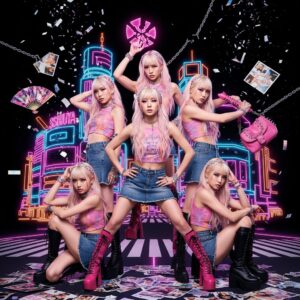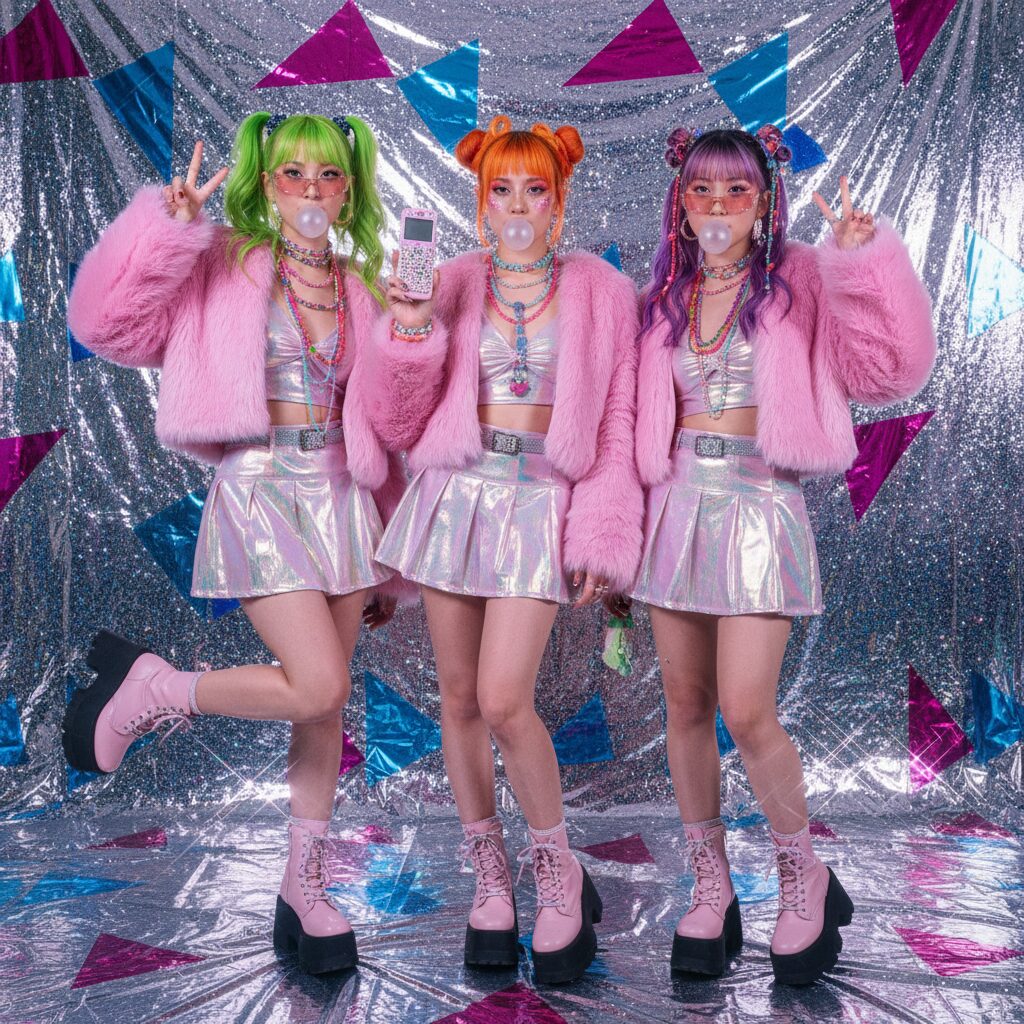
Yo, what’s the vibe? When you picture Japan, what hits your screen? Is it the serene temples in Kyoto, the sleek bullet trains slicing through the countryside, or maybe the mind-blowing neon jungle of Tokyo? For sure, for sure. But lately, thanks to the algorithm gods, you’ve probably seen a different side of Japan bubbling up, a ghost from the Y2K past. We’re talking platform boots that could crush your existential dread, bleached-out hair, tans so deep they look like they were baked in a cosmic oven, and makeup that screams, “I am the main character, and you’re just an NPC.” This is the world of the ‘Gal,’ or gyaru, a subculture that absolutely took over the streets of Shibuya in the late 90s and early 2000s. It’s loud, it’s unapologetic, and for anyone looking from the outside in, it seems like a total contradiction to the quiet, polite, and harmonious image of Japan that’s sold to the world. And that’s the whole point. You look at these images and think, “Wait, this is Japan too? How? Why?” That’s the real tea. This wasn’t just a fashion trend. It wasn’t a phase. The Gal movement was a full-blown cultural rebellion, a declaration of independence by a generation of young women who were told their future was canceled. They looked at the collapsing economy and the rigid social rules their parents worshipped, and they said, “Nah, we’re good.” Instead of falling in line, they created their own universe, with its own rules, its own language, and its own definition of beauty, right in the heart of Tokyo. This is the story of how they did it, why they did it, and what legacy they left behind. It’s a deep dive into the soul of a subculture that chose to shine its brightest when the world around it was fading to gray. Before we get into the nitty-gritty, let’s set the scene. The epicenter, the holy land, the place where it all went down: Shibuya, Tokyo. Peep the map below; this is ground zero.
This bronzed rebellion was a form of self-expression as potent and collectible as the capsule toys that filled the era’s arcades.
The Birth of a Counter-Culture: More Than Just a Tan
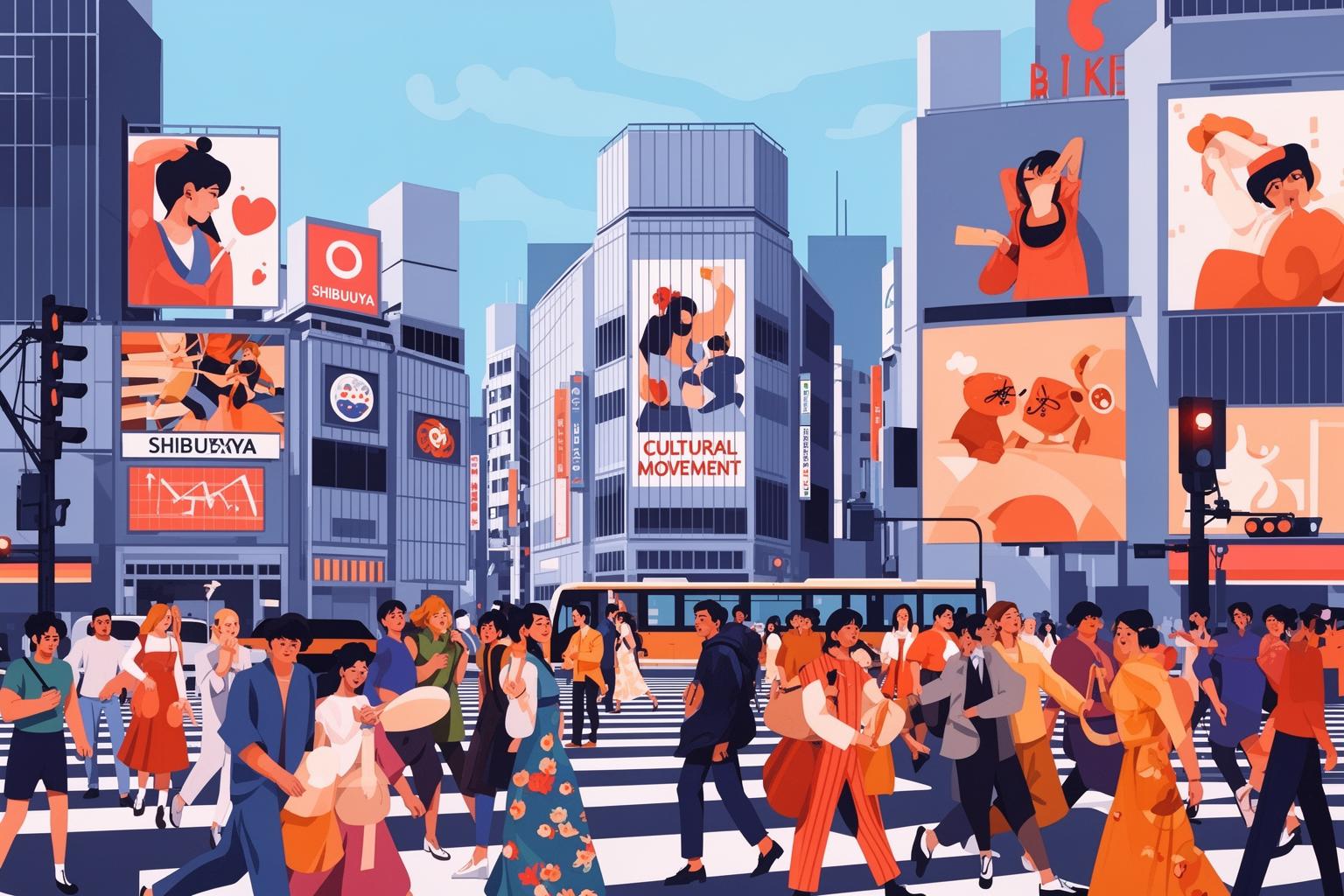
To truly understand why the Gal movement erupted with such intensity, you need to grasp the atmosphere in Japan during the 1990s. It was, to say the least, a complete downer. The nation was reeling from a massive economic collapse that burst the bubble of the 1980s, an era marked by astonishing wealth and prosperity. That decade of glamour and seemingly endless growth hit a wall, ushering in what became known as the “Lost Decade.” For the generation coming of age during this period, the promises their parents lived by were utterly shattered. The social contract was torn apart. The whole idea of graduating, landing a stable, lifetime job with a major company, marrying, and living a comfortable middle-class life? That script was essentially erased. It was a time of deep national anxiety and uncertainty, with young people, especially young women, facing a future that seemed bleak and uninspiring. The pressure to conform—to be a dedicated worker or an ideal housewife—felt not only oppressive but also pointless when the rewards were no longer assured. This societal gloom created a vacuum, a space for something new and radical to emerge. The Gals weren’t just dressing up for fun; they were responding to this profound sense of disillusionment. They rejected the self-sacrificing, workaholic mindset of the salaryman and the submissive, domestic expectations placed on women. Instead, they chose to live in the moment, crafting their own value system centered on fun, friendship, and personal expression, because the future they had been promised was officially canceled.
The Bubble Bursts and a Generation Adrift
The economic context is everything here. Japan in the 1980s was soaring. Stock market and real estate prices skyrocketed. People felt unstoppable. Companies were handing out jobs to graduates freely, and lifetime employment was the foundation of society. This system created a very specific, rigid life trajectory. For men, it was school, university, then full dedication to a corporation. For women, the path often involved school, a brief period as an “office lady” performing secretarial tasks, and then marriage and domestic life. This was the ideal—the definition of success. Then, in the early 1990s, the bubble burst. The stock market crashed. Property values tumbled. Companies once considered invincible began laying off staff. The promise of stability vanished. This economic shockwave rattled the social structure. The generation growing up in the ’90s witnessed their parents, who had followed all the rules, struggling with financial uncertainty and stress. The path that once seemed a golden ticket now looked like a dead end. This disillusionment hit young women especially hard. Why strive to be a perfect, diligent student and a polite, marriageable woman when the ultimate goal—a stable, prosperous family life—was no longer guaranteed? This wasn’t mere teenage rebellion; it was a rational response to a broken system. The Gals’ rejection of traditional norms didn’t arise out of nowhere; it stemmed from a very real sense that the old ways had failed them. Their bold fashion and carefree attitude were a direct protest against the country’s somber, anxious mood. If the adult world was all about austerity and worry, they would create a world defined by joy and excess.
The Kogal Precursor: High School Uniforms as a Canvas
Before the full-fledged Y2K Gal, with her deep tan and platform boots, appeared, her younger sister, the Kogal, planted the seeds of rebellion. The term, a blend of kōkōsei (high school student) and Gal, described a trend that began in the mid-1990s. The Kogals were the movement’s origin, and their chosen canvas for defiance was Japan’s strongest symbol of conformity: the school uniform. In a society that highly values group harmony and standardization, the uniform is a powerful tool. It erases individuality and enforces collective identity. The Kogals took this symbol and entirely subverted it. They transformed their uniforms into statements of personal style and rebellion. Skirts were raised to impossibly short lengths, often rolled at the waist. Standard navy or black socks were swapped for baggy, oversized “loose socks” (rūzu sokkusu) bunched around their ankles and secured with special sock glue called “Sock Touch.” They accessorized with designer goods, most famously the beige Burberry scarf, and carried luxury Louis Vuitton or Prada bags instead of the usual school bookbags. This wasn’t just about looking cute. It was a radical act. By customizing the uniform, they reclaimed individuality within a system designed to suppress it. And the luxury items? They symbolized economic power. Amid recession, these high school girls flaunted a consumer identity. They demonstrated that they had their own money and could participate in the economy on their own terms—not as future housewives, but as active consumers. This sparked controversy around enjo-kōsai, or “compensated dating,” where some girls dated older men for money. Though sensationalized and not universally practiced, it underlined the lengths some would go to fund their lifestyle and gain financial independence in a world offering few legitimate economic opportunities. The Kogal was the prototype, the trial run for the Gal rebellion. She proved that even the most rigid symbols of Japanese society could be bent, broken, and reinvented.
The Y2K Gal Aesthetic: A Visual Manifesto of Defiance
The turn of the millennium saw the Kogal transform into something far more extreme and visually striking. The Y2K Gal aesthetic was not about subtle modifications; it was a direct challenge to traditional Japanese beauty standards. Every aspect of the look was a deliberate rejection of what mainstream society deemed beautiful, proper, and desirable. It formed a uniform of its own, marking membership in a tribe of outsiders. From skin to hair to makeup, the Gal style served as a visual manifesto. It declared that these young women refused to be defined by the pale, demure, and natural ideal of femininity that had long dominated Japanese culture. Instead, they created a new ideal—one that was artificial, bold, and entirely self-fashioned. This was not intended to attract the male gaze; in fact, it often aimed to repel it, especially the gaze of the typical salaryman. It was about establishing a beauty standard for themselves, by themselves. The look functioned as armor, enabling them to move through the world in a way that made it impossible to be overlooked or dismissed as just another quiet, compliant Japanese girl. The look carried the message—one of radical self-creation and defiance.
Deconstructing the Look: The Ganguro and Beyond
To grasp the power of the Gal aesthetic, you must analyze it piece by piece, as every choice was intentional and loaded with meaning. The most iconic and provocative feature was the tan. The style called Ganguro—literally “black face”—involved extremely deep, dark artificial tans achieved through intensive tanning sessions and dark foundations. This was a profound cultural statement. For centuries, Japanese beauty ideals, embodied by the concept of bihaku (美白), prized pale, white skin. Historically, such skin symbolized aristocracy, refinement, purity, and high social rank, representing those who didn’t labor under the sun. The Ganguro tan was an outright rejection of this legacy. It was a choice to appear “un-Japanese,” aligning with a global youth culture influenced by American music videos rather than Kyoto’s ancient court ideals. It was a defiant declaration: “I refuse to be judged by your outdated standards of beauty.” Next came the hair, hadegami (派手髪), which means flashy or gaudy hair. Traditionally, Japanese women sported long, straight, black hair. Gals bleached theirs to shades of blonde, silver, orange, and pink, breaking away loudly from convention and signaling nonconformity. The upkeep was costly and time-intensive, underscoring their commitment to the subculture. Lastly, the makeup—Gal-meiku—was a true artistic expression. It involved using white concealer or lipstick as a base on the lips and around the eyes to accentuate the dark tan. This was combined with thick, black cat-eye eyeliner and multiple layers of dramatic, spidery false eyelashes on both upper and lower lids. The look was otherworldly and hyper-artificial, creating a mask-like persona. It wasn’t about enhancing natural beauty but rather constructing an entirely new face. The combination of dark skin, light hair, and dramatic makeup produced a look that was shocking and completely alien to the mainstream, which was precisely its purpose.
Yamanba and Mamba: The Peak of Extremism
Just as the mainstream began to comprehend the Ganguro style, the Gals pushed boundaries further with even more extreme variants known as Yamanba and, later, Mamba. These styles epitomized the pinnacle of the Gal aesthetic—a point of no return where the aim was to appear as unrecognizable and outrageous as possible. The name Yamanba itself is a rebellious stroke of genius, drawn from the Yama-uba, a demonic mountain witch figure in Japanese folklore, often portrayed with wild hair and a terrifying appearance. Initially used by mainstream media as a derogatory term to mock these girls, the Gals appropriated Yamanba as a badge of honor. They became the mountain witches of Shibuya, casting a spell of defiance over the city. The Yamanba look amplified every Ganguro element. The tan deepened to a nearly mahogany shade. The white makeup around the eyes was applied thickly, creating a stark “panda” effect. Hair was often a neon rainbow, styled wildly and adorned with hibiscus flowers, evoking a tropical, party-on-acid vibe. Additional facial adornments included small glittery stickers and rhinestones arranged in patterns on the cheeks and under the eyes. The look was completed by brightly colored, often mismatched and revealing clothing, topped off with towering platform boots. Mamba took it even further, featuring darker skin, more extreme makeup, and frequently silver or white hair. This transcended fashion into performance art. By making themselves appear so utterly “monstrous” by conventional standards, they achieved a kind of liberation. Positioned so far outside accepted norms, they were beyond such judgments altogether. They constructed an impenetrable fortress of style, immune to external critique. This was a radical act of self-love and community-building, forging a beauty standard so specific that only insiders could truly appreciate it.
The Gal Mindset: Language, Community, and Consumerism
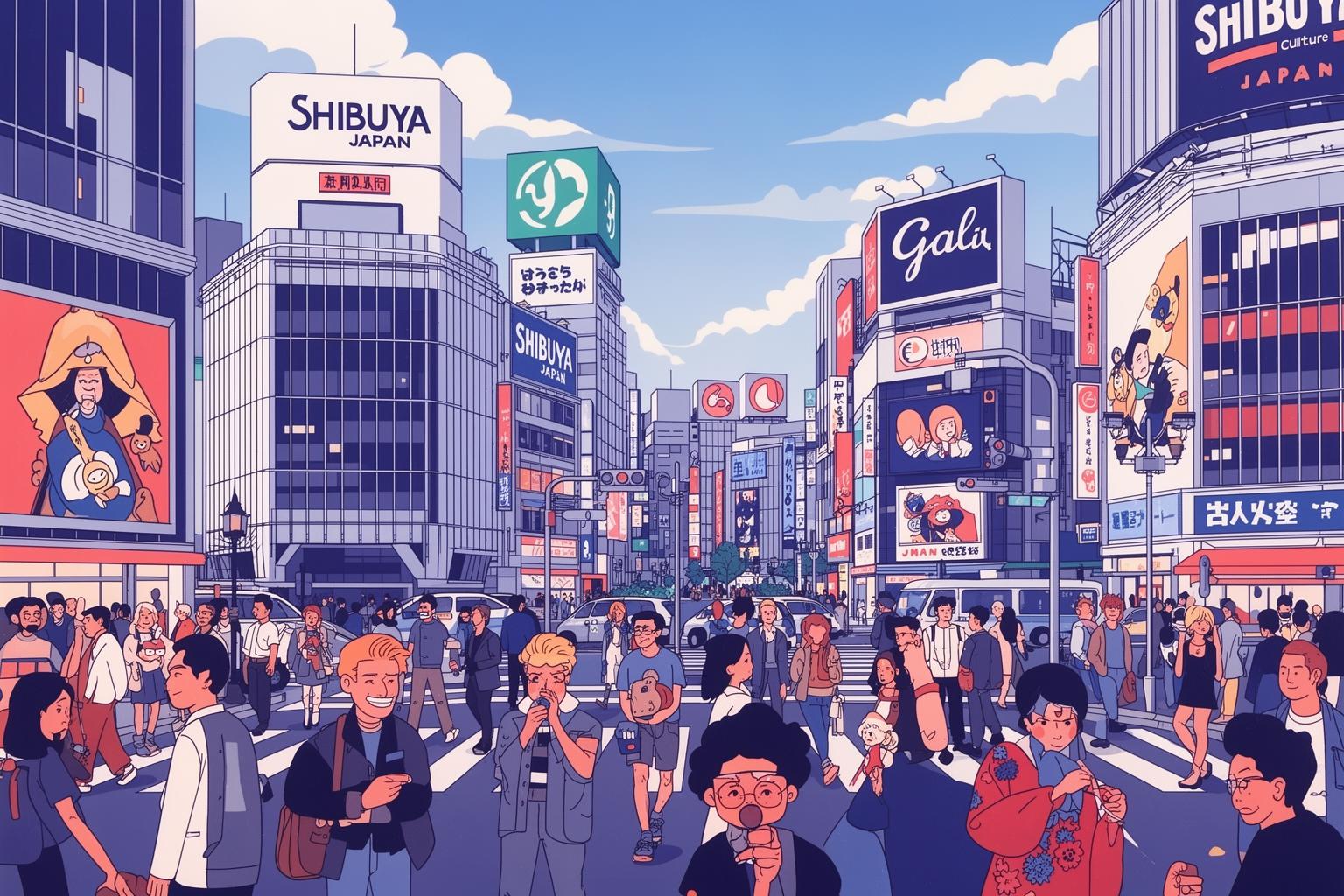
Being a Gal meant far more than just adopting a particular look. It was a comprehensive identity, a full worldview complete with its own language, revered spaces, and social rituals. This interconnected system is what made the subculture so powerful and enduring. It wasn’t merely a costume to put on and take off; it represented a lifestyle and a mindset. The “Gal Mind,” or gyaru maindo, emphasized living in the moment, fierce loyalty to friends (nakama), and a steadfast dedication to self-expression. It consciously rejected the long-term, self-sacrificing mentality typical of the corporate world. Within the Gal realm, social status was not determined by grades or family background, but by style, confidence, and commitment to the tribe. This fostered a strong sense of belonging for a generation that felt alienated from mainstream society. They created their own world from scratch, with every element designed to affirm their unique identity and keep outsiders out. This world was a bubble of pure, concentrated youth culture, thriving on its own internal logic and energy.
Gal-go: Speaking a New Language
One of the most effective means by which the Gals constructed and protected their bubble was through language. They developed their own distinctive slang called Gal-go (ギャル語), a quickly evolving vocabulary filled with new words, abbreviations, and altered pronunciations that were nearly indecipherable to outsiders. This coded language served dual purposes. On one hand, it functioned as a practical communication tool within the group, enabling them to discuss their lives, emotions, and experiences in a way that felt genuine. On the other, it acted as a strong social barrier. Parents, teachers, and mainstream adults simply couldn’t understand it, granting the Gals a sense of privacy and independence. The slang was playful and inventive. For example, they fused English and Japanese in new ways, like chō-beriba, a blend of the Japanese chō (super) and the English phrase “very bad,” meaning something extremely terrible. They shortened common phrases, such as pake-ho from pake-hōdai, referring to unlimited data plans crucial to their social lives. They also created their own text-writing style called gyaru-moji (ギャル文字), or “Gal characters,” replacing standard Japanese characters with an intricate mix of symbols, and even Russian or Greek letters resembling the originals visually. A message in gyaru-moji acted like a secret code, strengthening bonds among those who could read it and further isolating outsiders. This linguistic creativity was not mere playfulness but a sophisticated act of cultural self-preservation.
The Shibuya 109 Mecca and the Charisma Shop Staff
Every culture needs a capital, and for the Gals, that capital was unquestionably the Shibuya 109 building. This cylindrical, ten-story mall was much more than a shopping spot; it was their temple, community hub, and the origin of all trends. The small, cramped stores inside were filled with brands tailored specifically to the Gal aesthetic, like Alba Rosa, Me Jane, and Cecil McBee. Visiting 109 was a rite of passage. Yet the true power of the building lay not just in the clothes, but in the people who sold them. This period witnessed the rise of the “charisma shop staff,” or karisuma ten’in. These were no ordinary retail workers. They were the high priestesses of the Gal world, young women who perfectly embodied the Gal look and lifestyle, wielding tremendous influence. They were more than employees; they were living mannequins, style icons, and trusted mentors. Gals flocked to these shops not only to buy what the staff wore but to seek their advice on fashion, makeup, and life. Magazines such as egg and Popteen, the Gal culture bibles, featured these charismatic staff, elevating them to celebrity status with large followings. This created a new career path for young women, entirely outside traditional corporate structures. A university degree wasn’t necessary to become a star in the Gal world; what mattered was style, confidence, and personality. This ecosystem, centered around Shibuya 109, formed a self-sustaining economy and culture created by and for young women, offering them a sense of power and agency largely absent in the outside world.
Para Para Dancing: The Soundtrack to Rebellion
If Shibuya 109 served as the Gals’ temple, then Shibuya’s clubs were their sacred dance floors. The official dance of the movement was Para Para. Accompanied by the high-energy, synthesized beats of Eurobeat music, Para Para was a synchronized dance featuring intricate, repetitive hand and arm movements. It wasn’t about freestyle or partner dancing; it was a communal ritual. Groups of Gals lined the dance floor to perform the complex routines in perfect unison. Learning the latest Para Para moves, often shared via instructional videos, was essential to participation in the scene. The dance perfectly embodied the Gal mindset: energetic, flashy, and collectively focused. It provided a structured activity that nurtured a sense of community and shared identity. In a chaotic and uncertain world, the synchronized, predictable motions of Para Para offered release and order. Clubs playing Eurobeat, like Velfarre and Twin Star, became legendary gathering places. These were safe havens where Gals could be themselves, surrounded by their nakama, away from society’s judgmental gaze. The pounding beats and hypnotic movements combined to create a trance-like state—a temporary escape from everyday pressures. It was pure, unfiltered joy, an end in itself, starkly contrasting with their parents’ goal-driven, purpose-oriented world. Para Para was the pulsing, rhythmic heartbeat of their rebellion.
The East Asian Perspective: A Familiar Echo of Rebellion?
Now, viewing Japanese culture through a broader East Asian perspective, it’s intriguing to ask: Was the Gal phenomenon entirely unique to Japan? Or was it part of a larger narrative unfolding across the region? The answer, as with most things, is a bit of both. Throughout East Asia, the late 20th and early 21st centuries saw rapid, compressed modernization and economic upheaval. Such swift change inevitably generates generational friction and sparks youth subcultures as a form of response. In South Korea, the late 90s rise of the “Hallyu” wave gave birth to a powerful youth culture centered around K-pop idols, complete with specific beauty standards and fashion trends used by young people to shape their identities. In China, as the economy opened up, various youth tribes (zú) emerged, ranging from the Shāmǎtè with their wild, anime-inspired hairstyles to others obsessed with Western brands, each group finding ways to express their identity in a rapidly evolving society. Thus, the drive among young people to forge a distinct identity in opposition to dominant traditional culture is not exclusive to Japan. It’s a classic pattern. However, what sets the Gal movement apart as distinctly Japanese is its deep insularity and the specific targets of its rebellion. The Gal aesthetic was not merely about adopting Western styles; it was about crafting a new style in direct, confrontational dialogue with entrenched Japanese beauty norms. The bihaku ideal of pale skin is a key pillar of traditional Japanese aesthetics. By embracing the ganguro tan, Gals were deliberately aiming to look “un-Japanese” in a highly specific, culturally meaningful way—not simply to emulate girls on MTV. The same applies to the creation of gyaru-moji. While youth slang is universal, inventing an entirely new, barely comprehensible script represents a linguistic separation that expresses a desire to build a completely sealed-off world. Their rebellion was intensely inward-looking. It was a civil war of aesthetics waged on the streets of Shibuya, with rules defined entirely by Japanese cultural values. This emphasis on reacting to and subverting local traditions, rather than just borrowing foreign ones, is what gives the Gal movement its distinct character and analytical significance.
The Decline and Legacy: Why Did the Gals Disappear, and Did They Really?
By the mid-to-late 2000s, the extreme visual style of the Y2K Gal began to disappear from the streets of Shibuya. The towering platforms, deep tans, and panda-eye makeup grew less common, replaced by new trends. It seemed as if the rebellion had ended. However, cultural movements as powerful as this rarely simply vanish. They fade, evolve, and leave behind a cultural DNA that continues to influence future generations. The decline of the classic Gal look was not caused by a single factor but rather a combination of economic, technological, and cultural changes. The vibrant bubble the Gals had created could not remain isolated from the outside world forever. Yet, to say the Gals vanished misses the point. Although the aesthetic withdrew, the spirit—the “Gal Mind”—proved remarkably resilient. It seeped into the mainstream, transforming the definition of what was possible for young women in Japan and leaving a lasting impact on the country’s cultural landscape.
The Changing Tides of Economy and Technology
The world that gave rise to the Gals was shifting. The prolonged economic slump—the “Lost Decade” stretching into two—meant that even the most devoted Gal found sustaining such a high-cost lifestyle increasingly difficult. Frequent salon visits for hair bleaching and tanning, costly makeup, and a continuous stream of new clothes from Shibuya 109 required substantial disposable income, which was growing scarcer. Austerity began to take hold, and a more subdued, affordable style started to feel more fitting for the times. However, the biggest game-changer was technology. The Gal movement had been propelled by a top-down media structure. Magazines like egg were the definitive style authorities, and charismatic shop staff were the trendsetters. But the rise of mobile internet, blogs, and eventually social media platforms democratized fashion completely. Suddenly, trends could emerge from anywhere. A popular blogger could wield as much influence as a magazine editor. This fragmented the scene. Instead of one dominant subculture, thousands of micro-trends could now coexist. The singular, unified identity of the Gal gave way to a more individualized and diverse range of styles. Cultural tides also shifted. The rising popularity of the Korean Wave (Hallyu) introduced a different beauty ideal—one emphasizing pale skin, more “natural” makeup, and a different style of cute (gwiyeoun) femininity. This new aesthetic offered a fresh alternative, drawing many younger girls away from the extreme Gal look, making it seem outdated. The rebellion had fulfilled its purpose, and the cultural energy began to move on.
The Ghost in the Machine: The Enduring “Gal Mind”
So, if the look faded, what remained? The answer lies in the most important part of the legacy: the “Gal Mind” (gyaru maindo). This core philosophy underpinned the entire movement, and its influence is still evident today. The Gal Mind is a powerful blend of unapologetic confidence, fierce loyalty to one’s friends (nakama), rejection of authority for authority’s sake, and the conviction that you have the right to define your own happiness and beauty. It’s about living life on your own terms, being direct and honest, and prioritizing your own well-being. While the extreme visual markers of the Y2K Gal have vanished, this mindset was absorbed into broader Japanese youth culture. Elements of the Gal aesthetic were softened and mainstreamed. For example, dramatic eye makeup—circle lenses to enlarge the eyes, false eyelashes, and double eyelid tape—became standard for millions of young women, not just a subculture. The Gals’ pioneering use of mobile phones to build social networks and share information laid the foundation for modern influencer culture. More fundamentally, the Gals broke a major cultural taboo. They visibly showed that Japanese women could be loud, assertive, and unconventional. They created a new archetype. Today, there is a nostalgic revival of the Y2K Gal style on platforms like TikTok, with young people worldwide dressing as Reiwa Gals. But this revival is mostly aesthetic. It’s a playful style to adopt, but disconnected from the urgent, desperate social context that gave the original movement its rebellious force. The true legacy isn’t in the platform boots or loose socks; it lies in the quiet confidence and expanded sense of possibility that Japanese women have today—a legacy forged in tanning beds and on the dance floors of Shibuya.
Conclusion: Beyond the Platform Boots
Looking back at the photos of the Y2K Gals—the striking contrast of their dark skin against bleached hair, their defiant gazes, and the chaotic visual impact of it all—it’s easy to write them off as just another fleeting, wild youth trend. But that would be a huge misunderstanding. The Gal movement was never simply about fashion. It was a raw, brilliant, and deeply necessary reaction to a moment of national crisis. It was a survival tactic. For a generation of young women handed a fractured future, the Gal subculture became a way to reclaim power, build community, and assert their existence in a world that seemed intent on rendering them invisible. They absorbed the pressure, anxiety, and disappointment of the Lost Decade and transformed it into a vibrant, living work of art. They weaponized fashion, crafting an aesthetic so confrontational it demanded society’s attention. They established their own economy within the halls of Shibuya 109, developed a coded language to protect their subculture, and found collective joy in the synchronized ritual of Para Para. Understanding the Gals is crucial to grasping the complexities of modern Japan. Their story highlights the ongoing tension between the nation’s strong drive for conformity and the equally powerful, often hidden, urge for individual rebellion. They were a glitch in the system, a striking, neon-colored crack in the facade of a harmonious society. The Gals demonstrated that when the prescribed path leads to a dead end, sometimes the most rational choice is to slip on your highest platform boots, bleach your hair, and carve out your own unique path.