You’ve seen it. For real. Scrolling through your feed, you hit a picture that just stops you cold. It’s a phone case, but calling it a phone case feels like calling a supernova a little campfire. It’s an explosion of pastel-colored goo, looking suspiciously like whipped cream, piled a solid inch high. On top of this mountain of faux frosting sits a chaotic jumble of treasures: a tiny plastic unicorn, a glittery heart, a gummy bear that looks good enough to eat, a fistful of rhinestones, and maybe a Sanrio character for good measure. It’s insane. It’s impractical. It looks sticky. And your first thought is probably, “Who does this? And why would you do this to a thousand-dollar piece of technology?”
That, my friend, is Decoden. And it’s not just some random, weird internet trend. It’s a legit cultural vibe, a statement piece, and a deep dive into a specific corner of the Japanese psyche that values personal expression over sleek, minimalist design. You see this stuff and think it’s just weird Japan being weird again, but it’s so much deeper than that. It’s a rebellion in your pocket. It’s therapy you can hold in your hand. It’s the logical endpoint of a culture that has always believed that even the most mundane objects deserve to be beautiful, personal, and, above all, kawaii. So, let’s get into it. Let’s unpack the whole vibe, from the silicone cream to the cultural roots. Forget what you think you know about Japanese minimalism, because we’re about to dive headfirst into the world of pure, unadulterated maximalism. This isn’t just about decorating a phone; it’s about understanding why, in a world of conformity, a little bit of handcrafted chaos is everything. To get a feel for where the magic happens, check out the map below—it points to a major hub for craft supplies in Tokyo, ground zero for Decoden creators.
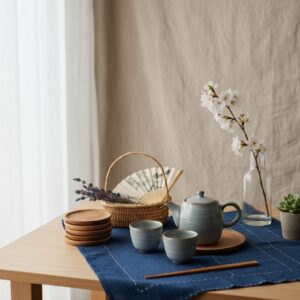
This maximalist, handcrafted aesthetic is part of a broader Japanese kawaii culture that also celebrates everyday items through movements like zakka.
The Vibe Check: What Even IS Decoden?
Before diving too deep, we need to grasp the basics. What exactly are we looking at? Decoden is a portmanteau, a blend of two Japanese words: “deco,” short for decoration, and “denwa,” meaning phone. Literally, it translates to “phone decoration.” But that’s a simple, low-key explanation for something far more intricate. This isn’t about just sticking a sticker on your phone and calling it done. It’s about transforming a functional object into a three-dimensional sculpture that loudly expresses your personality.
Breaking Down the “Deco” in Decoden
The name itself hints at its origin. The term “deco” became wildly popular in Japan in the early 2000s, especially alongside the rise of nail art and personal item customization. It involved adding bling, sparkle, and fine details to everything. Swarovski crystals were all the rage, and people would “deco” their flip phones, lighters, compact mirrors—anything they could get their hands on. Decoden evolved from that impulse, taking decoration from a flat, shiny surface to a tall, textured masterpiece. Its name is very direct and literal, which is common in Japanese product and trend naming. There’s no riddle; it’s a straightforward description of the craft. The magic doesn’t lie in the name but in the visual chaos of the finished product. It’s a simple label for a wildly complex aesthetic.
The Essential Ingredients of Chaos
So what’s inside? What makes Decoden, well, Decoden? There are a few essential components that create the signature look. The most iconic feature is the fake cream. Usually silicone sealant—a material you might use for bathroom tiles—is piped onto the phone case with a pastry bag and frosting tips, much like cake decorating. This creates that fluffy, whipped, and slightly unstable appearance. It forms the foundation of the entire piece.
Next come the cabochons. That’s the official name for all the small plastic and resin charms that get pressed into the cream. These are the soul of the Decoden case. They can be anything: tiny pastel macarons, anime characters, gummy bears, angel wings, crucifixes, miniature juice bottles, alphabet blocks—you name it. The selection of cabochons is how a creator tells a story or sets a theme. It’s like holding a mood board in your hand.
Finally, there’s the bling and filler. Rhinestones, pearls, glitter, tiny plastic sprinkles, and microbeads fill every last millimeter of empty space. Decoden aims for density. No part of the original case should show. It’s an exercise in pure, unabashed maximalism. Every spot is an opportunity for more color, more texture, more sparkle. The final creation is heavy, bulky, and an absolute sensory overload—which is precisely the point. It isn’t meant to be subtle; it’s designed to be a spectacle.
The Cultural Roots: This Didn’t Come From Nowhere
This kind of aesthetic doesn’t simply appear overnight. Decoden is the culmination of decades of cultural trends and social attitudes in Japan, all focused on this small, handheld object. To understand why a Decoden case looks the way it does, you need to consider what preceded it—from the technology before the smartphone to the street fashions that reshaped the meaning of “cute.”
The Legacy of the ガラケー (Gara-kei): Pre-Smartphone Personalization
Before the world was unified by the black-mirrored monolith of the iPhone, Japan had its own uniquely vibrant cell phone culture. These were flip phones, known as “gara-kei” (a nickname meaning “Galapagos phone,” since they evolved in isolation from the rest of the world). These phones were anything but standard. They came in a vast range of colors, featured different functions, and, most importantly, were designed to be customized.
The hallmark was the phone strap loop—a tiny loop that opened the door to a huge industry of phone charms or “straps.” You could hang dozens of them from your phone, ranging from anime characters to miniature food replicas, bells, and even straps that lit up with incoming calls. The size and intricacy of your phone strap collection was a statement about your interests, your travels (tourist spots offered unique charms), and how much you cared about personalizing your device.
Beyond straps, people adorned their gara-kei with stickers, painstakingly placed hundreds of tiny rhinestones, and even personalized the phone’s internal software with custom wallpapers and ringtones. The phone was more than a communication device; it was a personal accessory, as much a fashion statement as a handbag or piece of jewelry. When smartphones arrived—sleek, minimalist, and largely non-customizable—that urge didn’t vanish. It simply found a new outlet. The phone case became the new canvas, and Decoden emerged as the spiritual heir to that gara-kei customization culture, only amped up exponentially.
The Harajuku Influence: A Rebellion in Pink and Glitter
You can’t discuss Decoden without mentioning Harajuku. This Tokyo district is the heart of Japanese youth fashion and the birthplace of many subcultures, each with a distinctive style. Decoden is closely linked to aesthetics like Decora, Fairy Kei, and Lolita. These are far from mainstream; they are hyper-specific, niche styles that often serve as forms of rebellion.
Japanese society tends to emphasize conformity. From school uniforms to the dark suits of the “salaryman,” there’s a strong pressure to blend in. Harajuku fashion actively pushes back against this. Decora, for instance, is all about layering: piling on clothes, accessories, dozens of colorful hair clips, and facial stickers. It’s a walking, talking explosion of color and cuteness. Sound familiar? The Decora philosophy—that more is always more—is exactly the same philosophy behind Decoden.
These subcultures create separate worlds built on the foundation of kawaii (cuteness), allowing individuals to express themselves as intensely as possible. A Decoden phone case is a portable fragment of that world. Even if you wear a mundane uniform at your part-time job, pulling out your phone offers a glimpse of your true, glitter-covered self. It’s a small act of rebellion, carrying your subculture with you wherever you go.
Kawaii as a Shield: The Psychology Behind “Cute”
Now, let’s tackle the big one: kawaii. To many outside Japan, “kawaii” simply means “cute,” but that’s a huge oversimplification. In Japan, kawaii encompasses an entire universe of meaning. It’s an influential aesthetic and a core cultural element—not just for children. It appears everywhere, from bank mascots to government safety posters.
At its essence, the kawaii aesthetic is about things that are small, soft, childlike, and non-threatening. Think Hello Kitty rather than a femme fatale. It represents innocence and purity. In a high-pressure, stressful society, kawaii can act as psychological armor—a form of escapism. It provides a retreat from the harsh realities of adult life (otona) into a gentle, comforting space. The adult world is filled with responsibilities, expectations, and setbacks. The kawaii world is simple, sweet, and accepting.
Now consider what a smartphone symbolizes: a powerful tool for work and social interaction, a constant link to news, deadlines, and social demands—a symbol of adulthood. Covering that sleek, cold device with mounds of faux whipped cream, pastel charms, and children’s toys is a profound act. It domesticates technology, stripping it of its corporate coldness. It’s a rebellion against the severity of adulthood. The Decoden case transforms a source of stress into an object of pure, uncomplicated joy. It’s a glittery, plastic shield—and in its own way, a strong statement about what the owner values most: not productivity, but happiness.
The “Why” Question: Practicality vs. Personal Expression

This is where many people encounter a major obstacle. The first question practical-minded individuals ask when they see a Decoden case is, “How do you even use that?” It’s a fair question. These cases are the complete opposite of ergonomic design. They’re heavy, bulky, and attract dust and grime. So why would anyone prefer this over a slim, protective, and functional case?
But… Can You Even Use Your Phone?
Let’s be honest. Functionality is not the main concern here. A Decoden case makes your phone noticeably heavier, adding a quarter-pound or more of silicone and plastic to a device built to be lightweight. It definitely won’t fit in the pocket of your skinny jeans—you’ll need a bag. Taking it in and out of that bag can be tricky, as the various charms tend to snag on everything.
And yes, they do get dirty. The silicone “cream,” especially in the tiny spaces between charms, is a perfect trap for dust, lint, and grime. Cleaning it requires a toothbrush, patience, and a surgeon’s gentle touch. Some charms are fragile and might break off if you drop it—which, given its awkward size, is quite likely. So, from a purely practical standpoint, it’s a disaster: it makes the phone harder to hold, carry, and keep clean.
The Logic of Illogic: It’s Not Meant to Be Practical
Here lies the heart of the matter—the “aha!” moment that explains it all: its impracticality is the entire point. It’s a feature, not a flaw. In a world obsessed with optimization, efficiency, and minimalist design—exemplified by Apple’s brand identity—choosing a Decoden case is a bold statement. It’s a deliberate rejection of those values. It declares that your personal style, joy, and creative expression matter more than convenience.
It’s a kind of luxury—not a Gucci handbag luxury, but the luxury of being able to afford impracticality. It signals that your life isn’t so demanding that your phone must be a perfectly optimized survival tool. You have the freedom, time, and energy to carry around a piece of art. It’s a performance. When you pull out a Decoden-adorned phone, you’re performing an identity—one that is creative, playful, and unafraid to stand out.
Think of it like high fashion. No one wears an enormous feathered hat from a couture runway show to do grocery shopping. It’s not meant for that—it’s meant to be a statement, a work of art. Decoden follows the same principle. It’s not about improving your phone as a device, but about enhancing your phone as an expression of yourself. The inconvenience is a small price to pay for carrying a piece of art you love, possibly even made yourself.
The Crafting Process as Therapy
This brings us to another important aspect: many people don’t just buy their Decoden cases—they make them. This DIY element is central to the culture. It’s not just about the finished product; it’s about the creative process itself, which can be a powerful form of therapy and self-care.
Imagine spending hours carefully planning your design. You search for the perfect cabochons online or in specialty shops, assembling a collection that reflects your unique style. Then, you sit down, arrange all your pieces, and begin the delicate, focused work of piping the silicone cream. You have to get the texture just right. Using tweezers, you cautiously place each tiny charm into the wet silicone, one by one. You add rhinestones, pearls, sprinkles, filling every gap precisely. This process demands intense focus and patience.
In Japan, many traditional arts and hobbies emphasize this kind of mindful craftsmanship, from ikebana (flower arranging) to building Gundam models. It’s a way to enter a “flow state,” where outside stresses dissolve. You become fully immersed in the small creative task before you. For many young people dealing with the pressures of school, work, and social life, spending a weekend afternoon creating a Decoden case is a vital escape. It’s a way to unwind and create something beautiful and entirely their own by hand. The finished case serves as a trophy, a reminder of that calm, creative time.
Decoden in the Wild: Real vs. Expectation
Thanks to social media, it’s easy to believe that everyone in Tokyo is carrying a phone case that looks like a miniature wedding cake. However, the reality on the ground is somewhat different. Decoden is a strong niche, but it remains a niche. Understanding where and how it exists is crucial to grasping its role in Japanese culture.
Is Everyone in Tokyo Carrying These?
Let’s be clear: definitely not. If you board a crowded commuter train in Tokyo during rush hour, you will see a sea of sleek, minimalist phone cases. Clear cases, black cases, or simple branded cases from department stores are common. Like people everywhere, the vast majority of Japanese prioritize practicality. They want a case that protects their phone and doesn’t get in the way.
It’s important to remember that what goes viral online tends to be the most visually striking and unusual. Social media platforms like Instagram and TikTok greatly amplify niche subcultures. They can broadcast styles practiced by relatively few people to a global audience, creating the illusion that they are mainstream. In reality, you are most likely to encounter Decoden in very specific places, such as the streets of Harajuku, anime conventions, or within friend groups deeply invested in particular fashions or hobbies.
Where It Lives: The Ecosystem of Decoden
Decoden flourishes within its own self-contained ecosystem. It is supported by a network of stores and communities that provide materials and inspiration. The first stop is craft stores. Large stores like Hands (formerly Tokyu Hands) or specialty craft shops are treasure troves, selling silicone in various colors, piping tips, tweezers, and a baseline selection of charms and rhinestones—they enable the entire scene.
Next are the 100-yen shops like Daiso and Seria, which are indispensable for Decoden artists. These stores offer a vast range of affordable, cute items that can be repurposed as cabochons: tiny erasers shaped like food, cute buttons, plastic toys, beads, and pearls. Here artists acquire the volume of materials needed to achieve the dense, maximalist style without overspending.
Finally, specialty shops and online communities round out the ecosystem. In districts like Akihabara (the heart of anime/manga culture) or Nakano Broadway, you can find stores selling high-quality cabochons featuring anime characters or other niche interests. Online platforms such as Etsy, Instagram, and dedicated forums enable artists to sell their creations, purchase custom cabochons, and share techniques and inspiration. This ecosystem helps the culture thrive, innovate, and sustain itself, even as it remains outside the mainstream.
The Global Flow: From Harajuku to TikTok
Like many Japanese subcultures, Decoden has gone global. Thanks to the internet, a niche trend originating in Japan has found a large and enthusiastic worldwide audience. Western creators on TikTok and YouTube post tutorials, “haul” videos of their cabochon collections, and showcase their latest creations. The aesthetic has been embraced and adapted by new cultures.
Watching this global flow is fascinating. Sometimes, the original cultural context can get a bit lost in translation. For Western creators, Decoden might be more connected to a global “cottagecore” or DIY crafting aesthetic rather than a specific reaction against Japanese societal conformity. Styles also evolve: a popular trend globally involves using Decoden techniques on items like K-Pop photocard holders, blending Japanese craft culture with Korean pop fandom. This natural evolution of trends in a connected world shows that culture is never static; it flows, changes, and is remixed. Decoden’s journey from the backstreets of Harajuku to the global TikTok feed perfectly illustrates this.
The Evolution of Excess: What’s Next for Decoden?
Decoden is far from a static art form. It’s constantly evolving, with new styles, new canvases, and fresh ideas emerging all the time. While the core principle of hyper-customization remains intact, where and how it’s applied continues to shift.
Beyond the Phone Case
One of the clearest evolutions is that the “den” in Decoden is becoming less central. The aesthetic has expanded beyond just the phone. People are now “deco-ing” virtually anything they can get their hands on. Handheld gaming consoles like the Nintendo Switch and Switch Lite have become hugely popular canvases. Decorating a console with cream and charms transforms a mass-produced gaming device into something personal and unique. Other favored items include photo card holders, handheld mirrors, portable battery packs, and even computer mice and headphones. The idea is simple: if you own it and it has a surface, you can cover it with whipped cream and glitter. It’s about claiming ownership of your belongings and reshaping them in your own style.
New Aesthetics: From Sweet to Goth
Whereas the classic Decoden look centers on pastel colors and hyper-feminine sweetness, new style branches are continually emerging. Many of these draw inspiration from other Harajuku subcultures. For example, Yami-Kawaii, or “sick-cute,” has influenced a whole genre of Decoden. This style incorporates the same cute elements but infuses darker themes—think pastel pinks combined with syringes, pills, bandages, and other medical motifs. It’s a way to explore mental health and sadness through a cute, approachable lens.
There’s also Goth or Jirai Kei (“landmine style”) Decoden, which favors black, purple, and silver palettes. The cabochons might include crosses, skulls, spiderwebs, mixed with dark, glittery hearts. These darker variants illustrate the versatility of the Decoden technique. The process of piping cream and adding charms is simply the medium; the message and mood shift entirely by changing the color scheme and cabochon choices. This demonstrates that the fundamental idea is personal expression, which doesn’t always have to be sugar-coated sweetness.
Is It Worth It? A Final Vibe Check
Returning to the original question: after all this, is a Decoden case “worth it”? If you’re asking purely from a practical standpoint, the answer has always been no. It’s objectively impractical. But that’s like asking whether a painting is “worth it” because you can’t use it to hammer a nail—it’s the wrong way to think about it.
Understanding Decoden means understanding the human desire for joy, play, and identity. It’s a loud, glittery rebellion against the bland, the uniform, and the mass-produced. It’s a celebration of the handmade in an increasingly digital age. It’s a way to carve out a small, personal, chaotic, and beautiful space in a world that often demands neatness, order, and efficiency.
It’s not for everyone, nor is it meant to be. But by appreciating the cultural forces behind this mountain of fake cream and plastic charms—the history of personalization, the rebellion of street fashion, the psychological comfort of kawaii—you can start to see it not just as a “weird” phone case but as a complex and captivating cultural art form. It’s a statement that says, “In a world of minimalist glass and steel, I choose to be a fluffy, glittery, chaotic mess. And that makes me happy.” No cap—it’s a whole mood. And that, in itself, is absolutely worth it.