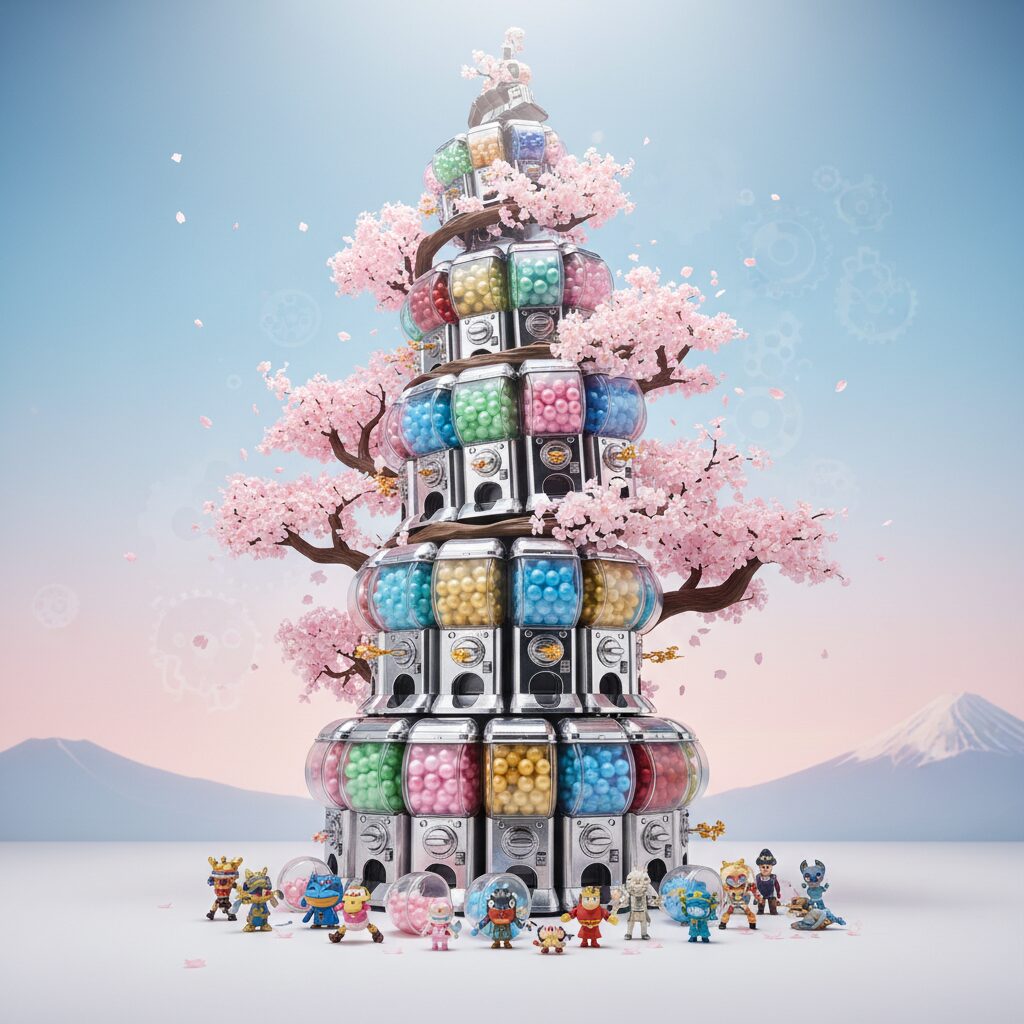
Yo, what’s the deal? Ayaka here, coming at you live from the heart of where the old-school meets the ultra-new. So, let’s talk about something you’ve def seen if you’ve ever scrolled through Japan-Tok or even just hit up a Japanese airport on a layover. I’m talking about those massive, hypnotizing walls of machines, stacked high, each with a clear window showing off tiny, perfect-looking toys. You see kids, teens, and even, like, full-on adults in business suits stopping, feeding in a handful of coins, and cranking that big ol’ knob with a look of intense concentration. Kuru-kuru-kuru… poton. A little plastic bubble drops into the tray. They crack it open, and the reaction is either a little sigh of disappointment or a quiet, fist-pumping “yessss.” This, my friends, is Gachapon. And if you’ve ever looked at this scene and thought, “Wait, are they… gambling? For a keychain? Why is this such a big deal?”—then you’re asking the right questions. Because this ain’t just about toys. It’s way, way deeper than that. You’re looking at the physical, real-world manifestation of a core mechanic that has defined Japanese gaming and pop culture for decades. This is the OG loot box. It’s a cultural ritual, a micro-economy, and a direct line into the collector’s soul that beats at the very center of Japan’s otaku heart. It’s a whole mood, a vibe that’s part nostalgia, part dopamine hit, and part obsessive quest for completion. Forget what you think you know about vending machines. We’re about to dive headfirst into the Gachapon rabbit hole and figure out why this simple act of cranking a plastic knob has a chokehold on the entire nation. It’s a system that seems kinda sus from the outside, but once you get the underlying logic—the RPG grind logic—it all starts to make a wild kind of sense. So, get your 100-yen coins ready, ’cause class is in session. Let’s get this bread.
This obsession with collecting tiny, perfect-looking toys is deeply intertwined with the broader cultural phenomenon of kawaii, which has shaped Japan’s aesthetic for decades.
The “Gacha” Grind: From Dragon Quest Slimes to Plastic Keychains
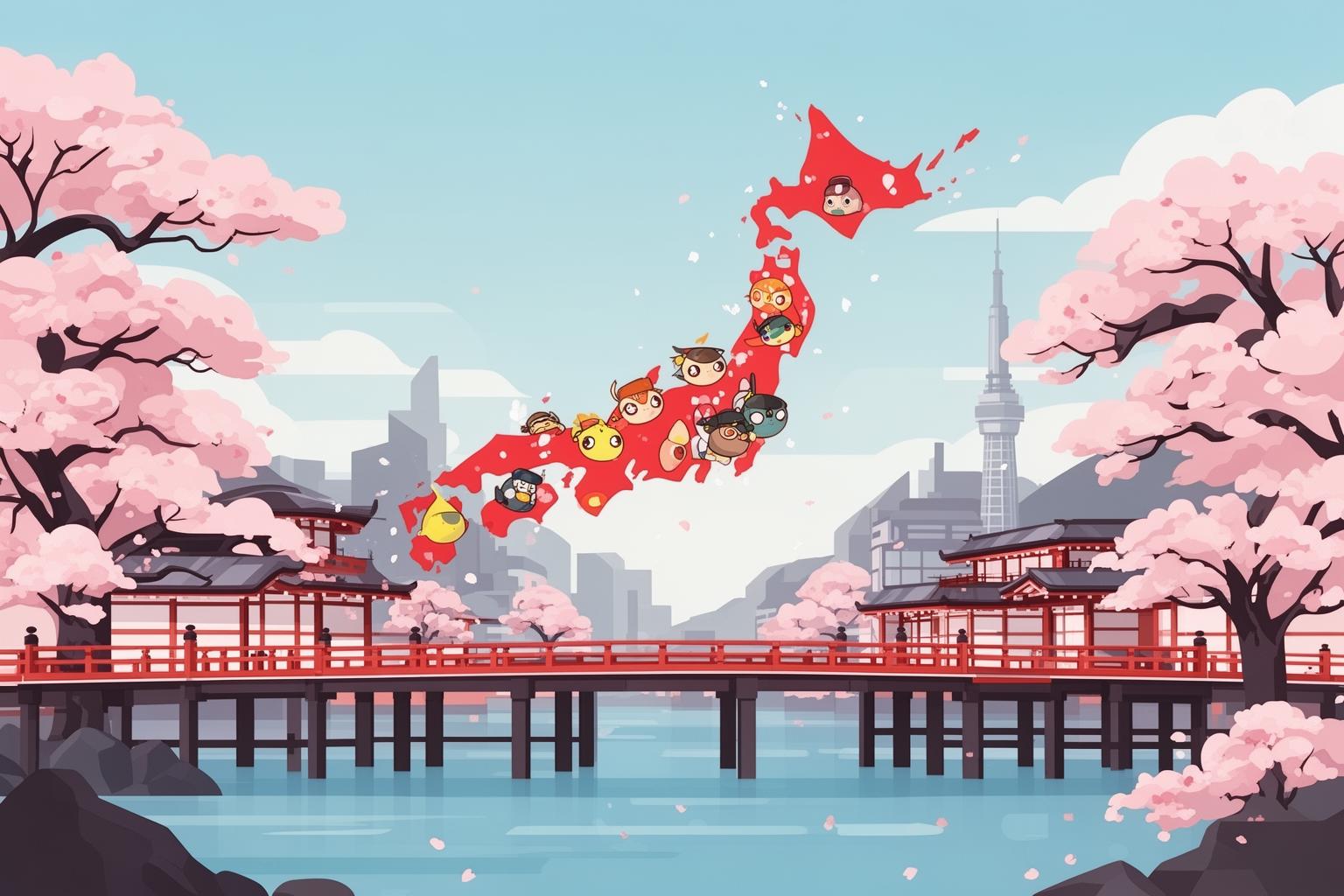
To truly understand Gachapon, you need to turn back time. We’re talking way before smartphones and microtransactions, back to the golden age of 8-bit and 16-bit Japanese Role-Playing Games, or JRPGs. If you’ve played classic titles like Final Fantasy or Dragon Quest, you know the routine: you’re a hero tasked with saving the world, but first, you have to get stronger. How? By grinding. You roam the same forest or dungeon floor, battling the same low-level monsters repeatedly. You’re not just earning experience points to level up—you’re after the drops. That tiny chance that the little slime you defeated will drop a rare weapon, a powerful potion, or a critical crafting material. Most times, you get nothing or some common junk. But occasionally… ding! A treasure chest appears. You open it and there it is: the 1% drop, the rare sword, the Metal Slime’s helmet. The rush is electric—a pure dopamine hit, a victory buzz that makes the grind worthwhile. This entire system—the repetition, the low odds, the random outcomes, and the thrill of a rare success—is a cornerstone of Japanese game design. It’s a vivid memory for anyone who grew up holding a Famicom or Super Famicom controller. The gameplay was built around RNG, the Random Number Generator—an unseen digital force determining your fate, drop by drop.
It All Began with a Slime
The slime from Dragon Quest perfectly symbolizes this concept. It’s the weakest, most common monster. You defeat thousands. Most drop nothing; sometimes, a basic healing herb. But in JRPG lore, ultra-rare variants like the Metal Slime exist. With immense defense, it almost always escapes, but if you do manage to defeat it, the rewards are huge. The odds to encounter one are slim, and the chance to kill it even slimmer. This layered probability system makes the final prize feel truly earned. It’s not just luck—it requires the right strategy, equipment, and timing. The player overcomes the odds set by the game’s code. This isn’t a passive experience; it’s an active battle against randomness. This emotional rollercoaster—the grind and hope loop—is ingrained in Japanese youth culture, teaching patience, persistence, and the sheer joy of a rare drop. The iconic sound effects—the victory fanfare, item chime, level-up jingle—are auditory symbols of accomplishment. This very feeling and gameplay loop is what the Gachapon machine masterfully captures in the real world.
“Kuru-kuru, poton”: Bringing the Digital Grind to Life
Now, step away from your screen and approach a wall of Gachapon machines. What are you really doing? You’re not just buying a toy—you’re engaging in that same familiar JRPG loop. The 500 yen you insert? That’s your MP, your stamina, your effort for one battle round. You’re investing your resources in the grind. Then comes the key moment: you grab the handle and turn it. That kuru-kuru-kuru sound of plastic gears spinning inside—that’s your battle sequence. It’s the tense pause after issuing your commands, waiting to see if your attack lands on the Metal Slime. Anticipation builds with every click. And then… poton. The solid thud as the capsule drops into the tray. That’s the treasure chest appearing. The monster has dropped its loot. The battle ends. You’ve won… something. But what? The mystery is everything. You pick up the capsule—opaque or colored so you can’t see inside. You shake it, guessing by weight. This is the moment of truth. You open it. Is it the common slime? Another character you already have multiples of? Or the secret rare item, the elusive 1-in-100 drop that completes your set? The machine is game master, dungeon, and monster all at once—a perfect self-contained system recreating the JRPG grind. It’s a physical RNG. And just like the games, the lure of that ultra-rare drop keeps you coming back, coin after coin, battle after battle.
The Collector’s Mentality: “Comp-Gacha” and the Hunger for a Full Set
Alright, so you understand the direct connection to the RPG grind. Yet, the fixation runs even deeper. It’s not merely about acquiring one cool item. If you examine the display card on any Gachapon machine carefully, you’ll notice the real game beneath the surface. There’s almost always a series of collectibles. “Cute Cats Wearing Fruit Hats – All 6 Types!” or “Miniature Showa-Era Vending Machines – 5 to Collect + 1 Secret Rare!” This is where the second level of psychology comes into play: the powerful, undeniable, and sometimes dangerous urge for completion. In Japanese culture, there’s a strong appreciation for completeness and order. Think about the flawless arrangement of a bento box, the precise organization of a stationery set, or the way a traditional garden is crafted with every element perfectly placed. An incomplete set feels discordant, unfinished, and simply… wrong. It generates a kind of mental static. Owning five of the six fruit-hat cats isn’t a ⅚ success; it’s a constant reminder of the one missing piece. This isn’t just about collecting toys; it’s about finishing a quest. The display card on the machine isn’t merely a menu; it’s your quest log. Until every item is collected, the mission remains incomplete. That FOMO—Fear Of Missing Out—is an exceptionally strong motivator. The idea that someone else might possess the full set while you don’t is, for some, unbearable.
Beyond Just One Toy: The Unspoken Rule of “Completing the Set”
This “gotta catch ‘em all” mindset is what powers the entire Gachapon market. No one designs a Gachapon series expecting the average buyer to be satisfied with just one item. The entire business depends on the desire to complete the full collection. They deliberately build in a rarity hierarchy within the set. There will be two or three common characters you’ll get repeatedly. Then one or two uncommon ones. And finally, the chase item—the character or color variant produced in far fewer quantities. The manufacturers understand this. The players are aware of it too. It’s an unspoken pact. The challenge is to beat the odds and complete the set before money or patience runs out. This creates a fascinating dynamic. You’ll notice people who just received a capsule immediately glance at the display card, tick it off mentally, then feed more coins into the machine. That first pull was merely a test. The real session is just beginning. This turns a simple purchase into a project. It offers the player a goal, a mission. And in a world flooded with endless digital content and fleeting fads, having a tangible, physical, and achievable objective—like collecting all six miniature ramen bowls—is deeply satisfying. It’s a small-scale, low-stakes way to bring order to chaos and gain a sense of mastery.
The Dark Side: When Collecting Becomes a Compulsion
Now, let’s address where this takes a darker turn. The intense urge to complete a set was exploited to an extreme in the realm of Japanese mobile games, giving rise to a practice called “Comp-Gacha,” or Complete Gacha. It was a monetization strategy so effective yet so predatory that it was eventually outlawed. Here’s how it worked: A mobile game would include a gacha system where you could pull for characters or items. But to obtain the ultimate grand prize—a super-powered, game-breaking character—you couldn’t pull it directly from the gacha. No. First, you had to collect a specific set of rare items from that same gacha. For example, “Collect all five Celestial Knights from the gacha to unlock the Celestial Queen!” This created a nightmare cycle for players. They’d spend money chasing Knights A, B, C, D, and E. They might acquire A, B, and C fairly easily, but D and E had extremely low drop rates. Players poured thousands, sometimes tens of thousands of dollars into the game chasing that one last item required to complete the set and claim the grand prize. The Japanese government intervened, declaring this mechanic illegal because it constituted a form of gambling—you combined items to win a prize, which is essentially a lottery. While physical Gachapon doesn’t employ this exact two-step mechanism, the underlying psychology is the same. The drive to complete the set is the core motivator. People will spend 5,000 yen (around $35-40) in one sitting, drawing duplicates repeatedly, all in desperate hope of landing that final piece. It walks a very fine line and preys on the same completionist instinct that made Comp-Gacha infamous.
The “Sunken Cost” Vibe: “I’ve Come This Far…”
Here, a classic psychological trap comes into play: the sunk cost fallacy. It’s the voice inside your head saying, “I’ve already spent 2,000 yen and only got four duplicates of the common character and one uncommon one. I can’t quit now. I’ve invested too much to walk away empty-handed. The next one has to be the rare one.” Each coin feels like progress, even though, statistically, every attempt has the same odds. The machine doesn’t track or care how much you’ve spent. But it doesn’t feel that way. It feels like you’re building toward something. This sensation is universal, but Gachapon makes it incredibly accessible. You don’t need to be at a casino poker table to experience the sunk cost fallacy. You can encounter it for just 300 yen a spin, standing in a brightly lit corner of a department store. It’s a micro-dose of a potentially harmful cognitive bias and a major reason people keep turning the handle long after they probably should have stopped. It’s no longer about the toy; it’s about justifying the investment you’ve already made. It’s about refusing to let the machine “win.”
Not Just Toys: Gachapon as a Micro-Economy and Social Currency
One of the biggest misconceptions from an outsider’s point of view is that Gachapon capsules are just filled with cheap, disposable plastic junk. And sure, back in the day, some of them were pretty low-effort. But today’s Gachapon scene is a whole different story. The quality and craftsmanship packed into these tiny plastic bubbles is, honestly, remarkable. It’s not just about collecting; the items themselves are genuinely sought after. They’ve gone beyond mere trinkets to become a true medium for art, design, and social expression. What you get from a 500-yen crank is often a miniature sculpture you’d gladly pay more for in a regular store. This rise in quality is key to understanding why it appeals so strongly to adults, not just kids. People are willing to try their luck because the prizes at the end are, more often than not, seriously impressive.
The Art of the Gacha: Quality that Impresses
We owe major credit to companies like Bandai, Takara Tomy, and Kaiyodo. These aren’t fly-by-night businesses; they are masters of manufacturing and design. They hire skilled sculptors and use advanced molding techniques to produce figures with an extraordinary level of detail. We’re talking about a 2-inch figure of an anime character with perfectly printed facial expressions, intricate folds in their clothing, and even accessories too small to easily see with the naked eye. The variety is astounding. You can find hyper-realistic miniatures ranging from slices of cake and bowls of ramen (complete with glistening broth and perfectly crafted toppings) to iconic furniture pieces by famous designers. Entire series focus on the mundane, like public park benches, miniature DJ turntables, tiny stepladders, or various types of Japanese manhole covers. It’s a celebration of the miniature. For 500 yen (around $3.50), you’re getting a tiny piece of high-quality art. It’s an incredibly accessible way to own something beautifully designed and expertly crafted. This isn’t a throwaway toy; it’s a collectible. People aren’t just aiming to complete sets; they’re curating miniature museums on their desks, and the quality of these pieces fuels their obsession.
The Aftermarket: Gacha Trading and the Community Experience
What happens when you’ve spent 3,000 yen and end up with six identical plastic cats in strawberry hats? Here, the Gachapon world expands beyond just you versus the machine. A whole secondary market and community arises around the duplicates, or “dubs” as they’re called. In otaku hotspots like Akihabara in Tokyo or Den Den Town in Osaka, the Gachapon ecosystem is thriving. On any weekend, you’ll find groups gathered near large Gachapon halls, displaying their recent pulls on cloths laid out for trading. “I’ll trade you two of my strawberry cats for one of your melon cats.” It’s a social event—a way to transform the frustration of duplicates into positive social interaction. Collectors bond over their shared quest, complain about poor pull rates, and swap tips about “hot” machines. This is a real community formed around the shared experience of the grind. Beyond informal trading, entire stores specialize in the Gachapon aftermarket. Shops in places like Nakano Broadway display thousands of opened Gachapon items behind glass, sold individually. If you’re desperate to finish your set and can’t get that rare last item, you can buy it here—often at a premium. Common items might sell for 200 yen (less than a pull), but rare chase pieces from the same series can go for 2,500 yen or more. This aftermarket serves two purposes: it offers an escape for frustrated collectors, and it validates the system as a whole. The very existence of a secondary market proves these little plastic items hold real, fluctuating value based on rarity and demand. It’s a micro-economy, and participating through trading or buying/selling is part of the broader Gachapon hobby.
Flexing Your Collection: Gachapon as Personal Identity
Ultimately, the Gachapon you choose to collect and display become a form of self-expression. They’re tiny flags you plant on your desk, backpack, or bookshelf to signal your interests and personality. Your collection tells a story. Are you into cute, pastel-colored animals? There are endless series for that. A hardcore fan of an 80s giant robot anime? There’s a Gachapon series of exquisitely detailed miniature mechs just for you. Into weird, ironic, meme-inspired humor? You’ll probably collect the “Shakurel Planet” series, where all the animals sport enormous, comically jutting chins, or the line of hyper-muscular pigeons. By showing off your Gachapon, you curate your personal brand. It’s a subtle, non-verbal way to communicate your tastes and connect with like-minded people. When a coworker stops by and says, “Hey, is that the secret rare from the ‘Cats in Construction Helmets’ series? I’ve been trying to get that one for weeks!”—you’ve just made a connection. It’s a social icebreaker and a badge of honor within your subculture. In a society that often values conformity, Gachapon offers a small, acceptable, and fun way to display your individuality and your specific, niche passions.
So, Is It Just Gambling? The Fine Line Japan Walks
This is a common and significant question, especially among people from Western cultures where the boundary between gaming and gambling tends to be much clearer. When you see someone repeatedly inserting coins into a machine with a random outcome, the word “gambling” immediately springs to mind. It resembles a slot machine for toys. So why isn’t it regulated the same way? Is Japan simply allowing children and adults to gamble freely on every street corner? The answer is complex and rests on a very specific legal and cultural distinction unique to Japan. It’s a fine line, but Gachapon stays just on the right side of it. Understanding this distinction is essential to grasping why this system is so widespread and socially accepted. It’s a system carefully crafted to offer the psychological excitement of gambling without technically or legally being classified as gambling.
The “Why Isn’t This Regulated?” Question
In Japan, gambling is tightly regulated, and most forms are illegal. The major exception is Pachinko, which cleverly bypasses the law through an unusual loophole. In Pachinko, you don’t win money directly. Instead, you win small metal balls, which you exchange for prizes inside the parlor. Then, you take those prizes—usually inexpensive plastic-encased gold tokens—to a separate, unofficial-looking booth outside, where you can trade them for cash. Because of this intermediary step involving prizes, it’s not considered direct gambling. It’s a bizarre system, but it works. Gachapon, on the other hand, relies on a much simpler and clearer defense: you always receive something for your money. You’re not betting on the chance of winning a prize versus winning nothing. You’re making a commercial purchase. You pay 500 yen, and you are guaranteed an item that, in theory, is worth 500 yen. The element of chance is not about whether you get a prize but which prize you get from a predetermined set. This is the key legal distinction. It moves Gachapon out of the “games of chance” category (like lotteries or slot machines) and into the realm of “shopping with a surprise” (like buying blind boxes or packs of trading cards). You never leave empty-handed. This principle is why Gachapon can be found everywhere—from toy stores to supermarkets to train stations—without falling under strict gambling regulations.
The Dopamine Hit vs. Financial Ruin
Just because it’s not legally gambling doesn’t mean it doesn’t stimulate the same areas of your brain. The neurochemical process is almost identical. The cycle of anticipation (turning the crank), the moment of random reward (the capsule dropping), and the outcome (did I get the one I wanted?) creates a powerful dopamine loop. Dopamine, the “feel-good” neurotransmitter linked to reward and motivation, drives this loop to keep you coming back for more. It’s an incredibly effective and, yes, addictive mechanism. The low price point makes it both so subtle and so successful. Spending 300 or 500 yen feels negligible—about the cost of a vending machine drink. So you try it once. Then you get a duplicate, and the sunk cost fallacy sets in, making you try again. And again. Those small, seemingly innocuous purchases can quickly add up to a substantial amount. The true brilliance of Gachapon—and its digital successor, the mobile game gacha—is how it isolates the addictive dopamine loop of gambling and packages it into a socially acceptable, low-cost, high-frequency format. It delivers the same neurological thrill as pulling a slot machine lever but without the social stigma or the risk of devastating financial loss in one night. It’s a gentler, more domesticated form of the same fundamental human urge. It’s the original microtransaction, perfected long before the first smartphone was invented, mastering the art of encouraging people to spend small amounts repeatedly.
The Modern Gacha Landscape: From Roadside Trinkets to Airport Luxuries
Although the core mechanic of Gachapon has stayed consistent for decades, the environment in which it exists has changed significantly. It’s no longer just a dusty machine with sun-bleached Pokémon keychains outside a local candy shop. Gachapon has become mainstream, premium, and global. It’s now a dominant aspect of Japanese retail, a must-try experience for tourists, and an oddly precise reflection of the ever-evolving niches and fascinations of Japanese pop culture. The vast scale and diversity of the contemporary Gachapon scene demonstrate its lasting appeal and its capacity to evolve with new trends and audiences. To truly understand Japan in the 2020s, you need to grasp where Gachapon stands today. It’s bigger, stranger, and more ambitious than ever.
Gachapon Goes Global (and Viral)
The most noticeable change is in scale. Forget about a lone machine; we’re now in the age of the Gachapon “department store.” For example, in Ikebukuro’s Sunshine City, you can visit the Gashapon Department Store, which once held the Guinness World Record for having the most machines in a single venue—over 3,000 machines crammed into a huge space. It’s an overwhelming, noisy cathedral of cranking and clattering. These Gachapon mega-stores have become destinations themselves. People travel there seeking the newest, rarest, or most popular series. Another brilliant advancement is their placement. A marketing stroke of genius involved installing large walls of Gachapon machines in major international airports such as Narita and Haneda. Positioned right after security checkpoints, these machines offer travelers a way to spend their last few hundred yen coins before departing. It’s brilliant. The tagline is literally “Spend Your Leftover Japanese Coins Here.” For tourists, it’s the perfect, quintessentially Japanese souvenir. It’s affordable, enjoyable, surprising, and easy to pack. This exposure has introduced millions of international visitors to the Gacha experience, transforming it from a local oddity into a global sensation shared widely on Instagram and TikTok, further enhancing its allure and popularity.
The Weird and the Wonderful: What You’ll Actually Find
If you spend any time exploring a modern Gachapon hall, you quickly notice that the offerings are a chaotic and beautiful mirror of the Japanese mindset. It goes far beyond the usual anime and manga characters. The level of detail and surrealism is astonishing. It’s like a cultural barometer sealed inside a plastic capsule. Here’s a glimpse of what you might encounter:
The Hyper-Specific: This category celebrates the mundane with incredible precision. You’ll find perfectly crafted miniature replicas of chairs from a particular Japanese office furniture brand. Tiny, working models of cash registers used at 7-Eleven are available. There are sets focused on various types of public telephones, miniature gas meters to attach to dollhouses, and incredibly detailed models of professional-grade power tools.
The Surreal/Meme-y: This is where things get delightfully weird. It’s Gachapon for the ultra-online crowd. There’s the famous “Too-Free Goddess,” a tiny Statue of Liberty striking ridiculous poses like tripping or performing pro-wrestling moves. Animals fused with food abound, such as a Shiba Inu dog that doubles as a piece of bread. And naturally, there are series featuring animals with oversized chins or buff pigeons. This is wearable, collectible meme culture.
The Practical (?): Some Gachapon offer a touch of utility, often in a delightfully absurd fashion. You can find tiny pouches shaped like rice balls (“Onigiri Pouch”) just big enough for a few coins or a piece of candy. Little plastic figures of cats or animals are designed to hug the corners of your computer monitor or hold charging cables, known as “Cable Bites.” There are even miniature shopping carts for your desk to hold paperclips. The practicality is debatable, but the cuteness is undeniable.
The High-Concept: Gachapon has also moved upscale. Collaborations with renowned contemporary artists, museums, and luxury brands have emerged. The Tokyo National Museum might release a series featuring miniature replicas of its most famous ancient sculptures. Art galleries might partner with artists to produce series of their signature characters. This elevates Gachapon from a mere toy to a bona fide piece of art merchandise, blurring boundaries and attracting new audiences.
The Crank, The Drop, The Culture
So, let’s return to where we began: that wall of machines, the person inserting coins, the look of intense concentration. Hopefully, it makes a bit more sense now. It’s not just someone buying a toy. It’s a gamer grinding for a rare drop. It’s a collector on a mission to complete a set. It’s an art lover hoping to snag a tiny, perfect sculpture for the price of a coffee. It’s a participant in a micro-economy of trading and social currency. The fascination with Gachapon is a perfect blend of Japanese cultural and psychological influences. It taps into the nostalgia for the JRPG grind—a formative experience for millions. It connects directly with the collector’s mindset and the deep desire for completion and order. It employs smart design and high-quality craftsmanship to create items truly worth owning. And it packages the whole experience in a legally sound, socially acceptable way that delivers the addictive dopamine rush of gambling without the usual risks or stigma. The next time you walk past a Gachapon corner in Japan, don’t just see it as a wall of vending machines. Recognize it for what it is: a complex and captivating cultural institution. It’s a game of chance, a celebration of artistry, and a physical expression of countless niche subcultures— all wrapped up in the simple, brilliant ritual of the crank and the drop. It’s the real-world loot box and, honestly, the ultimate vibe check on Japan’s pop culture soul. Now you get it. Bet.