Ever scrolled through your feed, seen some wild Japanese mascot that’s like, a haunted turnip with googly eyes, and just thought, “Okay, but… why?” You’ve seen it everywhere, even if you don’t know what to call it. It’s in Studio Ghibli’s lovable forest spirits, it’s in the literal pocket monsters of Pokémon, it’s in that keychain of a sad ghost huddled in a corner you bought in Tokyo. It’s this uniquely Japanese aesthetic: the spooky-cute, the creepy-kawaii, the… kowaii. It’s the vibe of a monster you wanna hug, a demon you’d share your snacks with. And if you’ve ever wondered where this all came from, you’re basically asking about the GOAT, the legend himself: Shigeru Mizuki. This isn’t just about some cartoons. This is about how one man, haunted by war and befriended by ghosts, single-handedly gave post-war Japan a new way to deal with its demons—by making them cute. He’s the reason Japan’s folklore feels less like a horror movie and more like a weird, wonderful family reunion. This is the story of how Mizuki’s yokai art became the blueprint for a national aesthetic, a cultural coping mechanism that totally slaps. It’s the deep lore you need to finally get why Japan is the way it is. To understand Mizuki is to understand the soul of modern Japan’s relationship with its own spooky, ancient past. And the best place to start that journey is on the very street dedicated to his life’s work.
このような特定の街や場所に込められた日本の独自の美意識を探るなら、デニムの聖地である児島のストーリーもまた、深く掘り下げる価値があります。
The OG Monsters: When Yokai Were Not Playing Around
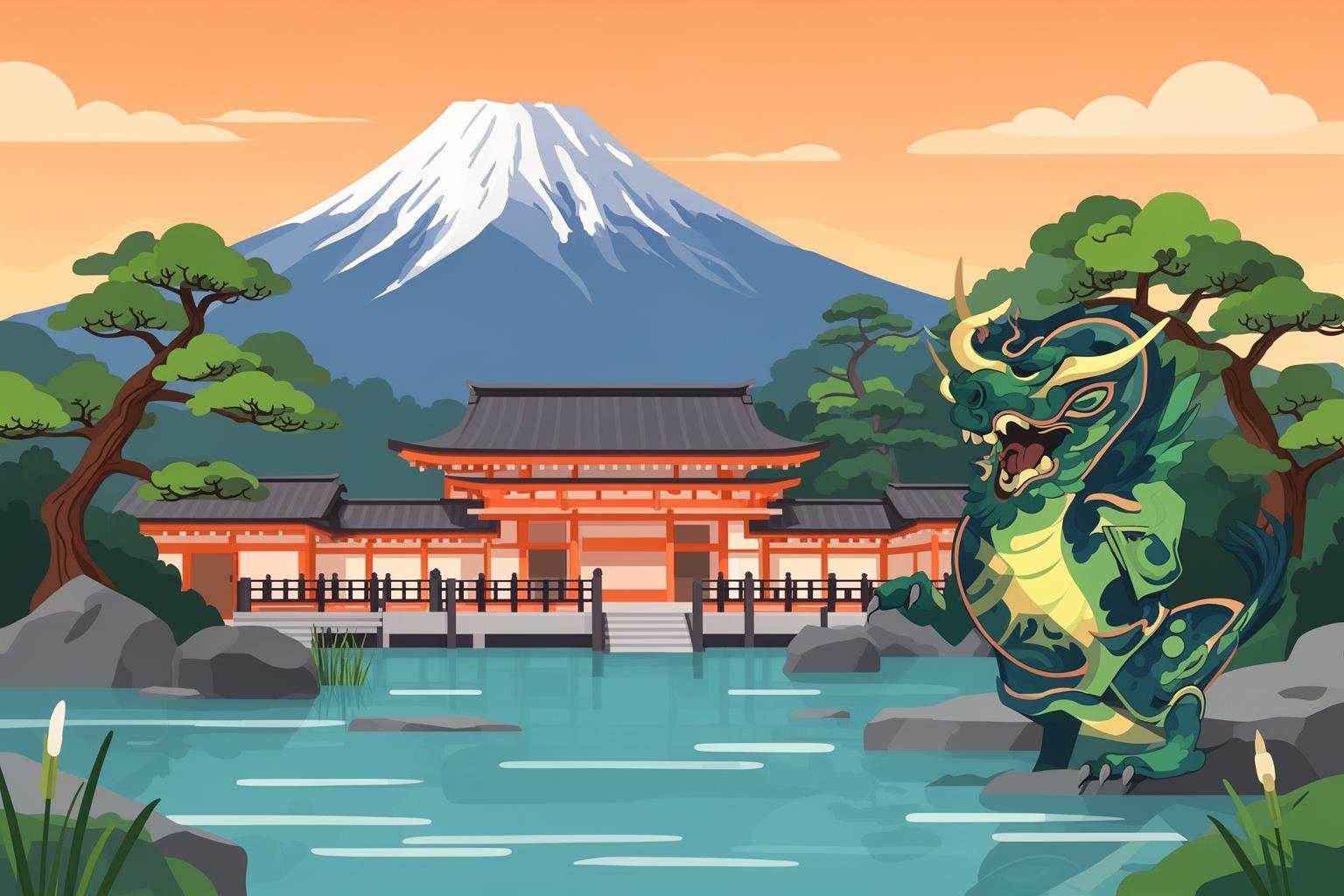
Before we dive into the charming aspects, you first need to grasp the vibe of old-school yokai. We’re referring to the era before Mizuki, before Pokémon—when these creatures were the stuff of genuine nightmares. Forget about friendly forest spirits; this was a realm of pure, unfiltered terror, and with good reason. For centuries, Japan was a precarious place to live. Typhoons, earthquakes, famines, plagues—disaster was always looming. When your child develops a fever without access to modern medicine, or a village’s crops fail mysteriously, you need an explanation. Yokai served as that explanation. They personified the unexplainable, embodying fear and nature’s harsh indifference.
Folklore as a Warning Sign
Consider yokai from the Heian or Edo periods as ominous public service announcements. The Kappa, a river-dwelling goblin? Far from a cute turtle-duck hybrid. It was a cautionary figure parents invoked to keep children away from dangerous rivers—a genuine monster that could drown you and, according to some chilling legends, extract your soul through your backside. The beautiful woman appearing on snowy nights, the Yuki-onna? Not an ice-queen with a misunderstood heart, but a spectral predator who would freeze victims solid. These tales were not entertainment—they were survival manuals wrapped in superstition. They embodied the fears of a society living on the edge. A sudden noise in the forest wasn’t just the wind; it might be a Tengu, a prideful and dangerous mountain demon, signaling you to turn back. Every shadow held danger, every strange event meant you had wandered into a realm not your own—and, frankly, you were doomed.
The Art of Fear
The artwork from this period mirrors this raw horror. Look up ukiyo-e prints by artists like Katsushika Hokusai or Utagawa Kuniyoshi. Their portrayals of yokai are wild, dynamic, and truly disturbing. Hokusai’s famous “Laughing Hannya” embodies pure nightmare fuel. Kuniyoshi’s “Takiyasha the Witch and the Skeleton Spectre” features a towering skeleton that makes the viewer feel small and powerless. Sharp lines, dark and dramatic colors, and creatures that merge human and animal traits into twisted faces of malice or agony—these images elicited visceral awe and fear. Toriyama Sekien, an 18th-century scholar and artist, was the first to systematically catalogue these beings in his illustrated collections like the Gazu Hyakki Yagyō (The Illustrated Night Parade of a Hundred Demons). Although his approach was more academic, his illustrations retained a strong grotesque element. They were scholarly but not designed to comfort; this was Japan’s baseline for monsters: terrifying, formidable, and utterly inhuman.
The Man Who Befriended Ghosts: Shigeru Mizuki’s Origin Story
So, how do we transition from giant, terrifying skeletons to a cute, one-eyed ghost boy? The answer can be found in the trenches of World War II, in the jungles of Papua New Guinea. This is where Shigeru Mizuki’s life story takes on real significance, and it’s crucial to understanding his art. Mizuki wasn’t just an artist; he was a survivor, a war veteran who faced the abyss and returned with a profoundly changed perspective. Born in 1922 in the coastal town of Sakaiminato, Mizuki was seen as somewhat of an oddball from an early age, more fascinated by the spooky tales told by an elderly neighbor than by his schoolwork. These stories weren’t merely fiction to him; they felt very real. But it was the war that shaped his unique bond with the spirit world.
A War Between Worlds
Conscripted into the Imperial Japanese Army, Mizuki was deployed to Rabaul, a harsh frontline in Papua New Guinea. The conditions were appalling. He contracted malaria, witnessed the deaths of his comrades, and endured the brutal realities of war. During a devastating bombing raid, he lost his left arm—his drawing arm—and had to relearn how to draw with his right hand. Yet, it wasn’t only the physical trauma that influenced him; the spiritual impact was just as profound. In his memoirs, Mizuki describes sensing the presence of spirits in the jungle, the souls of the dead surrounding him. He felt a deep connection not only with his fallen Japanese comrades but also with the land itself and the local Tolai people, whose rich spiritual traditions resonated strongly with him. They taught him that the world is shared, where humans and spirits coexist. When the war ended, and he was among the few survivors of his unit, he did not feel victorious. Instead, he experienced a profound guilt mixed with a sense of duty towards the dead. He believed he had been spared by the yokai—the spirits he had long felt connected to. This was not just an intellectual conviction; it was a lived experience. Returning to a defeated, shattered Japan, he arrived not with bitterness but with a peculiar kind of peace and a message from the other side: humans and monsters alike are simply trying to get by.
From Kamishibai to Manga Stardom
After the war, Mizuki faced hardships. He worked as a kamishibai (paper theater) artist, a popular street form of entertainment, before moving into kashi-hon (rental manga). It was a tough grind. Poor and often hungry, he continued to draw. His early works were horror stories, but they stood out. They had a strange, folksy charm and a gritty realism. Then, in 1960, he created the character that would change everything: Kitaro. Originally from a 1930s kamishibai story, Mizuki reimagined Kitaro for his manga, Hakaba Kitaro (Kitaro of the Graveyard). It was dark, gothic, and moderately successful. However, it was the later, more child-friendly adaptation, GeGeGe no Kitaro, which launched as a weekly manga in 1967 and an anime in 1968, that became a cultural phenomenon. It arrived at just the right time, captivating a generation of children in a rapidly modernizing Japan and paving the way for the spooky-cute revolution.
Deconstructing the Vibe: The Genius of GeGeGe no Kitaro
To truly understand why GeGeGe no Kitaro resonates so deeply, you need to examine its fundamental elements. On the surface, it’s a monster-of-the-week tale: a human encounters trouble with a malevolent yokai and sends a letter to Kitaro, who resides in a creepy forest, asking him to resolve the issue. However, it’s the way this straightforward premise is executed that made the series iconic. Mizuki didn’t just invent characters; he crafted an entire worldview. His work masterfully balanced the grotesque with the whimsical, the frightening with the gentle.
The Spooky-Cute Crew
Let’s look at the main cast, as they set the foundation for everything that followed. First, there’s Kitaro himself. He’s a yokai boy, the last survivor of the Ghost Tribe. Missing one eye, his hair often conceals the empty socket, and his name literally includes the character for “demon.” By appearance, he’s eerie. Yet, Mizuki portrays him as a small, stoic, and ultimately heroic child. Being an outsider, belonging neither to the human nor the yokai world, made him instantly relatable to children who felt out of place. Then there’s the breakout character, the real MVP of spooky-cuteness: Medama-oyaji (Eyeball Daddy), Kitaro’s father—or rather, what remains of him. After his body decayed in the grave, his spirit reanimated his eyeball. Let that sink in: he is a walking, talking eyeball. It’s one of the most absurd and macabre character concepts ever. Yet, he’s one of Japan’s most beloved characters. Mizuki drew him tiny, gave him a small body, and portrayed him as a loving, if slightly neurotic, father who’s always looking out for his son, often while bathing in a tiny teacup. The contrast is brilliant. It takes something utterly horrifying—a disembodied, sentient eyeball—and makes it endearing through personality and context. That’s the spooky-cute formula, perfected.
Humanizing the Monsters
Kitaro’s other companions build on this concept. Nezumi Otoko (Rat Man) is a half-yokai, half-human con artist: greedy, foul-smelling, and quick to betray Kitaro for a payday. He’s objectively despicable. But he’s also pathetic, cowardly, and occasionally reveals a hint of conscience, making him a comical yet oddly endearing rogue. He embodies the flawed, messy nature of humanity. The rest of the cast represents a parade of Japanese folklore—the sand-throwing hag Sunekake Babaa, the wailing old man Konaki Jijii—each with distinct, often humorous personalities. Mizuki’s major innovation was refusing to depict yokai as a uniform evil force. In his world, yokai could be good, bad, or simply trying to survive in a world that was forgetting them. Kitaro’s role was not to annihilate them but to serve as a mediator, a bridge. He fought truly evil yokai but often ended up helping or merely understanding others. This storytelling approach was groundbreaking. It suggested that “monsters” were not so different from humans—they had their own motivations, families, and struggles. Mizuki’s art style reinforced this vision. He combined meticulously detailed, nearly photorealistic backgrounds with simple, cartoony characters, creating a world that felt both believable and fantastical, grounding strange creatures in a recognizable reality and making them more real, more immediate.
A Nation in Need of New Myths
The tremendous success of GeGeGe no Kitaro wasn’t simply due to its compelling story. It was because it perfectly captured the spirit of its era. To understand this, you need to grasp the mindset of Japan in the 1960s. The post-war economic miracle was in full effect. Cities were being rebuilt, technology was advancing at an unprecedented rate, and the nation was eager to establish a new, modern identity. However, this rapid modernization came with a price. Traditional ways were fading away. Rural communities shrank as people migrated to urban centers. Local customs, superstitions, and folklore passed down through generations were being erased by concrete and overshadowed by the rise of television.
Nostalgia for a Past You Never Knew
Beneath the surface, there was a collective cultural unease. Japan had distanced itself from its militaristic past, but was uncertain about what should replace it. There was a profound yearning for a distinctly Japanese identity, free from the shadow of wartime nationalism. Shigeru Mizuki’s yokai offered the perfect answer. They were utterly Japanese—ancient, mysterious, and deeply connected to the nation’s landscape and history. Yet, Mizuki presented them as quirky, relatable characters, making them safe. They became a comforting form of nostalgia rather than a contentious one. For children reading Kitaro, these creatures were no longer the frightening monsters their grandparents feared; instead, they revealed a captivating secret world, a hidden reality beneath their modern lives. For adults, it became a way to reconnect with a genuine, unspoiled cultural heritage. Mizuki wasn’t merely illustrating monsters; he was documenting and preserving a fading culture, making it accessible and appealing to a new generation. He revived a fascination with folklore and made it fashionable once more.
The Outsider as Hero
Moreover, the very essence of Kitaro and his yokai companions resonated deeply with post-war Japan’s psyche. The nation felt like an outsider on the global stage, struggling with its pacifist identity and its relationship with the West. Kitaro, the solitary hero who belonged nowhere and fought for justice on his own terms, became a powerful emblem. The yokai themselves symbolized everything that didn’t fit into the neat, orderly, and increasingly uniform modern world. They represented the misfits, the outcasts, the spirits of forgotten places. Mizuki celebrated these figures through his stories. He conveyed, through his work, that these strange, non-conformist beings were not only valuable but essential to Japan’s soul. In a society that prioritizes group harmony and conformity, this was a subtly radical message. It affirmed that it’s okay to be different, to be a little monstrous, to be a talking eyeball in a teacup. It was a message of radical acceptance—one that Japan was more than ready to embrace.
The Yokai Boom: Mizuki’s Vibe Goes Viral
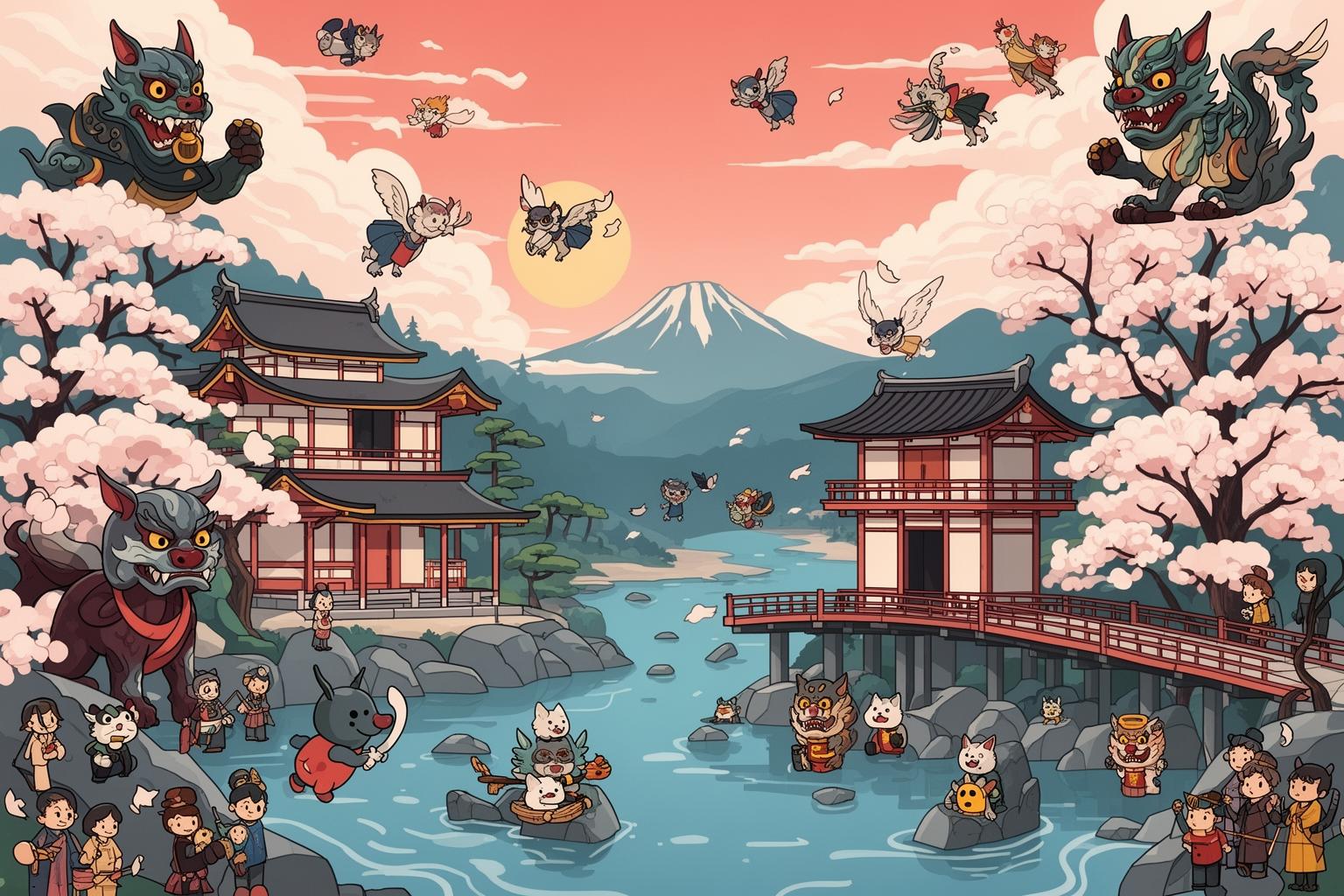
Once Mizuki kicked the door down, the floodgates of spooky-cuteness burst open. His influence is so deeply embedded in modern Japanese pop culture that it’s like trying to see the air—it’s simply there. He didn’t just create a successful franchise; he forged an entirely new genre, a visual and narrative language that generations of creators have adopted, adapted, and expanded upon. The DNA of GeGeGe no Kitaro is woven into some of Japan’s biggest cultural exports.
The Ghibli Connection
Let’s begin with the master, Hayao Miyazaki. Studio Ghibli’s films are beloved worldwide for their enchanting worlds, and much of that magic stems from their portrayal of spirits and monsters, which is distinctly Mizuki. Take My Neighbor Totoro. Totoro is a giant, furry forest spirit—immense and powerful, whose roar can shake the trees. In an old folktale, he might have been a fearsome mountain god to be appeased, but in Miyazaki’s hands, he’s a gentle, sleepy, huggable friend to two young girls—the ultimate spooky-cute icon. The film’s soot sprites, the susuwatari, are another perfect example: tiny, fuzzy, sentient dust balls, initially a bit creepy but ultimately harmless and even helpful. Then consider Spirited Away. The entire film is a journey through a realm filled with Mizuki-esque beings. The Radish Spirit, the Stink Spirit, the numerous gods and monsters frequenting the bathhouse—they are grotesque, bizarre, and utterly fantastic. Crucially, they’re not evil; they are clients at a spa with jobs and personalities. No-Face (Kaonashi) is the ultimate expression of this: starting as a terrifying, devouring monster, he is revealed to be a lonely, corrupted spirit yearning for a friend. The film’s message isn’t to slay the monster but to understand and heal it. This compassionate approach to the spirit world directly continues the philosophical foundation laid by Mizuki.
From Yokai to Pokémon
Then there’s Pokémon. This multi-billion dollar franchise that conquered the globe is, at its core, a direct evolution of Mizuki’s yokai-taming concept. The idea of “pocket monsters” is about domesticating the wild, supernatural world—encountering strange creatures in the tall grass, not fleeing but befriending, training, and partnering with them. Many original Pokémon designs are directly inspired by specific yokai. Vulpix and Ninetales derive from the Kitsune (fox spirit). Golduck echoes traits of the Kappa. Snorlax carries the vibe of a lazy, road-blocking yokai. The creators of Pokémon took Mizuki’s vision of a world brimming with diverse, morally complex creatures and gamified it, making it interactive. The goal is to “catch ’em all,” to catalog them, much like Toriyama Sekien and later Mizuki did. They weaponized the cuteness, creating a globally appealing aesthetic that softened the spookier edges but retained the core idea of a world full of collectible, characterful monsters. Without the cultural foundation of GeGeGe no Kitaro making yokai friendly and accessible, it’s difficult to imagine Pokémon becoming the phenomenon it is.
The Modern Yokai Craze
This influence persists today. The video game and anime series Yo-kai Watch was a huge hit in the 2010s, essentially GeGeGe no Kitaro for the smartphone generation. Its protagonist uses a special watch to see and befriend yokai causing everyday mischief, like making people forget their keys or start arguments—a direct update of Kitaro’s role as mediator. Even beyond monster-centric media, the aesthetic remains. Consider Japanese character goods: San-X’s Sumikko Gurashi (“life in the corner”) features a cast of cute, anxiety-ridden characters who are essentially modern-day yokai—a leftover piece of tonkatsu, a dust bunny, a tapioca pearl. They embody the feeling of being overlooked and out of place, a core theme in Mizuki’s work, made irresistibly cute and marketable. From high art to inexpensive gachapon toys, the spooky-cute vibe is one of Japan’s most potent and recognizable cultural exports, all tracing back to one one-armed man and his eyeball dad.
Why We Love Cute Monsters: The Psychology of Kowaii
So, what is it about this spooky-cute aesthetic that holds such a strong grip on Japanese culture and, increasingly, the wider world? It’s more than just a fleeting fad. It taps into deep-rooted cultural and psychological currents that deserve exploration. It’s a way of interpreting the world that is both remarkably practical and profoundly philosophical.
Kawaii as a Disarming Strategy
At its core, making something kawaii (cute) is a way to make it seem safe and approachable. Cuteness—with its large eyes, soft contours, and harmless proportions—activates our nurturing instincts. It acts as a social lubricant and a method of de-escalation. In a culture that often emphasizes indirect communication and the avoidance of overt confrontation, kawaii serves as a potent tool. So, what occurs when you apply this tool to something inherently frightening, like a ghost or a monster? You neutralize it. You take the terrifying, uncontrollable unknown and domesticate it. The existential fear of death becomes a friendly ghost on your pencil case. The unpredictable forces of nature turn into a sleepy Totoro. By rendering a monster cute, you gain a sense of mastery over it. It’s a psychological coping strategy, a way to make your fears feel manageable. You can’t stop a typhoon, but you can carry a keychain of an adorable storm cloud spirit.
Embracing Ambiguity and Imperfection
This connects directly to traditional Japanese aesthetics like wabi-sabi, which values beauty found in imperfection and transience. Yokai, by definition, are imperfect, asymmetrical, and peculiar. They stand in contrast to the polished, idealized forms often seen in classical Western art. Mizuki didn’t shy away from their grotesque nature; he embraced it, discovering charm and humanity within the monstrous. His characters are frequently lumpy, scarred, and strangely shaped. This reflects a worldview that refuses to divide things into a simple binary of good and evil or beautiful and ugly. Instead, it finds meaning in the ambiguous realm between. A yokai can be both scary and humorous, dangerous and helpful. This acceptance of ambiguity is a hallmark of Japanese storytelling and sharply contrasts with many Western narratives that insist on clear heroes and villains. The spooky-cute aesthetic celebrates this complexity. It allows for something to be two things simultaneously and discovers attraction in that contradiction.
Walking with Ghosts: Finding Mizuki’s World Today
For any traveler seeking the genuine story of Japan, grasping Mizuki’s influence is like holding a key to a secret chamber. Suddenly, his world appears everywhere. But to fully immerse yourself, you must visit the source: his hometown of Sakaiminato in Tottori Prefecture. This modest fishing port has reinvented itself as a living tribute to its most famous native, making it one of the most unique and heartfelt places to explore.
The Strangest Street in Japan
The highlight is Mizuki Shigeru Road, an 800-meter path stretching from the train station to the harbor. It’s more than a street; it’s an open-air museum and pilgrimage route adorned with 177 bronze statues of Mizuki’s yokai. Walking along this road is a surreal experience. You’ll spot a bronze Kitaro casually lounging on a bench. Around the corner, the sly Nezumi Otoko is caught scheming. Every few steps, another creature from his expansive universe appears from the pavement. The statues aren’t roped off—they blend seamlessly into the streetscape. You can sit beside them, touch them, pose for photos with them. The whole town embraces it. Lampposts are shaped like Medama-oyaji. Manhole covers depict Kitaro and his companions. Even local shops carry yokai-inspired names and products. It’s not a cold, corporate theme park; it feels intimate and handcrafted, a sincere expression of a town’s affection for its beloved hero. At night, the statues are lit eerily, with shadows dancing to give the impression that the yokai have truly come alive.
Beyond the Statues
At the street’s end stands the Mizuki Shigeru Museum, a must-see attraction. It offers more than just a display of his manga art. It’s an immersive journey into his remarkable life. Inside, you’ll find recreations of his chaotic studio, exhibits on his intense war experiences, and his personal collection of yokai-related artifacts from around the world. The museum clearly shows that for Mizuki, his work was not mere fiction. He was a folklorist, historian, and philosopher as much as a manga artist. Visiting Sakaiminato ties all the pieces together. You encounter the eerie and the adorable, realizing both stem from a profound compassion for the strange, the forgotten, and the misunderstood. It transforms the spooky-cute style from a simple visual trend into a deeply meaningful philosophy.
The Ghost in the Machine
In the end, the spooky-cute aesthetic that Shigeru Mizuki originated represents far more than just an eccentric Japanese style. It serves as the visual expression of a culture striving to reconcile its ancient, mystical heritage with its ultra-modern reality. It preserves the ghosts and gods of folklore not as sources of fear, but as family members—peculiar, occasionally troublesome, yet always present. Mizuki’s brilliance lay in his empathy. Scarred by the genuine horrors of human conflict, he found greater meaning and kindness within the realm of imaginary monsters. When he saw the eerie creatures hidden in the shadows of Japanese folklore, he did not perceive evil; instead, he saw lonely, misunderstood souls seeking acknowledgment. He taught an entire nation to stop battling its demons and start listening to them. So, the next time you spot a cute ghost on a T-shirt or play a game where you befriend a mythical creature, remember to give a nod to Shigeru Mizuki. He is the ghost in the machine of contemporary Japanese pop culture, the one-armed artist who reshaped the soul of a nation, one endearing monster at a time.