Yo, what’s the deal with Harajuku? For real. You’ve seen the pics, right? The ones that hit your feed like a glitter bomb from a bygone internet era. Images of kids absolutely decked out, drowning in layers of neon, their hair a constellation of a thousand plastic clips, faces beaming with a kind of chaotic, unfiltered joy. This was the Harajuku promised by the algorithm, a vibrant utopia of personal expression. So you book the ticket, you ride the Yamanote Line to that iconic station, and you step out, ready to be overwhelmed. But the reality on the ground feels… different. The Takeshita Street of today is a crush of tourists, crepe stands, and shops blasting K-pop. The fashion is cute, for sure—a lot of oversized hoodies, clean streetwear, maybe some muted goth vibes—but it feels more global, more… curated. The anarchic, rainbow-fueled explosion you were expecting seems to have been replaced by something more palatable, more trend-conscious. And the question hits you: Did I miss the party? Was the “real” Harajuku just a fever dream from the early 2000s, or am I just not looking in the right places? It’s a legit confusion, a classic case of expectation vs. reality when it comes to Tokyo. The truth is, Harajuku wasn’t, and isn’t, a theme park. It’s a living cultural ecosystem, and like any ecosystem, it evolves. The wild styles you saw in old copies of FRUiTS magazine weren’t a costume for visitors; they were a genuine, breathing youth movement. To understand what Harajuku is now, we have to vibe with what it was. And there’s no better way to do that than by chasing the ghost of its most iconic, most unapologetically extra subculture: Decora. This isn’t just a look back at a trend; it’s a deep dive into the soul of street style, a search for the echoes of a rebellion fought with plastic jewelry and a whole lot of pink. Let’s get into it.
To truly understand the soul of this movement, you can learn more about crafting authentic Harajuku Decora bling.
The Vibe Shift: Understanding the Harajuku Ecosystem
More Than Just a Shopping Street
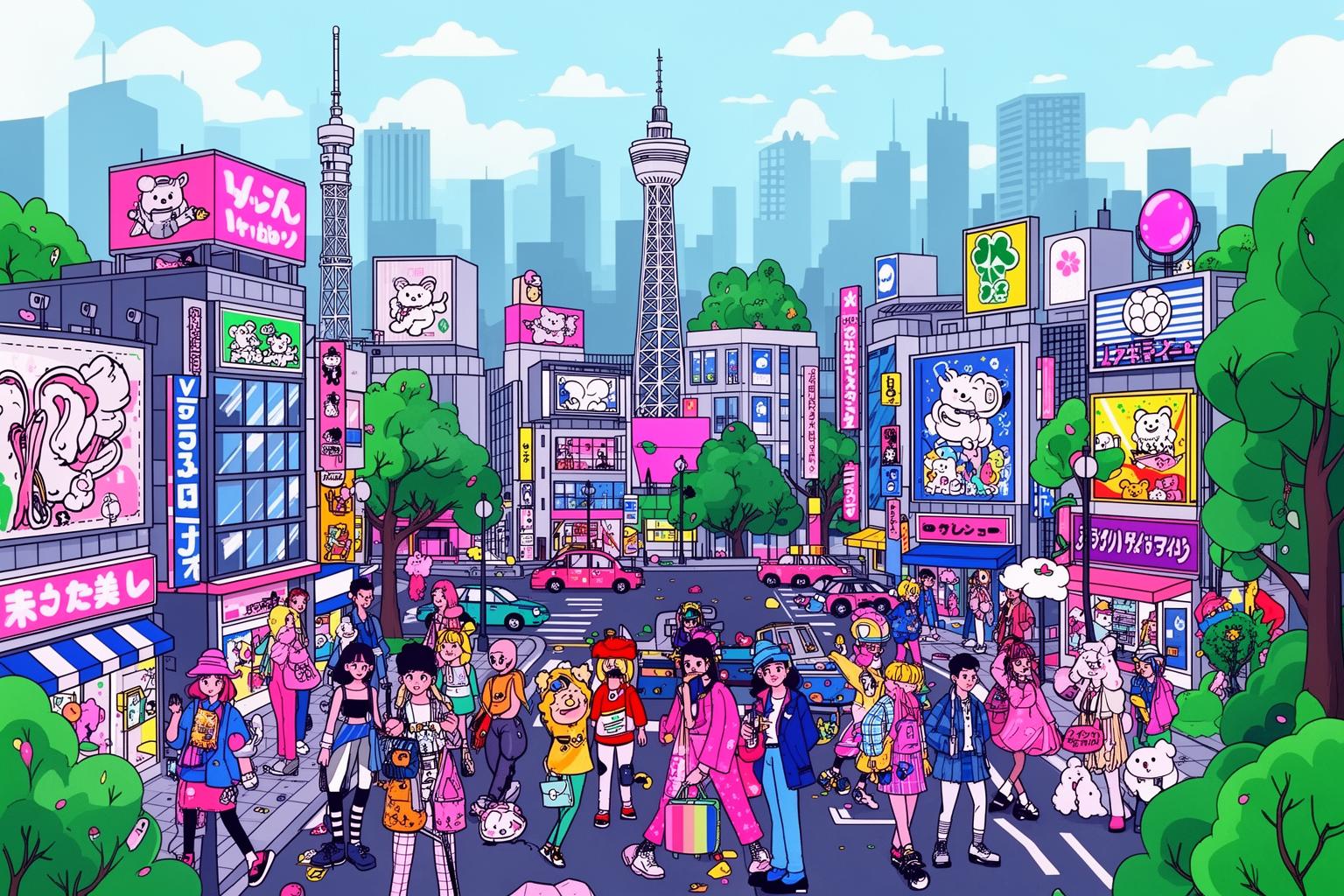
Before delving into the layers of Decora, it’s essential to clarify one thing: Harajuku is much more than just Takeshita Street. For decades, the area’s magnetic appeal to youth culture stemmed from something far more organic. The story truly begins with the Hokoten, or “pedestrian paradise.” From the late 70s, the main street of Omotesando, right next to Harajuku, was closed to traffic every Sunday. This simple urban planning decision had a revolutionary impact. It created a vast, open-air stage, a free zone where kids from Tokyo’s sprawling, conformist suburbs could gather and, crucially, be seen. This wasn’t about shopping; it was about existing. There were the Takenoko-zoku in their wild, colorful outfits dancing to boomboxes, and rockabilly crews with slicked-back hair and leather jackets rehearsing their moves. It was a weekly festival of identity. The key concept here is zoku, meaning tribe or clan. In a society that prioritizes the group over the individual, youth tribes have always emerged as undercurrents. From post-war greasers to the 90s kogyaru, these groups fashioned their own worlds with distinct aesthetics, slang, and codes of conduct. The Harajuku Hokoten served as the perfect incubator for these tribes—a physical space to find your community and perform your identity beyond the strict hierarchies of school and family. When the Hokoten closed in the late 90s, its energy didn’t vanish; it merely flowed into nearby side streets, particularly the narrow Takeshita Street and the quieter, boutique-filled Ura-Harajuku (“back Harajuku”). The spirit of performance and community endured, becoming more focused and concentrated in the visual language of fashion.
The Pre-Instagram Playground
To truly grasp the essence of peak Harajuku in the late 90s and 2000s, you have to imagine life without smartphones. There was no Instagram, TikTok, or global stream of trends to scroll through. Harajuku culture thrived analog, with street snap magazines as its bible. Publications like FRUiTS, KERA, and Cutie were both gatekeepers and tastemakers. The process was a sacred ritual. Kids spent the entire week carefully planning and assembling their outfits, blending vintage pieces, handmade creations, and items from small indie shops. Then on Sunday, they would pilgrimage to Harajuku, roaming around the station, down Takeshita, or across the Jingu Bashi bridge, hoping to attract the attention of a magazine photographer. The ultimate validation wasn’t a flood of likes from strangers online, but being stopped and photographed, especially by the legendary Shoichi Aoki of FRUiTS. This created a powerful cycle of creativity. Rather than copying a celebrity look from abroad, you aimed to craft something uniquely personal and visually striking enough to represent Harajuku in print. Originality, not conformity, was the goal. This fostered radical experimentation—pushing boundaries, clashing colors and patterns, and creating silhouettes entirely your own. The magazines didn’t impose trends from above; they captured what was organically emerging from the streets. This decentralized, peer-driven system enabled hyper-specific and wonderfully eccentric styles like Decora to thrive. It was a pure channel for creative expression, mediated through the camera lens and magazine pages, long before algorithms began leveling everything out.
Enter Decora: A Rebellion in Rainbows and Plastic
The Aesthetic Deconstructed
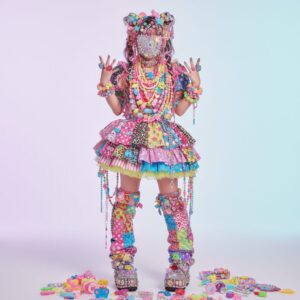
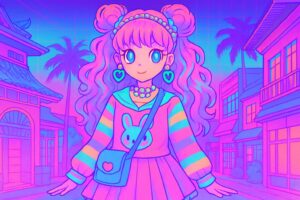
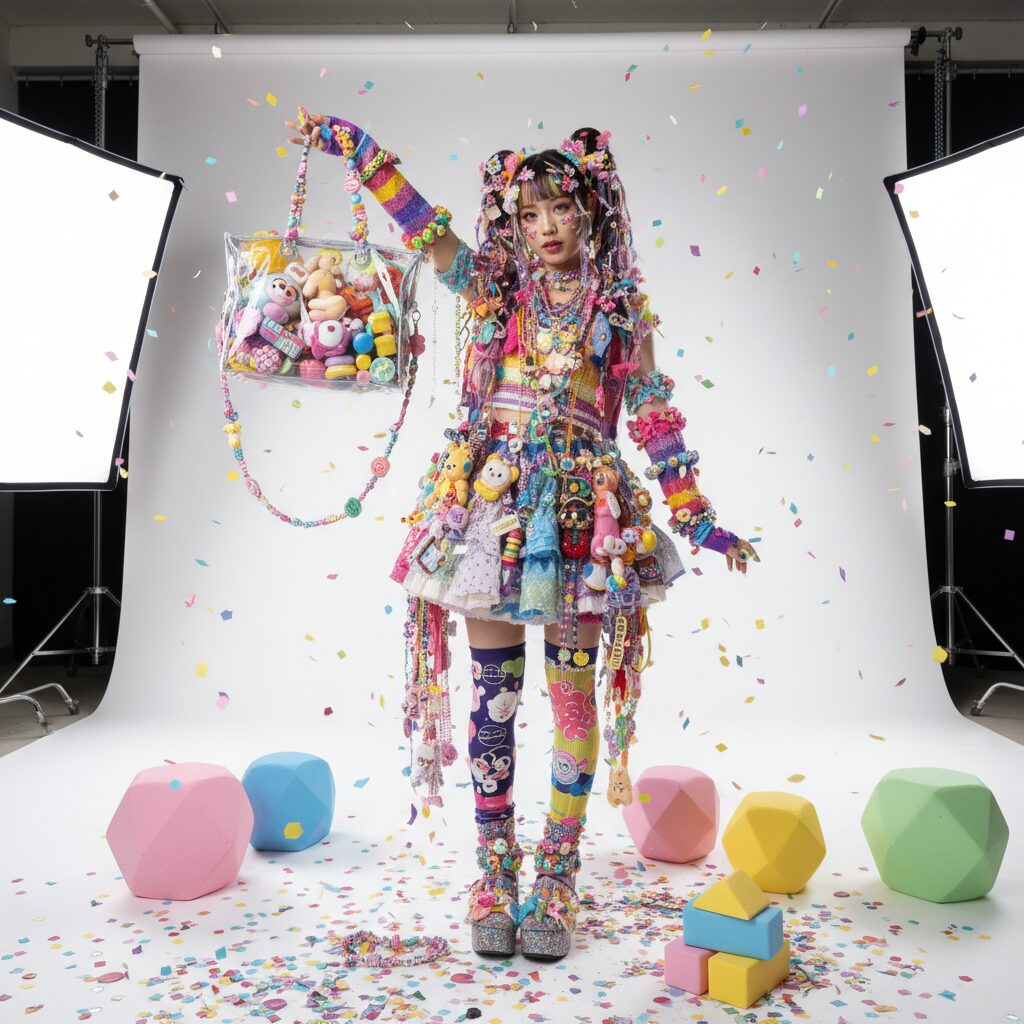
So, what exactly is Decora? At first glance, it appears as a chaotic burst of color and cuteness. It’s as if a Sanrio store exploded all over a person—in the best way imaginable. But look closer, and you’ll notice a very specific, intentional method behind the madness. Decora is short for “decoration,” and the main principle is layering. It’s not just about wearing many accessories; it’s about becoming a walking, three-dimensional collage of your favorite things. The base layer is typically simple yet brightly colored: a pink hoodie, a yellow t-shirt, perhaps from brands like Super Lovers or Angel Blue, featuring a cute, slightly quirky cartoon character. Then the layers build up. Another t-shirt on top of the first one. A frilly tutu or skirt layered over pants or leggings. The legwear is essential: multiple pairs of mismatched, vibrantly colored or patterned socks and leg warmers stacked on top of each other. Footwear is usually chunky and comfortable—like sneakers or platform boots—since you’ll be on your feet all day. But the true heart of Decora is above the neck. Hair is often dyed bright, artificial hues—pink and blue being classics—and serves as the canvas for the main attraction: an overwhelming number of hair accessories. We’re talking dozens, sometimes hundreds, of plastic clips, barrettes, and bows in every shape and color imaginable. Stars, hearts, animals, fruits—anything cute and plastic found its way into the hair. The face itself becomes part of the decoration. A colorful band-aid across the bridge of the nose was a signature touch, as were brightly colored stickers like little gems or stars applied to the cheeks. Then, there’s the jewelry—piles of beaded bracelets extending to the elbows, chunky plastic necklaces with bells and charms that jingled with every step. It’s a multi-sensory experience. Decora isn’t about looking chic or polished in the traditional sense. It’s about joyful excess. It amplifies the concept of “kawaii” (cute) to its ultimate, most extreme expression. It’s a statement that boldly shouts, “more is more.”
The “Why” Behind the Layers: A Deeper Look
This explosion of color and plastic did not just appear spontaneously. To truly understand Decora, you need to grasp the mood in Japan during the late 1990s and early 2000s. The country was deep into its “Lost Decade,” a prolonged economic slump following the spectacular collapse of the 80s bubble economy. For the generation coming of age during this era, the future promised to their parents—a lifelong job, steady economic growth, and predictable stability—had vanished. In its place was stagnation, uncertainty, and gloom. The adult world felt grey, serious, and stressful. Decora was a visceral, visual rebellion against that reality. It was a form of radical, self-made optimism. If the outside world is bleak, you create your own world and make it as bright and joyful as possible. It was a kind of sartorial escapism. Beyond the economic backdrop, there was the social context. Japanese society is famously centered on harmony (wa), subtlety, and conformity. From a young age, children in a highly structured education system learn to blend in, to “read the air” (kuuki wo yomu), and avoid standing out in disruptive ways. School uniforms symbolize this perfectly, erasing individuality in favor of group identity. Harajuku, and Decora in particular, served as the pressure valve. It was the weekend’s opposite to the weekday uniform. A space to be loud, messy, and unapologetically individualistic without social penalty. The sheer visual overload of a Decora outfit made a defiant statement against the quiet subtlety demanded by mainstream society. It was a way to reclaim your identity and shout it from the rooftops. Crucially, Decora was also highly democratic. It wasn’t a style based on expensive, high-fashion brands. Its materials were inexpensive and accessible. Many iconic plastic accessories came from 100-yen shops or children’s stores. The look was founded on creativity and curation, not wealth. It was about what you could achieve with a handful of cheap materials and boundless imagination. This accessibility made Decora a true grassroots, street-level movement. Anyone could join in. It wasn’t about buying into a brand; it was about building a world for yourself, one plastic hair clip at a time.
The Great Fade-Out: Did Instagram Kill the Harajuku Star?
The End of an Era
If Decora was once such a powerful, grassroots expression of youth identity, where did it all go? Strolling through Harajuku today, a full-fledged, classic Decora kid is a rare sight indeed. The change was gradual, but a significant symbolic moment arrived in 2017 when Shoichi Aoki announced he would stop the regular publication of FRUiTS magazine. His explanation sent shockwaves through the global community of Harajuku fashion enthusiasts: “There are no more cool kids to photograph.” This statement hit hard. It seemed to confirm what many had sensed for some time—that the wild, experimental energy was fading from the streets. Of course, “cool kids” hadn’t vanished entirely, but the ecosystem that nurtured the style FRUiTS showcased had changed fundamentally. Several factors contributed to this major decline. Foremost was the seismic shift caused by social media. The rise of Instagram, followed by TikTok, completely altered the dynamics of street style. The audience was no longer just other kids on the street or a magazine photographer; it became a global, digital audience of followers. The goal shifted from creating a unique, one-of-a-kind look to crafting an image that was clear, easily replicable, and algorithm-friendly. Global trends, accelerated by the internet, began to overshadow hyper-local ones. Clean, minimalist Korean fashion aesthetics and the edgy vibes of the e-girl/e-boy subculture emerged—styles born online and easily recognized and mimicked by a worldwide audience. The charmingly chaotic, handmade qualities of styles like Decora were harder to distill into a neat hashtag. What made it special—its intense individuality—also made it less compatible with the homogenizing forces of the digital age.
Changes in Youth Culture and Commerce
Alongside the rise of social media was the relentless commercialization of Harajuku itself. As the area gained international fame, it shifted from a local youth haven into a major global tourist hotspot. The small, independent boutiques that were once the scene’s lifeblood began to be priced out, replaced by large international fast-fashion chains, souvenir shops, and food stalls selling gimmicky, Instagram-friendly treats like giant rainbow cotton candy. Takeshita Street’s focus shifted from serving creative kids to catering to tourists eager to consume a simplified, pre-packaged version of “kawaii.” Original participants felt alienated. The space was no longer theirs; it became a performance for outsiders. This cycle is classic in any subculture: authenticity draws attention, attention draws commerce, and commerce can dilute or erase the original authenticity. Fast fashion’s proliferation also played a huge part. In the early 2000s, to achieve a unique look you often had to craft it yourself or hunt through vintage stores. By the 2010s, brands like H&M, Forever 21, and later online giant Shein made it incredibly easy and affordable to buy into a globally trending, pre-approved look. The barrier to being “fashionable” lowered, but arguably so did the ceiling for creativity. It became simpler to follow a trend than to invent an entirely new visual language. Lastly, the nature of youth expression itself evolved. Rebellion doesn’t always look like a rainbow explosion. For a generation raised on the internet and bombarded with constant visual stimuli, sometimes the most radical choice is to retreat into something more low-key, minimalist, or “normcore.” How young people express dissatisfaction or forge identity shifts with time. The spirit of defiance didn’t die; it just took new forms, many of which are less visible on a bustling street on a Sunday afternoon. It might manifest in a private Discord server, a carefully curated online persona, or an entirely different mode of creative expression.
The Y2K Echo: Hunting for Decora’s Ghost in Modern Harajuku
The Nostalgia Cycle Accelerates
Here’s the twist: the story isn’t finished. Just when it seemed the original Harajuku spirit was fading into a pixelated memory, something intriguing began to unfold. The relentless nostalgia cycle, now moving at the speed of a TikTok trend, finally reached the Y2K era. Suddenly, the late 90s and early 2000s aesthetics have returned in a huge way worldwide. Low-rise jeans, butterfly clips, chunky sneakers—all are making a powerful comeback. With this wave of Y2K nostalgia comes a revived fascination with its most extravagant and joyful expression: Decora. For a new generation of Gen Z, who were toddlers at Decora’s peak, the style feels fresh, thrilling, and, above all, authentic. They discover it through digital archives on Pinterest, old FRUiTS magazine scans, and TikTok creators dedicated to recreating the look. In a world dominated by beige minimalist influencers and algorithm-driven fast fashion, Decora’s untamed maximalism feels like a breath of sweet, invigorating air. It embodies a playful, unapologetically feminine self-expression, free from the cynicism and self-consciousness prevalent in today’s social media environment. Yet this revival isn’t an exact replica. It’s more of an echo, a remix. Often called “Decora-core” or “Neo-Decora,” the modern take may highlight specific style elements rather than the entire head-to-toe ensemble. This could mean a hairstyle adorned with Sanrio clips paired with contemporary streetwear or layered cute necklaces paired with a more muted color scheme. These looks tend to be more polished and deliberately composed for digital photography. It’s Decora’s essence filtered through the perspective of a generation that has always known a world with the internet.
Where to Spot the Traces
So, if you’re in Tokyo today, where can you actually witness these echoes? It takes a bit of a treasure hunt and a shift in your expectations. Let’s begin with Takeshita Street. Yes, it’s touristy, but don’t dismiss it entirely. Look beyond the crepe stands, and you might catch sight of a teenager blending Decora elements into their outfit or shops still selling the essentials—plastic clips, colorful socks, character goods. The vibe is different, but the DNA remains. To experience a more concentrated Harajuku spirit, you need to explore off the main street into Ura-Harajuku. This network of quieter backstreets around Cat Street, between Harajuku and Shibuya, has traditionally housed avant-garde streetwear and indie boutiques. Here, the atmosphere moves away from chaotic cuteness toward curated cool. You’ll find a treasure trove of high-end vintage shops. It’s in these stores, rifling through racks of early 2000s clothing, that you can uncover authentic pieces foundational to the original Decora style—the Angel Blue tees, the Super Lovers hoodies. This is where today’s style seekers find the building blocks for their Neo-Decora wardrobes. Then there are the landmark institutions like 6%DOKIDOKI, more than a shop, it’s a cultural icon. Founded in 1995 by artist Sebastian Masuda, it has continuously championed “Sensational Kawaii” before, during, and after the Decora craze. Visiting it feels like a pilgrimage—a direct link to Harajuku’s artistic, boundary-breaking core. It reminds us that the culture is not just about fashion but a philosophy of art, performance, and astonishing the world with cuteness.
The Digital Harajuku
Perhaps the most vital place to find Decora’s spirit today isn’t physical at all. The community has largely moved online. The modern Harajuku is a digital neighborhood built on hashtags. Search #decorafashion or #harajukufashion on Instagram or TikTok, and you’ll find it. Creators from across the globe—not just Japan—keep the style alive, reinterpret it, and share it with an international audience. This marks a fundamental shift from the original scene. It’s no longer a local phenomenon confined to a few blocks in Tokyo. It has blossomed into a global, decentralized subculture. A kid in the American Midwest can be as much a part of the Decora scene as someone in Tokyo. They exchange styling tips, trade accessories online, and build communities in digital spaces. In some ways, this is the ultimate evolution of the zoku. The tribe is no longer defined by who you stood next to on a Sunday on Jingu Bashi bridge but by who you connect with online. The street corner has given way to the screen, but the fundamental human need for community and self-expression through style remains unchanged.
So, Is Harajuku Still Worth It? Redefining the Pilgrimage
Managing Expectations
Let’s return to the original question. You’re in Tokyo and considering a visit to Harajuku. Is it worth it? If you expect to step into a time machine set to 2004, you’ll be disappointed. The world captured in the pages of FRUiTS is now a historical archive. The number of wildly dressed teenagers is smaller, while the commercial and tourist presence has significantly increased. Expecting to see dozens of classic Decora kids is like going to London and expecting everyone to be dressed as punks. It was a unique moment in time, a response to specific cultural and economic conditions. But calling Harajuku “dead” or “over” is a gross oversimplification. It misses the point entirely, implying culture is static and should be preserved unchanged, when in fact it’s a fluid, ever-evolving conversation.
A New Way to See
The key to appreciating modern Harajuku is to shift your perspective. Instead of searching for a particular look you’ve seen online, try to find the underlying spirit that has energized the neighborhood for decades. That spirit is one of youthful creativity, joy in self-expression, and building community around a shared aesthetic. You can still find it everywhere, but it’s revealed in the details. It’s in the way a high schooler decorates their backpack with dozens of keychains and badges. It’s in the bold makeup and hair color of a shop employee. It’s in the carefully chosen collection of a vintage store in Ura-Harajuku. It’s in the art showcased in a tiny independent gallery. The performance of identity continues throughout Harajuku; only the costumes and the stage have changed. Approaching it not as a tourist seeking a photo op, but as a cultural observer looking for these creative threads, will offer a much richer and more genuine experience. Don’t come to judge or consume. Come to observe, understand, and appreciate the ongoing, complicated, beautiful process of culture being made and remade in real time.
The Enduring Legacy of Decora
In the end, the story of Decora provides a powerful lesson about what street style truly means. It was never only about the clothes or the plastic clips. It was a philosophy. It was a declaration that, despite a bleak adult world, you could choose to create your own joy. It was a testament to creativity’s power over consumption. It was a sanctuary for kids who felt out of place, enabling them to form their own community. The visual expression of that philosophy was so strong and pure that its influence continues to spread decades later. It has inspired global artists and designers and has become a key part of the international “kawaii” lexicon. Although the style’s physical presence may have diminished on Tokyo’s streets, its spirit lives on. It survives in the Y2K nostalgia cycle, in digital communities of Neo-Decora fans, and, most importantly, in the enduring belief that fashion can be more than just clothing. It can be a shield, a statement, and a source of profound, life-affirming joy. The rainbow may have faded, but the energy it left behind still hums—if you know where and how to look.