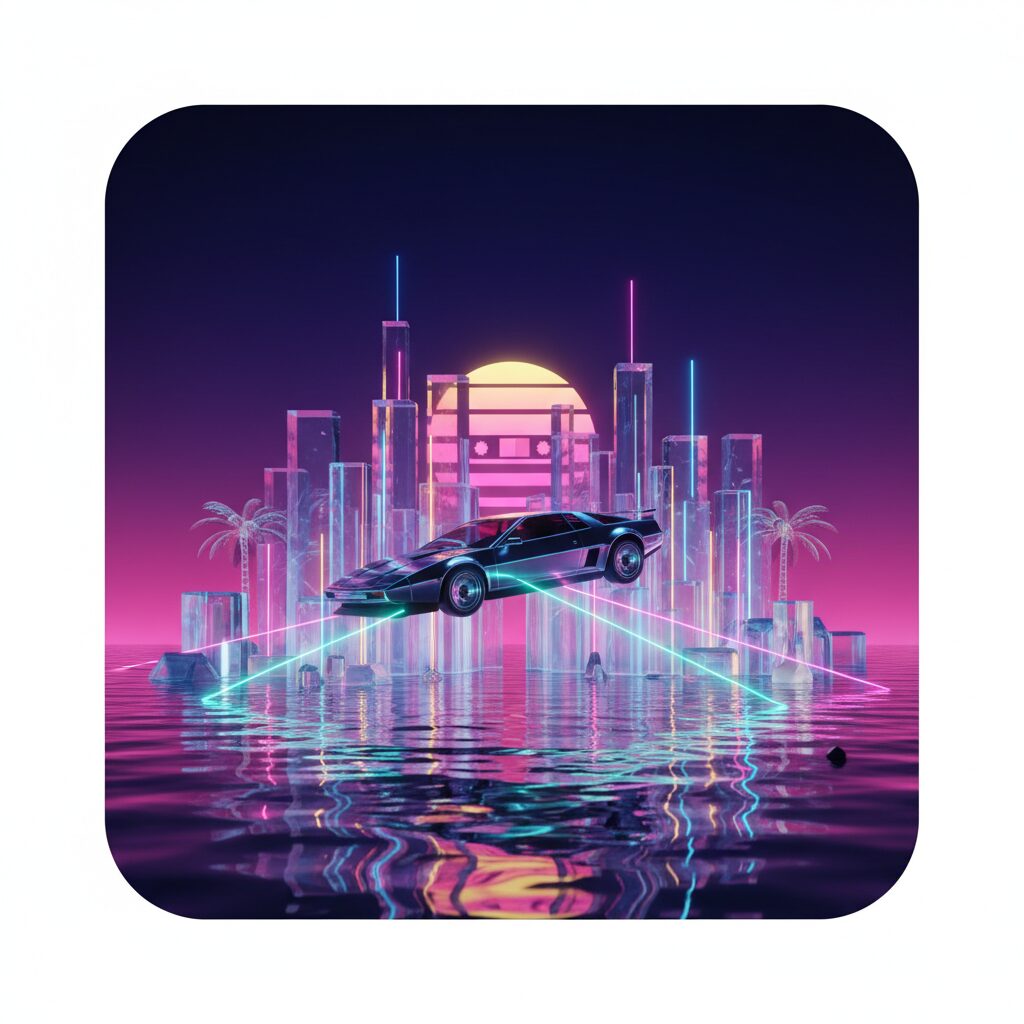
Yo, what’s the deal? Alex here. Ever been scrolling through YouTube late at night, letting the algorithm do its thing, when suddenly you’re hit with it? A Japanese track from, like, the 80s. The thumbnail is a pastel-perfect illustration of a swimming pool at sunset or a sleek car cruising down a coastal highway. You click. And then… bam. You’re hit with the smoothest bassline you’ve ever heard, a breezy sax solo, and vocals that feel like sunshine and melancholy all at once. You don’t understand a word, but you get the vibe. It’s chill, it’s nostalgic, it’s impossibly cool. You’ve just stumbled into the world of City Pop.
For real, this music has been having a massive moment online for years now, a legit ghost from Japan’s past haunting the global internet. It’s the kind of sound that makes you nostalgic for a time you never lived and a place you’ve maybe only seen in anime. But here’s the thing that gets me, the question that really kicks this whole thing off: Why? Why is this specific sound, from this specific country, from this specific decade, hitting so hard with millions of people right now? It’s not just a collection of bops; it’s a cultural artifact, a sonic time capsule from a version of Japan that was wildly different from the one we know today. It’s the soundtrack to a dream, a moment when the country was riding an economic high so massive it felt like it would never end. To get City Pop, you have to get the vibe of 1980s Japan—a period of insane optimism, futuristic tech, and endless cash. It’s a whole mood, a glimpse into the heart of the Japanese “economic miracle” and the boom-and-bust cycle that still defines the nation’s psyche. So, let’s crank up the volume on the tape deck, roll down the windows, and take a drive into the heart of City Pop, the ultimate soundtrack for a party that was just too good to last.
To truly understand this era’s unique aesthetic, you can see how its influence extends beyond music into other cultural phenomena like the viral sweets craze in Harajuku.
The Vibe Check: What Exactly Is City Pop?
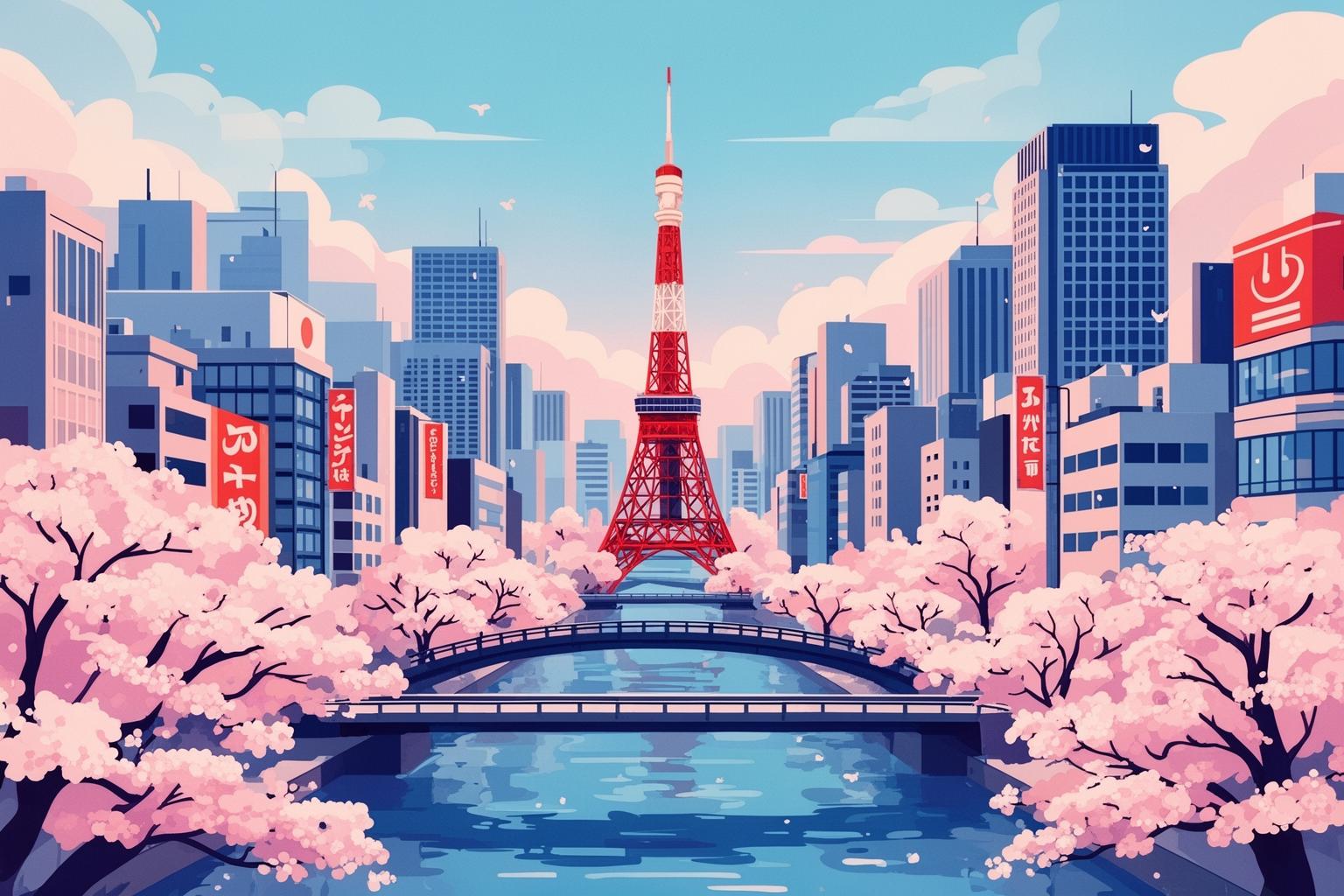
First, let’s lock down the definition. Calling City Pop a single “genre” is like calling “soup” a single recipe. It’s more of a mood board—a broad category of sound that draws from many different influences. It was Japan’s response to the sophisticated, polished sounds emerging from America in the late 70s and 80s. Think of it as a musical cocktail: a blend of American soft rock and AOR (Adult-Oriented Rock), a shot of sleek funk, a generous pour of groovy soul and R&B, a splash of jazz fusion, and perhaps a touch of tropical disco for flavor. The result is something uniquely Japanese yet unmistakably international.
Not Your Typical J-Pop
It’s crucial to understand that this wasn’t the dominant mainstream pop of its time in the way we view pop today. While charts were often topped by sentimental ballads known as enka or bubbly, manufactured idol groups, City Pop was the cooler, more mature older sibling. It was aspirational music. The production quality was phenomenal—we’re talking crystal-clear mixing, layered harmonies, and incredibly tight session musicians crafting grooves that were both complex and effortlessly smooth. The key ingredients? Those walking, melodic basslines that steal the spotlight. Shimmering Fender Rhodes electric pianos or bright, futuristic Yamaha DX7 synthesizers provided the harmonic backbone. And, of course, the ever-present saxophone solo, soaring over the track with a sense of pure, unfiltered freedom. Vocals were often smooth, controlled, and understated, projecting an air of urban nonchalance. A classic City Pop signature was the inclusion of English phrases or entire choruses in English within the Japanese lyrics. It wasn’t always grammatically precise, but that didn’t matter. It was about capturing a cosmopolitan, international vibe, feeding the fantasy that you could be cruising in a convertible in California just as easily as in Tokyo.
The Lyrical Landscape: Cruisin’, Cocktails, and Coastal Highways
The themes of City Pop matter as much as its sound in shaping its unique world. This is music that paints a picture, almost always one of sophisticated, urban leisure. The lyrics tell stories of a lifestyle that, for most, was more fantasy than reality. It’s a world without the daily grind or sardine-can commutes on crowded trains. Instead, it’s a never-ending weekend of possibilities. Love is central, but rarely the dramatic, heart-wrenching kind found in ballads. It’s a more casual, fleeting romance—a summer fling at a seaside resort, a mysterious encounter at a city bar, a longing glance across a dance floor. The city itself is a key character. Songs are named after highways, districts, and times of day. There are tracks about driving through the city at night with lights blurring past, meeting a lover at a specific station, or feeling the energy of the metropolis. This isn’t a gritty, stressful city; it’s a romanticized, sparkling playground. Escapism is the essence. Lyrically, City Pop transports you to a coastal highway with the top down (the Shonan coast near Tokyo is a frequent reference), to a high-rise apartment overlooking the skyline, or to a tropical resort with a drink in hand. It’s the sound of leaving your worries behind, even if just for the three-and-a-half-minute length of the song. It’s pure, unfiltered fantasy, selling a lifestyle of effortless cool and endless summer.
The “Why” Behind the Vibe: Japan’s Economic Miracle
Alright, the music exudes an expensive, polished, and incredibly optimistic vibe. The pressing question is: why? How did this particular sound emerge in Japan at this exact moment? The answer largely revolves around money—cold, hard cash. To grasp City Pop, you need to understand Japan’s 1980s “Bubble Economy” (バブル景気, baburu keiki). This era is almost mythical in contemporary Japan, marked by such extraordinary economic prosperity that it’s difficult to comprehend today.
The Bubble Era: When Japan Felt Untouchable
Following World War II, Japan rebuilt itself with fierce determination. By the 1980s, decades of relentless effort, innovative manufacturing (think cars and electronics), and a focus on exports had transformed the nation into an economic powerhouse. The Japanese yen was strong, and companies like Sony, Toyota, and Nintendo dominated global markets. This crescendoed in the late 1980s asset bubble. Stock prices and real estate values soared to astonishing heights. At its peak, the land beneath Tokyo’s Imperial Palace was reputed to be worth more than all the real estate in California. These weren’t just abstract figures; they fostered a national mood of euphoria and invincibility. It seemed the good times would last forever. Tales from the period are legendary: corporate workers had huge expense accounts for entertaining clients, people waved ¥10,000 bills (around $100) to hail taxis because drivers wouldn’t stop otherwise, and new graduates were courted with extravagant gifts and overseas trips. There was a shared conviction that Japan had “made it,” surpassing its Western mentors and now leading the world forward. This boundless optimism and surplus wealth created the ideal environment for a new style of music to thrive.
The Soundtrack to a World of Excess
This economic upswing directly financed City Pop’s creation. Flush with money, record labels invested heavily in album production. They hired top-tier session musicians, skilled arrangers, and premier sound engineers. They booked extensive studio time in Tokyo and Los Angeles, inviting American icons like Tower of Power’s horn section or members of Toto to feature on tracks. That’s why City Pop has such a refined, “Western” sound—it was often produced with the same personnel and gear used on major American AOR and funk records. Moreover, technological advancements propelled the music’s evolution. Japanese companies led the way in audio innovation. The 1979 invention of the Sony Walkman transformed music listening. It was no longer a communal, home-bound activity; it became personal, portable, and the soundtrack to everyday life. High-quality car stereos became essential for the affluent. City Pop was perfectly suited for these new listening habits. Its clean production, punchy bass, and crisp highs sounded fantastic through headphones on a morning commute or blasting from a new Honda Prelude’s speakers during a nighttime drive. The music was not just a byproduct of economic prosperity; it was its advertisement. It formed the soundtrack for the emerging consumer lifestyle—the sound you’d hear in a trendy Omotesando café, a sleek Ginza department store, or on a Japan Airlines flight to Hawaii. It was the sound of a generation with disposable income and an appetite for sophisticated, modern leisure.
Key Players and Iconic Tracks: Your City Pop Starter Pack
While City Pop encompassed a wide movement with hundreds of contributing artists, a select few stand out as the creators of its signature sound. Exploring their work is like taking a crash course in the genre’s core essence. These artists weren’t merely producing songs; they were constructing entire worlds, shaping the sonic universe we now regard with deep fascination.
The Architects of Cool
These are the essential figures whose contributions defined and elevated the genre from straightforward pop music into a cultural phenomenon.
Tatsuro Yamashita: The King
If there’s one person recognized as the father of City Pop, it’s Tatsuro Yamashita. He is a legend—a meticulous producer, a gifted songwriter, and an exceptional vocalist. Deeply influenced by American music, particularly the complex harmonies of The Beach Boys and the tight grooves of R&B and soul, he brought an extraordinary level of craftsmanship to his records. His 1982 album For You is often hailed as a genre cornerstone. The opening track, “Sparkle,” kicks off with one of the most iconic guitar riffs in Japanese music history—a funky, syncopated rhythm that’s pure ear candy. The production dazzles with a full horn section, lush backing vocals (frequently all performed by Yamashita himself through multi-tracking), and an irresistibly infectious groove. His music perfectly captures the “driving with the windows down” vibe. Another must-listen track is “Ride on Time.” The title, presented in English, conveys a sense of forward momentum and hope. The song’s swelling cinematic grandeur feels like the opening credits to an epic film. Yamashita raised the bar for production quality and musical sophistication in City Pop. His work, though complex, remained accessible—a true masterclass in pop songwriting.
Mariya Takeuchi: The Queen
No discussion of City Pop’s modern revival is complete without mentioning Mariya Takeuchi. Though successful in the ’80s, her global fame skyrocketed decades later due to one song: “Plastic Love.” Originally released in 1984, the track was re-uploaded to YouTube around 2017 and, thanks to the platform’s enigmatic algorithm, introduced millions worldwide to City Pop. It became a viral sensation and an entry point for a new generation of fans. But what makes this song so remarkable? On the surface, it’s a fantastic dance track with a funky bassline and an irresistible hook. Yet lyrically, it’s profoundly melancholic. Takeuchi, who also penned the song, sings about a woman masking heartbreak with frivolous parties and meaningless encounters. “I’m just playing games, I know that’s plastic love,” she confesses. The song explores the loneliness and emptiness lurking beneath a glamorous, consumer-driven lifestyle. This contrast—upbeat, danceable music paired with introspective, sad lyrics—is a defining trait of the best City Pop. It lends the music a depth and the Japanese term setsunai—a bittersweet sadness. Takeuchi, married to Tatsuro Yamashita, had an uncanny gift for crafting perfect pop songs with hidden emotional layers, affirming her status as the genre’s unrivaled queen.
Toshiki Kadomatsu: The Funk Master
If Yamashita was the pop craftsman and Takeuchi the lyrical poet, Toshiki Kadomatsu was the funk and fusion maestro. His music tended to be faster, rhythmically intricate, and dance-floor focused. Kadomatsu infused City Pop with instrumental virtuosity, blending jazz fusion and powerful funk elements. His 1983 album After 5 Clash exemplifies this. The title track is an anthem for urban professionals unwinding after a long day, featuring a fiery bassline, sharp horns, and a design made to move you. Kadomatsu’s tracks reflect the Bubble Era’s “work hard, play hard” ethos—songs about releasing tension, weekend freedom, and the city’s nighttime excitement. Songs like “If You…” and “Airport Lady” perfectly showcase his slick, high-energy style. A prolific producer and songwriter, both for himself and others, his influence shaped the more upbeat, dance-centric edge of City Pop.
Anri & Tomoko Aran: The Sounds of Summer
Though much of City Pop evokes the glittering city nightlife, a significant part of its aesthetic embodies the fantasy of an endless summer vacation. Two female artists who captured this breezy, coastal vibe were Anri and Tomoko Aran. Anri’s 1983 album Timely!!, produced by Toshiki Kadomatsu, is a summer sound masterpiece. Tracks like “Cat’s Eye” and “Last Summer Whisper” are light, sun-soaked anthems, conjuring images of beaches, pools, and ocean breezes—pure escapism. Tomoko Aran, less known in Japan then, has grown into a cult favorite internationally. Her 1983 song “Midnight Pretenders” is a slow-burning, atmospheric gem featuring a compelling bassline and dreamy synthesizers. The track gained renewed fame when The Weeknd heavily sampled it in “Out of Time,” introducing Aran’s music to a vast global audience. These artists demonstrate that City Pop wasn’t just about urban life; it was equally about escaping to an idealized paradise.
The Tech Factor: How Walkmans and Car Stereos Shaped the Sound
The sound and aesthetic of City Pop are deeply intertwined with the technology of the era. During this period, Japan was not only an economic powerhouse but also the undisputed global leader in consumer electronics. Companies like Sony, Panasonic, and Pioneer were revolutionizing the world, and this technological breakthrough had a direct influence on the music being created.
Music Made for Motion
Consider how music was consumed before the 1980s. For most people, it was either through a home stereo system or on the radio. The Sony Walkman, introduced in 1979, completely changed that. For the first time, you could carry a high-quality, personal soundtrack for your life. You could listen to your favorite tapes while riding the notoriously crowded Tokyo subway, jogging in the park, or simply walking through the city. This created a demand for music that sounded great on headphones. City Pop, with its clear separation of instruments, deep bass frequencies, and crisp production, was ideal for this intimate listening experience. Meanwhile, the car became a new sanctuary for music lovers. Japanese automakers were installing increasingly advanced stereo systems in their vehicles, featuring graphic equalizers and multiple speakers. The car turned into a private concert hall on wheels. City Pop was the perfect soundtrack for this setting. It was literally called “driving music.” The steady tempos, smooth grooves, and expansive sonic landscapes were perfect for cruising down the new highways being built across Japan. The music was crafted, consciously or not, to be the perfect companion for a population on the move, experiencing life through the new lens of personal and mobile technology.
The “Resort” Aesthetic and Urban Fantasy
It’s impossible to discuss City Pop without mentioning its album covers. The visual aesthetic is as iconic as the music itself and played a major role in selling the fantasy. Two artists, in particular, defined the era’s look: Hiroshi Nagai and Eizin Suzuki. Their artwork has become synonymous with the genre. They created a visual world that was clean, bright, and deeply aspirational. Hiroshi Nagai is renowned for his hyper-realistic paintings of swimming pools, palm trees, and classic American cars, all bathed in the warm glow of a perpetual late afternoon. His paintings rarely include people, giving them a serene, almost utopian atmosphere. It’s a perfect, unspoiled paradise. Eizin Suzuki’s style was more pop-art-inspired, using bold colors and clean lines to depict idealized American-style coastlines and cityscapes. His work often incorporated brand names and advertisements, blending consumer culture seamlessly with the landscape. Both artists drew heavily from American influences like David Hockney and the general aesthetic of places such as California and Florida. Yet, their work carries a distinctly Japanese quality—a sense of precision, calm, and masterful use of empty space. The album art was a vital part of the package. It communicated what the music was meant to feel like before you even dropped the needle on the record. It sold a dream of endless summer, American-style luxury, and urban sophistication. This visual language was so powerful that it continues to attract new fans today, making it a perfect aesthetic for the age of Instagram and Pinterest.
The Crash and the Comeback: Why Are We Listening Now?
So, if City Pop was the soundtrack to Japan’s endless party, what happened when the party finally came to an end? Because it did end—and it ended abruptly. The story of City Pop’s decline and its strange, internet-driven revival decades later is just as captivating as the tale of its origin.
The “Lost Decade”: When the Party Ended
In the early 1990s, the bubble burst. The excessively inflated stock and real estate markets collapsed, plunging Japan into a long period of economic stagnation known as the “Lost Decade” (which, in truth, extended into two or even three decades). The nation’s mood shifted dramatically. The boundless optimism of the ’80s vanished, replaced by anxiety, uncertainty, and austerity. The cultural scene changed alongside the economy. The extravagant, carefree sound of City Pop suddenly seemed outdated, naive, and even somewhat embarrassing. It became a relic of an era of excess that no longer existed. The music industry moved forward. The ’90s saw the emergence of a new J-pop style, often produced by Tetsuya Komuro, characterized by high-energy dance beats and synthesizers. Rock bands and alternative genres also gained widespread popularity. City Pop—with its smooth saxophones and romantic visions of urban life—faded into the background, becoming the kind of music found in bargain bins of used record stores, a kitschy reminder of a past era.
The YouTube Algorithm and the Rise of a Global Cult Following
For decades, City Pop remained a niche interest, mostly cherished by dedicated collectors in Japan. Then, in the mid-2010s, something unusual began to happen. The internet, and specifically YouTube, brought it back to life. The story of Mariya Takeuchi’s “Plastic Love” is the best-known example, but the phenomenon affected countless other tracks as well. Music enthusiasts and DJs were digitizing their old vinyl records and uploading them online. YouTube’s recommendation algorithm, designed to detect patterns and connect users with similar content, started pushing these obscure ’80s Japanese tracks to listeners worldwide. Why did it resonate so deeply with a global, non-Japanese audience in the 21st century? There are several key reasons. First, there’s the element of nostalgia for a time we never experienced. For millennials and Gen Z, who have grown up amid economic instability, climate anxiety, and social media pressures, the sincere optimism and effortless cool of City Pop acts as a powerful form of escapism. It represents a fantasy of a simpler, more prosperous, and more stylish past—a world free from the burdens of today. Second, the aesthetic perfectly aligns with modern internet culture. The pastel-colored, clean-lined album art is pure Instagram gold. The music itself was heavily sampled by underground internet genres like vaporwave and future funk, which took City Pop’s smooth sounds, chopped and slowed them to create new, surreal, often ironic soundscapes. These genres served as gateways, introducing listeners to the original music. Finally, there’s the thrill of discovery. Because this music was never officially released or marketed in the West, finding it felt like uncovering a hidden treasure—a secret world of incredible music untouched by Western pop culture, waiting to be explored. It felt more authentic and personal than simply listening to chart-topping hits.
Beyond the Nostalgia: What City Pop Tells Us About Modern Japan
The global resurgence of City Pop is more than a mere quirky internet fad. It offers a captivating perspective on not only Japan’s past but also its present, as well as our broader global culture.
A Lingering Dream
The City Pop revival prompts an intriguing question: Do Japanese people share the same nostalgia for the Bubble Era? The answer is complex. For older generations who experienced it firsthand, memories are often intertwined with the pain brought by the subsequent economic collapse. For younger Japanese, the Bubble remains a semi-mythical era known only through stories and media. It symbolizes a time when the country felt more vibrant, confident, and forward-thinking than it does today. In a society now facing population decline, economic stagnation, and a diminished sense of global influence, the boundless ambition of the City Pop period can feel like a distant dream. This revival has sparked reissues, concerts, and a renewed appreciation for these artists within Japan, indicating that the nation is ready to reflect on and reassess this pivotal chapter in its history. Moreover, the core themes of City Pop continue to resonate deeply. Feelings of urban loneliness, the quest for connection amid fast-paced living, and the bittersweet nature of fleeting moments are timeless human experiences. The setsunai quality that lends the music its emotional richness prevents it from being dismissed as merely a cheesy relic. It’s an emotion that still strikes a chord in Japan’s often reserved and formal social environment.
City Pop’s Legacy in Modern Music
City Pop’s influence has extended beyond internet subcultures, permeating mainstream music both in Japan and worldwide. Contemporary Japanese bands like Suchmos, Awesome City Club, and Yorushika have openly embraced City Pop’s sounds and aesthetics, blending them with indie rock, soul, and 80s nostalgia to create a fresh and evolving style. This is not simple retro imitation but a true continuation and development of the original sound. Internationally, prominent artists have expressed their admiration as well. The Weeknd’s sampling of Tomoko Aran exemplifies this, and artists like Tyler, the Creator and Thundercat have also expressed their passion for the genre. Its influence can be heard in the smooth, funk-tinged R&B and hip-hop of many current acts. City Pop has become fully embedded in the global musical dialogue—a testament to the quality and timelessness of its songwriting and production that allows it to be rediscovered and reinterpreted by new generations of musicians and fans.
City Pop is far more than just some chill tunes for studying. It stands as a complex cultural artifact, a sonic postcard from a Japan dreaming in vibrant pastel hues. It captures the sound of a nation at the height of its economic power, filled with futuristic optimism that, in retrospect, was unsustainable. It celebrates a consumerist fantasy—sleek cars, towering apartments, and endless summers. Yet beneath the polished exterior lies a subtle melancholy, a hint of emptiness accompanying materialism and the bittersweet realization that every great celebration must eventually end. Its unexpected global revival decades later highlights the power of the internet to erase boundaries and collapse time. It reveals that a great groove is a universal language, and the yearning for a perfect, sun-dappled moment of escape is a feeling that unites us all. The dream of the 80s may have passed, but the vibe, as it turns out, is eternal.