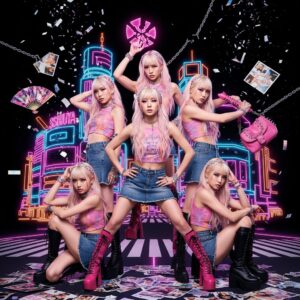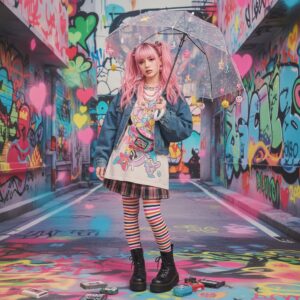
Yo, what’s the move? Let’s take a trip. Not just to a place, but to a time. A time when stepping out of Harajuku Station in Tokyo felt like plugging your entire nervous system directly into a rainbow-fueled power socket. We’re talking about the 2010s, the peak era of a style so vibrant, so unapologetically extra, it basically rewrote the definition of street fashion. This wasn’t just about clothes, fam. This was a whole mood, a declaration of independence written in pastel tulle, plastic hair clips, and layers—so, so many layers. It was the physical manifestation of kawaii, a term that just means ‘cute’ but in this context meant so much more. It was a philosophy, a rebellion, and a community all rolled into one sugar-coated, jingle-jangling spectacle. As a foodie who first hit up Tokyo on a mission for the most legendary crepes and towering rainbow cotton candy, I landed on Takeshita Street and was stopped dead in my tracks. The food was lit, no cap, but the real feast was for the eyes. The sheer creative energy radiating from the kids on the street was on a whole other level. It was pure, unfiltered self-expression, and it was beautiful. Before we dive deep into this technicolor dream, let’s get our bearings. This all went down in the electric heart of Tokyo, a district that became a global synonym for youth culture.
This creative energy wasn’t confined to fashion, as the same spirit of playful discovery fueled Japan’s obsession with capsule toys.
The Vibe Check: What Did 2010s Harajuku Feel Like?
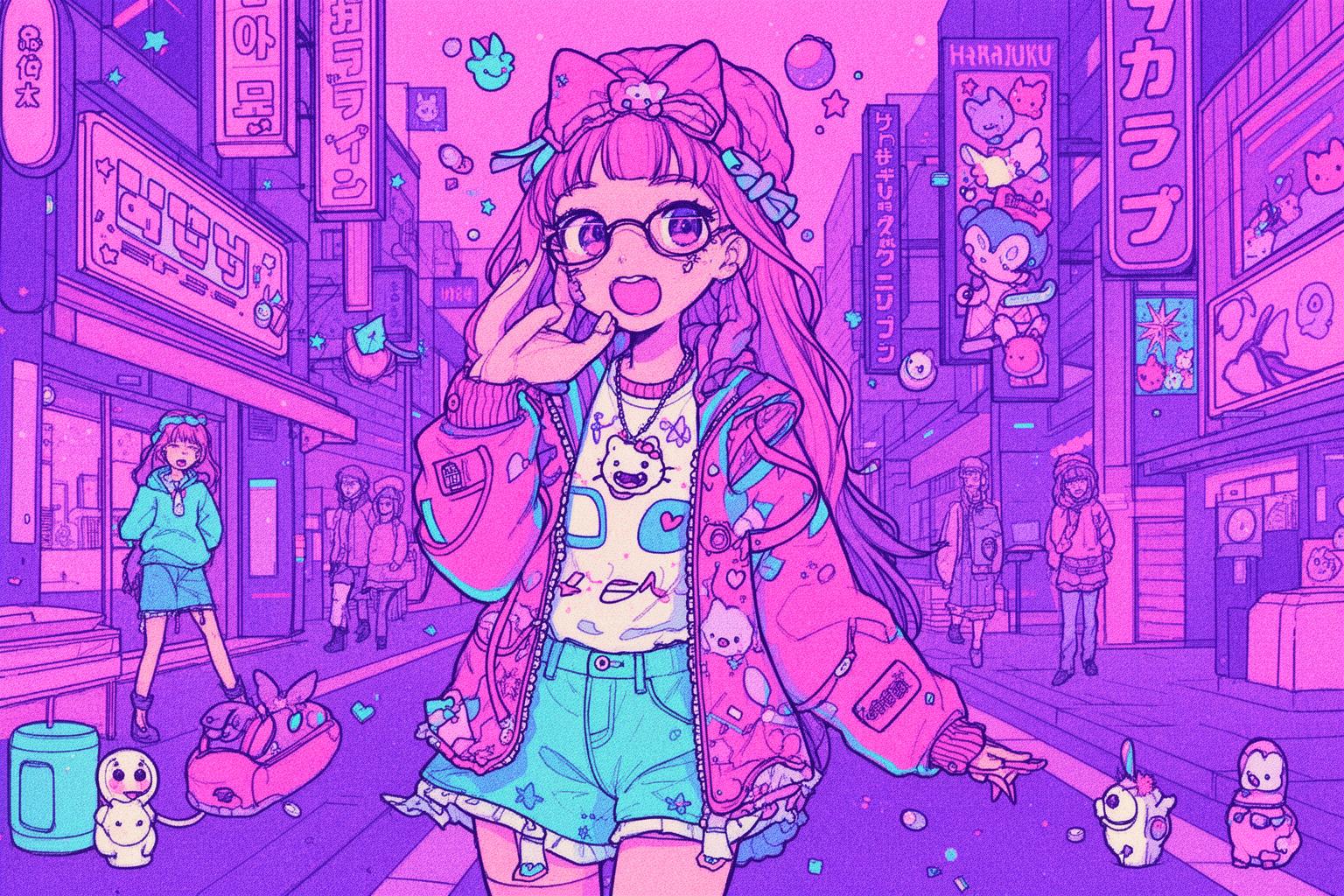
To truly grasp it, you have to feel the atmosphere. It was more than just a visual style; it was a full-body sensory immersion. Strolling down Takeshita Street, the narrow pedestrian artery of Harajuku, felt like being carried along by a human river of pure creative chaos. The air was dense with the scent of sugar—sweet, buttery crepe batter caramelizing on the griddle, blending with the artificial cherry blossom from a nearby cosmetics shop and the savory aroma of takoyaki. In terms of sound, it was a battle of the bands with every shop competing. High-energy J-pop bangers blasted from speakers, overlapping with theme songs from popular anime and the frantic jingles of claw machine arcades. Above it all, a constant buzz of conversation—groups of friends laughing, tourists gasping, shopkeepers calling out welcomes. It was loud, overwhelming, and utterly exhilarating. The energy was tangible, like a live wire of youthful optimism. It felt like anything was possible here. This was a place where conformity wasn’t required. In a society that often values harmony and fitting in, Harajuku in the 2010s was a sanctuary, a designated zone for radical individualism. It was a safe space for teens and young adults to experiment, find their tribe, and be celebrated for their differences. The unspoken rule was that there were no rules. The more you clashed, layered, and expressed your unique inner world outwardly, the more you belonged. This wasn’t about being conventionally “cool” or “attractive” by mainstream standards. It was about an internal logic of joy. Does this plastic dinosaur keychain bring you happiness? Attach it to your bag. Do these three different patterned leg warmers make you smile? Wear them all at once. This philosophy created a visual landscape that was intensely personal and endlessly fascinating. Every outfit told a story of the wearer’s passions, favorite characters, and current mood. It was a world apart from the curated, algorithm-driven trends of today. This was analog self-expression at its most vibrant peak. The climax of this weekly fashion festival was Sunday. On Sundays, the Jingu Bashi, the bridge linking Harajuku Station to Meiji Shrine, transformed into an open-air runway. This was the stage. Kids from all around Tokyo and beyond spent the entire week meticulously planning, creating, and assembling their outfits for the Sunday showcase. They weren’t dressing for anyone’s approval but their own and that of peers who shared their passion. It was a community gathering, a real-life social network based on shared aesthetics and mutual respect for creativity. You’d see Gothic Lolitas quietly chatting next to neon-clad Decora kids, their accessories jingling with every move. It was a beautiful ecosystem of subcultures, coexisting and drawing inspiration from one another in a brilliant, chaotic harmony.
Deconstructing the Drip: The Key Styles That Defined the Decade
Alright, let’s dive into the details. The 2010s Harajuku scene wasn’t defined by a single look; it was a constellation of hyper-specific, carefully crafted sub-styles. Each had its own philosophy, its own guidelines, and its own iconic features. Grasping these is essential to appreciating the full depth of this cultural phenomenon. These weren’t mere trends—they were identities. People didn’t just wear Decora; they were Decora kids. It was a complete commitment, a lifestyle choice that radiated from every pore. The dedication was extraordinary, with many enthusiasts hand-making their own accessories and customizing clothes to create a look that was entirely unique. This level of sartorial artistry is rarely seen outside high-fashion ateliers, yet here it was happening on the streets, created by teenagers armed with hot glue guns and dreams.
Decora Kei: The Living Art Installation
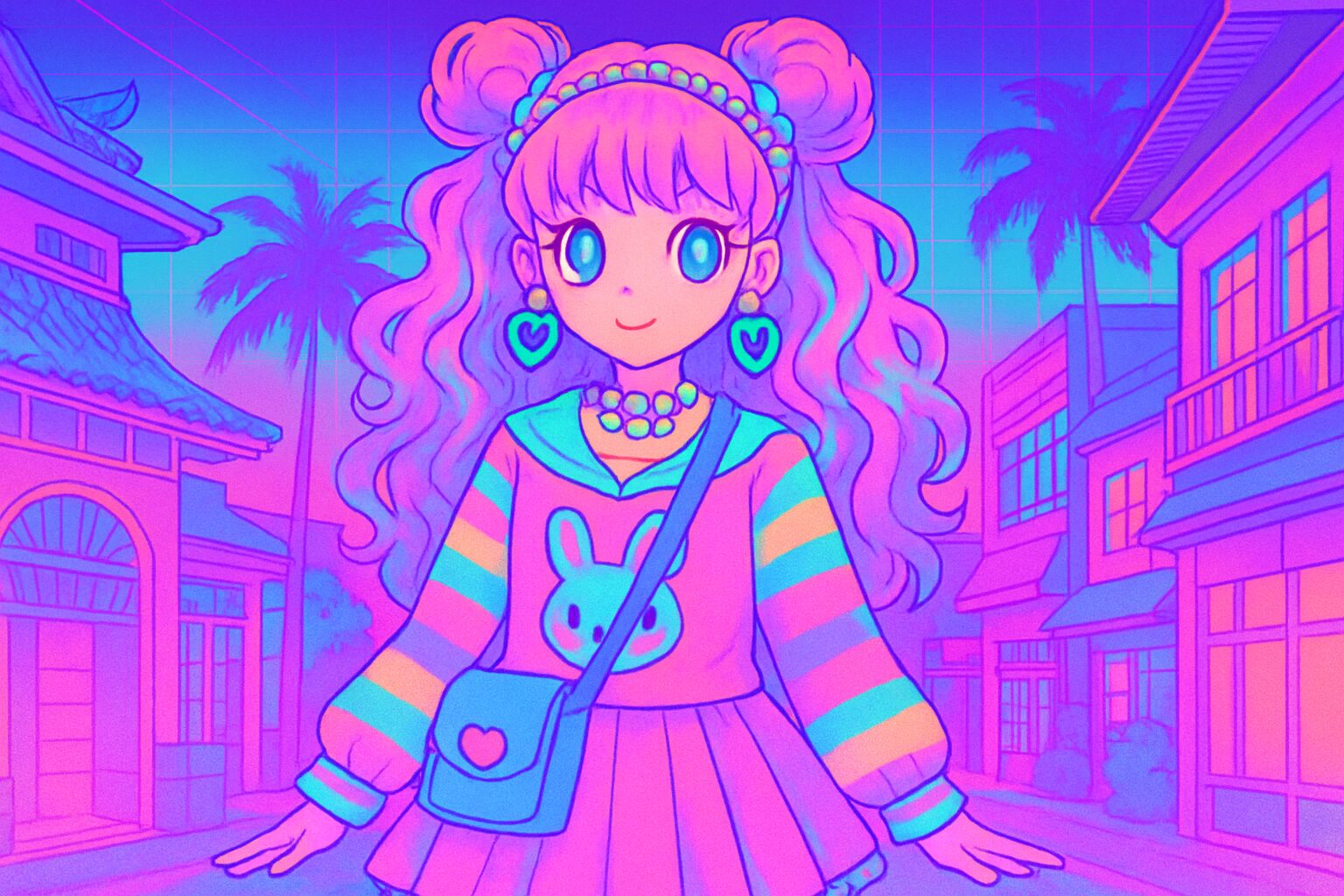
If there’s one style that epitomizes ‘peak 2010s Harajuku’ to newcomers, it’s Decora Kei. The name itself derives from ‘decoration,’ embodying an ethos taken to the extreme. The core principle of Decora is clear: more is more. No, you don’t get it. More. Is. More. It was a full-scale rejection of minimalism, a joyful revolt against the beige and mundane. Decora was about decking yourself out with so many cute, colorful items that you became a walking, talking, jangling work of art. This style was rooted in childlike delight and the pure, unfiltered joy of accessorizing.
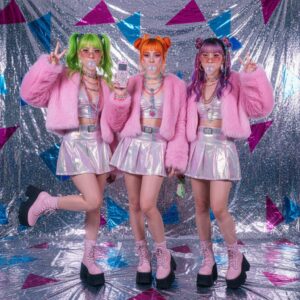
Breaking down a Decora outfit: it begins with bright, often neon clothing. Imagine pinks, yellows, blues, and greens all worn simultaneously. Layering was crucial—a T-shirt over a long-sleeved shirt, topped with a hoodie, maybe with a vest layered on top. On the bottom, patterned leggings under a frilly tutu or colorful skirt, paired with mismatched, multi-layered leg warmers. No surface was left bare. The true soul of Decora, however, lay in the accessories. Hair was a masterpiece. Often dyed vibrant colors and styled in pigtails, it served as a canvas. The aim was to cover as much hair as possible with a dense array of plastic clips, bows, barrettes, and sparkly decorations—literally a wall of clips, so many that hair was barely visible beneath them. The face wasn’t left out. A hallmark was the colorful, character-themed Band-Aid across the nose bridge or under the eye, often accompanied by vivid face stickers, glitter, and playful makeup. Body accessories followed: giant plastic bead necklaces, toy animals, and alphabet blocks layered in abundance. Wrists were piled high with colorful bangles and friendship bracelets. Plushies and character keychains from franchises like Sanrio (Hello Kitty, My Melody) or Gloomy Bear were attached to bags, belts, and wherever else they could fit. The sound of a Decora kid walking was unmistakable—a continuous gentle jingle of plastic on plastic. This style engaged all the senses. It was a playful protest against adulthood’s seriousness, clinging to childhood’s joy and wonder in the most visible way possible.
Fairy Kei: Living in a Pastel Dream
If Decora was a loud, neon sugar rush, Fairy Kei was its soft, pastel-hued counterpart. This style distilled nostalgia into a fantasy version of the past, drawing heavily from the whimsical, soft-focus aesthetic of 1980s and early 1990s cartoons, toys, and pop culture, especially Western ones. Think My Little Pony, Care Bears, Rainbow Brite, and Popples, all filtered through a sweet, ethereal Japanese perspective. The mood was innocent, magical, and utterly dreamy. It centered less on chaotic layering and more on creating a cohesive, fantasy-like aesthetic.
The defining rule of Fairy Kei was its pastel color palette. Strictly soft hues like lavender, mint green, baby pink, pale lemon yellow, and sky blue formed its foundation. Dark or primary colors were rare. The silhouette was gentle and floaty, featuring oversized sweatshirts (often adorned with vintage cartoon characters), fluffy sweaters, tulle skirts resembling clouds, and cute bloomers peeking out beneath skirts. Leg warmers were common too—in soft pastel shades—as well as winged sneakers that gave the impression of potential flight into one’s own pastel sky. Motifs were key: stars, moons, hearts, rainbows, clouds, and unicorns abounded. Prints featured vintage toys or magical girl themes. Accessories, while as important as in Decora, were more carefully chosen to match the dreamy aesthetic: plastic star-shaped wands, heart-shaped sunglasses, satin ribbons tied in hair or around wrists, and necklaces made of plastic alphabet beads spelling cute words. Hair was often dyed pastel—pink, lavender, mint—or styled with high-quality wigs. Makeup was soft and doll-like, emphasizing big, innocent eyes, rosy blush high on the cheeks, and a touch of glitter. Fairy Kei created a personal bubble of sweetness and enchantment; it was a gentle escape, crafting a soft, safe, beautiful world amid a bustling, often harsh city.
Lolita Fashion: The Elaborate Subculture
Next up is Lolita. First, let’s clear up a common misconception: this fashion subculture has absolutely no connection to Nabokov’s novel. Any association is a major misunderstanding. Lolita fashion is a Japanese street style heavily inspired by Victorian and Rococo clothing and aesthetics. Its core philosophy is embodying a specific kind of elegance, modesty, and beauty, often with a doll-like quality. It’s one of the most rule-driven and devoted subcultures within Harajuku. Being a Lolita requires serious commitment, with devotees investing considerable time and money into wardrobes centered around specific high-end Japanese brands.
The defining hallmark of Lolita is the silhouette. The classic Lolita shape is a bell-shaped or A-line skirt, achieved by wearing a full petticoat underneath. This silhouette is non-negotiable. The outfit, called a ‘coordinate’ or ‘coord,’ is meticulously planned. Typically, it includes a blouse (often with a Peter Pan collar and ruffles), the bell-shaped skirt or jumperskirt (JSK) worn over the blouse, knee-high socks or tights, a headdress, and particular shoe styles like Mary Janes or iconic rocking horse shoes. Within this structure, many distinct sub-styles exist.
Sweet Lolita
Sweet Lolita is probably the most recognizable sub-style and heavily associated with kawaii culture. It uses the classic Lolita silhouette drenched in all things cute and sugary. The color palette leans heavily on pastels—pinks, saxon blues, lavenders, and mints—as well as classic white. Dress prints steal the show, featuring whimsical motifs like cakes, macarons, strawberries, cute animals such as bunnies and kittens, and fairy tale elements. Brands like Angelic Pretty and Baby, The Stars Shine Bright are coveted within this sub-style. The look is completed with large headbows, lace-trimmed socks, and an overall aura of intense, sugary cuteness. The goal is to appear as a living porcelain doll or a confectionary-themed fairytale character.
Gothic Lolita
At the other end of the spectrum is Gothic Lolita. This sub-style swaps pastels for a much darker palette. Black dominates, often accented with rich jewel tones like crimson, royal purple, or midnight blue. The elegant silhouette remains unchanged, but the aesthetic leans toward the dark and mysterious. Prints and motifs include crosses, bats, coffins, chandeliers, and religious symbols. Lace remains prominent but is almost always black. Makeup is more dramatic, often incorporating dark lips and smoky eyes. The overall vibe is that of an elegant, enigmatic Victorian doll. Mana, musician and designer, is a pioneer of this style, with his brand Moi-même-Moitié representing the pinnacle of Gothic Lolita fashion.
Classic Lolita
Classic Lolita falls between Sweet and Gothic, presenting a more mature, refined, and historically inspired appearance. The color scheme is subdued and sophisticated—ivory, dusty rose, olive green, and wine red are typical. Silhouettes tend more towards A-line than bell-shaped, with prints that are less whimsical and more focused on florals, tapestries, and artistic motifs. Classic Lolita aims for a polished, ladylike elegance, as though stepped right out of a historical painting. It emphasizes timeless refinement rather than the persona of a ‘cute doll.’
A-Moe-Zing: The Rise of Otaku-Inspired Styles
A major trend in 2010s Harajuku was the growing fusion of fashion and otaku (nerd/geek) culture. This went beyond simply wearing a geeky tee; it involved fully integrating anime, manga, and video game aesthetics into a coherent style. Rooted in the concept of ‘moe,’ a Japanese slang term expressing a strong affection and protectiveness toward cute fictional characters, A-moe-zing styles aimed to embody that feeling. School uniform elements like sailor collars and pleated skirts were extremely popular but were reimagined with bold colors, unique accessories, and character merchandise. It became a way to wear one’s fandom openly. You’d see people with bags covered entirely in keychains and badges of favorite anime characters—a practice called building an ‘ita-bag’ (painful bag, named both for the embarrassment and the hefty cost). This style celebrated niche interests and brought them into the open, turning personal fandom into a public fashion statement. It was a powerful fusion of two of Japan’s biggest cultural exports: fashion and anime.
The Icons and Influencers: Faces of the Movement
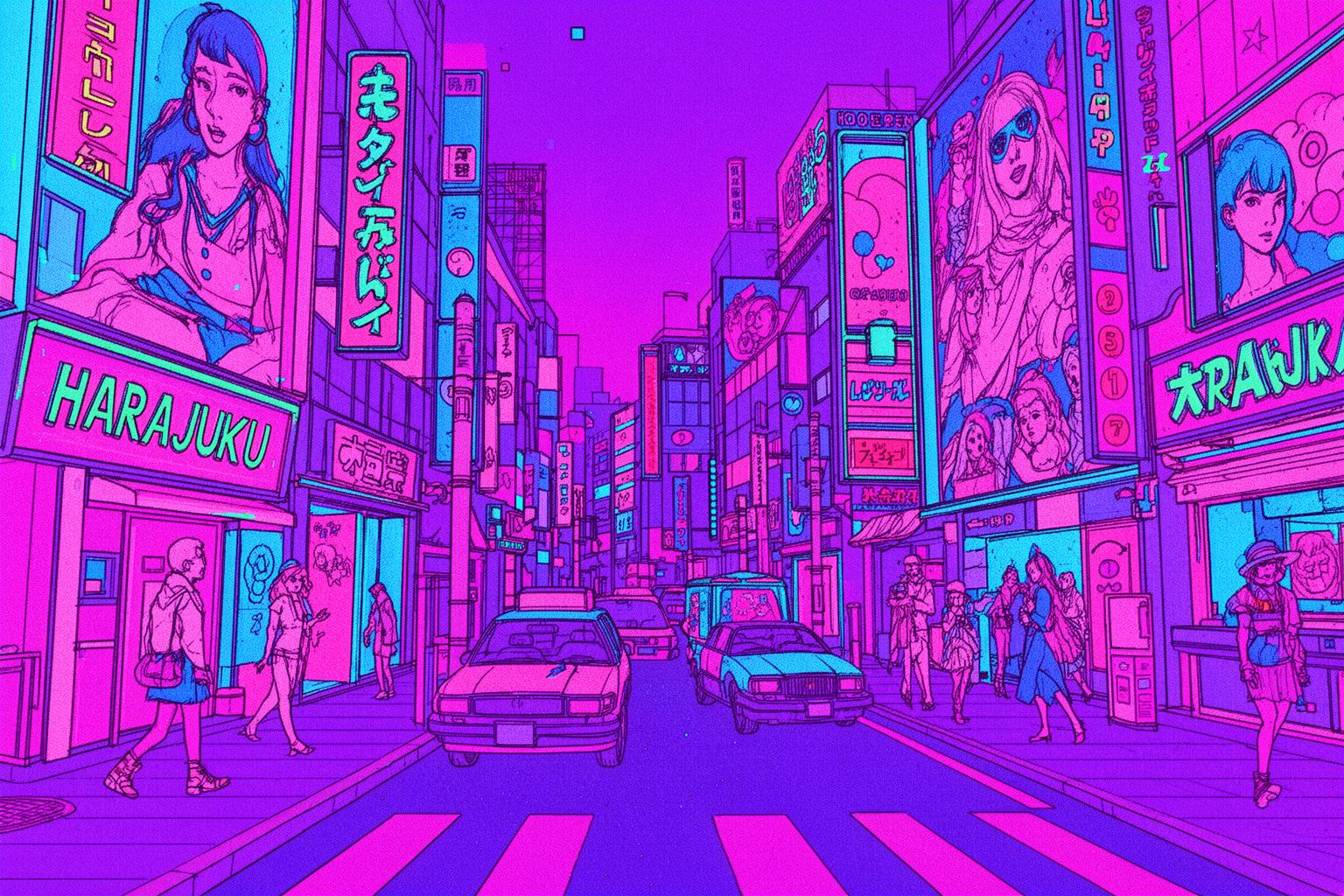
This entire movement was not a faceless force of nature; it was driven by influential individuals, publications, and shops that served as cultural hubs. These tastemakers and documentarians amplified Harajuku’s styles and shared them with the world. Before the rise of Instagram influencers, Harajuku’s influence was earned on the streets through originality, dedication, and a look so striking that it demanded attention. The icons of this time included a mix of pop stars who emerged from the scene, photographers who documented it, and the stylish youth who became local legends.
Without a doubt, the global emblem of 2010s Harajuku style was Kyary Pamyu Pamyu. Before she became a J-pop superstar, she was simply a high school girl passionate about Harajuku fashion and frequently featured in street style magazines. Her official debut in 2011 with the “PONPONPON” music video was a cultural explosion. Created by Sebastian Masuda of 6%DOKIDOKI, the video was a surreal burst of everything that made Harajuku fashion so mesmerizing: vibrant colors, quirky and cute motifs, and a playful, slightly chaotic energy. It perfectly captured the ‘sensational kawaii’ aesthetic and became a viral global sensation. Kyary transformed the niche, street-level styles of Harajuku into a pop culture phenomenon accessible worldwide. She embodied the Decora-inspired aesthetic, and for many, she was the first introduction to this remarkable scene.
Long before Kyary’s rise, the culture’s most vital documentarians were the street snap magazines. The most legendary among them was undoubtedly FRUiTS. Founded in 1997 by photographer Shoichi Aoki, FRUiTS was the Harajuku style bible. Each issue presented a simple yet stunning collection of full-page photos of stylish young people Aoki discovered on the streets. Beside each photo was a brief text block listing the subject’s name, age, and the brands they wore, often noting details such as ‘handmade’ or ‘remade.’ Aoki’s approach was anthropological; he photographed subjects against plain walls, allowing their outfits to speak for themselves without judgment or commentary on fashion’s value—it was an honest, unfiltered record of the scene. For international fans in the pre-social media age, acquiring a copy of FRUiTS was like receiving a sacred text from a distant land—a vital source of inspiration and a glimpse into a world of limitless creativity. Another magazine, TUNE, highlighted male street style, proving that Harajuku’s fashion creativity transcended gender.
The shops were as iconic as the people. They were more than retail stores; they were community centers, creative studios, and pilgrimage destinations for fashion enthusiasts. At the core was 6%DOKIDOKI, tucked away in Harajuku’s backstreets. Founded by art director Sebastian Masuda, this store was the heart of the extravagant, ‘sensational kawaii’ style that shaped Decora and Kyary Pamyu Pamyu. Entering 6%DOKIDOKI felt like stepping into an exploded toy box—a vibrant, immersive experience filled with color and sound. For the Lolita community, brands like Angelic Pretty, known for its ultra-sweet prints, and Baby, The Stars Shine Bright were hallowed ground. The launch of a new print from these brands sparked frenzied enthusiasm, with fans queuing for hours to secure their prized dresses. For followers of Fairy Kei, the small shop SPANK! was influential, championing the 80s pastel fantasy aesthetic with its vintage and remade apparel. These stores didn’t just sell clothing; they offered a dream, an entire world for customers to immerse themselves in.
So, What Happened? The Evolution and Fading of a Technicolor Dream
The hyper-vibrant Harajuku scene of the early to mid-2010s shone so brilliantly that it seemed like it would endure forever. However, like all powerful subcultures, it eventually began to evolve. Walking through Harajuku today, you’ll still encounter amazing fashion, but the dense, layer-heavy, hyper-colorful styles that defined the 2010s have noticeably diminished. Several factors contributed to this change, signaling a new chapter for the district.
One of the biggest game-changers was the rise of social media, especially Instagram. During the classic era, the ‘runway’ was the physical street, and FRUiTS magazine served as the key publication. Influence was local and community-driven. Instagram globalized everything. Suddenly, trends spread instantly from Seoul to New York to Tokyo, leading to a certain level of aesthetic homogenization. The motivation for dressing up also shifted. For some, it became less about the joy of community expression and more about curating a flawless online persona. The goal changed from participating in a vibrant scene to capturing the perfect, shareable photo. This isn’t necessarily negative, but it fundamentally altered the street’s dynamic.
At the same time, Harajuku’s physical landscape began to shift. Global fast-fashion giants like H&M and Forever 21 established large flagship stores along Takeshita Street. Their arrival made trendy, affordable clothing accessible to many, but it also displaced some of the small, independent boutiques that gave the area its distinctive character. Rents increased, and the commercialization of the street diluted the authentic, subcultural atmosphere. What was once a place created by and for young people started to feel more like a tourist destination.
This brings us to the third factor: the ‘tourist gaze.’ As Harajuku’s international fame grew, it became a major tourist hotspot. While this brought economic benefits, it also changed the vibe. The young people who once used the street as their personal canvas began to feel like unpaid attractions in a theme park, constantly photographed (often without consent) by waves of tourists. For some, this scrutiny turned dressing up into a performance rather than an authentic expression, prompting them to withdraw or seek out new gathering spaces.
A pivotal moment occurred in early 2017 when Shoichi Aoki announced he would cease regular publication of FRUiTS magazine. His reason was both simple and heartbreaking: “There are no more cool kids to photograph.” This announcement sent shockwaves through the global fashion community. He later clarified that he didn’t mean fashionable people had disappeared, but that the specific daring, original, and rebellious style he had documented for 20 years had faded. The youth were now embracing more subdued, conventional ‘normcore’ looks. The unique ecosystem that fostered the wild styles of the 2010s had transformed.
In the end, all subcultures experience a natural life cycle. They emerge from a desire for rebellion and community, reach a peak of creativity and influence, and then either fade, go mainstream, or evolve into something new. The peak Harajuku style of the 2010s was a stunning, explosive moment in time, and its transformation was, in many respects, inevitable.
How to Vibe with 2010s Harajuku Today
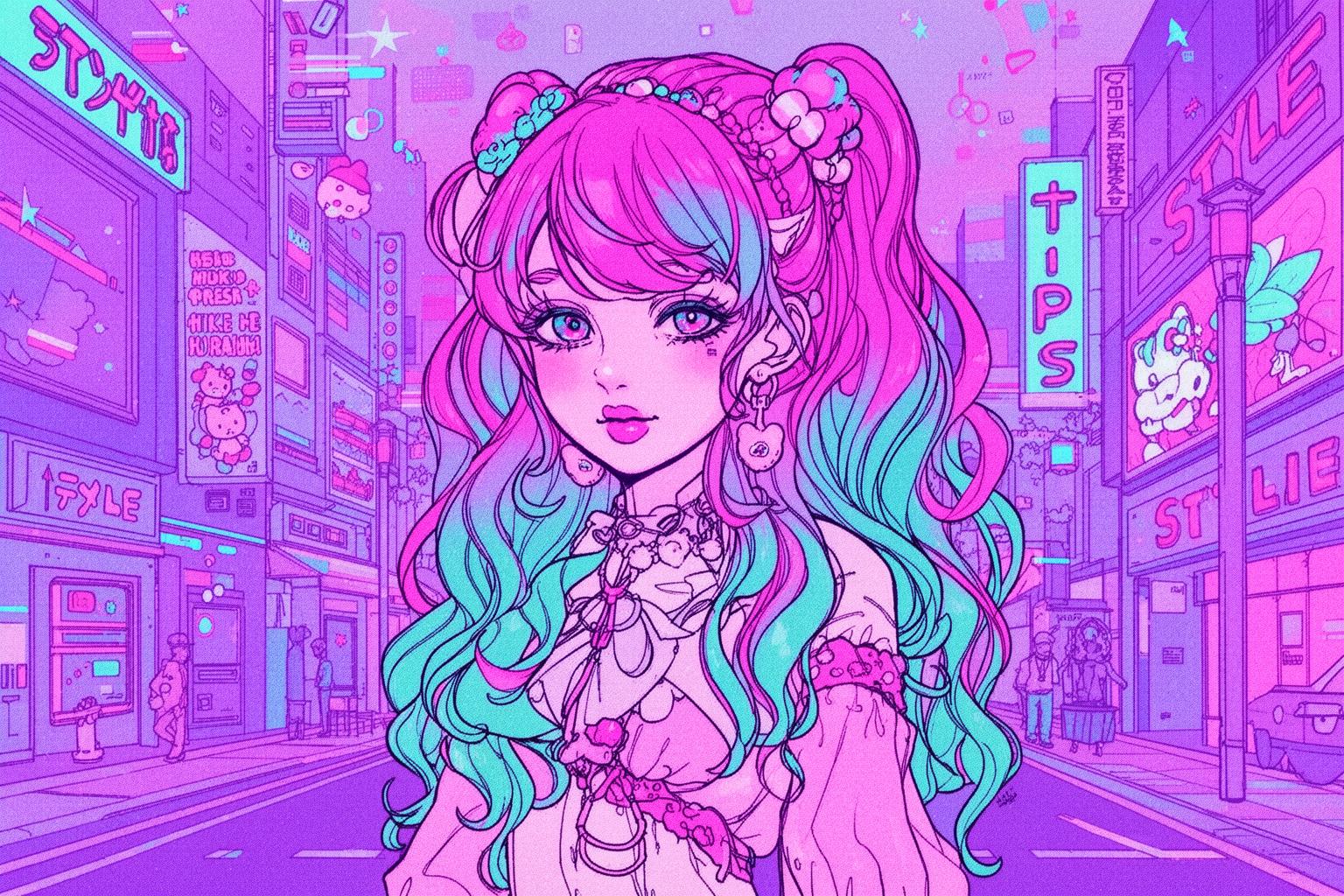
So, if you’re planning a trip to Tokyo right now, what should you expect? First, it’s crucial to manage your expectations. You won’t step off the station and into a 2012 FRUiTS magazine photoshoot. The scene has changed. But that doesn’t mean the spirit of Harajuku is gone. It’s just different—like a ghost, but a very cute and well-dressed one. The creativity remains; you just need to know where to find it.
Traces of the classic era still endure. Legendary shops like 6%DOKIDOKI continue to champion ‘sensational kawaii’ and are a must-visit for that original, explosive energy. Many Lolita brands maintain their beautiful storefronts, serving as shrines to their devoted fans. To discover today’s more unique and indie fashion, you’ll need to explore beyond the main streets. Venture into Ura-Harajuku, the maze of backstreets behind the main roads. Here, you’ll find smaller boutiques, vintage shops, and the new generation of creative hubs. Cat Street, the pedestrian-friendly path connecting Harajuku to Shibuya, is another excellent spot to see contemporary Tokyo street style, often more chic and refined than past fashions.
Modern Harajuku is a melting pot of fresh influences. You’ll notice many styles inspired by K-pop, along with ‘Jirai-kei’ (landmine style) and ‘Ryousangata’ (mass-produced) aesthetics, which carry a darker, doll-like ‘cute but mentally unstable’ vibe. While the styles remain highly detailed and deliberate, the dominant look has shifted. Takeshita Street itself is still an essential experience. It’s a chaotic, fun, and delicious bombardment of the senses. Indulge in the giant rainbow cotton candy, outrageously over-the-top crepes, ‘long-fried-potato’ sticks, and the overall spectacle. It remains the heart of Tokyo’s teenage culture, even if that culture now appears somewhat different.
For first-time visitors, here are some practical tips. Harajuku is incredibly easy to reach. Take the JR Yamanote Line to Harajuku Station, and you’ll emerge right in front of Takeshita Street. Alternatively, use the Tokyo Metro Chiyoda or Fukutoshin lines to Meiji-jingumae Station. The best time for people-watching is still a weekend afternoon, especially Sundays. The crowds will be intense, but that’s part of the charm. The most important advice, however, is about etiquette: if you see someone with an amazing outfit and want to take a photo, always ask for permission first. A polite ‘Sumimasen, shashin ii desu ka?’ (‘Excuse me, is it okay to take a photo?’) accompanied by a respectful gesture goes a long way. Remember, these are people, not props for your vacation photos. Be kind and respectful, and you’ll find that those who embody the Harajuku spirit are often happy to share their incredible artistry with you.
The Legacy: Why the 2010s Kawaii Explosion Still Slaps
Although the street scene has evolved, the legacy of 2010s Harajuku fashion remains immense and undeniable. It was more than just a passing trend; it was a cultural export that profoundly influenced the world. The visuals from that period—documented in FRUiTS and spread internationally through music videos and early fashion blogs—inspired a generation of Western artists and designers. Consider Gwen Stefani’s Harajuku Lovers phase, the vibrant and surreal styles of Nicki Minaj and Katy Perry, and the many designers who integrated kawaii elements into their collections. Harajuku showcased a distinctive, lively, and unapologetically quirky vision of Japanese youth culture to the global stage.
More importantly, the movement redefined the meaning of ‘kawaii.’ It demonstrated that ‘cute’ was not merely a passive, superficial aesthetic but a tool for empowerment. It served as a form of self-care, creating a protective shell of joy and softness against the pressures of a demanding world. It was a rebellion against the expectations to be serious, sexy, or grown-up. The Harajuku youth of the 2010s proved that you could fashion your own world, set your own rules, and live in it proudly. It was a tribute to the strength of authenticity.
The core message from that golden era is more relevant now than ever: radical self-acceptance is the ultimate style. This movement was rooted in the joy of creation, finding your tribe, and expressing who you are without uttering a word. The electric rainbow of the 2010s may have faded somewhat on Harajuku’s streets, but its spirit endures. It lives on in every individual worldwide who dares to wear what makes them happy, who connects online with others sharing niche passions, and who believes in the transformative power of adding a bit more color, joy, and self to the world. And that, no cap, is a vibe that will never go out of style.