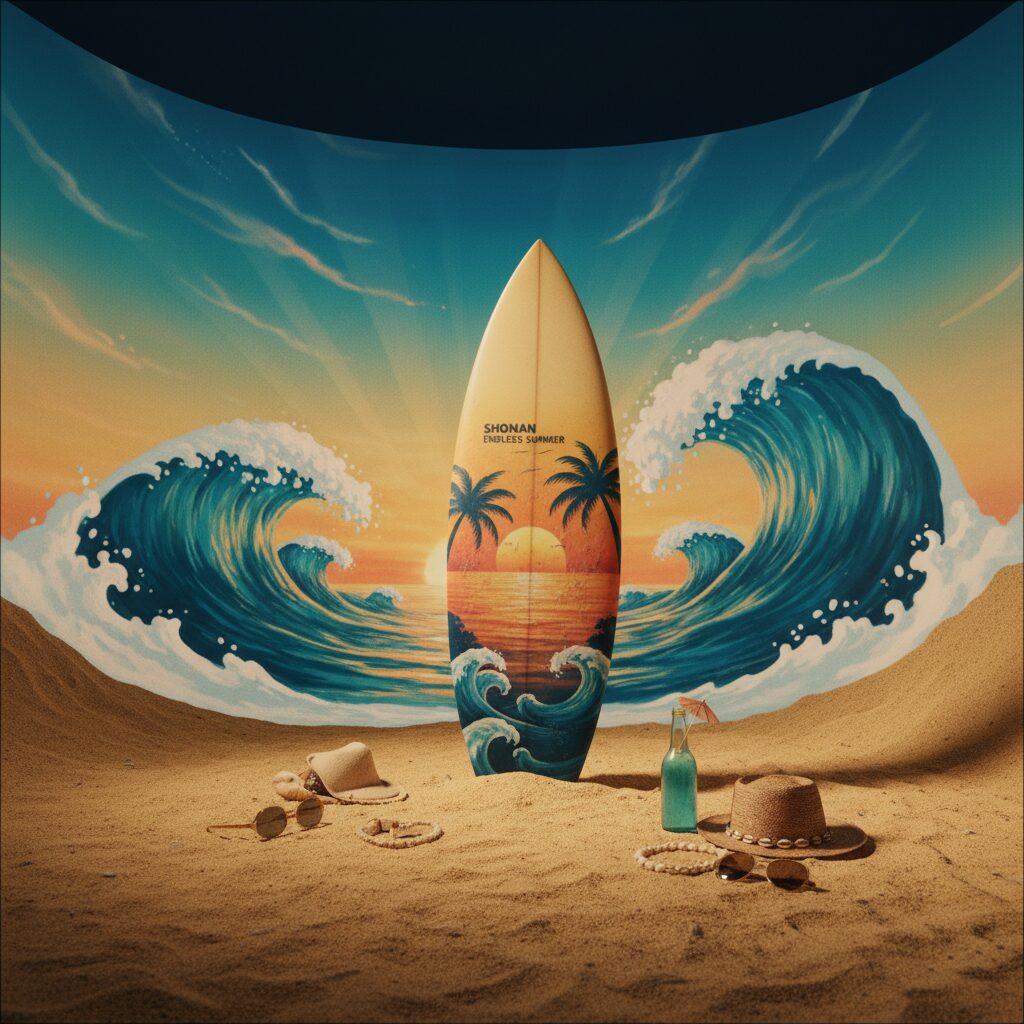
Yo, what’s the real deal with Shonan? You’ve seen it, for sure. It’s all over your feed. That one shot of a retro green train, the Enoden, chugging along a coastline so close to the houses you could almost high-five the driver. Then there are the longboarders, silhouetted against a setting sun, with Mount Fuji holding court in the background like a sleeping giant. It’s got that laid-back, sun-bleached, salt-in-the-air vibe that screams ‘California’. It’s sold as Japan’s answer to the West Coast dream—a chill, surf-centric paradise just a stone’s throw from the concrete chaos of Tokyo. It’s the ultimate escape fantasy, packaged and ready for weekend consumption. But let’s get real for a sec. Is this whole ‘California of Japan’ thing legit, or is it just a masterclass in branding? Is Shonan a genuine surf mecca, a place with deep, authentic roots in wave-riding culture, or is it more of a meticulously crafted aesthetic, a performance of the beach life for a nation of workaholics who desperately need to exhale? We gotta dig deeper than the surface-level gloss. It’s a place that tells you so much about modern Japan—its aspirations, its pressures, and its search for a little bit of soul in a hyper-efficient world. This isn’t just about beaches and boards; it’s about decoding a cultural phenomenon. Let’s peel back the layers and see what’s really going on behind the perfect sunset shot. It’s time for a proper vibe check on Japan’s so-called endless summer.
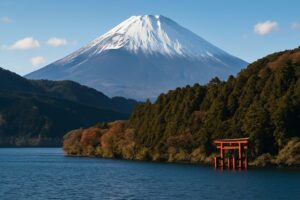
To understand this search for soul beyond the city, one can also explore the iconic Fuji views from nearby destinations like Hakone.
The Vibe Check: Why Shonan Isn’t Really California (And Why That’s A Good Thing)
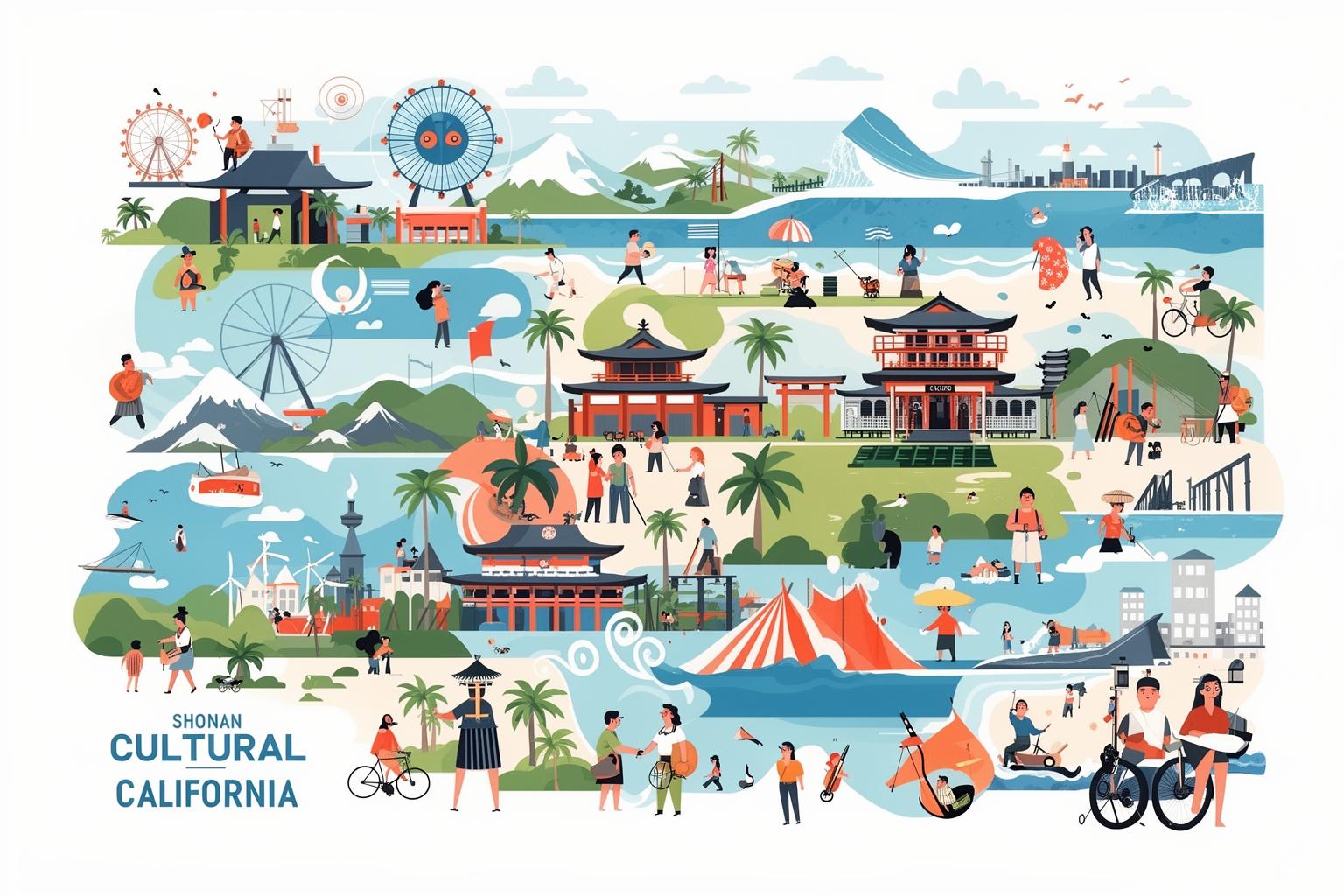
First and foremost, we need to shatter the illusion. Comparing Shonan to California is like contrasting a carefully packed bento box with an expansive all-you-can-eat buffet. Both involve food, sure, but their philosophy, scale, and atmosphere are entirely different. The ‘California’ tag is a convenient, imported shorthand for a feeling Japan yearned for, especially in the latter half of the 20th century. It’s not about duplicating Malibu or Santa Cruz exactly; it’s about capturing a spirit—a spirit of freedom, individualism, and sunlit optimism that felt utterly opposed to Japan’s post-war reality of rebuilding, conformity, and relentless hard work.
Decoding the “California” Label
It all began in the post-war period. American culture swept over Japan like a tidal wave. GIs on bases, Hollywood films flickering on screens, rock and roll blasting from radios—it was an intoxicating mix of cool. For a generation brought up in Japan’s rigid, hierarchical society, the vision of America, especially California, represented a new frontier of personal expression. It was the land of blue jeans, convertibles, and endless highways—a place where reinvention seemed possible. This wasn’t just fantasy; it was a psychological lifeline.
Then came the 70s and 80s, when Japan’s economy was booming. The country was no longer just surviving; it was thriving. This newfound wealth created a generation of youth with disposable income and, critically, leisure time. Car ownership surged. The dream of driving to the coast for the weekend was no longer just a movie scene—it became real. This is when the media machine went into overdrive. Magazines like Popeye became the bibles for young men. They didn’t merely report trends—they shaped them. Popeye introduced the idea of the ‘City Boy,’ a sophisticated urbanite balancing work with a rich life of culture, fashion, and crucially, escape. The magazine ran extensive features on West Coast American style—the clothes, music, and lifestyle. Shonan became the local stage where this imported dream could be played out. Close enough to Tokyo to be accessible, yet far enough to feel like another world. It was here you could wear your Hang Ten shirt, grab your surfboard (even if you barely knew how to use it), and live the California fantasy for 48 hours.
The Wave Reality: A Surfer’s Honest Perspective
Now, about the surfing. If you’re an experienced surfer from Hawaii, Australia, or California and you paddle out at Kugenuma Beach expecting epic, peeling barrels—you’re in for disappointment. Let’s be frank: the waves in Shonan are mostly not world-class. No exaggeration. Sagami Bay, where Shonan is located, is geographically sheltered. It doesn’t get the powerful, long-period swells that produce the kinds of waves seen in surf magazines. More often than not, the surf is small, mushy, and dependent on the wind. It’s a paradise for longboarders who can elegantly ride gentle ankle-high waves, but for shortboarders seeking a powerful canvas to carve, it can be frustrating.
So, the million-yen question: why are so many surfers drawn here? Why do thousands flock to these shores at dawn, day after day? The answer unlocks the soul of Shonan. Surfing here is less about adrenaline-fueled conquest and more about a meditative ritual. It’s about the process: waking up in the dark, the quiet drive to the coast, the first sight of the ocean to check conditions. It’s the feeling of cool sand beneath your feet, paddling out through gentle surf, the camaraderie of sitting with a hundred others on boards, all facing east, waiting for sunrise and a set to roll in. It’s a moment of pure calm before the day’s chaos. It’s a form of active mindfulness, a way to connect with something greater in a society that often values the collective over the individual. In the water, everyone is equal. Job titles and social status don’t matter. It’s just you, the board, and the ocean. For the Tokyo salaryman who spends his week in a suit, bowing within a strict corporate hierarchy, this liberation is priceless. The small, gentle waves are actually a blessing for the many beginners who take up the sport here. The scene is wonderfully diverse: you’ll see the veteran local surfer who’s been riding the same break for 50 years, university surf club members, weekend warrior families teaching their kids, and Tokyo executives who swapped briefcases for longboards for the day. Shonan proves that wave quality is secondary to the quality of the experience.
The Social Escape Hatch: Shonan as Tokyo’s Backyard
To truly understand why Shonan holds such a mythical place in the Japanese imagination, you need to grasp what it represents an escape from. It’s not merely a matter of geographical isolation; it’s a mindset. Shonan acts as Tokyo’s vital release valve, a sanctuary where the overwhelming pressure of urban life can be safely relieved before reaching a breaking point. The one-hour train ride marks a passage across a psychological divide, moving from a world of strict expectations to one of relaxed acceptance.
The Pressure Cooker and the Release Valve
For many, life in Tokyo is a test of endurance. It’s the sardine-can commute on the Yamanote line, where you are physically pressed against strangers yet remain emotionally distant. It’s the notoriously long work hours, where leaving the office ‘on time’ can be viewed as lacking team spirit. It’s the complex web of social obligations, from after-work drinking parties (nomikai) that are technically optional but socially compulsory, to the subtle dynamics of senpai-kohai (senior-junior) relationships that govern how you speak, behave, and even pour drinks. This is a society that highly values harmony, conformity, and the collective good. This is the world of tatemae—the public facade, the polite and socially acceptable persona you project. It’s efficient, safe, and orderly, but it can also feel emotionally stifling.
Shonan is the antidote. It embodies honne—your true feelings, your authentic self. The moment you step off the train in Kamakura or Fujisawa, you can physically feel the collective tension ease. Shoulders drop. The pace slows down. The unofficial Tokyo uniform—the dark suit, the conservative blouse, the polished leather shoes—is replaced by board shorts, loose linen shirts, and Havaianas. It’s a place where being a bit scruffy, a little loud, a little different is perfectly acceptable. No one minds if your hair is tousled by the sea breeze or if there’s sand on your feet in a café. This freedom from judgment is perhaps the most intoxicating part of the Shonan experience for the Japanese. It’s not about wild rebellion; it’s about the simple, profound joy of letting your guard down. It’s the freedom to sit on a seawall and do absolutely nothing without feeling pressured by society to be productive or to be rushing somewhere. In a culture that can often feel overwhelmingly prescriptive, Shonan offers a space of blissful ambiguity.
The Anatomy of a Shonan Day Trip
The ritual of escaping to Shonan is as important as the destination itself. It begins amidst the steel and glass canyons of Shinjuku or Tokyo Station. You board the Shonan-Shinjuku Line and for the first 30 minutes, you remain firmly in the city’s grasp, rattling past an endless array of apartment blocks and office towers. But then, after Ofuna, something shifts. The buildings start to shrink, the sky broadens, and then you catch the first glimpses of blue on the horizon. The Pacific Ocean. A collective sigh of relief seems to ripple through the train car.
The real magic begins when you transfer to the Enoshima Electric Railway, the Enoden. This quaint, slightly rickety train is the heart and soul of Shonan. It’s not merely a mode of transport; it’s a mobile cultural experience. The train moves at a leisurely pace, its bell clanging nostalgically. For long stretches, it runs along the street like a tram, squeezing between houses and shops so closely you could peer into someone’s living room. Then, along the famous stretch between Kamakurakokomae and Shichirigahama, it opens out onto the coast, running parallel to the road with the shimmering ocean just feet away. This iconic scene, immortalized in countless anime, films, and TV shows, is etched deeply into the national consciousness. Riding the Enoden is an act of surrendering to a slower pace. It compels you to stop rushing and simply… observe. It links the key cultural landmarks of the area—the ancient temples of Kamakura, the lively island of Enoshima, the surf breaks of Kugenuma—not as a sterile subway might, but as a romantic, winding thread. The journey itself becomes a form of therapy, a gradual unwinding from the high-octane energy of the city.
The Cultural Soundtrack and Scenery
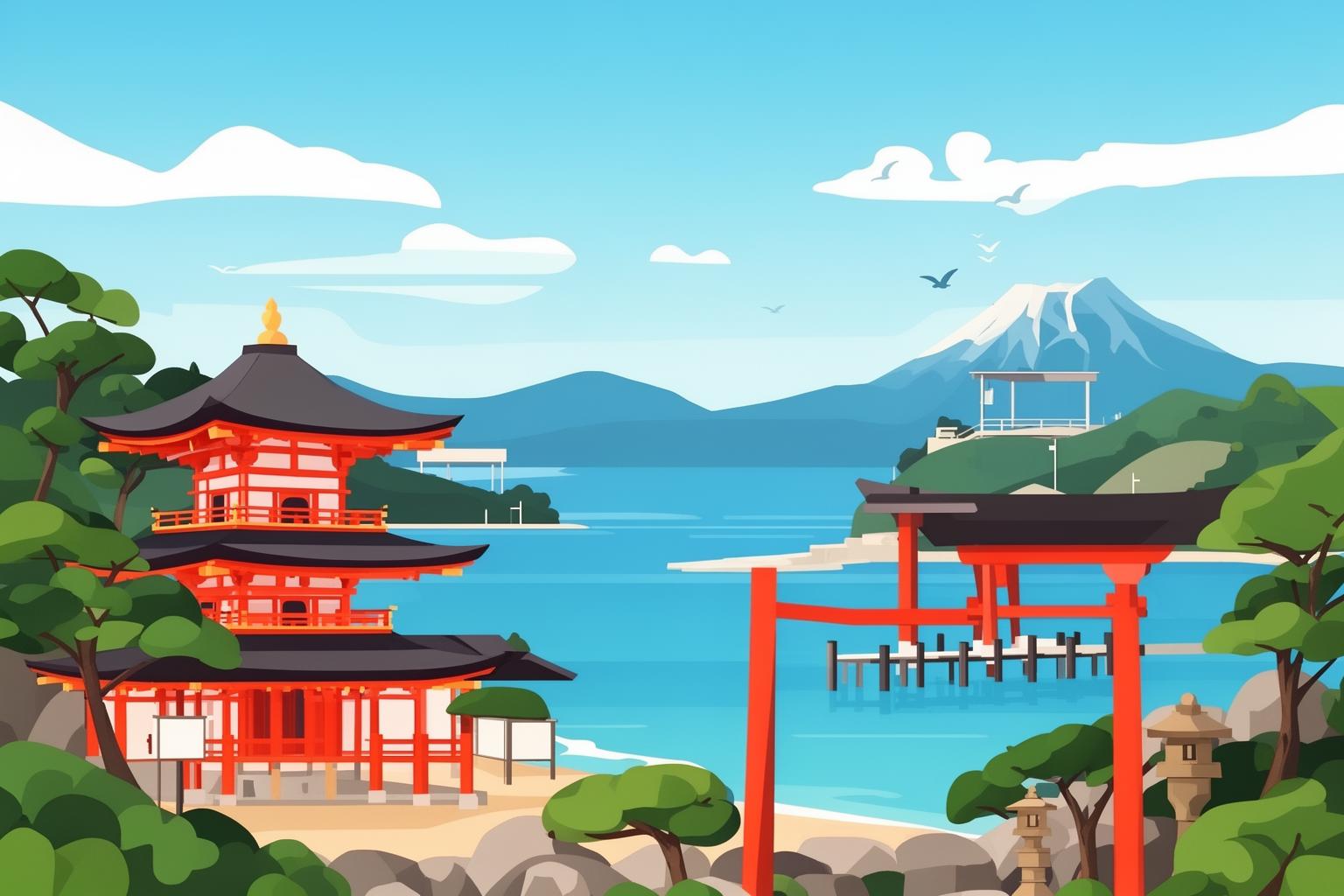
Shonan’s identity is far more than just its sand and surf. It is a rich tapestry woven from history, music, and cuisine. The area presents a fascinating paradox: a place where a millennium of history coexists with the latest café trends, and where the national pop culture has been shaped by its local landscape. To truly understand Shonan, you need to look beyond the beach and delve into the cultural ecosystem that gives it its distinctive character.
More Than Just a Beach: Kamakura, Enoshima, and Chigasaki
‘Shonan’ is an umbrella term encompassing a collection of unique communities, each with its own personality. It is not a single entity. The atmosphere in Kamakura is vastly different from that in Chigasaki, and this diversity is central to its charm.
Kamakura is where history comes alive. This was the seat of Japan’s first shogunate and the country’s de facto capital from the 12th to the 14th century. As a result, the city is filled with magnificent Zen temples, tranquil shrines, and, of course, the iconic Great Buddha (Daibutsu), a massive bronze statue that has quietly watched over the area for nearly 800 years. What’s striking and beautiful about Kamakura is how this profound history exists side by side with modern beach culture. You can spend your morning wandering the peaceful bamboo forest at Hokokuji Temple, hearing only the rustle of leaves, then take a 15-minute walk to Yuigahama Beach to watch surfers in action. This culture does not isolate its history in museums; it lives with, around, and through it. The idea that one can seek spiritual enlightenment and catch a good wave in the same afternoon perfectly embodies the balanced lifestyle many Japanese aspire to.
Enoshima represents Shonan’s liveliest and most commercial side. It is a small, hilly island linked to the mainland by a long bridge, serving as a bustling tourist hotspot. You climb its steep, narrow streets lined with souvenir shops and eateries selling grilled squid and other seafood. You visit various shrines dedicated to Benten, the goddess of fortune, wealth, music, and water. You can explore the Iwaya Caves, shaped by the sea over millennia, and ascend the Sea Candle, a modern observation tower offering breathtaking panoramic views stretching from the Izu Peninsula to Tokyo’s skyscrapers, with Mount Fuji presiding over it all on clear days. Enoshima is slightly kitschy, a touch mystical, and a great deal of fun. It epitomizes the accessible, family-friendly side of the Shonan dream—a place of simple pleasures and spectacular scenery.
Chigasaki reveals the purest spirit of Shonan’s surf culture. It is less polished than Kamakura and less touristy than Enoshima. A residential town where life genuinely revolves around the ocean, it boasts the highest concentration of surf shops, shapers, and passionate locals living in rhythm with the tides. Chigasaki is also revered by Japanese music lovers as the hometown of Southern All Stars, one of Japan’s most beloved and enduring rock bands. Frontman Keisuke Kuwata has penned countless songs that serve as the unofficial soundtrack of summer in Japan, filled with lyrics evoking Shonan’s specific scenes—the beaches, the R134 highway, and the feeling of youthful romance mixed with bittersweet nostalgia. For many generations, Southern All Stars’ music is inseparable from the experience of being in Shonan, lending Chigasaki an almost mythical aura.
The Taste of the Coast: Shonan’s Food Culture
Shonan’s lifestyle is also defined by its cuisine, reflecting its blended identity deliciously. At its heart lies the sea. One local specialty you cannot miss is shirasu-don. Shirasu — tiny, immature whitebait — are served in a generous heap over rice, either boiled (kamaage) or, for the adventurous, raw (nama). Enjoying a bowl of fresh shirasu-don at a small diner overlooking the ocean is an essential Shonan experience, a pure taste of the region’s fishing heritage.
Layered upon this traditional base is a modern, international influence that fuels the area’s ’California’ image. Shonan’s streets are dotted with trendy cafés serving artisanal coffee and avocado toast. Hawaiian-themed restaurants offer menus featuring loco moco and garlic shrimp, decorated with ukuleles and surfboards. Gourmet burger joints, wood-fired pizzerias, and craft beer bars showcasing local brews round out the culinary scene. This variety reflects the Shonan dream’s cosmopolitan, relaxed, and slightly indulgent approach to dining—quite different from Tokyo’s quick and functional noodle shops. Yet, these new venues don’t replace the old; they coexist. A 50-year-old shokudo run by an elderly couple sits right beside a brand-new Australian-style café. This blend makes Shonan feel vibrant and dynamic, a place that honors its roots while eagerly embracing fresh ideas.
The Modern Shonan: Dream vs. Reality
For all its romantic appeal, the Shonan of today is a complex and sometimes contradictory place. What was once a niche subculture dream has gone mainstream, fueled by social media and pop culture. This surge in popularity has brought fresh energy and new opportunities, but it has also introduced pressures that threaten to undermine the very authenticity that made the area special originally. The tension between the idealized image and everyday reality has become a central part of Shonan’s story.
The “Terrace House” Effect and The Instagram Invasion
If there’s one thing that launched the Shonan aesthetic onto the global stage, it was Fuji TV and Netflix’s reality show, Terrace House: Boys & Girls in the Next Door. The show, chronicling six young strangers living together in a sleek modernist house in Shonan, was a cultural sensation. It didn’t just highlight their drama; it marketed a lifestyle. Audiences worldwide were captivated by scenes of cast members surfing at sunset, jogging along the beach, and sharing profound conversations in chic local cafes. The show made Shonan a character itself, a setting of aspirational cool.
The impact of this exposure has been significant. Certain spots featured on the show have become pilgrimage destinations for fans. The railroad crossing at Kamakurakokomae Station, already famous from the anime Slam Dunk, is now perpetually crowded with tourists aiming to capture the exact shot of the Enoden train coming past the ocean. This is the double-edged sword of modern fame. The influx of visitors and the relentless stream of Instagram posts have certainly boosted the local economy. Yet it has also resulted in extreme congestion. On any bright summer weekend, Route 134—the main coastal highway—turns into a parking jam. The beaches become so packed that finding a spot to lay a towel is difficult. For locals, this ‘Instagram invasion’ can be a source of irritation. The peaceful, laid-back atmosphere they treasure is threatened by waves of transient visitors more interested in capturing images than engaging with the culture. The dream is becoming a victim of its own marketability.
Who Actually Lives Here? The Changing Demographics
The image of Shonan is one of surfers, artists, and bohemian cafe owners. While that community indeed exists and forms the cultural heart, the reality of who lives here is far more diverse and rapidly evolving. For decades, Shonan has also served as a bedroom community for Tokyo. People endure a 60- to 90-minute commute each way in exchange for a better quality of life—more space, cleaner air, and the ocean at their doorstep. It’s a classic suburban dream, just with a cooler, salt-sprayed facade.
The COVID-19 pandemic accelerated this trend dramatically. As remote work shifted from a niche benefit to a mainstream norm at many Tokyo-based companies, thousands of office workers had an epiphany. If they only needed to go to the office once or twice a week—or not at all—why pay exorbitant rent for a tiny city apartment? This triggered a mini-exodus, especially among young families and professionals in their 30s and 40s, to places like Shonan. They sought the ‘Shonan life’ not just as a weekend getaway, but as a full-time reality.
This demographic shift is reshaping the area. New housing projects are emerging. Schools are seeing rising enrollment. The need for co-working spaces and high-speed internet has skyrocketed. But this new wave of residents also highlights the economic realities beneath the dreamlike surface. Shonan is not an inexpensive place to live. Growing demand has driven up property prices and rents, making it harder for the artists, musicians, and low-wage service workers who helped build the area’s ‘cool’ reputation to remain. There’s increasing tension between the romantic image of the free-spirited surf bum and the reality of the well-paid remote worker who can afford an ocean-view apartment. The Shonan dream, it turns out, carries a price tag, and not everyone can buy in.
The Enduring Myth: So, What’s the Real Shonan?
So, what’s the bottom line? Is Shonan Japan’s California? No. It’s something far more interesting and complex. It’s not a simple imitation; it is a uniquely Japanese creation. A cultural space born from a nation’s collective yearning for an outlet, a place to breathe in a society that often demands silent conformity. It is the product of a post-war fascination with American freedom, filtered through a Japanese lens of subtlety, community, and a profound appreciation for nature and ritual. The ‘California Dream’ was the initial inspiration—the imported seed—but the plant that grew is native to these shores.
The Shonan you see on Instagram is real, but it represents only one frame of a much larger, more nuanced story. The reality includes the traffic jams on Route 134, the mediocre waves on a Tuesday morning, the old fisherman mending nets beside a tourist snapping a selfie. It’s the clash between the quiet life locals seek and the weekend excitement city dwellers bring. It is the beautiful, messy, living paradox of ancient history and modern ambition, of deep-rooted community and globalized cool.
The lasting power of the Shonan myth reveals much about the pressures and desires of modern Japan. The fact that millions continue to chase this dream, crowding onto the Odakyu Romancecar every Friday night, proves its vital place in the national psyche. They aren’t in search of a perfect copy of California. They are seeking a space to become a slightly different, slightly more relaxed, slightly more authentic version of themselves. And in a country as orderly and demanding as Japan, finding that space, even for a weekend, means everything. Shonan is not just a place on a map; it’s an idea. An idea Japan cannot live without.