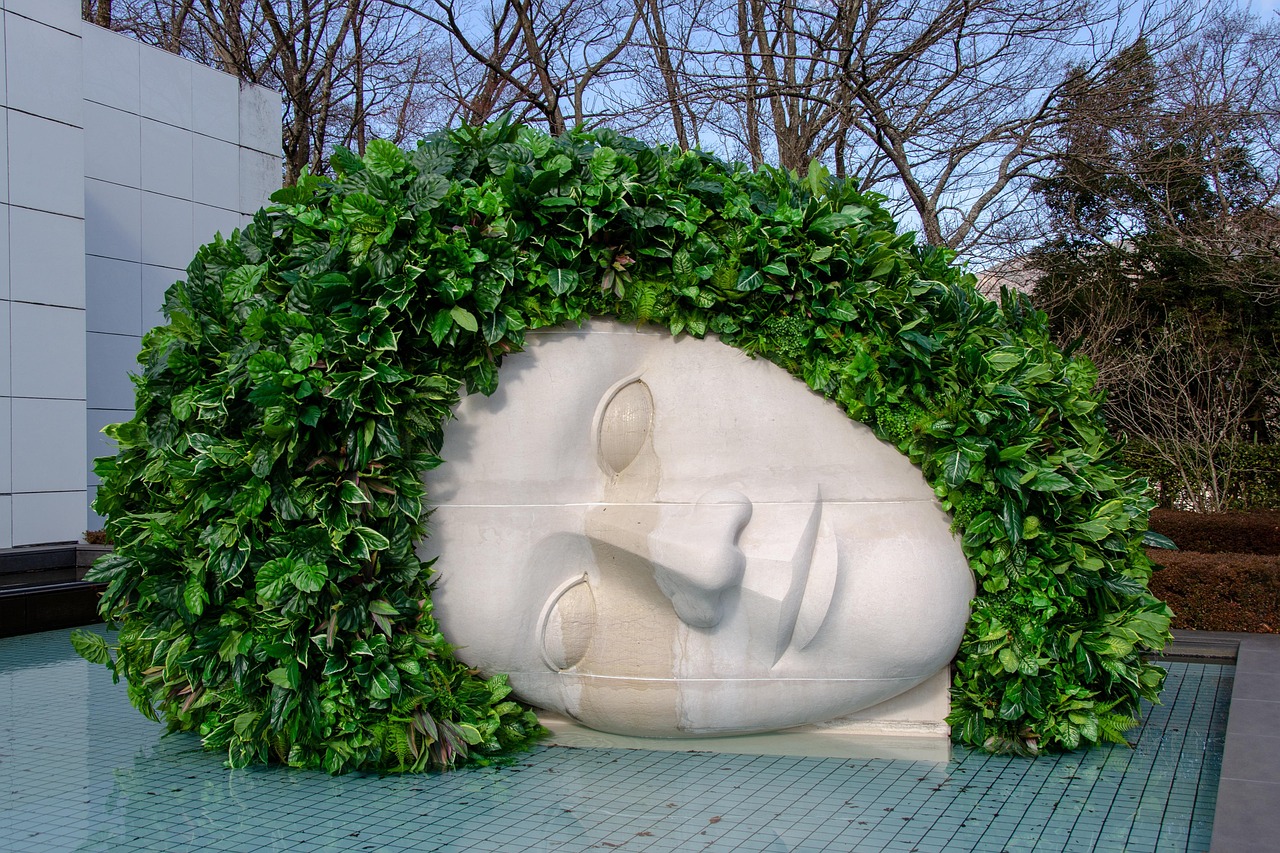
Yo, let’s talk about escaping the matrix. You know the feeling. You’ve been grinding in the electric canyons of Tokyo, a city that’s pure fire but never sleeps, and your soul is craving a different kind of buzz. You need space. You need air. You need mountains. And you need a dose of culture that doesn’t involve being cooped up inside four white walls. If that’s the vibe, then I’ve got the place for you. Pack your bags, we’re heading to the Hakone Open-Air Museum, a place that’s about to completely rewire your definition of what a museum can be. This ain’t your grandma’s quiet, dusty art gallery where you’re scared to breathe too loudly. Nah, this is a sprawling, epic campus of creativity plopped right in the middle of Japan’s most stunning mountain scenery. It’s a place where monumental sculptures reach for the sky, where art and nature aren’t just coexisting, they’re in a full-blown, passionate love affair. Opened way back in 1969, it was Japan’s first-ever open-air museum, a revolutionary idea that completely changed the game. The goal was to create a space where art and nature could harmonize, and let me tell you, they absolutely nailed it. Here, masterpieces by legends like Picasso, Henry Moore, and Taro Okamoto aren’t trapped indoors; they’re living their best lives out in the elements, chilling on lush green lawns, framed by volcanic mountains and the endless sky. It’s a sensory overload in the best way possible, a full-body experience that engages you, invites you to play, and leaves you feeling completely refreshed and inspired. This is art you can walk around, walk through, and sometimes even climb on. It’s a place to run, to relax, to think, and to feel. Forget what you know about museums; Hakone is a whole new level of lit.
Stepping into a Sculptural Wonderland
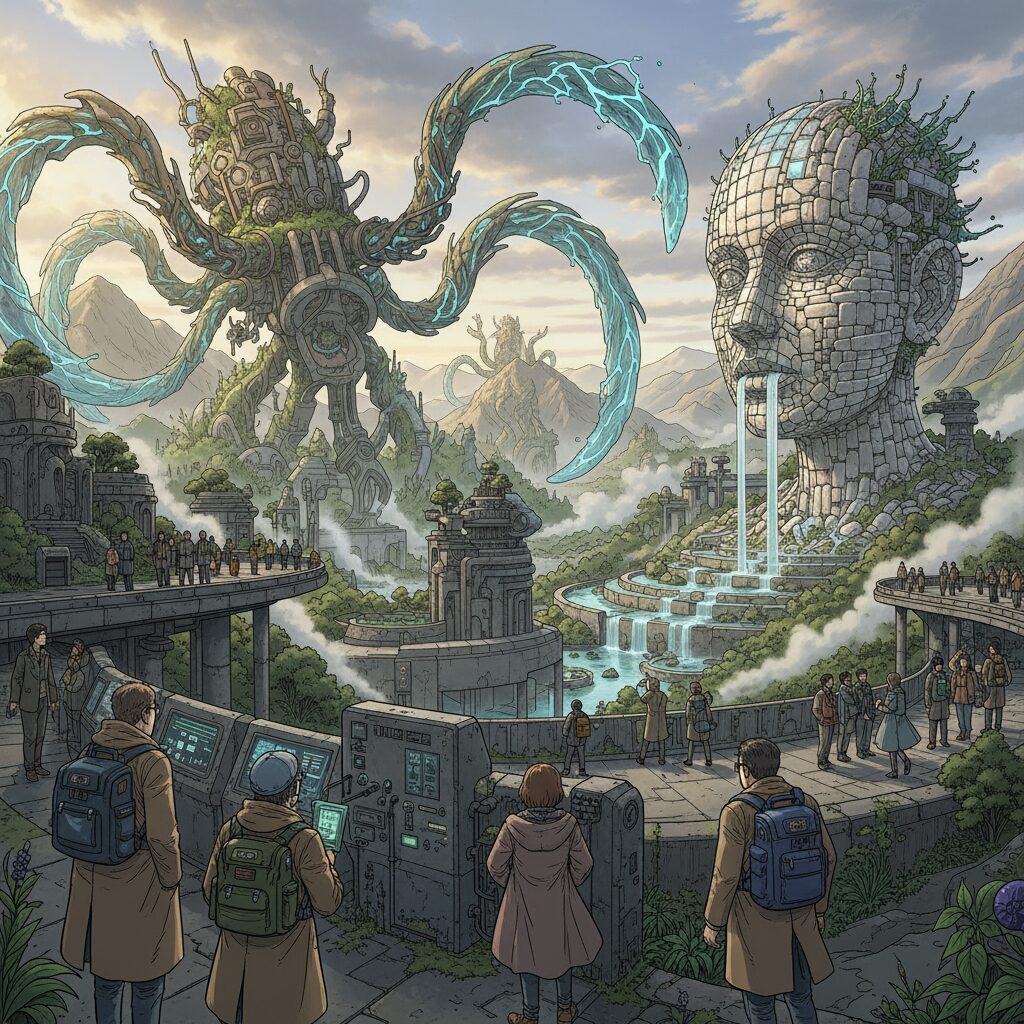
The moment you step off the charmingly old-fashioned Hakone Tozan train at Chokoku-no-Mori Station (which literally means “Forest of Sculptures Station”), you immediately sense a change. The air feels crisper, cleaner, and carries a subtle, earthy aroma of mountain foliage and volcanic soil. As you pass through the entrance, suddenly, the world opens up before you. You’re not just entering a building; you’re stepping onto an immense, 70,000-square-meter canvas where nature serves as the backdrop and world-class art takes center stage. The first thing that strikes you is the vastness of the space. Rolling green lawns, meticulously maintained gardens, and winding pathways lie ahead, scattered with sculptures as bold and dramatic as the mountains surrounding them. There’s an instant feeling of freedom here, the complete opposite of a conventional museum. You hear children’s excited shouts echoing from a distant play sculpture, see couples enjoying picnics on the grass beside multi-million-dollar artworks, and feel the gentle breeze rustle through the trees and skim across the surface of a bronze statue. The atmosphere is incredibly relaxed and inviting. There’s no pressure to act like a serious art critic, to whisper, or to follow a set route. The museum encourages exploration, getting lost, and discovery. You might turn a corner and come face-to-face with a massive, abstract geometric form or find a tranquil, reclining figure by Henry Moore that seems to have naturally emerged from the hillside. It feels less like a carefully curated collection and more like a magical, hidden world where giants left their playthings behind. The landscape itself is a living part of the exhibit. In spring, cherry blossoms burst into clouds of pink and white, creating a dreamy, almost surreal frame for the art. In summer, the greenery is so vibrant and lush it seems to pulse with life. Autumn is a masterpiece in its own right, with the surrounding mountains ablaze in fiery reds, burnt oranges, and brilliant golds, turning every view into a postcard. And winter? Winter may be the most dramatic season of all. A pure white blanket of snow can transform the park into a silent, monochrome realm, making the vivid colors and bold lines of the sculptures stand out with striking intensity. This constant transformation means you could visit the Hakone Open-Air Museum four times a year and have four completely unique, equally stunning experiences.
The Heavy Hitters: Don’t Sleep on These Pieces
While the entire park is a visual delight, there are a few iconic installations that are absolutely unmissable. These are the showstoppers, the pieces that will linger in your mind long after you’ve left. First up, and arguably the greatest of all time in the museum, is the “Symphonic Sculpture.” From the outside, it appears to be a simple, cylindrical concrete tower—kind of cool, but you have no idea what awaits inside. You step through a small doorway, and your jaw will drop. The interior is a spiraling, breathtaking mosaic of stained glass, crafted by the French artist Gabriel Loire. It’s literally a kaleidoscope you can walk inside. As you climb the winding spiral staircase at the center, you’re bathed in a constantly shifting cascade of jewel-toned light—deep blues, vibrant reds, glowing yellows—that floods the space and colors everything around you. It’s a fully immersive, almost spiritual experience, making you feel like you’re ascending into another dimension. When you finally reach the top, you step out onto a small viewing platform offering a stunning 360-degree panorama of the entire museum and the Hakone mountains beyond. It’s the ultimate reward and an absolute must-see. You’ll want your camera, but honestly, no photo can truly capture the sensation of being inside that tower of light.
After returning to earth, it’s time for a major shift in pace. Nestled in its own dedicated, modern building is the Picasso Pavilion. You might be thinking, “Picasso? In the mountains of Japan?” Yes—and it’s not just a few sketches. This is one of the most significant collections of his work in Asia, showcasing over 300 pieces. The collection focuses heavily on his later works, especially his ceramics, which are incredibly playful, imaginative, and vibrant. Seeing his famous forms and faces painted onto plates, pitchers, and vases gives you a whole new appreciation for his relentless creativity. Beyond the ceramics, there are paintings, drawings, prints, and even some gold and silver objects. It provides a fascinating, comprehensive glimpse into the mind of a master. Stepping into this quiet, climate-controlled space after exploring the open, wild park is a welcome change of pace. It adds a layer of classic, art-history gravitas to the experience and serves as a powerful reminder of the exceptional caliber of art this museum has managed to gather.
But the big names don’t end there. As you wander the grounds, you’ll come across a vast array of sculptural superstars. Watch for the powerful, curvaceous forms of Henry Moore, which seem to melt into the rolling grassy hills. Niki de Saint Phalle’s “Miss Black Power” bursts with joyful color and defiant energy that’s impossible not to smile at. The towering, almost intimidating “Man and Pegasus” by Carl Milles appears ready to leap into the sky. And you must seek out the series of works by the Japanese avant-garde legend Taro Okamoto, whose sculptures overflow with a primal, chaotic energy that’s pure, unfiltered fun. Each piece has its own personality, story, and unique relationship with the space it inhabits. Part of the joy is letting yourself be surprised by what you discover around each bend. Don’t rush; take time to sit with the art, observe how the light falls upon it, and feel the conversation it holds with the surrounding nature.
Beyond the ‘Gram: It’s a Full-Day Vibe
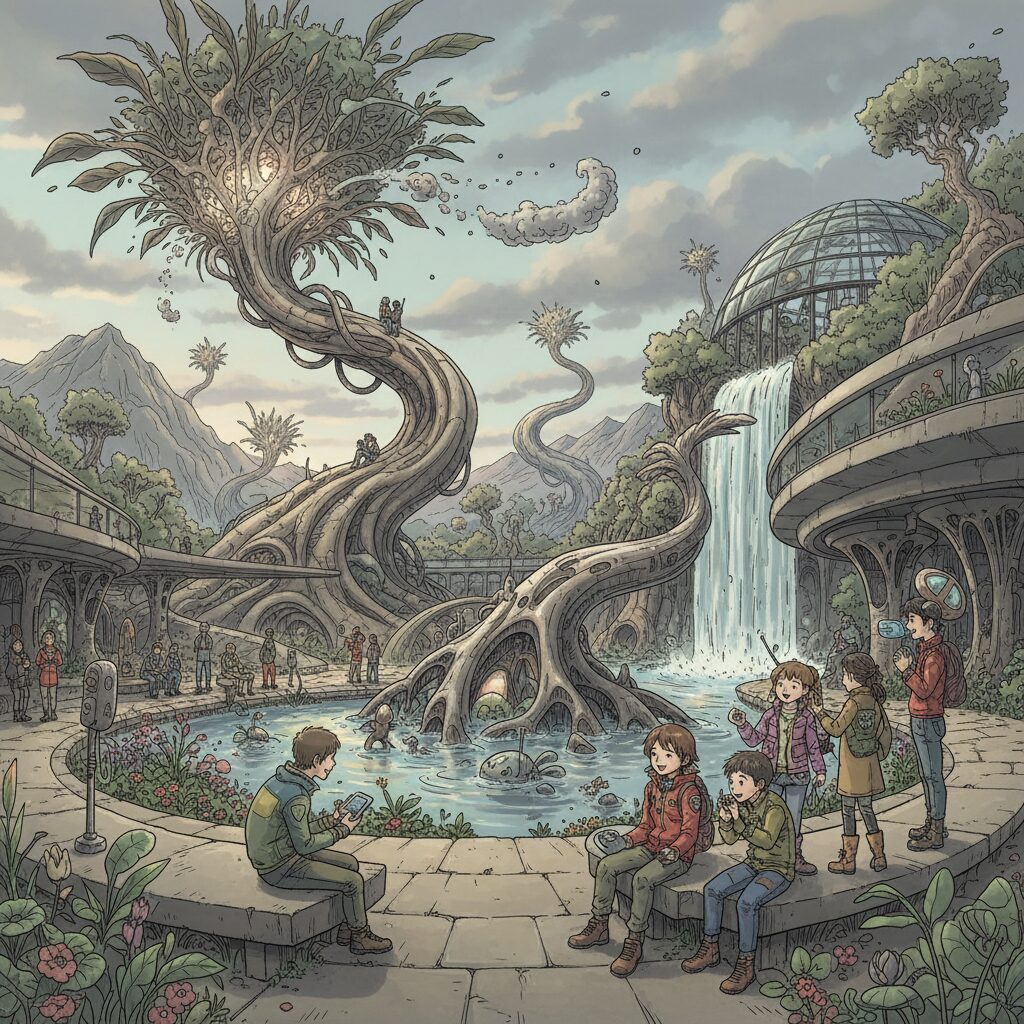
One of the most authentic aspects of the Hakone Open-Air Museum is that it’s designed for a full day of exploration and enjoyment. It’s not just about passively viewing art; it’s about actively engaging with the space. This is especially true for families with children or for those of us who remain young at heart. The museum features some of the coolest art-playgrounds you’ll ever encounter. The standout attraction is the “Woods of Net” (also known as the “Knitted Wonder Space”). Located inside a stunning, igloo-shaped wooden dome, it’s a large, multi-colored, hand-knitted climbing net created by artist Toshiko Horiuchi MacAdam. Kids (and occasionally fortunate adults, depending on the day) can take off their shoes and climb, swing, and bounce through this amazing, suspended world of color. It’s a work of art that doubles as a jungle gym, and it’s sheer brilliance. Other interactive installations are spread throughout the museum, like the “Curved Space-Diamond Structure,” a climbable, transparent labyrinth that’s a wild adventure to navigate. These features make the museum incredibly family-friendly and prove that art doesn’t have to be a passive experience.
After several hours of walking and exploring, your feet will likely be sore. But don’t worry—Hakone has something truly special and quintessentially Japanese to offer. Right in the center of the park, you’ll find a natural hot spring footbath, known as an ashiyu. For a few hundred yen, you can purchase a small towel, sit on the edge of the long wooden bath, and soak your tired feet in mineral-rich, geothermally heated water flowing straight from the volcanic ground beneath you. And you get to enjoy this while gazing at the surrounding sculptures and mountains. It’s a moment of pure zen. The warm water is deeply relaxing and the perfect way to recharge before continuing your museum visit. There are even small sections with textured stones on the bottom to massage your feet. This seemingly minor detail—a thoughtful, uniquely Japanese touch—elevates the entire experience from great to unforgettable.
When hunger strikes, you won’t need to leave this art haven. The museum offers several cafes and a restaurant, allowing you to refuel without interrupting your day. The main cafe, often called Bella Foresta, serves light meals, pastries, and drinks with a stunning view through its expansive floor-to-ceiling windows. You can sip coffee while looking out over the main lawn and some of the park’s most iconic sculptures. It’s the ideal spot to rest, reflect on what you’ve seen, and plan your next move. Having these convenient, quality dining options on-site means you can comfortably spend an entire day at the museum without feeling rushed or needing to leave for food. It’s all part of the smooth, well-designed experience.
The Lowdown: Nailing Your Museum Visit
Alright, let’s dive into the details. Getting to Hakone is part of the experience, and it’s actually quite simple. If you’re traveling from Tokyo, your trip will probably begin at either Tokyo Station or Shinjuku Station. From Tokyo Station, you can catch the Tokaido Shinkansen (bullet train) for a speedy 35-minute ride to Odawara Station. From Shinjuku, the best choice is the Odakyu Line’s “Romancecar,” a limited express train with large windows that takes you directly to Hakone-Yumoto Station in about 85 minutes. Once you arrive in Hakone, you’ll switch to the real highlight: the Hakone Tozan Railway. This charming red mountain train is an impressive feat of engineering. The journey from Hakone-Yumoto to Chokoku-no-Mori is a slow, picturesque ascent through thick forests and steep valleys. The train maneuvers the climb using a series of switchbacks, where the conductor actually leaves the carriage to move to the other end of the train to reverse direction and continue uphill. It’s a one-of-a-kind and delightful experience, so be sure to grab a window seat.
Here’s the most important tip for anyone visiting this area: get the Hakone Free Pass. Seriously, don’t hesitate. This pass, available at major stations like Shinjuku, is your all-access pass to the region. It covers your round-trip train fare from Tokyo on the Odakyu Line and, more importantly, offers unlimited rides on nearly all transportation within Hakone for two or three consecutive days. This includes the Hakone Tozan Railway, the Cable Car, the Ropeway, the sightseeing cruise on Lake Ashi (yes, the pirate ship), and local buses. It makes traveling around effortless and stress-free. Plus, it provides discounted entry to the Open-Air Museum and many other attractions around the area. It will definitely save you money and spare you the hassle of buying tickets at every stop. It’s a no-brainer.
Regarding timing, there’s no bad season to visit, though each one offers a unique charm. Spring (late March to April) is fantastic for cherry blossoms. Autumn (November) dazzles with stunning fall foliage. Winter (December to February) can be chilly, but the crisp air, clear skies, and occasional snow-dusted landscape are enchanting. Summer (June to August) is lush and green but may be hot, humid, and rainy during the tsuyu season, so pack accordingly. Whenever you go, wear your most comfortable shoes. The park is extensive and requires a lot of walking over varied terrain, including hills and stairs. Layers are also essential, as the mountain weather can change quickly. You might start your day in bright sunshine and end it amid cool, misty fog. Plan to spend at least three to four hours to cover the highlights, but to truly enjoy the experience—to see everything, relax in the footbath, and avoid feeling rushed—I recommend setting aside five to six hours, or even a full day.
Level Up: Beyond the Museum Walls
While the Open-Air Museum is a destination worth visiting on its own, it also serves as the perfect starting point for a broader Hakone adventure. The region is brimming with natural beauty and cultural experiences, and the Hakone Free Pass makes exploring the famous “Hakone Loop” simple. After visiting the museum, you can ascend the mountain via the Hakone Tozan Cablecar, then switch to the Hakone Ropeway. This is where the experience becomes truly spectacular. The ropeway carries you over Owakudani, the “Great Boiling Valley,” where you’ll find yourself suspended in a gondola above a stark, volcanic landscape dotted with sulfurous steam vents and bubbling hot springs. The sulfur scent is strong, and the views are otherworldly. Upon arriving at Owakudani station, don’t miss the local delicacy: kuro-tamago, or black eggs. These are regular chicken eggs boiled in the naturally hot, sulfur-rich spring water that turns their shells jet black. Legend says that eating one adds seven years to your life. Though they taste like ordinary hard-boiled eggs, the experience is completely unique.
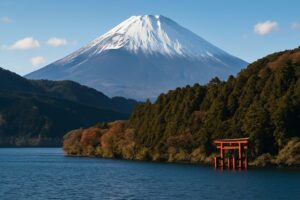
From Owakudani, the ropeway descends the opposite side of the mountain to Togendai, located on the shore of Lake Ashi (Ashinoko). This beautiful caldera lake is Hakone’s centerpiece, and on clear days, it offers one of Japan’s most iconic sights: a flawless reflection of Mount Fuji rising majestically in the distance. The best way to take in this view is aboard the Hakone Sightseeing Cruise. These are no ordinary boats—they are large, ornately decorated pirate ships. It’s kitschy, touristy, and incredibly fun. Gliding across the peaceful blue waters, with the red torii gate of Hakone Shrine on the shore and Fuji-san watching over it all, is an unforgettable experience.
To fully complete your Hakone journey, spending the night in a ryokan, a traditional Japanese inn, is essential. Here, you can immerse yourself in the culture of omotenashi (Japanese hospitality) and, most importantly, enjoy a genuine onsen (hot spring bath). After a day filled with walking and sightseeing, there is nothing better than soaking in a steaming, mineral-rich onsen, whether indoors or, preferably, in an open-air rotenburo with views of a garden or mountains. Many ryokan also offer exquisite multi-course kaiseki dinners, a culinary art form that highlights seasonal, local ingredients. Waking up in a tatami-mat room, savoring a traditional Japanese breakfast, and feeling completely refreshed by the onsen waters is the perfect way to end your trip. It elevates a day trip into a deeply restorative and culturally enriching escape.
The Takeaway: Art, Nature, and Good Vibes
Leaving the Hakone Open-Air Museum, you don’t just feel like you’ve seen some impressive art. You feel different. You feel lighter. There’s something about the blend of world-class creativity, the breathtaking beauty of the natural surroundings, and the freedom to explore everything on your own terms that truly gets under your skin. This place breaks down the invisible barriers that so often exist in the art world. It shows that art doesn’t need to be sheltered behind glass; it can be a living, breathing part of our environment. It can withstand rain, snow, and sunshine. It can be a playground for children and a sanctuary of quiet reflection for adults. It can be both monumental and intimately personal. The museum is a dialogue—between the artist and the landscape, between the past and the present, and between the art and you. It encourages you to look up, to look around, and to discover the beauty and creativity found not only in galleries but throughout the world itself. It stands as proof that when human imagination meets natural wonder, the outcome is pure magic. So if you’re seeking an experience that will nourish your soul, ignite your curiosity, and leave you with memories as vivid and lasting as the sculptures themselves, don’t hesitate. The mountains are calling, and the art awaits. No kidding, it’s a trip you have to take.