Yo, what’s up, world wanderers and vibe seekers! Get ready to plug into a place that’s not just a destination, but a whole different dimension. We’re talking about Yakushima, a small island south of mainland Japan that’s packing some seriously big energy. This ain’t your average island getaway with palm trees and chill beach parties. Nah, this is a deep dive into an ancient world, a legit UNESCO World Heritage Site where the trees are older than empires and the air hits different. It’s a place where myth and reality blur, where the forest floor is a neon green carpet of moss, and where Studio Ghibli’s masterpiece Princess Mononoke got its legendary glow-up. Yakushima is more than a hike; it’s a pilgrimage to the heart of nature itself. It’s a place to disconnect from the noise and reconnect with something primal, something real. So, if you’re ready to trade your doomscrolling for some soul-strolling and witness a world that’s been vibing for millennia, then lace up your boots. We’re about to drop into the mystical, magical, and utterly unforgettable world of Yakushima. This is the ultimate guide to catching the island’s ancient frequency.
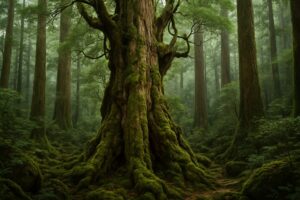
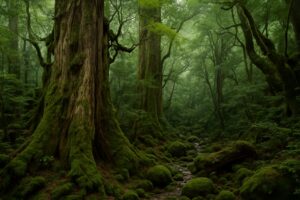
To truly experience this ancient frequency, you must embark on a journey through the island’s ancient cedar forests and moss-covered trails.
The Island That Breathes: Yakushima’s Vibe Check
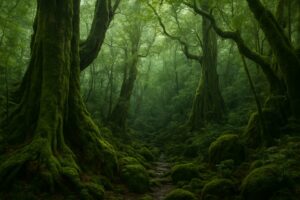
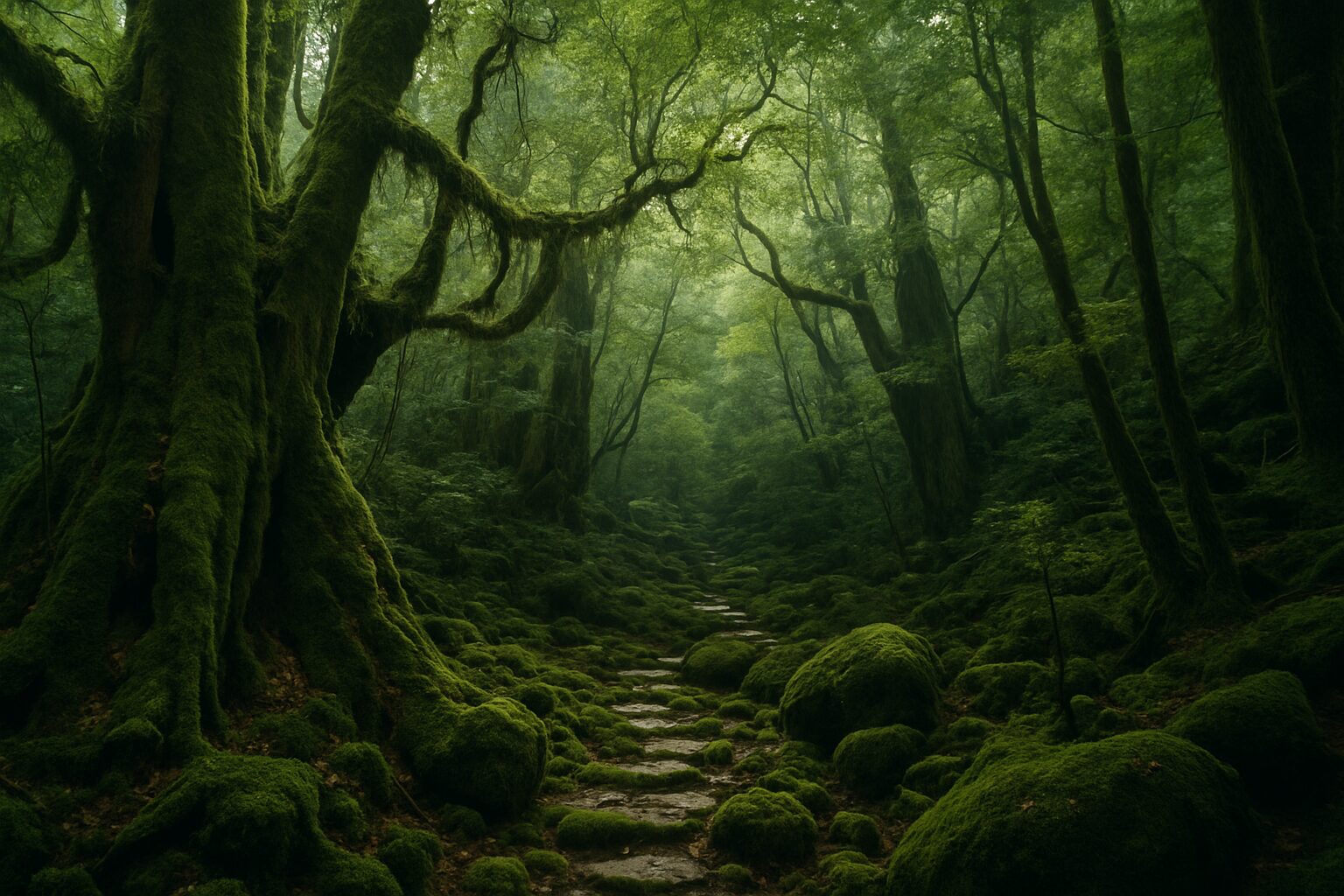
First and foremost, let’s focus on the main character of this island: its atmosphere. The vibe in Yakushima is flawless, no exaggeration. From the moment you step off the ferry or plane, you can feel it. The air is thick, humid, and so pure it’s like inhaling concentrated oxygen. Yakushima is well-known for its rain—the locals humorously say it rains “35 days a month”—but don’t let that deter you. The rain is the island’s lifeblood. It’s what gives the forest its extraordinary, almost fluorescent green hue. It nourishes the moss that covers every surface, from the gnarled roots of ancient trees to the rocks in rushing rivers. This isn’t just any forest; it’s a koke-musu mori, a moss-covered forest, a phrase that barely captures the surreal experience of being there.
Walking through these woods engages all your senses. The silence itself is a sound—a deep, resonant stillness only interrupted by water dripping from leaves, a distant bird’s call, or the rustle of a Yakushika deer in the brush. Looking up, the canopy of towering cedars and subtropical trees is so thick that only thin shafts of light break through, creating a cathedral-like atmosphere. It’s humbling. You feel small, but not insignificant. Instead, you sense being a tiny part of a vast, living, breathing organism. This is Yakushima’s power. It’s a place that commands reverence. The island’s granite mountains, rising close to 2,000 meters, generate their own weather systems, capturing sea moisture and transforming it into the vital rain that shapes the ecosystem. This distinctive geology and climate have fostered a sanctuary where life thrives at an extraordinary pace. For many, this intense natural energy makes Yakushima a “power spot,” a place where you can sense a spiritual presence—whether in the Shinto kami (gods) believed to dwell in the trees or simply in the undeniable force of nature itself.
The OG Kings of the Forest: The Yakusugi Cedars
So why all the fuss about the trees? They’re the island’s icons, ancient giants that attract visitors from around the globe. We’re talking about the Yakusugi, the Japanese cedars, or sugi, native to the island. But not every cedar earns the name Yakusugi. That honor is reserved for the originals—trees that have stood strong for over 1,000 years. Younger trees are called kosugi (little cedars). These Yakusugi are true survivors. Growing on nutrient-poor granite, they develop incredibly slowly. This slow growth fills their wood with a remarkable amount of resin, making them almost immortal. They resist rot, insects, and the island’s harsh, typhoon-prone weather. They are living symbols of endurance.
Then there’s the ultimate champion, the undisputed monarch of the forest: Jomon Sugi. This massive tree is the oldest and largest on the island, with age estimates ranging from 2,170 to an astonishing 7,200 years. Take a moment to absorb that. This tree was a sapling when the pyramids were being built. It has silently witnessed the rise and fall of countless civilizations. Standing before it is a deeply moving experience. The journey to see it is an epic adventure in itself, but beholding its twisted, enormous trunk—covered in a thriving ecosystem of mosses and ferns—is a memory you’ll carry forever.
But Jomon Sugi isn’t the only famed cedar. Along the trails, you’ll encounter other legendary trees. There’s Wilson’s Stump, or Wilson’s Kabu, the massive remains of a cedar cut down centuries ago. You can actually walk inside its hollowed stump, and from just the right angle, the opening forms a perfect heart shape against the sky. It’s a surreal, breathtaking sight. Then there are Daio Sugi (Great King Cedar), one of the largest and most impressive trees that’s easily accessible, and Meoto Sugi (Married Couple Cedars), two towering trees fused together in a woody embrace. Each of these trees has its own character, a story carved into its bark. They’re more than just plants; they are guardians of the island’s history and spirit.
Choose Your Adventure: Slaying the Yakushima Trails
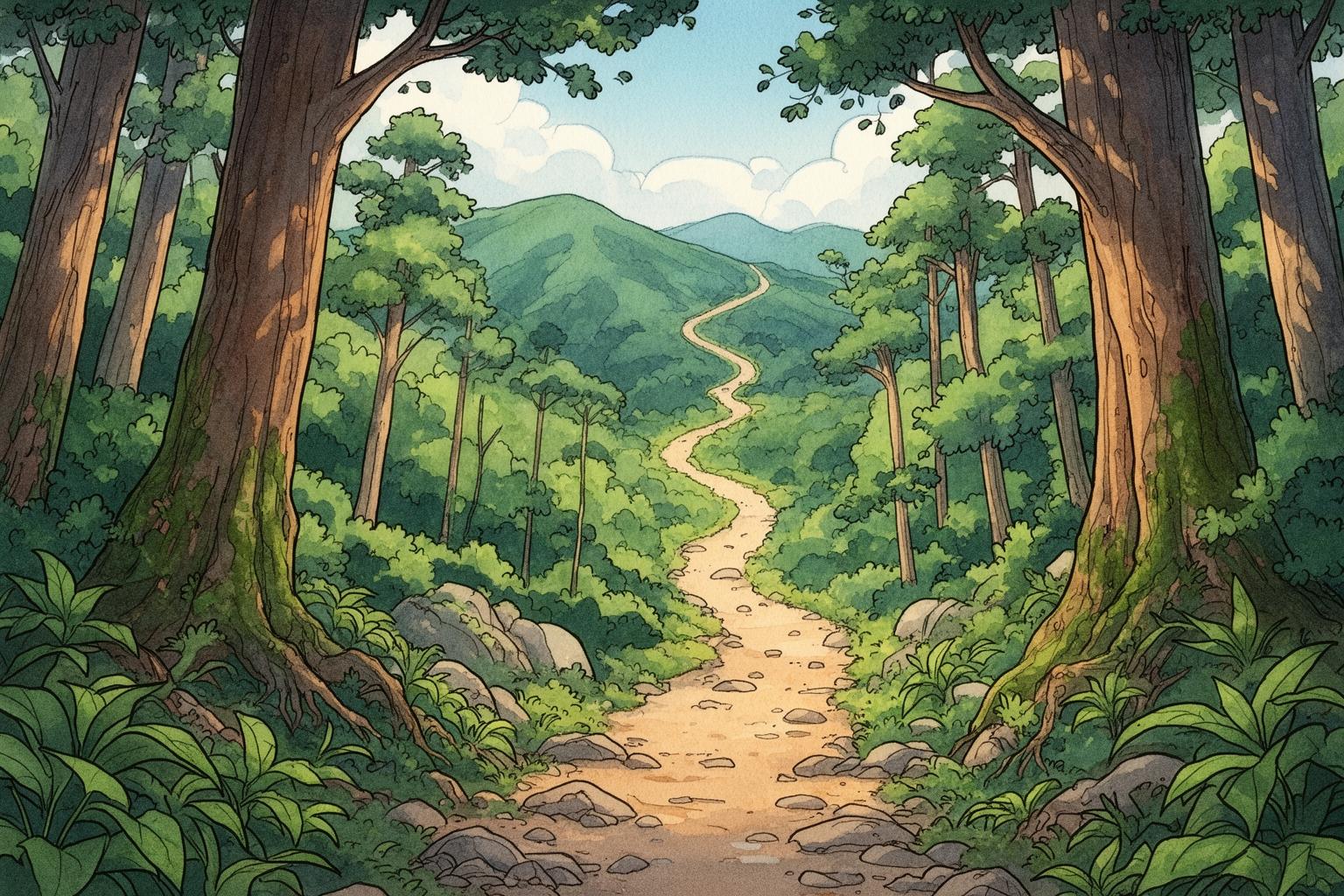
Alright, you’re pumped. You’re eager to witness these ancient wonders firsthand. Yakushima offers trails for every fitness level, from easy strolls to intense multi-day adventures. You just need to choose your challenge.
Shiratani Unsuikyo Ravine: The Mononoke Drip
If you’re after that Studio Ghibli magic, this is the place. Shiratani Unsuikyo is the forest that famously inspired Hayao Miyazaki’s Princess Mononoke, and it’s easy to see why. This spot is pure enchantment. The moment you step onto the trail, you’re surrounded by a world of emerald green. Moss blankets everything—the ground, rocks, and twisting tree roots—creating a soft, otherworldly landscape. The air is misty, and beams of light filter through the canopy in an ethereal glow. It feels like a kodama (tree spirit) could peek out from behind a branch any second.
Shiratani Unsuikyo has several routes. The shortest, the Yayoisugi Course, is a relatively easy one-hour loop leading to the impressive Yayoisugi cedar. But the real highlight lies in the longer Bugyosugi Course or the ultimate Taikoiwa Rock round trip, which takes around four to five hours. This trail guides you through the heart of the koke-musu mori, the iconic moss-covered section, followed by a steep climb to Taikoiwa Rock. The climb is tough, but the payoff is incredible. You emerge from the dense forest onto a massive granite boulder with panoramic, god-tier views of the island’s mountainous interior. On a clear day, you can spot the highest peaks, including Miyanoura-dake. It’s a breathtaking moment that makes all the effort worthwhile. Reliable hiking shoes and good rain gear are essential, as the rocks and wooden paths can be very slippery.
The Jomon Sugi Quest: An Epic Pilgrimage
This is the big one. The hike to Jomon Sugi is no walk in the park; it’s a full 10 to 12-hour test of endurance. Yet, it’s also one of the most rewarding treks worldwide. Most hikers start at the Arakawa Trailhead, meaning you’ll catch a shuttle bus before dawn, usually around 4 or 5 AM. The first section, roughly 8.5 kilometers, is a long but relatively flat walk along the old Anbo Forest Railway track. This narrow-gauge railway was once used for logging, and walking its tracks through tunnels and over bridges feels like stepping into another era. The rhythmic thud of your boots on wooden sleepers is your only companion for hours.
After the railway, the real climb begins. The Okabu Trail is a steep, demanding ascent through the ancient forest’s heart. You’ll scramble over roots, climb wooden staircases, and push your physical limits. Along the way, you’ll pass giants like Wilson’s Stump and Daio Sugi, serving as previews for the main attraction. The final approach to Jomon Sugi builds anticipation. Then you see it. Protected by an observation deck to preserve its roots, you can’t get too close, but its sheer size is awe-inspiring. It hardly looks like a tree; it resembles a geological formation, a force of nature made tangible. You’ll share the moment with other exhausted yet exhilarated hikers, all standing in quiet reverence. This is a serious journey. You need to be physically fit, bring plenty of water and high-energy snacks, wear proper hiking gear, and carry a headlamp for the early start. Many choose to hire a local guide, which is wise for safety, pacing, and learning about the forest’s ecology and history.
Yakusugi Land: Ancient Vibes on Easy Mode
Not everyone has the time or energy for the Jomon Sugi pilgrimage, and that’s totally fine. Yakusugi Land provides a much more accessible way to experience the magic of the ancient cedars. Don’t be misled by the name; this isn’t a theme park. It’s a breathtaking nature park with well-maintained trails and wooden boardwalks that make exploring a primeval forest easy. There are multiple routes, from a 30-minute stroll to a 150-minute loop deeper into the woods. Even the shorter paths showcase massive Yakusugi trees over 1,000 years old, like Kigen Sugi and Buddha Sugi. The forest here is just as beautiful and mossy as elsewhere on the island. It’s a perfect choice for families, casual walkers, or days when you want to soak up the forest’s beauty without committing to a grueling 10-hour trek. It proves you don’t always have to push to the limit to truly feel the Yakushima spirit.
Beyond the Cedars: Yakushima’s Full Glow-Up
While the forests remain the primary attraction, Yakushima is an island of remarkable diversity. The adventure extends beyond the treeline. Its coastline, mountains, and rivers provide an entirely new level of exploration.
Coastal Flex: Sea Turtles, Waterfalls, and Onsen
Yakushima’s coastline is a striking blend of sandy beaches and dramatic granite cliffs. Nagata Inakahama Beach is a must-visit. This stretch of golden sand serves as Japan’s largest sea turtle nesting site. From May to August, loggerhead and green sea turtles emerge at night to lay their eggs. It’s a profound, ancient spectacle. Strict regulations protect the turtles, so joining a guided observation tour is the best way to responsibly witness this wonder. From August to September, the baby turtles hatch and scramble to the sea—a remarkable display of the circle of life.
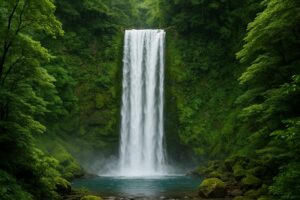
The island also boasts some truly impressive waterfalls, nourished by constant mountain rain. Oko-no-taki Falls in the south is among Japan’s top 100 waterfalls, an enormous 88-meter cascade you can approach closely to feel its spray. Senpiro-no-taki and Toroki-no-taki are equally breathtaking, each carving through the island’s granite terrain. After a long day of hiking, nothing beats soaking in a natural hot spring, or onsen. Yakushima features some unique coastal onsens, such as Hirauchi Kaichu Onsen, a tidal onsen only accessible a few hours around low tide. Bathing in the warm, sulfurous water while the Pacific Ocean crashes nearby offers a truly extraordinary experience. It’s co-ed, and you bathe nude or with a small towel, so expect a very local, very natural atmosphere.
Mountain Highs: Conquering the Inner Peaks
For serious mountaineers, Yakushima presents a challenge known as the “Alps of the Ocean.” The island’s central mountain range is a daunting collection of peaks, including Miyanoura-dake, the highest mountain in Kyushu and southern Japan at 1,936 meters. A multi-day trek across these central peaks demands proper equipment, experience, and careful planning. But the rewards are vast. As you climb, the scenery shifts from dense subtropical forest to an alpine zone with distinctive flora like the Yakushima rhododendron. The views from the granite summits are stunning, often gazing over a sea of clouds. Here, you truly encounter the island’s raw, untamed spirit, far removed from any crowds.
The Nitty-Gritty: Your Yakushima Mission Briefing
Alright, time to get practical. Conquering Yakushima demands a solid game plan. Here’s the crucial info you need to succeed.
Getting There: The Journey Sets the Mood
Yakushima is remote but accessible. The main entry point is Kagoshima, located at Kyushu’s southern tip. From Kagoshima, you have two main choices. You can catch a quick 40-minute flight straight to Yakushima’s small airport — the fastest but most expensive option. Alternatively, you can take a ferry. The Toppy & Rocket hydrofoils are speedy passenger ferries that cover the route in about two to three hours, offering a good balance of speed and affordability. If you’re bringing a rental car or watching your budget, the slower car ferry, Yakushima 2, takes about four hours but lets you relax on deck and enjoy the ocean views. Booking ahead is wise, especially during peak travel times.
Getting Around: Mastering Island Travel
Once on the island, navigating is your next step. Honestly, renting a car is hands down the best way to explore Yakushima. It gives you the freedom to move at your own pace, access remote trailheads, chase waterfalls, and stop anytime a stunning view catches your eye. There’s a main road circling most of the island, but public transport can be infrequent and doesn’t conveniently reach all key spots. The local bus system does exist, along with multi-day passes, but you’ll be limited by its schedule. For major hikes like the Jomon Sugi trail, having a car is essential to reach the shuttle bus parking early. Taxis are available but can get pricey fast. If you’re uneasy about driving, consider hiring a private guide to manage your transportation.
Where to Stay: Choosing Your Base
The island’s two main towns are Miyanoura on the north coast—the largest port with the most amenities—and Anbo on the east coast, the second port and favorite base for hikers because of its trailhead proximity. Both offer a variety of accommodations, from hotels and guesthouses (minshuku) to hostels. Staying in a minshuku is an excellent way to experience local life; typically family-run, they often serve incredible home-cooked meals. For a quieter, more off-the-beaten-path stay, look to smaller villages in the island’s south and west. Wherever you choose to stay, be sure to book well in advance, especially during Japanese holidays like Golden Week or Obon.
What to Pack: Gear That Won’t Let You Down
Packing for Yakushima boils down to one thing: waterproof. Seriously. High-quality rain gear—a GORE-TEX jacket and pants—is not optional, it’s absolutely essential. Even if the forecast is sunny, the mountain weather can shift in an instant. Sturdy, waterproof hiking boots with solid grip are also a must. The trails are rugged, wet, and slippery. Beyond that, think layers. Bring quick-drying clothes you can add or shed as needed. A headlamp is crucial for early starts on the Jomon Sugi trail. Don’t forget a reusable water bottle (mountain water is tasty and safe from many sources), high-energy snacks, a small first-aid kit, and a portable toilet kit for long hikes since facilities are limited. Always respect the pristine environment by packing out whatever you bring in.
Fueling the Adventure: Yakushima’s Culinary Scene
Spending a full day hiking burns a significant number of calories, and fortunately, Yakushima’s local food scene is ready to replenish you. The island’s cuisine highlights fresh, local ingredients, with a strong emphasis on seafood. The true highlight is tobiuo, or flying fish. You’ll find it on nearly every menu, most commonly served as karaage—deep-fried whole, fins and all, making it look like it’s flying straight off your plate. It’s crispy, flavorful, and a unique experience. Another local favorite is mackerel, or saba, often smoked or enjoyed as sashimi. Be sure to try some local shochu, a distilled spirit, before you leave. The most renowned brand is Mitake, a smooth, potato-based shochu that’s ideal for relaxing after a long day. The island is also famous for its citrus fruits, especially tankan and ponkan, which are incredibly sweet and juicy. Make sure to have dinner at your minshuku at least once; the multi-course meals wonderfully showcase the island’s rich bounty.
Living in Harmony: The Spirit of the Island
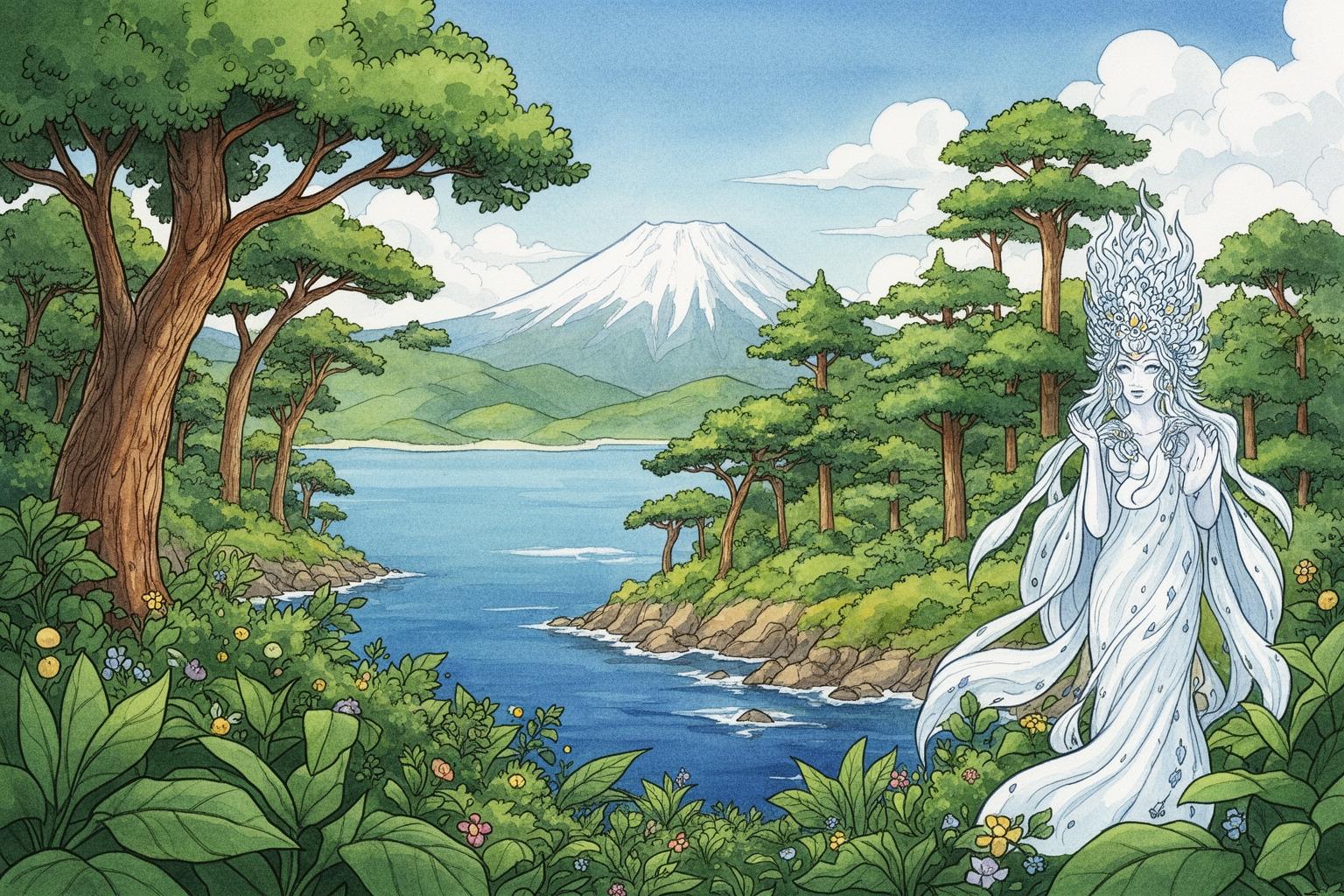
A profound respect for nature is deeply felt on Yakushima. The island has a rich and complex history, having been extensively logged for centuries, with its valuable cedar wood used to build temples and castles throughout Japan. However, in the latter half of the 20th century, a strong conservation movement emerged, bringing an end to the logging of ancient trees and resulting in the island’s designation as a National Park and later a World Heritage Site. This history has fostered a deep awareness among the islanders of the fragile balance between humans and nature.
This reverence stems from ancient Shinto beliefs that perceive kami, or gods, within natural elements. The giant Yakusugi cedars are regarded as sacred homes for these spirits, and the mountains themselves are objects of worship. This spiritual bond promotes a way of life centered on coexistence rather than domination. Visitors are expected to embrace this respect by staying on trails, avoiding disturbance of wildlife—especially the Yakushika deer and Yakuzaru monkeys commonly seen—and strictly following Leave No Trace principles. The island’s magic relies on its untouched state, and every visitor plays a part in protecting it. Locals say the mountains are not places for recreation, but for prayer.
Final Boss Tips for First-Timers
Before you set off, here are a few final pro-tips to make sure your Yakushima trip is an absolute success.
First, book everything—and I mean everything—well in advance. Flights, ferries, accommodations, rental cars, and especially mountain guides fill up months ahead, particularly during peak seasons like spring, summer, and autumn.
Second, bring cash. While larger hotels and restaurants accept credit cards, many smaller shops, guesthouses, and rural cafes operate on a cash-only basis. ATMs are available in Miyanoura and Anbo, but it’s wise to carry a good amount of yen with you.
Third, stay flexible. The weather on Yakushima calls the shots. Your plans may need to change due to heavy rain or trail conditions. Embrace it. A rainy day is the perfect chance to visit the Yakusugi Museum or relax in an onsen.
Fourth, mobile phone service is unreliable in the mountains. Download offline maps of the island and your hiking trails before you leave. Be sure to share your hiking plan with someone before you head out.
Finally, don’t overbook your schedule. Yakushima isn’t a place to rush through. Allow yourself time to breathe, sit quietly, listen to the forest, and watch clouds drift over the mountains. The island’s true gift is its ability to slow you down and reconnect you to the natural world’s rhythm.
Yakushima is a journey that will challenge, inspire, and perhaps even change you. It’s a reminder of the power and beauty of an ancient world, still very much alive if you know where to look. So go, wander among the giants, feel the rain on your face, and let the deep, timeless energy of this incredible island seep into your soul. You’ll return with more than photos—you’ll return with a story. Go find it.