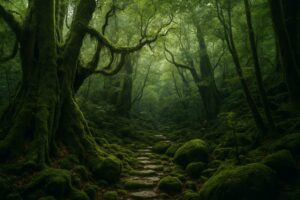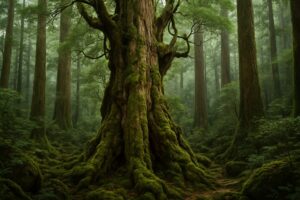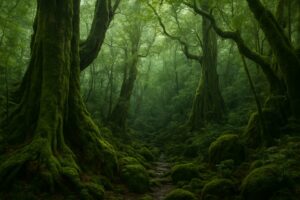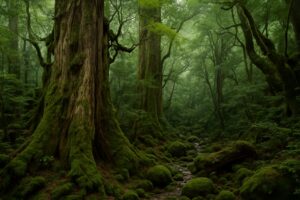
Yo, what’s the vibe? Mia Kim here, and I’m about to spill the tea on a spot so legendary, it feels like it was ripped straight out of an anime fantasy world. We’re talking about Yakushima Island, a teardrop-shaped chunk of raw, untamed nature floating off the southern coast of Kyushu, Japan. This isn’t just another pretty island getaway; it’s a full-on spiritual side quest. Picture this: forests so ancient they make history books look like yesterday’s news, trees that have seen more centuries than you’ve seen sunrises, and a carpet of moss so vibrant it practically glows. This place is a legit UNESCO World Heritage site, not because it’s cute, but because it’s a living, breathing relic of a primeval world. The main characters here are the ‘Yaku-sugi,’ colossal cedar trees that are over a thousand years old, with some absolute legends pushing past the 3,000 or even 4,000-year mark. No cap. Walking among them is like stepping into a different dimension where time just hits different. And if you’re a fellow otaku, you’ve probably already guessed the big-name drop: this is the forest that inspired Hayao Miyazaki’s masterpiece, Princess Mononoke. You can literally walk through the very landscapes that birthed the Kodama and the spirit of the forest. It’s an IRL isekai experience, a pilgrimage for nature lovers and Ghibli stans alike. Before we dive into the deep lore of these trails, get your bearings and check the map. This is where your adventure begins.
While you’re exploring the spiritual side of Kagoshima’s culture, you might also be interested in experiencing the region’s unique New Year’s rituals.
Catching the Yakushima Vibe
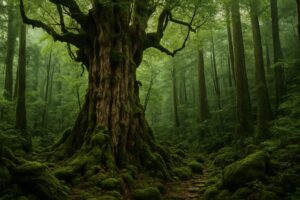
First things first, let’s set the scene. The moment you arrive on Yakushima, whether you touch down at its tiny airport or disembark from a ferry, the atmosphere shifts. The air is thick—heavy with humidity and the scent of damp earth, rain, and vibrant life. The island is essentially a massive, lush granite mountain rising from the ocean, and its distinctive landscape creates its own wild weather patterns. Locals joke that it “rains 35 days a month,” a playful way of advising you to bring a raincoat—and then another, just to be safe. But really, the rain is central to the whole experience. It’s what makes everything so vividly green, nourishes the moss, and gives the forest its enchanting, misty vibe. When sunlight finally breaks through the canopy, it feels like a cinematic moment, with rays piercing the fog like divine spotlights. This isn’t just a hike; it’s a full-on sensory feast. The silence here is something else too—not empty, but an ancient, profound quiet, interrupted only by the drip of water, the murmur of a hidden stream, and the soft rustle of a Yaku-shika (the local deer) moving through the underbrush. You feel small, humbled by the vastness around you. The true stars of the show, the Yaku-sugi, exist on another plane. These aren’t mere trees; they are giants. Their bark is gnarled and twisted into countless shapes, each telling tales of survival through typhoons, lightning, and centuries of steady growth. Trees under 1,000 years are known as ‘ko-sugi’ (small cedars), a notable achievement. The real legends—those over a thousand years old—are crowned ‘Yaku-sugi.’ Packed with resin that makes them highly resistant to rot, they’ve thrived for ages in this damp sanctuary. Standing before one is a powerful encounter with Mother Nature herself.
The Main Quest: Shiratani Unsuikyo Ravine
Alright, for most visitors, the adventure kicks off at Shiratani Unsuikyo Ravine. This is the epicenter of the Princess Mononoke atmosphere. It’s easy to access, breathtakingly beautiful, and offers a variety of trails so you can select your preferred level of challenge. You don’t need to be an expert mountaineer to enjoy the magic here, which is a big advantage. The park features several routes, from a quick 1-hour walk to a more demanding 4-5 hour hike that links to other trail networks. My recommendation? Opt for the longer path if you have the time and stamina. It’s absolutely worth it.
Entering the Spirit World
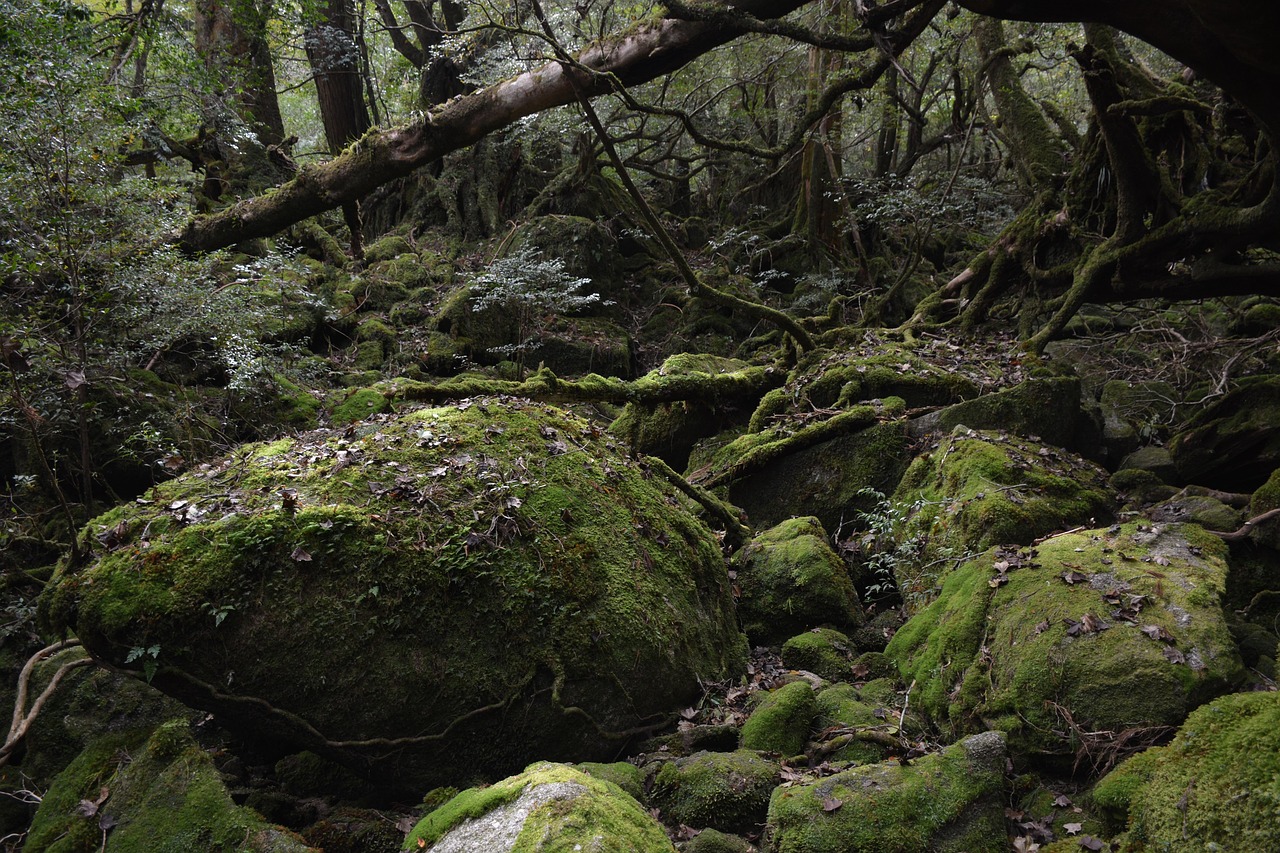
The moment you step beyond the entrance and onto the trail, the experience begins. The initial stretch is well-maintained, with stone steps and wooden walkways that evoke the feeling of entering a sacred garden. But this is no manicured park. Here, nature reigns supreme. Rocks the size of cars are completely enveloped in a lush, velvety moss carpet. Tree roots, thick as pythons, wind across the path, forming a natural, rugged staircase. Everything is cloaked in green. There are hundreds of moss species here, each with its own texture and hue, ranging from deep emerald to glowing lime. The air is cool and fresh, a refreshing break from the coastal humidity. You’ll cross crystal-clear streams on charming wooden bridges, the water so pure you might be tempted to drink it (pro tip: always filter your water, but yes, it looks that clean). You’ll pass remarkable trees like the Nidaio-sugi and Kuguri-sugi, a cedar you can literally walk through. It feels less like hiking and more like wandering through a living sculpture garden crafted by forest spirits.
The Moss Forest: Mononoke’s Domain
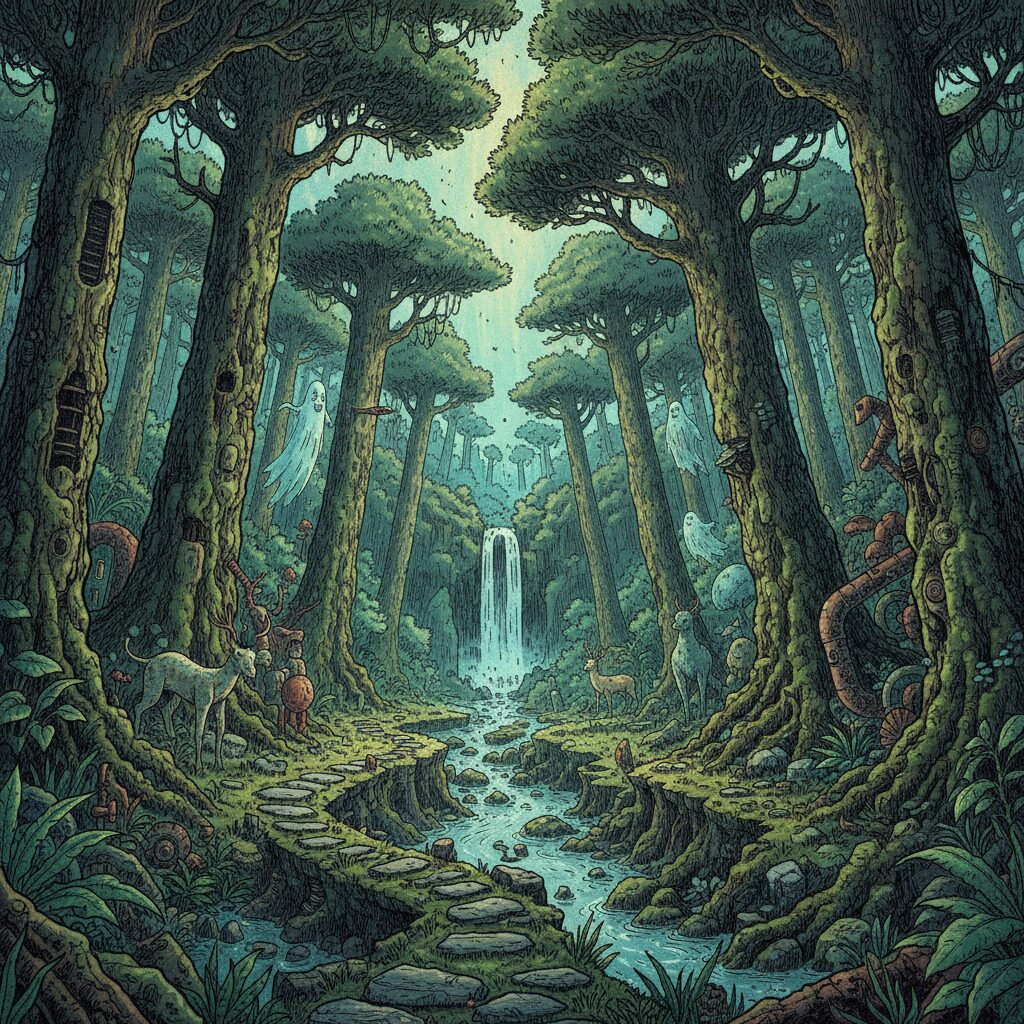
The crowning jewel of Shiratani Unsuikyo is the area officially called “Kokemusu-no-Mori,” but affectionately known as “Mononoke Hime no Mori” (Princess Mononoke’s Forest). You’ll recognize when you arrive. The trail opens into a clearing where the greenery is dialed up to an extraordinary level. It’s a beautifully chaotic scene of moss-covered everything—ground, rocks, fallen logs, tree trunks—a seamless carpet of green. It’s quiet, otherworldly, and utterly mesmerizing. You almost expect a little Kodama with its rattling head to peek out from behind a root. This is the spot. It’s a pilgrimage site for Ghibli fans. People speak softly here, and with good cause. It feels sacred. It’s the kind of place where you want to sit quietly on a mossy rock, breathe deeply, and absorb the ancient energy. Forget your phone, forget your notifications. This is about being fully present in a world that has existed for millennia. It’s a soul-refreshing reset.
The Final Vista: Taiko-iwa Rock
For those continuing beyond the moss forest, the ultimate reward awaits at Taiko-iwa. The final climb involves some scrambling, with ropes and a few steep sections, but it’s brief and manageable for anyone with reasonable fitness. When you emerge from the dense forest onto this huge, exposed granite boulder, the world opens up before you. You’re treated to a stunning panoramic view of Yakushima’s mountainous interior, a rolling expanse of green peaks stretching to the horizon. On a clear day, you can spot Miyanoura-dake, the island’s highest peak. After being enclosed in the intimate, shaded forest world, this sudden, vast view is breathtaking. It’s the perfect finale to the Shiratani Unsuikyo experience. You feel like you’re on top of the world—or at least on top of this magical, floating one. It’s a view that lingers in your mind, a mental screensaver you’ll revisit long after you’ve left.
Leveling Up: The Jomon Sugi Quest
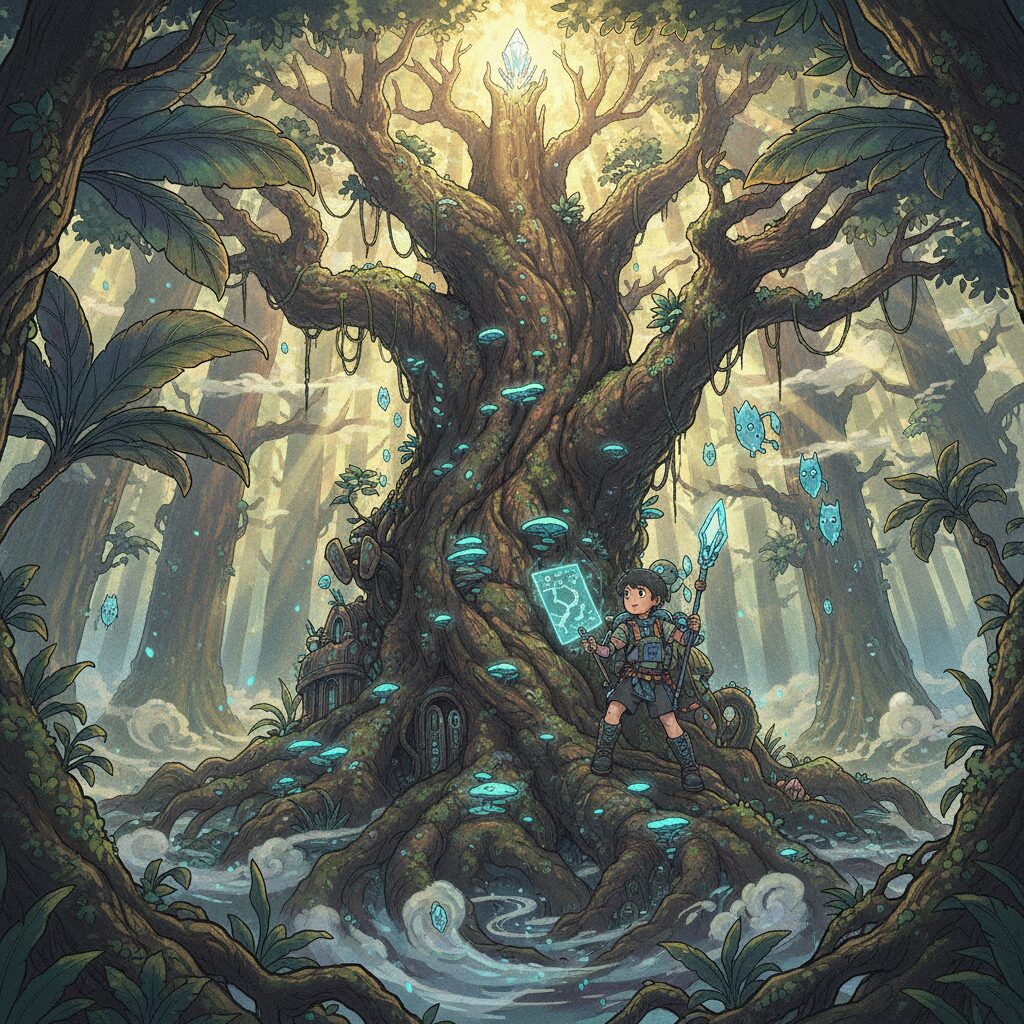
If Shiratani Unsuikyo serves as the tutorial level, then the hike to Jomon Sugi is the ultimate boss battle. This is no casual walk. It’s a grueling 22-kilometer, 10-to-12-hour round-trip trek that will push your physical and mental endurance to the limit. But the payoff is a face-to-face (or rather, platform-to-trunk) encounter with the king of all Yaku-sugi, the Jomon Sugi. This ancient tree is estimated to be anywhere from 2,000 to an astonishing 7,200 years old, making it one of the oldest living beings on Earth. This hike is truly a pilgrimage in every sense of the word.
The Long Road to the King
The journey starts in darkness. Most hikers set off between 4 and 5 AM to ensure they have enough daylight to finish the trek. The first few hours involve walking along the Anbo Forest Railway line, a narrow-gauge track formerly used for logging that now serves as the main route for hikers. Walking on the wooden railway ties under the dim glow of your headlamp, with the forest waking quietly around you, is a surreal experience. It’s a long, flat, yet mentally draining stretch. You just have to keep your head down and push through. Once past the railway section, the real climbing begins. The trail transforms into a rugged, root-filled, often muddy ascent into the mountain’s heart. Here, you’ll encounter some of the trail’s celebrity cedars, including the massive Daio-sugi (Great King Cedar) and the Meoto-sugi (Husband and Wife Cedars), two trees whose branches have merged high above. A major milestone is Wilson’s Stump (Wilson-kabu), the enormous, hollowed remains of a cedar felled centuries ago. Step inside and, if you look up at just the right angle, the opening forms a perfect heart shape. It’s a classic photo spot and a welcome place to rest. The final stretch to Jomon Sugi is steep and demanding. Your legs will ache, you’ll question your life choices, but the anticipation drives you forward.
An Audience with an Ancient
Finally, you arrive. Because of its age and conservation efforts, you can’t approach Jomon Sugi closely or touch it. A wooden viewing deck, located a short distance away, protects its fragile root system. In fact, that distance gives you the space to truly absorb its majesty. The tree is immense—not just in size, though it is incredibly thick and imposing. It’s the presence it radiates. The bark is like a universe unto itself, weathered and marked by millennia. Its branches resemble individual trees extending in all directions. It looks less like a tree and more like a mythical creature from another time. You can feel its vast age. You’re not merely gazing at wood and leaves; you’re witnessing history—a silent observer of humanity’s entire saga. It’s a deeply humbling moment. You share quiet awe with your fellow hikers, savor your well-earned bento lunch, and then begin the long trek back, your mind still spinning from the encounter.
Guide or No Guide? The Big Question
For a hike like Jomon Sugi, hiring a local guide is a smart move. Sure, it costs money, but here’s what you get: they take care of all logistics, including transportation to the trailhead in the early morning hours. They set a steady pace so you don’t burn out. They’re walking encyclopedias of the forest’s flora, fauna, and history. Most importantly, they’re your safety net. These mountains are serious, and weather conditions can change without warning. A guide knows the trails inside out. Experienced, well-prepared hikers can go solo, but for first-timers or those uncertain of their abilities, a guide turns a potentially stressful challenge into a memorable, enriching experience. Plus, they have the best stories and point out fascinating details you’d otherwise miss.
Beyond the Cedars: Yakushima’s Other Bops
Look, the ancient cedars are the main attraction, but Yakushima offers a whole festival of other amazing things to discover. The island isn’t just a one-hit wonder. After paying your respects to the forest gods, give your tired legs a rest and explore the island’s other facets. It’s a place of striking contrasts, where towering mountains plunge directly into the sea.
Chasing Waterfalls and Sea Turtles
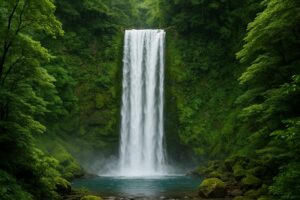
Yakushima’s incredible rainfall means one thing: spectacular waterfalls. The two most famous are Oko-no-taki in the southwest and Senpiro-no-taki in the south. Oko-no-taki is among Japan’s top 100 waterfalls, an 88-meter giant that you can walk right up to at the base. The spray and roar are overwhelming, a true showcase of nature’s power. Senpiro-no-taki offers a different experience; you view it from afar as it spills down a massive granite cliff. It’s more of a grand, scenic spectacle. The island’s coastline is equally dramatic. Visit Nagata Inakahama, a stunning stretch of golden sand and the most important nesting ground for loggerhead sea turtles in the North Pacific. From May to July, female turtles come ashore at night to lay their eggs. Strict rules protect them, and joining a guided observation tour is the best way to witness this incredible event without disturbing the turtles. It’s another one of Yakushima’s profound, life-affirming moments.
Island Life and Local Flavors
The human side of Yakushima is just as captivating as its natural beauty. The main settlements are the port towns of Miyanoura in the north and Anbo in the southeast. They’re quiet, laid-back places with a warm, small-town atmosphere. This is where you’ll find most of the island’s restaurants, shops, and accommodations. The food scene is a must-experience. Be sure to try anything featuring tobiuo (flying fish). It’s served as sashimi or, my personal favorite, karaage (deep-fried), with the wings spread out like a crispy, edible sculpture. It’s delicious. Also, watch for dishes with local venison and produce. The island is famous for its citrus, especially tankan and ponkan, which are incredibly sweet and juicy. And for drinks? You have to try the local shochu, especially Mitake, a strong spirit made from sweet potatoes and Yakushima’s famously pure water. It’s the perfect way to toast your hiking accomplishments.
The Logistics Lowdown: Getting In and Getting Around
Alright, let’s get practical. Reaching a remote, enchanting island takes some planning. But don’t worry, the journey itself is part of the adventure. You have options, so you can choose what best fits your budget and schedule.
Arrival Options: Plane or Boat
The primary entry point to Yakushima is Kagoshima, the southernmost major city on Kyushu’s mainland. From there, you have two main choices. The fastest is to fly. Japan Air Commuter operates multiple daily flights from Kagoshima to Yakushima’s small airport. The flight lasts about 35 minutes and offers incredible aerial views of the island as you approach. You can also fly direct from Fukuoka or Osaka (Itami), though these flights are less frequent. The more scenic and economical route is by sea. You can take a high-speed jetfoil (known as the “Toppy” or “Rocket”), which takes around 2-3 hours and provides a fairly smooth ride. Alternatively, if you’re on a tight budget and have plenty of time, there’s a slower car ferry that takes about 4 hours, is much cheaper, and lets you bring a vehicle. Honestly, the jetfoil hits a sweet spot between speed, cost, and the classic experience of arriving on an island by boat.
Getting Around the Island: Your Mode of Transport Matters
Once you arrive on Yakushima, getting around is your next hurdle. The island is larger than it appears, and the main attractions are spread out. Public transit is, frankly, limited. There is a bus service that connects main trailheads and towns, but the schedule is infrequent. Missing a bus could mean waiting for hours. Depending on it demands precise planning and can seriously limit your freedom. This is why I can’t stress enough: rent a car. It’s hands down the best way to explore Yakushima. It lets you go where you want, when you want. You can stop at random viewpoints, chase waterfalls spontaneously, and avoid being tied to a bus timetable. Book your rental car well in advance, especially during peak times (like Golden Week or summer vacation), because they book up quickly. The island’s main road is a coastal ring road, but beware: the western segment, the Seibu Rindo Forest Path, is a narrow, winding, single-lane road where monkeys and deer have the right of way. It’s a stunning drive, but take it slow.
Final Boss Tips & The Vibe Check
Before you pack your bags and book your flight, here are a few last bits of advice to ensure your Yakushima adventure is a success. This is the kind of information that can make or break your trip.
First, respect the island. This isn’t a theme park; it’s a fragile ecosystem. Stay on the trails, carry out everything you bring in (Leave No Trace is the rule here), and don’t feed the wildlife. The Yakushima macaques (monkeys) and Yaku-shika (deer) are wild animals. They’re fascinating to watch from afar, but keep your food and hands to yourself. The monkeys, in particular, can be quite bold.
Second, book everything in advance. That means flights, ferries, accommodations, rental cars, and especially mountain guides if you plan to hire one. Yakushima is a popular destination, and many things fill up months ahead, especially in spring and autumn. Don’t show up expecting to wing it, or you might end up sleeping in your rental car (if you even manage to get one).
Third, embrace the bento. For long hikes like Jomon Sugi, you’ll need a packed lunch. Most hotels and guesthouses on the island offer a service where you can order a bento the night before. They’ll have it ready for you to pick up before you set out in the pre-dawn darkness. Typically, it’s a simple but filling meal of rice balls, some fish or meat, and pickles—ideal trail fuel.
Finally, gear up properly. Waterproof everything. Seriously. A good rain jacket and rain pants are essential. Sturdy, waterproof hiking boots with solid ankle support are your best allies. Even if it’s not raining, the trails can be wet and muddy. Bring layers since the temperature can shift dramatically with elevation. A headlamp is a must for early morning starts. You can rent most of this gear from shops in Miyanoura or Anbo, so you don’t have to carry it all from home.
Yakushima is more than just a destination; it’s an experience. It demands respect and rewards you with a profound connection to the natural world. Trekking through the ancient, moss-covered forests feels like stepping back in time, a reminder of the planet’s raw and lasting beauty. It’s a place that will test you, humble you, and ultimately transform you. Whether you’re a Ghibli fan on pilgrimage, a hardcore hiker chasing a new challenge, or simply someone seeking a touch of magic, Yakushima delivers. It’s a legendary-tier spot, a side quest that turns into the main story. So go, explore, and let the spirit of the forest work its magic on you. You won’t regret it.