What’s up, fellow adventurers? Shun Ogawa here, ready to drop some serious knowledge on a place that’s straight-up legendary. We’re talking about an island that’s basically the final boss of nature, a spot so epic it feels like it was cooked up in a fantasy writer’s room. Forget what you think you know about forests, because we’re diving headfirst into Yakushima, a UNESCO World Heritage site that’s not just a location, it’s a whole mood. This island, floating just off the southern coast of Kyushu, is where time gets weird. It’s home to some of the oldest living things on Earth—the Yakusugi, ancient cedar trees that were saplings when mammoths still roamed the planet. This isn’t your average weekend hike in the park; this is a pilgrimage to the heart of the world, a place dripping with moss, mystery, and a vibe so ancient it hums in your bones. People come here to feel small, to connect with something primal, and to witness a living, breathing ecosystem that has been doing its thing for millennia. It’s the kind of place that changes you, low-key. You arrive as a tourist, but you leave as a storyteller, with tales of glowing moss, thousand-year-old trees, and rain that feels like the sky is giving the island a permanent hug. It’s raw, it’s real, and it’s about to blow your mind. Bet. Let’s get this journey started and map out why Yakushima is the absolute GOAT of natural wonders.
For an equally epic adventure on another of Japan’s remote southern islands, consider a wild trek on a living volcano in the Tokara Islands.
The Mononoke Vibe: Shiratani Unsuikyo Gorge
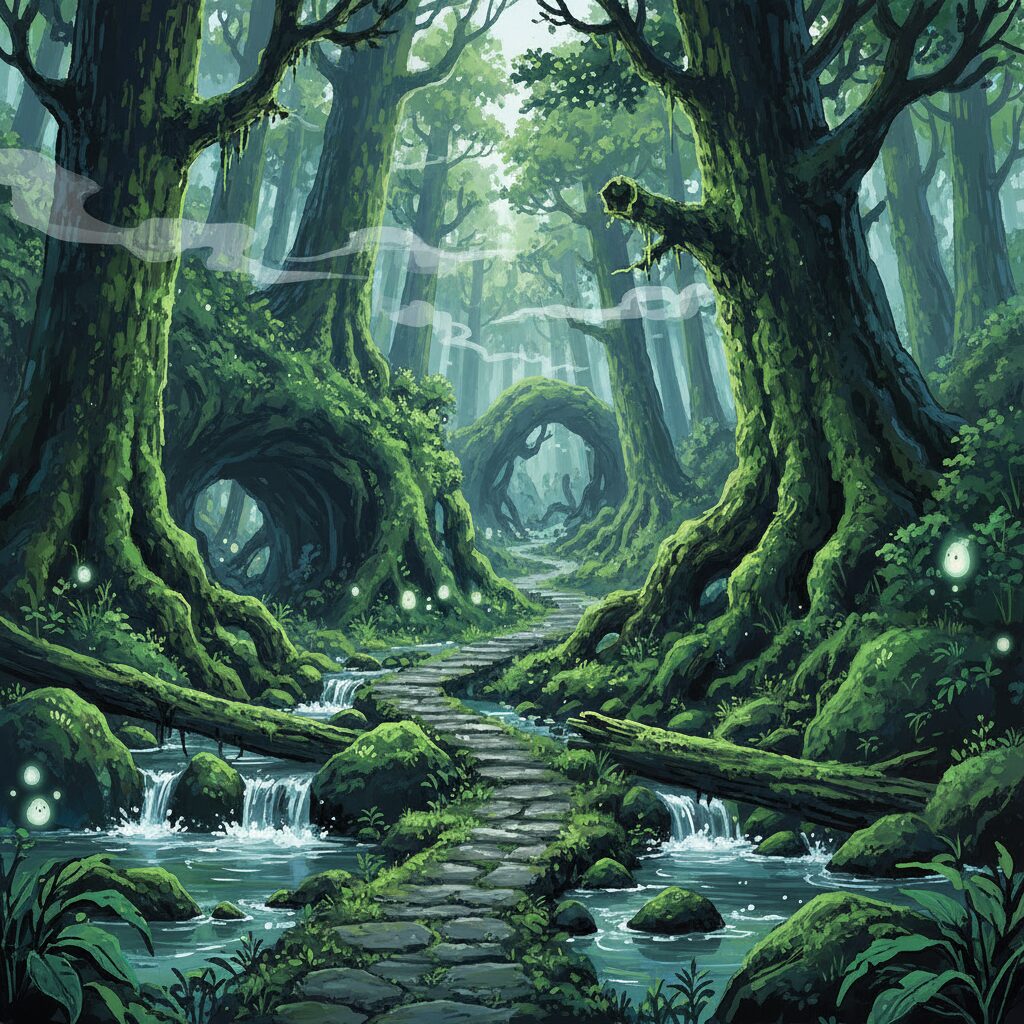
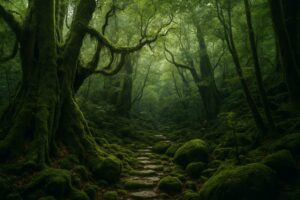
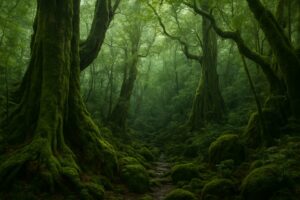
Alright, let’s start with the place that occupies every Ghibli fan’s imagination rent-free: Shiratani Unsuikyo Gorge. If you’ve ever watched Hayao Miyazaki’s Princess Mononoke and thought, “There’s no way a place this magical actually exists,” you’re about to be proven wrong. This is it. This is the very spot. Miyazaki himself spent countless hours here sketching, and you can feel his inspiration in every inch of the landscape. The moment you set foot on the trail, it hits—a cool, thick air scented with damp earth and wood. Everything—and I mean everything—is cloaked in a lush layer of glowing green moss. With over 600 varieties of moss here, each one contributes to the surreal, otherworldly atmosphere. It’s as if the entire forest is wrapped in velvet.
Journey into the Moss Forest
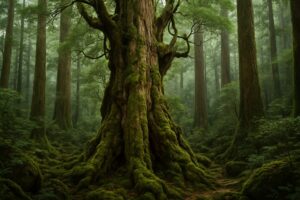
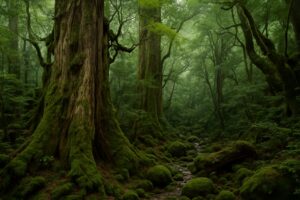
The highlight of Shiratani Unsuikyo is the area affectionately known as the “Moss Forest” or Kokemusu-no-mori. It overwhelms the senses in the best way. Light struggles to penetrate the dense canopy of ancient trees, sending ethereal beams that illuminate patches of glowing moss and winding roots. Sounds are muted by the thick vegetation; all you catch is the gentle drip of water from leaf to leaf, distant birdcalls, and your own heartbeat. It’s a deeply meditative experience. The trees themselves tell a story—the Yayoisugi, a Yakusugi estimated to be around 3,000 years old, stands as a venerable guardian near the entrance. You’ll cross crystal-clear streams via rustic wooden bridges and clamber over giant roots that resemble sleeping dragons. The trails are well-kept yet rugged, often using the natural stone and wood beneath your feet, making you feel completely immersed in the forest.
Level Up to Taikoiwa Rock
For those seeking a tougher challenge, pushing beyond the Moss Forest to Taikoiwa Rock is essential. This part of the hike is steeper and more strenuous—a genuine stair-master routine courtesy of Mother Nature. But the reward is beyond incredible. After a grueling climb, you emerge from the thick forest onto a vast granite boulder perched on the mountainside. The view from Taikoiwa Rock is an absolute ten out of ten. It offers a sweeping panorama of the island’s mountainous interior—a sea of green stretching endlessly. On a clear day, it’s breathtaking; on a misty one, it’s even more magical, with clouds weaving through the peaks, making you feel like you’re standing on an island in the sky. It’s a moment of pure awe, a powerful reminder of the scale and majesty of this place. It’s the perfect spot to sit back, breathe, and let Yakushima’s grandeur sink in. This isn’t just a hike—it’s an emotional journey that refreshes your soul. Don’t miss it.
The Quest for the King: Hiking to Jomon Sugi
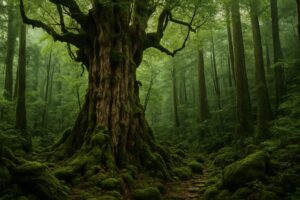
If Shiratani Unsuikyo is the soul-stirring poetry of Yakushima, then the trek to Jomon Sugi is its epic saga. This is far from a simple walk in the woods; it’s a grueling ten-to-twelve-hour pilgrimage to encounter the island’s undisputed monarch. Jomon Sugi is the oldest and largest Yakusugi cedar on the island, and its age borders on legendary. Estimates suggest it could be anywhere from 2,170 to an astonishing 7,200 years old. Let that sink in. This tree was alive during the Jomon period of Japanese prehistory, a time of hunter-gatherers. It stood long before the first pyramids were built in Egypt. Standing before it is a deeply humbling experience, connecting you to a timeline almost beyond comprehension.
The Grind is Real: Anbo Forest Railway
The journey begins before dawn. You’ll find yourself at the Arakawa trailhead while it’s still pitch black, headlamp on, ready for the long trek. The first segment of the hike—two to three solid hours—follows the tracks of the Anbo Forest Railway. This narrow-gauge railway was once used to transport lumber out of the mountains during the logging era. Today, it serves as a flat but seemingly endless path leading deeper into the wilderness. Walking on the wooden railway ties in the dim pre-dawn light feels surreal. To your left lies a steep drop into a ravine; to your right, a dense, dark forest. It’s a test of mental endurance, a rhythmic march that allows you to sync with the island’s pulse. As the sun rises, it gradually reveals spectacular scenery—towering trees and lush valleys hidden in the dark. This section is all about pacing yourself and soaking in the unique atmosphere.
The Climb and the Reward
Once you leave the railway tracks, the real challenge begins. The trail turns into the Okabu Trail, climbing almost straight up. You’ll scramble over giant roots, ascend steep wooden staircases, and navigate rocky paths. This is where your physical fitness truly comes into play. But the scenery serves as your reward. Along the way, you’ll encounter other legendary trees, each with its own story. You’ll pass Meoto Sugi, two cedars fused together like a married couple, and the Daiosugi, a giant that fell long ago but still commands respect. One of the most iconic stops is Wilson’s Stump, or Wirson-kabu. This is the massive, hollowed-out remains of a cedar felled in the 1580s by order of warlord Toyotomi Hideyoshi. You can actually walk inside the stump, and if you look up from a certain spot, the opening forms a perfect heart shape. It’s a beautiful, poignant reminder of the island’s history of both exploitation and reverence.
Finally, after hours of relentless climbing, you arrive. A wooden viewing deck has been built a short distance from Jomon Sugi to protect its fragile root system. And there it stands. Words and pictures simply can’t do it justice. Its trunk is a gnarled, twisted fortress of bark, resembling more a geological formation than a tree. Its branches stretch out like ancient arms, telling a story of millennia spent weathering typhoons, lightning strikes, and the slow passage of time. It doesn’t feel like you’re just looking at a tree; it feels like you’re in the presence of a wise, ancient being. It radiates an aura of immense power and serenity. This is the climax of your Yakushima quest, a moment of profound connection with the deep history of our planet.
The Lifeblood of the Island: Water, Wildlife, and Endless Green
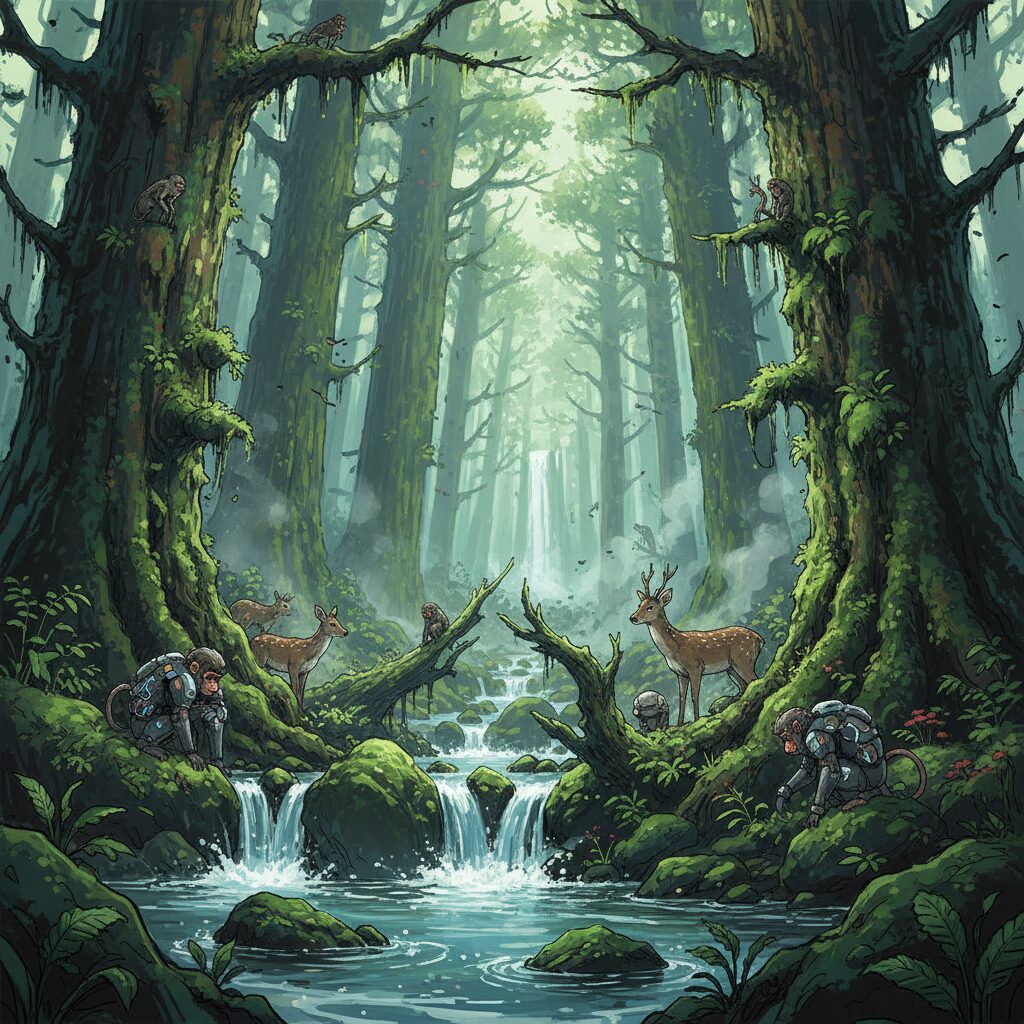
To truly appreciate Yakushima, you need to grasp its connection with water. The local saying, “It rains 35 days a month,” is hardly an exaggeration. This island receives an extraordinary amount of rainfall—among the highest in the world. Its towering central mountains, including Kyushu’s highest peak, Mount Miyanoura, capture the moisture-laden air coming from the sea, causing it to rise, cool, and release its moisture. This continuous rainfall cycle fuels the entire ecosystem. It explains the surreal mosses, lush ferns, and towering trees. The water here is so pure and abundant that you can often drink directly from the mountain streams. Yakushima is truly an island brimming with life.
Chasing Waterfalls and Rivers
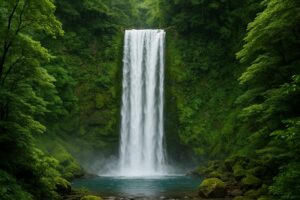
All that rain has to flow somewhere, and on Yakushima, it forms an impressive network of rivers and waterfalls. Renting a car to tour the waterfalls makes for an amazing day out. Senpiro-no-taki Falls is a colossal force, with an immense torrent cascading down a giant granite rock face into a deep gorge. Toroki-no-taki is special because it is one of the rare waterfalls in Japan that empties directly into the ocean. But the crown jewel is Oko-no-taki Falls. With an 88-meter plunge, it ranks among Japan’s top 100 waterfalls, and you can get right up to its base. The sheer force of the water and the mist it generates is revitalizing. Beyond waterfalls, the rivers themselves offer adventures. Kayaking or stand-up paddleboarding on the Anbo or Miyanoura rivers provides a unique view of the forest. You glide through calm, emerald-green waters flanked by dense subtropical forest. It’s a wonderfully relaxing way to soak in the scenery without a strenuous hike.
The Local Residents: Monkeys, Deer, and Turtles
Yakushima is not just about plants; it’s alive with wildlife. As you explore, you’re almost certain to encounter the native Yakushika deer and Yakuzaru monkeys. These animals are smaller than their mainland relatives, a distinctive subspecies adapted to the island’s environment. They are everywhere, particularly along the Seibu Rindo, or Western Forest Path, a narrow road winding through a protected coastal forest. Driving this route feels like a safari; you’ll spot dozens of monkeys grooming each other near the roadside and deer peacefully grazing just feet away. Although wild, they are accustomed to humans and not shy, presenting incredible wildlife photography opportunities.
Wildlife encounters extend beyond the forests to the shores. From May to August, Yakushima’s beaches, particularly Nagata Inakahama, serve as vital nesting grounds for loggerhead and green sea turtles in the North Pacific. Witnessing a massive female turtle haul herself ashore at night, dig a nest, and lay her eggs under the stars is a profoundly moving and unforgettable experience. Local conservation groups offer guided viewing tours to protect the turtles from disturbance, providing a meaningful lesson in ecological stewardship.
The Logistics Lowdown: Your Yakushima Game Plan
Alright, so you’re excited and ready to book your ticket. But how exactly do you make a trip to this remote island paradise happen? Planning is essential because reaching and exploring Yakushima takes a bit of effort. Trust me, it’s absolutely worth it. Let’s break down the key info.
Getting There: Air or Sea?
You have two main choices for traveling to Yakushima: flying or taking the ferry. Flying is the quickest and most convenient option. There are several direct flights daily from Kagoshima, plus usually one flight from Fukuoka and Osaka (Itami). The flight is short and offers stunning aerial views of the island as you near it. However, it’s also the priciest option, and flights can be canceled due to bad weather, especially during typhoon season.
The more popular, budget-friendly option is the ferry from Kagoshima. Here, you have options as well. The high-speed jetfoil, called the Toppy or Rocket, takes about two to three hours and provides a smooth, fast ride. It’s ideal for passengers, but you can’t bring a car on board. If you want to bring your own vehicle or save the most money, there’s the slower car ferry, the Ferry Yakushima 2. This much larger ferry takes about four hours, offering a more relaxed trip. You can stroll around on deck, and on calm days, you might even spot dolphins or flying fish. Honestly, watching a school of flying fish dart across the waves is unforgettable.
Getting Around: The Car is Essential
Once you arrive, how do you get around the island? The truth is, you’ll want to rent a car. Although a public bus system exists, it’s infrequent and doesn’t reach all the trailheads and key sights. Having a car gives you the freedom to explore on your own timetable, chase good weather, and uncover hidden gems. The island has one main loop road—a full drive without stopping takes about three hours. Roads are usually well maintained but can be very narrow and winding, especially in remote areas like the Seibu Rindo, which is often just a single lane with steep drops. So, drive cautiously and be ready to share the road with monkeys and deer.
Where to Stay: Picking Your Base
The main accommodation hubs are Miyanoura, the island’s largest town and main port, and Anbo, the second-largest town and port on the opposite side. Miyanoura offers the most amenities, including supermarkets, restaurants, and rental shops. Anbo is smaller but closer to trailheads like Jomon Sugi and Yakusugi Land, making it popular with serious hikers. For a quieter, more relaxed atmosphere, consider staying in the southern part of the island around Onoaida or Hirauchi. This area is known for its coastal hot springs and rural charm. Lodging ranges from luxury hotels with ocean views to cozy minshuku (family-run guesthouses), where you can enjoy local hospitality and home-cooked meals featuring island specialties like flying fish.
What to Bring: Pack Smart
Packing for Yakushima is no joke. The weather is famously unpredictable and can shift suddenly. The most critical item to bring is top-quality, fully waterproof gear. I’m not just talking about a water-resistant windbreaker—you need a true waterproof, breathable rain jacket plus rain pants. Your hiking boots should be waterproof with solid ankle support and good grip for slippery roots and rocks. Layers are crucial. Pack quick-drying synthetic or wool clothing. Avoid cotton—it stays wet and cold once soaked. Other must-haves include a headlamp for early starts, a reusable water bottle to fill up from mountain streams, strong insect repellent, and sunscreen. For long hikes like Jomon Sugi, a portable toilet kit is essential, as facilities on the trail are very limited. Follow leave-no-trace principles to keep this paradise pristine.
Beyond the Trails: More Island Adventures
Yakushima’s ancient forests are the main attraction, but the island offers so much more than just hiking. If you add a few extra days to your itinerary, you can uncover another side of Yakushima’s charm. The island provides an ideal mix of mountain and sea experiences, guaranteeing that there’s never a dull moment.
Soaking in a Seaside Onsen
After several days of challenging your muscles on the trails, nothing beats a soak in a natural hot spring as a reward. Yakushima features some truly unique coastal onsens. The most well-known is Hirauchi Kaichu Onsen, a series of natural pools that appear along the rocky shoreline. The catch? It’s only accessible for a few hours before and after low tide. When the tide rises, the onsen is completely covered by the ocean. Timing your visit becomes part of the adventure. Bathing in the steaming, mineral-rich water while waves crash just a few feet away is an enchanting experience. It’s a mixed-gender, very rustic onsen (no changing rooms), making it a very natural and local experience. Slightly further down the coast is Yudomari Onsen, which is similar but a little more developed, featuring a small stone wall separating it from the sea.
Yakusugi Land: Accessible Ancient Wonders
If the ten-hour trek to Jomon Sugi seems too demanding, or if you’re traveling with family, Yakusugi Land is an excellent alternative. Don’t be misled by the name; this isn’t a theme park. It’s a beautiful nature park providing a more accessible way to enjoy the Yakusugi forest. There are several well-kept trails, from a 30-minute boardwalk loop perfect for a relaxed stroll to a more strenuous 150-minute course that leads deeper into the primeval forest. You’ll encounter magnificent ancient cedars, cross lovely moss-covered bridges, and experience the full Yakushima forest feel without extreme physical effort. It’s a high-reward, low-commitment option that captures all the essence.
A Final Word from the Island
Leaving Yakushima feels like waking from a dream. The vivid green, the immense age of the trees, and the constant presence of water leave a lasting impression. This place commands respect—for its power, its history, and its delicate balance. The island stands as a living testament to what the world can become when nature is left to flourish on its own. It teaches resilience, the beauty of imperfection, and your own place in life’s vast timeline. Whether you’re an avid trekker, a nature photographer, or simply seeking a touch of magic, Yakushima delivers. It’s a journey to the dawn of time, one that stays with you long after you’ve boarded the ferry back to the modern world. This trip isn’t just recommended; it’s essential.