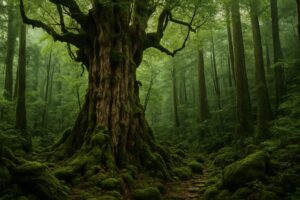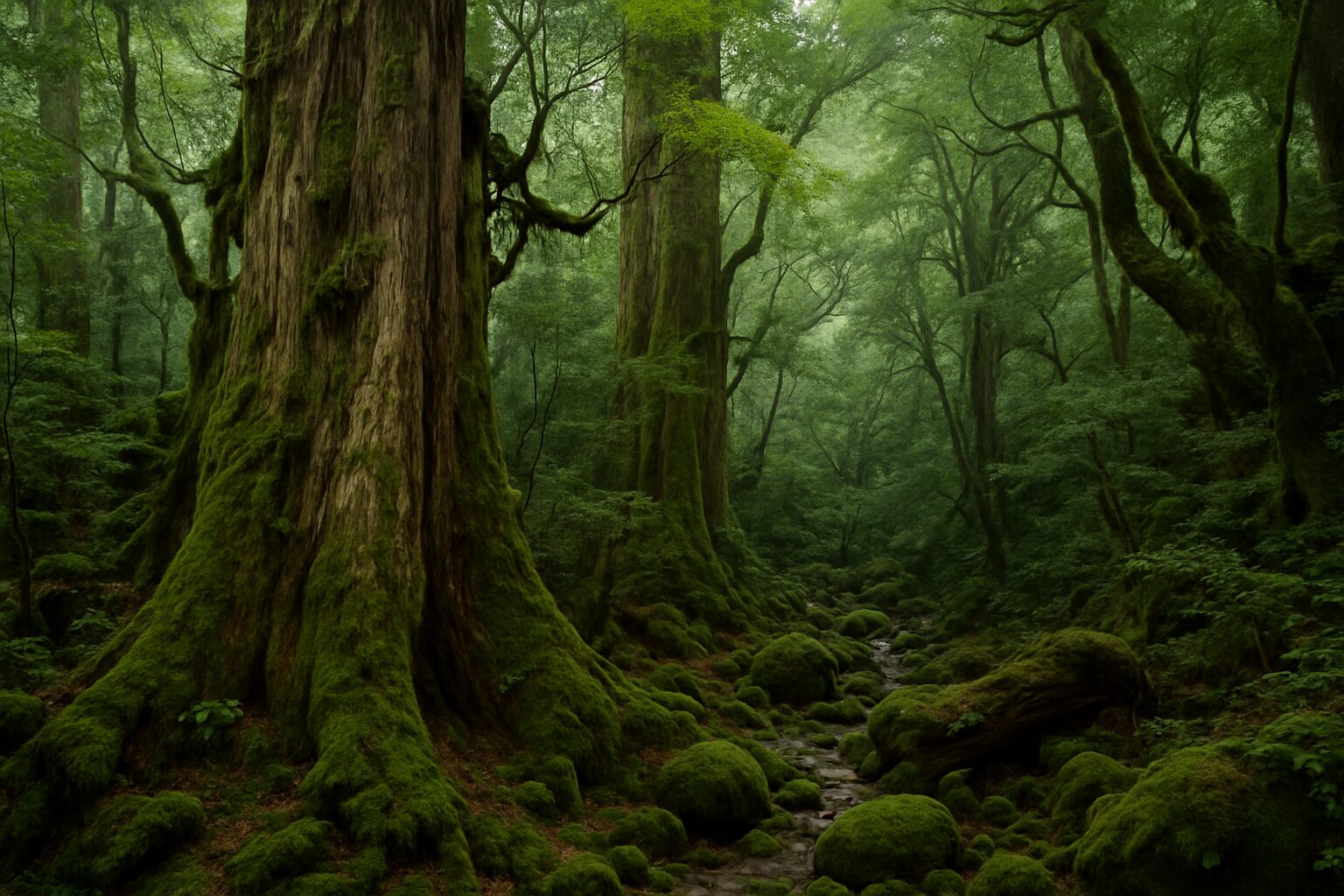
Yo, what’s the move? If you’re scrolling for a Japan trip that’s way more than just neon cities and ancient temples, I got you. We’re talking about a place that hits different, a place where the air itself feels like it’s from another time. Get ready to teleport to Yakushima, an island south of Kyushu that’s basically the final boss of forest hikes. This isn’t just a walk in the park; it’s a full-on spiritual glow-up. This whole island is a UNESCO World Heritage site, and for good reason. It’s home to the Yakusugi, ancient cedar trees that have been chilling here for thousands of years. We’re talking trees that were already old when samurai were a new thing. Standing next to one of these giants? It’s a vibe that’ll reset your whole perspective on life, no cap. This is the real-life enchanted forest, the kind of place that inspired legendary anime and continues to blow the minds of everyone who steps foot on its mossy ground. It’s a place where rain isn’t just weather; it’s the island’s lifeblood, creating a green so intense it feels like you’re breathing color. So, if you’re ready to trade crowded streets for whispering woods and find a piece of primordial Earth, let’s get into it. This is your guide to hiking through a living legend.
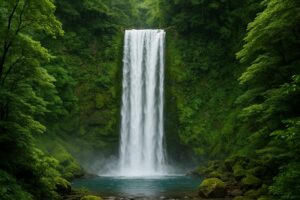
For a different kind of magical water experience in Kagoshima, don’t miss the stunning Ogawa Falls.
The OG Giants: Meeting the Yakusugi
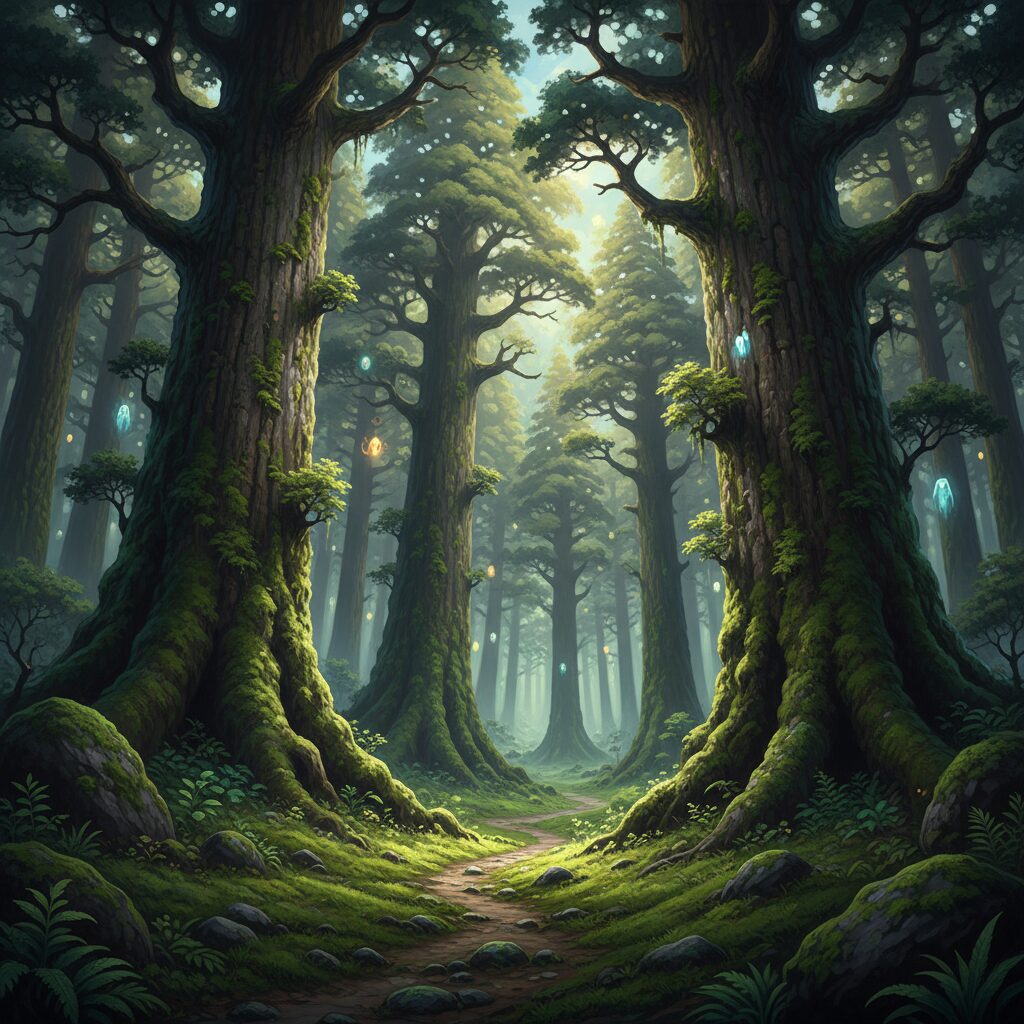
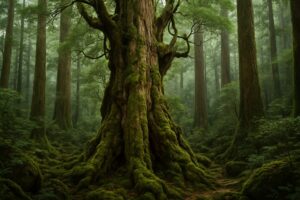
First things first, let’s focus on the island’s main characters: the Yakusugi. These are no ordinary trees. To be called a Yakusugi, a cedar on this island must be over 1,000 years old. Anything younger is simply a kosugi (a small cedar). It’s like an exclusive VIP club for ancient trees, and they reign supreme. Their longevity is thanks to Yakushima’s harsh climate. The granite-based, nutrient-poor soil combined with heavy rainfall causes these trees to grow very slowly. This slow growth saturates their wood with a remarkable amount of resin, making them nearly impervious to rot and decay. They are truly nature’s ultimate survivors.
The Quest for Jomon Sugi
If there’s one Yakusugi that stands out as the ultimate celebrity, it’s the Jomon Sugi. This colossal tree is estimated to be anywhere from 2,000 to an astonishing 7,200 years old. Its name is derived from the Jomon Period of Japanese prehistory, meaning this tree was a sapling when people in Japan were still hunter-gatherers. Just let that sink in. Reaching it is a pilgrimage—an intense ten to twelve-hour round-trip hike that challenges your body but deeply rewards your soul. The journey begins with a long walk along the Anbo Forest Railway, an old logging track now repurposed as a forest path. It’s a surreal experience, walking on wooden planks and steel rails beneath a closing forest canopy. The sound of your footsteps on the tracks and the gentle babbling of streams provide the perfect soundtrack.
After several hours, you leave the railway behind, and the real ascent begins. The trail gets steep, winding through a maze of roots and rocks. Along the way, you pass other legendary trees, like the Meoto Sugi—two cedars fused together like an old married couple—and the Daio Sugi, once the forest king before Jomon Sugi was discovered. Each has its own presence and story. But with every step, your anticipation for Jomon Sugi grows. When you finally arrive, you can no longer get up close—a viewing deck was built to protect its ancient roots—but even from afar, its presence is overwhelming. The bark twists and gnarls into shapes resembling faces and spirits. It doesn’t feel like just a tree; it feels like a living deity of the forest. People stand silently, mesmerized and humbled. It’s a moment of pure, unfiltered awe. This isn’t merely a photo opportunity; it’s a connection to deep time.
Wilson’s Stump: A Heart of Green
Another highlight along the Jomon Sugi trail is Wilson’s Stump, or Wilson-kabu. This massive remnant of a cedar was cut down centuries ago during the Edo period for its wood. It’s so enormous you can step right inside it. From the outside, it appears as a huge, moss-covered stump. Inside, however, it’s a completely different world. A small spring bubbles up from the ground, and if you look up just right, the opening at the top forms a perfect heart shape against the sky. It’s a nature-made photo spot and has become an iconic symbol of Yakushima. The stump was named after English botanist Ernest Henry Wilson, who documented it in the early 20th century. Standing inside this ancient giant and looking up through the heart-shaped opening is deeply symbolic. It reminds us that even after being felled, life finds a way to create something beautiful. It’s a powerful message from the forest about resilience and renewal.
Welcome to the Ghibli-verse: Shiratani Unsuikyo
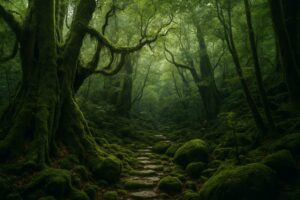
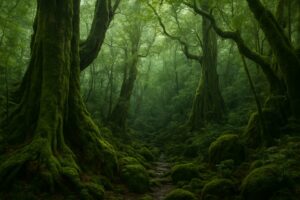
If the Jomon Sugi hike seems a bit too intense, or if you’re a huge Studio Ghibli fan, then Shiratani Unsuikyo is the place for you. This area is the very inspiration for the ancient forest in Hayao Miyazaki’s masterpiece, Princess Mononoke. And once you’re there, you’ll understand why. It’s not just similar; it is that forest. The moment you step onto the trails, you enter a world brimming with life. Everything—the rocks, the tree trunks, the fallen logs, even the ground—is cloaked in a thick, velvety carpet of countless shades of green moss. The air is cool and misty, and the silence is broken only by the sound of dripping water and the occasional bird call. It’s so enchantingly magical it feels staged, yet it’s completely real.
Finding the Kodama Forest
Shiratani Unsuikyo offers a variety of trails, ranging from easy one-hour loops to more demanding five-hour treks that can connect you all the way to the Jomon Sugi trail if you’re up for an extra adventure. The most popular path takes you through an area officially called Kokemusu-no-mori, or the Moss Forest. This is the place where you half expect to see the little white kodama (tree spirits) from the movie peeking out behind a log. Light filters through the dense canopy in ethereal beams, illuminating the mist and making the entire scene glow. You’ll cross crystal-clear streams on rustic wooden bridges, climb over massive, twisted roots, and walk through hollowed-out tree trunks. It’s a sensory feast in the best way. The intense greenness is something you have to see to believe—a deep, ancient green that feels alive.
The Payoff: Taikoiwa Rock
For those willing to put in some extra effort, the trail continues up to Taikoiwa Rock. It’s a bit of a climb, with rope sections to help you navigate steeper parts, but the view from the top is absolutely breathtaking. You emerge from the dense forest onto a massive granite boulder that offers a jaw-dropping panoramic view of the island’s mountainous interior, including Mount Miyanoura, the highest peak in southern Japan. It feels like you’re on top of the world. On a clear day, the view is incredible. You can see the endless sea of green canopy you just hiked through, stretching out toward the towering peaks in the distance. It’s the perfect climax to the Shiratani Unsuikyo experience—a moment of expansive freedom after the beautiful, enclosed world of the moss forest. It’s a spot to sit, breathe, and fully absorb the grandeur of Yakushima’s epic nature.
Going Off the Beaten Path: Deeper Dives
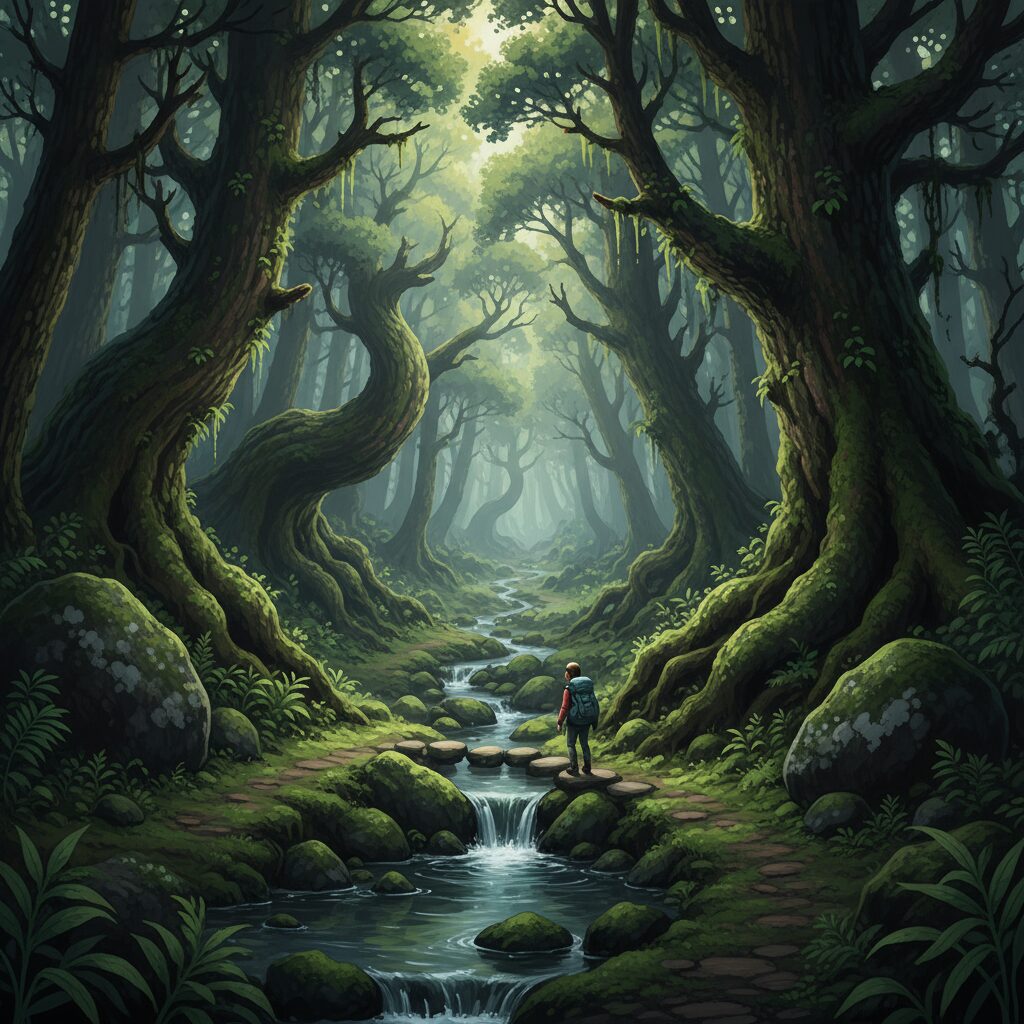
While Jomon Sugi and Shiratani Unsuikyo are the main attractions, Yakushima has much more to offer. Honestly, you could spend weeks here and still not explore everything. If you want to avoid the main crowds and discover your own piece of ancient forest, there are some truly epic options.
Yakusugi Land: Easily Accessible Ancient Treasures
Don’t be misled by the name; Yakusugi Land isn’t a theme park. It’s a protected nature park that provides a more accessible yet equally stunning experience of the Yakusugi forest. It features several well-maintained trails, some with wooden boardwalks, making it ideal for families or those not up for a 10-hour hike. You can pick from short 30-minute walks to longer 150-minute routes. The longer you trek, the deeper and more primeval the forest becomes. You’ll still encounter massive Yakusugi trees, like Buddhasugi, along with many other uniquely named ancient cedars. The forest here feels just as magical, with moss-covered everything and crystal-clear rivers rushing through deep ravines. It’s a fantastic way to enjoy the awe-inspiring Yakusugi experience without the intense physical challenge of the Jomon Sugi hike.
Seibu Rindo: The Untamed Western Road
Seibu Rindo, or Western Forest Path, is a narrow road that winds through the most pristine, core part of the UNESCO World Heritage site on the island’s west coast. This area has barely been logged at all. It represents Yakushima in its wildest form. For a long time, the road was closed to public vehicles, but parts have now reopened, though it’s wise to check current conditions. Driving or, better yet, walking a segment of this road offers a completely different experience. You are almost certain to encounter the island’s endemic wildlife. Yakushima macaques (Yaku-zaru) and Yakushima deer (Yaku-shika) are everywhere, lounging on the road or within the forest. The monkeys are smaller and have thicker fur than their mainland relatives, and the deer are also charmingly petite. They’re so accustomed to their quiet domain that they often don’t even move for you. It’s a reminder that you’re simply a visitor in their home. The forest here feels dense and untamed, pressing right up against the road. It’s a raw, unfiltered glimpse into Yakushima’s wilderness.
Challenge Mode: Climbing Mount Miyanoura
For serious hikers, the ultimate test on Yakushima is summiting Mount Miyanoura. Standing at 1,936 meters, it’s the tallest peak in Kyushu and is often called the “Alps of the Ocean.” This trek usually takes two days, with an overnight stay in a mountain hut. It’s a demanding trek that requires proper gear and preparation, but the rewards are spectacular. The route takes you through a stunning range of ecosystems. You begin in lush subtropical coastal forests, climb through the temperate Yakusugi zone, and finally reach a subalpine environment above the treeline that feels more like the Japanese Alps than a southern island. The summit is a rugged pile of weather-beaten granite boulders, offering 360-degree views of the entire island and surrounding ocean. Along the way, you pass through fields of Yakushima bamboo grass and spot unique alpine flowers. Reaching the summit of Miyanoura-dake is a peak experience in every sense. It offers a full appreciation of the island’s scale and diversity, from its mossy core to its rocky crown.
The Power of Water: Rivers, Falls, and Coastlines
Locals have a saying about Yakushima: “it rains 35 days a month.” Although this is an exaggeration, it captures a fundamental truth: this island is defined by water. Yakushima receives some of the highest rainfall on Earth, and all that water must find its way somewhere. It carves deep valleys into the island’s granite mountains, nurtures the lush forests, and forms a stunning network of rivers and waterfalls. Embracing the water is essential to understanding Yakushima’s true spirit.
Chasing Waterfalls
Yakushima is a paradise for waterfalls, with so many that it’s easy to lose count. Two of the most impressive and accessible are Senpiro-no-taki and Oko-no-taki. Senpiro-no-taki is a massive cascade that thunders down a vast granite face. Its name means “a thousand hiro deep” (a hiro being an old unit of measurement), giving a sense of its immense scale. A viewing platform offers a great vantage point to witness its power. Oko-no-taki, located on the rugged west coast, is one of Japan’s top 100 waterfalls. This 88-meter giant allows you to walk right up to the plunge pool at its base. The spray is intense, and the roar deafening. Standing there, feeling the raw force of the water, is a profoundly humbling experience. Then there’s Toroki-no-taki, a rare waterfall that drops directly into the Pacific Ocean, a sight that depends on the tides.
Go with the Flow: River and Sea Adventures
With so many pristine rivers, it’s no wonder water sports play a big role here. River kayaking is a wonderful way to experience the forest from a fresh perspective. Paddling down the gentle currents of the Anbo or Miyanoura rivers, you’re surrounded by lush greenery with birds flitting overhead. It’s incredibly peaceful. For the more adventurous, there’s sawanobori, or shower climbing, which involves scrambling, swimming, and climbing up river gorges—a wild, full-body immersion into the island’s aquatic environment. Along the coast, sea kayaking offers breathtaking views of the island’s mountainous silhouette rising from the sea. From May to August, Nagata Inakahama Beach serves as one of the North Pacific’s most important loggerhead sea turtle nesting sites. Guided night tours provide a respectful way to watch these ancient creatures come ashore to lay their eggs. It’s a deeply moving and unforgettable experience that underscores the island’s role as a sanctuary for wildlife.
Island Life: Food, Onsen, and Local Culture
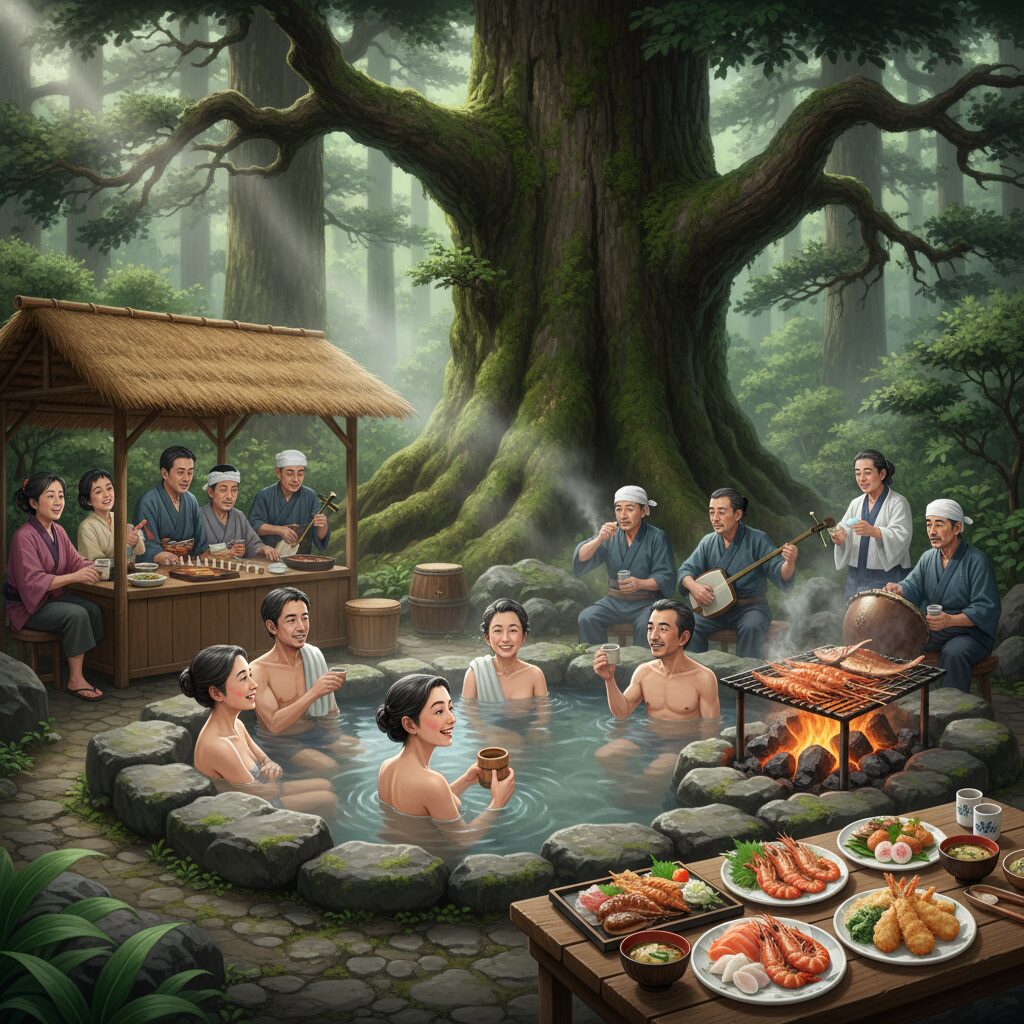
Life on Yakushima unfolds at a different rhythm. The small towns and villages, such as Miyanoura and Anbo, serve as the island’s centers but still maintain a calm, relaxed atmosphere. The residents here possess a profound, deeply rooted respect for the surrounding nature, a bond cultivated over centuries. Immersing yourself in this local culture is an essential part of the Yakushima experience.
Fueling Your Adventure: Yakushima’s Local Cuisine
A full day of hiking builds up a serious hunger, and Yakushima’s local dishes provide the perfect nourishment. The island’s specialty is tobiuo, or flying fish. It appears in a variety of preparations, though the most popular are karaage (deep-fried) and satsuma-age (a type of fried fish cake). The whole fried fish, with its fins spread like wings, is a classic Yakushima delicacy. The island is also well-known for its citrus fruits, particularly the tankan and ponkan oranges, which are exceptionally sweet and juicy. You’ll find them served fresh, as juice, and in many sweets and desserts. For a post-hike drink, you must try the local shochu. The most renowned brand is Mitake, a sweet potato shochu so beloved it’s often hard to find outside the island. Smooth and flavorful, it’s the perfect way to relax after a long day on the trails.
A Hot Spring Soak by the Ocean
After working your muscles on the trails, nothing beats soaking in a natural hot spring, or onsen. Yakushima offers some truly unique options. The most famous is Hirauchi Kaichu Onsen, a tidal onsen situated right on the rocky coast. These natural rock pools are accessible only for a couple of hours before and after low tide. At other times, they are entirely submerged by the ocean. Bathing here is a thrilling experience. You sit in geothermally heated water while the waves of the Pacific crash just a few feet away. It’s a mixed-gender, very rustic setting (no changing rooms, just you and the rocks), and bathing suits are generally not worn, although some tourists use a small towel for modesty. It’s all about embracing nature fully. The sensation of hot spring water blending with cool sea spray beneath a sky filled with stars is pure magic. It’s one of those unforgettable, only-in-Yakushima moments.
Your Mission Brief: Planning the Trip
Alright, you’re convinced. You’re ready to answer the call of the ancient cedars. But reaching and getting around a remote island like Yakushima requires some planning. Here’s the essential info on the logistics.
Getting There: Plane or Ferry?
Yakushima is an island, so your primary options are flying or taking a ferry from Kagoshima, the nearest major city on the mainland. There are a few direct flights daily to Yakushima’s small airport from Kagoshima, as well as from Fukuoka and Osaka. Flying is definitely the fastest and most convenient choice. The alternative is the ferry, with two main options: the high-speed hydrofoil (called the Toppy or Rocket) and the slower car ferry (the Yakushima 2). The hydrofoil takes about two to three hours and is popular. The car ferry takes around four hours but is much cheaper and is the only option if you want to bring a vehicle. It also has outdoor decks where you can relax and watch for dolphins and flying fish. Your choice depends largely on your budget and schedule.
Getting Around the Island: Rent a Car, Seriously
I can’t stress this enough: rent a car. While Yakushima has a bus system, it is infrequent and doesn’t cover all areas. The schedules can be very limiting, especially when trying to time your hikes. Taxis are available but can become expensive quickly. Having your own car lets you explore the island at your own pace, stop at unexpected scenic spots, reach trailheads early before buses start running, and visit more remote areas like the west coast. Book your rental well in advance, especially during peak seasons, as availability is limited. Driving is on the left, and roads are often narrow and winding, so drive carefully and watch out for monkeys and deer.
When’s the Best Time to Visit?
Yakushima is a year-round destination, with each season offering a distinct atmosphere.
- Spring (March-May): The island bursts with fresh greenery and mountain rhododendrons bloom beautifully. The weather is usually pleasant, but the rainy season often begins around mid-May, so expect occasional downpours.
- Summer (June-August): This period marks peak rainy season, especially June and July, with hot and very humid conditions. However, it’s the best time for river and ocean activities and the peak of the sea turtle nesting season. Just be mindful of possible typhoons that can disrupt plans.
- Autumn (September-November): Probably the best season for hiking. Rain decreases, humidity drops, and temperatures are cool and comfortable. Autumn colors are less dramatic than mainland Japan, but clear skies and stable weather make it ideal for trail adventures.
- Winter (December-February): The lowlands remain mild, but the mountains get snow-covered, transforming the ancient forests into a silent, white wonderland. It’s breathtaking and much quieter then. However, many high-altitude trails may be inaccessible without proper snow gear and experience. This season is for the well-prepared.
Pro Tips for First-Timers
Here are a few tips to help your trip go smoothly. First, bring quality rain gear—not a cheap poncho but waterproof, breathable jacket and pants. It will rain, and being cold and wet in the mountains is unpleasant and risky. Second, wear sturdy hiking boots with good traction; trails are often wet, rocky, and covered with slippery roots. Third, bring cash. While larger hotels and restaurants accept cards, many small shops, guesthouses, and local eateries only take cash. Fourth, consider hiring a local guide for at least one of your major hikes. They offer much more than directions—they share knowledge about the unique flora and fauna, tell local legends and history, and help ensure your safety. Their insight greatly enriches the experience. Finally, book everything—flights, ferries, accommodation, rental cars, and guides—as early as possible. Yakushima is a popular destination, and many things sell out months in advance, especially around holidays like Golden Week.
The Forest is Calling
A trip to Yakushima is more than just a vacation; it’s a journey to a place that exists beyond human time. Standing before a 3,000-year-old Yakusugi, you can’t help but gain a profound sense of perspective. You come to realize you are a small, fleeting part of a much larger, older story. The island has a unique way of quieting your mind and reconnecting you to something fundamental. It is a place of immense beauty, raw power, and profound, tranquil wisdom. It will challenge you physically, drench you in its life-giving rain, and then reward you with moments of pure, unforgettable magic. So, if you seek an adventure that will stay with you long after you leave, put Yakushima at the top of your list. The ancient forest awaits—go discover what it has to share with you.