Yo, let’s talk about a place that’s low-key a spiritual experience disguised as an island trip. We’re heading to the Seto Inland Sea, this unreal body of water dotted with islands that look like they’ve been plucked from a Ghibli movie. Among them is Teshima. And listen, Teshima isn’t just a destination; it’s a whole entire mood. It’s where world-class contemporary art doesn’t just sit in a gallery but literally breathes with the landscape. It’s where you can trade the frantic energy of the city for the sound of wind rustling through rice terraces and the gentle lapping of the sea. For real, this place is a total reset button. It’s a pilgrimage for art lovers, a sanctuary for nature seekers, and for anyone who just needs to feel something real. It’s the kind of place that sticks with you, a quiet hum in your soul long after you’ve boarded the ferry back to the mainland. It’s a testament to the power of art to heal not just people, but a place itself. Bet. So, if you’re ready to slow down and plug into something truly special, Teshima is calling. It’s time to answer.
To further explore the stunning Seto Inland Sea by bicycle, consider tackling the epic Shodoshima cycling route.
The Main Event: Teshima Art Museum is a Whole Vibe

Alright, let’s dive straight into the essence of it—the place that has people whispering its name with reverence around the world: the Teshima Art Museum. Calling it merely a ‘museum’ feels like a huge understatement. It’s more like a living sanctuary, a futuristic temple devoted to light, water, and air. This isn’t a place to simply gaze at paintings on a wall. It’s where you go to experience time itself dissolving. Truly, the experience is the art, and you become part of it from the moment you step onto the path leading to its entrance. The museum is a collaboration between architect Ryue Nishizawa and artist Rei Naito, and together, they crafted pure magic.
First, the setting is absolutely stunning. The museum nestles in a corner of the island overlooking the shimmering Seto Inland Sea, surrounded by beautifully restored terraced rice fields cascading down the hillside. The journey itself is part of the exhibit. You walk along a quiet, winding path, with the island’s sounds—the buzzing insects, distant bird calls, and gentle sea breeze—attuning your senses before you arrive. With every step, you shed the outside world.
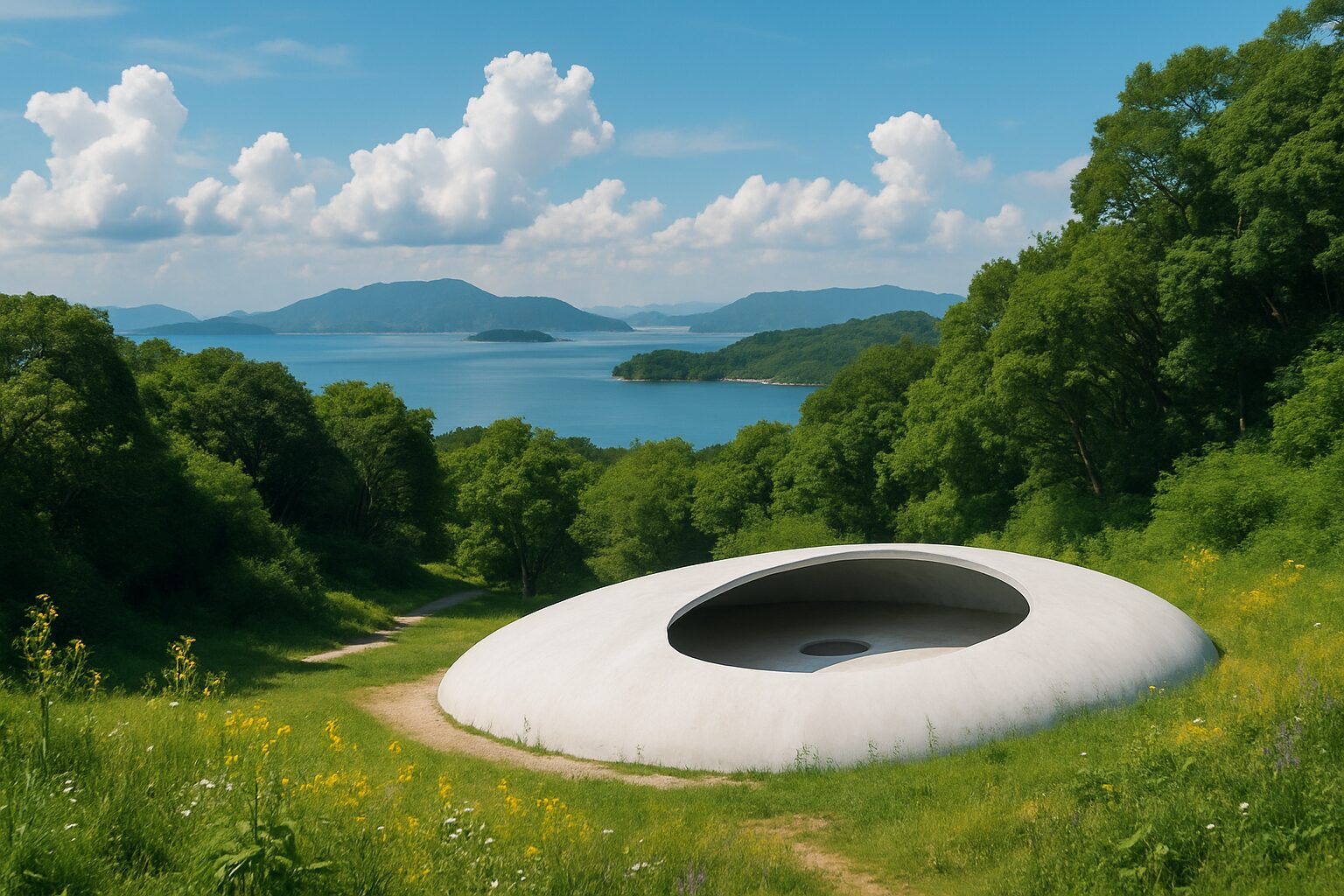
The building itself resembles a single, massive droplet of water solidified on the landscape. It’s a seamless white concrete shell, impossibly thin and elegant, curving naturally with the hill. There are no sharp edges, no imposing façade. Just a soft, otherworldly yet natural form that feels both ancient and futuristic. Before entering, you must remove your shoes. This simple gesture is essential. It’s a mark of respect, but it also grounds you, connecting you physically to the cool, smooth floor inside.
Then you step inside. The interior is one vast, open space beneath the domed shell. Two large elliptical openings in the ceiling are completely open to the elements. These aren’t windows; they’re portals. They frame the sky, clouds, passing birds, and falling rain. They are the sole sources of light, which pools and shifts across the floor, coloring the space with the changing hours of the day. The acoustics are astonishing. Every small sound—a cough, a footstep, the whisper of the wind—is amplified and becomes part of the ambiance.
But the true centerpiece is Rei Naito’s artwork, called “Matrix.” It’s one of the most subtle yet powerful experiences you’ll ever have. Around the floor, from tiny, nearly invisible pinholes, droplets of underground water emerge. They well up, seemingly from nowhere. They tremble, merge with other droplets, forming tiny streams that snake across the floor, pooling and disappearing in a slow, silent, endless dance. That’s it. That’s the art. Water emerging from the earth. You can spend hours just watching. You find a spot on the floor to sit and observe. Some lie down, gazing upward through the openings at the sky. Time becomes fluid—a minute stretches like an hour, an hour shrinks like a minute. The water’s movement is mesmerizing, a meditation on birth, life, and the quiet forces of nature. Occasionally, a string dangling from one of the openings sways gently in the breeze, its motion a delicate counterpoint to the water’s journey on the floor. It’s like watching the planet breathe. The experience transforms completely depending on the weather. On a sunny day, the light is sharp and clear, making the water sparkle. On cloudy days, the light softens and diffuses, creating a more introspective mood. And in the rain? It’s pure poetry. Rain falls directly into the space, composing a symphony of sound and motion as it merges with the water on the floor. It’s an artwork that is never the same twice. The experience is profoundly simple yet deeply moving, and it will absolutely rewire your brain. It hits differently, and you’ll leave feeling… lighter. Cleansed. It’s a masterpiece, pure and simple.
Your Heartbeat in the Archives: Christian Boltanski’s Legacy
After the ethereal, minimalist calm of the Teshima Art Museum, prepare for an experience that resonates on a completely different emotional wavelength. Hidden away in a quiet cove, beyond a secluded sandy beach, stands a small, dark wooden structure: Les Archives du Cœur, or the Heart Archives. This powerful installation by the late French artist Christian Boltanski is among the most hauntingly beautiful places you will ever visit. The concept is devastatingly simple yet profoundly deep: to collect and preserve the sound of human heartbeats from across the globe. It’s a library of life itself.
The experience unfolds in three parts. First, you enter the Heart Room. The room is pitch black, except for a single, bare lightbulb hanging from the ceiling. In the darkness, a sound surrounds you: a deep, rhythmic thumping beat. It’s the amplified sound of a heartbeat, filling the room. The lightbulb flickers in perfect sync with the beat. In-out, light-dark, thud-thud. It’s intense, immersive, and slightly unsettling. You stand inside the sound of someone’s life force. The heartbeat you hear is selected at random from the archive, representing an anonymous life, a universal rhythm that unites us all. You can feel the vibration in your chest. It’s a stark, visceral reminder of our mortality and shared humanity. It’s heavy, yet in a way that feels essential.
Next, you move to the listening room. This area is brighter, resembling a library or research center. Computer stations allow you to explore the archive. You can search for heartbeats by name, birthdate, or location of recording. You might hear the heartbeat of a stranger from a distant country. You can look up the name of a loved one, hoping to find a preserved piece of them here. It’s a deeply personal and often emotional experience. Listening to these diverse rhythms—some fast, some slow, some steady, some faint—you realize each is a unique signature, a subtle, percussive ghost of a person captured in time.
Finally, there is the recording room. For a small fee, you can add your own heartbeat to the archive. You sit in a booth with a staff member who places a stethoscope on your chest as your heartbeat is recorded. It’s a strange and intimate moment to hear the sound of your own life so clearly and alone. Your recording is then added to the archive, preserving your personal rhythm forever alongside tens of thousands of others. You become a permanent part of the artwork. Les Archives du Cœur is not merely something to observe; it’s something you feel deep within. It’s an incredible, poignant meditation on memory, absence, and the fragile, beautiful pulse of life.
A Trip Inside an Artist’s Mind: Teshima Yokoo House
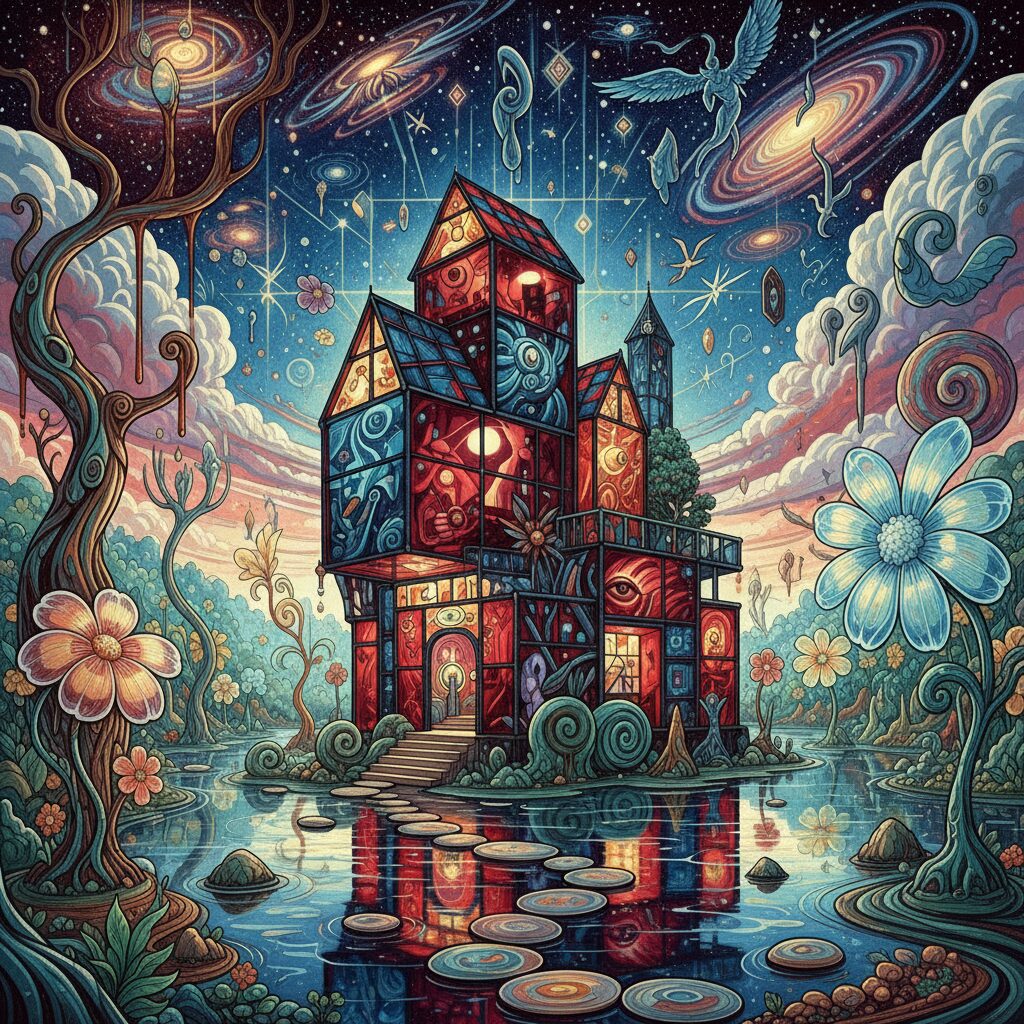
If the Teshima Art Museum offers minimalist meditation and the Heart Archives provide a dive into the soul, then the Teshima Yokoo House is a full-on psychedelic celebration. This place bursts with color, chaos, and raw, unfiltered creativity. Situated in the Ieura Port area, it’s a collaboration between artist Tadanori Yokoo, a legend in Japanese graphic design and pop art, and architect Yuko Nagayama. They transformed three old traditional Japanese houses into a fully immersive, mind-bending art installation. This is where you go to have your senses blasted in the best possible way.
The experience starts even before you enter. The garden of the main house features stones and a winding path, but the real journey begins when you look through the windows. The glass of the main building has been replaced entirely with red-tinted panes, instantly altering your perception and casting the outside world in a dramatic, fiery glow. The contrast between the traditional dark wood of the house and the vibrant red tint creates a striking visual vibe on its own.
Once inside, it’s a complete sensory overload. Yokoo’s vivid, often surreal artwork covers every surface. The tatami mat rooms and sliding fusuma screens, typically calm and muted, become canvases for his explosive paintings and collages. His work draws from a vast array of influences—traditional Japanese ukiyo-e, vintage movie posters, pop culture icons, spiritual symbols—and blends them all together. It’s chaotic, humorous, and deeply personal. As you move through the rooms, each offers a unique visual experience. The soundscape is equally curated, with music and noises filling the spaces, adding another layer to the disorienting, dreamlike environment.
One of the most memorable sights is the stone garden visible from the main room. A small, mosaic-tiled “river” runs through it, linking the main house to a smaller outbuilding. But the highlight is the cylindrical tower structure at the center of the complex. When you enter this tall, dark space, you find the entire floor is made of glass, beneath which a waterfall rushes over rocks. You stand on the glass, peering down into this roaring, primal scene, encircled by Yokoo’s art. It’s a dizzying, thrilling experience. The Teshima Yokoo House celebrates art’s ability to completely transform a space—and, in turn, your perception. It’s playful, intense, and serves as a vivid contrast to the more contemplative art found elsewhere on the island. It reminds you that art can also be loud, joyful, and delightfully strange. If you know, you know.
Getting Around: Your E-Bike is Your Bestie
Let’s discuss logistics, because how you explore Teshima significantly shapes the experience. The island is surprisingly hilly, and the main art sites are scattered throughout. While a shuttle bus circles the island, if you want true freedom and to fully absorb the vibe, renting an electric-assist bicycle is the best option. Honestly, it’s non-negotiable. Your e-bike will be your best companion for the day.
You can rent e-bikes at the two main ports, Ieura and Karato. It’s strongly advised to reserve one online ahead of time, especially during peak season or weekends, as they do run out. Once you start riding, you’ll see why it’s the superior mode of transport. The electric assist makes those intimidating hills easy. It gives you a gentle boost that makes you feel like a superhero, letting you focus on the incredible scenery instead of struggling up steep inclines.
There’s nothing quite like cruising along Teshima’s coastal roads on an e-bike. With the sparkling sea on one side and lush green hills on the other, the wind in your hair and sun on your skin—plus the freedom to stop whenever you like. Spot an intriguing side road? Go explore it. Find a deserted beach? Park and relax. See the perfect viewpoint of terraced rice fields? It’s yours to enjoy. This freedom defines the Teshima experience—you’re not tied to any bus schedule; you’re on your own adventure moving at your own pace.
The main road loops around most of the island, offering a beautiful 20-kilometer ride. It passes through main villages, key art sites, and offers stunning panoramic views at the highest points. You’ll cycle through sleepy fishing villages frozen in time, past small vegetable gardens and traditional tiled-roof houses. You’ll smell the salty sea air and the freshness of the trees—a sensory journey. Pro tip: ensure your bike’s battery is fully charged before setting off, and keep an eye on your power if you plan to explore extensively. The rental shops provide maps pointing out key spots. Riding on Teshima isn’t just transportation; it’s embracing the journey, uncovering hidden corners, and feeling a deep connection with the island’s amazing landscape.
Beyond the Big Three: Exploring Teshima’s Soul
While the Teshima Art Museum, Heart Archives, and Yokoo House draw most visitors, the island’s true magic emerges when you venture beyond them. The supporting characters and places give Teshima its rich, resonant soul.
One must-visit spot is Shima Kitchen, located in the village of Karato. It’s much more than a restaurant—a community hub, art project, and a celebration of local culture all in one. Housed in a beautifully restored old house with an open-air wooden deck and stage, Shima Kitchen was launched as part of the Setouchi Triennale. The concept is simple and brilliant: local mothers and grandmothers cook hearty meals using fresh, local ingredients—vegetables from their gardens and fish caught that morning. The menu is straightforward, often offering a set lunch with sea bream, tempura, and local rice. Eating here feels like being welcomed into a Japanese family’s home. The food is incredible, crafted with love and skill passed down through generations. It’s a place to nourish both body and spirit, connect with the local community, and taste the island itself—an authentically special experience.
Teshima’s landscape is an artwork itself. The terraced rice fields around the Teshima Art Museum, especially in Karato-oka, are breathtaking. These paddies, once abandoned for years, were carefully restored by locals and volunteers. Seeing them filled with water in spring, reflecting the sky like countless tiny mirrors, or lush and green in summer, is truly spectacular. They symbolize the island’s rebirth and the community’s deep bond with their land.
For more art enthusiasts, smaller, subtler installations are scattered across the island. Mariko Mori’s “Tom Na H-iu” is a quiet, meditative piece nestled in a forest—a futuristic monolith that glows softly as it interacts with cosmic rays. It’s a bit of a treasure hunt to find, making the discovery even more rewarding.
And then there’s simply the joy of Teshima’s nature. The coastline is dotted with small, pristine beaches where you can have the sand and sea all to yourself. Take a moment to sit quietly, listen to the waves, and watch ferries and fishing boats glide across the Inland Sea. The villages of Ieura and Karato are worth exploring on foot too. Wander their narrow, winding streets, admire the old houses’ architecture, and soak in the island’s peaceful rhythm. These quiet moments—the taste of a local meal, the view over the rice terraces, the sound of the sea—are just as vital as the major art sites. They form the very fabric of Teshima.
The Comeback Story: Teshima’s Past and Present
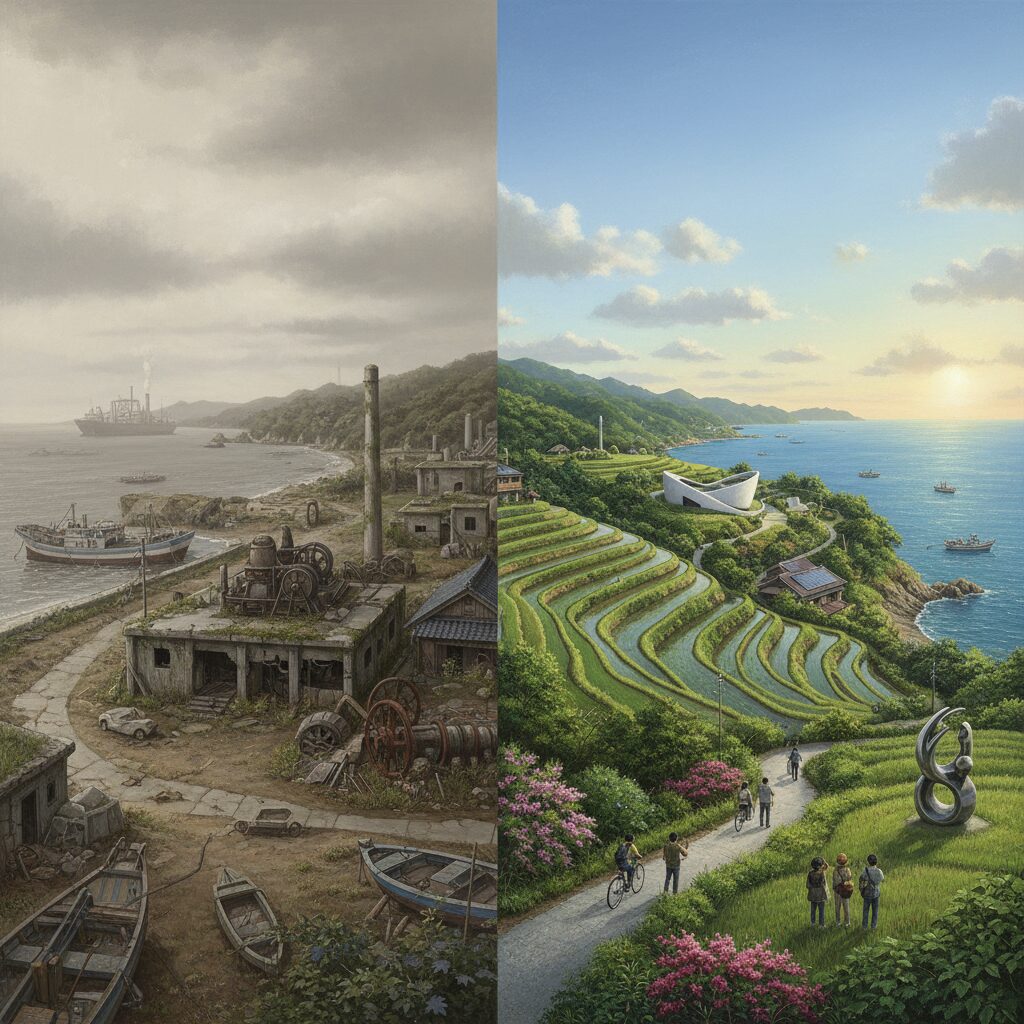
To truly grasp and appreciate the Teshima of today—this lively center of art and nature—you must understand its past. The story is both heartbreaking and incredibly inspiring. Teshima boasts one of the most powerful comeback stories in all of Japan, a remarkable transformation from environmental disaster to cultural sanctuary. This background lends profound meaning to every beautiful thing you encounter on the island.
Starting in the late 1970s, a dubious company began illegally dumping vast quantities of toxic industrial waste, including shredded car parts and slag, in a remote part of the island. This secret dumping continued for over a decade, creating a massive heap of poison that seeped into the soil and groundwater. The residents, many elderly farmers and fishermen, started to sense something was amiss. Their concerns were ignored by local authorities for years. What followed was a long, difficult, and heroic fight for justice. Despite being a small community, the islanders organized, protested, and waged a legal battle that spanned decades against those responsible and the prefectural government that had failed to intervene.
At last, in 2000, they succeeded. A landmark mediation agreement was reached, launching an enormous and unprecedented cleanup effort. It was a monumental challenge to remove hundreds of thousands of tons of toxic soil and purify the contaminated water—work that continues to this day. The island bore deep scars, both physical and emotional.
It was within this context that the Setouchi Triennale, a contemporary art festival held every three years across several islands in the Seto Inland Sea, made its appearance. The festival’s theme has always been island revitalization, addressing issues like depopulation and aging communities. On Teshima, this theme held an even deeper significance. Art was not merely about attracting tourists; it was about healing. It was about transforming a place with a troubled past into a symbol of hope and renewal.
The Teshima Art Museum, with its life-affirming water, became a potent emblem of purification and rebirth. Shima Kitchen united the community and honored its culinary heritage. The art installations were not simply imposed; they were developed in collaboration with the island, engaging with its landscape and history. The islanders’ fight to restore the beauty of their home is the unseen foundation that supports all the celebrated art today. Knowing this story changes your perception of everything. The pristine nature isn’t merely preserved; it was fiercely defended. The vibrant culture isn’t just a tourist draw; it stands as a testament to the resilience of a community. Teshima is a living monument to the idea that even after the darkest times, beauty and life can return.
Planning Your Pilgrimage: The Nitty-Gritty
Alright, you’re sold on the idea and ready to dive into the Teshima experience. Let’s cover the practical details to ensure your trip goes smoothly. Planning is essential for the Setouchi islands, as ferry schedules and museum tickets require some advance preparation.
First, how to get there. Teshima is reachable only by ferry. The two main mainland ports connecting to the island are Takamatsu in Kagawa Prefecture and Uno in Okayama Prefecture. Ferries also run from the nearby art island of Naoshima. Although ferries operate several times a day, the frequency isn’t very high, so you absolutely must check the latest timetable online before heading out. Schedules vary by season and day of the week. Missing the last ferry back from the island is definitely not ideal, so plan your day carefully around these times.
The most important tip for planning: book your ticket for the Teshima Art Museum online well in advance. I can’t emphasize this enough. Tickets are tied to specific dates and time slots, and they often sell out weeks or even months ahead, especially during peak times like spring, autumn, and the Triennale period. Don’t expect to buy a ticket at the door—you’ll almost certainly be disappointed. Securing this ticket as soon as your travel dates are set is essential.
When to visit? Spring (March-May) and autumn (October-November) are typically the best seasons. The weather is mild and pleasant, ideal for cycling, and the natural scenery shines with cherry blossoms in spring and vibrant leaves in autumn. Summer (June-August) is hot and humid but lush and lively. Winter (December-February) offers a quiet, crisp beauty, though some restaurants and attractions may have limited hours or be closed.
Regarding your itinerary, Teshima can be done as a day trip from Takamatsu, Uno, or Naoshima. It’s a long, busy day but completely doable if you catch an early ferry and plan well. To truly soak in the island’s atmosphere, the ultimate move is to stay overnight. There are a few small guesthouses (minshuku) and inns on the island. Staying overnight lets you experience Teshima’s magical quiet after the last ferry leaves with day-trippers. Waking up on Teshima and enjoying a slow morning before the first ferry arrives is an unbeatable experience. Accommodations are limited, so like the museum tickets, book early. Pack light, wear comfortable shoes, bring cash (as not all small businesses accept cards), and prepare for an unforgettable journey.
The Teshima Afterglow
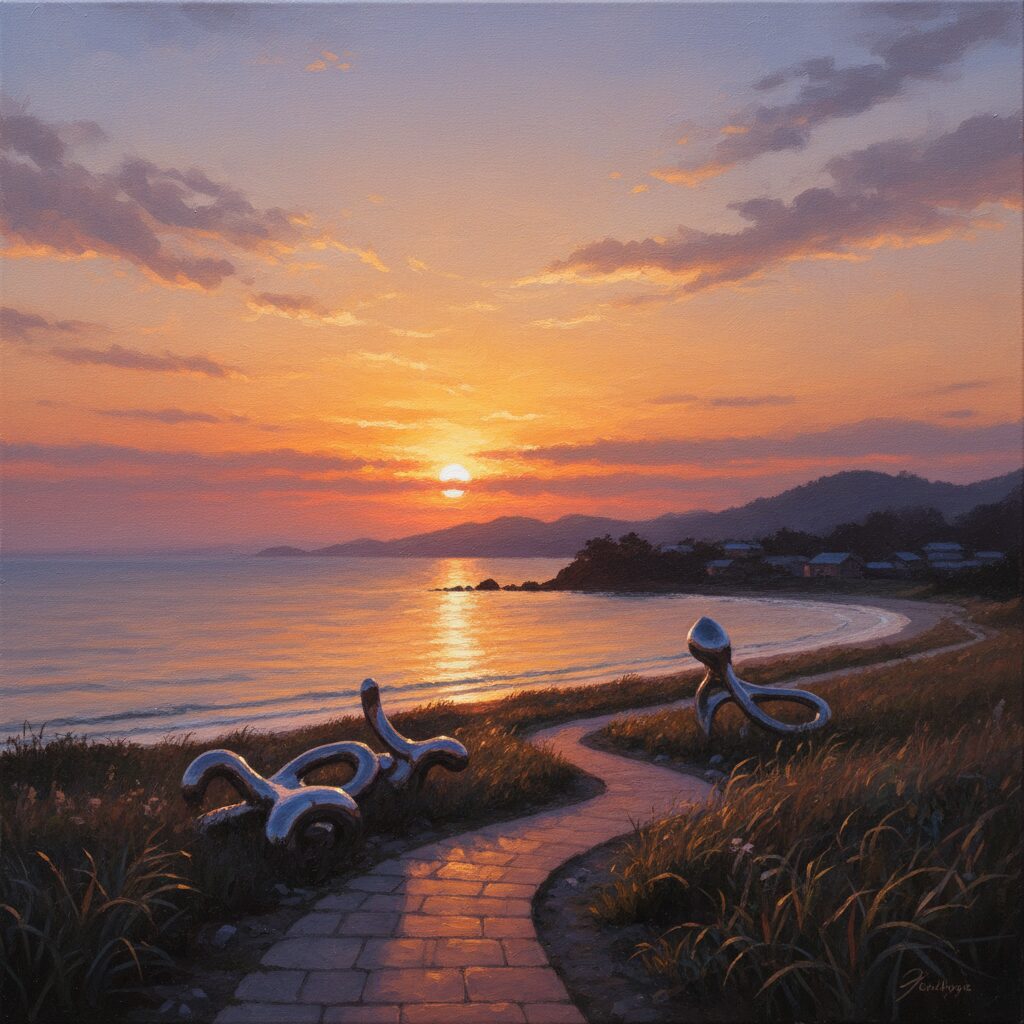
Teshima is not just a place to visit; it’s a place that leaves an impact on you. You don’t merely observe the art; you breathe it in. You don’t simply walk the landscape; you sense its heartbeat. You may arrive with a list of sights to see, but you leave carrying a collection of emotions: the profound stillness inside the Teshima Art Museum, the visceral thump of a stranger’s heart in a dark room, the joyous sensory overload of the Yokoo House, and the simple pleasure of the wind on your face as you bike along the coast. This island invites you to slow down, pay attention, and be fully present. It reminds you of the deep, essential connections between art and nature, past and future, and all of us. The afterglow of a day spent on Teshima is a quiet peace, a feeling of being subtly yet profoundly changed. It’s a gentle recalibration of the soul. Once scarred by neglect, this island has transformed into a place of pilgrimage and healing, offering that same gift of renewal to everyone who visits. So go—let it work on you. You won’t come away the same.