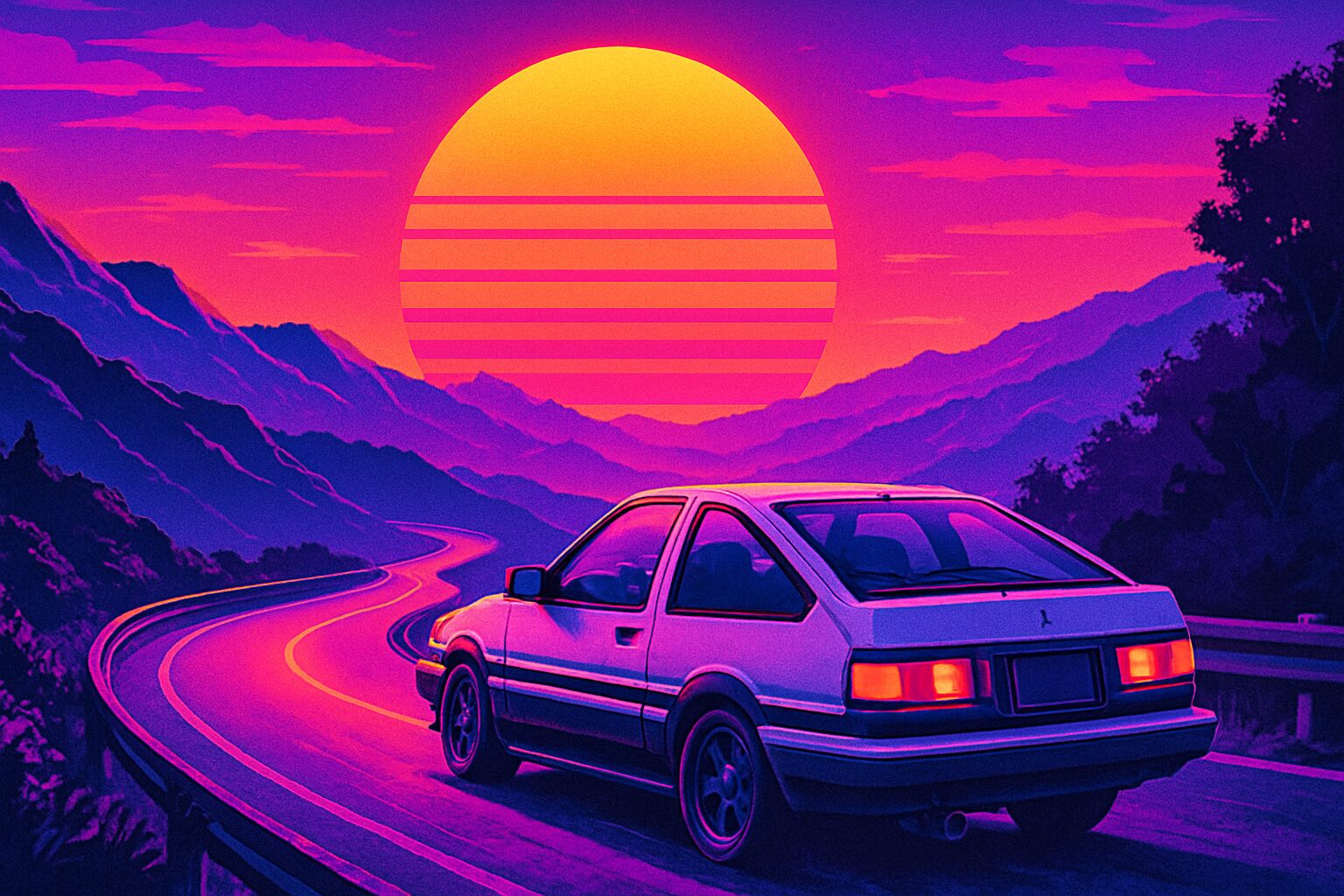
Yo, what’s the move? Keiko Nakamura here, your go-to curator for all things that slap in modern Japan. We usually talk art, but today, we’re diving into a different kind of masterpiece—a kinetic sculpture of steel, asphalt, and fading light. We’re talking about the sunset touge run. It’s a ritual, a vibe, a whole entire mood that’s so deeply ingrained in Japanese car culture, it’s practically a religion. Forget the stuffy museums for a sec. The real gallery is out there, carved into the mountainsides, waiting for you. Imagine this: the sky is bleeding into a wild gradient of orange, pink, and purple. You’re strapped into the driver-focused cockpit of a modern JDM legend, like the Toyota GR86 or its twin flame, the Subaru BRZ. In front of you, a ribbon of perfect asphalt winds its way up a mountain, disappearing into a forest of ancient cedar trees. The air is crisp, carrying the scent of pine and anticipation. You blip the throttle, the boxer engine sings its iconic, throaty song, and you begin the ascent. This isn’t just a drive. It’s a conversation between you, your machine, and the mountain. It’s a form of high-speed meditation that’s both intensely focused and incredibly freeing. It’s the kind of experience that’s so fire, it basically rewires your brain. This is the heart of the touge, and we’re about to chase the sun all the way to the top. This is where the real Japan lives, breathes, and revs its engine. It’s an iykyk (if you know, you know) situation, but I’m here to give you the full download. So buckle up, because class is in session, and the gallery is the open road.
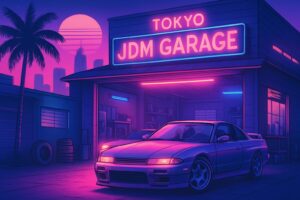
This high-speed meditation is a direct descendant of the culture celebrated in our private garage tour of 90s JDM legends.
The Touge Manifesto: It’s a Vibe, Not a Race
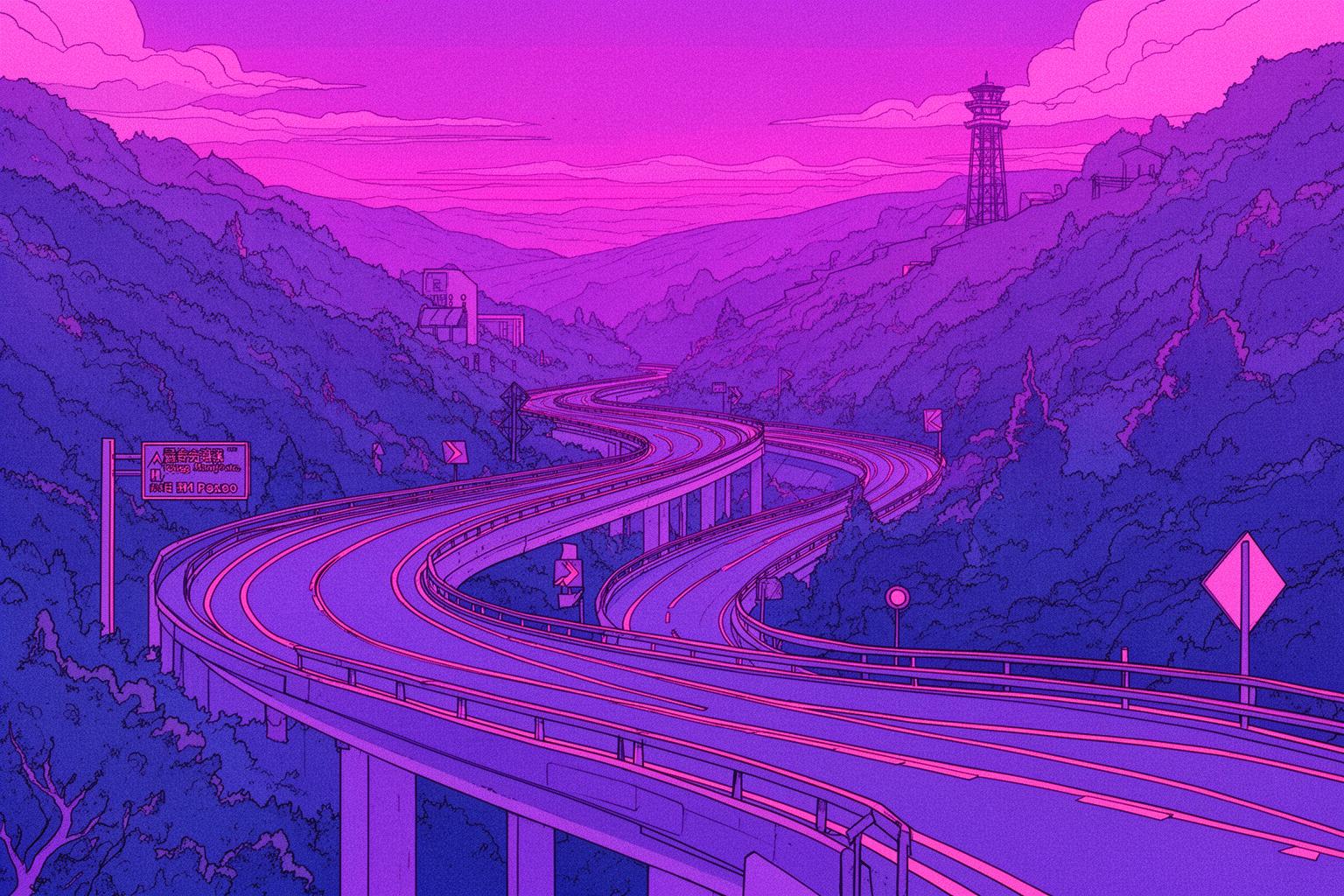
First things first, let’s clarify the terminology. What exactly is a touge? In theory, it’s straightforward. The kanji, 峠, comprises the characters for ‘mountain’ (山), ‘up’ (上), and ‘down’ (下). It literally means ‘mountain pass’. These are the winding roads that thread through Japan’s mountainous landscape, linking towns and villages tucked away in the valleys. For centuries, they were perilous footpaths used by monks, merchants, and samurai. Today, they’ve become smoothly paved playgrounds for a different type of warrior: the driving enthusiast. But the word ‘touge’ carries far more significance than its literal meaning. It’s a concept, a subculture, a proving ground. It’s where skills are sharpened, cars are pushed to their limits, and a unique community thrives in the dead of night or the early glow of dawn. It serves as an escape from the relentless order of the city—a sanctuary where the only rules that count are the laws of physics and an unspoken code of honor. You have to understand that in Japan, a country where space is a precious commodity and social conformity is often the norm, the touge symbolizes a profound sense of freedom. It’s a place to express individuality through your car and driving style.
The Ghost in the Machine: How Pop Culture Turned the Touge into a Legend
Let’s be real. You can’t talk about touge culture without acknowledging the piece of media that essentially put it on the global stage: Initial D. Even if you’ve never seen the anime or read the manga, its influence is undeniable. The story of Takumi Fujiwara, a seemingly indifferent teenager who unintentionally becomes a driving prodigy by delivering tofu for his father’s shop on Mount Akina, is legendary. It wasn’t just a show about cars; it was an exploration of the philosophy, technique, and spirit behind touge battles. It romanticized the underdog—the perfectly balanced, underpowered AE86 Sprinter Trueno—outclassing more powerful rivals through skill and local knowledge. This series single-handedly transformed the mountain roads of Gunma Prefecture into pilgrimage destinations for fans worldwide. Suddenly, terms like ‘gutter run’ and the significance of weight distribution were common knowledge. It gave a face and a name to the secretive world of street racing, but more importantly, it captured the soul of the touge—the intense focus, rivalry, respect, and sheer thrill of a flawlessly executed drift. Its impact is enormous. It shaped tuning trends, car selections, and the driving aspirations of an entire generation. And it’s not just Initial D. The essence of touge permeates other media, from video games like Gran Turismo, which painstakingly recreated these iconic roads, to numerous car magazines dedicated to machines built specifically for this purpose. The touge became a cultural export—a mythic arena where any driver could become a hero for a handful of perfect corners.
The Unwritten Code: Touge Etiquette 101
This is crucial, so pay attention. While the pop culture image of touge centers on high-stakes battles, the reality for most enthusiasts today is quite different. This isn’t a free-for-all. There’s a deeply rooted, unspoken code that distinguishes the serious enthusiast from the reckless fool. The first and foremost rule is respect. Respect for the locals who use these roads daily. Respect for other drivers, whether part of the scene or just passing through. And respect for the mountain itself. This means keeping noise levels down near homes, not leaving litter behind, and remembering that you are a guest. The second rule is to stay in your lane. Always. These roads aren’t closed circuits; oncoming traffic is a serious hazard. The art of the touge lies in maximizing your speed and flow within your own lane. It’s a test of precision, not just brute power. You’ll often notice a system of communication through hazard lights. A quick flash might mean ‘thank you’ for letting someone pass or warn of an obstacle ahead. It’s a subtle language that helps maintain order and safety. The vibe is competitive, yes, but it’s an internal challenge—a contest against your own limits, not necessarily just the car in front of you. Reckless driving, tailgating, and showboating are seriously frowned upon and will get you quickly ostracized from the community. Read the room. Don’t be that guy.
Modern Samurais: Why the GR86 & BRZ are the Perfect Touge Partners
So, what’s the perfect weapon for mastering these mountain roads? You might imagine fire-breathing GT-Rs or iconic Supras. While they certainly have their place, the true essence of the touge has always prioritized balance over sheer power. It’s about a car that feels like an extension of your body—lightweight, responsive, and communicative. That, my friends, is why the modern twins, the Toyota GR86 and Subaru BRZ, reign supreme as the accessible touge champions. They carry forward the very philosophy that made the original AE86 a legend.
The Bloodline: A Tribute to the AE86 Hachiroku
To grasp the GR86’s significance, you must first know its predecessor, the AE86 Corolla Levin/Sprinter Trueno, affectionately called the Hachiroku (eight-six). In the 80s, when most manufacturers were shifting to front-wheel-drive layouts, this modest Toyota stuck with a front-engine, rear-wheel-drive design. It was affordable, lightweight, and easy to modify. Though not the fastest in a straight line, its exceptional balance and responsiveness made it a formidable force on tight, twisty touge roads. This car rewarded skill and taught drivers the fundamentals of car control. As Initial D famously portrayed, it was the perfect tool for the job. The GR86 and BRZ were born from this same ethos. They deliberately avoid the modern trend of adding more power, weight, and complexity, choosing instead to preserve the purity of the driving experience. This isn’t just a namesake; it’s a philosophy. This car just gets it.
Toyota GR86: The Sharp-Dressed Scion
Now, let’s dive into the details of the Toyota GR86. In an era dominated by SUVs and electric vehicles, Toyota’s Gazoo Racing (GR) division delivered a gift—an affordable, rear-wheel-drive sports coupe built purely for fun. It embodies their promise of ‘no more boring cars,’ and it absolutely delivers.
Under the Hood: The FA24 Boxer Engine
At its core is a 2.4-liter naturally aspirated boxer engine, sharing key DNA with its Subaru sibling. For the enthusiasts, this flat-four design allows the engine to sit very low in the chassis, contributing to an impressively low center of gravity. This is crucial for touge driving, as it reduces body roll and makes the car feel stable and planted in corners. The second-generation GR86 addressed one major complaint from its predecessor: the notorious mid-range ‘torque dip.’ Now, power delivery is more linear and robust. As you attack mountain passes, you get that vital mid-range punch to pull you out of hairpin turns without constantly hunting for the ideal gear. As for sound, while it’s not a screaming V8, it offers a purposeful, throaty growl that’s distinctive to the boxer engine—an enjoyable soundtrack for spirited driving.
The Dance of Dynamics: Chassis and Handling
This is where the GR86 truly excels. The chassis is a masterpiece of balance and feedback, designed to keep the driver fully informed. You can feel the front tires through the steering wheel and the rear tires through the seat of your pants. It’s incredibly intuitive to drive. The standard Torsen limited-slip differential (LSD) is a game-changer, sending power to the wheel with the most grip when exiting corners. This allows you to get on the power earlier and with extra confidence. Handling is famously playful—eager to turn in, with traction control that can be dialed back or switched off for the brave, making the rear end rotate in a controlled, predictable way. The GR86 is a car that wants to dance with you, turning every corner into an event.
Aesthetics and Ergonomics: A Cockpit for Purists
Inside, the GR86 is all about the driver—no distractions, just business. The seating position is ideal: low, snug, with controls within easy reach. The digital instrument cluster is clear and focused, with a track mode highlighting the rev counter and vital stats. It’s designed to maximize your connection to the driving experience. The exterior is equally purposeful—clean, athletic, and aerodynamically functional. It doesn’t try to mimic exotic supercars; instead, it presents a handsome, honest sports car with perfect proportions, looking ready to tackle winding roads.
Subaru BRZ: The Blue-Blooded Brother
Beside the GR86, the Subaru BRZ is almost identical—the product of one of the best collaborations in automotive history. They share the same engine, chassis, and overall design, but don’t mistake them for identical. Subaru, with its rally heritage and AWD expertise, infused its own subtle tuning, giving the BRZ a slightly different personality.
The Subaru Difference: A Subtle Twist on Perfection
The main difference is in suspension tuning. Both cars are excellent, but Subaru engineers chose slightly different spring rates and damper settings. The result is a car that feels a bit more planted and stable, especially at the rear. While the GR86 is often described as more tail-happy and playful, the BRZ is more composed and secure. It inspires a steadier confidence, gripping tenaciously and feeling composed through high-speed sweepers. Think of it like this: the GR86 is an eager puppy ready to play, while the BRZ is a focused hunting dog, all calm precision.
Shared DNA, Separate Souls
So, which one’s right for your touge adventure? Honestly, there’s no wrong choice. It depends on your taste and driving style. Prefer a car that feels looser and more throttle-responsive, inviting a bit of hooliganism? Go with the GR86. Value ultimate stability and unwavering grip that lets you carry speed through corners? Then the BRZ is your pick. They’re two distinct interpretations of the same brilliant formula. Driving them back-to-back on a touge road reveals fascinating nuances. The best part is both uphold the core promise: an unfiltered, exhilarating, and accessible driving experience perfectly suited to the challenges of a Japanese mountain pass.
The Sacred Asphalt: A Tour of Japan’s Most Epic Touge Roads
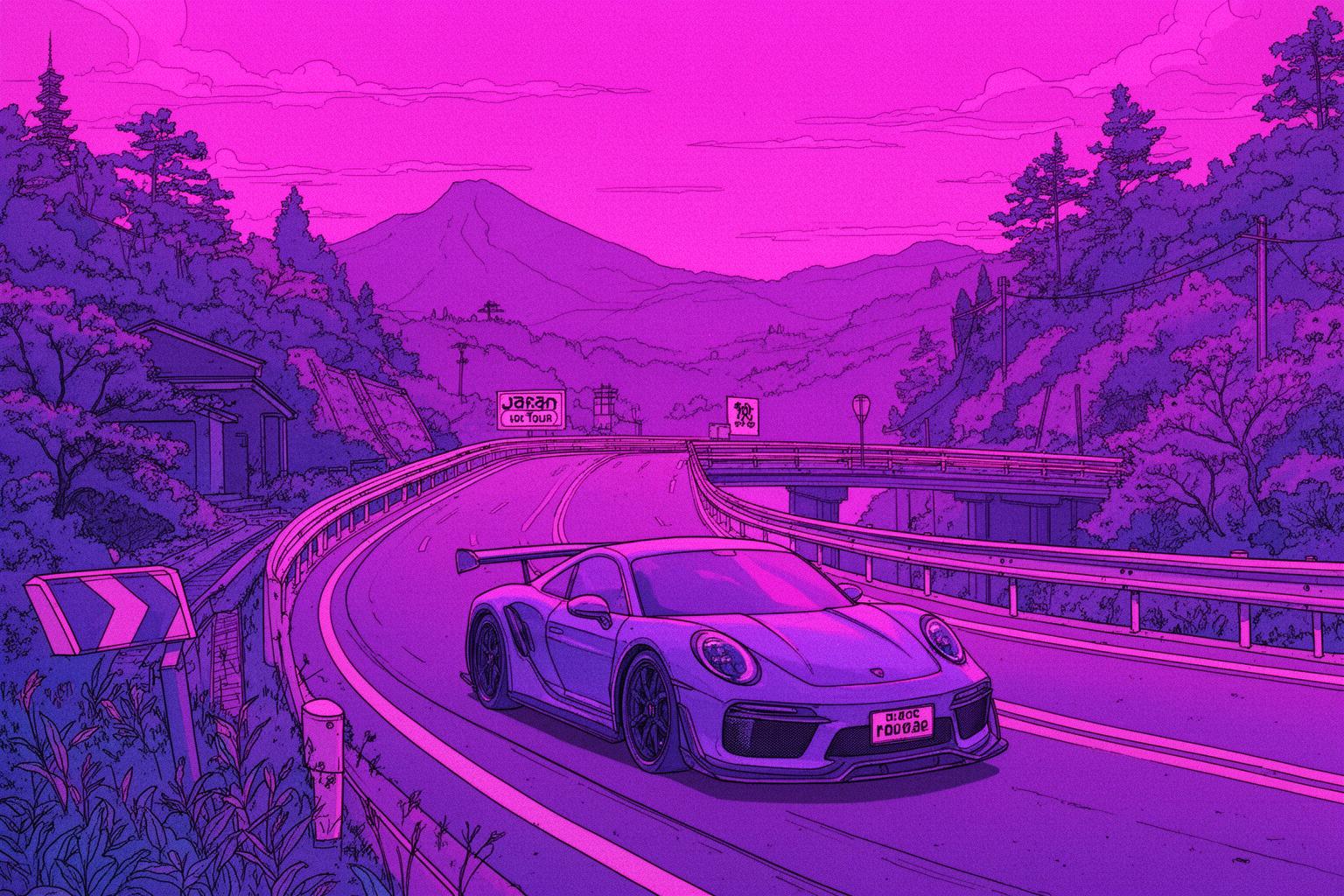
Japan is over 70% mountainous, providing an almost endless array of incredible driving roads. Each region and prefecture boasts its own legendary passes, each with unique features and dedicated local fans. While exploring them all could take a lifetime, there are a few iconic spots every enthusiast should know.
The Gateway Drug: Hakone and the Izu Peninsula
For anyone living in or visiting Tokyo, the Hakone and Izu region is the ideal destination for a quick touge fix. It’s nearby, breathtakingly beautiful, and offers a fantastic variety of roads suited for drivers of all skill levels. This area serves as the perfect introduction to the world of touge.
Hakone Turnpike (Anest Iwata Turnpike)
This is the hallmark route, the classic. Privately owned and tolled, the Hakone Turnpike is impeccably maintained, wide, and generally free of slow-moving local traffic common on other passes. It’s less about tight, technical corners and more of a high-speed, sweeping rollercoaster. The road climbs from the coast into the mountains, featuring a series of medium- to high-speed bends that allow cars like the GR86 to really stretch their legs. The views are stunning—on clear days, panoramic vistas of Sagami Bay and the iconic Mount Fuji unfold on either side. Several lookout points and a large rest area at the summit make it a popular gathering spot for car clubs and enthusiasts, especially on weekend mornings. It’s the perfect road for learning your car’s feel and building confidence.
Izu Skyline
If Hakone Turnpike is an intense sprint, the Izu Skyline is a flowing marathon. This toll road runs along the ridge of the Izu Peninsula’s mountains for nearly 40 kilometers, offering an almost continuous series of thrilling corners, elevation changes, and breathtaking scenery. The road feels crafted by a driving enthusiast, with an incredible rhythm where one corner flows effortlessly into the next, allowing drivers to enter a state of pure driving bliss. The route passes through dense forests and opens up to spectacular views of the Pacific Ocean and Mount Fuji. Its length provides a wide variety of corner types, from tight hairpins to long, fast sweepers, rewarding smooth and clean driving lines. A sunset drive along the Izu Skyline is truly a world-class, life-affirming experience.
Nanamagari Pass (The Seven Bends)
For a classic, old-school touge experience near Hakone, the Nanamagari—meaning “seven bends”—is a must-visit. This is a shorter, tighter, and more technical public road featuring a rapid succession of hairpin turns that demand full focus. The narrow roadway, close surrounding foliage, and intimate atmosphere make this the perfect place for the nimble handling of the 86/BRZ to shine. Power is less important here than precision, quick steering, and a car that changes direction instantly. It’s a thrilling challenge that connects the hot spring town of Yugawara with Hakone.
The Holy Land: Gunma Prefecture’s Legendary Trio
For devoted fans and drift disciples, there is one true holy land: Gunma Prefecture. Thanks to its starring role in Initial D, the mountains here have become legendary. Driving these roads feels like stepping straight into the manga, making it a pilgrimage every JDM fan must undertake at least once.
Mount Haruna (Akina)
This is the iconic home course of Takumi Fujiwara and his famous AE86. Known in reality as Mount Haruna, it lives up to every bit of its reputation. The most famous part is the series of five consecutive hairpin turns on the downhill stretch. Seeing them in person for the first time is a surreal moment—you can almost hear the Eurobeat soundtrack echoing in your mind. The road is challenging, blending tight corners with short straights. At the summit lies Lake Haruna, a caldera lake featuring a distinctive volcanic cone at its center, where you can pause, grab a snack, and soak in the ambiance. Driving Haruna is about more than just the corners; it’s about connecting with automotive history. Expect to see fellow fans capturing photos and paying homage to the Tofu Shop hero.
Mount Akagi
Mount Akagi, home to the Takahashi brothers and their RedSuns team, offers a very different challenge. Larger and more commanding than Haruna, its touge course reflects that scale. The roads are generally wider and faster, with long straights leading into complex, multi-apex corners. It demands a driving style that balances high-speed commitment with technical precision. The landscape is just as distinct, with vast forests and towering wind turbines near the summit. Akagi tests both driver skill and a car’s stability at speed. It’s a serious road for serious drivers, and the vastness you feel while driving it is immense.
Mount Myogi
If Haruna emphasizes rhythm and Akagi speed, then Mount Myogi stands for pure chaos. Home to the wild NightKids in the series, Myogi is infamous for its jagged, dramatic rock formations and a road that seems haphazardly placed atop them. The layout is tricky and unconventional, featuring tight, often blind corners and abrupt elevation changes. It’s arguably the most challenging of the Gunma trio, demanding intense concentration and respect. The extraordinarily unique landscape delivers an unforgettable drive. It feels less like a racetrack and more like a level from a video game.
The Technical Masterpiece: Irohazaka Winding Road, Nikko
Just north of Gunma, near Nikko’s stunning temples and shrines, lies one of Japan’s most unique and demanding roads: the Irohazaka. In reality, it’s two separate one-way roads that ascend and descend the mountain. The twist: together they contain 48 hairpin turns, each marked with a letter from the ancient Japanese alphabet (the Iroha). With downhill traffic coming from Lake Chuzenji separated from uphill traffic, there’s no need to worry about oncoming cars in corners, creating a pure test of cornering skill. The relentless succession of hairpins challenges your braking, turn-in, and exit techniques repeatedly. In autumn, this road becomes one of Japan’s premier spots for viewing fall foliage (koyo), though it also turns into a notorious traffic bottleneck. If you catch it on a quiet weekday, however, the experience of carving through all 48 turns is sheer, technical bliss.
The Golden Hour Ritual: Your Perfect Sunset Run, Step-by-Step
Alright, you know the culture, the cars, and the roads. Now, let’s discuss how to bring it all together for the ultimate experience: the golden hour touge run. This is a ritual—a process just as crucial as the drive itself. It’s about building anticipation and entering the right mindset.
The Prep Phase: Setting the Mood
The perfect run begins hours before you even turn the key. First, become a student of the sky. Check the weather forecast and the exact time of sunset. You want a clear or partly cloudy evening for the best light display. The aim is to time your ascent so you arrive at your chosen viewpoint just as the sun kisses the horizon. Next, a quick pre-drive check on your car. Inspect the tire pressures, oil level, and brakes. A happy car is a safe car. Then comes the essential soundtrack. This is a deeply personal choice. Are you an Initial D purist needing a high-octane Eurobeat playlist to get in the zone? Or perhaps you prefer the chill, nostalgic vibe of 80s City Pop? Maybe some instrumental lo-fi hip-hop to foster a more meditative mood? Whatever it is, curate it carefully. Finally, the last ritual before heading to the mountains: a stop at a convenience store or a jidohanbaiki (vending machine). The popular drink choice is a can of Boss coffee, a small but potent caffeine hit now synonymous with Japanese car culture. With your coffee in hand and playlist ready, you’re set.
The Ascent: Racing the Dying Light
Leaving the city suburbs and climbing into the foothills, you feel the world change. The air cools, city noise fades, and the road starts to twist. This is the warm-up lap. You get a feel for the car, the road surface, and the rhythm of the corners. As you climb higher, the sun begins to set. The light shifts from harsh daylight to a warm, golden glow. It filters through the trees, creating a strobe effect as you carve through corners. Long, dramatic shadows stretch across the asphalt, altering your perception of the road. This is the magic hour. The world looks softer, more beautiful. Your focus sharpens. It’s just you, the engine’s hum, the tires’ squeal, and the serpentine road ahead. You start linking corners, entering a flow state where your inputs become instinctive. Brake, turn, clip the apex, unwind the wheel, and power out. Repeat. It’s a dance—a conversation where the road asks questions and the car answers.
The Peak: A Moment of Zen at the Top
You timed it perfectly. You pull into the lookout at the summit just as the sun, now a brilliant orange orb, touches the distant mountain range. You cut the engine. The sudden silence is profound, interrupted only by the faint ticking of the cooling exhaust and the whispering wind. You step out and are struck by the view. The sky becomes an impossible canvas of color. Below, the valleys sink into deep blue shadows, and distant towns’ lights begin to twinkle like fallen stars. This is the reward. A moment of pure, unadulterated peace. All the stresses of daily life, all the noise, melt away. It’s a profound sense of accomplishment and a deep connection to the natural world. This is the ‘why.’ This is the reason you do it.
The Descent: Dancing in the Twilight
After the sun disappears, a new challenge begins. You switch on your headlights, and their beams carve a sharp path through the gathering darkness. The world shrinks to what lies illuminated ahead. Driving in twilight or night on a touge is a wholly different experience. Your senses heighten. You rely more on your memory of the road from the ascent and your feel for the car’s dynamics. Corners emerge out of the darkness, demanding even greater focus and precision. As you descend back toward civilization, city lights grow brighter, pulling you back to reality. The final part of the ritual is the cool-down. You pull into a brightly lit konbini at the mountain’s base. You grab a hot drink or snack and take a moment to reflect on the drive. Your mind is clear, your body buzzing with adrenaline, and you feel completely refreshed. You’ve completed the ritual.
The Afterparty: Parking Area Culture and Community
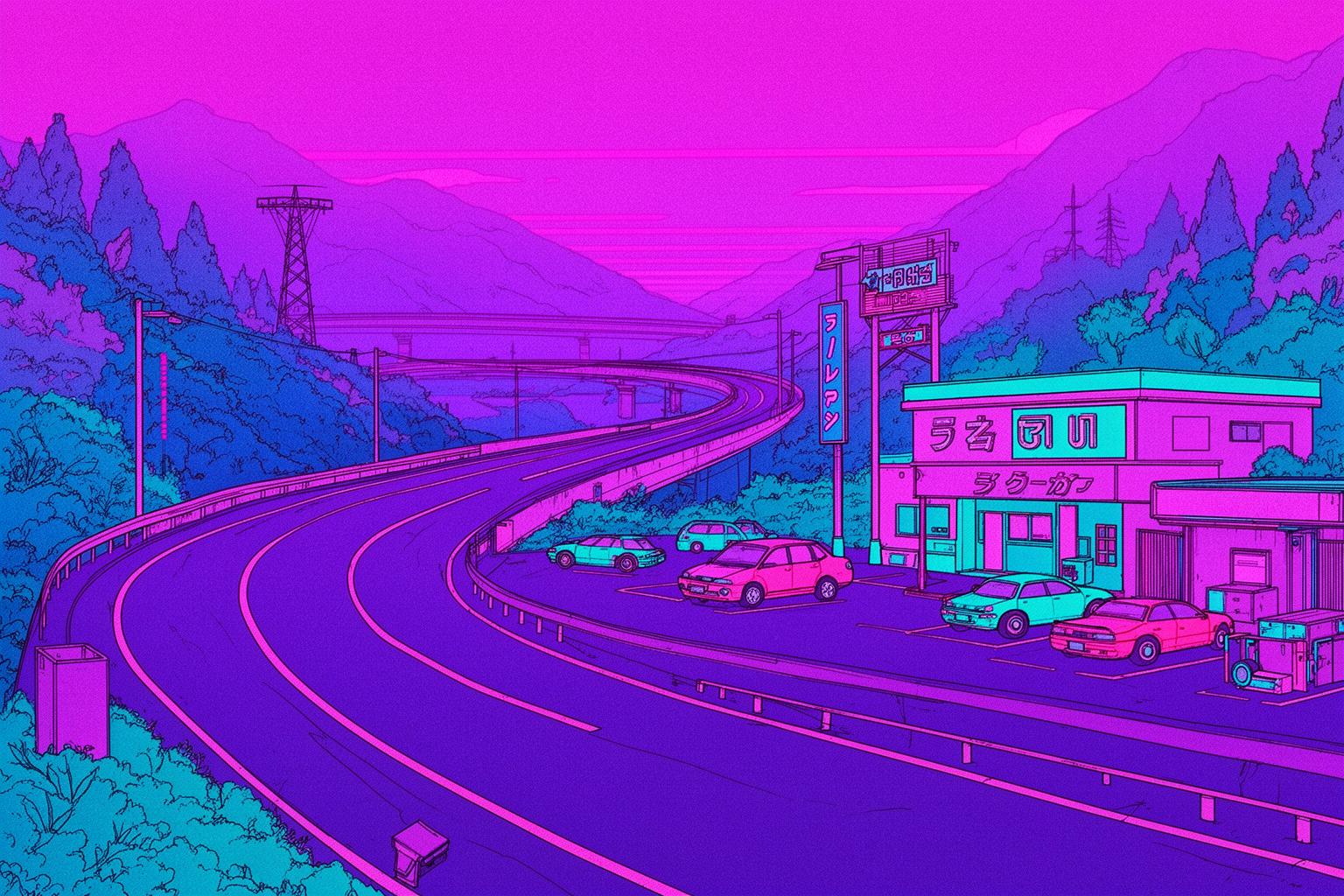
The touge experience doesn’t necessarily end when the driving stops. For many enthusiasts, the social aspect holds equal importance. Parking areas (PAs) and rest stops near well-known mountain passes often turn into informal car shows, especially on Friday and Saturday nights. These spots become gathering points for the community.
More Than Just Parking: The PA as a Social Hub
While large PAs like Daikoku Futo near Yokohama are renowned for their huge meetups, a similar culture thrives on a smaller, more intimate scale in the mountains. At the summit of the Hakone Turnpike or a quiet lot near Mount Haruna, clusters of car lovers gather beneath the stars. Hoods are open, showcasing meticulously maintained engine bays and impressive modifications. Owners swap stories, share tuning advice, and admire each other’s builds. You’ll find a remarkable variety of JDM machines, from pristine classic Skylines and Silvias to the latest GR Yaris models, along with plenty of 86s and BRZs in every possible state of tune. The vibe is relaxed and low-key, driven by a shared passion.
How to Blend In: A Guide for the Gaijin Driver
As an outsider, entering this scene can feel daunting, but the community is usually very welcoming if you approach with the right mindset. The key is humility and respect. A simple nod or wave to fellow drivers goes a long way. The greatest compliment you can offer is to admire someone’s car. Don’t hesitate to approach and, using gestures or basic Japanese, express your appreciation. A thumbs-up paired with the words ‘Kakkoii’ (cool) or ‘Sugoi’ (amazing) will almost always be met with a smile. The golden rule is never to touch someone’s car without explicit permission. These vehicles are their owners’ pride and joy. By showing genuine interest and respect, you’ll find language barriers quickly disappear, replaced by the universal language of automotive passion.
Your Turn at the Wheel: A Practical Guide for Tourists
Feeling inspired? Thinking about giving this a shot yourself? Bet. Experiencing a touge run is definitely achievable for tourists, but it does require some planning. Here’s the rundown on how to make it happen.
Renting Your JDM Dream
Your typical rental car company won’t have a GR86 ready to go. You’ll need to seek out a specialist sports car rental service. Fortunately, Japan offers several excellent options tailored specifically for enthusiasts. Companies like Omoshiro Rent-a-Car, Fun2Drive, and Sports Car Rent are well-known. They have fleets filled with JDM legends, from modern models like the GR86 to classics like the R34 GT-R and RX-7. Booking is generally available online in English. The single most crucial document you’ll need is an International Driving Permit (IDP) issued under the 1949 Geneva Convention. Your regular driver’s license from your home country is not sufficient. No IDP means no rental, no exceptions. Make sure you obtain the correct one before heading to Japan. Also, review the insurance policies thoroughly. These are high-performance vehicles, so it’s essential to understand your liability.
Navigating Japan: Tips and Tech
Once you have your car, finding your way is surprisingly straightforward. Google Maps works perfectly in Japan and is invaluable for locating mountain roads. Most rental cars also come equipped with built-in navigation systems. Toll roads are common, especially on well-maintained routes like the Hakone Turnpike. It’s highly recommended to rent an ETC (Electronic Toll Collection) card with your car. This lets you pass through toll gates without stopping, with fees automatically charged to your rental. Japanese road signs are generally easy to read, with key information often displayed in English. Speed limits are posted in kilometers per hour. An important sign to recognize is the Japanese stop sign—a red, inverted triangle bearing the characters 止まれ (Tomare).
A Word on Safety: This Isn’t a Video Game
I can’t emphasize this enough: these are public roads, not your personal racetrack. The aim is spirited, enjoyable driving—not chasing land speed records. Always follow posted speed limits and drive within your skill level. Stay fully aware of your surroundings. Mountain roads in Japan can be inhabited by wildlife. It’s common to encounter deer (shika), monkeys (saru), or wild boar (inoshishi), especially at dawn and dusk. Weather conditions can change rapidly in the mountains. A sunny base might become foggy and wet at the summit. If heavy rain starts, slow down and drive cautiously. The line between spirited and dangerous driving is clear—respect it. The goal is to get both the car and yourself back safely, with nothing but great memories.
The Heart of the Machine: Why the Touge Endures
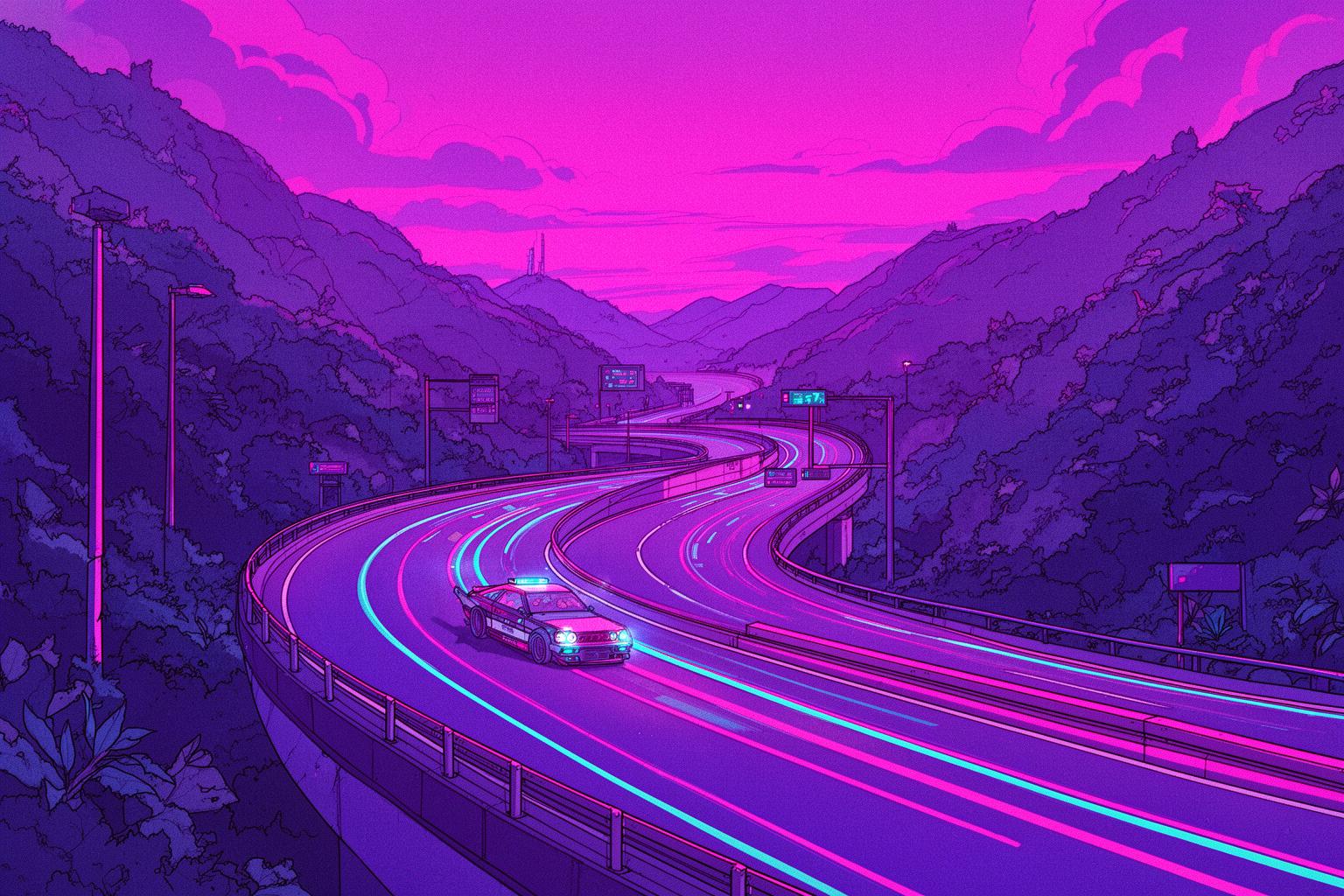
So why does this culture endure? In an increasingly digital and disconnected world, the touge run remains a deeply analog and visceral experience. It stands as a rebellion against the ordinary. It offers a chance to unplug from screens and engage with something tangible: a machine, a road, and a landscape. It embodies the Japanese philosophy of kaizen, or continuous improvement. Each run is an opportunity to become a bit smoother, a bit more precise, and more in sync with your car. It’s about pursuing a personal best, not chasing lap records. The touge serves as a sanctuary, where life’s complexities are distilled into the pure, exhilarating physics of a car carving a corner. It’s about capturing that perfect, fleeting moment when the car, driver, and road align in harmony. It goes beyond driving—it’s therapy, an art form, and for many, a way of life. Chasing the last rays of sunset down a mountain road reminds us that the most beautiful moments are often the most fleeting. It’s not about the destination; it’s about the vibe, the flow, and the unforgettable sensation of the run. Quietly, it’s a spiritual experience. And it’s waiting for you here, in the mountains of Japan.