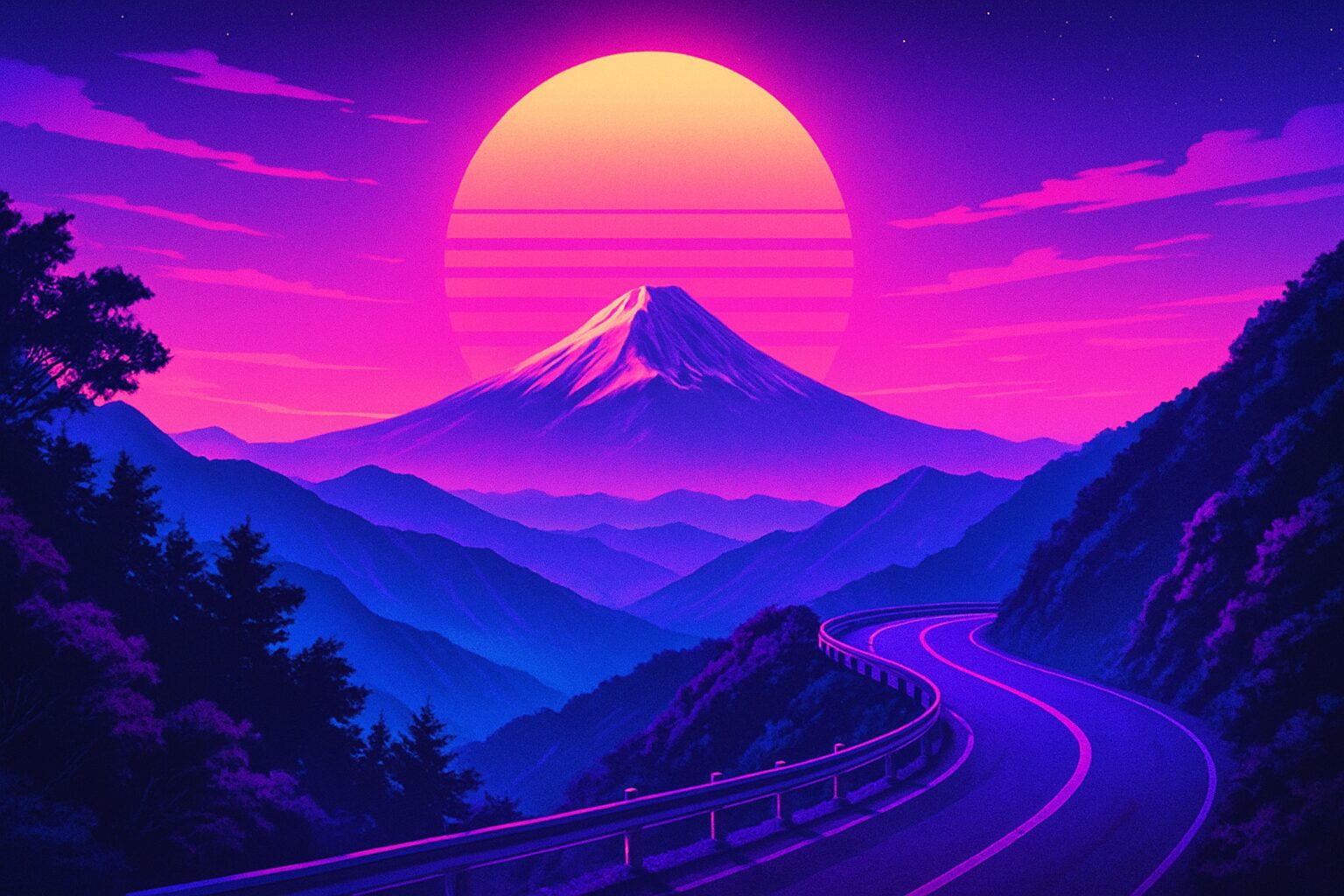
There’s a specific kind of magic that happens after midnight on a Japanese mountain road. The air grows crisp, the world shrinks to the twin beams of your headlights, and the silence is punctuated only by the hum of an engine and the whisper of tires on asphalt. This is the realm of the toge—a word that simply translates to ‘mountain pass,’ but carries a universe of meaning. It’s more than just a winding road; it’s a stage, a proving ground, and a sacred space in Japanese car culture. These ribbons of tarmac, carved into the volcanic spine of the nation, are where the art of drifting was born and perfected. They are living archives of automotive lore, haunted by the exhilarating ghosts of legends, both real and fictional. To drive a toge is to chase these ghosts, to feel the pulse of a subculture that redefined the relationship between driver, machine, and gravity. It’s an immersion into a cinematic reality, where every hairpin turn feels like a scene from a movie you’ve always wanted to star in. This isn’t just about sightseeing; it’s about seeking the ‘Toge Vibe’—that intangible, electric feeling of history, risk, and sublime beauty that hangs in the mountain air.
For a different kind of urban automotive atmosphere, discover how a Tokyo midnight drive creates its own unique soundtrack and vibe.
The Anatomy of a Legend: What is a Toge?
To grasp the essence of Japanese car culture, one must first appreciate the geography that shaped it. Japan is a mountainous land, with over seventy percent of its islands covered by peaks and forests. For centuries, the toge served as vital arteries—treacherous routes linking isolated villages and feudal domains. They were passages marked by hardship and stunning natural beauty. In modern times, as these paths were paved and engineered, they adopted a new role, becoming a distinctive kind of playground.
A toge is not a highway. It is a complex puzzle of asphalt laid over harsh terrain. Its defining characteristics are the elements that racers learned to master: the hepain (hairpin turn), a sharp corner demanding a sharp reduction in speed and a test of a car’s agility; the S-curve, a flowing series of left and right bends requiring rhythm and precise weight transfer; and the dramatic elevation changes that test an engine’s power going uphill and a car’s brakes downhill. These roads are narrow, often just a single lane each way, bordered by unforgiving metal guardrails or steep drops into wooded valleys. They are inherently challenging, designed for transit rather than speed. Yet it was this very challenge that attracted the hashiriya, the street racers, to these slopes.
By day, these roads fulfill their function. Locals, delivery trucks, and tourists in rental cars navigate them cautiously, pausing at viewpoints to admire the sweeping vistas. But as night falls, the toge’s character shifts completely. Tourists disappear, trucks are parked, and a deep silence settles. It is in this darkness that the toge truly awakens, transforming into a secret stage for those fluent in the language of horsepower and cornering G-forces.
The Birth of the Drift: Where Sound and Speed Became Art
The story of the toge is deeply intertwined with the story of drifting. In the 1970s, a generation of Japanese racers, inspired by the techniques of rally and motorcycle legends, started experimenting on these mountain passes. They discovered that by deliberately inducing oversteer—causing the rear wheels to lose traction and slide—they could carry more momentum through tight corners. It was a radical, counterintuitive approach. Rather than resisting the slide, they mastered it, balancing the car on a knife’s edge using precise throttle control, counter-steering, and courage. This marked the birth of drifting.
It originated as a raw, underground subculture. Groups of young drivers, known as zoku, would gather at the base of a mountain late at night. They weren’t criminals in the usual sense; they were enthusiasts, often working-class youths who invested every yen they had into their cars. Their chosen canvas was the deserted toge roads, far from police vigilance and society’s disapproving eyes. Here, they could push both their vehicles and skills to the absolute limit. It was more than a competition against others; it was a challenge against the road itself, a quest for the perfect line, the most graceful and fastest slide.
This clandestine scene was propelled into global awareness by one man: Keiichi Tsuchiya, the ‘Drift King.’ A professional racer who honed his craft on the toge of Nagano, Tsuchiya had an uncanny talent for controlling a car in a slide. A bootleg video of his driving, ‘Pluspy,’ became wildly popular among car enthusiasts, highlighting his extraordinary skill and the artistry of drifting. He legitimized the technique, proving its effectiveness on the racetrack and helping found the first professional drifting competitions. Yet he never forgot his origins, always speaking with respect for the toge where his journey began. To him, drifting wasn’t just about speed. It was about style, precision, and the ultimate display of car control. It was art made with smoke and sound, and the toge was its original and most authentic gallery.
The Gunma Holy Trinity: A Pilgrimage to the Heart of ‘Initial D’
No discussion of the toge is complete without honoring Gunma Prefecture, the undeniable mecca for enthusiasts of the culture. This region serves as the real-world backdrop for the iconic manga and anime series Initial D, a tale that introduced the world to the excitement and drama of Japanese mountain pass racing. For many fans, visiting Gunma is a pilgrimage, an opportunity to drive the very roads where Takumi Fujiwara and his modest Toyota Sprinter Trueno AE86 achieved legendary status. The ‘Gunma Holy Trinity’—Mount Haruna, Mount Myogi, and Usui Pass—are more than mere locations; they are characters in the narrative, each with its own unique personality and challenges.
Mount Haruna (Akina): The Ghost of the Eight-Six
In the Initial D universe, it’s known as Akina, the protagonist’s home course. In reality, Mount Haruna is a dormant volcano featuring a stunning caldera lake and a shrine at its peak. The road to the summit is the famous Akina touge, a drive that feels like stepping straight into the manga’s pages. The route is a flowing, rhythmic sequence of medium-speed corners that tighten progressively as you climb. Then come the notorious five consecutive hairpin turns—a relentless string of tightening corners that challenge both your nerve and your vehicle’s handling. Navigating them, you can almost hear the spirit of Takumi’s AE86, its 4A-GE engine screaming at high RPM, headlights piercing the pre-dawn haze.
By day, Haruna is a peaceful tourist spot. Visitors can take the ropeway for breathtaking views of the Kanto Plain, rent swan-shaped paddle boats on Lake Haruna, or simply savor the crisp mountain air. The road is busy with sightseers, creating a relaxed, scenic atmosphere. But at sunset, the mood shifts. The viewpoints turn into gathering places for local car enthusiasts. The forest’s silence is broken by distant turbocharged engines. The mountain’s history feels palpable. This is where the quintessential ‘Toge Vibe’ of Initial D comes alive. Essential for any pilgrim is a stop at the D’z Racing Cafe Garage at the base, a cafe adorned with memorabilia and serving tofu-themed pudding—a direct tribute to the Fujiwara Tofu Shop.
Mount Myogi: The Guardian of the West
If Haruna is about rhythm and flow, Mount Myogi embodies raw aggression and technical challenge. Known in the series as the home of the NightKids team, Myogi is visually striking even before you start driving. The mountain boasts jagged, weathered rock formations resembling a traditional ink wash painting. The road winding around it is equally daunting—tighter, more complex, and less forgiving than Haruna. Many corners are blind, the road surface unpredictable, and elevation changes abrupt. It is a course that demands respect and complete focus. It feels more like a fight than a dance.
By day, Myogi is a favored hiking destination. Trails lead to various peaks, offering spectacular close-ups of the unique geology and sweeping views. The brilliant red Myogi Shrine, nestled at the base of the rocks, is a beautiful and serene spot to visit before or after the drive. Driving Myogi presents a different kind of challenge—it’s less about finding a perfect, repeatable rhythm and more about reacting to the chaos of the road. It’s a true test of a driver’s adaptability and a car’s responsiveness. The atmosphere here is wilder, more untamed than Haruna, reflecting perfectly the nature of its fictional racing team.
Usui Pass: The Dance of the SilEighty
Usui Pass is legendary for its distinctive rhythm. It’s renowned for its dense concentration of corners packed into a relatively short stretch. The most famous is the corner known as C-121, a complex and demanding turn requiring a very precise line. Driving Usui is a test of endurance and concentration; it’s a continuous sequence of left and right turns requiring constant input from the driver. This is the home course of the Impact Blue duo, Mako and Sayuki, and their Nissan SilEighty—you can sense their focused precision in every aspect of the road.
What adds to Usui’s allure is its history. Running alongside the modern road is the old Abt system railway, a feat of Meiji-era engineering. The most remarkable remnant is the Meganebashi, or ‘Spectacles Bridge,’ a stunning red brick arch bridge that visitors can walk across. Exploring these railway ruins during daylight enriches the visit with historical depth. Nearby, the town of Karuizawa is a stylish mountain resort, offering a sharp contrast to the pass’s raw intensity. At night, Usui transforms into a maze of shadows and light. Mastering its endless series of corners demands profound understanding of car balance, making it a favorite among drivers who value technical finesse above all else.
Beyond Gunma: Exploring Other Legendary Toge
While Gunma may be the spiritual center, the ‘Toge Vibe’ echoes through mountains throughout Japan. Each region boasts its own legendary passes, each possessing a unique character shaped by local geography, history, and the driver community. From Nikko’s picture-perfect hairpins to the high-speed sweepers overlooking Mount Fuji, the adventure stretches well beyond Gunma’s borders.
Irohazaka, Nikko: The Alphabet of Hairpins
Irohazaka is arguably one of the most famous and visually striking mountain roads in Japan. Its name means ‘Iroha Slope,’ referencing the 48 characters of the old Japanese alphabet. Aptly, the road features exactly 48 hairpin turns, each marked by a corresponding character. The route is actually composed of two one-way roads: the Daini (second) Irohazaka ascends the mountain, while the Daiichi (first) Irohazaka descends. This one-way setup offers a unique driving experience, eliminating oncoming traffic from your lane and allowing full focus on the upcoming curves.
The climb is tight and technical, while the descent is freer and more flowing, including two spots where the road passes over itself. The scenery is stunning, especially in autumn when the mountainsides burst into vibrant reds, oranges, and yellows. However, this beauty comes with a cost: during peak koyo (autumn foliage) season, traffic jams can last for hours. For enthusiasts, the ideal time to enjoy Irohazaka is weekday mornings outside the peak season, when the road is clear and its remarkable engineering can be fully appreciated. The pass links Nikko—home to the ornate Toshogu Shrine, a UNESCO World Heritage site—with the scenic highlands of Lake Chuzenji and Kegon Falls, making it an essential part of any visit to the area.
The Hakone Turnpike: The Cathedral of Speed
If Gunma’s passes are intimate, technical dojos, the Hakone Turnpike is a grand, sweeping cathedral of speed. Officially called the Izu Hakone Skyline, this privately owned toll road changes the experience entirely. Its surface is impeccably maintained, lanes are wide, and corners are long, fast, and elegantly cambered. This isn’t a road for tight, smoky drifts—it’s made for high-speed, precise driving. It’s where high-performance cars like Porsche, Ferrari, and Nissan’s GT-R get to stretch their legs.
The ascent from Odawara is thrilling, offering awe-inspiring views of Sagami Bay. As you climb higher, you’re rewarded with one of Japan’s most iconic sights: a panoramic view of Ashinoko (Lake Ashi) with the majestic cone of Mount Fuji in the distance. It’s a bucket-list drive for any car lover. The road is often featured in automotive magazines and TV shows like Top Gear, and is a popular weekend morning gathering spot for car clubs. At the summit, the Taikanzan Sky Lounge provides a place to park, enjoy coffee, and admire the breathtaking scenery along with the assembled exotic cars. The atmosphere here is less about secret rebellion and more about a shared celebration of automotive performance and natural beauty.
Mount Rokko, Kobe: The Western Frontier
Heading into Kansai, Mount Rokko stands as a formidable guardian overlooking Kobe and Osaka. The roads weaving through this mountain range are legendary in western Japan’s street racing community. Known for being exceptionally challenging—tight, technical, and often damp from the mountain’s moist air—they test a driver’s skill. The road surface can be uneven, and many corners are off-camber, requiring great adaptability. The guardrails bear scars from past misadventures, silently testament to the mountain’s unforgiving character.
What makes Rokko truly special is its close proximity to the sprawling urban landscape below. As you navigate dark, tree-lined corners at night, you might suddenly round a bend to be greeted by a breathtaking panorama: the sparkling city lights of Kobe and Osaka, famously called the ‘ten-million-dollar night view.’ This contrast defines the Rokko toge experience—the sensation of being in a remote and dangerous wilderness while the civilized world shimmers just beneath you. It’s a raw, visceral experience that captures the dual nature of Japan itself: the serene, ancient mountain alongside the hyper-modern city, existing together in a delicate, thrilling harmony.
The Machine and the Soul: Understanding Toge Car Culture
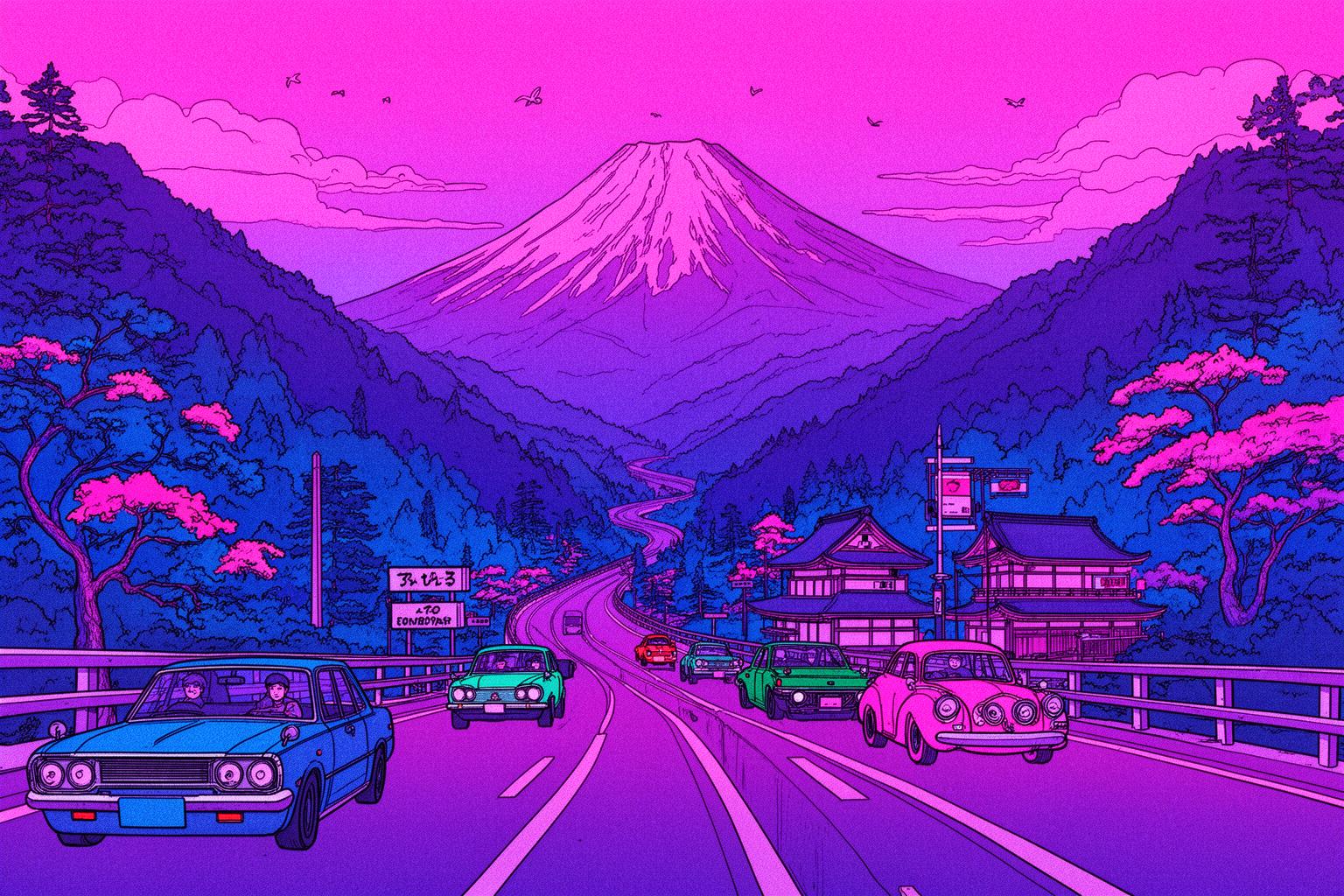
The toge experience is an intimate dance involving three partners: the driver, the road, and the machine. The cars that became legends on these mountain passes were not supercars boasting earth-shattering horsepower. Instead, they were modest, lightweight, and well-balanced machines that rewarded skilled driving. They served as canvases for modification and personal expression, extensions of the driver’s own will.
The undisputed king of the toge is the Toyota Sprinter Trueno AE86, a lightweight, rear-wheel-drive hatchback from the 1980s with a rev-happy engine. It was affordable, easy to modify, and featured a perfectly balanced chassis, making it an ideal platform for mastering the art of drifting. Its giant-killer status in Initial D solidified its legendary reputation. Other iconic models include the Nissan Silvia (S13, S14, S15), the quintessential drift platform; the Mazda RX-7 (FC3S and FD3S), known for its unique rotary engine and exquisite handling; and the formidable Nissan Skyline GT-R (especially the R32), whose ATTESA E-TS all-wheel-drive system revolutionized high-speed toge driving.
For the hashiriya, tuning a car was a profoundly personal art form. It wasn’t merely about adding parts for extra power; it was a holistic process. Suspension was painstakingly adjusted for the specific corners of a home course. Brake pads were selected for their bite and resistance to fade. Limited-slip differentials were installed to manage how power was delivered during a slide. Aesthetics held equal importance. Aggressive aero kits, lightweight wheels from manufacturers like Rays and Work, and bucket seats were not just for show; they served practical purposes—improving aerodynamics, reducing unsprung weight, and keeping the driver firmly in place. A car’s appearance, from its sponsor stickers to its choice of wheels, conveyed a story about the driver’s affiliations, inspirations, and philosophy.
Your Toge Journey: A Practical Guide for the Aspiring Pilgrim
Experiencing the toge firsthand is an unforgettable adventure, but it demands careful planning and, above all, a deep respect. These are public roads, not racetracks, so safety must always be the top priority. This journey is about chasing a feeling, not a lap time.
Securing Your Steed: Renting a Performance Car in Japan
To fully enjoy the toge, you need the right car. Fortunately, Japan has several specialist rental companies catering to enthusiasts. Agencies such as Omoshiro Rent-a-Car, Fun2Drive, and Club GT offer fleets filled with iconic toge legends. You can rent everything from an AE86 or an S2000 to a modern GT-R. Booking well in advance is crucial, especially for popular models. An International Driving Permit (IDP) under the 1949 Geneva Convention is required, and it must be obtained in your home country before traveling to Japan. Be prepared for costs including rental fees, mandatory insurance, and tolls for roads like the Hakone Turnpike. Treat the car with great care—these vehicles are often cherished and meticulously maintained.
The Unwritten Rules: Toge Etiquette and Staying Safe
This is the most vital part of your journey. The toge culture operates underground, and its continuation depends on keeping a low profile. The aim is to blend in and show respect, not act like a reckless tourist. Here are the essential rules:
- The Mountain Belongs to the Locals: You are a guest. Always yield to local traffic. If a faster car approaches from behind, find a safe spot to pull over and let them pass. This is a sign of respect.
- Drive Within Your Limits (and the Law): Public speed limits apply and should be followed. The thrill of the toge comes from the corners and atmosphere, not from beating speed records on straightaways. Never race other drivers.
- Stay in Your Lane: Crossing the center line on a blind corner is extremely dangerous and strictly forbidden.
- Be Aware of Your Surroundings: Toge roads are habitats for wildlife. Deer, monkeys, and even wild boar (inoshishi) can appear suddenly, especially at night. Road conditions can swiftly change with wet patches, fallen leaves, or gravel.
- Respect the Peace: When passing small villages at mountain bases or summits, keep noise to a minimum. No loud music or unnecessary engine revving. Residents live here and should not have reason to resent car enthusiasts.
- The Goal is a Clean Run: The ultimate mark of skill is a smooth, clean drive where the car flows effortlessly through corners. It’s not about being the loudest or showiest; it’s about moving in harmony with the road.
Timing is Everything: When to Go
Each season offers a unique toge experience. Spring brings stunning cherry blossoms but also unpredictable weather. Summer features lush greenery and warm nights but comes with insects and humidity. Autumn is arguably the most beautiful season with vibrant foliage, though it is also the busiest. Winter is for the truly dedicated; many passes, especially in northern Japan and at high elevations, close due to snow and ice. Driving in icy conditions should only be attempted by experienced drivers with properly equipped vehicles.
The contrast between day and night is fundamental. Plan to drive each pass twice. Experience it during the day to learn the layout, enjoy the sights, and take in the scenery. Then, if comfortable, return for a short, cautious drive at night to witness the transformation and feel the unique, electric ‘Toge Vibe’ under the stars.
The Echo in the Valley

To chase the ghosts of the toge is to engage with a uniquely Japanese tale of passion, innovation, and the relentless pursuit of perfection. It is a culture born from a love for the machine and a profound respect for the rugged beauty of the natural world. The echo of a straight-six engine reverberating through a mountain valley is more than mere noise; it is a sound that carries the legacy of the pioneers who first dared to dance at the limits of adhesion, along with the countless enthusiasts who have followed in their tire tracks.
These roads are more than just asphalt. They are repositories of dreams, standing as a testament to the belief that a simple mountain pass can transform into a world-class stage for human skill and mechanical artistry. Whether you’re a devoted Initial D fan, a lifelong car enthusiast, or simply a traveler seeking a different side of Japan, the toge promises an unparalleled adventure. Drive safely, with respect, and listen closely. You might just catch the ghost of an Eight-Six, downshifting for the next corner, forever chasing the perfect line in Japan’s mountains.