Ever felt like you’ve stepped out of reality and straight into a storybook? Not the glossy, sanitized kind, but one of those old, beautifully worn books with dog-eared pages, filled with tales that are a little bit dark, a little bit weird, and a whole lotta magical. That’s Tono. Tucked away in the misty, rolling mountains of Iwate Prefecture in northern Japan, this place is less of a city and more of a living, breathing legend. It’s the undisputed folklore capital of Japan, a realm where mischievous water sprites called Kappa are said to lurk in streams, and fortune-bringing child spirits might just be hiding in the rafters of an old farmhouse. This isn’t just history you read about on a plaque; it’s a palpable energy that hums in the air, a whisper carried on the wind that blows through the rice paddies. It’s the home of the Tono Monogatari, or The Legends of Tono, an iconic collection of local folk tales compiled in 1910 that basically put Japanese folklore studies on the map. Coming here is like getting a backstage pass to the very soul of Japan’s supernatural imagination. Get ready to leave the modern world behind, because we’re diving deep into a place where the tales are as real as the mountains that guard them.
The Vibe Check: Why Tono Hits Different
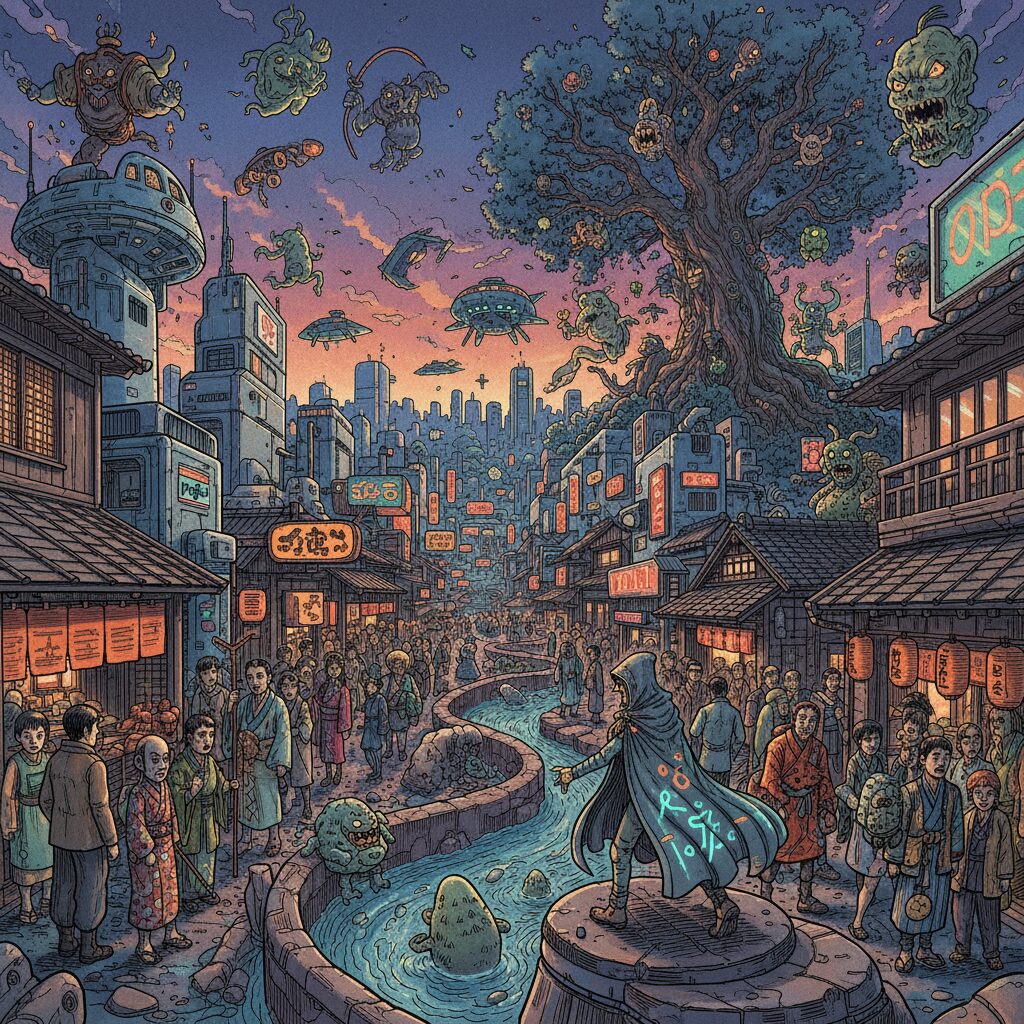
Let’s be honest, you can visit Tokyo for neon-lit nights or Kyoto for temple tours, but you come to Tono for a vibe that’s completely off the beaten path. The atmosphere here feels… ancient. It’s a deep, resonant quiet, broken only by the rustle of leaves, the buzz of a dragonfly, or the distant caw of a crow. The air carries a certain weight, a sense of timelessness that makes you feel as if you might turn a corner and encounter a centuries-old spirit. The landscape itself plays a role in every story. The mountains, often cloaked in low-hanging mist, resemble sleeping giants. The rivers, especially the Sarugaishi River, meander through the valley like silver ribbons, with every pool and deep bend seeming to hold a secret. It’s this deep connection between the land and its legends that gives Tono its power. You’re not merely visiting a place; you’re stepping into a living web of stories. This feeling seeps into your very being. You begin to see faces in the twisted old trees and wonder what lurks just beyond the shadows in a thick cedar grove. In a world filled with constant notifications and noise, the profound, eerie silence of Tono acts as a reset for the soul. It reminds you that there’s an entire other world humming just beneath the surface of our own—and here, the veil is extraordinarily thin.
The Main Event: Fireside Chats with Ghosts and Gods
At the core of the Tono experience is listening to mukashi banashi, or “tales of long ago,” recounted by a local kataribe, a master storyteller. Forget sleek presentations or high-tech exhibits; this is as raw and genuine as it gets. You’ll often find yourself seated in a traditional thatched-roof farmhouse, on a tatami mat around a sunken hearth called an irori. A fire crackles and pops at the center, casting warm flickers across the storyteller’s weathered face and filling the dark, smoky room with the scent of burning wood. The kataribe, typically an elder who has inherited these tales through generations, begins to speak. And here’s the twist: they tell these stories in the rich, lyrical Tono dialect, which can be nearly impossible for even native Japanese speakers from other regions to fully grasp. But honestly? That doesn’t matter. The language becomes a kind of music. You get swept away by the rhythm of their voice, the expressive force of their gestures, the sparkle in their eye as they recount a clever fox or a fearsome yama-uba (mountain witch). It’s a deeply hypnotic experience. You sense the room’s collective gasp during a chilling moment, the shared laughter at a yokai’s foolishness. This is how these stories were always meant to be told—person to person, heart to heart, with the warmth of a fire warding off the darkness. It’s a tradition that connects you directly to the past, a living piece of cultural heritage that feels both precious and powerful.
Where to Tune In
You can catch these storytelling sessions at a few key locations. The Tono Monogatari no Yakata (Folktale Museum) and the expansive Tono Furusato Village are the most popular spots. They offer scheduled performances throughout the day. While some may provide a brief English summary on a handout, the real magic lies in letting go of the need to understand every word and simply immersing yourself in the storytelling. It transcends language. You’ll leave that smoky farmhouse feeling like you’ve been let in on a secret—a story that now lives inside you too. It’s an intimate and deeply human experience that no museum exhibit could ever replicate. The memory of the storyteller’s voice, mingled with the aroma of woodsmoke and the feel of tatami beneath your legs, will stay with you long after you’ve left Tono’s misty mountains behind.
Meet the Local Legends: Tono’s A-List Yokai
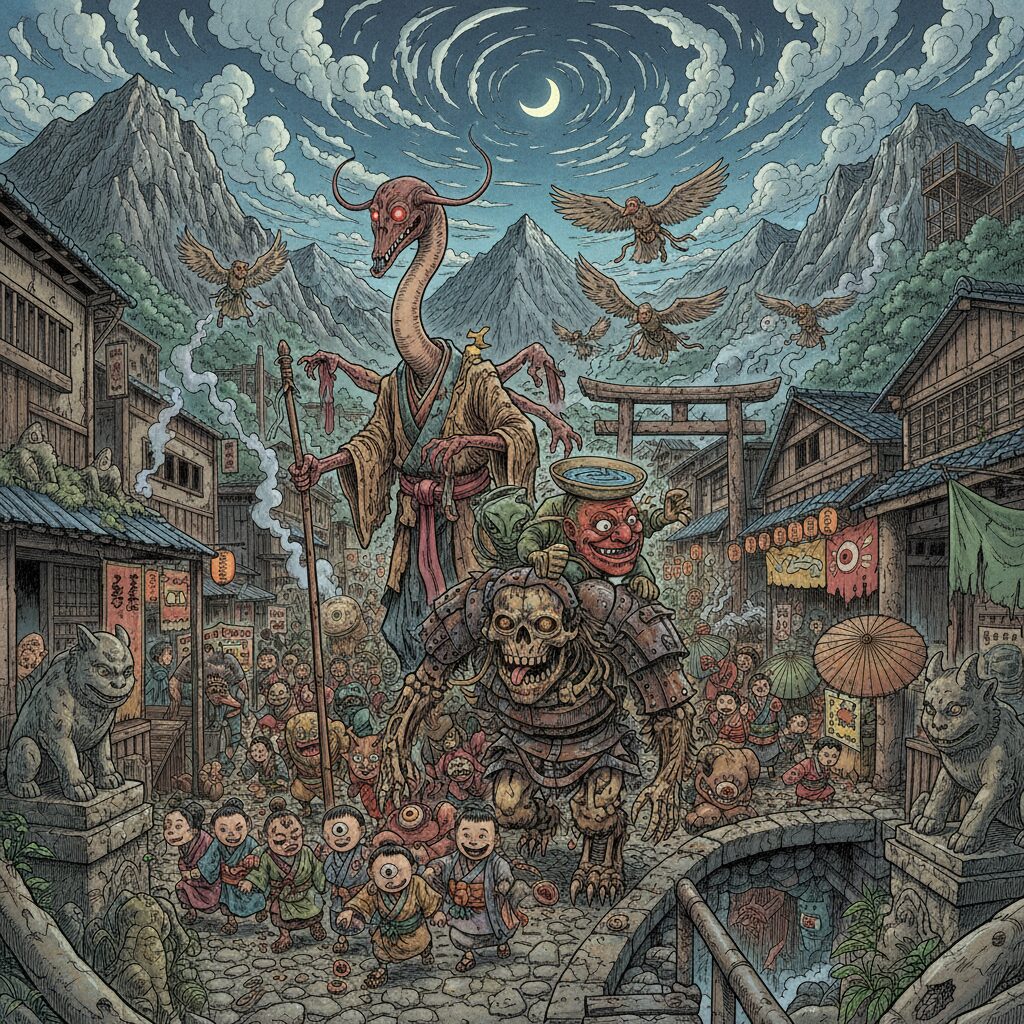
Tono’s folklore is more than just a random assortment of spooky stories; it’s an entire universe inhabited by a recurring cast of supernatural beings, or yokai. Getting familiar with them is like becoming acquainted with the town’s local celebrities.
The Kappa: Tono’s Famous River Gremlin
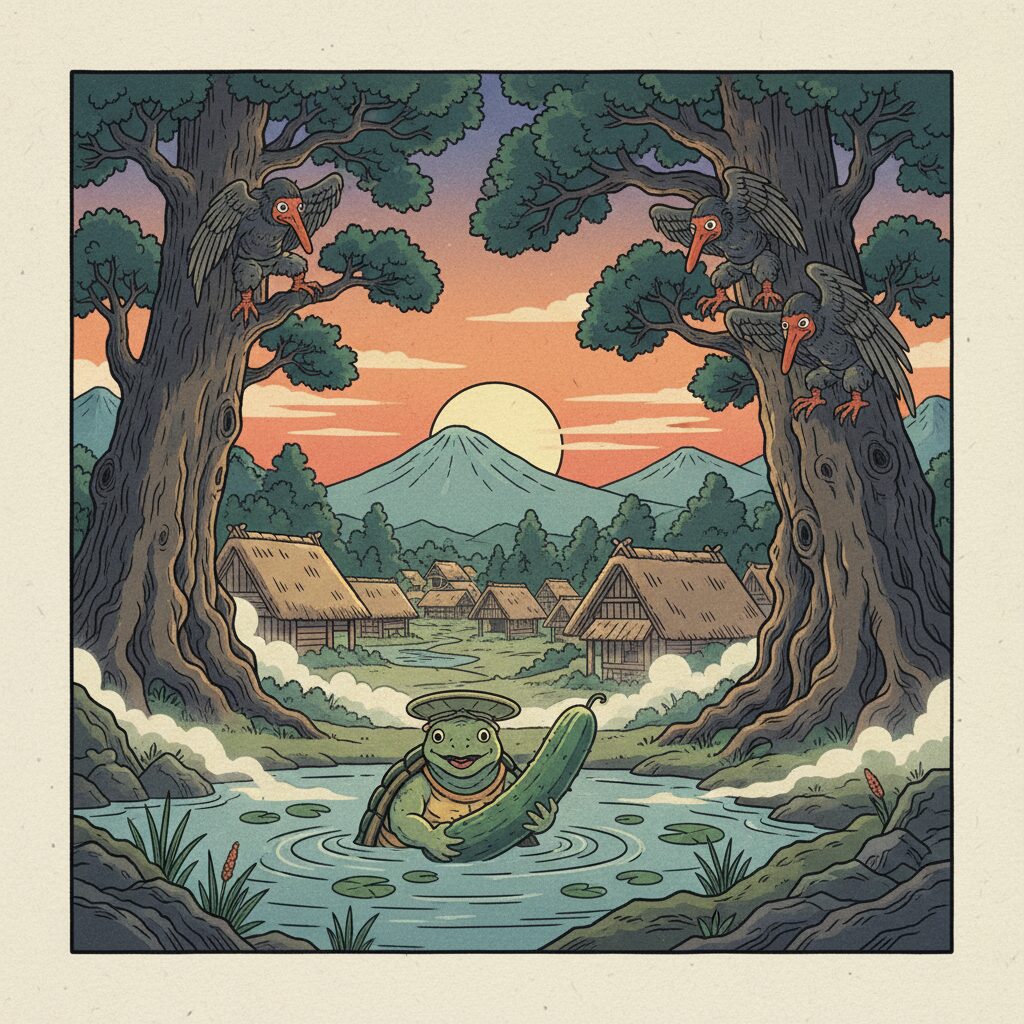
No joke, the Kappa is Tono’s biggest celebrity. These amphibious humanoids are said to have turtle-like shells, scaly skin, and a dish-shaped indentation on their heads that holds water—the source of their power. Known as troublemakers, they sometimes drag horses or even people into the water, yet they also have a strangely formal side, enjoying sumo wrestling and, oddly enough, cucumbers. The heart of Kappa lore lies at Kappa Buchi, a modest pool on a bend in a stream behind the Jokenji Temple. The journey there is part of the experience—you pass beneath the temple’s wooden gate and follow a quiet path. The air becomes cooler and damper. The sound of the stream grows louder. Then you arrive. It is a peaceful, almost disappointingly ordinary-looking spot, shaded by weeping willows. But the atmosphere is charged. Offerings of cucumbers rest on a small shrine to appease the Kappa. Fishing rods with cucumbers tied as bait are left for anyone hoping to catch one. The scene is both playful and deeply heartfelt. Standing there, it’s easy to imagine a Kappa peeking at you from beneath the water’s surface. It’s a testament to storytelling’s power that such a simple place can feel so magical.
The Zashiki-warashi: The Fortune-Bringing Spirit of the Attic
If the Kappa is Tono’s mischievous wild child, the Zashiki-warashi serves as its protective guardian spirit. This yokai appears as a child with a bobbing red face and traditional attire, choosing to reside in certain old houses. When a Zashiki-warashi inhabits a home, the family prospers; if angered and it leaves, their luck crumbles. It is a spirit demanding respect and care—a supernatural embodiment of the house itself. You can sense the possible presence of these spirits in the many preserved magariya farmhouses scattered throughout Tono. These L-shaped buildings, designed to shelter both family members and their essential horses under one roof, are architectural wonders. Stepping inside one, such as those at Denshoen Park or Tono Furusato Village, means entering the Zashiki-warashi’s realm. The dark, cavernous interiors, with massive wooden beams and soaring thatched roofs, feel ancient and alive. You might almost hear faint phantom footsteps or a child’s laughter echoing from dusty, shadowy lofts where these spirits are said to dwell. It’s a comforting kind of eeriness—a legend linking family prosperity directly to the cherished home.
The Oshirasama: A Story of Love and Loss
Not all of Tono’s legends are lighthearted. The tale of the Oshirasama is a powerful and tragic story, reflecting the deep bond between humans and their animals. It tells of a farmer’s daughter who fell in love with the family horse. Enraged, her father killed the horse and hung it from a mulberry tree. Grieving, the daughter clung to the dead horse, and a god, moved by their sorrow, allowed them to ascend to heaven together. They became the deity Oshirasama, the god of sericulture (silk farming), an important industry in the region’s past. This deity is symbolized by a pair of mulberry wood sticks—one carved as a girl, the other as a horse—wrapped in many layers of colorful cloth. A vast collection of these figures can be seen at Denshoen Park in a dedicated hall called the Oshira-do. The room is filled with thousands of these cloth-wrapped icons, a silent, vivid tribute to the heartbreaking tale. Visitors may add their own cloth piece, making a wish as they do. The sheer number of these figures, each representing a prayer or hope, creates a deeply moving and slightly eerie atmosphere. This story reveals the somber, profound layers of Tono’s spiritual heritage.
Level Up Your Tono Quest: Must-See Spots
Beyond the storytelling sessions, Tono is a landscape to be explored. The best way to experience it is by hopping on a bike and letting the legends guide your journey.
Tono Furusato Village (Tono Furusato no Mura)
This place is an absolute treasure. It’s not just a sterile museum; it’s a vast, living reconstruction of a traditional mountain village nestled in a beautiful valley. Authentic magariya farmhouses have been relocated here from across the region, each one meticulously preserved. You can roam freely, step inside the houses, breathe in the lingering scent of soot from the irori, and imagine the lives of the families who once inhabited them. In some houses, artisans demonstrate traditional crafts like weaving or pottery. The village is sprawling, connected by winding paths through forests and fields, making every discovery feel natural and genuine. You could easily spend half a day here, soaking in the atmosphere and feeling as though you’ve traveled back in time. The village’s scale and authenticity make it the best place to physically experience the world from which the Tono legends originated.
Tono Municipal Museum & Tono Monogatari no Yakata
These two sites are located side by side and make the ideal starting point for your visit. The Municipal Museum offers a thorough overview of the region—its geography, history, and way of life—providing the factual foundation. Then, just a short walk away is the Tono Monogatari no Yakata (Folktale Museum), where the magic unfolds. This museum brings the legends to life through dioramas, films, and soundscapes. You can enter a room that replicates a spooky forest or see visual depictions of yokai. It’s an excellent way to familiarize yourself with the main characters and stories before setting out to explore the real-world locations. Think of it as your folklore boot camp.
Denshoen Park
This compact but essential stop is a must on any Tono pilgrimage. It houses a beautifully preserved farmhouse that belonged to Kizen Sasaki’s family, the local folklorist who was Kunio Yanagita’s primary source for the Tono Monogatari. Exploring the house gives you an authentic sense of traditional life. More importantly, the park contains the Oshira-do, the hall filled with thousands of Oshirasama figures, located right next to the pathway that leads to Kappa Buchi. You can easily visit these three major folklore sites in one go, making for a super-efficient and impactful experience.
Gohyaku Rakan (The 500 Arhats)
A short drive or longer bike ride from the town center takes you to one of Tono’s most hauntingly beautiful spots. Hidden in a mossy forest glade are hundreds of stone statues, each representing a disciple of Buddha. They were carved by a priest to comfort the souls of those who perished in a great famine centuries ago. Over time, nature has begun to reclaim them. Covered in thick, velvety green moss, their faces—each one unique—are weathered and softened by the passage of time. The air here is still and heavy, filled only with the sounds of dripping water and birdsong. It’s an incredibly somber yet peaceful place that reflects Tono’s real history of hardship, offering a poignant contrast to the whimsical nature of some of the legends. It’s a place for quiet reflection.
How to Get Your Tono Adventure Started: The Lowdown
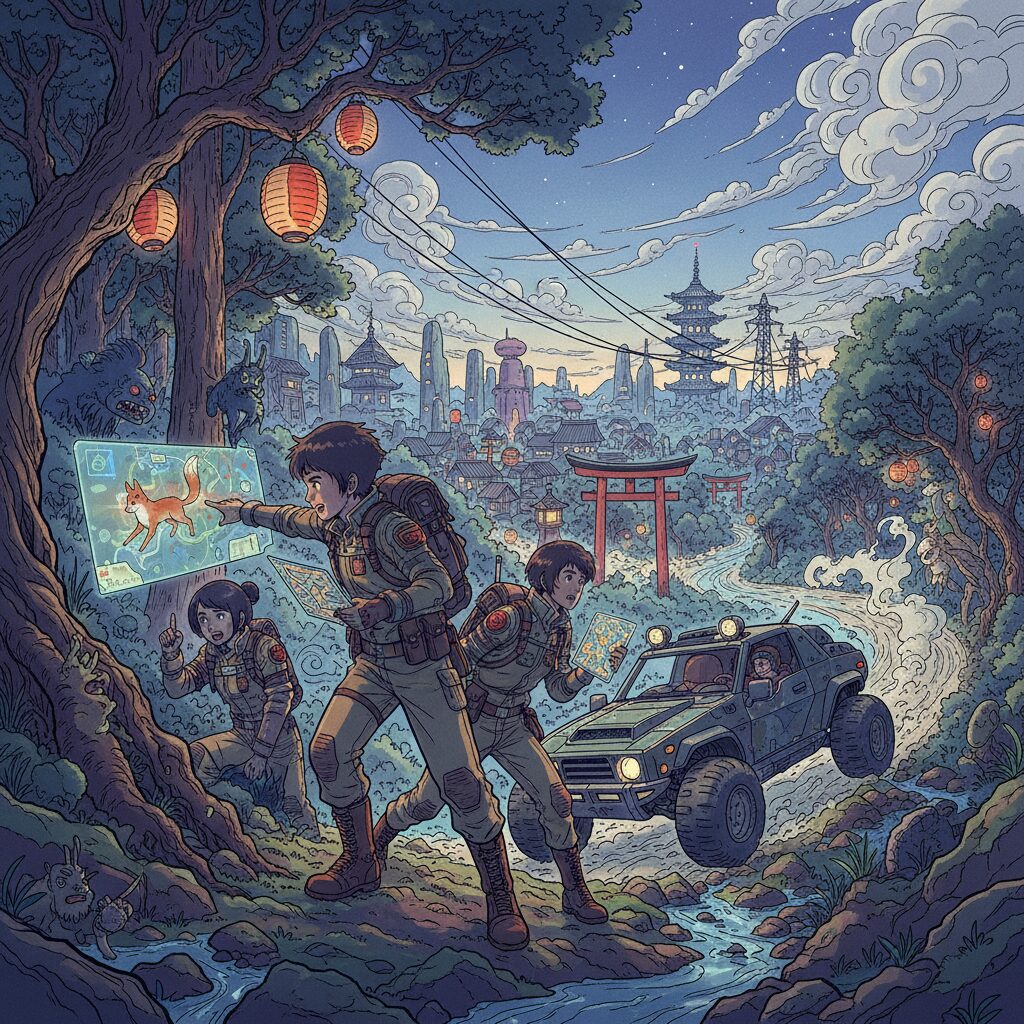
Reaching Tono is part of the adventure, a journey that takes you from Japan’s bustling main corridors into its serene, green heart.
Getting There
Your main route from Tokyo involves taking the high-speed Tohoku Shinkansen to Shin-Hanamaki Station. This segment of the trip is sleek, fast, and comfortable. However, the true magic begins at Shin-Hanamaki when you switch to the JR Kamaishi Line. This local train line serves as your gateway to deep Iwate. The train slows down, and the scenery outside your window shifts from urban sprawl to breathtaking, untouched nature. The train winds through a dramatic river valley, diving into tunnels and re-emerging to views of lush green mountains and crystal-clear streams. In the right season, you might even get the chance to ride the SL Ginga, a restored steam locomotive that runs on this line, making the journey even more romantic and nostalgic. The chugging engine and whistle echoing through the mountains provide the perfect soundtrack for your arrival in the land of legends.
Getting Around
Once in Tono, your best companion is a bicycle. The main town area is flat and compact, and many key folklore spots like Kappa Buchi and the museums are within easy cycling distance. You can rent a bike (known locally as “Tono Rin”) right near the station. This gives you the freedom to explore at your own pace and to stop whenever a quiet shrine or a scenic view catches your attention. For more distant places like Tono Furusato Village or Gohyaku Rakan, renting a car is a good option. Alternatively, the local bus system can get you there, but you’ll need to plan carefully around the infrequent schedules. Still, biking is the GOAT. It allows you to breathe the fresh mountain air and truly connect with the landscape.
A Pro Gamer Move: Insider Tips for Your Tono Trip
When to Visit
Tono is stunning throughout the year, with each season showcasing its own unique charm. In spring and summer, the landscape is vividly green, with rice paddies filled with water reflecting the sky—ideal for cycling. Autumn transforms the mountains into a fiery display of red and gold, with a cozy and abundant harvest-season atmosphere. Winter is for the adventurous; heavy snowfall blankets the area in pristine white, creating a magical scene, though transportation can be challenging and some attractions may have limited hours. Winter also hosts the Tono Dobekko Festival, celebrating the local cloudy, unrefined sake that’s guaranteed to warm you up.
Tono Eats: Nourishment for Yokai Hunters
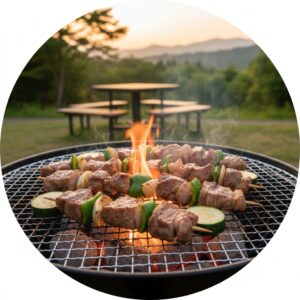
As a food lover, I was impressed by Tono’s hearty and rustic cuisine. The must-try dish is Jingisukan, the famous grilled mutton named after Genghis Khan, served on a special dome-shaped skillet that lets the fat drip away while you cook it with fresh vegetables. The sizzling sound and savory aroma filling the restaurant are irresistible. Another local favorite is Hittsumi, a comforting soup with hand-torn flour dumplings and seasonal vegetables in a savory broth—true Japanese soul food. And don’t miss Doburoku (or Dobekko), the milky, slightly sweet, and often fizzy homemade sake. Potent and rustic, it pairs perfectly with an evening of storytelling.
Take Your Time and Stay Longer
Tono isn’t a place to rush through. It’s not a destination to simply check off your list. To truly experience its magic, you need to slow down. I recommend spending at least two full days, or three if possible. Stay at a local ryokan (traditional inn) or minshuku (family-run guesthouse) to fully immerse yourself. Waking up in a tatami room, enjoying a traditional Japanese breakfast, and chatting with the local hosts offers a cultural experience a hotel simply can’t match.
Beyond the Stories: The Soul of Tono
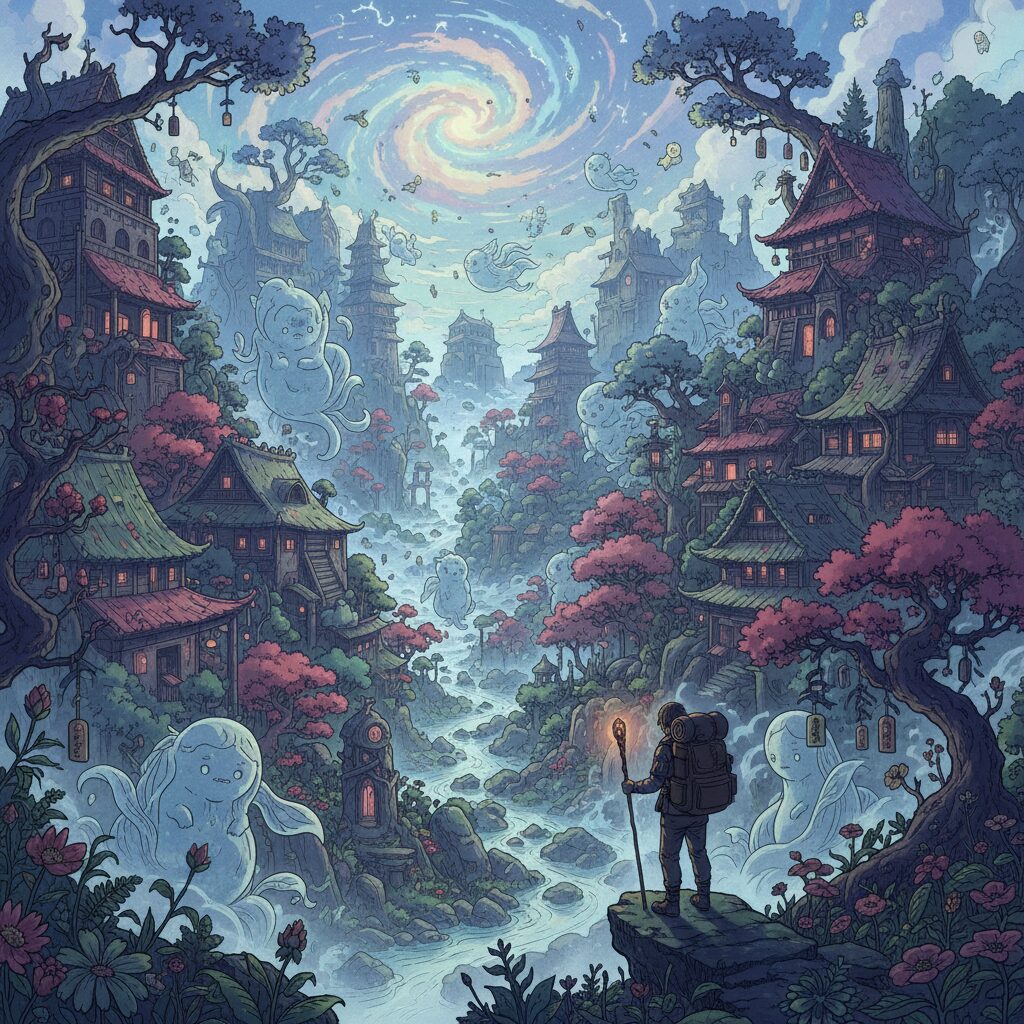
After spending a few days in Tono, you begin to realize something profound. The stories here are more than mere entertainment; they embody the cultural DNA of the region. They served as a way for people to understand the world around them—the beauty of nature, the fear of famine, and the mysteries of life and death. The Kappa legend taught children to be cautious of the river’s dangers, while the Zashiki-warashi inspired respect for one’s home. These tales are intricately woven into the daily lives and the very identity of the people who inhabit this place. In Tono, the past isn’t a distant land; it’s a constant companion, like a friendly ghost seated beside you at the table. Visiting Tono is a powerful reminder that in our highly logical, scientific age, there remains great value in story, mystery, and the belief that there’s more to the world than what we see. It’s a place that sparks the imagination and rekindles a childlike sense of wonder.
So, if you seek a journey beyond typical sightseeing, if you want to travel somewhere that will genuinely touch your soul and alter your perspective on life, pack your bags and set your course for Tono. Listen to the whispers of the wind, leave a cucumber for the Kappa, and perhaps—if you’re fortunate—you’ll discover a story of your own awaiting you in the misty mountains of Japan’s folklore capital. It’s a trip that will linger in your memory—a tale you’ll recount time and again.