Yo, what’s up, world explorers. Ami here, coming at you live from the flip side of the usual Japan travel hype. We all know the big names—Tokyo’s neon chaos, Kyoto’s temple tranquility. But today, we’re taking a hard left turn, diving deep into the misty, mystical mountains of the Tohoku region, to a town that’s straight-up legendary. I’m talking about Tono, in Iwate Prefecture. This place is famous for its folktales—think mischievous kappa water sprites and mountain spirits. It’s got this timeless, almost otherworldly vibe, where ancient farmhouses dot rolling green hills and every crooked tree seems to hold a secret. But we’re not just here for the folklore. We’re here for a plot twist, a culinary mystery that’s got me completely hooked: Jingisukan.
Okay, hold up. For those not in the know, Jingisukan is that iconic Japanese BBQ dish of grilled mutton and lamb, sizzled to perfection on a dome-shaped skillet. And if you know your Japanese food geography, you’re probably thinking, “Isn’t that a Hokkaido thing?” One hundred percent. Hokkaido is the undisputed champion, the OG of Jingisukan culture. So what in the world is it doing here, hundreds of kilometers south, thriving as the undisputed soul food of this tiny, secluded mountain town? It’s a legit puzzle. This isn’t just a random dish on a few menus; it’s a way of life. In Tono, Jingisukan isn’t just dinner. It’s a picnic, it’s a party, it’s a community ritual that pops off by the riverbank, under cherry blossom trees, or right in the backyard. The whole town runs on the sizzle and smoke of grilled lamb. It’s a culture so deep and so unique, it completely redefines what you think you know about this dish. So, buckle up. We’re about to peel back the layers of this delicious enigma, figure out how Tono stole Hokkaido’s thunder, and discover why a simple grilled meal became the heart and soul of Japan’s land of legends.
To truly understand this unique culinary culture, it’s essential to first explore the deep connection between the local food and the region’s rich folklore traditions.
The Tono Aura: Where Legends and Lamb Smoke Mingle
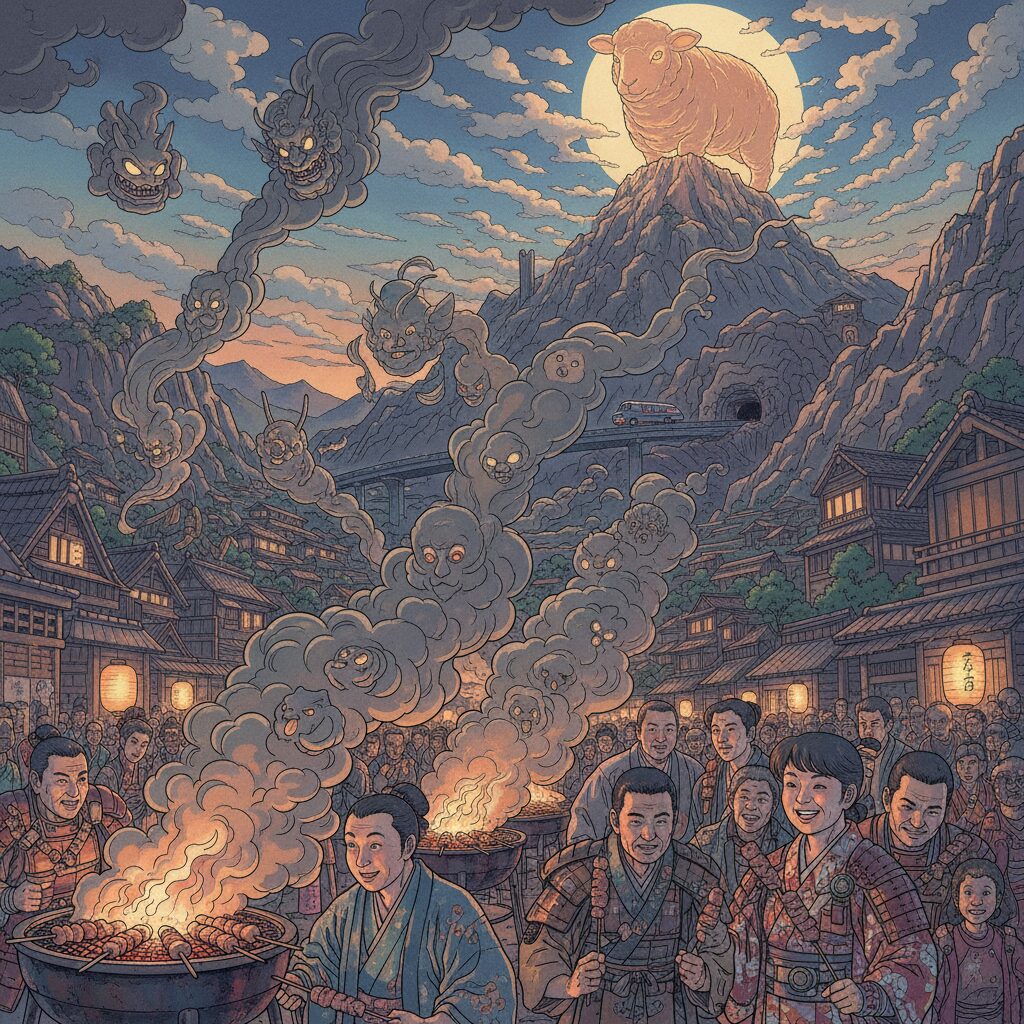
Before we even light the grill, you need to grasp the setting. Tono isn’t your typical Japanese town. Stepping off the local train feels like being transported into a Hayao Miyazaki film. The air here is different—crisp, clean, and filled with the scent of damp earth and woodsmoke. The town is nestled in a basin surrounded by mountains often cloaked in a soft, cinematic mist, lending the landscape a hazy, dreamlike quality. This is the backdrop for the Tono Monogatari, or “The Legends of Tono,” a renowned collection of folklore compiled over a century ago. This book is the town’s claim to fame, brimming with stories of spirits, gods, and supernatural beings that locals believed shared their world.
The atmosphere is deeply rooted in this folklore. You can sense it as you stroll past the old, thatched-roof farmhouses called magariya. These L-shaped homes were designed so that people and their cherished horses could live under one roof, reflecting a time when life was tougher and closely connected to nature. Visiting spots like Tono Furusato Village or Denshoen Park lets you experience these architectural treasures firsthand, and it’s quite the journey. Walking among them, you can almost hear echoes from the past—the whispers of old stories shared around a hearth.
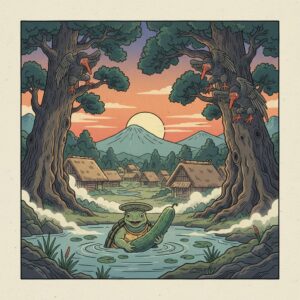
Yet the most iconic place is probably Kappa Buchi, a small, unassuming stream behind a temple where kappa, the cucumber-loving water sprites, are said to reside. You’ll find locals and tourists alike, sometimes holding cucumbers tied to fishing lines, hoping to catch one. It’s quirky and charming, perfectly capturing the town’s spirit. Tono doesn’t just preserve its legends; it lives them. There’s a playful seriousness to it all, a profound respect for the unseen world woven into everyday life.
This atmosphere of tradition, close-knit community, and living in harmony with the seasons and the land creates the perfect fertile ground for soul food to flourish. It’s a place that cherishes authenticity and resourcefulness. This is where the story of Jingisukan starts to make sense. It’s not a flashy, imported fad but a tradition that grew naturally from the very soil of this enchanting, slightly eerie land. The smoke from Jingisukan grills doesn’t clash with the morning mist; it blends with it, becoming yet another layer of Tono’s distinct, flavorful identity.
Solving the Jingisukan Puzzle: A Tale of Wool, Need, and Genius
So, how did Tono become a Jingisukan powerhouse? The answer is a fiery tale of history, economics, and sheer, unfiltered ingenuity. It’s a story that completely overturns the widely held belief that “Jingisukan comes from Hokkaido,” at least from Tono’s perspective of the truth. This narrative is less about Mongolian invaders and more about post-war survival, and it’s what gives the food here its deep sense of history.
The Post-War Shift: From Wool to Meat
Let’s go back to the period following World War II. Japan was rebuilding, and the government was implementing various plans to revive the economy. One such initiative aimed to increase domestic wool production. The demand for wool in clothing and textiles was huge, and relying on imports was far from ideal. Authorities identified regions with suitable climate and terrain for sheep farming, and the Kitakami mountains, home to Tono, stood out. Sheep farms soon sprang up across the area. Tono became a major hub in Japan’s emerging wool industry—focused on fleece rather than meat.
For a time, prospects looked promising. But then, the global market changed. In the 1960s, inexpensive, mass-produced wool from overseas flooded into Japan. Domestic wool production couldn’t keep pace. Prices collapsed, and the vision of a thriving wool industry in Tohoku fell apart. This left Tono’s farmers facing a tough dilemma: plenty of sheep but no market for their wool. What do you do? Adapt or perish. And Tono adapted—in the tastiest way imaginable.
From Necessity to Culinary Tradition
The people of Tono surveyed their flocks of now-unwanted sheep and had an inspired realization. If wool won’t sell, sell the meat instead. Back then, lamb and mutton weren’t commonly eaten across most of Japan. The meat often had a strong, gamey flavor (`kusami`) that many disliked. But Tono’s farmers and butchers began experimenting. They created marinades with soy sauce, ginger, garlic, and local apples to tenderize the meat and mellow its taste. They discovered the best cuts and perfected the grilling method.
This was not a gourmet trend started by high-end chefs—it was a grassroots solution born from necessity. It was about salvaging a valuable resource. It was about survival. Because it was so genuine and practical, it immediately connected with the local community. Jingisukan became the go-to dish for gatherings, a filling and affordable way to feed families and celebrate with friends. It evolved from an economic lifeline into the town’s culinary hallmark. This origin story is the magic ingredient. It’s why every bite of Jingisukan in Tono feels so authentic and grounded. It’s more than just food; it’s a symbol of the town’s resilience.
The Iconic Bucket System: Jingisukan, Anywhere, Anytime
This is where Tono’s Jingisukan culture truly shines and secures its legendary status. While excellent restaurants exist, the most authentic Tono experience is the DIY, take-home version centered around a simple yet brilliant tool: the Jingisukan bucket.
You enter a local butcher shop—the pillars of Tono’s food scene—and purchase fresh lamb or mutton, either pre-marinated in their secret house sauce or plain, plus a bag of fresh vegetables like bean sprouts, onions, and bell peppers. For a small deposit, you rent the complete party set: the iconic dome-shaped cast-iron grill pan (`nabe`) and a metal bucket with holes cut into the sides to act as a portable grill stand. They even provide a chunk of solid fuel. With these, you’re fully equipped to host a Jingisukan barbecue anywhere you choose.
This is no exaggeration. People bring these buckets everywhere. The classic tradition is a hanami Jingisukan party beneath spring cherry blossoms. Seeing families and friends gathered on blue tarps, the sweet smoky scent of grilled lamb mingling with the delicate fragrance of sakura—that’s quintessential Tono. They do it on riverbanks, in parks, and in their own yards. The bucket is a ticket to feast. It embodies a food culture that’s unpretentious, communal, and deeply tied to nature. It’s a system built on mutual trust—you simply return the bucket and nabe to the butcher when done. This tradition is the vibrant, living core of Tono’s soul food, and experiencing it offers a profound understanding of the town itself.
The Art of the Grill: A Tono Jingisukan Masterclass
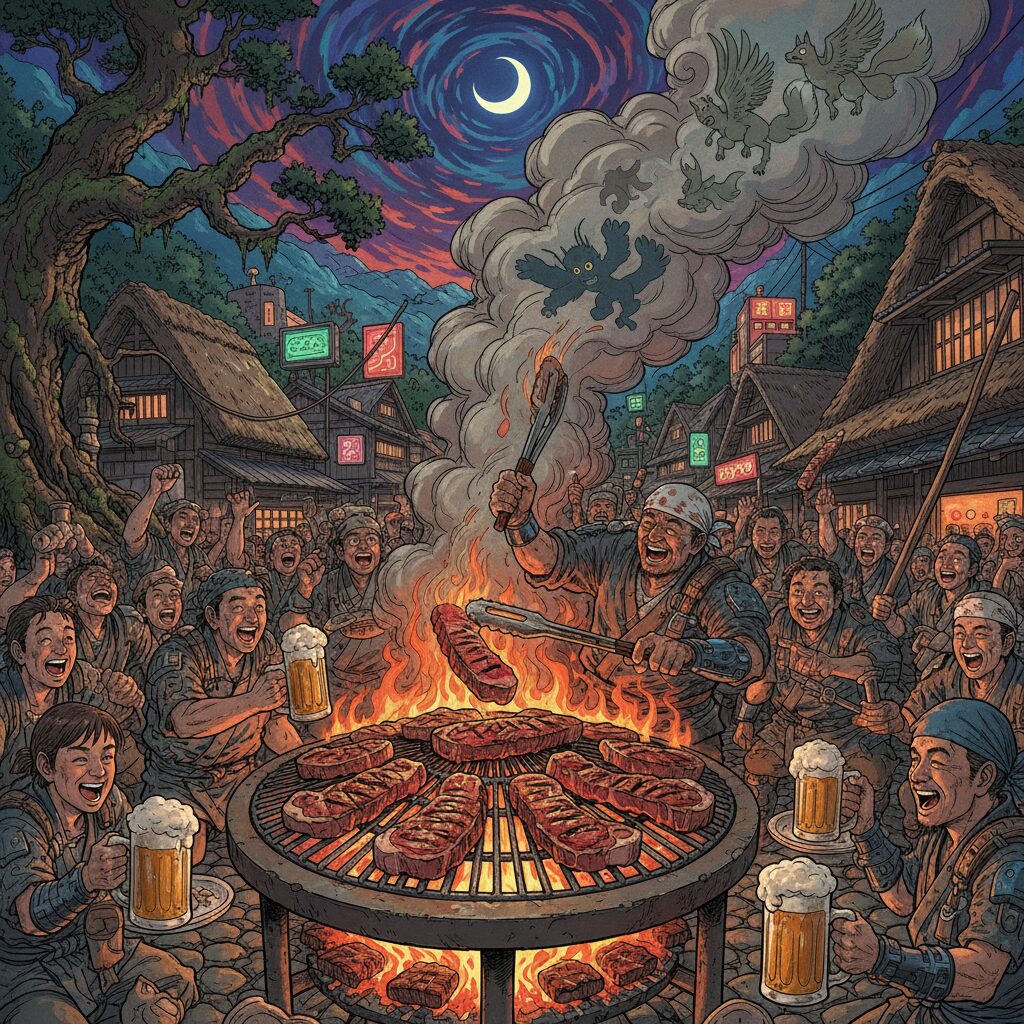
Alright, you’ve absorbed the history and caught the vibe; now let’s dive into the mouthwatering details. Experiencing Tono Jingisukan is a ritual, and whether you opt for the full DIY bucket experience or visit a legendary local spot, there’s a rhythm to it—a method to the madness that transforms it from a simple meal into a rich cultural event. Let’s break down the perfect Tono grill-down.
Step One: Pick Your Champion at the Butcher Shop
The journey starts at the butcher (`niku-ya`). This isn’t like grabbing a flimsy pre-packaged tray of meat at a supermarket. In Tono, butcher shops such as the iconic Anbe or Tono Shoei are sacred places. Walking inside feels like stepping back in time. The air is cool, scented with fresh meat and savory marinades. Glass counters display glistening cuts of lamb and mutton, while the butchers, masters of their craft, are there to guide you.
Your first big decision is lamb or mutton? Lamb (`ramu`) is younger, tenderer, and milder in flavor, making it a great choice for first-timers. Mutton (`maton`), from older sheep, is the traditional favorite, boasting a richer, deeper, more robust taste that true enthusiasts cherish. It has character. My recommendation? Get a bit of both and taste the difference. Next, choose marinated (`aji-tsuki`) or non-marinated (`nama`). The marinated meat is soaked in the shop’s signature `tare`—a secret soy sauce-based blend with hints of apple, ginger, and garlic. It’s a flavor explosion. The non-marinated option highlights the pure taste of the meat, perfect for dipping in sauce while eating. Again, the savvy move is to sample both.
Don’t forget the veggies! You’ll buy these at the butcher as well. The classic lineup includes heaps of bean sprouts (`moyashi`), sliced onions, and bell peppers. Some shops also offer cabbage or other seasonal greens. And crucially, grab a chunk of lamb fat—not to eat, but as your grilling medium, the secret to unlocking incredible flavor.
Step Two: The Ritual of the Grill
Once you’ve gathered your ingredients and your legendary bucket and nabe, find your spot and get set up. Light the solid fuel in the bucket, place the cast-iron nabe on top, and wait for it to reach a scorching temperature. This is the moment of truth.
Take a glorious chunk of lamb fat and rub it all over the dome of the hot grill. It immediately starts to sizzle and melt, its liquid gold flowing down the sides into the moat around the pan. This not only oils the grill but also imparts a rich, savory base flavor. Now, pile the vegetables—the onions, peppers, and bean sprouts—into the moat encircling the dome. They’ll cook slowly, steaming in the meat juices that will soon drip down.
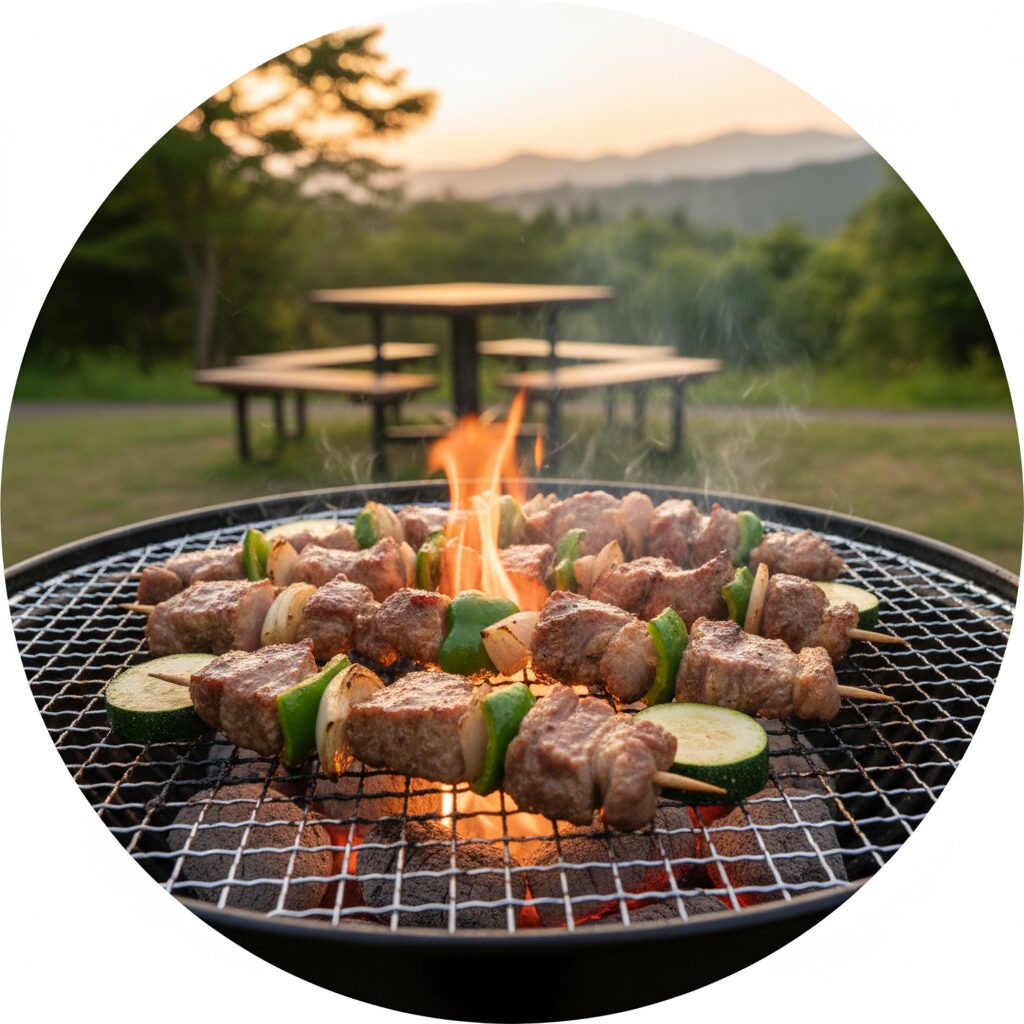
The star, the meat, is placed on the very top of the dome, the hottest spot on the grill. Lay the slices down and listen for that gratifying tssszzz. The sound and the fragrant plume of smoke create pure sensory joy. The dome-shaped nabe is a stroke of genius: as the meat cooks, its fat and juices run down the sides, basting the veggies below. The vegetables essentially get poached in a smoky, flavorful lamb broth. It’s brilliant culinary engineering.
Step Three: The Feast and the Grand Finale
Don’t overcook the meat. A minute or two per side is usually enough, especially for thinner slices. Grab a piece with your chopsticks, dip it in the `tare` if it’s un-marinated, and savor it. The combination of tender, smoky meat and crisp, savory-sweet vegetables is superb. Pair it with a cold beer or a sip of local sake, and you’ve reached Tono nirvana.
The meal isn’t finished when the meat is gone. The true expert’s move is the `shime`, or finale. Toss a block of udon or yakisoba noodles into the moat of the nabe, which by now is filled with a luscious mixture of concentrated meat juices, caramelized sauce, and cooked-down veggies. Stir-fry the noodles in this flavor-packed broth until they absorb it all. This final dish—known as `yakiudon` or `yakisoba`—is arguably the best part of the experience. It’s an umami explosion that ensures no drop of deliciousness is wasted. It perfectly embodies Tono’s resourceful, waste-not-want-not spirit, and it’s unbelievably good.
Not a DIYer? Tono’s Top-Tier Jingisukan Joints Have You Covered
While the bucket barbecue epitomizes the quintessential Tono experience, sometimes you just want to sit back, relax, and let the experts handle the fire. Don’t worry—Tono is full of legendary Jingisukan restaurants, each boasting its own history, secret sauce, and devoted local following. These spots aren’t just places to eat; they serve as community hubs and institutions where the story of Tono’s soul food is shared every night.
Jingisukan no Anbe: The Original Legend
If you ask anyone in Tono where to find the best Jingisukan, nine times out of ten, they’ll direct you to Anbe. This place is the original, a true institution. What began as a butcher shop has evolved into the town’s most cherished Jingisukan restaurant. The vibe inside is pure, unpretentious Showa-era authenticity, with simple wooden tables, well-worn seats, and an atmosphere infused with the rich aroma of decades of grilled lamb. The scent greeting you at the door—a potent blend of sizzling meat, caramelized soy sauce, and charcoal—is intoxicating. It’s the signature fragrance of Tono.
Anbe is renowned for its fresh, top-quality meat and its perfectly balanced, secret marinade. The flavor is slightly sweet, deeply savory, and utterly addictive. You receive a sizzling nabe and plates piled high with meat and vegetables, cooking it yourself right at your table. It’s a social, interactive experience. Visitors range from local families celebrating birthdays to groups of old friends catching up over beers and mutton. Dining at Anbe feels like being welcomed into a local secret, a rite of passage for any Tono visitor. Pro tip: The smoke is intense and will cling to your clothes, so avoid dressing in your finest. Think of the smoky scent as a delicious memento.
Marumatsu Jingisukan: The Contender with a Devoted Following
Though Anbe may hold the fame, Marumatsu is another major player in Tono’s Jingisukan scene, boasting its own fervent fanbase. It also functions as both a butcher shop and restaurant, guaranteeing the freshest meat possible. The atmosphere is similarly casual and vibrant, focused purely on the food, with no distractions.
Fans of Marumatsu often point to the `tare` sauce as the deciding factor. Each restaurant fiercely guards its recipe, and the subtle variations fuel lively rivalries. Marumatsu’s sauce is said to be punchier, with a stronger ginger or garlic presence. The best way to pick a side? Try them both. A Jingisukan crawl is a perfectly valid Tono travel plan. What makes places like Marumatsu and Anbe truly special is their unwavering quality and deep roots in the community. These are not fleeting trends but timeless classics that have nourished the town for generations. The flavors reflect Tono’s rich history.
The Atmosphere: Beyond Just a Meal
Eating at a Tono Jingisukan restaurant is an immersive experience. It’s loud, filled with the buzz of happy diners and the constant sizzle from every grill. It’s smoky—a fragrant haze filling the air, leaving you carrying the scent of barbecue with you. And it’s deeply communal. You share a grill, pass around plates, and pour drinks for one another. It breaks down barriers. Eating here calls for gusto—there’s no room for pretension when you’re skillfully handling sizzling mutton with chopsticks. It’s hearty, honest, and profoundly satisfying—a perfect mirror of the town itself.
Your Tono Playbook: Nailing the Logistics
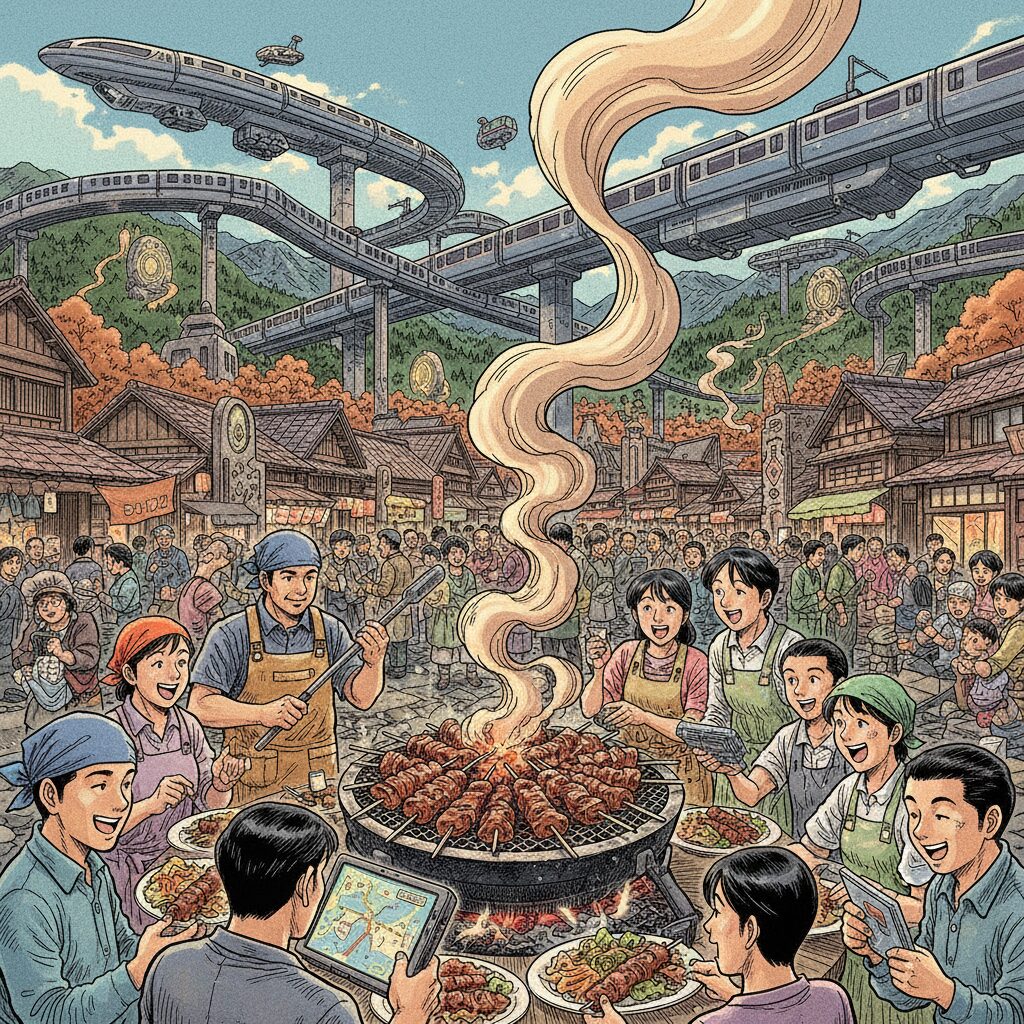
Feeling drawn to the misty mountains and the smoky charm of grilled lamb? Tono might be a bit off the beaten path, but that’s a big part of its appeal. Getting there and getting around is an adventure itself, but with some planning, it’s easy. Here’s the scoop on how to make your Tono pilgrimage a reality.
Getting There: The Journey is Part of the Experience
Your main entry point to the region is the Tohoku Shinkansen (bullet train). From Tokyo, catch the Hayabusa or Yamabiko train to Shin-Hanamaki Station. This leg of the trip is a smooth, futuristic ride lasting about two and a half to three hours. From Shin-Hanamaki, transfer to the JR Kamaishi Line. This is where the real magic starts.
The Kamaishi Line is a local train that feels like something out of an anime. It’s a single-track route winding through lush river valleys and dense, forested mountains. The train, usually a quaint two-car setup, moves at a relaxed pace, offering stunning views through its large windows. The journey from Shin-Hanamaki to Tono Station takes about an hour, perfectly shifting you from the fast modern world to the timeless rhythm of Tono. Keep an eye out for the SL Ginga, a vintage steam locomotive that sometimes runs on weekends along this line, delivering a truly epic, retro travel experience.
When to Go: Planning Your Trip for the Best Experience
Tono is beautiful all year, but each season brings its own unique charm.
Spring (late April to May) is arguably the best time to visit for one reason: hanami Jingisukan. Cherry blossoms cover the town’s parks and riverbanks, and locals celebrate by grilling Jingisukan under the pink petals. The stunning scenery combined with delicious food creates an unforgettable experience.
Summer (June to August) bursts with vibrant greenery. Rice paddies are lush, mountains full of life, and the long days are perfect for exploring the countryside by rental bike. It’s prime time for a riverside BBQ, with the cool breeze from the Sarugaishi River cutting through the summer heat.
Autumn (October to November) is breathtaking. The mountains blaze with red, orange, and yellow foliage, providing a dramatic setting for your folkloric adventures and, naturally, your hearty grilled mutton feast. The crisp autumn air makes the warmth of the grill feel even cozier.
Winter (December to February) is quiet and magical. Tono is coated in a thick blanket of snow, turning the landscape into a silent, monochrome wonderland. Though outdoor Jingisukan might not be possible, cozying up in a warm, smoky restaurant for a comforting meal is the perfect way to embrace the cold.
First-Timer Tips: A Few Handy Pointers
To ensure a smooth trip, keep a few things in mind. Renting a bike near Tono Station is a great way to explore main sights in the central basin, like Kappa Buchi and Tono Furusato Village. The terrain is relatively flat, and the scenery is beautiful. For exploring farther out, local buses or renting a car might be necessary. Accommodation ranges from business hotels near the station to traditional ryokan (Japanese inns) and minshuku (family-run guesthouses) offering a deeper cultural experience. Booking ahead is wise, especially during busy times like Golden Week or the cherry blossom festival. Finally, embrace the Jingisukan aroma—it’s a badge of honor and proof you’ve truly experienced the heart of Tono.
More Than a Meal, It’s a Mood
As the last of the udon noodles are scraped from the grill and the embers in the bucket begin to die down, you’re left with more than just a full stomach. You’re left with a feeling—a deep appreciation for a place that transformed a crisis into culture, and a simple meal into a powerful symbol of community. Tono’s Jingisukan is the real deal. It’s not a tourist trap or a passing culinary fad; it’s a living, breathing piece of history served sizzling on an iron plate.
This isn’t just about the taste, though the taste is undeniably epic. It’s about the entire ritual: the trip to the old-fashioned butcher, the friendly exchange, the ingenious simplicity of the bucket grill. It’s about sharing food and stories beneath an open sky, surrounded by landscapes that have inspired legends for centuries. It’s a taste of the Tono spirit—resilient, resourceful, and deeply connected to the land and to one another.
So when you’re planning your next trip to Japan, dare to stray from the well-trodden path. Take the local train into the misty heart of Iwate. Seek out the kappa by the stream, wander among old farmhouses, and then, follow the smoke. Find a spot by the river, fire up a bucket, and join a tradition that is as delicious as it is meaningful. You won’t just be having a meal; you’ll be tapping into the very soul of Tono, one perfect, smoky, unforgettable bite at a time.