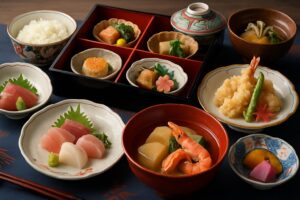
Alright, let’s get real for a sec. You think you know markets? Maybe you’ve hit up a farmer’s market for some organic kale or browsed a cute little fish market by the pier. That’s cool, that’s chill. But I’m here to tell you about a place that will completely rewire your brain and your tastebuds. We’re talking about Omicho Market in Kanazawa, a spot so legendary, so buzzing with life, it’s basically the beating heart of the city’s entire food scene. Forget everything you thought you knew, because this place is on a whole other level. It’s been dubbed “Kanazawa’s Kitchen” for over three centuries, and trust me, it’s a title that is 100% earned. This isn’t just a place to buy fish; it’s a full-body, sensory overload experience of the best kind. It’s where grandmas with shopping trolleys hustle past wide-eyed travellers, where the shouts of vendors create a symphony of commerce, and where the air is thick with the briny, sweet perfume of the Sea of Japan. This is the source, the epicentre of Kanazawa’s world-famous culinary reputation, and diving in is an absolute non-negotiable for anyone visiting this part of Japan. Get ready to have your mind blown and your stomach filled, because Omicho Market is, in a word, epic.
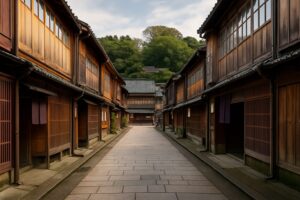
After experiencing the vibrant energy of Omicho Market, consider exploring the historic charm of Kanazawa’s Chaya districts for a complete cultural journey.
The Vibe Check: What’s Omicho Market Even Like?
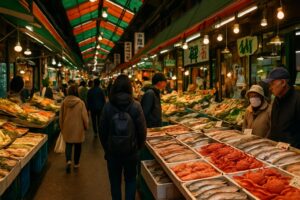
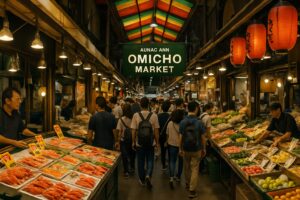
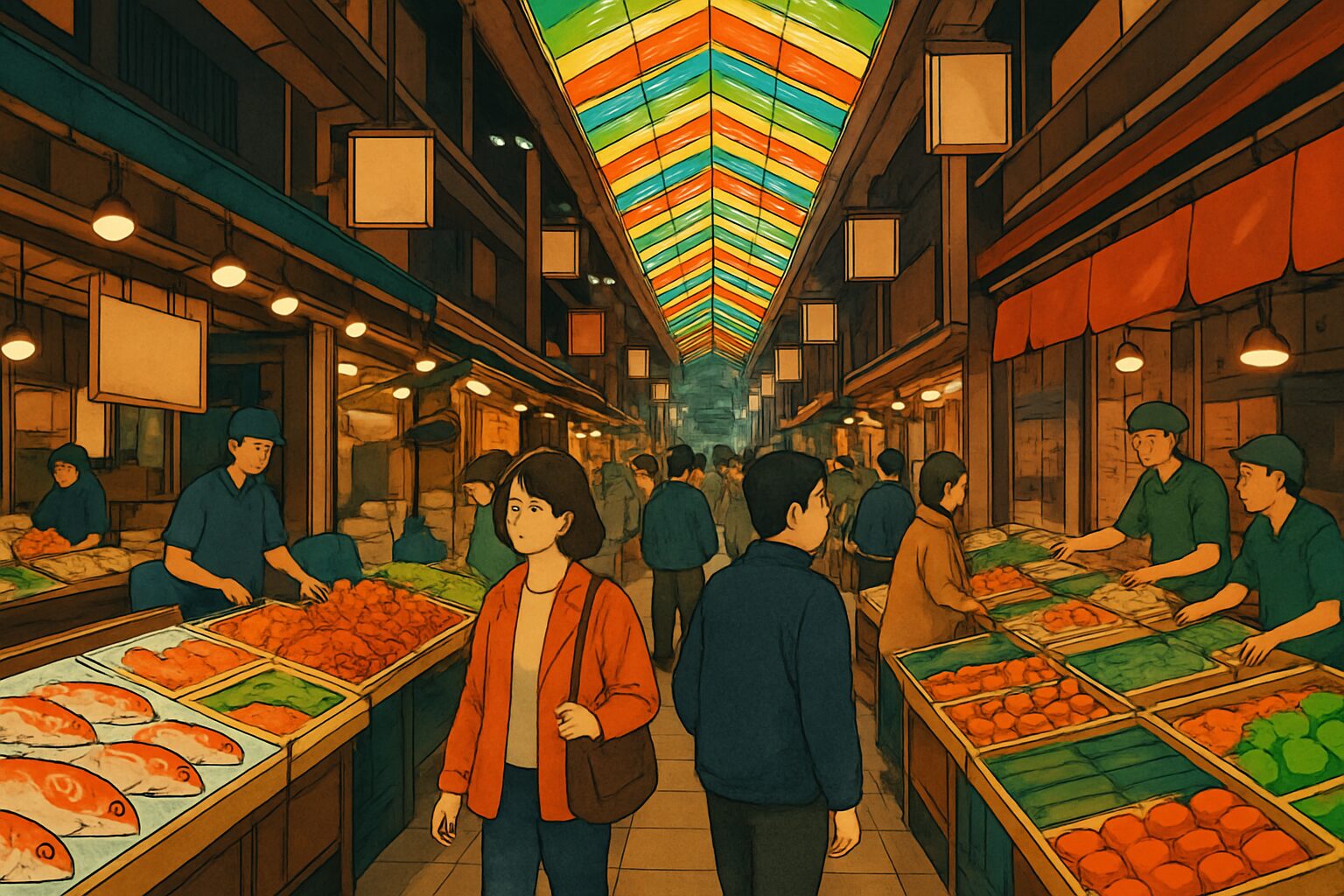
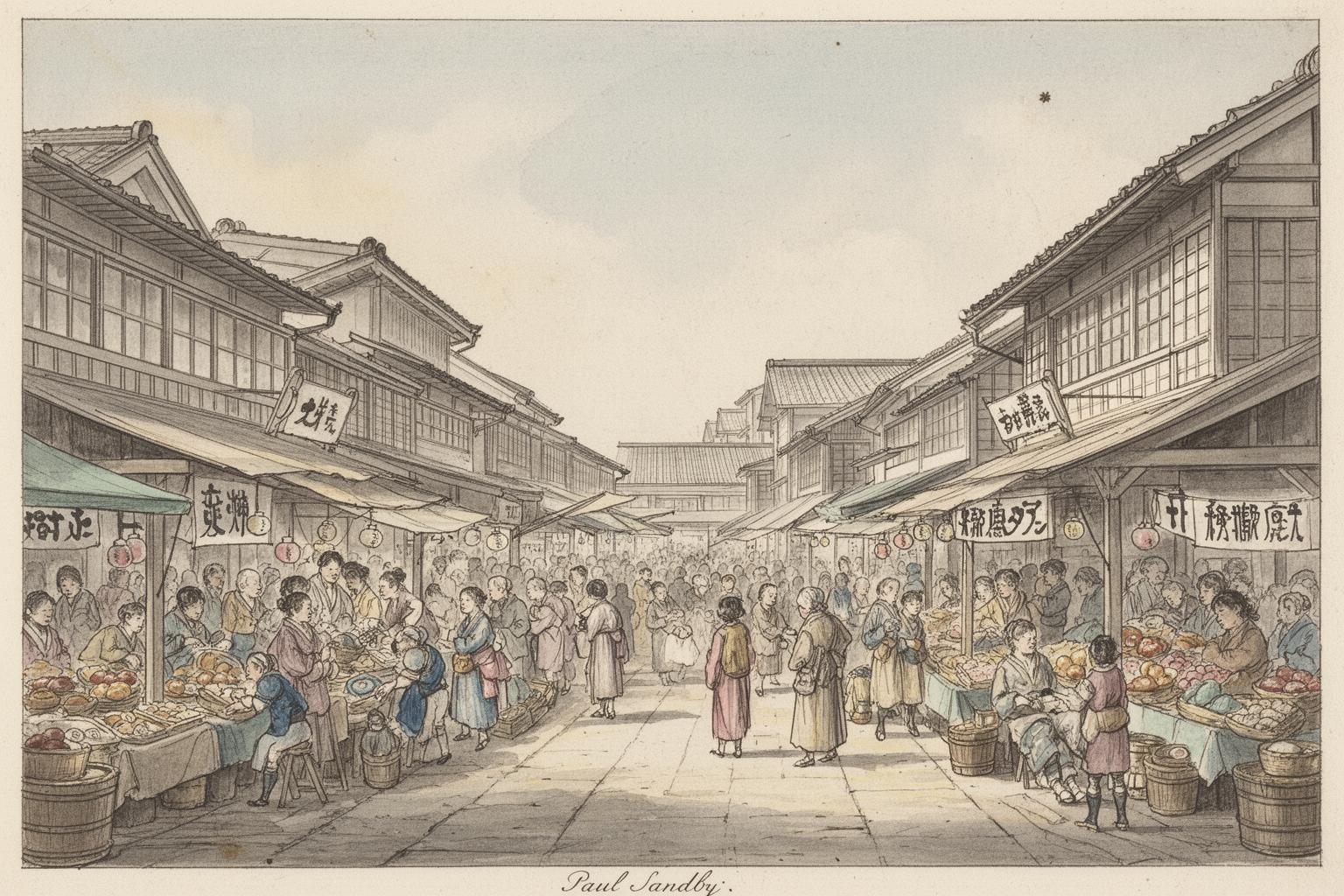
Entering Omicho Market is like stepping onto a film set the moment the director shouts “Action!” and a hundred different stories unfold simultaneously. It’s a beautifully chaotic maze of covered alleyways, a sensory overload that hits you as soon as you walk beneath its entrance signs. The first thing that strikes you is the sound. It’s more than just noise; it’s a living, breathing soundtrack. There’s the lively, rhythmic chorus of “Irasshaimase! Irasshaimase!” (Welcome! Come on in!), the friendly calls of vendors promoting their daily specials. You’ll catch the clatter of knives on wooden boards, the sizzle of something delicious grilling, the shuffle of hundreds of feet on worn concrete floors, and the excited chatter of locals and tourists alike. It’s a symphony of commerce and community that feels both timeless and vibrantly modern.
Then the smells hit you. It’s an intoxicating mix that tells the market’s story. The dominant note is the clean, salty scent of the ocean—the unmistakable fragrance of unbelievably fresh seafood. But woven within that are many other aromas. There’s the smoky, savory scent of grilled eel and squid drifting from a street food stall, the sweet, earthy aroma of local Kaga vegetables piled high, the sharp, tangy fragrance of giant wooden barrels brimming with colorful pickles, and the delicate floral notes from flower shops tucked away in quiet corners. It’s not a fishy odor; it’s the scent of freshness, of products pulled from the sea and earth just hours before.
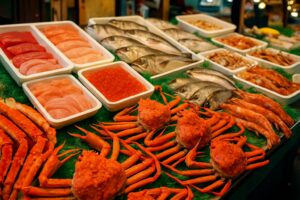
Visually, Omicho is a feast for the eyes. The market bursts with color and texture. Stalls are piled high with glistening fish, their scales shimmering under fluorescent lights. You’ll see mountains of crimson snow crabs, their long legs stacked like firewood. Trays of creamy, golden sea urchin roe sit beside iridescent sweet shrimp and pearly white scallops. The seafood section gives way to stalls overflowing with the colors of the earth: deep purple Kaga nasu eggplants, vibrant orange Gorojima Kintoki sweet potatoes, and the stark white of the famously sticky Kaga renkon lotus root. It’s a maze, for sure. One moment you’re on a wide main thoroughfare, the next you’re squeezing down a narrow side alley that feels like a secret passage. The architecture is an eclectic mix of old and new, with sleek modern storefronts next to traditional stalls that seem unchanged for a hundred years. You’ll see old-school fishmongers in rubber boots and aprons expertly breaking down massive tuna with impossibly long knives, right beside trendy little counters selling freshly squeezed juices. The energy is contagious. It’s busy, it’s bustling, but never overwhelming. It’s organized chaos, a place with purpose. You sense the history in the walls, the feeling that this daily ritual of buying and selling, of nourishing the city, has lasted for generations. It’s a living museum, but one where you’re invited to touch, taste, and join the action.
The Main Event: Seafood That’s Straight-Up Fire
Let’s be honest—you’re here for the seafood, and Omicho Market delivers an experience that is truly legendary. Its close proximity to the Sea of Japan ensures the catch is incredibly fresh, with an astonishing variety. This is not just about eating fish; it’s about savoring it in its purest, most delicious form. Whether you’re a dedicated foodie or a curious newcomer, a seafood adventure awaits you here.
Kaisen-don: The Ultimate Glow-Up Bowl
If there’s one dish that embodies the Omicho experience, it’s the kaisen-don. This is no ordinary seafood bowl; it’s a masterpiece. Picture a bowl of perfectly cooked, slightly warm sushi rice, completely hidden beneath a breathtaking mosaic of the freshest sashimi you can imagine. Think thick, melt-in-your-mouth slices of fatty tuna (toro), glistening salmon, firm and flavorful yellowtail (buri), sweet, creamy scallops (hotate), and generous heaps of shimmering salmon roe (ikura) that burst with salty goodness. Often, these bowls are topped with local specialties like sweet shrimp (amaebi) and translucent slices of squid (ika). From tiny hole-in-the-wall counters to larger eateries on the second floor, the market’s restaurants compete to craft the most impressive and delicious kaisen-don. You’ll find options for every budget, from simple classic combinations to extravagant piles of premium ingredients like sea urchin (uni) and crab meat. Eating kaisen-don at Omicho is a rite of passage, capturing the essence of the Sea of Japan in one unforgettable meal.
Oysters (Kaki): A Briny Shot of the Ocean
As you wander through the market, you’ll naturally be drawn to stalls piled high with fresh oysters. These are not just for taking home—they’re meant to be enjoyed immediately. For a few hundred yen, you can have a large, juicy oyster shucked right before your eyes. With a swift, skilled cut, the vendor pops open the shell to reveal a plump oyster nestled in its natural liquor. While soy sauce or ponzu is offered, the purest way to enjoy it is raw, perhaps with a slight squeeze of lemon. The flavor is a pure ocean burst—a powerful hit of brine followed by a creamy, subtly sweet finish. It’s an experience that feels both primal and refined. If you’re wary of raw oysters, many stalls also offer grilled oysters cooked over charcoal until warm and smoky, often topped with butter or cheese—a perfect, satisfying snack to keep you energized while exploring.
Snow Crab (Kani): The Winter King
If you’re lucky enough to visit Kanazawa between November and March, you’re in for a real treat. It’s snow crab season, and Omicho Market becomes a crustacean kingdom. The star here is the male Zuwaigani, recognized by a light blue tag confirming its origin from Ishikawa Prefecture. These crabs are prized for their long, elegant legs, packed with exquisitely sweet and delicate meat. You’ll find them displayed live in tanks or freshly boiled to a vivid crimson. While purchasing a whole crab can be pricey, many stalls sell crab legs or portions to eat on the spot. Don’t overlook the female snow crab, the Kobako-gani. Though smaller, she’s a flavor treasure chest, with a shell full of rich, dense roe called uchiko (unfertilized orange eggs) and the texture-rich sotoko (fertilized eggs on the shell’s exterior). Eating Kobako-gani is an intense, flavorful experience cherished by locals and available in kaisen-don, as sushi, or simply steamed.
Nodoguro: The White-Fleshed Toro
While tuna often steals the spotlight, Kanazawa boasts its own superstar fish: the Nodoguro, or Blackthroat Seaperch. This deep-sea fish is so rich and fatty it’s often dubbed the “toro of white fish.” Its name means “black throat,” referring to the dark color inside its mouth. Grilled simply with salt (shioyaki), its skin crisps perfectly while the flesh remains tender, juicy, and bursting with rich, buttery flavor that’s downright sublime. You’ll find it served whole in restaurants or skewered for a quick snack at the market. It’s also a premium sushi choice that highlights its creamy texture. Though it commands a higher price, Nodoguro is an iconic Kanazawa delicacy well worth every yen.
Street Food Snacking: The Tabe-Aruki Culture
One of the best ways to experience Omicho is through tabe-aruki, the delightful Japanese practice of eating while strolling (or more precisely, standing and eating near the stall). The market is a haven for this. Everywhere you look, vendors are grilling, frying, and steaming single servings that let you sample a wide range of flavors. You can grab a skewer of giant, tender grilled squid (ikayaki) brushed with a sweet and savory soy glaze or a smoky, rich skewer of grilled eel (unagi). Vendors also offer fresh sea urchin (uni) served right in its spiny shell—a decadent spoonful of creamy, briny heaven. For something warm and comforting, try the crab cream croquettes (kani cream korokke), crispy on the outside with a molten, creamy crab filling inside. There are also stalls selling fresh fruit, juices, and soft-serve ice cream to provide a sweet contrast to all the savory seafood. This is the ultimate way to immerse yourself—wandering from stall to stall, following your nose and cravings, crafting your own personalized tasting journey.
More Than Just Fish: The Full Omicho Experience
While seafood is undeniably the main attraction, seeing Omicho merely as a fish market would overlook the bigger picture. This is Kanazawa’s pantry, stocked with all the other ingredients that make the region’s cuisine truly special. Venturing beyond the seafood stalls reveals a deeper connection to the land and culinary traditions of the Kaga region.
Kaga Vegetables: The Pride of the Prefecture
Step away from the shimmering fish, and you’ll enter a world of vibrant, earthy colors. Here, stalls offer Kaga vegetables, a collection of 15 traditional, locally grown heritage varieties cultivated in this area for centuries. These vegetables are the unsung heroes of Kanazawa cuisine. You’ll encounter the Kaga renkon, a lotus root prized for its starchy, sticky texture and subtle sweetness, ideal for tempura or simmered dishes. There’s the Gorojima kintoki, a slender sweet potato with striking reddish-purple skin and golden flesh, incredibly sweet and nutty when roasted. Then, the unique Kaga futokyuuri—a fat cucumber more suited for pickling and cooking than eating raw—and the Gensuke daikon, a short, stout radish with a deep, spicy flavor. Even if you don’t cook them yourself, seeing these distinctive vegetables and appreciating their significance to local food culture adds depth to your visit. Some stalls may even offer small samples or sell snacks made from these veggies.
Tsukemono and Preserves: A World of Pickles
No Japanese meal is complete without tsukemono—pickles—and Omicho boasts stalls that celebrate this craft. You’ll be welcomed by giant wooden barrels and glass cases filled with a vibrant assortment of pickled vegetables. The variety is remarkable. There’s the classic pickled daikon (takuan), bright yellow and crunchy. Sour, salty pickled plums (umeboshi), a bento staple, are also available. You’ll find vegetables pickled in rice bran (nukazuke), miso (misozuke), and sake lees (kasuzuke), each technique lending a unique and complex flavor. A particularly renowned local pickle is kabura-zushi, made by fermenting salted yellowtail between slices of turnip with koji (malted rice). It offers a sophisticated and pungent flavor that truly embodies the region’s preservation traditions. Vendors are usually happy to offer a small taste, letting you explore a spectrum of salty, sour, sweet, and umami notes. These pickles make excellent, authentic souvenirs.
Sake and Local Brews: The Perfect Pairing
Ishikawa Prefecture is a major player in the sake world, blessed with premium rice and pure mountain water. Omicho Market features liquor stores and stalls showcasing these local brews. Here, you have a great opportunity to explore various sake styles from the region—from crisp and dry to rich and aromatic. Knowledgeable staff can assist you in finding a bottle that matches your taste, whether you’re an experienced sake drinker or a beginner. A bottle of local sake from a brewery you won’t easily find elsewhere makes a wonderful souvenir. And what could be better than pairing a bottle of crisp local sake with fresh sashimi and oysters you just purchased at the market? It’s the ultimate foodie power move.
Navigating Omicho Market Like a Pro: The Lowdown
Omicho can feel a bit overwhelming initially, but with a few insider tips, you’ll be navigating its busy alleys like a seasoned local. A little preparation goes a long way toward making your visit smooth, delicious, and completely stress-free.
Getting There: Your Transit Plan
Omicho Market is very centrally located, making it easy to reach. If you’re arriving at Kanazawa Station, you have several convenient options. The simplest is to take one of the frequent city buses. Head to the east exit of the station and find the bus loop. The Kanazawa Loop Bus (both right and left loops), along with many other local buses, will get you there. Just get off at the Musashigatsuji/Omicho Market bus stop. The ride is short, usually under 10 minutes. If the weather is nice and you’re up for a bit of exercise, it’s also a pleasant and manageable walk. It’s about 15-20 minutes on foot from Kanazawa Station, and it’s a straight route down the main road, so you won’t get lost. This is a great way to get a feel for the city as you head toward the market. Omicho is also within easy walking distance of other major sights like Kanazawa Castle Park and the Higashi Chaya District, making it easy to fit into a day of sightseeing.
Best Time to Visit: The Early Bird Gets the Uni
Timing is key at Omicho. To experience the market at its liveliest, aim to visit in the morning. The market officially opens around 9:00 AM, which is when it’s at its most vibrant. Vendors are fully stocked, seafood is at its freshest, and local chefs and residents are doing their daily shopping. This is the best time for people-watching and soaking up the authentic atmosphere. The lunch rush kicks off around 11:00 AM and can get quite busy, with long lines forming at popular kaisen-don restaurants. If you want to have lunch, either go early (around 11:00 AM) or later (after 1:30 PM) to avoid large crowds. Keep in mind that Omicho is a morning market — many fresh produce and fish stalls start closing by late afternoon, around 4:00 or 5:00 PM. Arriving too late means missing much of the action. Also, note that many stalls and restaurants close on Wednesdays, and some on Sundays, so it’s wise to check the calendar before your visit.
Essential Pro Tips for First-Timers
- Bring Cash: While Japan is becoming more card-friendly, many smaller, older stalls at Omicho Market still only accept cash. To avoid awkward moments when paying for that delicious grilled scallop, carry a reasonable amount of yen. It makes every transaction smoother and faster.
- Do a Lap First: It’s tempting to buy the first amazing thing you see—resist the urge! Take a full lap around the market first to get a sense of what’s available, compare prices, and spot the stalls that look most appealing. This helps you make informed choices and avoid filling up before seeing everything.
- Follow the Queues: In Japan, a line almost always signals something worth trying. If you see locals patiently waiting at a particular food stall or restaurant, it’s a good sign the food is exceptional. Don’t be shy; join the queue, and you’ll likely enjoy something truly special.
- Point and Smile: Don’t speak Japanese? No worries. Vendors at Omicho are experienced with international visitors. A simple point, a smile, and holding up fingers to show quantity works perfectly. Saying a friendly “Kore, kudasai” (This, please) will also be appreciated.
- Mind Your Manners: The market can get crowded. Be aware of your surroundings, avoid blocking narrow pathways, and be considerate of people trying to pass. When eating street food (tabe-aruki), the polite custom is to stand beside the stall where you bought it, eat there, and dispose of trash in the bins before moving on. Walking and eating simultaneously is generally frowned upon.
A Slice of History: Why Omicho is So Legit
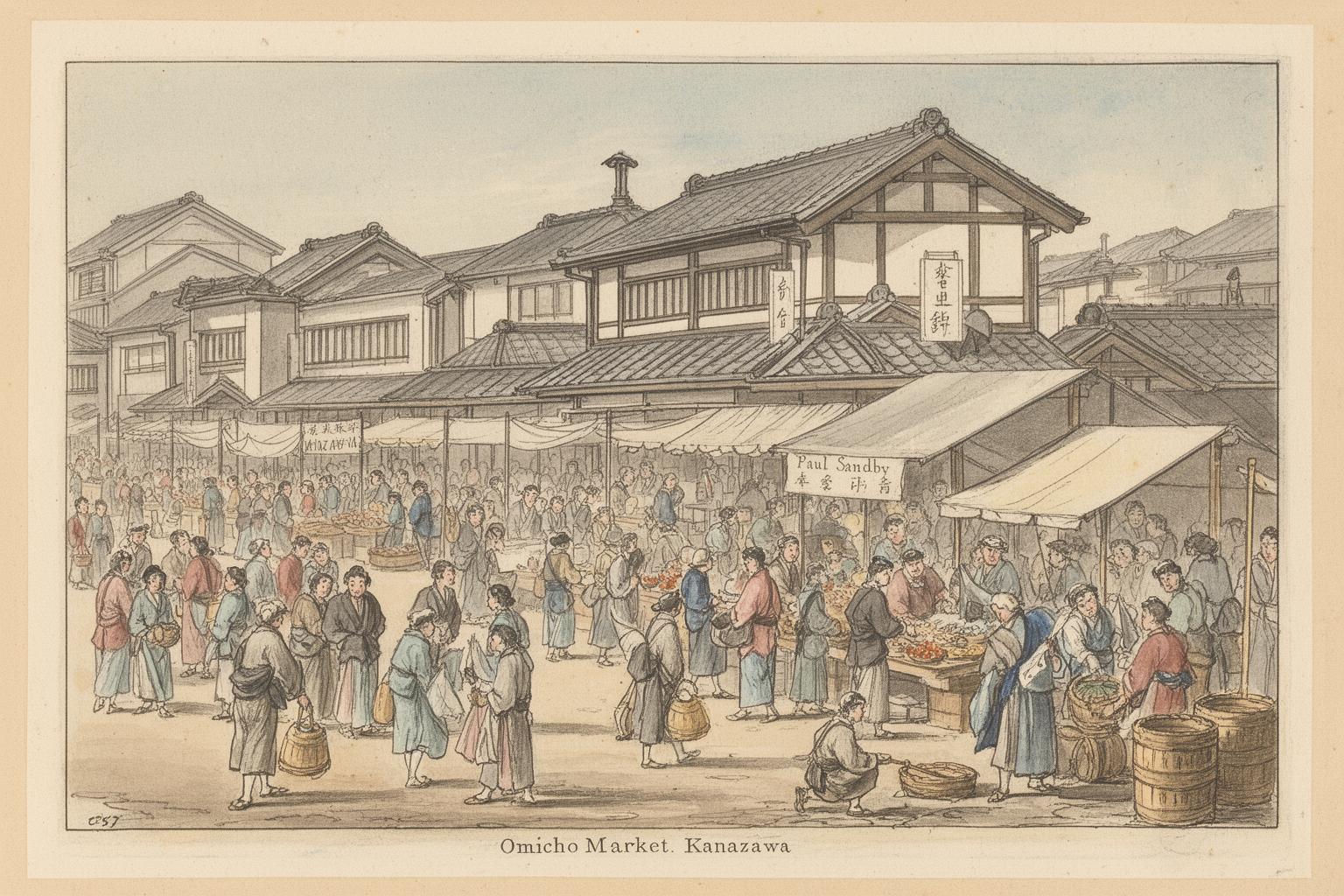
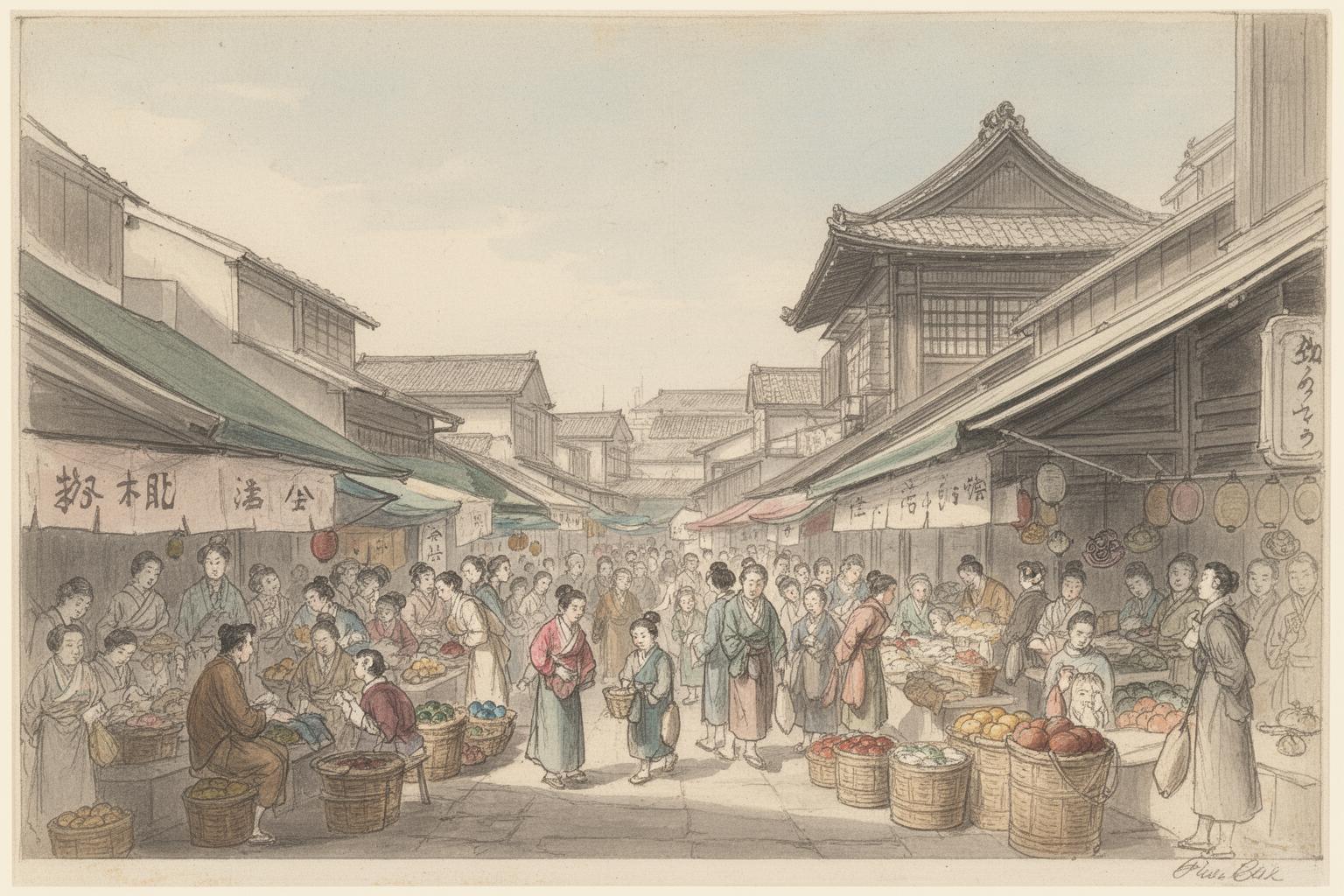
Omicho Market is not a recently developed tourist spot; it is a place rich in centuries of history, intricately woven into Kanazawa’s identity. Its origins date back to the Edo Period. Although the market officially began in its current form in 1721, informal markets had been held in the area long before that. Its location was strategic, serving as a bustling crossroads just outside Kanazawa Castle’s main gate.
During the Edo Period, Kanazawa was governed by the powerful Maeda Clan, who ruled the Kaga Domain, the wealthiest domain in Japan after the Shogun’s. The Maeda lords were avid patrons of the arts and culture, including cuisine. They demanded the finest ingredients, and Omicho Market met these expectations by supplying the castle kitchens with fresh fish from the Sea of Japan, distinctive Kaga vegetables from the surrounding plains, and other delicacies. The market became the source of food for both samurai and commoners, earning its reputation as “Kanazawa’s Kitchen” (Kanazawa no Daidokoro).
Over the centuries, the market has endured fires, societal shifts, and Japan’s modernization. It was an essential source of sustenance for the city’s residents during the challenging post-war era. Naturally, the market has evolved. The current main building, Omicho Ichibakan, was redeveloped in the 2000s, incorporating modern facilities, restaurants, and shops on the upper floors. Yet, despite these updates, the spirit of the old market endures. Many businesses remain family-run, passed down through generations. The fishmonger preparing your sashimi today could be the great-grandson of the man who supplied fish to samurai centuries ago. This remarkable continuity gives Omicho its soul. It isn’t a recreation; it is a living, evolving institution that has nourished Kanazawa for over 300 years. When you stroll through its crowded lanes, you are walking through history, taking part in a daily ritual that connects you to generations past.
So, Is Omicho Market Worth the Hype?
Let me put it this way: absolutely, one hundred percent, yes. Omicho Market is far more than just a place to eat. It’s a full immersion into the heart and soul of Kanazawa’s vibrant food culture. It’s loud, a bit chaotic, and utterly, unforgettable. Here, you can see, smell, and taste the incredible bounty of land and sea that has shaped the region for centuries. It’s a place where you can enjoy a life-changing bowl of kaisen-don for lunch, snack on a perfectly grilled oyster, and chat with a third-generation pickle maker—all within just a few hours.
This isn’t a polished, sterile tourist trap. It’s a genuine, working market with dirt under its fingernails and a story around every corner. It’s a place to be adventurous. Try something you’ve never heard of. Point at that strange-looking shellfish and give it a try. Trust the vendor who recommends a particular cut of fish. Let your senses lead you through the maze of stalls. Whether you spend an hour grabbing a quick snack or half a day feasting your way from one end to the other, a visit to Omicho Market is an essential Kanazawa experience. It’s a delicious, exhilarating, and authentic taste of Japan that will linger with you long after you’ve left. So go on, dive in. Kanazawa’s Kitchen is open, ready to blow your mind.