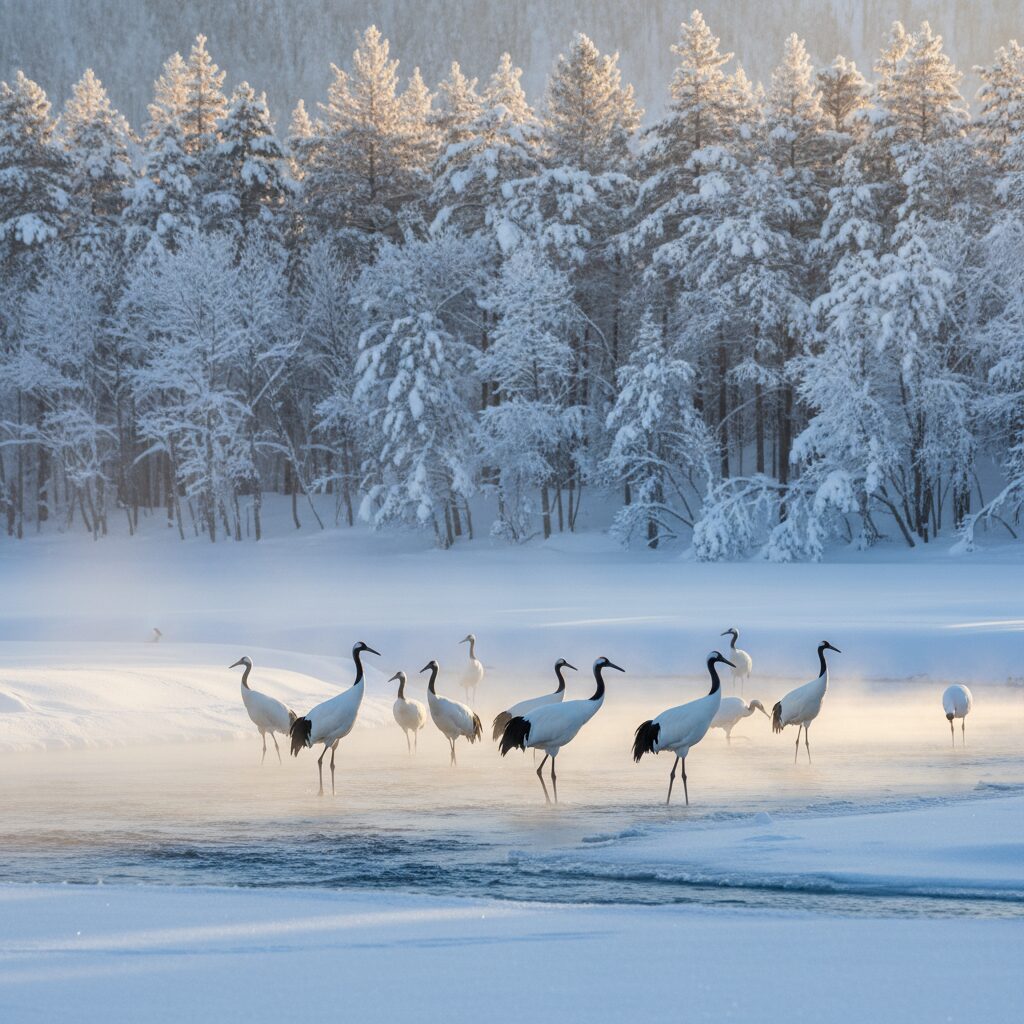
Yo, what’s the deal, wanderlusters and camera warriors! Ever scroll through your feed and see a photo so unreal, so breathtakingly epic, it makes you question reality? Picture this: a landscape blanketed in a thick, pristine layer of pure white snow, so silent you can hear your own heartbeat. Steam rises from a winding river, catching the first golden rays of a shy winter sun. And right there, in the middle of this ethereal scene, are these majestic, impossibly elegant birds. Stark white bodies, jet-black accents, and a crown of fiery red. They’re dancing. Not just moving, but performing an ancient, spellbinding ballet on a stage of ice and snow. This ain’t some CGI fantasy, fam. This is the real deal. This is winter in Tsurui Village, Hokkaido, the undisputed kingdom of the Red-crowned Crane, the legendary Tancho. Forget whatever you thought you knew about winter. Hokkaido’s version is a whole different beast, a level-up of epic proportions, and Tsurui is the VIP lounge where nature’s most iconic supermodels hang out. This isn’t just a trip; it’s a pilgrimage for anyone with a camera, a soul, or a pulse. It’s about to get seriously lit, so grab your gear, bundle up, and let’s drop into one of the most incredible wildlife spectacles on planet Earth. This guide is your all-access pass to capturing the magic, feeling the vibe, and understanding why this little village in northern Japan is a place that will live in your memory, rent-free, forever.
If you’re looking for another epic Hokkaido adventure beyond the cranes, consider exploring the untamed wilderness of the Hidaka Mountains.
The Vibe Check: What’s Tsurui Village Even Like?
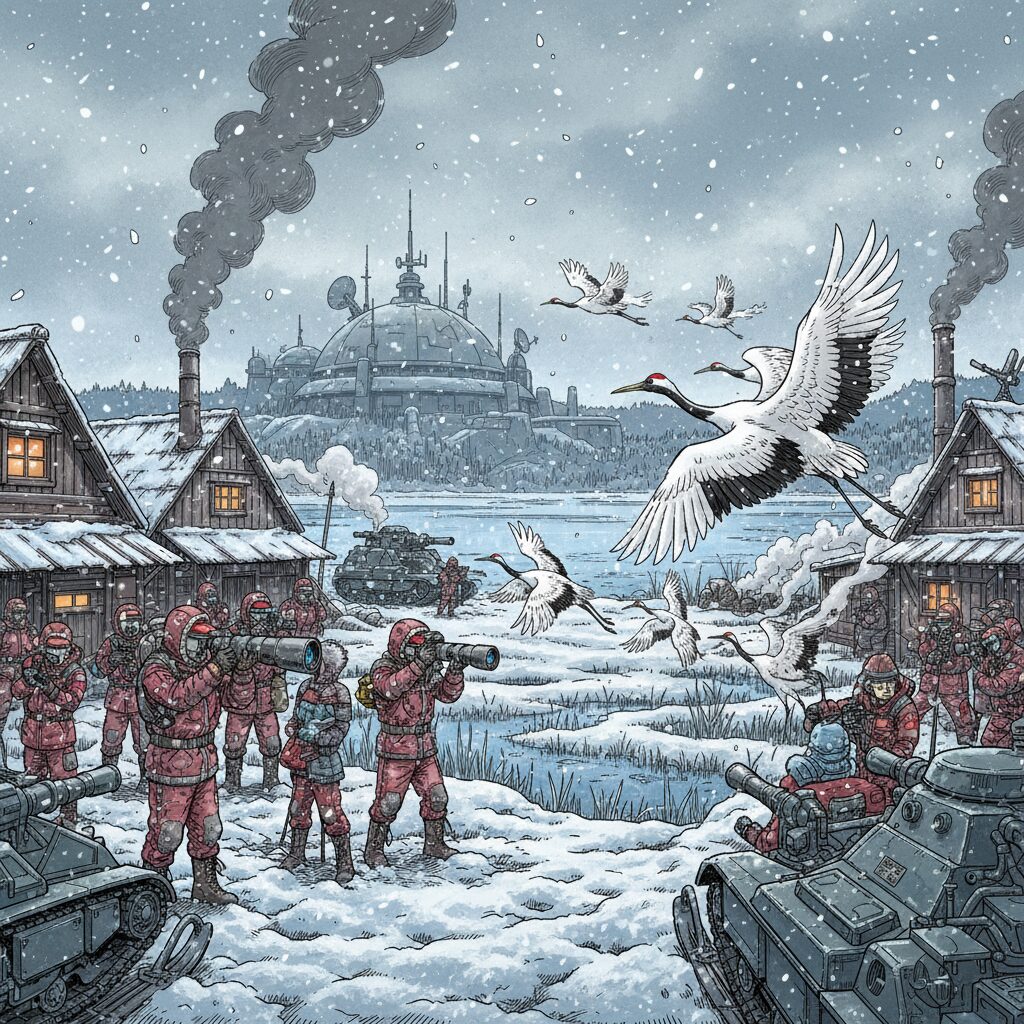
First of all, let’s clear something up. Tsurui Village isn’t your typical bustling tourist hotspot. You won’t find crowded shopping streets, loud arcades, or flashing neon lights here. No, Tsurui exists on a completely different wavelength. The atmosphere is purely calm and unspoiled. It offers a level of serenity that can be almost startling if you’re used to a big city’s chaos. The entire landscape is blanketed in snow, which naturally muffles sound. The result is a deep silence, a quietness that feels ancient and sacred. The air is so cold and pure that every breath seems like a full reset for your body. You’ll see your breath mist in the air, forming brief clouds in the icy atmosphere, and in these small moments, you begin to connect with the raw force of Hokkaido’s winter. The village itself is small and modest, a collection of simple houses and farms with snow piled thick on their roofs. There’s an aura of resilience and balance here, a community that has grown to live in harmony with the harsh yet stunning winters. But the true spirit of the village, the energy that fills the air, comes from the cranes. They are the soul of this place. Locals speak of the Tancho with quiet respect. These aren’t just birds; they are living symbols, officially recognized as a Special Natural Monument of Japan. They embody happiness, longevity, and good luck. Watching them here, in their natural winter habitat, feels less like observing wildlife and more like receiving a royal audience. Among visitors, especially photographers, there’s a shared sense of purpose and quiet reverence. People from all corners of the world stand side by side in the freezing cold, united by their admiration for these magnificent creatures. A silent camaraderie exists, a mutual nod of understanding among strangers who have traveled far to witness this wonder. It’s a place that compels you to slow down, be present, and simply watch. The experience is meditative, a true digital detox where the only screen you’ll want to focus on is your camera’s viewfinder, framing a scene that seems crafted by the gods themselves.
The Main Event: Getting That Perfect Crane Shot
Alright, let’s get down to business. You’re here for the photos—the kind that make your followers drop their jaws. Tsurui is a dreamland for photographers but far from easy. It requires patience, careful preparation, and some know-how. But believe me, the reward is absolutely worth it. The Tancho cranes are incredibly photogenic, and their behaviors—from graceful courtship dances to powerful takeoffs—offer endless chances for stunning shots. Capturing these moments challenges your skills but also delivers one of the most fulfilling photographic experiences imaginable. The trick is knowing where to go, when to go, and what to bring. It’s about tuning into the rhythm of the cranes and the landscape. Think of it as a partnership between you, your camera, and the wild spirit of Hokkaido. You bring the vision and gear; the cranes put on a soul-stirring performance. Let’s dive into how to nail this once-in-a-lifetime shoot.
The Iconic Spots: Where the Magic Happens
You can’t just wander hoping to see cranes. Sure, luck might smile on you, but for real action, you need to visit the designated sanctuaries and viewing points. These are the stages where the drama unfolds daily.
Tsurui-Ito Tancho Sanctuary
This is the original site, the ground zero of crane conservation and photography in Tsurui. Its story is legendary. Once thought extinct in Japan, a small group of Tancho was found in the Kushiro wetlands. During harsh winters, the birds struggled to find food until a local farmer, the late Yoshitaka Ito, began feeding them in his fields to help them survive. What started with a handful grew over decades, and his family’s dedication transformed this spot into a vital wintering ground attracting hundreds of cranes. The Ito Tancho Sanctuary is a living legacy of that kindness. When you visit, you’re standing on historic ground. The main event is feeding time, usually around 2 PM. That’s when the sanctuary staff scatter grain, and cranes—having been out roaming—fly in for the feast. The sight and sound of hundreds of these massive birds descending is breathtaking. Their calls form a powerful chorus echoing through the valley. It’s a flurry of activity, perfect for capturing interactions, food squabbles, and breathtaking flight shots as they land with their impressive wings spread wide. The sanctuary’s well-kept viewing area lets you set up your tripod comfortably. It gets busy, so arriving early to secure a good spot is wise. The backdrop of snowy fields and forested hills lends a clean, natural look to your photos. Beyond the feeding frenzy, you’ll witness more subtle behaviors—pairs preening, reinforcing their lifelong bonds, and perhaps the start of courtship dances. It’s nature’s theater in full swing.
Tsurumidai
A short drive from the Ito Sanctuary brings you to Tsurumidai, which translates to “Crane Viewing Stand.” This spot offers a slightly different vibe: more open and right next to the road, making it very accessible. Decades ago, Hatsue Watanabe, known affectionately as the “crane granny,” began feeding the birds here, a tradition that continues. The feeding time here is usually in the morning, providing a beautiful contrast to the afternoon session at Ito Sanctuary. The soft morning light illuminates the cranes as they gather. The openness allows for wider shots of flocks against the sprawling Hokkaido sky. You may also spot other visitors, like elegant whooper swans joining the feast. Being close to the road means more casual tourists, but the excitement and awe remain. Tsurumidai is an essential stop on any Tsurui photography tour, offering a fresh perspective and lighting conditions. Combining morning at Tsurumidai with afternoon at Ito Sanctuary is the classic daily strategy to maximize photo opportunities.
Otowa Bridge (Otowabashi)
If the sanctuaries are grand concert halls, then Otowa Bridge is the intimate jazz club where the real magic unfolds. This is the most iconic and sought-after photography spot in Tsurui. It’s not about feeding times or large flocks, but pure artistry. The bridge crosses the Setsurigawa River, a spring-fed waterway that remains unfrozen during winter. Cranes roost here at night, standing in shallow water to evade land predators like foxes. What makes this place legendary is the ‘kearashi’ or hoarfrost phenomenon. In the pre-dawn cold—sometimes dropping to -20°C (-4°F) or lower—the warmer river releases steam that instantly freezes on surrounding trees, coating them with delicate crystalline ice. Combined with the river mist, this creates a surreal, otherworldly scene. Your mission is to arrive on the bridge before sunrise, waking early in pitch-black cold, layering up, and braving icy roads. You won’t be alone; the narrow bridge fills silently with photographers from all over the world, tripods lined up and ready. The atmosphere is electric yet hushed. Then, as twilight paints the eastern sky, faint ghost-like silhouettes of cranes appear in the mist. As light strengthens, the hoarfrost sparkles, mist dances in shades of pink and orange, and cranes awaken with haunting calls cutting through the still, frozen air. This is the shot you traveled halfway around the world for. Capturing the cranes in this ethereal dreamscape demands low-light skill but yields pure photographic poetry. After sunrise, the show continues with cranes taking off from the river, wings beating powerfully as they ascend to feeding grounds—prime moments for dramatic flight photos. Otowa Bridge isn’t just photography; it’s a spiritual connection to winter’s raw beauty.
The Gear Talk: What to Pack in Your Camera Bag
Showing up to Tsurui unprepared is like visiting a Michelin-star restaurant without an appetite. You might enjoy the vibe, but you’ll miss the main course. The biting cold and distance to your subjects pose unique challenges, so preparation is key.
First: lenses. Telephoto is king. These wild birds won’t welcome close approaches. A 100-400mm or 150-600mm zoom lens offers fantastic versatility—ideal for framing a lone bird, a dancing pair, or a flock. Prime shooters will love 300mm, 400mm, 500mm, or even 600mm lenses. Many pros add 1.4x or 2x teleconverters for extra reach. While super-telephoto is your primary weapon, bring a standard zoom like a 24-70mm or 24-105mm to capture sweeping landscapes, hoarfrosted trees at Otowa Bridge, and the village atmosphere.
Next, a tripod is absolutely essential. You’ll shoot in low light at dawn, use heavy long lenses prone to shake, and stand still for hours. A flimsy travel tripod won’t suffice; you need a sturdy, stable one that holds your gear securely and resists wind vibrations. A solid ball head or gimbal head (great for tracking flight) will ease your work and save your arms.
Batteries are your cold-weather enemy. Normal battery life can drop from all day to mere hours in -20°C. Bring at least three or four spares and keep extras inside your jacket near your body to keep them warm. Swap batteries as they die; the cold ones often regain charge when warmed.
Memory cards matter, too. You’ll be shooting volumes—birds constantly moving, dancing, and flying demand burst mode to capture peak action. This chews through card space quickly. Shoot RAW for maximum detail and editing flexibility. Bring plenty of high-capacity, fast cards—you don’t want to waste time deleting shots while a rare crane performance unfolds.
Don’t overlook small but critical items: a lens hood to prevent flare and shield your lens from snow, a circular polarizer to cut snow glare and deepen sky color, and lens cloths to wipe condensation or snow. Most importantly, dress warmly in layers. Insulated, waterproof boots are a must when standing on snow and ice for hours. Quality gloves are essential—many use thin liner gloves under thick mittens for dexterity and warmth. Chemical hand warmers save fingers. A warm hat, neck gaiter or balaclava, and ski pants complete your cold-weather armor. Stay warm and focused, or your epic photo adventure turns into suffering.
The Pro Moves: Leveling Up Your Crane Photography
Having the right gear is half the battle; using it to capture the soul of the moment is the other half. The cranes offer diverse photographic opportunities—from intimate portraits to explosive action—each needing its own approach.
Settings first. When cranes are still or preening, focus on clean, sharp shots. For movement—courtship dances or flight—switch to shutter-priority (Tv/S) or manual mode. Fast shutter speeds freeze motion: aim for 1/1000s or faster (1/1600s–1/2000s) to capture flapping wings crisply. Boost ISO as needed; modern cameras handle noise well, and a bit of grain beats blur. Shoot wide open (f/4 or f/5.6) to isolate subjects with soft backgrounds and let in more light for faster shutter speeds. Your autofocus will be working overtime; use continuous autofocus (AF-C/AI Servo) to track birds in motion. Experiment with AF area modes—a single point for stationary subjects, dynamic area or zone modes for erratic flight or dance.
Composition separates snapshots from art. Avoid always centering the crane. Use the rule of thirds. If a bird is looking or moving a direction, leave space in that direction. Look for stories—a duet call, where two cranes raise their heads and call in unison, symbolizes their bond; capturing this beats a simple portrait. The courtship dance is the holy grail: an elegant, explosive display of bowing, jumping, and wing-flapping. Anticipate action. Watch birds closely: subtle cues precede big leaps. Fire bursts to catch the perfect moment when wings are fully spread.
Think beyond individuals—the environment is key. At Otowa Bridge, misty rivers and hoarfrosted trees are as important as the birds. Use wider compositions to include their ethereal surroundings. On clear days, use the blue Hokkaido sky or pure snow as a minimalist backdrop to highlight the cranes’ elegant shapes. This ‘high-key’ technique is powerful but requires exposure compensation (+1 or +2 stops) because your camera’s meter can underexpose against bright snow, rendering it gray. Patience is invaluable. Wildlife photography is a waiting game. Long quiet spells offer chances to study light changes and crane behaviors. Knowing your subjects helps you anticipate those magical moments. Don’t just be a photographer—be a naturalist with a camera.
Beyond the Cranes: Soaking Up the Hokkaido Winter
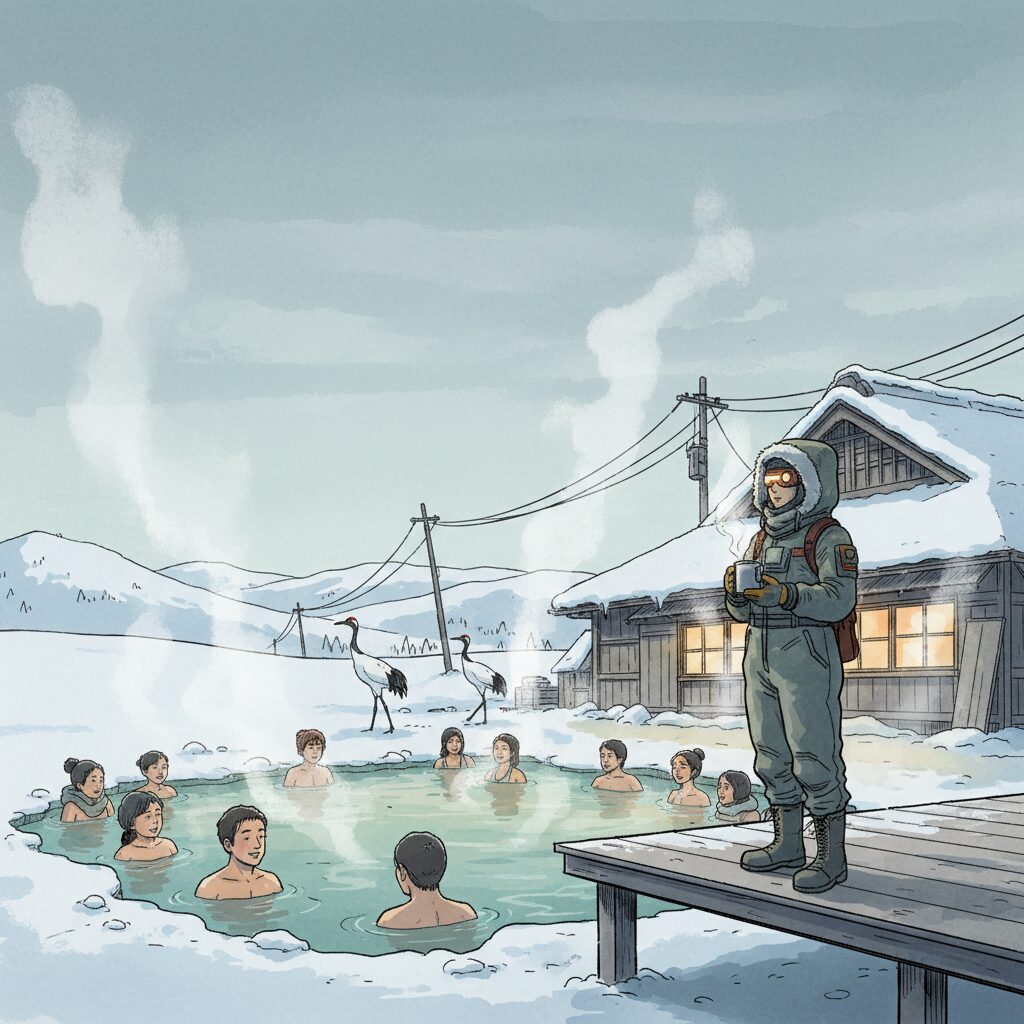
As amazing as the cranes are, spending your entire trip solely looking through a viewfinder would be a missed opportunity. Tsurui Village and the surrounding Eastern Hokkaido region provide an in-depth experience of the culture and natural beauty of Japan’s wild north. Taking the time to explore will deepen your experience and give you a much richer understanding of this remarkable place. After a freezing morning shoot, nothing—and I mean nothing—is better than the Japanese tradition of onsen, or hot springs. The region is blessed with geothermal activity, and immersing your cold, tired body in a steaming, mineral-rich bath is pure bliss. Many local hotels and ryokans (traditional inns) feature their own onsen. Soaking in an outdoor bath, or ‘rotenburo,’ while snowflakes gently fall around you is an essential Hokkaido memory you simply must have. It’s the perfect way to warm up and relax your muscles before the next day’s adventure.
Tsurui Village Life: More Than Just a Photo Opportunity
Tsurui is a center for dairy farming, and the quality of the local milk, cheese, and soft-serve ice cream is exceptional. Yes, you really should enjoy ice cream even when it’s freezing outside—it’s a Hokkaido ritual. Look for local cafes and restaurants serving dishes made with fresh, local ingredients. Staying in a minshuku (a family-run guesthouse) in the village can be a fantastic experience. You’ll enjoy local hospitality, home-cooked meals, and tips from locals who know the area intimately. It’s a more personal and authentic way to experience the region’s culture. The food scene in this part of Hokkaido is a paradise for food lovers. A short drive to the nearby city of Kushiro opens up a world of culinary delights. Hokkaido is famous for its ramen, and a piping bowl of miso or shoyu ramen is the ideal soul-warming meal on a cold day. But the real highlight is the seafood. Kushiro is a major fishing port, and the freshness is unparalleled.
Exploring the Neighborhood: Kushiro Shitsugen National Park
Tsurui Village lies on the edge of the stunning Kushiro Shitsugen, the largest wetland in Japan. This vast, protected national park is a crucial ecosystem and a breathtaking landscape, especially when blanketed in snow. While the cranes are the main attraction, the park is home to many other wildlife species. Keep an eye out for majestic Ezo sika deer, often seen grazing in herds across the snowy fields. You might also catch sight of a clever Ezo red fox, its fiery coat providing a vivid splash of color against the white snow. Scan the skies and treetops for a chance to see a Steller’s sea eagle or a White-tailed eagle—two of the largest and most impressive birds of prey in the world. They are often spotted perched near rivers, searching for fish. One of the best ways to enjoy the peaceful beauty of the wetlands is by taking a winter canoe trip down the Kushiro River. Guided tours will bundle you up in warm gear and lead you on a gentle float along a stretch of river, similar to the Setsurigawa, that remains unfrozen. Paddling quietly through this winter wonderland, with chances to see wildlife up close, is an unforgettable experience. For those who prefer to stay on land, snowshoeing is an excellent way to explore the park’s trails. Wearing a pair of snowshoes lets you venture off the beaten path and into the silent, snow-covered forests and marshes, making you feel like a true Arctic explorer. A visit to one of the park’s observation decks, such as the Hosooka Observatory, provides breathtaking panoramic views of the vast, snow-blanketed marshland stretching to the horizon. The scale of the landscape is truly humbling. And no trip to the area is complete without stopping by Kushiro’s Washo Market. This bustling, lively fish market lets you try a local specialty called ‘katte-don.’ You purchase a bowl of rice, then wander from stall to stall selecting your own toppings from an incredible variety of outrageously fresh sashimi and seafood. It’s a DIY seafood bowl of your dreams and a must-try culinary adventure.
The Nitty-Gritty: Your Tsurui Trip Planner
Alright, you’re excited and ready to start. Let’s cover some logistics. A bit of planning can make your trip smoother, more successful, and stress-free.
When to Go: Timing is Crucial
Although the cranes are present from about November to March, the best months for photography are January and February. This is the peak of winter, when snow cover is thickest and most stunning, providing a perfect white backdrop for your shots. The coldest temperatures bring the magical ‘kearashi’ river mist at Otowa Bridge. During this time, crane numbers are at their highest, and breeding behaviors such as courtship dances are more frequent and vibrant. December is an okay option, but the snow is less dependable. March is also possible, but melting snow creates a muddy, less picturesque landscape. For a true winter wonderland experience, plan for the deep freeze of January or February.
Getting There and Getting Around
Your entry point is Tancho Kushiro Airport (KUH), which has regular flights from Tokyo’s Haneda Airport (HND) and Sapporo’s New Chitose Airport (CTS). Renting a car is the most practical and recommended way to get around since public transportation in rural Hokkaido is limited and lacks flexibility. Having a car lets you reach Otowa Bridge before sunrise, move between sanctuaries at your own pace, and stop whenever you spot deer or foxes along the road. Ensure your rental includes 4WD and snow tires—this is usually standard for winter rentals in Hokkaido but always confirm. Winter driving demands caution; roads can be icy, especially in the mornings and evenings. Locals call this ‘black ice’—a transparent ice layer that looks like wet pavement. Drive slowly and defensively, keep ample distance from other vehicles, and avoid sudden braking or sharp turns. Main roads are generally well-kept and plowed, but smaller side roads may be more challenging.
Where to Stay: Accommodation Options
You have two main lodging choices. You can stay in Kushiro city, which offers a wider selection of larger hotels, restaurants, and amenities. It’s about a 45-minute to one-hour drive from Kushiro to Tsurui. Alternatively, for serious photographers, staying in or near Tsurui Village is ideal. The area offers several charming pensions (Western-style inns), minshuku (guesthouses), and small hotels. Staying locally means you’re just minutes from main photo spots, making those early morning wake-ups for Otowa Bridge more manageable. These smaller, local accommodations also provide a more immersive experience. Whichever you choose, book well in advance—January and February are peak crane tourism months, and the best places fill up months or even a year ahead.
The Golden Rules: Respect the Cranes and the Environment
This is vital. The Tancho cranes are a protected and revered species. Viewing and photographing them is a privilege, not a right. Following simple etiquette keeps the birds safe and ensures a pleasant experience for everyone. First and foremost, drones are strictly prohibited in all viewing areas. They cause great stress to the cranes and are illegal to operate nearby—don’t attempt it. Keep your distance; although the cranes are accustomed to people, they remain wild animals. Stay within designated viewing zones and use telephoto lenses for close-ups. Never enter the fields to get closer. At Otowa Bridge, silence is important. Visitors come for a serene, almost reverent experience and concentrate on photography under challenging conditions. Keep conversations to quiet whispers, avoid loud noises and sudden movements. Do not feed the cranes; the sanctuaries carefully control their feeding to complement the birds’ natural diets. Feeding them yourself can harm them and disrupt natural behaviors. Lastly, always leave no trace—pack out everything you bring in. Help keep this pristine environment beautiful for the cranes and future visitors.
This trip to Tsurui Village is much more than a photography journey. It’s an opportunity to step into a living fairy tale and witness a breathtaking natural spectacle. It will test your patience and endurance against the cold, but the reward is a collection of priceless images and memories. You’ll leave with your memory card full of stunning photos and the echo of the Tancho’s calls in the crisp air, the sight of their elegant dances on the snow, and a deep appreciation for the wild, untamed beauty of Hokkaido in winter. So, charge your batteries, dress in layers, and get ready to be captivated. The winter stage is set, and the red-crowned cranes are ready to share their story. Be there to witness it.