
When most people picture Japan, their minds conjure up a highlight reel of extremes. It’s either the serene, moss-covered temples of Kyoto or the electric, neon-drenched canyons of Shinjuku. It’s the hushed reverence of a tea ceremony or the chaotic energy of Shibuya Crossing. While all of that is true, it’s also an incomplete, airbrushed version of the country. The vast majority of Japan exists in the spaces in between, in the quiet, workaday neighborhoods that tourists rarely see. And the heart of that Japan, the true artery of local life, is the shōtengai.
So, what is a shōtengai? The word translates to “shopping street,” but that’s a painfully inadequate description. Think of a pedestrian-only lane, often covered by a long, arching roof of corrugated plastic or glass, creating a kind of permanent twilight. Lined on both sides are small, independent, family-run shops. This isn’t a mall. There’s no gleaming marble, no central air conditioning, no piped-in pop music. A shōtengai is a bit faded, a little worn around the edges, and utterly, unapologetically authentic. It’s a sensory time capsule, a living museum of a bygone era, and perhaps the best place to understand the subtle, powerful currents of Japanese community. To walk through one is to step off the bullet train of modern Japan and onto a local line, rumbling slowly through the past.
For a broader glimpse into Japan’s multifaceted past, exploring the art of iaijutsu offers a complementary narrative to the authentic charm of shōtengai.
The Atmosphere of Everything, All at Once
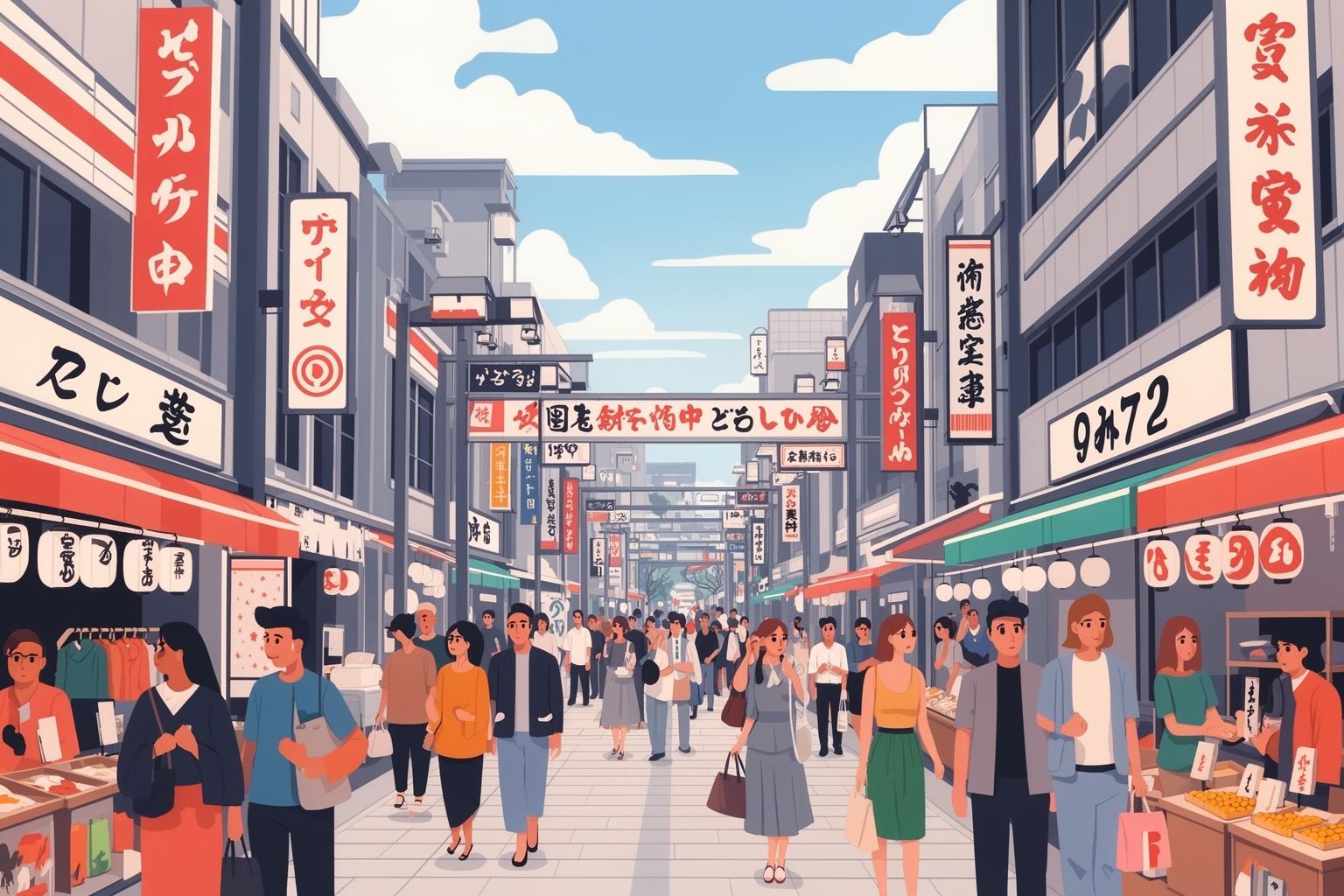
Your initial steps into a shōtengai feel like a full immersion. The experience isn’t carefully curated; it’s a chaotic yet harmonious symphony of stimuli. The first thing you might hear is the sound—a unique acoustic environment, both muffled and amplified by the arcade roof. You’ll catch the rhythmic clang of a metal shutter being rolled up, the cheerful, slightly distorted jingle of a supermarket’s theme song, and the sizzle of oil as a butcher shop fries menchi-katsu (minced meat cutlets) for passersby. Overhead, a tinny, instrumental version of a forgotten pop tune may drift from ancient speakers mounted on lampposts.
Then come the smells, distinct and layered, shifting every few feet. One moment, you smell the savory soy-sauce-and-sugar aroma of grilled eel from an unagi shop that’s been there for seventy years; the next, the clean, slightly sweet scent of daikon radishes and fresh tofu from the greengrocer. You might catch the earthy fragrance of roasted green tea, the sharp tang of pickled vegetables resting in open barrels, or the faint, sweet smoke of incense from a butsudan-ya, a shop specializing in Buddhist home altars. It’s the scent of daily life—of sustenance and ritual—all mingling beneath one roof.
Visually, it’s a feast of glorious imperfection. Storefronts form a collage of different eras. A sleek, modern bakery with minimalist signage might be nestled between a dusty tea shop adorned with faded paper lanterns and a cluttered hardware store coated in a fine layer of history. Look up, and plastic cherry blossoms, long past their seasonal prime, are zip-tied to the metal framework of the ceiling. Banners celebrating a local baseball team or announcing a summer festival hang limp. The signs are often hand-painted, prices boldly written in inky strokes on cardboard. This isn’t the cold, calculated precision of corporate branding; it’s the warm, human clutter of lives being lived and businesses being run, day after day.
A Physical Memory of the Shōwa Era
To truly grasp the shōtengai, you need to understand the era that gave rise to it: the Shōwa period (1926-1989), especially the decades of rapid post-war growth. As Japan rebuilt, these shopping arcades emerged as lively, bustling hubs of local economies. They were the original one-stop shops, serving as the neighborhood nexus before the rise of massive supermarkets, sprawling suburban malls, and, of course, the internet.
Everything a household required was available here. There was the sakana-ya (fishmonger), whose owner knew exactly how you preferred your sea bream sliced. The niku-ya (butcher) might add a bit extra fat for your stir-fry. You’d find the yaoya (greengrocer), the okome-ya (rice merchant), and the tōfu-ya, where tofu was freshly made each morning in the back. These weren’t just shops; they were specialists, experts in their craft. This focus on specialization nurtured a strong culture of quality and trust.
Beyond food, the shōtengai served every facet of daily life. You could find a futon-ya selling bedding, a geta-ya for traditional footwear, a small stationery store stocked with notebooks and pens for schoolchildren, and a kissaten, the quintessential Japanese coffee house. A kissaten is a world unto itself—often dimly lit, wood-paneled, with velvet seats and the subtle scent of drip coffee. It acted as the neighborhood’s living room, a spot for gossip, business meetings, or quiet reflection over a thick slice of toast. The shōtengai was a whole ecosystem, a self-sufficient world where commerce and everyday life were deeply intertwined.
Walking through one today feels like a journey into the past. Many original shops remain, run by second or even third-generation owners. Cash registers may be outdated, and the décor largely untouched since the 1970s. These places are not retro-themed attractions; they are genuinely old. They have endured not by following trends, but by remaining steady. They stand as tangible reminders of a different way of living and consuming, from a time when human connection mattered more than efficiency.
The Architecture of Connection
The physical design of the shōtengai is no accident; it represents a clever form of social engineering. The pedestrian-only street fosters a safe, communal environment. Without the noise and dangers posed by cars, conversations flow more naturally. Children can run ahead of their parents, and neighbors pause to chat, momentarily blocking foot traffic without anyone becoming particularly annoyed. The pace feels inherently slower and more human.
The roof is perhaps the most vital feature. It shields visitors from Japan’s intense summer sun and sudden rain showers, ensuring the arcade remains a dependable, all-weather public space. Psychologically, it offers the sensation of being indoors while still outdoors. It marks the shōtengai as a distinct area, separate from the surrounding city. This semi-enclosed design nurtures a sense of intimacy and shared identity. It’s our street, our space. This contrasts sharply with the vast, impersonal, and privately owned atmosphere of modern shopping malls, which prioritize consumption over community.
The street’s narrowness is equally important. It compels closeness. You inevitably make eye contact with shopkeepers and other shoppers. Goods overflow from storefronts, blurring boundaries between public and private property. A crate of oranges rests on the pavement; a rack of clothes juts into the walkway. This intentional, organic intrusion encourages browsing and interaction. You’re not a passive consumer moving through a sterile passage; you’re an active participant in a lively marketplace.
The Faces of the Arcade
A shōtengai is ultimately a story about people. The architecture serves merely as the backdrop; the shopkeepers and residents are the players. At the core of the shōtengai’s social life lies the concept of the jōren (常連), or the regular customer. Being a jōren means more than just frequent business; it signifies a relationship.
The owner of the vegetable stand knows that one grandmother prefers her cucumbers small and firm. The woman at the senbei (rice cracker) shop always saves a small, imperfect cracker for a passing toddler. These exchanges are smoothed by years of small talk and mutual recognition. When you buy your fish, you also receive a cooking tip and a bit of neighborhood gossip. This is the social currency of the shōtengai.
This spirit is evident in interactions everywhere. Elderly residents, for whom the shōtengai may be their primary social outlet, move slowly from shop to shop with their shopping trolleys in tow. They are greeted by name and asked about their health. They serve as the keepers of the neighborhood’s collective memory. Young mothers, children in tow, pick up ingredients for dinner. The shōtengai is a multi-generational space where diverse groups, who might otherwise never cross paths, share common ground.
Even as a visitor, you can feel this warmth. The shopkeepers are often curious and friendly in a way that staff at a polished Tokyo department store might not be. There’s no pretense. These are people proud of what they sell and deeply connected to a community they have served for decades. Their identity is inseparably tied to this small stretch of pavement.
A Slow Fade and the Specter of the Shutter
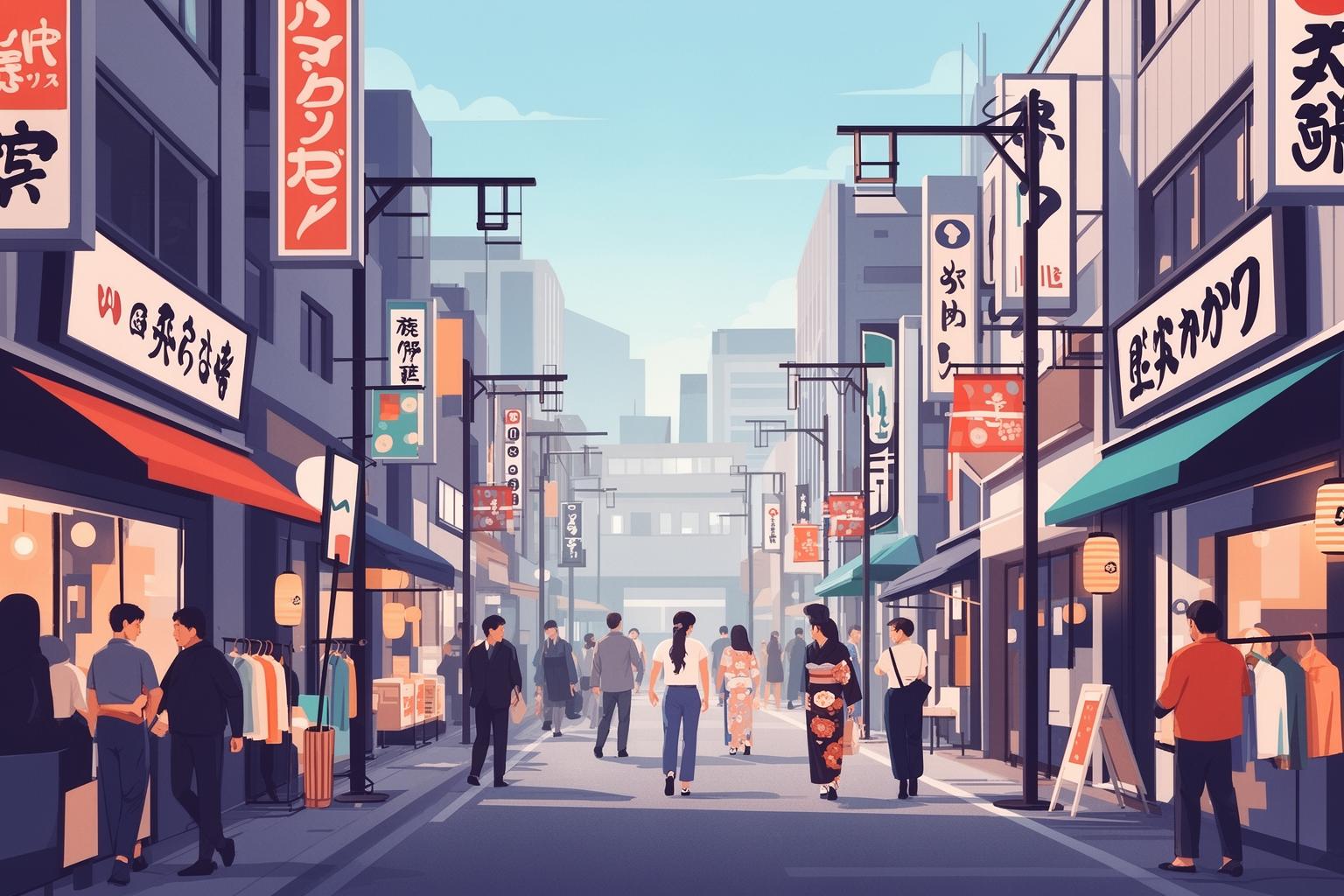
It would be misleading to depict the shōtengai as universally thriving. Many are quietly experiencing a crisis, a gradual decline noticeable to anyone paying close attention. The term shattā-dōri (シャッター通り), or “shutter street,” has become a common expression in Japan to describe a shōtengai where most storefronts are permanently shuttered, their metal doors rusted and covered in grime.
The reasons behind this are complex and deeply tied to shifts in Japanese society. The primary cause is demographics. Shopkeepers who opened their stores in the 1950s and 60s are now in their eighties or nineties. Their children, having pursued university degrees and corporate careers in big cities, show little interest in taking over the family tofu shop or hardware store. When the owner retires or passes away, there is often no successor, leading to another shuttered storefront.
Competition is another significant factor. The rise of large, American-style suburban shopping malls, frequently anchored by a massive AEON or Ito-Yokado supermarket, has drained vitality from many local arcades. These malls offer one-stop convenience, plentiful free parking, and the appeal of national and international brands—a combination that is difficult for a small, aging fishmonger to compete with. Adding the seamless convenience of online retailers like Amazon and Rakuten, the traditional shōtengai model appears increasingly precarious.
The younger generation, accustomed to the convenience of 24-hour konbini (convenience stores) and the sophistication of department stores, may view the shōtengai as outdated or inconvenient. Why buy vegetables from three different shops when you can find them all pre-packaged at the supermarket? The decline of the shōtengai, in many ways, reflects the fading of a certain type of community-centered way of life.
Glimmers of a New Beginning
However, the story is not solely one of decline. In cities throughout Japan, a fresh narrative is taking shape. A new generation, disenchanted with corporate life and in search of greater purpose, is rediscovering the shōtengai. Young entrepreneurs, artists, and chefs are attracted by the low rents and the distinctive character of these aged spaces.
They are not aiming to revive the old businesses. You won’t find a 28-year-old opening a traditional futon store. Instead, they are adapting the old storefronts for modern ventures. An old clock shop becomes a craft coffee roastery. A former vegetable stand is converted into a minimalist art gallery. A dusty, forgotten pharmacy is given new life as a natural wine bar or a microbrewery. This results in a fascinating and sometimes striking contrast: the sleek, contemporary design of a new café beside a cluttered, sixty-year-old watch repair shop.
This revitalization is not about restoration but reinvention. It injects new energy and attracts a different demographic to the arcade. While some older locals may feel cautious about these changes, many embrace the renewed vitality. The new businesses bring people back to the street, and the increased foot traffic benefits everyone. It creates a hybrid environment where old and new coexist, where you can purchase artisanal bread and freshly made tofu during the same short stroll. This blend is perhaps the shōtengai’s best chance at survival—not as a mere relic of the past, but as a dynamic, living space reflecting the evolving face of its community.
The Real Japan Is in the Arcades
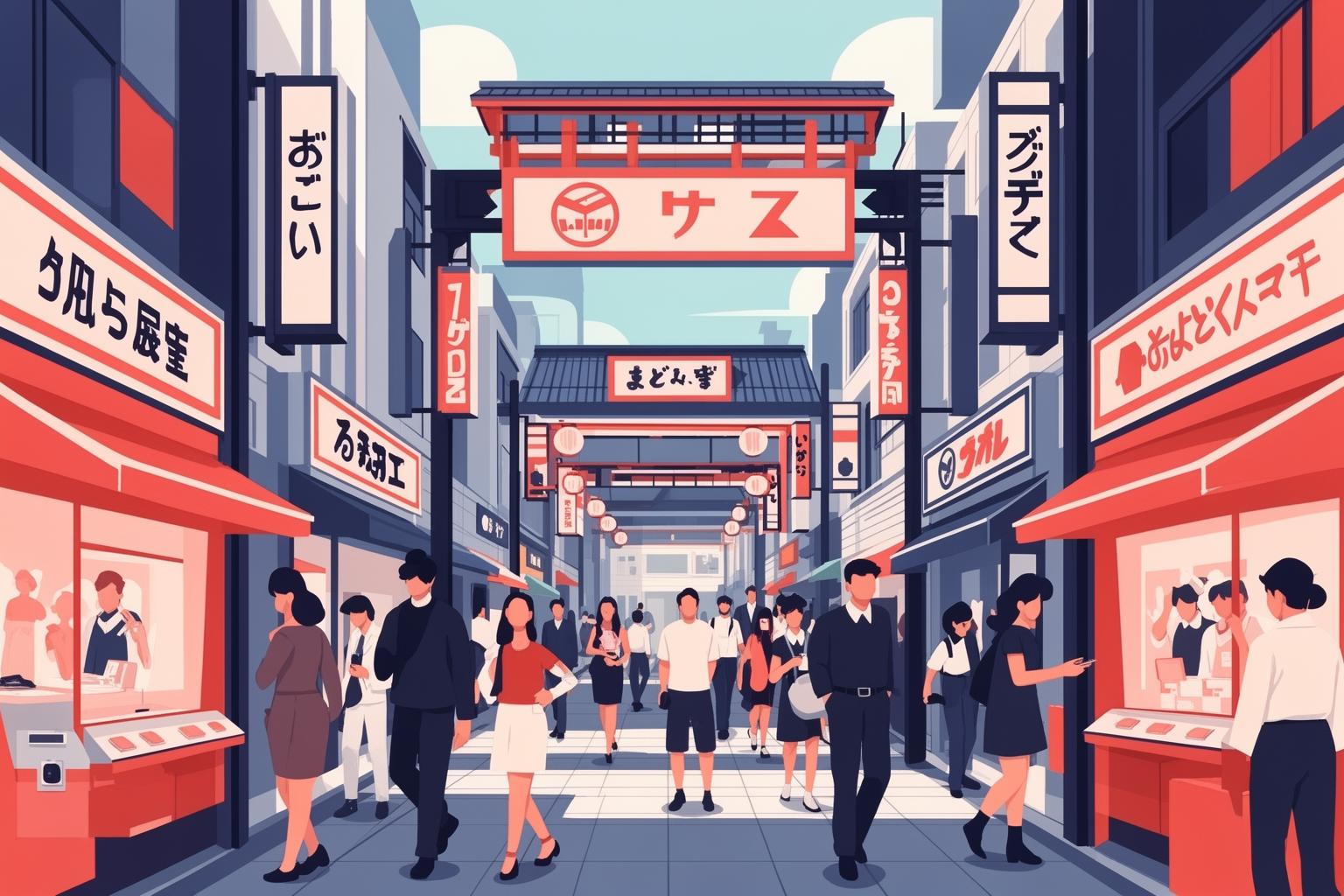
If you genuinely want to experience Japan, I encourage you to look beyond the guidebooks. Choose a random station a few stops away from major hubs like Shinjuku or Ueno. Get off the train, stroll through the residential streets, and chances are you’ll come across a shōtengai. Don’t go with a plan to purchase anything specific. Simply walk and observe.
Listen to the conversations. Watch the slow, deliberate rhythm of daily errands. Notice the details—the hand-written signs, the worn tiles on the floor, the cat napping on a sack of rice. Buy a freshly fried croquette and eat it as you walk. This is where you’ll discover the Japan that doesn’t appear in travel brochures. It’s not glamorous or futuristic. It’s a bit messy, somewhat nostalgic, and deeply, truly human. It’s the living, breathing heart of the country, waiting for you just beneath that long, plastic roof.