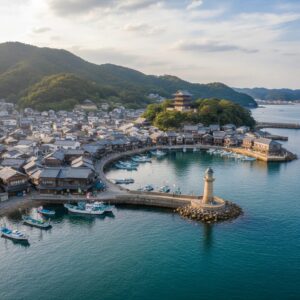
Yo, what’s the deal? Keiko here, coming at you straight from the heart of Japan’s creative soul. Today, we’re ditching the neon chaos of Tokyo and the ancient gravitas of Kyoto for a place that hits different. We’re talking about Onomichi, a sleepy port town nestled in Hiroshima Prefecture, clinging to a hillside that tumbles dramatically into the Seto Inland Sea. This ain’t your average tourist spot. Nah, Onomichi is a whole mood. It’s a labyrinth of steep slopes, a sanctuary for lazy cats, and a living, breathing muse that has fueled the imaginations of Japan’s most iconic filmmakers and poets for generations. It’s where nostalgia hangs in the salty air like morning mist, and every cobblestone alleyway feels like a scene straight out of an arthouse film. Forget your packed itineraries and your to-do lists; this is a place where the main event is getting lost and letting the city tell you its story. It’s a place that demands you to slow down, to look closer, and to feel the deep, rhythmic pulse of culture that flows through its veins. It’s a time warp, a creative hub, and a low-key paradise all rolled into one. Ready to catch the vibe? Let’s dive deep into the literary and cinematic wonderland that is Onomichi. It’s about to be a cinematic journey, for real.
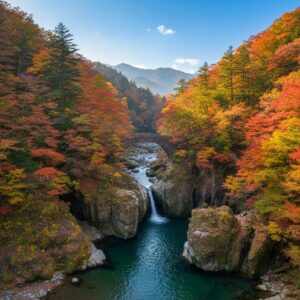
If you’re looking for another breathtaking natural escape in the Hiroshima area, consider exploring the pristine beauty of the Sandan-kyo Gorge.
The Cinematic Soul of Onomichi: A Living Film Set
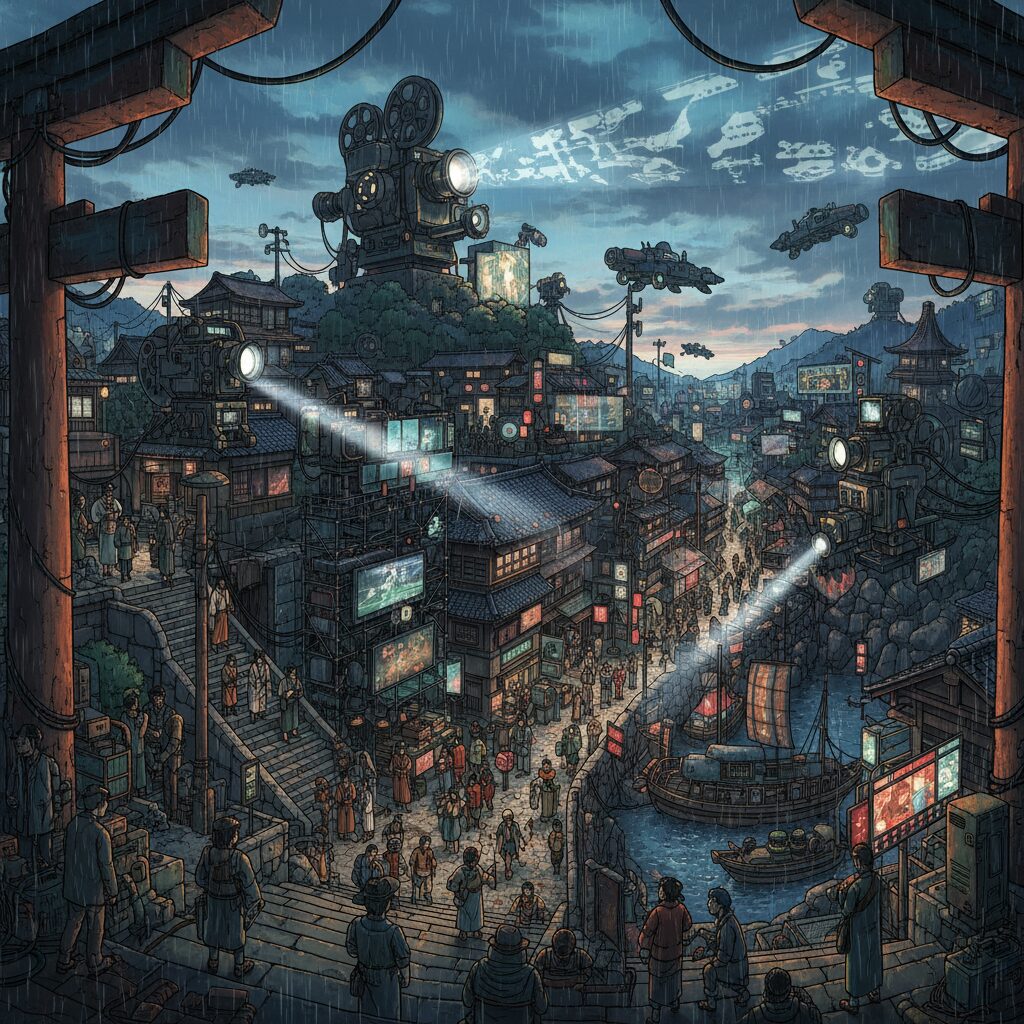
First things first: you can’t discuss Onomichi without mentioning film. This town is practically a star in its own right, the protagonist in numerous Japanese movies. The director who put it on the world stage was the legendary Nobuhiko Obayashi. His 80s films, like “I Are You, You Am I” and “The Girl Who Leapt Through Time,” are collectively known as the “Onomichi Trilogy,” turning this town into a pilgrimage destination for cinephiles. Walking through Onomichi feels like stepping right onto the screen. The steep stone stairways where characters had intense heart-to-hearts, the pedestrian overpass where high schoolers swapped bodies, the sweeping views of the port that set the scene for youthful adventures—it’s all here. The atmosphere is pure, unfiltered Showa-era nostalgia, with that soft, grainy texture of vintage film stock, evoking an innocent yearning that makes you feel as if you’re living inside a memory.
But the town’s cinematic heritage runs even deeper. We’re talking about the GOAT of Japanese cinema, Yasujiro Ozu. His 1953 masterpiece, “Tokyo Story,” widely regarded as one of the greatest films ever made, anchors itself in Onomichi. In the film, Onomichi is the furusato—the idyllic, slow-paced hometown that sharply contrasts with the cold, impersonal hustle of post-war Tokyo. It symbolizes family, tradition, and a way of life gradually fading away. When you stand on the hills overlooking the Onomichi Channel, watching ferries chug back and forth, you can feel the quiet, profound melancholy Ozu captured so flawlessly. The beauty of the landscape carries a bittersweet sense of time slipping away. It’s deeply moving and strikes you right in the heart.
To fully appreciate the story, you need to visit the Onomichi Motion Picture Museum. It’s a small but powerful spot housed in a cool retro building that was once a bank. Inside, you’ll find vintage posters, classic film gear, and plenty of behind-the-scenes details about movies made here. It’s not just a museum; it’s a key that opens a new dimension of the city. After your visit, you’ll start spotting filming locations everywhere, seeing the town through the eyes of these master directors. Every corner becomes a possible film set, every view a potential establishing shot. You’ll catch yourself framing scenes in your mind, imagining the stories these streets could tell. It’s an immersive experience that turns an ordinary stroll into a cinematic adventure. You’re not just a tourist—you’re a location scout on a mission to absorb the celluloid soul of Onomichi.
Whispers of the Poets: Onomichi’s Literary Path
If film is the beating heart of Onomichi, then literature is its whispering soul. Long before the cameras arrived, this town attracted writers and poets seeking refuge and inspiration. The ultimate immersion into this legacy is the “Bungaku no Komichi,” or the Path of Literature. This is no dull, stuffy trail. It’s a magical stroll that winds up the hill through Senko-ji Park, with the path lined by huge, moss-covered boulders. Carved into these stones are verses from renowned Japanese literary figures who were captivated by Onomichi’s charm.
The star of Onomichi’s literary world is Naoya Shiga, one of modern Japan’s literary giants. He lived here for a time and wrote parts of his masterpiece, “A Dark Night’s Passing,” while gazing out at the same tranquil seascape you see today. You can visit his former home, a beautiful traditional wooden house with airy rooms and a perfect view of the channel. Stepping inside, it’s easy to see why he found inspiration here. The quiet calm, the gentle sea breeze, the rhythmic sounds of the port—it’s an ideal setting for deep creative reflection.
Then there’s Fumiko Hayashi, a formidable female writer known for portraying the struggles of ordinary people. Though she led a wandering life, she always considered Onomichi her spiritual home. Her famous line, “I have seen the sea, I have seen the sea. The sea I saw was Onomichi’s sea, which I long for,” speaks to her profound connection with the place. Her former house has been preserved as well, and visiting offers a glimpse into her world. You can feel her affection for this town, a place that gave her a sense of belonging.
Walking the Path of Literature is a deeply meditative experience. As you ascend, the city unfolds beneath you, and with each carved stone, you encounter a different voice from the past. You don’t need to be an expert in Japanese literature to appreciate it. It’s about the atmosphere. The sunlight filtering through the dense tree canopy, the profound silence interrupted only by birdsong, the weight and texture of kanji etched in stone—it’s a sensory journey. You’re literally walking through a gallery of words, where nature frames the art, and the poetry is inspired by the very landscape surrounding you. It’s a powerful reminder that the same things that move us today—the breathtaking view, the peaceful mood—moved these literary legends a century ago. It connects you to the timeless, creative spirit that defines Onomichi.
Getting Lost is the Point: Exploring the Slopes and Alleys

Let’s be real: if you visit Onomichi and stick only to the main streets, you’re missing the point. The true charm of this town lies in its vertical maze of saka (slopes) and impossibly narrow alleys. The best way to explore Onomichi is to have no plan whatsoever. Just choose a staircase and start climbing. Getting lost isn’t a mishap; it’s the whole experience. It’s along these winding, overlooked paths that you’ll discover the true soul of the city.
One of the most popular hidden spots is “Neko no Hosomichi,” or Cat Alley. And yes, it’s exactly what it sounds like: a paradise for cat enthusiasts. This tiny lane is home to a group of laid-back, sunbathing cats who reign supreme over this area. But it’s not just about real cats. An artist began painting round stones to resemble cats—called fukuishi-neko (lucky stone cats)—and has placed hundreds of them in every nook and cranny: nestled in walls, perched on rooftops, peeking out from behind plants. This whimsical, open-air art installation adds an extra layer of charm to the neighborhood. Following the trail of stone cats will lead you past quirky cafes, small galleries, and the Maneki-neko Museum, which is packed with lucky beckoning cat figures. The entire area feels like an Instagram-worthy dream, brimming with creative, cat-inspired cuteness.
This spirit of creative reuse plays a big role in Onomichi’s modern revival. The town is known for its akiya (abandoned houses) issue, but instead of letting them fall apart, a new generation of artists, architects, and entrepreneurs has been revitalizing them. This initiative, often called the “Onomichi Akiya Saisei Project,” has transformed these empty hillside homes into some of the most interesting spots in town. You might be wandering along an ancient stone path and suddenly discover a minimalist coffee shop with a stunning view, a stylish guesthouse, or a contemporary art gallery. It’s this blend of old and new, traditional and trendy, that makes exploring Onomichi so thrilling. It feels like a treasure hunt where the reward is uncovering hidden gems that breathe fresh life into the historic cityscape. Pro tip: wear your comfiest shoes. Seriously, the hills are tough. Taking the Senko-ji Ropeway to the top and then strolling down is a smart move. Your legs will thank you.
The Temple Run: More Than Just Sightseeing
Onomichi is a city centered around its temples. They are not merely isolated tourist attractions; rather, they are intricately woven into the hillside, connected by a historic pilgrimage path known as the “Koji Meguri” or Temple Walk. This trail links 25 temples, and while completing the entire route requires dedication, exploring a portion of it is an absolute must. It’s not about ticking off temples on a list; it’s about experiencing the town’s spiritual core and witnessing how faith, nature, and everyday life are seamlessly intertwined here.
Your first stop should be Senko-ji. Situated near the mountain summit, it stands out for good reason. You can reach it via the convenient ropeway, and the moment you step out, you’re greeted with a breathtaking panoramic view of the city, the Shimanami Kaido bridges, and the islands scattered across the Seto Inland Sea. It’s the embodiment of Onomichi’s charm. The temple grounds themselves are a fascinating and vibrant mix of halls and pagodas arranged around massive sacred rocks. The most renowned is the “Tama no Iwa,” a huge boulder said to have once held a mystical glowing jewel that illuminated the sea. The entire area exudes an ancient, potent energy.
From Senko-ji, the descent leads you past several other remarkable temples. Jodo-ji, located a bit further from the main cluster, is a designated National Treasure and offers a tranquil escape from the crowds. Its magnificent two-storied pagoda and peaceful ambiance convey a profound sense of untouched history. It carries genuine ancient gravitas. Another noteworthy site is Saikoku-ji, famous for the pair of enormous waraji (straw sandals) hanging at its Niomon gate. According to legend, the temple’s guardian deity wears them, and they are believed to grant strength to travelers, making it a fitting stop in this city full of walkers and pilgrims. Each temple you visit presents a unique character, story, and view. The walk itself is enchanting, taking you along narrow stone paths, through quiet residential streets, and past old cemeteries with sweeping vistas. You hear rhythmic chanting from temple halls, smell the sweet incense smoke, and feel the weight of history beneath your feet. It’s a spiritual and physical journey that deeply connects you to the landscape of Onomichi.
Beyond the Slopes: The Shimanami Kaido and Seaside Vibe
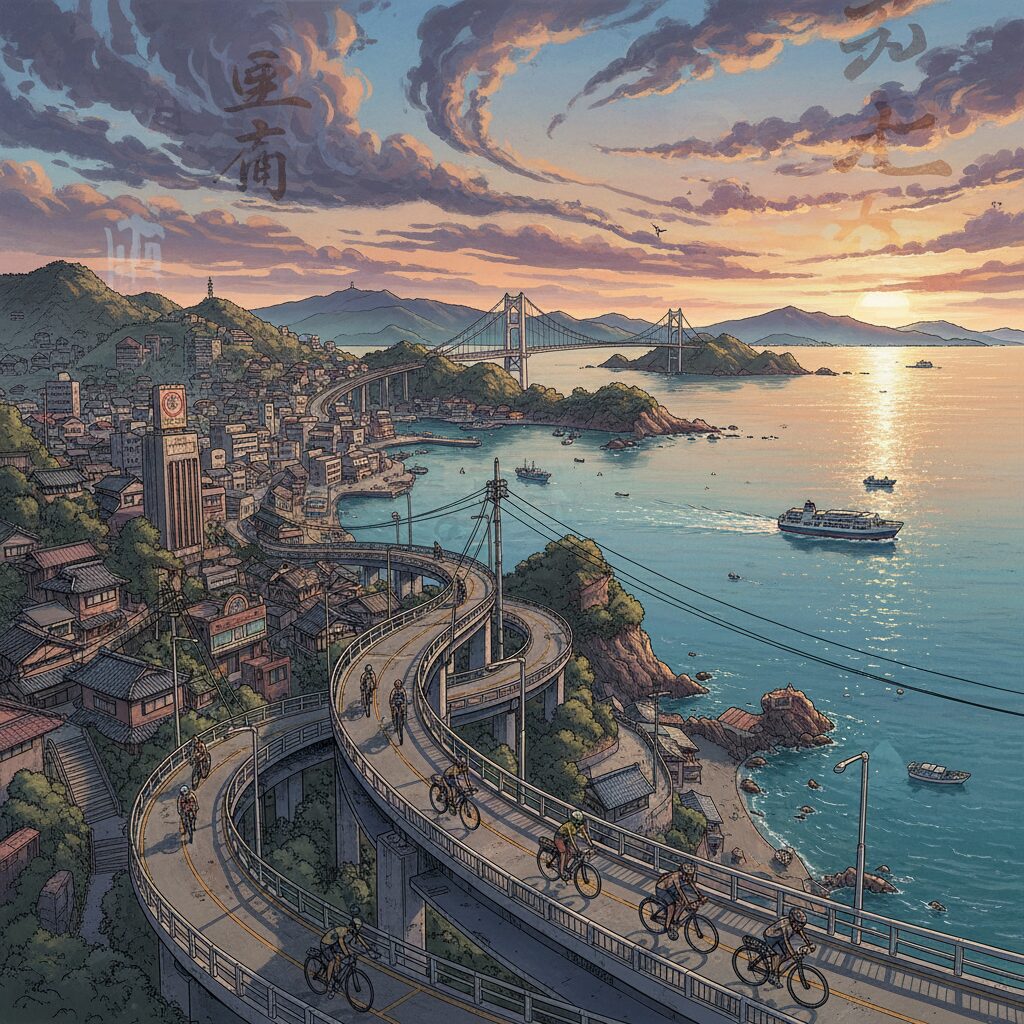
While the hillside labyrinth is Onomichi’s main attraction, its identity as a port town is equally important. The city serves as the official starting (or ending) point on Honshu for the Shimanami Kaido, one of the world’s most extraordinary cycling routes. This 70-kilometer trail crosses six islands via a series of stunning bridges, linking Onomichi with Imabari in Shikoku. You don’t have to be a serious cyclist to enjoy this experience; the smart move is to rent a bike for a few hours to explore the waterfront or take a short ferry ride to the first island, Mukaishima, for a leisurely ride.
This seaside part of town has a completely different vibe. It’s industrial, lively, and genuine. You’ll spot shipyards, fishing boats, and massive cargo ships navigating the narrow channel. The salty air, the foghorns, and the working port vividly remind you that Onomichi is not just scenic; it’s a city with a raw, maritime spirit. The best example of Onomichi’s modern transformation is right here on the waterfront: Onomichi U2. This spot is the ultimate glow-up—a huge, beautifully restored 1940s warehouse turned into a sleek, multi-functional complex. Inside, there’s Hotel Cycle, where you can check in and bring your bike to your room, a Giant bike shop, a trendy restaurant and bar, a bakery, and a store featuring local artisanal products. It perfectly blends Onomichi’s industrial roots with contemporary style. This is where the cycling community, trendy locals, and curious visitors all come together. Grabbing a coffee and sitting on the deck to watch the ships pass by is a must-do Onomichi experience, bridging the city’s historic charm with its cool, creative future.
After all that walking and cycling, you’ll want to eat. The ideal way to recharge is with a steaming bowl of the local specialty: Onomichi Ramen. This isn’t typical ramen. Its base is a savory shoyu (soy sauce) broth made from chicken and small fish from the Seto Inland Sea, but the signature touch is the blobs of sebura—pork back fat—floating on top. Don’t worry; it’s lighter than it sounds. The fat melts into the hot broth, adding a rich sweetness and deep flavor that balances the salty soy sauce. Served with flat, chewy noodles, it’s the ultimate comfort food. This dish was born in a bustling port town, crafted to be a quick, hearty, and delicious meal for sailors and shipyard workers. Slurping it down in a tiny, old-school ramen shop is the most authentic way to savor the taste of Onomichi.
Practical Sesh: How to Slay Your Onomichi Trip
Alright, let’s dive into the details. Planning a trip to Onomichi is pretty relaxed, but a few tips will help you get the most out of your experience. Getting there is simple. The city sits on the JR Sanyo Main Line. If you’re coming by Shinkansen (the bullet train), you’ll need to switch at either Fukuyama Station or Mihara Station to a local line, which is just a short ride away. The moment you step out of Onomichi Station, the port is right in front of you, with the hills to your left. You’re instantly immersed in the atmosphere.
The ideal time to visit is honestly spring or autumn. Spring offers the iconic cherry blossoms, stunning against the temples and the sea. Autumn brings crisp, cool air, clear skies, and perfect weather for tackling those famous slopes. Summer can be hot and humid, turning the Temple Walk into a challenging endurance test. Winter is quiet and atmospheric with fewer tourists, though it can be chilly.
When it comes to getting around, walking is your best bet. This city is made for it. The Senko-ji Ropeway is great for an easy lift up the mountain, saving your energy for the more pleasant walk downhill. For island hopping or sampling the Shimanami Kaido, rental bikes are abundant around the station, and the ferries run frequently and are easy to use. Accommodations vary widely. You can opt for a classic ryokan (traditional inn) on the hillside, stay in a beautifully restored akiya guesthouse blending old and new, or check into the ultra-modern Hotel Cycle at U2 if you prefer a sleek, industrial-chic style.
One key tip for first-timers: don’t over-schedule. Seriously. The magic of Onomichi lies in discovery. Let yourself wander aimlessly. Follow a cat down an alley. Step into a quirky cafe. Sit on a bench and watch the boats. The city’s true gems aren’t in guidebooks; they’re waiting for you to uncover. And please, make sure your phone or camera is fully charged. Every corner of this town is a photo opportunity. You’ll be snapping constantly, trying to capture that elusive, cinematic Onomichi vibe.
The Final Take: Why Onomichi Hits Different
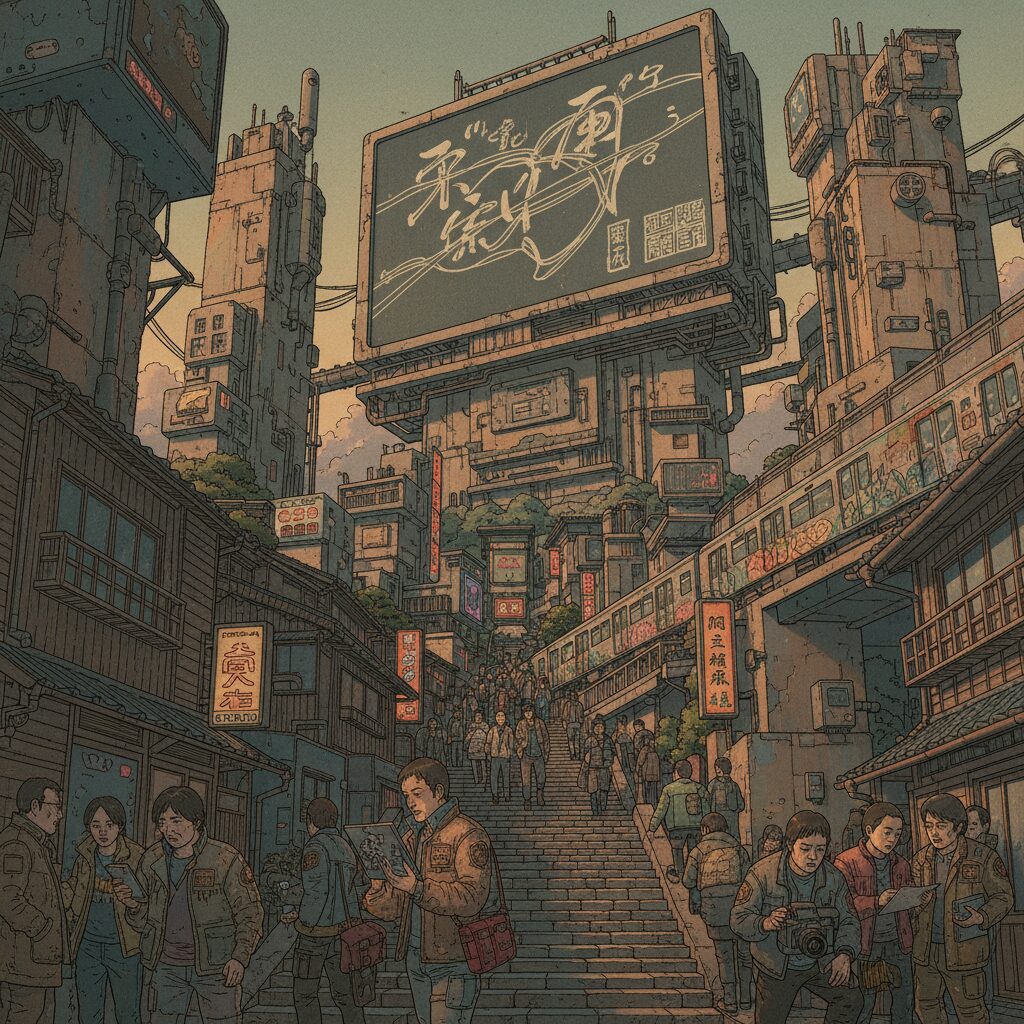
So, what’s the final verdict on Onomichi? It’s a place that seeps into your soul in the most wonderful way. More than just a charming port town dotted with temples, it’s a multi-layered, intricate city where history, art, and daily life intertwine seamlessly. It embodies the nostalgia of an Ozu film, the poetic melancholy of a Shiga novel, the playful charm of a sunbathing cat, and the innovative spirit of a contemporary design project—all at once. It’s a city of contrasts: old and new, steep and flat, sacred and secular, industrial and natural.
Visiting Onomichi is an experience that awakens all your senses. You feel the burn in your legs as you climb stone steps, take in the stunning view from above, hear the distant ringing of a temple bell, and savor the rich, savory broth of its famous ramen. It’s a place that encourages you to slow down, observe, and create. You leave feeling as if you’ve not only witnessed a city but also become part of its ongoing story. Whether you’re a film buff, a literature enthusiast, a cycling fan, or simply someone searching for a soulful corner of Japan, Onomichi delivers. It doesn’t shout for attention; it gently whispers, inviting you to discover your own story within its timeless, winding streets. And believe me, it’s a tale you’ll want to share for years to come.