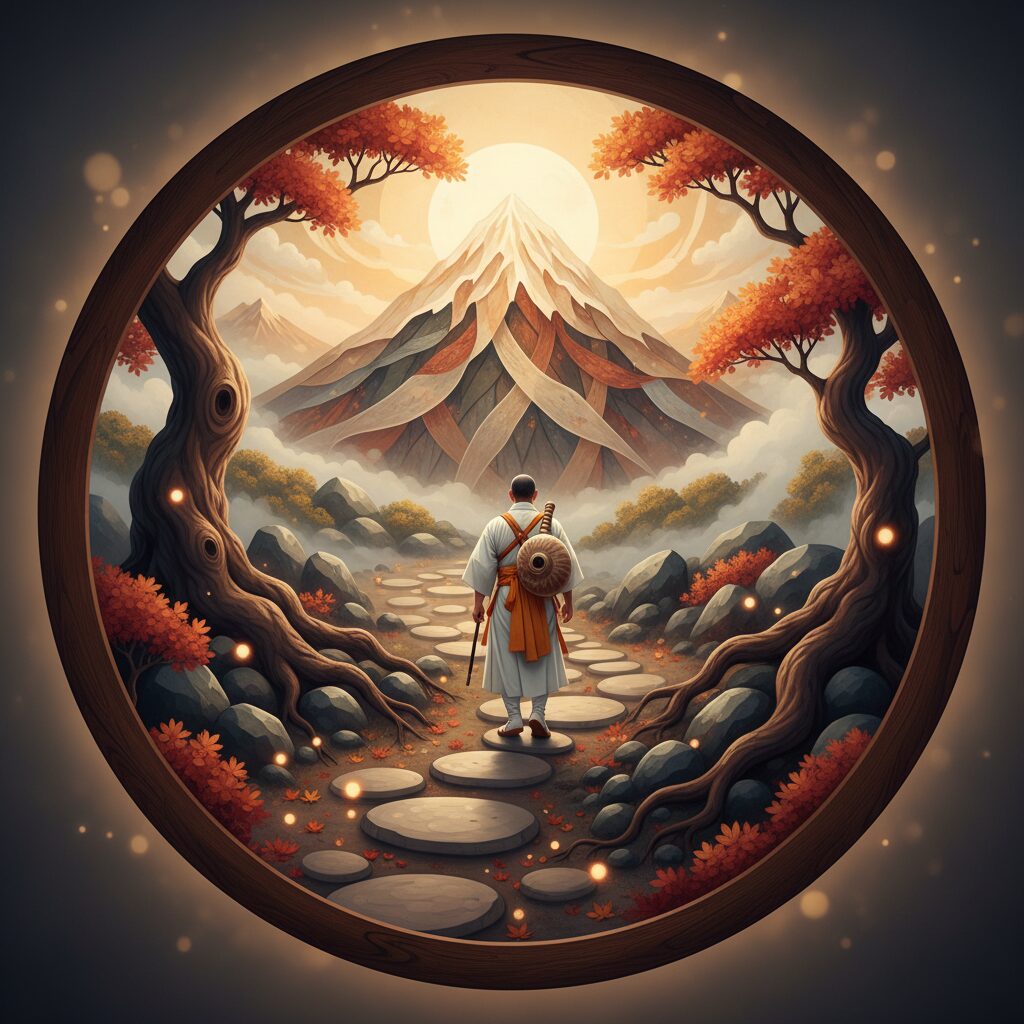
Yo, let’s be real for a sec. You’ve seen the pics, right? The endless aesthetic-core shots of Japan. Moss-covered stone lanterns, impossibly serene bamboo forests, epic mountain vistas that look like they were ripped straight out of a Studio Ghibli movie. You might’ve even booked a ticket, laced up your best trail runners, and hit one of those famous hiking routes yourself. You climbed the stone steps, breathed in that ridiculously fresh cedar-scented air, and snapped a fire pic for the ‘gram at the top. The vibes were immaculate. But also… kinda weird, right? There’s this feeling you can’t quite shake. An intensity, a certain weight to the air that feels older than the gnarly trees flanking the path. You pass a small, unassuming shrine in the middle of nowhere, or a row of stone statues wearing little red bibs, and you think, “Cute,” but there’s a flicker of something else. A low-key hum of energy that suggests you’re not just on a scenic trail. You’re walking through someone else’s church, and the church is the entire mountain. You felt it, didn’t you? That’s not just the altitude making you lightheaded. You’ve accidentally stumbled onto an ancient spiritual mainframe, a path carved not for leisure, but for hardcore ascetic transformation. What you thought was a hike was actually a pilgrimage route for a wild, syncretic religion of mountain warriors called Shugendo. These trails weren’t designed for sick views; they were designed to break you down and rebuild you, one grueling, sacred step at a time. So let’s get into it, for real. Let’s unpack why that beautiful Japanese mountain trail felt so profoundly, spookily alive.
If you’re curious about the unique, time-capsule feel of these sacred trails, you might also appreciate exploring the vintage mountain huts that dot these ancient routes.
The Vibe Check: When a Trail Isn’t Just a Trail
First, we need to establish the baseline. In many parts of the world, a mountain is simply a geological feature—a challenge to be conquered, a summit to be claimed, a place for recreation and sport. We measure it in feet or meters, rate its difficulty, and regard it as a beautiful but mostly inert backdrop for our adventures. The relationship is often adversarial or dominating: humanity versus nature. You climb the mountain, plant a flag, then descend. Job done. That mindset? You have to throw it out the window when you’re in Japan. Here, mountains aren’t just piles of rock and soil. They’re living beings—centers of life and death, homes of the gods, and even literal embodiments of deities. This isn’t mere metaphor; it’s a core belief of Shinto, Japan’s indigenous faith. Before grand shrines were constructed in cities, the original places of worship, the kannabi, were awe-inspiring natural formations—majestic mountains, ancient trees, massive rocks, cascading waterfalls. These were considered the dwelling places or descending grounds of the kami—gods, spirits, or divine essences of the universe. Thus, entering a mountain wasn’t just a hike; it was stepping into a sacred precinct, walking into the presence of the divine. The trail beneath your feet wasn’t simply the easiest path to the summit; it was a consecrated approach to an altar. The entire landscape is imbued with spiritual meaning. That sensation of being watched? It’s the enduring presence of the kami, the spirits of the place, and the echoes of countless pilgrims before you. The very air you breathe feels different because the boundary between physical and spiritual, mundane and sacred, is permeable here. You’re not merely observing a landscape; you’re participating in it. This fundamental disconnect confounds many visitors. They arrive expecting a nature park and instead find themselves in a cathedral—a cathedral with no roof, miles-long aisles of cedar trees, and altars crafted from granite and mist. The silence isn’t empty; it resonates with power. The oddly shaped rocks aren’t random; they serve as focal points of energy, markers on a spiritual map. The trail’s layout, sometimes seeming illogical and unnecessarily difficult, wasn’t designed for your comfort but for your transformation. The journey itself, with all its hardships, is the ritual. You’re not just moving through space; you’re moving through a symbolic landscape intended to shift your consciousness. The intensity is real because the intention behind these paths’ creation was deeply, profoundly real. And the people who mastered this landscape were a different breed entirely.
Enter the Yamabushi: The OG Mountain G.O.A.T.s
So who were the master architects and original users of these intense mountain circuits? They were the yamabushi, which literally means “those who lie down in the mountains.” But don’t let the sleepy name mislead you. These were no laid-back campers. The yamabushi were Japan’s original mountain mystics, ascetic warriors, and spiritual power brokers. They were the ultimate G.O.A.T.s (Greatest of All Time) of endurance and spiritual resilience. Imagine a wild fusion: a hermit-monk, a wilderness survival expert, a martial artist, a shaman, and a healer, all combined into one rugged, mountain-dwelling figure. They were quite a sight. Picture someone dressed in distinct ritual attire: a saffron or white robe, a small, black pillbox-like cap called a tokin strapped to their forehead (symbolizing a Buddhist stupa), often accompanied by animal pelts for warmth. They carried a unique set of gear—a spiritual toolkit for their mountain missions. There’s the shakujo, a staff with clanging metal rings used to ward off animals and evil spirits, its rhythmic sound serving as a form of walking meditation. And most iconically, the horagai, a large conch shell trumpet. The deep, resonant blast of the horagai echoing through mountain valleys was not just for communication; it was believed to be the voice of the Buddha, a sound that could purify the land and connect the yamabushi to cosmic vibrations. Their origins perfectly illustrate Japan’s distinctive spiritual synthesis. Shugendo, the practice of the yamabushi, isn’t a single, pure religion. It’s a syncretic masterpiece—a spiritual remix unique to Japan. It takes the ancient, pre-Buddhist Shinto reverence for nature and mountains as its base. Then, it incorporates the complex philosophical and esoteric traditions of Mikkyo, or Japanese esoteric Buddhism, which arrived in the 8th and 9th centuries. From Buddhism, it borrowed the goal of enlightenment, the use of sutras and mantras, and a pantheon of deities like Fudo Myo-o, the Immovable Wisdom King, who became a central figure of worship for his power to remove obstacles. Then, for added depth, it sprinkled in elements of Chinese Taoism, emphasizing harmony with nature, magic, and practices aimed at longevity and even immortality. The legendary founder of Shugendo is a semi-mythical figure named En no Gyoja, a 7th-century mountain wizard said to possess supernatural powers, able to command demons and fly through the air. He is the archetypal yamabushi—a man who turned away from courtly life and sought ultimate truth not in scriptures or temples, but in the raw, untamed power of the mountains. For centuries, the yamabushi were the spiritual backbone of rural Japan. They lived on society’s fringes but were deeply woven into its spiritual fabric. Villagers regarded them as healers, exorcists, diviners, and guides who bridged the human world and the potent forces of the spirit realm. They gained this power not through prayer alone, but through gyo—rigorous, intense ascetic training in the mountains. Their aim wasn’t to transcend the world and drift away to some heavenly realm. Their purpose was to absorb the cosmos’ power, embodied by the mountain, into themselves and then bring that energy back to the community for its benefit. They were spiritual power stations, with the mountains serving as their charging grid.
Shugendo 101: The “Path of Training and Testing”
To truly understand what’s happening, you need to break down the name itself: Shugendo (修験道). It consists of three kanji characters. Shu (修) means to train, cultivate, or master. Gen (験) means a test, experience, realization, or manifestation. And Do (道) means the way or path, as seen in Judo or Kendo. Thus, Shugendo means “The Way of Cultivating and Realizing Power Through Ascetic Practice.” It’s a path grounded in direct experience—you can’t simply read about it; you have to do it, embodying it through physical and mental trials. Central to Shugendo philosophy is the belief that the mountain itself is a mandala—a symbolic map of the cosmos and the route to enlightenment. In esoteric Buddhism, there are two primary mandalas: the Diamond Realm Mandala, symbolizing the unchanging, absolute wisdom of the cosmos, and the Womb Realm Mandala, representing the dynamic, compassionate world of phenomena. The yamabushi viewed the mountain as a three-dimensional, living fusion of these two mandalas. The journey into the mountains, called nyubu (入峰) or “entering the peak,” is the core ritual. But this is far from a simple hike; it is a profound rite of passage, a symbolic death and rebirth. When a yamabushi enters the mountain, they metaphorically die to their old self, ego, and the defilements of the everyday world. The mountain becomes a womb—a liminal space where transformation occurs. Each stage of the journey, every valley and peak, corresponds to a phase on the path to enlightenment. The practices, or gyo, performed during this journey push the practitioner to the absolute limits of their physical and mental endurance. This isn’t about self-punishment for its own sake; it’s about using extreme stress to shatter the illusion of a separate self, the ego clinging to comfort and fearing pain. By surpassing these limits, the yamabushi aims to attain unity with nature and the cosmos. Let’s explore some classic Shugendo training rituals. One is taki-gyo, or waterfall meditation, where practitioners stand, sometimes for hours, beneath the bone-chilling, pounding force of a mountain waterfall while chanting sutras. The icy water shocks the system, demanding absolute focus and purifying body and mind. It is an exercise in enduring the raw, untamed power of nature until one becomes one with it. Another is omine-iri, involving long-distance ritual treks along perilous mountain ridges, sometimes lasting weeks or months. This tested ultimate endurance, navigation skills, and mental fortitude, with a single misstep potentially fatal. Fatigue, hunger, and constant danger served to strip away non-essential thoughts and cultivate hyper-awareness. Other practices included zange, or confession, where practitioners were hung by their ankles over a cliff’s edge and compelled to confess their misdeeds—a stark method of confronting one’s failings. Fasting, sleep deprivation, extended chanting sessions, and even sokushinbutsu—a process of self-mummification practiced by a very small number of committed ascetics in northern Japan—also featured, representing an even more extreme level of discipline. All these practices shared a singular goal: to realize that the Buddha, the divine, the ultimate reality, is not an external entity to be worshipped, but is inherent within oneself and all of nature. By merging with the mountain through these trials, the yamabushi sought to awaken this innate Buddhahood. The path was not just earth and stone; it was a soteriological instrument, a technology for enlightenment.
Decoding the Trail: Reading the Spiritual Breadcrumbs
Now that you understand the theory, how does it apply to what you, a 21st-century hiker, actually encounter on the trail? You are walking through a landscape rich with a symbolic language refined over a thousand years. Once you learn to interpret it, the entire hike shifts from a scenic stroll into a deep, layered narrative. Let’s decode some of the most common spiritual signs you’ll come across. First, the shimenawa (注連縄): thick, braided ropes often decorated with zigzag white paper strips called shide. You’ll find them wrapped around enormous, ancient trees (shinboku, or god-trees), stretched across the fronts of waterfalls, or tied around remarkable rocks. At first, you might think they’re merely decorative. They’re not. A shimenawa marks a sacred boundary. It signifies a space or object of extraordinary purity, a place where a kami dwells or is believed to appear. That rope signals, “DIVINITY PRESENT. PROCEED WITH RESPECT.” The object it encircles is a yorishiro, a vessel that can attract and house a divine spirit. So that twisted, thousand-year-old cedar isn’t just a tree; it’s the home of a living deity. You stand in the presence of a god. The rope physically marks the invisible border between our world and the spirit world. Next are the Jizo statues. You’ve surely seen these—small, often endearing stone figures of a Buddhist bodhisattva, usually depicted as a monk. They’re everywhere in Japan but particularly along mountain paths. Many wear little red bibs and hats, placed there by worshippers as offerings. Jizo is the protector of travelers, children, and those in transitional states, especially the souls of deceased children. On mountain trails, these statues serve several purposes: protectors ensuring safe passage, markers reassuring you that you’re on a well-trodden path, and memorials honoring those who died here or praying for loved ones in the afterlife. Each Jizo embodies a convergence of human emotions—hope, grief, gratitude—turning the trail into a collective memory gallery. Then come the torii (鳥居) gates. These striking, usually vermilion-painted gates are the most recognizable symbol of Shinto. A torii marks the entrance to a sacred space. Passing beneath it is a symbolic act of purification and transition. When you find one far into the mountains, miles from any major shrine, it makes a profound statement: you have left the ordinary, profane world behind. You are crossing a threshold into kami territory. The mountain itself is the great shrine, and this gate marks its formal entrance. Finally, consider the trail design. You might be struggling up steep, uneven stone steps, grumbling at the ancient engineers, or pulling yourself up near-vertical cliffs with chains bolted into the rock. This is not poor workmanship—it’s purposeful design. The challenge is intentional. These sections, called nansho or “difficult places,” are physical tests meant to develop spiritual qualities. The steep steps compel a meditative rhythm of breath and movement. The daunting chain climb requires complete focus and trust, anchoring you to the present moment. The struggle purifies mind and body, breaking down the complaining ego. The path is not merely a means to an end; the path is the practice. Every obstacle is a koan for the body—a spiritual lesson carved into stone and gravity. When you recognize these elements, you are no longer just a tourist; you become a reader of sacred texts—and the text is the mountain itself.
Case Study: The Holy Trinity – Dewa Sanzan
To experience this all in one epic, concentrated dose, look no further than the Dewa Sanzan (出羽三山), the Three Sacred Mountains of Dewa in Yamagata Prefecture. This is among the holiest sites for Shugendo, a pilgrimage circuit active for over 1,400 years. It’s also a stunningly beautiful and popular hiking destination. The brilliance of the Dewa Sanzan pilgrimage lies in its narrative structure. The three mountains—Mount Haguro, Mount Gassan, and Mount Yudono—symbolize a passage through the past, present, and future, forming a powerful allegory of death and rebirth. For a modern visitor, this journey serves as an immersive introduction to the Shugendo worldview. Your pilgrimage begins on Mount Haguro (羽黒山), which represents the present and the world of earthly desires. It is the most accessible of the three, with its base in a lively temple town. The main route is a legendary path of 2,446 stone steps winding through a forest of towering, 500-year-old cedar trees. This is no casual stroll; it is a profound immersion. As you ascend, the air cools, sunlight filters through the dense canopy, and the outside world fades away. You sense your own smallness amid this ancient forest. Halfway up, you encounter a magnificent five-story pagoda, a national treasure, standing quietly in a clearing—it feels like stepping back into another era. The climb is demanding, symbolizing the struggles of our current life. Reaching the summit, where the main shrine complex is located, represents a kind of birth or entry onto the spiritual path. From Haguro, the journey continues to Mount Gassan (月山), or “Moon Mountain.” Gassan represents the past and the realm of the dead. Due to enormous snowfall, the mountain is accessible only from July to mid-September. The landscape here is strikingly different. You leave the dark forest behind and emerge onto vast, treeless alpine meadows and marshlands. The scenery is otherworldly and ethereal, often cloaked in mist. The hike is long and exposed—a passage through a quiet, beautiful yet desolate landscape evoking the feeling of crossing into the afterlife. The shrine at its peak is simple, fitting for a place of ancestral spirits. By undertaking this journey, pilgrims symbolically experience death and traverse the land of ancestors, purifying their past karma. The final and most sacred destination is Mount Yudono (湯殿山). This mountain represents the future and the moment of rebirth. The journey to Yudono is the pilgrimage’s climax, shrouded in secrecy. There is no main shrine building here. The object of worship, the goshintai, is the mountain itself—specifically, a massive rust-colored rock over which hot, mineral-rich water flows. It appears alive, breathing. Upon arrival, pilgrims must remove their shoes and socks. Photography is strictly prohibited. Most importantly, visitors are sworn to secrecy about what they see and experience there. The famous rule of Yudono is kataru nakare, kiku nakare—“Speak not, listen not.” This isn’t about exclusivity; it is about preserving the sanctity of a direct, personal, unmediated encounter with the divine. The experience is meant to be felt, not described. Walking barefoot on the sacred rock and feeling the warm water is a deeply sensory, elemental ritual. It symbolizes re-entering the womb of the Great Mother, and upon departure, you are considered reborn, purified, and ready for the future. For a modern hiker, completing the Dewa Sanzan circuit, even without understanding its deep doctrine, is intensely moving. You tangibly feel the shift in atmosphere from one mountain to the next. You journey from a majestic forest of life, through an ethereal landscape of the past, to a secret, elemental site of rebirth. You participate in a story told for centuries, written not in words but in stone, water, and mist.
So, Is This Vibe Still Relevant? Shugendo in the 21st Century
It’s easy to discuss this topic as if it belongs to ancient history, a cool but dusty relic of feudal Japan. Yet, Shugendo is very much alive. While the number of full-time, professional yamabushi has decreased, the practice is experiencing a fascinating revival, drawing a new generation of seekers from both Japan and abroad. So, how does this ancient, intense practice fit into our hyper-modern, digital age? The answer is: almost perfectly. Consider what Shugendo offers. It provides a radical escape from the noise and distractions of everyday life. It’s a full-body, sensory-rich experience in an era dominated by detached screen time. It’s the ultimate form of digital detox. Many Shugendo centers, especially at Dewa Sanzan, now offer yamabushi taiken—or “yamabushi experience” programs—for laypeople. These short, intense introductions to the practice typically last a few days. Participants wear traditional white robes, learn to blow the conch shell, and undertake classic ascetic practices such as waterfall meditation and lengthy mountain treks. These programs attract a surprisingly diverse group: stressed salarymen seeking a reset, university students in search of identity, athletes aiming to test their mental and physical limits, and spiritual tourists from around the globe curious about this unique Japanese tradition. The appeal is clear. In a world that values comfort and convenience, there remains a deep human desire to challenge ourselves, confront authentic difficulties, and connect to something greater than ourselves. Shugendo offers a ready-made, time-honored framework for precisely that. It’s like a blend of extreme sport, mindfulness retreat, and profound cultural exploration, all at once. Naturally, some skepticism is warranted. Is this just “spiritual tourism”? Does authenticity suffer when you can sign up for a weekend warrior version? Practitioners would say the mountain doesn’t care if you are a 40-year veteran yamabushi or a first-timer from Ohio. The cold of the waterfall is just as cold. The steepness of the trail is just as steep. The power of the natural landscape remains for anyone willing to engage with it sincerely. The practice isn’t about reaching some ultimate goal in three days; it’s about planting a seed. It’s about briefly experiencing a different way of being—one more in tune with nature, more aware of the body, and less controlled by the ego’s chatter. The ancient essence is still relevant because the human challenges it was designed to address—anxiety, alienation, feelings of powerlessness—are more pressing than ever. Shugendo’s core message, that strength and clarity come from immersing ourselves in nature and pushing past perceived limits, resonates strongly in the 21st century.
The Takeaway: Your Hike is a Ghost Story
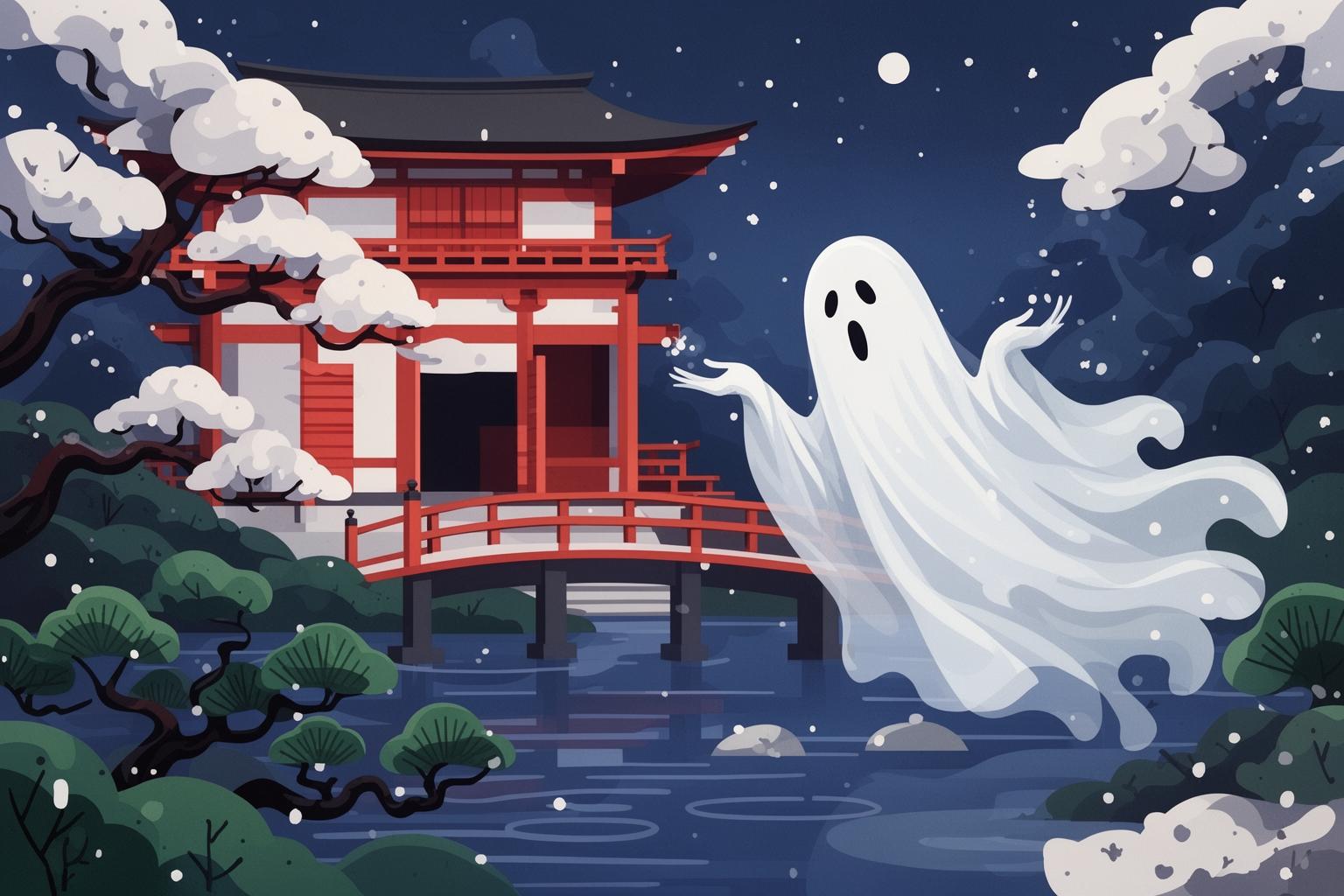
So, let’s return to where we began. That strange, electric sensation on that Japanese mountain trail—the feeling of being in a place both beautiful and subtly intimidating. Now you understand. That feeling is the psychic echo of over a thousand years of intense spiritual practice. You weren’t merely walking a path. You were walking on an energy grid, a circuit of power, a story etched into the landscape. You were walking through a ghost story. The ghosts are the countless yamabushi who trod the same path, chanting the same sutras, enduring the same trials. Every oddly placed rock, every unnaturally steep staircase, every ancient, roped-off tree is a character in that narrative. They are artifacts in a living museum where the exhibits aren’t behind glass; they are the very ground beneath your feet and the air you breathe. The trail is a conduit, linking you not just to nature, but to the deep, accumulated history of human intention. It’s infused with the prayers, sweat, pain, and moments of profound insight from generations of seekers. You don’t need to believe in kami or grasp esoteric Buddhist teachings to feel this. You only need to be present and attentive. You just have to be open to the possibility that a place can carry memory. So, next time you plan a hike in Japan, remember this: look a little closer at the trail map. Choose the path that feels a little older, a little stranger. And when you’re there, walking among the silent cedars, and that shiver runs down your spine—that sense of awe beyond the view—lean into it. You’ve tapped into the mainframe. You’ve logged onto the ancient network. You’re not just a tourist anymore. You’re a pilgrim, whether you intended to be or not. And the mountain is weaving its slow, powerful magic on you. It’s a whole vibe. Seriously.