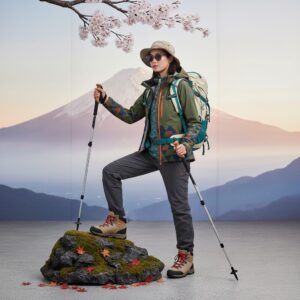
What’s up, fellow travelers! Ayaka here, coming at you straight from the heart of Japan. Today, we’re diving deep into a vibe that’s, no cap, my absolute favorite combination: the nostalgic, dreamy soundwaves of City Pop and the breathtaking, soul-stirring scenery of Japan’s mountain passes, or as we call them, ‘toge’ (峠). If you’ve ever found yourself cruising down a coastal highway at sunset with Tatsuro Yamashita on the speakers, feeling that main character energy, then you already get it. Now, imagine taking that exact feeling and transplanting it onto a winding mountain road, surrounded by ancient forests, with views that absolutely slap. It’s a whole mood, a sensory experience that connects the retro-futurism of 80s Japan with the timeless beauty of its landscape. A toge isn’t just a pass; it’s a transition, a place between worlds, where countless stories of travelers, samurai, and pilgrims are etched into the very stones. It’s where you leave one reality behind and ascend into another. Pairing this journey with the smooth basslines, sparkling synths, and bittersweet vocals of City Pop? That’s where the magic happens. It’s the perfect soundtrack for watching the world unfold from a high vantage point, for feeling the wind in your hair, and for those moments of quiet reflection as you look out over a sea of clouds. So, grab your best headphones, lace up your hiking boots, and get ready to add some new destinations to your must-visit list. We’re about to explore the most iconic toge in Japan that are just begging for their own City Pop anthem. Let’s get this journey started.
For a deeper dive into hiking Japan’s nostalgic landscapes, explore the vintage soul of the Yatsugatake Mountains.
Irohazaka Winding Road: The Ultimate Initial D & City Pop Dreamscape

The Vibe Check
Alright, let’s start with a true icon. If you know, you know. The Irohazaka Winding Road in Nikko, Tochigi Prefecture, is nothing short of automotive poetry. It consists of two one-way roads twisting up and down a steep mountainside, famed for its 48 insanely sharp hairpin turns. Driving here feels like being dropped right into an arcade racing game or a dramatic anime montage. The precision of the curves, the blur of the guardrails, the constant gear shifts—it’s an adrenaline surge. But here’s the twist: slow down, put on some Toshiki Kadomatsu, maybe “If You Wanna Dance Tonight,” and the whole experience transforms. It turns from a race into a rhythmic dance. The climb builds like a crescendo of synths and scenery, while the descent plays out like a smooth cool-down track, full of funky basslines and sweeping vistas. Especially in autumn, when the mountain bursts into fiery reds, oranges, and golds, the visual feast is overwhelming—in the best way. It’s a sensory overload that perfectly matches the rich, layered production of a classic City Pop hit. You feel sophisticated, adventurous, and slightly detached from reality, watching the world roll by from behind the wheel of a classic car you’re probably imagining you’re driving.
A Road Alphabetized by History
This road isn’t just a feat of engineering; it’s steeped in history. The name Irohazaka comes from “I-ro-ha,” the first three characters of an old 48-character Japanese alphabet. Each of the 48 hairpin turns is named after one of these characters, with signs marking each one in order. This unique feature adds a cultural depth to the drive. Historically, this route served as a path for Buddhist monks and pilgrims heading to the sacred grounds of Lake Chuzenji and Kegon Falls. The journey was about spiritual purification and enlightenment. Today, we’re more likely chasing breathtaking views than nirvana, but that ancient, sacred energy still lingers in the air. The towering cedar trees lining parts of the road seem to murmur stories from centuries long gone. It’s the blend of sacred and thrilling, ancient and modern, that makes Irohazaka so iconic—you’re literally driving through history, one perfectly executed turn at a time.
The Scenic Route: Up, Down, and Beyond
The journey splits into two distinct routes: the Daini (Second) Irohazaka, which takes you up the mountain, and the Daiichi (First) Irohazaka, which brings you back down. Near the summit, you must stop at the Akechidaira Plateau. From here, a ropeway carries you up to an observation deck with arguably one of the most breathtaking views in Japan. You get an unobstructed view of the majestic Kegon Falls, one of the country’s top three famous waterfalls, plunging nearly 100 meters, with the tranquil expanse of Lake Chuzenji and surrounding mountains beyond. It’s a postcard-perfect moment that almost feels unreal. The scale is humbling. This is an ideal spot to pause your driving playlist, step out, and absorb the scene. Breathe in the crisp mountain air. Watch the clouds drift past. The view here is the visual equivalent of a soaring vocal harmony in a Miki Matsubara track—powerful, emotional, and unforgettable. Once at the top, the Lake Chuzenji area offers an entirely new world to explore, from lakeside shrines and boat tours to hiking trails that provide even more stunning perspectives on this epic landscape.
Perfect City Pop Pairing
Creating the perfect Irohazaka playlist is an art. For the ascent, you need something energetic with a steady build-up, and Tatsuro Yamashita’s “Ride on Time” is the GOAT. Its driving rhythm and optimistic chorus perfectly capture the feeling of climbing higher, each turn unveiling a more expansive view. For the moment at Akechidaira Plateau, something grand and bittersweet fits best—Anri’s “Last Summer Whisper” or Mariya Takeuchi’s “Plastic Love” bring that reflective, emotional depth you feel when you’re literally on top of the world. For the descent, smooth, groovy, and funky tracks set the tone. Makoto Matsushita’s “Love Was Really Gone” offers the ideal laid-back soundtrack for the controlled, winding drive back to civilization. It’s about syncing the music not only to the scenery but also to the road’s rhythm, the pace of your journey, and the feelings it stirs.
Access & Pro Tips
The most common way to reach Irohazaka is from Nikko, a popular and easy day trip from Tokyo via the Tobu Nikko Line or JR. From Nikko Station, public buses run up the winding road to Lake Chuzenji. But to truly embrace the City Pop experience, renting a car is best. This lets you stop at viewpoints whenever you wish and, of course, control your soundtrack. The prime time to visit is during autumn foliage season, usually from mid-October to early November. Fair warning: you won’t be alone. The road gets notoriously congested, especially on weekends. My advice? Visit on a weekday, and go early—super early. Aim to start your ascent at sunrise. You’ll be rewarded with golden light, fewer cars, and a far more personal, zen-like experience. Here, the early bird truly gets the best views and clearest roads.
Usui Toge: Where History Whispers on a Retro Highway
A Tale of Two Prefectures
Next, we’re heading to a place that feels like a forgotten dream: Usui Pass, or Usui Toge. This legendary pass lies on the border between Gunma and Nagano prefectures and was once a critical—and notoriously challenging—section of the old Nakasendo highway connecting Edo (Tokyo) with Kyoto during the feudal era. Unlike the energetic buzz of Irohazaka, the atmosphere at Usui Toge is filled with nostalgia, exploration, and the quiet beauty of ruins being reclaimed by nature. Here, history feels vividly alive. You can almost hear the echoes of samurai, merchants, and imperial princesses who once walked these same paths. The air is thick with stories. It’s the ideal place to listen to mellow, introspective City Pop—the kind of music that feels like a faded photo or a half-remembered memory. Imagine Taeko Onuki’s album “Sunshower” playing softly as you wander through patches of sunlight and moss-covered stones.
The Abandoned & The Active
What makes Usui Toge so captivating are its layers of history, visible through the different routes crossing it. There’s the modern highway, a smooth ribbon of asphalt that cars speed along. But the true magic lies in the old paths. The most remarkable among these is the Apt-no-Hosomichi trail, which follows the route of a decommissioned railway line. This was the Usui Line, an engineering marvel from the Meiji era that used a special rack-and-pinion system to haul trains up the steep slope. The line was closed in the 1960s, and the old roadbed has since been transformed into a stunning hiking trail. Walking this path feels like stepping into a Studio Ghibli film: surrounded by dense forests, with the silence broken only by birdsong and your footsteps crunching on gravel. It’s a journey into a quieter, slower past—a stark contrast to the rush of modern life only a few kilometers away.
Hiking the Apt-no-Hosomichi
Let’s dive into the details of this hike because it’s truly epic. The trail stretches about six kilometers, connecting the old station of Yokokawa on the Gunma side with Karuizawa on the Nagano side. The absolute highlight—the money shot—is the Meganebashi, or “Spectacles Bridge.” This colossal red-brick arch viaduct soars over a valley and is one of the largest of its kind in Japan. It’s a breathtaking piece of Meiji-era industrial architecture, softened now by time and nature. You can walk across the top of it, and the views are spectacular. But the adventure doesn’t end there. The trail passes through a series of old railway tunnels. Stepping into the cool, damp darkness of a long brick tunnel and then emerging back into the bright green forest is a sensory experience. The temperature dips, sounds echo strangely, and with every step, there’s a thrilling sense of discovery. It’s this constant interplay between light and dark, open air and enclosed space, that makes the hike so compelling and cinematic.
Karuizawa & Yokokawa
The two towns framing the pass are striking in their contrasts and are destinations in their own right. On the Nagano side is Karuizawa, a chic and sophisticated mountain resort town known for its upscale shopping, beautiful villas, and a trendy, international vibe. It’s the kind of place you’d expect to see the characters from a City Pop album cover relaxing for the weekend. On the Gunma side lies Yokokawa, a quieter, more nostalgic town deeply connected to its railway history. Its claim to fame is the Toge no Kamameshi, a delicious and iconic ekiben (station bento) that has been sold for decades. This meal features rice cooked with chicken, shiitake mushrooms, bamboo shoots, and other ingredients, all served in a reusable ceramic pot. Grabbing a kamameshi after your hike is an essential part of the Usui Toge experience. It’s a taste of local history, and absolutely delicious. The contrast between sleepy, retro Yokokawa and vibrant, modern Karuizawa perfectly captures the dual nature of the pass itself.
City Pop Soundtrack for a Bygone Era
The mood at Usui Toge is deeply nostalgic and tinged with melancholy. It’s about the beauty of things no longer in use—the romance of decay. The ideal City Pop soundtrack here leans toward the more atmospheric and soulful side. Junko Ohashi’s “Telephone Number” carries a wistful quality perfect for the mood, evoking a longing to reconnect with the past. The warm, analog sounds of these tracks—the gentle electric pianos, soft strings, and sighing vocals—blend beautifully with the weathered brick viaducts and the quiet dignity of the old trail. This is music for wandering, reflecting, and feeling the weight and wonder of time. You’re not here for a party; you’re on a pilgrimage to a forgotten era, and your soundtrack should mirror that deep, soulful vibe.
Getting There
Accessing the Apt-no-Hosomichi trail is straightforward. The easiest route is to take the Hokuriku Shinkansen to Karuizawa. From Karuizawa Station, catch a local bus toward Yokokawa and get off at Kumanokotai Shrine, near the top of the pass and a great starting point to hike down toward the Meganebashi. Alternatively, you can begin on the Gunma side by taking a local train on the Shin-Etsu Main Line to Yokokawa Station. Nearby is the Usui Pass Railway Heritage Park, and the trailhead is just a short walk from there. Hiking from Yokokawa up to the Meganebashi and back is a popular option. Whichever way you choose, be sure to wear comfortable shoes, bring water and snacks, and a flashlight is definitely recommended for the tunnels since it gets quite dark inside!
Hakone Toge: Fuji Views, Onsen, and Lakeside Grooves

The Classic Tokaido Route
Let’s shift our focus now to a place that embodies pure, unfiltered classic Japan: Hakone. This isn’t just any pass; it’s an expansive geothermal marvel nestled within the caldera of an ancient volcano. Hakone Toge was one of the most significant and demanding checkpoints on the old Tokaido road—the main thoroughfare linking the shogun’s capital in Edo to the imperial court in Kyoto. For centuries, every traveler had to pass through here, and that historical importance is still palpable today. The atmosphere blends stunning natural beauty, deep-rooted history, and luxurious resort relaxation. It’s less about a solitary hike and more about a fully immersive travel experience. This is the weekend escape City Pop artists endlessly celebrated—fleeing Tokyo’s concrete jungle for fresh mountain air, lakeside cruises, and a refined, carefree vibe.
Views that Slap
The highlight of Hakone, the image gracing countless postcards, is the view of Mount Fuji—and trust me, it never loses its charm. On clear days, seeing that perfect, snow-capped peak soaring above the deep blue waters of Lake Ashi is a memory in the making. There are numerous spectacular vantage points to take in this sight. One standout spot is the Hakone Detached Palace Garden, a gorgeous park perched on a peninsula stretching into the lake. Another prime location is the Hakone Ropeway, where the cable car glides over the steaming, sulfurous volcanic vents of Owakudani valley. The striking contrast between the tranquil lake, the volcanic landscape, and the majestic Fuji-san in the distance is simply breathtaking. It’s a powerful, dynamic scene that humbles you in the best possible way. Such epic views call for an equally epic soundtrack—think sweeping orchestral arrangements with a strong, soaring chorus.
More Than Just a Pass
Hakone is an absolute playground for travelers. The journey itself is part of the adventure. The Hakone Tozan Railway is a charming mountain train that zigzags up steep slopes using a series of switchbacks—a thrilling ride through lush forests and dramatic gorges. Then there are the iconic “pirate ships” that glide across Lake Ashi, providing unbeatable Fuji views from the water. And naturally, the onsen are a major draw. Hakone is one of Japan’s most famous hot spring resorts, and soaking in a mineral-rich bath—especially an outdoor rotenburo overlooking the mountains—is the ultimate way to relax after a day of exploration. Add to that a world-class open-air museum showcasing sculptures by artists like Picasso and Henry Moore, a reconstructed samurai-era checkpoint, and a historic cedar-lined avenue, and you have a destination bursting with attractions. It’s a journey that unfolds in stages, combining various transport methods and experiences to create a grand adventure.
Your Hakone City Pop Mix
The Hakone vibe is breezy, refined, and effortlessly stylish. It’s a setting made for sunglasses, linen shirts, and an air of leisurely elegance. The City Pop soundtrack for Hakone should capture this mood. Think of the smoother, jazz-inflected side of the genre. Yurie Kokubu’s “Just a Joke” is perfectly light and danceable for a sunny lakeside afternoon. Hiroshi Sato’s album “Awakening” offers pure seaside-to-mountains bliss with mellow keyboards and cool, relaxed vocals. These songs feel like a gentle breeze, like sipping a chilled drink on a hotel balcony overlooking a stunning view. It’s aspirational music for an aspirational destination—less about the raw grit of conquering a pass and more about arriving in style and savoring the high life, a core theme of City Pop.
Navigating the Loop
At first, Hakone’s many modes of transport can feel a bit overwhelming. The best way to navigate it all is with the Hakone Free Pass. Available from Shinjuku in Tokyo or at Odawara Station, this pass covers nearly all transportation within the Hakone area—the Tozan train, cable car, ropeway, pirate ships on the lake, and local buses. It enables you to complete the famed “Hakone Loop,” a circular route hitting all the major sights. I recommend doing the loop counter-clockwise to potentially beat some crowds. Start with the train up to Gora, then hop on the cable car and ropeway over Owakudani, cruise across Lake Ashi, and finish with a bus ride back toward the start, making stops at the cedar avenue and checkpoint. It’s a full-day adventure, so begin early and take it slow—Hakone isn’t a place to rush.
Shibu Toge: Hitting the Highest Point with Maximum Chill
Japan’s Highest National Highway
Prepare to ascend toward the heavens, as our next destination is Shibu Toge, the highest point on any national highway in Japan. At an elevation of 2,172 meters (over 7,100 feet!), this pass offers a completely different experience. The air here is thin, crisp, and pure. The landscape feels raw, wild, and alpine. Forget the dense, lush forests of Hakone or Nikko; this is a realm of volcanic rock, resilient dwarf pine trees, and vast, open skies. In early summer, enormous walls of snow often still line the road, creating a surreal corridor of white. The sensation here is one of exposure and vastness. You truly stand on Japan’s roof, with panoramic views stretching endlessly. It’s a humbling, almost spiritual encounter, a place where you sense nature’s raw power. This high-altitude chill zone calls for a soundtrack that’s just as expansive and atmospheric.
The Shiga-Kusatsu Kogen Route
Shibu Toge is the crown jewel of the Shiga-Kusatsu Kogen Route, a stunning scenic drive connecting the Shiga Kogen ski resort area in Nagano with Kusatsu Onsen in Gunma. This road is an event all on its own. It meanders through some of Japan’s most dramatic volcanic terrain. The region around Mount Kusatsu-Shirane is particularly surreal, characterized by barren, moon-like landscapes and the strikingly acidic emerald waters of Yugama Crater Lake (though access to the crater is often restricted due to volcanic gases, so always check local conditions). Driving this route can feel like a journey to another world. The road is only open from late April to early November, as winter completely buries it in snow. The drive itself is an adventure, with sweeping curves and breathtaking vistas at every turn. There’s a real sense of remoteness, deep within the untamed heart of the Japanese Alps.
Onsen at Both Ends
One of the best features of the Shiga-Kusatsu Kogen Route is what awaits at each end. It’s a journey framed by two of Japan’s most iconic onsen towns. On the Nagano side lies Shibu Onsen, a charming, old-fashioned hot spring town with cobblestone streets where visitors wander in yukata robes. It’s also adjacent to Jigokudani Snow Monkey Park, home to Japanese macaques that famously bathe in natural hot springs—an absolutely iconic sight. On the Gunma side sits Kusatsu Onsen, consistently ranked among Japan’s top three onsen resorts. It’s renowned for its potent acidic waters and the dramatic “Yubatake” (hot water field) at the town center, where hot spring water gushes from the ground and cools in massive wooden chutes. Being able to begin the journey with a relaxing pre-drive soak and end it with a soothing post-drive recovery makes this toge experience truly special—it’s the ultimate onsen road trip.
Ethereal Beats for the High Altitude
The atmosphere at Shibu Toge is vast, open, and nearly psychedelic. The scale of the landscape, the clarity of the air, the sensation of soaring so high—it’s a journey for the senses. The perfect musical pairing here is the jazz fusion side of City Pop. Bands like Casiopea or T-Square truly capture this expansive, ethereal vibe. Their instrumental tracks, featuring intricate, soaring guitar solos and shimmering keyboard melodies, provide the ideal soundtrack for this setting. Casiopea’s “Asayake (Morning Glow)” stands out as the ultimate Shibu Toge anthem, with its clean, crisp sound and uplifting energy perfectly reflecting the sunrise over 2,000 meters up. More ambient, spacey tunes by artists such as Taeko Onuki or the synth-rich sounds of Yellow Magic Orchestra also fit brilliantly. This music gives you room to breathe, mirroring the vast sky around you.
The Journey Plan
This adventure is best—and practically only—done by car. Having the freedom to stop at numerous lookout points is essential. You can start from either Nagano or Gunma. A popular itinerary is to take the shinkansen to Nagano, rent a car, visit the snow monkeys, then drive the route to Kusatsu, possibly staying overnight before heading back to Tokyo. The ideal time for this trip is summer, when the scenery is lush and green, or autumn, for spectacular fall colors. Be prepared for rapidly changing weather at this elevation. Even if it’s warm down in the valley, it can be cold and windy at the pass, so bring layers. Also, ensure your car has a full tank before starting the climb, as no service stations are available along the way. This is a true adventure into the wild, so a bit of preparation makes all the difference.
Koli Pass: Deep Chichibu and the Pilgrim’s Path

Into the Deep Countryside
For our final toge, let’s leave the well-worn path far behind. Let’s head to Koli Pass, or Koli-toge, a modest yet historic trail nestled deep within the mountains of Chichibu-Tama-Kai National Park, on the border of Yamanashi and Saitama. This isn’t a flashy driving route with famous viewpoints. There are no ropeways or pirate ships here. This toge is for purists, for hikers seeking the quiet, rugged core of rural Japan. The atmosphere here invites immersion and tranquility. It’s about the sound of your own breath, the rustling leaves in the breeze, the scent of damp earth and cedar. It’s a meditative journey that deeply connects you to the land. If the other passes were feature films, this one is an intimate documentary. It’s real, raw, and profoundly rewarding.
A Historic Trail
Koli-toge was once part of a vital trade route called the “Ome Kaido.” For centuries, merchants and pilgrims used it to travel between the provinces of Kai (modern Yamanashi) and Musashi (modern Saitama and Tokyo). Countless feet have walked this path over hundreds of years. Along the trail, you’ll find relics of its history: old stone signposts weathered by time still point the way, and small moss-covered Jizo statues, placed to protect travelers, quietly rest in the shade of ancient trees. Hiking here is more than a physical challenge; it’s a communion with history. You feel a tangible link to those who once carried their goods, worries, and hopes across these mountains. It’s a humbling and grounding experience.
The Hike Itself
The trail to Koli-toge is a true mountain hike. It leads you through dense, stunning forests filled with cypress, cedar, and beech trees. The path can be steep and challenging at times, but it’s well-maintained. Here, the journey is the destination. It’s about the small moments: the way light filters through the canopy, a crystal-clear stream tumbling over rocks, the sudden sight of a blooming wild azalea. While it lacks the grand panoramas of other passes, occasional clearings offer breathtaking views of the Chichibu mountains, range after range fading into the blue haze beyond. The pass itself is a simple, quiet saddle on the ridge. Arriving there feels like a true achievement. It’s a spot to sit, eat your onigiri, and simply be present in the profound silence of the deep mountains.
The Sound of Solitude
What kind of City Pop suits a place of such deep quiet and reflection? Something with a similarly organic, earthy vibe. The folk-influenced side of the genre is an ideal match. Takako Mamiya’s album Love Trip carries a soulful, slightly melancholic tone that fits the ancient trail’s mood perfectly. Gentle acoustic guitars and warm, understated vocals feel at home in the forest. The mellow, introspective works of artists like Kingo Hamada or early EPO also resonate here. This music doesn’t demand your attention; it acts as a subtle, supportive soundtrack for a journey inward. It’s about finding a quiet groove, a gentle rhythm that matches your footsteps. Music that enhances silence instead of breaking it.
Access and Preparation
This hike is suited for experienced and well-prepared travelers. Access is usually by bus from train stations like Enzan on the JR Chuo Line (Yamanashi side) or Mitsumineguchi on the Chichibu Railway (Saitama side). Bus services to trailheads can be infrequent, so checking schedules beforehand is essential to avoid getting stranded. Proper hiking gear is a must: sturdy boots, waterproof layers, a map (and the skill to read it), a compass or GPS, and ample food and water. There are no shops or vending machines once on the trail. This is serious mountain terrain, deserving of your full respect. But for those who prepare well, the reward is an experience of Japan few tourists ever encounter—a quiet, authentic, and unforgettable journey over a truly historic toge.
And there you have it. From the adrenaline-fueled curves of Irohazaka to the serene solitude of Koli-toge, Japan’s mountain passes offer a world of adventure, beauty, and history. They provide the perfect stage to create your own cinematic moments, with the timeless sounds of City Pop as your personal soundtrack. Each pass has its own character, rhythm, and story. So go ahead—make that playlist, choose your destination, and hit the road. Discover the magic where retro soundscapes meet timeless landscapes. Trust me, it’s a vibe you’ll never forget. Catch you on the next mountain road! Peace out.