Yo, let’s get real for a sec. You’ve seen the photos on your feed. A lone figure in white robes standing under a pounding waterfall. A mysterious procession snaking through ancient cedar forests. A stunning shrine perched on a misty peak. Japan’s mountains hit different, that’s for sure. It’s a whole aesthetic. But here’s the thing—what you’re seeing isn’t just a scenic hike with a spiritual-themed filter slapped on. It’s not about bagging a peak for the ‘gram or finding your zen in a Lululemon-sponsored yoga retreat. This is something older, deeper, and honestly, a lot more intense. It’s the living echo of Shugendo, the path of the mountain ascetic. And it begs the question: in a country known for its hyper-modernity and creature comforts, why are people still drawn to this hardcore, ancient practice of intentional suffering in the wild? What’s the ultimate goal of trading a comfy apartment in Tokyo for a freezing waterfall and a diet of, well, almost nothing? It’s a vibe that’s both fascinating and kinda confusing from the outside. You see the surface, the epic visuals, but you feel like you’re missing the source code. Why is this a thing? Before we dive deep into the philosophy and the grind, let’s ground ourselves. The map below points to the Dewa Sanzan, one of the most important hubs for this whole spiritual world. This isn’t just a location; it’s a living textbook, a spiritual training ground carved from rock and root. Look at it, feel its remoteness. This is where the theory ends and the practice begins.
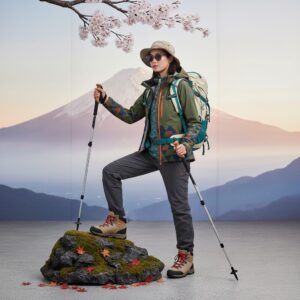
This intense, ascetic path stands in stark contrast to the modern, fashion-driven Yama Girl vibe that has recently transformed Japan’s hiking culture.
The Shugendo Drip: More Than Just a Hike
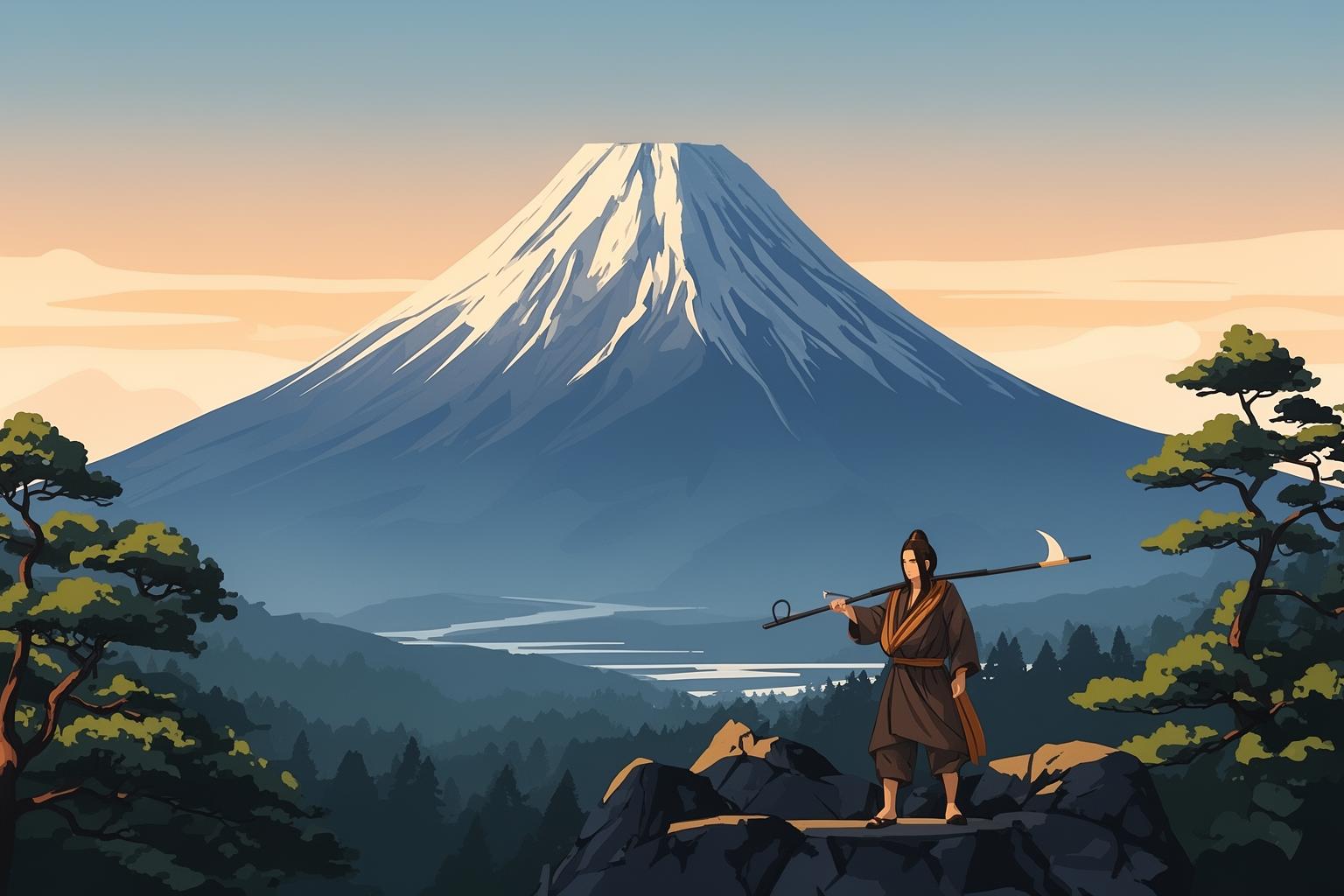
So, you’re considering hiking in Japan. You probably have a certain image in mind: high-tech gear, well-kept trails, perhaps an onsen and a cold beer waiting at the end. And yes, you can definitely have that experience. But Shugendo? That’s a completely different world. It’s a practice where the mountain isn’t something to conquer, but something to submit to. The whole purpose is to let the mountain break you down and rebuild you. This isn’t a pastime; it’s transformation, complete with its own uniform, tools, and subtle spiritual legends—the Yamabushi.
Breaking Down the Aesthetic: It’s Not About the Summit Selfie
First, let’s discuss the attire. When you see Shugendo practitioners, they’re not flaunting the latest Arc’teryx gear. Their clothing, or “drip,” carries deep symbolism. The most recognizable piece is the white garment, the shiroshōzoku. From afar, it might appear to be a simple white robe, but its significance is profound. In Japan, white symbolizes purity, yet also death. When a Yamabushi dons these robes, they symbolically die to their ordinary life. They shed ego, social status, and even their name. They become a blank canvas, ready to absorb the mountain’s teachings. This isn’t a fashion choice; it’s a declaration of purpose. It’s the ultimate anti-flex, a conscious rejection of the individualism and self-branding that dominate modern life. Often, they wear a small pillbox hat called a tokin, said to symbolize a stupa or a crown of enlightenment, but functionally serves as a drinking cup. Everything has its purpose. Then there’s the staff, the shakujō. It’s more than just a walking stick. Often topped with metal rings that jingle as they walk, this sound serves several roles: it scares off dangerous animals like bears and snakes, maintains a meditative rhythm in their steps, and is believed to purify the path ahead. The staff is a weapon, a tool, and a ritual instrument all at once. And don’t forget the conch shell trumpet, the horagai. Its deep, resonant blast echoes through valleys, used to communicate between groups, mark moments in rituals, and is believed to ward off evil spirits. The sound is primal and ancient; it literally alters the vibration of the air around you. Each part of this attire acts as spiritual technology, refined over centuries. It’s designed to constantly remind the wearer of their purpose and facilitate interaction with the spiritual terrain they traverse. The aim isn’t to look impressive for a summit photo. The aim is to become an extension of the mountain itself, to attune so deeply to the environment that the boundary between self and nature dissolves. The journey is the destination, and the outfit is the uniform for that inner pilgrimage.
Yamabushi: The Original Mountain Hermits
So, who are the people who live this way? They’re called Yamabushi, which literally means “one who prostrates on the mountain.” It’s an apt name. They don’t conquer; they bow to nature’s power. These figures are some of the most intriguing and misunderstood in Japanese history. They were the original spiritual freelancers—unbound by any single temple or shrine. They operated in the liminal spaces, both geographically and socially. Historically, mountains were viewed as the frontier; wild, dangerous, and outside the strict control of the imperial court in Kyoto or the shogun in Edo. The Yamabushi made this wilderness their home. They were a diverse band of mystics, healers, exorcists, and martial artists. Villagers sought them out to perform rituals for good harvests, heal ailments, and provide guidance. Living beyond rigid social hierarchies, they were seen as having access to a different kind of power—the raw, untamed force of the mountains and the kami that dwell there. They were rebels in a way. Choosing the Yamabushi path meant rejecting the established order. It was a route for those who didn’t fit in, for those seeking knowledge beyond scrolls and sutras. They were, and remain, masters of embodied wisdom. Their understanding stemmed from direct experience—the sting of icy water, the burn of fatigued muscles, the gnawing of hunger. This history is essential to grasping today’s vibe. The spirit of the Yamabushi is one of fierce independence and a deep, almost stubborn belief that true wisdom lies beyond civilization’s confines. They were the original bio-hackers, utilizing nature’s extreme challenges to reprogram consciousness long before the term existed. This legacy of being spiritual outsiders and finding strength on society’s margins is a major part of the appeal for modern practitioners, even those who only enter the mountains a few days each year.
The “Why” Behind the Grind: Unpacking the Spiritual Tech
Alright, we get it. The aesthetic is profound, the history fascinating. Yet the central question remains: why endure such hardship? Why the fasting, sleepless nights, grueling treks, and cold-water endurance tests? This isn’t just about toughness. Each of these practices, or gyō, is a carefully calibrated technique aimed at inducing a specific state of consciousness. It’s a form of spiritual technology that uses the body as a tool to recalibrate the mind and spirit. It’s about systematically breaking down the ego until something deeper, something more fundamental, can surface. This is the essence of Shugendo, and it’s where things get truly intriguing.
It’s a Body Thing: Shugendo as Embodied Knowledge
In many Western spiritual traditions, the focus is often intellectual. You read sacred texts, listen to sermons, pray with words, and contemplate abstract ideas. Shugendo flips this approach entirely. Its core belief is that the body is not a distraction from spirit; it is the primary vessel for spiritual attainment. You don’t think your way to enlightenment; you walk your way there. The mountain itself is the mandala, the sacred diagram. Every rock, stream, and peak is a character in a living scripture that can only be “read” with your feet. Take taki-gyō, or waterfall meditation, for example. On the surface, it seems like an extreme test of endurance — and it is. The water is often freezing cold, and its force overwhelming. But the goal isn’t simply to prove toughness. The shock of the cold water acts as a hard reset for the nervous system, pushing you out of your endlessly chattering mind into the raw, immediate present. You can’t be distracted by your email inbox when icy water crashes down on your head. All you can do is breathe and chant. In this sensory overload, the ego loosens its grip. Likewise, the long, exhausting hikes, often done with little food and sleep, are designed to push you beyond your perceived limits. When your body screams with exhaustion, your mind has no choice but to quiet down. The usual anxieties and looping thoughts that trouble daily life simply lack the energy to persist. This is what the Yamabushi call mushin, or “no mind.” It’s not about emptiness but about entering a state of flow and intuitive awareness in which your actions become spontaneous and perfectly attuned to your environment. You stop thinking about walking, you just walk. The knowledge gained in this state isn’t intellectual; it’s visceral. It’s a cellular understanding of your endurance and connection to the world. This knowledge resides in muscles and bones, not just the brain. That’s why you can’t simply read a book about Shugendo and “get it.” It has to be lived. This approach critiques a modern world that often traps us in our heads, disconnected from our bodies and the natural world.
Syncing with the Kami: Animism Amplified
To truly understand Shugendo, you need to rethink your idea of “religion.” It’s not a neat system centered on a single holy book or a singular god. Instead, it’s a beautifully messy, syncretic fusion—a spiritual remix blending ancient indigenous Japanese mountain worship, esoteric Buddhism, and elements of Daoism. At its heart lies a profoundly animistic worldview. The mountains aren’t merely a beautiful backdrop for spiritual practice; they are the practice. They brim with life and power, inhabited by a vast pantheon of kami (deities, spirits, divine essences). Every ancient tree, prominent boulder, and waterfall is considered a potential dwelling place for a kami. This is no metaphor. For the Yamabushi, it is literal reality. Their aim is not to worship these deities from afar but to embody them. They seek to absorb the mountain’s power, syncing with its energetic frequency. Through ascetic practices, they purify themselves to become fitting vessels for this divine force. A key figure in the Shugendo pantheon is Fudō Myō-ō, a wrathful Buddhist deity surrounded by flames. He’s not malevolent; his fierce expression and sword are meant to cut through delusion and destroy barriers to enlightenment. Yamabushi often perform rituals before massive bonfires, chanting and making mudras to channel the purifying power of Fudō Myō-ō’s flames, seeking to internalize his unshakable determination. In other rituals, they connect with mountain gods, like the deity of Mount Ōmine, regarded as a manifestation of a powerful Buddha. By pilgrimaging to this sacred peak, they symbolically merge with him. This is participatory spirituality—a collaboration with the divine forces of nature. The Yamabushi don’t just pray to the mountain god; they strive to become the mountain god, bringing that power back to the human realm for healing and guidance. This contrasts sharply with Western notions of a transcendent God separate from the material world. In Shugendo, the divine is immanent—present in the rustling leaves, the chill of streams, and the sheer cliff faces. The grind of ascetic practice attunes your senses to perceive it.
The Cycle of Death and Rebirth: A Hardcore Spiritual Transformation
At the very heart of Shugendo lies a powerful, recurring theme: death and rebirth. This isn’t merely a philosophical idea; it’s a psycho-spiritual process the pilgrimage is designed to enact. As noted, when a practitioner dons white robes, they symbolically die. They leave behind their social identity, past, and future at the mountain’s foot. This stage is called shime or nyūbu, entry into the sacred mountain realm, also seen as entering the world of the dead—or a womb. The mountain journey is structured as a traversal through the Jikkai, the Ten Realms of Buddhist cosmology. Certain valleys represent the realm of hungry ghosts, treacherous ridges the realm of beasts, and difficult climbs the realm of hell. The hardships faced here are not random; they are direct, physical experiences of these spiritual states. Hunger, fear, and pain all form part of the curriculum. Yamabushi guides, known as sendatsu, lead practitioners through these trials, using chants and rituals to frame the experience. The entire process is a controlled descent into a symbolic underworld—a purification by fire, stripping away all that is non-essential. The idea is that by confronting one’s physical and mental demons within this sacred container, one can overcome them. After enduring these trials, the practitioner reaches the summit or the pilgrimage’s final sacred site. This moment represents rebirth. Having faced death and journeyed through the lower realms, they emerge transformed. They are no longer the person who entered the mountain but have gained new spiritual power, resilience, and a deeper understanding of life and death. This is the ultimate spiritual “glow-up,” a transformation earned through sweat, fear, and sheer will. This framework clarifies some of the tradition’s most extreme and misunderstood aspects, like sokushinbutsu, the rare historical practice where a few ascetics undertook a years-long self-mummification through extreme diet and meditation. Although no longer practiced, it embodies the ultimate death-and-rebirth ideal: conquering the physical body to achieve spiritual permanence. For most practitioners, the rebirth is symbolic but no less profound. They return to daily life carrying a new perspective—a quiet confidence forged in the sacred mountain’s crucible.
Modern Shugendo: Is It Still Relevant or Just Spiritual Tourism?
Talking about medieval mountain mystics is one thing, but what does Shugendo look like in the 21st century? In an era of smartphones and bullet trains, does this ancient, rugged practice still hold relevance? The answer is a definite—and perhaps unexpected—yes. Although its forms have evolved, the core essence—the pursuit of transformation through direct experience in nature—is arguably more pertinent than ever. However, this growing popularity prompts a crucial question: is it still authentic, or has it been diluted into a packaged experience for spiritual tourists?
The Weekend Yamabushi: A Modern Escape
Today, most people who engage in Shugendo are not full-time, mountain-dwelling ascetics. They are ordinary individuals: office workers, teachers, artists, entrepreneurs. They come from all walks of life, young and old, men and women. For a few days or a week, they swap their suits and laptops for white robes and a pilgrim’s staff, becoming “weekend Yamabushi.” Far from a criticism, this shift is actually key to its contemporary relevance. Shugendo now serves a new purpose, acting as a powerful antidote to the specific ailments of modern urban life: relentless pressure, information overload, and a profound disconnection from the body and nature. For those who spend their weeks in front of screens in climate-controlled offices, plunging into an icy river or hiking hours over uneven forest trails is a radical and restorative jolt to the system. It’s a deliberate, profound act of “touching grass.” These modern programs, offered by temples and traditional Shugendo lineages, provide structured ways to disconnect from daily routines and reconnect with something more fundamental. They offer temporary community, shared purpose, and clear challenges, sharply contrasting with the often vague and unsatisfying struggles of modern work life. On the mountain, the goal is simple: just keep putting one foot in front of the other. The feedback is immediate—you feel cold, tired, hungry. This simplicity is deeply relieving. It’s a reset button, a way to clear mental clutter and return to daily life feeling lighter, stronger, and with renewed perspective. Problems at the office seem much smaller after spending a night chanting in a remote mountain hut.
The Authenticity Question: Real Deal vs. Insta-Bait
With this rise in popularity naturally comes skepticism. When you can book a Shugendo experience online, is it genuinely authentic? Or just a spiritual-themed adventure tour? This is a valid and complex question. There’s no doubt there is a spectrum of intensity. Some experiences are explicitly designed as introductions for beginners, focusing on safety and explaining the basic philosophy, often involving shorter hikes, milder fasting, and more comfortable accommodations. On the other end are the intense training sessions, or daigyō, which are physically and mentally demanding, usually reserved for those with years of practice. So, are the beginner-friendly versions “inauthentic”? It depends on your definition. If authenticity means perfectly replicating the life of a 12th-century Yamabushi, then no. But that is a rigid and unhelpful criterion. Cultures evolve. Traditions adapt or they perish. A more useful question is whether the core principles are maintained. Does the experience still emphasize direct bodily encounter over intellectual belief? Does it promote deep respect for the sacredness of nature? Does it use hardship as a tool to strip away the ego and facilitate self-discovery? In most reputable programs, the answer is yes. Intention is paramount. Participants are not merely seeking cool photos; they genuinely seek something deeper. Choosing to participate, submitting to the rules and guidance of the sendatsu, wearing symbolic robes, and sincerely facing the challenges—this is what makes the experience real. The ritual’s power resides in the participant’s wholehearted engagement. In this light, modern Shugendo is less about perfect historical reenactment and more about being a living tradition that skillfully adapts ancient spiritual technology to meet contemporary human needs.
A Chinese Perspective: Echoes of Daoist Hermits
As someone deeply fascinated by Chinese culture, I can’t help but notice intriguing parallels between the Japanese Yamabushi and the longstanding tradition of Daoist hermits and mountain sages in China. This is not a uniquely Japanese phenomenon but rather a local expression of a broader East Asian worldview that honors mountains as sacred spaces. In China, mountains like Wudang and Huashan have long been retreats for those wishing to escape court politics, cultivate qi (life energy), and pursue immortality—whether literal or spiritual. These Daoist masters, much like the Yamabushi, sought alignment with the Dao, the universe’s natural flow, most palpable far from urban centers. They developed breathwork (qigong), movement (tai chi), and alchemical practices, all aimed at harmonizing the body with the cosmic energies of the mountain landscape. The imagery is strikingly similar: a solitary figure meditating in a remote cave, a master endowed with supernatural abilities drawn from close communion with nature. Both traditions regard mountains as sources of immense power and sites of profound transformation. Both distrust purely textual knowledge in favor of learning through direct, embodied experience. Viewing Shugendo through this lens helps place it in context. It’s not some “quirky Japanese” phenomenon but part of a rich tapestry of mountain asceticism across East Asia. It underscores a shared cultural understanding: true wisdom and power are not found in society’s centers but in the wilderness, on the margins, through disciplined, respectful engagement with nature’s forces. This cross-cultural resonance highlights the universal human quest for meaning and connection in the natural world.
Hiking a Sacred Mountain: What to Expect When You’re Expecting Zen
Suppose you’re not quite ready to commit to the full Yamabushi experience, but you’re curious. You choose to hike one of these sacred mountains—such as the Dewa Sanzan in Yamagata or Mount Kōya in Wakayama—as an ordinary tourist. It’s important to realize that you’re not merely entering a national park. You are stepping into a liminal space, where the boundary between the physical and spiritual realms feels especially thin. The atmosphere is distinct, and understanding what to expect can transform your trek from a simple stroll into a profoundly moving encounter.
It’s More Than Just a Walk in the Park: The Vibe Check
The instant you step onto a trail like the 2,446 stone steps ascending Mount Haguro, you sense it. The air shifts, becoming heavy and filled with a pregnant silence. You walk beneath enormous cedar trees, centuries old, their trunks resembling the pillars of a vast, green cathedral. The forest floor is covered with vibrant, lush moss, and the only sounds are the drip of water, a crow’s call, and your footsteps on the ancient stones. This is not a neutral setting. It is a space consecrated by millions of pilgrimages, centuries of chanting, prayer, and rigorous ascetic practices. The very rocks and trees seem imbued with this history of human devotion. You’ll pass small, weathered shrines nestled in tree roots, marked with shimenawa—sacred ropes adorned with white paper streamers (gohei), signaling the presence of a kami. These are not merely decorations; they are active places of worship, indicators of sacred territory. You might catch the distant, haunting call of a horagai echoing through the forest, reminding you that practitioners are actively sharing this space. The atmosphere can be deeply peaceful, yet somewhat intimidating. There’s a sensation of being observed—not in an eerie way, but in a manner that makes you feel small, mortal. It’s a humbling experience that commands reverence. You come not to conquer the mountain, but to listen to it. The aim is to attune your inner frequency to the quiet, powerful vibration of the place itself.
Your Role as an Observer: How to Hike with Respect
In light of this charged atmosphere, your conduct as a visitor is important. This goes beyond simply “Leave No Trace.” It’s a matter of cultural and spiritual respect. Above all, remain quiet. This is not the place for loud conversations or blasting music from a speaker. Silence is one of the most precious aspects of these places. Honor it; contribute to it. Move slowly and mindfully. Notice the details: the way sunlight filters through the canopy, the texture of the moss on a stone lantern, the subtle scent of damp earth and incense. Treat every element of the landscape as part of a sacred whole. When you come across a shrine, no matter how small, it’s customary to show a sign of respect—a simple, slight bow of the head is sufficient. You don’t need to be a believer to recognize that you are in a place sacred to others. Avoid touching or moving offerings, shimenawa ropes, or other ritual objects, as they have been placed with deliberate intention. If you encounter Yamabushi or other pilgrims, give them ample space. They are immersed in serious practice. A quiet nod is acceptable, but refrain from staring, taking intrusive photos, or attempting to engage them in conversation. You are a guest in their sacred space—and that space is the entire mountain. By adopting the mindset of a respectful observer, you do more than avoid being a disruption. You open yourself to the mountain’s unique energy. You shift from being a passive onlooker to an active participant in its sacred atmosphere. You allow the mountain to work its subtle magic on you, even if your visit lasts only an afternoon. It’s a practice of humility, awareness, and the recognition that some places wield a power that demands we meet them on their own terms, not ours.
The Takeaway: Why This Ancient Vibe Resonates Now
So, what is the final take on Shugendo and Japan’s sacred mountains? It’s easy to write it off as an obscure, outdated practice. But doing so misses the point entirely. Shugendo’s lasting power stems from its deep understanding of a fundamental human need—the need for real challenge, rites of passage, and a connection to something greater and more authentic than our fleeting egos. This philosophy asserts that true strength, clarity, and wisdom are not found in comfort and ease, but are forged through hardship, in the heart of the wilderness. In an increasingly virtual, sterile, and predictable world, the path of the mountain ascetic offers a radical alternative. It fully rejects the notion that a good life is necessarily an easy one. It suggests that by pushing our physical and mental boundaries, and symbolically shedding our former selves, we can tap into a deeper, more resilient, and more genuine way of being. The Yamabushi’s journey is not an escape from reality; it is a pilgrimage toward a deeper reality. Grasping this essence is crucial to understanding an important, often hidden, aspect of the Japanese cultural psyche. Beneath the polished surface of modern life lies a profound respect for discipline (shugyō), endurance (gaman), and the transformative power of nature. While not everyone dons white robes to hike mountains, these values quietly permeate the culture. So next time you see a photo of a waterfall ascetic or a misty mountain shrine, look beyond the surface. See it not as a relic of the past, but as a living, breathing response to a very modern challenge: how to feel truly alive in a world that often lulls us into slumber. It’s the ultimate philosophy of “touching grass,” a reminder that sometimes, the only way to find yourself is to get completely and utterly lost in the mountains.