Yo, what’s the deal? Keiko Nakamura here, your guide to the flip side of Japan’s neon-drenched, super-sleek image. We all know Tokyo’s a whole mood, a city living in 2049, and Kyoto’s got that timeless, sacred drip. It’s epic, for real. But low-key, there’s another Japan, a ghost in the machine, a world that’s been left behind. I’m talking about places where the party ended decades ago, but nobody bothered to clean up. These are the forgotten amusement parks, the concrete skeletons of Japan’s wildest economic dreams, and honestly? They’re serving major post-apocalyptic realness. Forget cherry blossoms for a sec; we’re going on a different kind of tour. This is for the explorers, the artists, the ones who see beauty in the breakdown. We’re diving deep into the world of ‘haikyo’—the art of exploring ruins. These aren’t just creepy spots to get your spook on. Nah, they’re way more profound. They’re accidental art installations curated by nothing but time, rain, and neglect. Each peeling mascot and vine-strangled roller coaster tells a story about the rise and fall of the Bubble Era, a time when Japan felt invincible and built fantasy worlds like there was no tomorrow. Well, tomorrow came, and it wasn’t what they expected. What’s left is a powerful, melancholic vibe, a perfect example of ‘mono no aware’—that beautiful sadness for the passing of things. It’s the feeling you get watching the final scene of an indie movie, but like, in real life, with more rust. So, if you’re tired of the usual tourist trail and want to see a side of Japan that’s raw, unfiltered, and hauntingly beautiful, you’re in the right place. Let’s get into the aesthetic of decay and explore the ghosts of Japan’s good times. It’s a vibe check on a national scale.
If you’re captivated by the melancholic beauty of these abandoned parks, you might also find a similar haunting atmosphere in Japan’s forgotten onsen hotels.
Nara Dreamland: The Sleeping Beauty Castle’s Final Bow
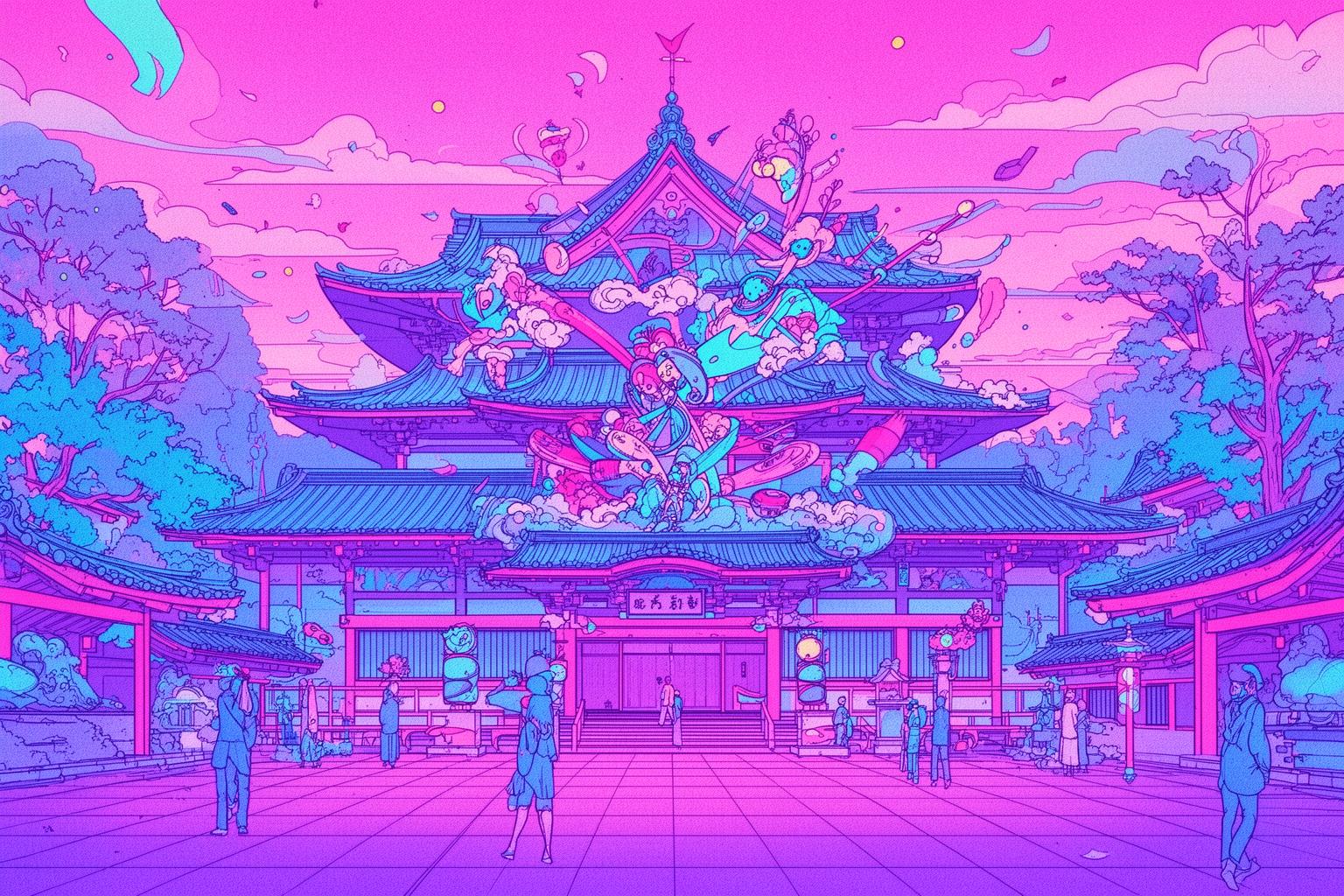
Let’s begin with the legend, the original, the one that essentially put Japanese haikyo on the global stage: Nara Dreamland. This place was more than just an amusement park; it was a bold statement. Opened back in 1961, it stood as Japan’s heartfelt, audacious, and completely unauthorized homage to Disneyland. Consider the context: Japan was rising from the post-war ruins, flexing its economic power, and brimming with infectious optimism. A businessman named Kunizo Matsuo visited the United States, saw Disneyland, and was so inspired he vowed, “I need to build this in Japan, like, right now.” He even enlisted engineers from Disney to assist, but when the licensing deal fell through, Matsuo did what any determined dreamer would: he built his own version anyway. For a time, it was pure enchantment. A pastel pink Sleeping Beauty-style castle welcomed visitors, a Main Street USA replica buzzed with shops, and classic rides like a Matterhorn-inspired coaster, monorail, and teacups whisked families away into a world of fantasy. It was the dream of a rising nation brought to life.
A Bubble-Era Fever Dream
The park thrived for decades. Generations of kids from the Kansai region forged core memories on its expansive grounds. It symbolized prosperity—a place where the emerging Japanese middle class could enjoy a slice of American-style fantasy without leaving the country. The park grew, adding new attractions, including its legendary centerpiece: the Aska wooden roller coaster. This towering wooden giant twisted through trees, its click-clack-click resonating throughout the park. Yet, the dream eventually faded. The real world intruded. Tokyo Disneyland opened in 1983, delivering the genuine, licensed magic. Then, the decisive blow came in 2001 with the launch of Universal Studios Japan just a short train ride away in Osaka. Suddenly, Dreamland seemed like a relic—a knockoff from simpler times. Attendance plummeted, the laughter faded, and the once-vibrant park began to feel worn and tired. After 45 years, the gates finally closed in 2006, and Nara Dreamland slipped into a deep, enchanted slumber.
The Post-Apocalyptic Vibe Check
Here begins Dreamland’s second chapter, its afterlife as a haikyo icon. What followed was a slow, beautiful, and utterly captivating takeover by nature. The park wasn’t demolished immediately; it was left to the elements. For a decade, it sat in silence, becoming a real-life Sleeping Beauty castle—not guarded by thorns but wrapped in vines and weeds. Urban explorers who ventured inside captured images that were pure post-apocalyptic poetry. The Aska coaster stood as the park’s decaying heart, its massive wooden frame engulfed by greenery, resembling a colossal prehistoric skeleton reclaimed by the jungle. It could have been a set piece straight from a Ghibli film, illustrating nature’s ultimate triumph. The pastel paint on the castle and Main Street facades peeled away, exposing the raw concrete beneath. The merry-go-round horses, frozen mid-gallop, gathered layers of dust and grime, their painted smiles turning melancholic and eerie. Walking through the silent park, explorers sensed an atmosphere thick with nostalgia and profound loss. The only sounds were the creaking metal swaying in the wind and the rustle of leaves. It was the quintessential ‘end of the world’ movie setting—except it was real. It felt like being the last person on Earth, wandering through the ruins of a civilization that once worshipped fun. The mood was less horror and more a deeply affecting meditation on impermanence. It was a tangible reminder that even the happiest places eventually fall silent.
The Spirit of Dreamland Today
Sadly, you can no longer visit this ghost park. Demolition began in late 2016 and was complete by 2018. The site where dreams were once made is now a barren, flat expanse. Yet in some ways, Nara Dreamland is more renowned now than in its final years. It has become a digital specter, immortalized through countless photos, videos, and articles online. It stands as the ultimate ruin porn icon. Its destruction sparked an unexpected mourning among a global community of people who had never set foot there. We lost a masterpiece of accidental art and a physical link to a specific moment in Japan’s history. Its story powerfully testifies to the allure of these lost places. It’s not about the risks of trespassing or the cheap thrill of spooky exploration. It’s about witnessing the slow, graceful dance of decay and appreciating the profound beauty left behind. Nara Dreamland may be gone, but its legend laid the foundation for Japan’s modern haikyo culture.
Western Village: A Glitch in the American Frontier
Alright, if Nara Dreamland was a melancholic fairy tale, then our next stop is a fully surrealist western that morphs into sci-fi horror. Prepare yourself for Western Village. Nestled in the mountains of Tochigi Prefecture, not far from the renowned shrines and temples of Nikko, this park was a bizarre and captivating fever dream of Americana. Opened in 1975, it plunged visitors deep into the mythology of the American Wild West, crafted with the classic Japanese attention to detail. Imagine dusty main streets, swinging saloon doors, a sheriff’s office, and even a mock steam train. The entire site was inhabited by extraordinarily lifelike (and now eerily unsettling) animatronic cowboys, sheriffs, and saloon girls, who performed programmed shootouts and conversations. It was a carefully constructed fantasy—a slice of John Wayne’s world tucked away in the Japanese countryside.
Gunslingers, Gundams, and Gold Rushes
What truly made Western Village an icon of weird Japan was its glorious, chaotic blend of themes. It wasn’t merely a western town. Over time, it absorbed other attractions with a wonderfully nonsensical logic. The ultimate pièce de résistance was the fake Mount Rushmore. But instead of U.S. presidents, the colossal rock face bore the faces of the park’s founders—an act of magnificent, Bubble-Era confidence that commands admiration. As if this weren’t enough, in its later years the park became the final resting place for a massive, life-sized head of the RX-78-2 Gundam, a relic from a promotional event in Tokyo. Let that sink in: a futuristic robot’s head, a symbol of Japan’s otaku culture, abandoned in the middle of a faux 19th-century American town. The clash of time and culture is simply chef’s kiss. This is surrealism at its finest. The park struggled financially toward the end, and in 2007 it closed for a “temporary renewal” that ultimately became permanent. The gates were locked, the animatronics powered down, and the village was surrendered to ghosts.
The Uncanny Valley of Decay
The post-apocalyptic atmosphere at Western Village is starkly different from Dreamland’s gentle, nature-reclaiming vibe. This place is outright uncanny valley horror. The silence here is anything but peaceful—it’s deeply disturbing. Those who have ventured inside have documented a truly unsettling scene. Within the saloons and general stores, animatronic figures remain frozen in their final stances. A cowboy slumped over a dusty poker table, layered in a decade of neglect. A sheriff with peeling synthetic skin, eyes glazed and fixed on nothing. It’s as if the entire cast of Westworld experienced a simultaneous catastrophic failure and were left to decay. Taxidermied bears and props rot alongside the synthetic breakdown, mixing organic decomposition with mechanical failure. It’s a museum of failed robotics—a haunting tableau of arrested motion. The once-proud Mount Rushmore replica now cracks and stains, its faces crumbling into something more akin to eroding golems. And the Gundam head rusts away, a fallen idol from a future that never arrived, stranded in a past that never truly existed. The entire park feels like a glitch in the timeline—a forgotten file on reality’s hard drive gone corrupt. It stands as a potent statement on the artificiality of themed entertainment and the eerie stillness that follows when the illusion is extinguished.
Access and The Eerie Silence of Nikko
The location of Western Village is essential to its strange power. It’s just a short drive from Nikko, a UNESCO World Heritage site famous for its ornately preserved 17th-century shrines. Nikko embodies sacredness, tradition, and meticulous care. Western Village is its shadow self: profane, pop-cultural, and utterly forsaken. The contrast is striking and beautiful. One represents Japan’s enduring spiritual heritage; the other, the transient, disposable nature of modern consumer culture. Today, the park remains tightly sealed. Owners have reinforced fences, and security is a genuine obstacle for would-be explorers. It’s not a place you can simply wander into. Yet its images continue to circulate online, standing as a testament to its unique brand of weirdness. It remains a stark, sun-bleached monument to a particular kind of cultural import—a dream of America that was built, cherished, and then abandoned, leaving behind a silent, dusty testament to all its strangeness.
Gulliver’s Kingdom: The Gentle Giant’s Final Slumber
If our journey so far has revolved around faded dreams and eerie robots, our next stop takes a sharp turn into the deeply melancholic and profoundly surreal. Welcome to Gulliver’s Kingdom, a park whose tale is as tragic and bizarre as its main attraction. This place was a colossal failure, opening in 1997 and closing its doors permanently in 2001—a lifespan of only four years. Yet in that brief time, and throughout the years of decay that followed, it etched an unforgettable image into the minds of haikyo enthusiasts: a giant man, pinned to the earth, staring at the sky.
A Lilliputian Dream Beside a Somber Forest
Gulliver’s Kingdom was founded on a wonderfully simple, if misguided, idea. Its centerpiece was a single, breathtaking attraction: a 45-meter (147-foot) long statue of Lemuel Gulliver from Gulliver’s Travels, depicted lying on his back, bound by the Lilliputians. Visitors could walk over the giant, becoming the Lilliputians themselves. It was a brilliant, interactive photo opportunity. However, the park’s location was its first and most fatal flaw. It was built at the foot of the majestic Mount Fuji, which sounds like a great idea, right? The problem was which side of Mount Fuji—it was situated right next to Aokigahara, a place known worldwide and tragically as Japan’s “Suicide Forest.” The contrast was, to say the least, striking. The park was meant to be a cheerful, family-friendly destination, yet it stood in the shadow of one of the country’s most somber and sorrowful places. Beyond the location, the park’s downfall was sealed by its financial background. It was funded by a bank that went bankrupt, and even worse, it was later exposed that the park’s operating company had received massive, questionable loans through a firm linked to the Aum Shinrikyo cult, the group behind the 1995 Tokyo subway sarin attack. The combination of an unsettling location and a toxic financial history doomed Gulliver’s Kingdom from the outset. It was a dream fated to become a nightmare.
A Landscape of Melancholy
Following its swift closure, Gulliver’s Kingdom deteriorated with remarkable speed, creating a scene of unmatched post-apocalyptic beauty. The central image, naturally, was the Gulliver statue. As nature began to reclaim the park, the giant figure resembled less of a theme park attraction and more like a fallen colossus from ancient myth. Mount Fuji loomed in the background, a silent, sacred witness to this strange, man-made ruin. Photos from this period are iconic. Gulliver’s face, with its vacant, serene expression, became a canvas for graffiti artists. His enormous body, once swarmed by laughing children, was now explored only by weeds and the occasional urban photographer. The atmosphere was said to be uniquely heavy. Its proximity to Aokigahara imbued the silence with a tangible sense of sorrow. It wasn’t just an abandoned park; it felt like a place of mourning. The smaller, Lilliputian-themed buildings were swiftly consumed by the encroaching forest, their whimsical architecture rotting away in the damp shadows. The entire scene resembled something from a surreal painting or a video game like Shadow of the Colossus, where one stumbles upon the remnants of ancient giants. It was a powerful visual metaphor for human hubris—an enormous, ambitious project brought low and pinned to the earth, unable to escape its tragic surroundings.
The Vanished Landmark
Like Nara Dreamland, Gulliver’s Kingdom no longer exists. The land was cleared, and the gentle giant was dismantled and removed around 2007. Not a trace remains. Its existence was so brief that it now feels more like a myth than a real place. It stands as a cautionary tale about the importance of location and context: you can’t simply build a happy place anywhere; the land itself carries memory and mood. But the legacy of Gulliver’s Kingdom is that single, powerful image—a giant, helpless and abandoned, under the watchful gaze of Japan’s most sacred mountain. It’s a perfect symbol of the Bubble Era’s grandest projects: enormous in scale, awe-inspiring in concept, and ultimately, tragically unable to recover once they fell.
Echoes from Other Forgotten Playgrounds
The big three—Dreamland, Western Village, and Gulliver’s—stand as giants in the Japanese haikyo scene, yet the landscape is scattered with the remnants of smaller parks that are no less atmospheric. While these spots may lack the grand backstory of the main trio, each offers a distinct flavor of post-apocalyptic melancholy. They serve as the whispers and echoes within the broader tale of Japan’s forgotten worlds of fun.
Kejonuma Leisure Land: The Ferris Wheel in the Fog
Travel north to Miyagi Prefecture, and you might have once encountered Kejonuma Leisure Land. Nestled beside a swamp (the ‘numa’ in its name), this park exudes a pure gothic horror vibe. Though it featured the usual rides, its fame in the haikyo community comes from one iconic structure: a solitary, rusting Ferris wheel. What sets this wheel apart is its eerie setting. The swamp nearby often shrouds the area in a thick, unsettling fog. Photographers have captured haunting images of the Ferris wheel’s silhouette emerging from the mist, resembling a skeletal guardian of a forgotten realm. The atmosphere leans away from Bubble-Era extravagance toward a slow, creeping dread. You can almost hear the metal’s groaning creak and feel the damp chill in the air. It’s a perfect setting for the Silent Hill video game series. The park’s story took an unusual turn when a portion briefly reopened as a campsite, allowing visitors to legally spend the night among the ruins—a surreal meta-tourism experience. It has since closed again, leaving the Ferris wheel to its silent, fog-bound watch. This is proof of how atmosphere can elevate a simple structure into a powerful piece of environmental art.
Niigata Russian Village: A Crumbling Slice of Siberia
For sheer, out-of-place oddity, few places rival Niigata Russian Village. Hidden in Niigata’s snowy countryside, this theme park was devoted to—yes, you guessed it—Russian culture. It stood as a bizarre tribute to Russo-Japanese relations, boasting replicas of cathedrals with golden onion domes, a museum housing a taxidermied mammoth, and grand hotels styled like imperial palaces. Like many parks from the Bubble Era, it was born from the “build it and they will come” mindset. Opening in 1993, it struggled on before closing permanently in the early 2000s. The decay here is especially striking. The ornate golden onion domes peel and tarnish, a mournful echo of the park’s original grandeur. Inside, shattered glass, collapsed ceilings, and rotting luxury reign. Witnessing these symbols of a rich, foreign culture copied then forsaken in rural Japan evokes a profound sense of displacement and sorrow. It is more than a failed business; it feels like a failed cultural embassy. The post-apocalyptic aura is one of hollow mimicry—a beautiful dream turned moldy, crumbling nightmare, a lonely Siberian outpost stranded amid Japanese rice paddies.
The Afterlife of Amusement: Why We’re Obsessed with Ruin Porn
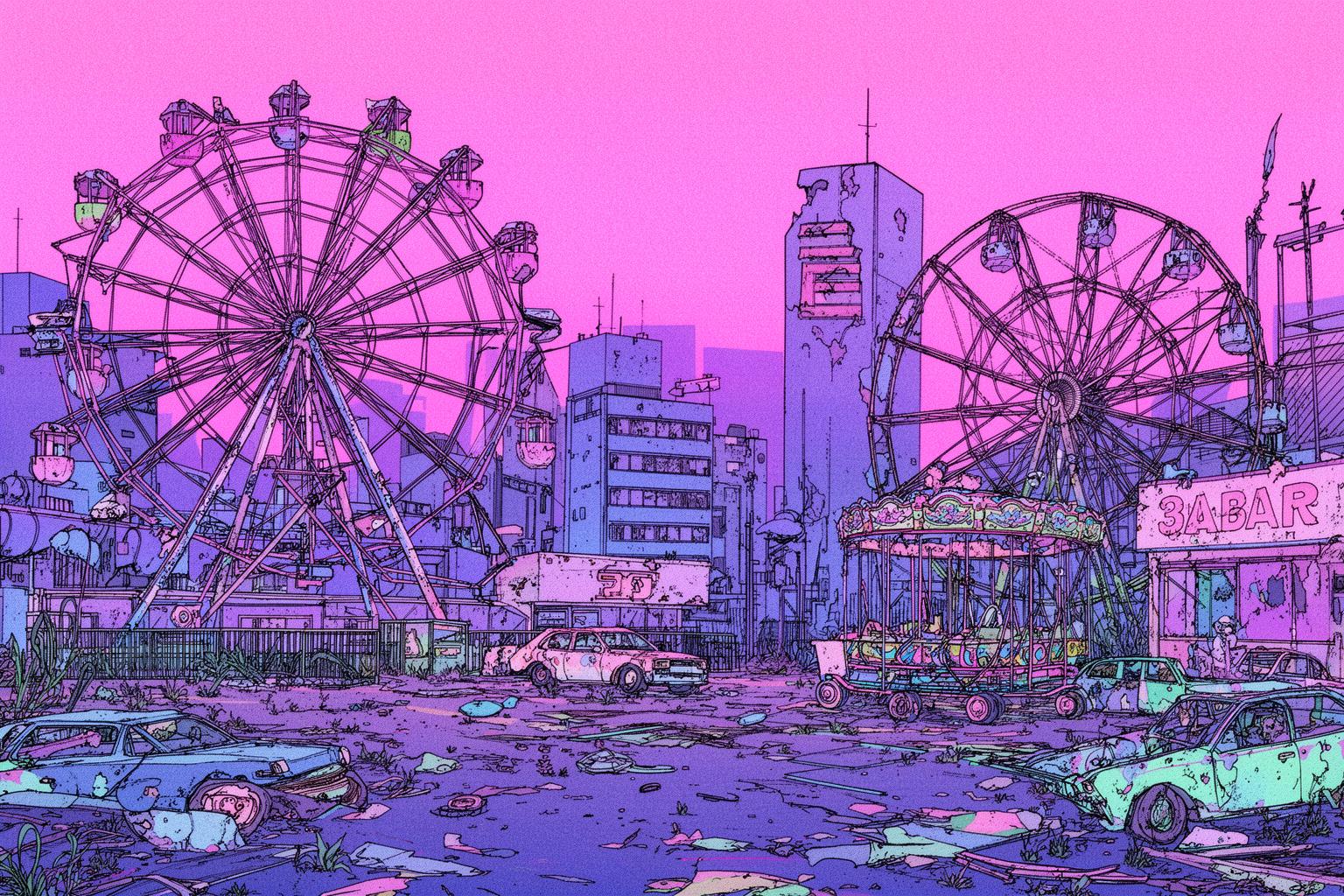
So, why are we so captivated by these places? What is it about a rusted roller coaster or a dusty animatronic cowboy that draws us in? It’s not merely about seeking a spooky thrill; it goes far deeper. As a curator, I view these sites as the most genuine museums one could ever visit. They are raw, unfiltered exhibitions exploring themes of time, nature, and memory. They represent a tangible expression of ideas artists have delved into for centuries.
Beyond the Thrills: The Art of Decay
There is a fundamental Japanese aesthetic known as ‘wabi-sabi.’ It embraces the acceptance of impermanence and finds beauty in the imperfect, transient, and incomplete. It values the humble and the unconventional. These abandoned parks embody wabi-sabi on a grand scale. The peeling paint, rust streaks, and creeping vines—these are not flaws but the marks of time’s passage. They tell a story, a life lived. In this context, nature acts as the ultimate artist, collaborating with the original creators to form something new and perhaps even more profound. A roller coaster is simply a ride. But a roller coaster slowly swallowed by a forest? That becomes a sculpture illustrating the battle between humanity and nature. These places compel us to face our own impermanence, reminding us that everything we create, no matter how grand or joyous, will eventually be reclaimed. There is a strange comfort in that, a release from the demand for perfection. They become spaces for quiet contemplation, accidental shrines celebrating the beauty found in decay.
A Final Thought: The Ghosts of the Bubble
In the end, these parks are remnants of a specific era: Japan’s Bubble Economy of the late 1980s. It was a time of extraordinary wealth and boundless optimism. The nation seemed to stand atop the world, confident the boom would never end. These extravagant, often surreal theme parks were monuments to that time, constructed with a sense of endless possibility. When the bubble burst in the early 90s, Japan entered a prolonged economic slump known as the ‘Lost Decades,’ and these parks became its most visible casualties. The post-apocalyptic atmosphere they exude is not about an imagined nuclear future but the very real collapse of a particular economic and cultural world. They serve as time capsules of a national dream gone bust. Exploring their history is to explore modern Japan’s story—with all its victories, oddities, and hauntingly beautiful failures. They remind us to seek out stories in the quiet, forgotten corners of the world, where often the most powerful art resides.