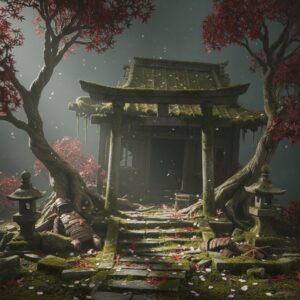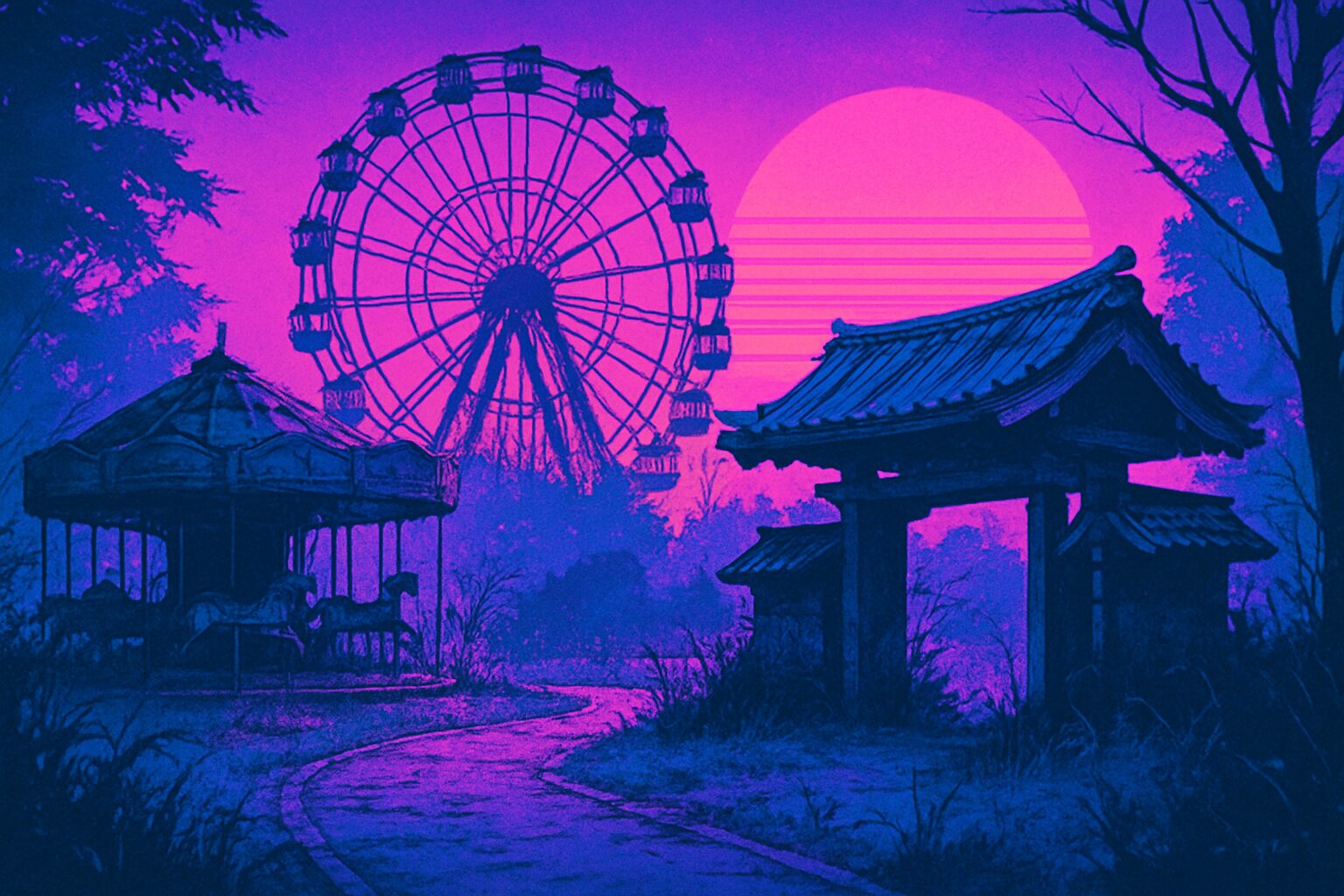
Hey everyone, it’s Sofia! So, let’s get real for a sec. When you think of Japan, what’s the first thing that pops into your head? Is it the crazy-bright lights of Shibuya Crossing? Steaming bowls of ramen that are basically a hug in a bowl? Or maybe those super serene temples in Kyoto where you feel like you’ve time-traveled? All totally valid, all totally iconic. But today, we’re taking a detour from the main tourist route. We’re logging off from the neon-soaked cityscapes and venturing into a world that’s silent, melancholic, and honestly, hauntingly beautiful. We’re about to explore the world of Japan’s abandoned amusement parks, the forgotten wonderlands reclaimed by nature. These places, known in the local urban exploration scene as ‘haikyo’, are more than just ruins; they’re time capsules. They’re epic, sprawling graveyards of joy where the laughter has faded, but the echoes remain. It’s a whole mood—a poignant mix of childhood nostalgia and post-apocalyptic vibes that’s just so incredibly photogenic and thought-provoking. This isn’t your typical travel guide content. This is for the adventurers, the artists, the ones who find beauty in the decay and stories in the silence. It’s about understanding a different, deeper side of Japan, where the impermanence of things is not just accepted, but seen as a form of beauty. Get ready to dive into the melancholic magic of these sleeping giants.
If you’re captivated by the melancholic beauty of these abandoned spaces, you might also be drawn to the eerie silence of Japan’s forgotten Showa-era housing complexes.
The Vibe Check: What’s the Deal with Haikyo Culture?
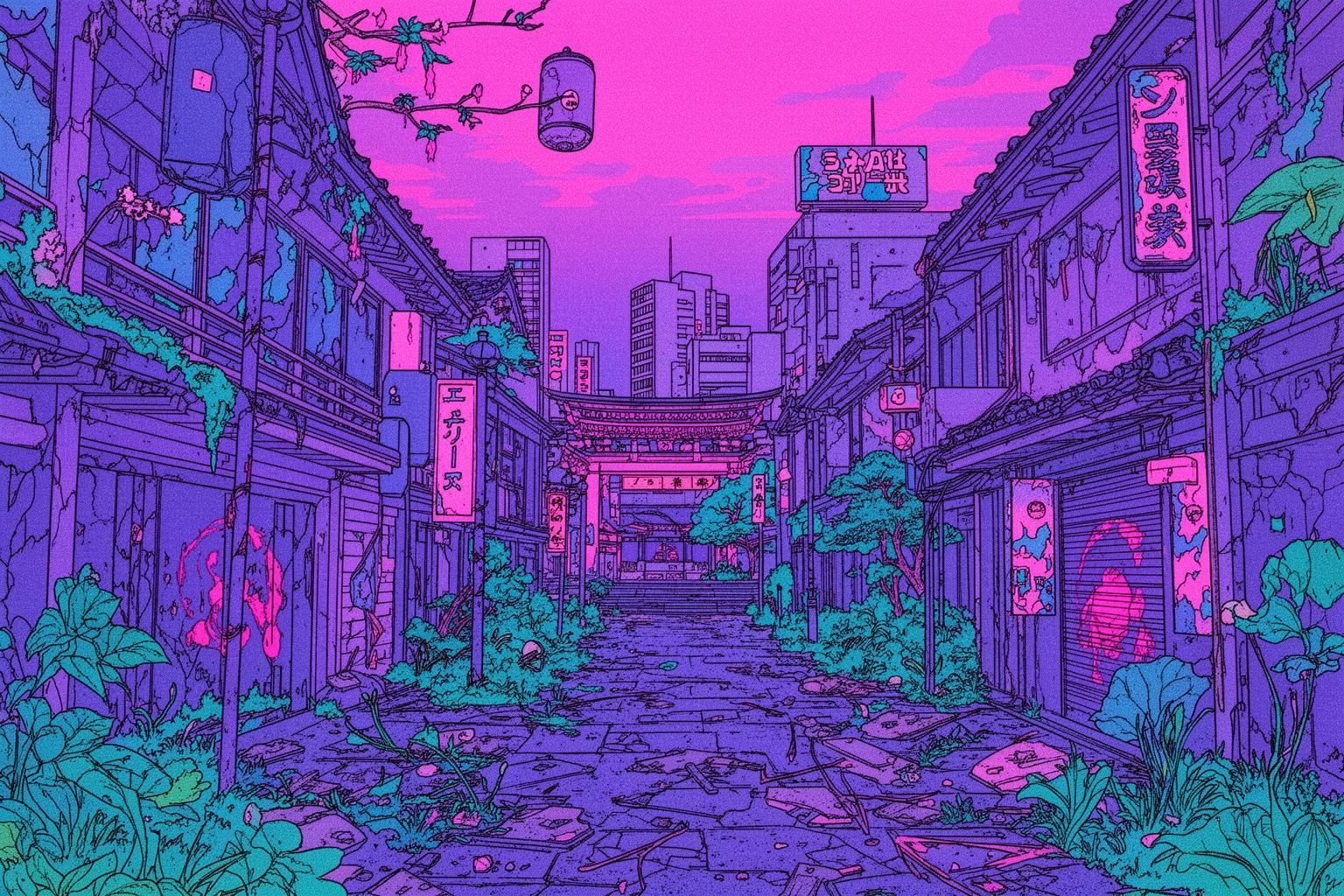
Before we dive in, let’s set the context. Why are people in Japan—and around the world—so captivated by these decaying places? It’s not merely about seeking a spooky thrill or snapping a cool Instagram photo, although that certainly plays a part. The fascination with ‘haikyo’ (廃墟), which means ‘ruins,’ is closely tied to fundamental Japanese aesthetics. You’ve likely heard of ‘wabi-sabi’—the concept of finding beauty in imperfection and transience. Haikyo represents wabi-sabi on a grand, industrial scale. It’s about valuing the elegance of decay and the stories told by rust and peeling paint. Another important concept is ‘mono no aware’ (物の哀れ), which roughly means ‘the pathos of things’ or ‘a sensitivity to ephemera.’ It’s that gentle, bittersweet sorrow you feel when you recognize the impermanence of everything. Seeing a massive roller coaster, once a hub of screams and laughter, now slowly overtaken by vines and rust? That embodies mono no aware in its most poignant form. It’s a vivid reminder that even our greatest creations will eventually return to nature. This cultural perspective transforms ruins from being seen as merely ugly or dangerous into spaces of reflection and profound beauty. The modern urban exploration (urbex) community in Japan has elevated this appreciation to new heights. This subculture of photographers, historians, and adventurers is dedicated to documenting these forgotten places. They follow a strict code: ‘Take only pictures, leave only footprints.’ Their goal is preservation through documentation, not destruction. They see themselves as contemporary archaeologists, capturing the final moments of a building’s life before it crumbles or is demolished. This community has played a crucial role in introducing the haunting beauty of Japan’s haikyo to a global audience, sharing stunning photographs and videos that seem almost otherworldly. So, when we discuss these abandoned parks, we’re not simply referring to crumbling concrete. We’re talking about a living, breathing art form and a philosophical perspective that finds poetry in decay. It’s a powerful vibe and the key to understanding why these places hold such a strong grip on our imagination.
Icon Status: Nara Dreamland – The Ghost of Japan’s Disney Dreams
Alright, let’s dive into the legend. The GOAT. The one spot that truly established Japanese haikyo on the global stage: Nara Dreamland. Though it no longer stands, any discussion about abandoned amusement parks has to honor this absolute icon. Its tale is a wild journey of ambition, nostalgia, and epic decay that has fascinated urban explorers for years. It was the ultimate pilgrimage destination, a dormant kingdom that felt like a surreal, post-apocalyptic fairy tale.
A Little Background, Fam
Imagine this: it’s the late 1950s. Japan’s post-war economy is booming. A Japanese businessman, Kunizo Matsuo, visits the United States and explores a brand-new, magical place called Disneyland in Anaheim. He is completely amazed. The fantasy, the scale, the pure joy—it was clear he had to bring that magic home to Japan. He even met Walt Disney himself to discuss a potential partnership. Though the Disney deal fell through, Matsuo was undeterred. He set out to build his own dreamland, a Japanese version of the happiest place on earth. In 1961, Nara Dreamland was born. And honestly? The resemblance was striking. They didn’t just borrow inspiration; they created a near-identical aesthetic replica. Dreamland had its own Main Street U.S.A., its own Sleeping Beauty Castle (called the ‘Fairy Tale Castle’), a monorail, a jungle cruise, and even its own Matterhorn-style mountain coaster named ‘Aska’. For decades, it was hugely successful, a beloved destination for families across the Kansai region. It was a place where millions of childhood memories were made, symbolizing Japan’s rising prosperity and optimism. But eventually, the magic began to fade. Tokyo Disneyland opened in 1983, followed by Universal Studios Japan in Osaka in 2001. These newer, larger, officially licensed parks offered a polish and brand power that the aging Dreamland couldn’t match. Visitor numbers declined. The once-vibrant park started to feel tired and outdated. Finally, on August 31, 2006, after 45 years, Nara Dreamland shut its doors forever. And then it just… sat there. Untouched.
After the Screams Fell Silent
This is when the second chapter of its life began—its haikyo chapter. For ten years, Nara Dreamland was left exposed to the elements. And what spectacular decay it became. Nature didn’t just reclaim it; it transformed it into a masterpiece of melancholic art. The park became a silent, sprawling canvas of rust and rot. The iconic ‘Screw Coaster,’ a twisting giant of steel, was gradually engulfed by a forest of green, its bright yellow and pink paint peeling away to reveal a rusty skeleton. The wooden tracks of the ‘Aska’ coaster, once thunderous with rattling cars, began to sag and splinter, weeds sprouting between the ties. It looked like a giant wooden ribcage stripped bare by time. The entrance area, with its ersatz Main Street, felt like a ghost town. The souvenir shop windows were shattered, interiors littered with dust-covered merchandise and faded posters. The Fairy Tale Castle, once the pastel-pink centerpiece, turned into a grim, graffiti-covered shell. Its cheerful facade stained with black mold, as if it was weeping. According to those daring enough to enter, walking through the abandoned park was surreal. Teacups on the Mad Hatter ride were filled with stagnant, green rainwater. The carousel horses were frozen mid-gallop, their once cheerful painted smiles now almost sinister in the eerie silence. The jungle cruise boats lay half-submerged in murky water, vines curling around animatronic elephants and hippos. The atmosphere was dense with loss and deep nostalgia. It was a place where you could almost hear phantom echoes of children’s laughter, cheerful park music, and the roar of coasters, all muffled beneath the heavy silence of abandonment. This haunting beauty, this perfect preservation of decay, is what made Nara Dreamland a legend in the urbex world. Photographers from across the globe risked arrest to sneak in and capture its fading magic.
The End of an Era: Demolition and Legacy
Sadly, all things must pass, even the most beautiful ruins. In 2016, demolition of Nara Dreamland began. The process was slow and deliberate, lasting over a year. Urbex enthusiasts watched with heavy hearts as their sleeping kingdom was dismantled bit by bit. The Screw Coaster was torn down, the castle reduced to rubble, and the wooden frame of the Aska shattered to nothing. By the end of 2017, the land that had hosted a million dreams was just a flat, empty plot of dirt. Yet, even though it’s physically gone, Nara Dreamland’s legacy is stronger than ever. It lives on in thousands of stunning photos and haunting video walkthroughs online. It set the standard for what haikyo could be—not just an old site, but a place of myth and legend. It taught us that even when the lights go out and the gates close forever, the story doesn’t end. Sometimes, that’s when the most beautiful chapter begins.
Still Standing: Exploring Japan’s Forgotten Wonderlands

Though the king, Nara Dreamland, has vanished, its spirit endures in other forgotten parks scattered throughout the Japanese countryside. These sites may not match its grandeur, but each holds a unique story and an intensely melancholic atmosphere. They have become the new pilgrimage destinations for those seeking the ghost of laughter. However, a crucial warning: exploring these locations comes with serious caveats. They are private properties, and trespassing in Japan is a serious matter. The information provided here is intended for appreciation and documentation, not as a guide for unauthorized entry. Respect the boundaries, obey the law, and understand that the safest way to experience these places is often through the work of skilled photographers who have captured them. Gaining this understanding is essential to grasping the haikyo phenomenon today.
Kejonuma Leisure Land: The Ferris Wheel Watching Over the Swamp
Nestled deep in the mountains of Miyagi Prefecture, on the edge of a tranquil swamp, lies a park that seems to be gradually sinking back into the earth. Kejonuma Leisure Land is a smaller, rustic park that compensates for its modest scale with an intense atmosphere of decay. Its centerpiece, a solitary Ferris wheel, has become an iconic symbol of Japanese haikyo.
Location & The Lowdown
Opened in 1979, Kejonuma Leisure Land was a modest family amusement park featuring a Ferris wheel, a small roller coaster, go-karts, and a handful of classic attractions. It was a local favorite, offering simple, enjoyable days out beside the Kejonuma reservoir. Its decline was gradual, driven by shifting demographics and economic challenges in rural Japan. The park officially closed in 2000 and has since been left to endure humid summers and snowy winters, resulting in a decay that is strikingly beautiful. Surrounded by dense forest and wetlands, its location has hastened nature’s reclamation, creating a scene that feels both primeval and peacefully serene.
The Aesthetic: Rust and Reeds
Kejonuma’s atmosphere is one of quiet melancholy. The Ferris wheel is the undisputed star, its once-vibrant cabins now faded and rust-streaked, hanging like strange metallic fruit against the sky. From a distance, it seems almost operational—a silent guardian overlooking the swamp. Reeds and tall grasses have overtaken the park grounds, growing up through the ride mechanisms. The go-kart track is now just a cracked ribbon of asphalt vanishing into greenery. The small roller coaster’s tracks, uniformly rusted a deep orange, twist through the overgrowth like the fossilized rib of a prehistoric serpent. The combination of man-made structures and untamed nature strikes a surreal balance, resembling not a concrete jungle but a rusty wetland. The air is still, filled only with birdsong and the buzzing of insects from the nearby swamp. It is not aggressively eerie, but contemplative and poignant—a gentle testament to nature’s quiet, unyielding force.
The Urbex POV: Getting the Shot
Kejonuma has long been a favored location for Japanese haikyo explorers due to its relatively accessible character and photogenic Ferris wheel. Still, it remains private property with fences and “No Trespassing” signs usually in place. Access varies over time, but the biggest dangers here are physical as well as legal. The ground is marshy and unstable in parts, and the corroded structures have endured over twenty years of weathering. A misstep could cause a serious injury from falls or rusty metal. The best way to appreciate Kejonuma is through the extensive photographic collections online, documenting the park through all seasons—snow-dusted winter scenes, lush summer greenery, and autumns ablaze with color—showcasing its enduring, somber beauty.
Western Village: A Ghost Town Straight Out of a Movie
If Kejonuma embodies serene melancholy, Western Village delivers pure, unfiltered uncanny valley nightmare fuel—in the best way possible. Situated near the tourist hotspot of Nikko in Tochigi Prefecture, this abandoned park is among Japan’s strangest and most fascinating haikyo sites. It is a full-scale replica of a Wild West town, complete with a fake Mount Rushmore, now inhabited by decaying, eerily lifelike animatronics.
Wild West… in Nikko?
Opened in 1975, Western Village capitalized on the popularity of American Western films in Japan. It was an ambitious venture, featuring saloons, a sheriff’s office, a bank, and a large Mount Rushmore replica with carvings of American presidents. The park’s standout feature was its sophisticated animatronics—visitors could witness staged bank robberies with robotic cowboys or have a drink in a saloon filled with animatronic patrons. It was immersive and advanced for its time. Although successful initially, it eventually succumbed to shifting tastes and stronger competitors, closing in 2007. When staff locked up, they left nearly everything behind, including the robots.
The Uncanny Valley Vibe
This is what sets Western Village apart as a premier haikyo site. The atmosphere is intensely creepy. The animatronics, once the park’s main attraction, now serve as its most unsettling element. They remain fixed in place, caught mid-gesture. A robotic John Wayne figure, his plastic skin peeling and cracked, gazes from a saloon with lifeless glassy eyes. In the bank, an animatronic teller slumps over the counter, encrusted with dust, while his robotic robber counterpart perpetually aims a gun at him. The fake Mount Rushmore, already surreal in the Japanese mountains, sports streaks of black mold running down the presidents’ faces, giving the eerie impression that they are crying. The buildings show advanced decay, with peeling paint and rotted floorboards. Walking the abandoned streets feels like stepping onto a horror movie set. It taps into the deep, primal fear of dolls and mannequins coming to life—here designed to do so yet now frozen in a menacing silence.
A Photographer’s Dream (or Nightmare)
For haikyo photographers, Western Village is a treasure trove of surreal, disturbing images. The vast array of props, furniture, and detailed animatronics left behind offers endless material. Around every corner lies another bizarre scene: a dusty robot poker game, a robotic bartender eternally polishing a glass, a lone animatronic woman staring from a second-story window. The park tells a story of sudden abandonment, as if everyone vanished in an instant. The site is heavily secured, rightly so. The structures are unstable, and the owner is known to fiercely protect the property. Trespassing is not only illegal but also profoundly disrespectful to efforts aimed at preserving the site. Nonetheless, the photographic legacy of Western Village remains a powerful, chilling record of one of Japan’s eeriest, most unique forgotten spaces.
Gulliver’s Kingdom: The Gentle Giant’s Final Rest
Our final stop is a park as strange in story as in theme. Gulliver’s Kingdom was a massive failure from the start, doomed by an odd location and a flawed concept. Its rapid decay and unforgettable centerpiece have secured its place in haikyo lore. Its defining image? A giant 45-meter-long statue of Lemuel Gulliver, tied down and lying at the foot of Mount Fuji.
A Strange Premise Near Mt. Fuji
Built in 1997 with funding from a bank that later went bankrupt, Gulliver’s Kingdom struggled from its inception. Its theme, based on the 18th-century satirical novel Gulliver’s Travels, may have been too niche. But its greatest challenge was its location—Kamikuishiki, a village adjacent to the notorious Aokigahara Forest, known as the “Suicide Forest.” This was also the home of the Aum Shinrikyo doomsday cult responsible for the 1995 Tokyo subway sarin gas attack. Needless to say, the area hardly conveyed a family-friendly atmosphere. Financial failure was inevitable, and the park closed in 2001 after just four years. It remained abandoned for nearly a decade.
The Main Attraction: The Fallen Gulliver
During its era as a haikyo, Gulliver’s Kingdom was defined by one breathtaking image: the giant statue of Gulliver lying on his back, head tilted skyward, body bound by ropes and stakes exactly as described in the book. On clear days, the majestic cone of Mount Fuji rose serenely behind him. The scene was surreal, melancholic, and deeply symbolic. This enormous figure, symbolizing adventure and human aspiration, was pinned helplessly, slowly reclaimed by weeds and weather. Photographers flocked to capture this haunting tableau—the decaying giant juxtaposed with the timeless perfection of Mount Fuji created a poignant visual poem of impermanence, embodying the essence of ‘mono no aware,’ the awareness of life’s transience.
Gone but Not Forgotten
Like Nara Dreamland, Gulliver’s Kingdom no longer exists, having been fully demolished by 2007. Its existence was brief, both as a theme park and as a ruin. Yet, because of that single extraordinary statue, its memory remains powerful. It stands as a cautionary tale of hubris and a beautiful example of how even the most spectacular failures can become poetic through decay. Photos of the fallen giant remain among the most iconic and widely shared images in haikyo culture, a testament to a strange, failed dream that found its true meaning only after abandonment.
The Ethics & The Risks: A Real Talk About Urbex in Japan
Alright, we’ve witnessed the stunning beauty of these places, and it’s natural to feel drawn to experience them personally. However, we need to have a serious discussion about the reality of urban exploration in Japan. This isn’t just a casual pastime; it involves significant legal, physical, and ethical concerns. Mistakes here can lead to serious consequences, not only for you but also for the sites themselves.
It’s Not Just Fun and Games: The Legal Realities
Let’s be perfectly clear: entering private property without permission in Japan is illegal. This offense, known as ‘trespassing’ (不法侵入, fuhō shinnyū), is treated very seriously. Unlike in some Western countries where it might be a minor violation, in Japan, it can result in heavy fines and even imprisonment, particularly if any damage occurs. These abandoned parks remain owned by someone—a company, a bank, or an individual—and are not public spaces. The ‘No Trespassing’ signs (立入禁止, tachiiri kinshi) are not mere suggestions; they are legally enforceable warnings. The rise in haikyo’s popularity has led to increased security at many well-known sites, including taller fences, motion-sensor cameras, and security patrols. Getting caught is a real possibility, and being a foreigner won’t grant you any leniency. Claiming ignorance of the law is no excuse. It’s essential to respect both the law and the property rights involved.
Safety Comes First, Seriously
Beyond legal concerns, these areas are genuinely hazardous. There’s a reason they are fenced off. These are not maintained buildings; they’re actively deteriorating. Dangers are everywhere. Floors may be rotten and could give way beneath you. Ceilings can collapse. Staircases may be rusted and unsafe. Broken glass, sharp metal edges, and exposed wiring are common hazards. In rural areas, there’s also the threat of wildlife. Japan’s countryside hosts some formidable creatures, including aggressive giant hornets (‘suzumebachi’), venomous pit vipers (‘mamushi’), and in mountainous zones, even wild boars or bears. These structures have been abandoned for decades with no safety rails, first aid, or reliable cell service. If you get injured, help might be far away. No Instagram photo is worth a trip to the hospital—or worse.
The Haikyo Code: Leave No Trace
For those who do explore, there’s a strict, universally accepted code of ethics centered around respect. The golden rule is ‘Take only pictures, leave only footprints.’ This means not disturbing anything. Don’t break windows or force doors open to get inside. Don’t rearrange items for a better shot. Absolutely never take souvenirs. Stealing a dusty teacup or a faded sign is both illegal (theft) and damages the experience for future visitors. The aim is to leave the site exactly as you found it. This also means not publicly sharing exact locations. As a haikyo site gains popularity, it faces a greater risk of vandalism and damage by those who disregard the code. True explorers protect these places to preserve their gradual decay. The goal is to be a silent observer and documentarian, not a contributor to their destruction.
So, You Can’t Go In… How to Experience the Vibe Legit?
So you’re captivated by the aesthetic of decay and the beauty of forgotten places, yet you’re also a law-abiding citizen who’d rather not fall through a rotten floor. I understand! The good news is that there are plenty of ways to experience the haikyo vibe legally, safely, and just as vividly. It’s all about shifting your perspective and knowing where to look.
Follow the Pros: The World of Haikyo Photography
The safest and best way to explore Japan’s abandoned wonders is through the work of talented photographers who dedicate themselves to documenting these places. These artists—often with permission or at their own calculated risk—venture into these sites and bring back stunning, high-quality images and videos. Following Japanese and international haikyo photographers on platforms like Instagram, Twitter, and YouTube opens up a whole world. Hashtags such as #haikyo, #urbexjapan, or #廃墟 will lead you to breathtaking galleries featuring the places we’ve mentioned and many more—abandoned schools, hospitals, hotels, and entire villages. This isn’t just a substitute; in many ways, it’s even better. You get the perfect shot, curated by a professional eye, without any of the risks. Many photographers also share the history and stories behind each location, providing context that you wouldn’t get just by sneaking in. It’s a way to support the community and appreciate the art form that has sprung up around these ruins.
Finding Beauty in a Different Kind of “Old”
If you want an in-person experience exploring a piece of history, Japan offers some incredible, fully legal haikyo-style destinations open to the public. These sites provide the same sense of scale, history, and melancholic beauty, with the added benefits of safety and official tours.
Gunkanjima (Hashima Island)
This is the ultimate legal haikyo tourism destination. Gunkanjima, or ‘Battleship Island,’ is a former undersea coal mining facility off the coast of Nagasaki. It was once the most densely populated place on Earth—a sprawling concrete city on a tiny island. After the mine closed in 1974, everyone left, and the city was abandoned to the typhoons. Today, it’s a UNESCO World Heritage site where you can take official boat tours to a specially designated and safe area of the island. Viewing the towering, crumbling concrete apartment blocks, silent schools, and abandoned hospital from the platforms is a truly humbling and awe-inspiring experience. It’s pure, large-scale urban decay—and it’s 100% legal to visit.
Open-Air Architectural Museums
For a gentler but equally fascinating experience, visit one of Japan’s open-air museums. Places like Meiji-mura in Aichi or the Edo-Tokyo Open Air Architectural Museum in Tokyo have rescued and relocated historic buildings from across Japan. You can walk through perfectly preserved schools, homes, and shops from past eras. While not exactly ‘ruins,’ these sites offer a profound sense of nostalgia and ‘mono no aware.’ You’re literally walking among ghosts of the past, making it a beautiful and immersive way to connect with Japan’s history—without needing a tetanus shot.
Explore Rural Japan (Inaka)
Sometimes the most profound haikyo experiences aren’t in a large amusement park but in the quiet, depopulating countryside. Throughout Japan, you can find ‘akiya’ (abandoned houses), closed schools, and silent shopping streets. While you should never enter these buildings, simply walking or driving through these quiet villages offers a powerful and poignant glimpse into the effects of time and demographic change. This living, breathing form of haikyo tells a contemporary story about Japan and allows you to see the real, unfiltered ‘mono no aware’ in its natural setting.
A Final Thought: The Echoes in the Silence
There’s a reason why we feel so drawn to these places. Abandoned amusement parks represent a unique form of ruin. They weren’t merely structures; they were factories of joy, created specifically to generate happiness, excitement, and wonder. When that purpose ends, the silence that follows is deafening. It serves as a powerful reminder of the fragility of our happiness and the unstoppable passage of time. These parks stand as monuments to impermanence. Exploring their stories, whether through photographs or visiting legal alternatives, is about more than just dark tourism. It’s a way to connect with a deeper, more reflective aspect of Japan. It’s about recognizing a profound and haunting beauty in things that are broken, forgotten, and abandoned. Though these parks may no longer resonate with screams and laughter, if you listen carefully—to the rustling leaves brushing against a roller coaster’s frame or the drip of water in a forgotten teacup—you can still catch the echoes of the dreams they once held. And that, in its quiet way, is a kind of magic that never truly disappears.