Yo, what’s up. It’s Ami. So let’s talk Japan. You’ve seen the pics, right? The Blade Runner-esque shots of Tokyo, all neon and chrome, a future that’s already here. You see the hyper-clean streets, the bullet trains that are, like, offensively on time, and the convenience stores that are basically tiny temples of perfection. It’s a whole vibe. But then, you scroll a little deeper. You stumble onto a different aesthetic. A crumbling theme park with a Ferris wheel frozen against a grey sky. An entire concrete island of abandoned apartments being eaten by the sea. A school hallway with peeling paint and textbooks left open on dusty desks, like the students just vanished. It’s a total glitch in the matrix. On one hand, you have this culture that’s obsessed with precision, newness, and impeccability. On the other, there’s this deep, almost reverent love for things that are literally falling apart. And you gotta ask, what’s the deal? Why is a country so focused on the future so into its own ghosts? The answer isn’t just about a spooky aesthetic or some edgy urban exploration trend, though that’s part of it. The real tea is that this modern obsession with ruins, or haikyo as we call them, is plugged directly into a super old, super deep cultural power source: the aesthetic of Wabi-Sabi. It’s this ancient philosophy that finds legit, profound beauty in things that are imperfect, impermanent, and incomplete. It’s about seeing the story in the decay, the soul in the scars. So, buckle up. We’re about to decode why Japan’s love for ruins is more than just a phase—it’s a masterclass in finding the beauty in the breakdown.
This deep appreciation for impermanence and decay is a key part of the Japanese aesthetic of Mono no Aware, which you can explore further in our article on why Japan’s abandoned places feel so beautiful.
The Lowdown on Wabi-Sabi: More Than Just ‘Imperfect’
Alright, before diving into the whole ruins topic, we first need to have a real conversation about Wabi-Sabi. You’ve probably heard the term thrown around—it gets attached to everything from minimalist beige interiors to pricey, oddly shaped pottery. But usually, the explanation is a bit vague, like “the beauty of imperfection.” Sure, that’s the starting point, but it goes much deeper. It’s not just about appreciating objects with flaws; it’s a worldview, a mindset that influences how Japanese culture perceives beauty, life, and even time itself. To truly understand it, you have to break it down into its two components: wabi and sabi. These are distinct concepts that, when combined, create something truly exceptional.
Wabi: The Essence of Simplicity & Quietness
Let’s begin with wabi. Think of wabi as the understated confidence found in simplicity. It’s an aesthetic that finds elegance and richness in humble, unpretentious things, free from excess. This contrasts sharply with many Western ideas of beauty and luxury, which often emphasize opulence, symmetry, and display. Wabi is the opposite of showing off. It’s the feeling you get in a quiet, sparsely decorated room where the light falls just right. It’s the charm of a plain, unembellished wooden bowl that feels just right in your hands. It’s about appreciating the material for what it is, not what it’s been forced to become. Historically, this concept originated with Zen Buddhist monks and tea masters who rejected the flashy, ornate styles of the aristocracy. They found spiritual fulfillment not in gold and elaborate carvings, but in rustic, natural materials and the calm of uncluttered spaces. It’s a kind of minimalism, but not cold or sterile—wabi feels warm, human, and deeply connected to nature. It’s about recognizing that you don’t need much to feel content. There’s profound beauty in ‘enough.’ It’s a quiet confidence, a peacefulness that doesn’t need to call attention to itself. Applied to life, it means finding joy in small, simple moments—the taste of perfect tea, the sound of rain, the feel of a well-worn cotton shirt. It’s a radical act of appreciation in a world constantly urging you to want more.
Sabi: The Beauty Imprinted by Time
Now for the other half: sabi. If wabi celebrates humble simplicity, sabi honors the beauty that comes with the passage of time. This is where we get much closer to the ruin aesthetic. Sabi is the elegance found in aging—rust on an iron gate, moss creeping over a stone lantern, faded fabric colors, the patina on a copper roof. In many cultures, these signs of age are seen as flaws to be polished away, painted over, or replaced. But the sabi aesthetic encourages you to see them as stories. Every crack, stain, and wear mark is a testament to the object’s history, a visible record of its journey through time. It signifies that something has been lived with, used, and exposed to nature. It holds an authenticity that brand-new, shiny objects cannot replicate. A perfect example is kintsugi, the Japanese art of repairing broken pottery with gold lacquer. Instead of hiding the cracks, kintsugi highlights them, making the item even more beautiful and valuable than before it broke. The philosophy is that breakage and repair are part of the object’s story, not something shameful. That’s sabi in essence: an appreciation for the dignity of aging and the grace found in decay. It accepts impermanence as a profound and beautiful truth.
Bringing It Together: A Unified Mood
When wabi and sabi combine, they create a powerful, unified aesthetic. Wabi-Sabi is an appreciation for modest, unpretentious beauty that is deeply linked to the natural cycles of growth and decay. It’s the feeling you get from discovering a cracked, moss-covered teacup (sabi) in a quiet, simple room (wabi), evoking a profound sense of peace. It’s not merely an intellectual idea; it’s an experience, a mood you sense. It teaches you to slow down and notice the subtle beauty in the world around you. It serves as an antidote to our fast-paced, disposable culture. Instead of pursuing perfection, Wabi-Sabi invites you to embrace imperfection, asymmetry, and weathered surfaces. It’s about realizing that things are more beautiful because they are transient, not despite it. This philosophy runs deep in Japanese cultural traditions, from tea ceremonies and ikebana flower arranging to garden design. And as we’re about to explore, it’s the key to understanding the modern fascination with abandoned places.
From Ancient Tea Rooms to Abandoned Islands: The Haikyo Boom
Now that we have the Wabi-Sabi framework, let’s connect the dots. How does a 15th-century philosophy focused on tea bowls and mossy gardens explain why people in the 21st century risk trespassing to photograph abandoned hospitals? Because haikyo, or ruins, are essentially Wabi-Sabi on a grand, architectural scale. It embodies imperfection, impermanence, and the poignant beauty of decay. The contemporary haikyo craze is a direct, often unconscious, continuation of this ancient aesthetic, adapted for our complex modern world.
What Exactly IS ‘Haikyo’? The Lowdown on Japanese Ruin Exploration
First, let’s define the term. Haikyo (廃墟) literally means ‘ruins.’ It broadly refers to the hobby of exploring abandoned man-made structures. This isn’t just about historic castles; it’s about modern ruins—places that were full of life only a few decades or even years ago. Think abandoned schools, hospitals, theme parks, hotels, industrial sites, and sometimes entire residential complexes or islands. What makes a site a compelling haikyo is the sensation that it’s frozen in time. It’s not merely an empty building; it’s a place where traces of everyday life linger—a chalkboard filled with equations in a silent classroom, medical charts scattered on a hospital floor, a roller coaster car halted atop its climb, slowly overtaken by vines. These scenes resonate because they tell stories of sudden departure, of life interrupted. Now, a quick reality check from your girl Ami: exploring haikyo, or ‘urbex’ as it’s called worldwide, exists in a legal and safety gray zone. Most of these sites are private property, making entry technically trespassing. More importantly, these structures are often unstable and hazardous—think weak floors, falling debris, and other dangers. While the aesthetic is stunning, safety must come first. Experienced explorers understand the risks and prepare accordingly. This isn’t casual tourism; it’s a serious pursuit for those who know what they’re doing.
Gunkanjima (Hashima Island): The Ultimate Wabi-Sabi Icon
If you need one epic example of haikyo as Wabi-Sabi, look no further than Gunkanjima. Officially called Hashima, everyone calls it Gunkanjima or ‘Battleship Island’ because its tightly packed concrete buildings resemble a warship’s silhouette from afar. Located off Nagasaki’s coast, it was once the most densely populated place on Earth. From the late 1800s until 1974, it was a thriving undersea coal mining facility owned by Mitsubishi. It was a fully self-contained city with high-rise apartments, schools, a hospital, a cinema, shops—everything. It symbolized Japan’s rapid industrialization, a powerhouse of the nation’s economy. Then coal ran out, petroleum took over as the energy king, and the mine shut down. Within weeks, over 5,000 residents left. The island was left to the elements. Today, Gunkanjima reigns supreme as a haikyo icon. Visiting it (now possible by official, limited tours) is mind-blowing. The concrete buildings crumble as salt air takes its toll. Corridors lie in rubble; inside apartments, vintage 1970s TVs and personal items still sit, cloaked in decades of dust and rust. Nature is reclaiming its space with green weeds bursting through the gray concrete everywhere. It’s a breathtaking portrait of decay. This is pure sabi—every inch shouts the passage of time. The rust, erosion, and decay aren’t ugly; they’re a powerful, vivid texture narrating the island’s life and death. The mood exudes profound wabi—a stark, silent emptiness where thousands once intersected. The stark contrast between its dense past and empty present creates a palpable sense of mono no aware, a gentle sadness for life’s transience. Gunkanjima stands as a monument not to permanence but to impermanence. It’s a striking reminder that even humanity’s grandest ambitions will eventually be reclaimed by nature. It’s Wabi-Sabi embodied in 16 acres of concrete and sea.
It’s Not Just Spooky Season: Discovering Beauty, Not Ghosts
Western audiences often see abandoned hospitals or empty schools and jump to horror movie associations—thinking these places are explored for thrills or ghost hunting. While Japan does have a culture of kimodameshi, or courage tests, where people visit spooky spots for scares, that’s a more niche activity. The mainstream appeal of haikyo lies not in ghost-chasing but in seeking a feeling. It’s a meditative, almost spiritual experience. Standing in an abandoned school gym, sunlight filters through a broken window, illuminating dust motes dancing in the air. The feeling isn’t fear; it’s a deep sense of peace and melancholy. You think of generations of students running across that floor, the laughter and basketball bounce that once filled the space. That silence is heavy with memory. Here is mono no aware again—a Japanese aesthetic that finds beauty in the gentle sadness of fleeting moments. It’s like watching cherry blossoms fall, knowing their beauty is temporary. Haikyo explorers are essentially engaging in cherry-blossom viewing in a different form. They appreciate the beauty of decay, aware that this building, this scene, is transient. It won’t stay like this forever; eventually, it will collapse entirely. The explorer witnesses and values this brief, fleeting stage of existence. It’s about finding beauty and meaning in the inevitable return to nothingness—a very Zen, deeply Wabi-Sabi worldview.
The Modern Twist: Why Now? Haikyo in the Age of Social Media
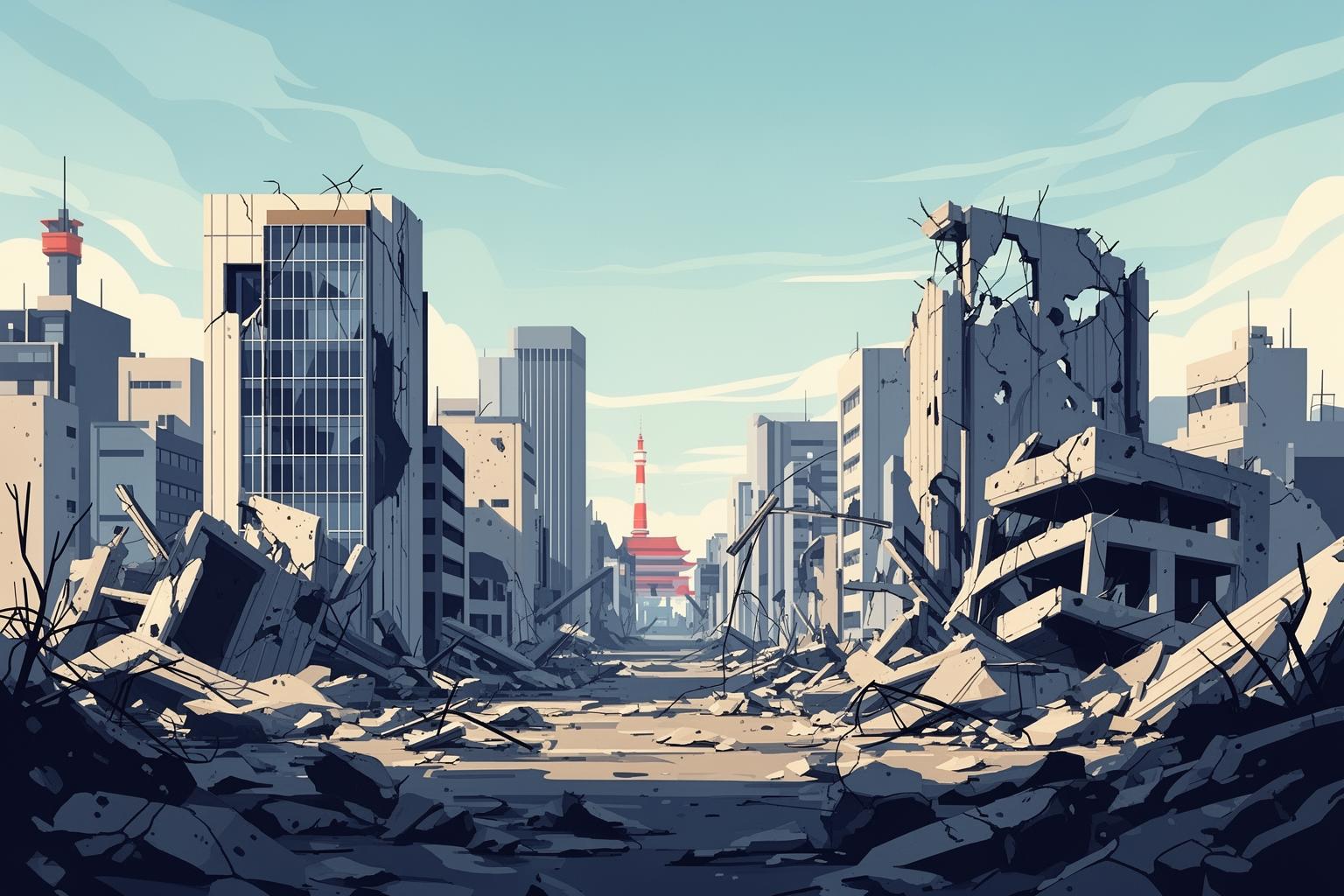
The Wabi-Sabi connection highlights the deep cultural roots of this aesthetic, but it doesn’t fully explain why haikyo has surged in popularity over the past couple of decades. An ancient philosophy can provide fertile ground, yet modern influences are necessary for a trend to take hold. The recent haikyo boom stems from Japan’s more contemporary history, its economic changes, and, naturally, the internet.
The Post-Bubble Economy Hangover
To understand the modern context, it’s essential to know about Japan’s bubble economy in the 1980s—a period marked by extraordinary economic growth and speculation. Money flowed freely, confidence soared, and the boom seemed eternal. During this time, developers embarked on an ambitious building spree: luxury ski resorts in the mountains, expansive theme parks in rural areas, lavish hot spring hotels. The future appeared bright and endlessly profitable. Then, in the early 1990s, the bubble burst—spectacularly. The economy crashed, ushering in the ‘Lost Decades’ of stagnation. Suddenly, many grand projects became untenable, with numerous sites left unfinished or abandoned shortly after opening due to a lack of visitors. This historical shift left behind a vast inventory of modern ruins. Many of Japan’s most frequented haikyo spots are remnants of the bubble era. For generations born after the bubble, who grew up hearing tales of that extravagant time, exploring these ruins feels like time travel—a physical touch of a shattered national dream. Standing amid a decaying, vine-covered resort once synonymous with luxury, one senses both ambition and failure. This adds a layer of contemporary pathos to the enduring Wabi-Sabi appreciation of decay. It’s not only about the universal fading of all things but also about the specific unraveling of a distinct era of Japanese optimism.
Instagram vs. Reality: The Aesthetics of Decay Go Digital
It’s impossible to discuss any modern trend without mentioning social media, and Instagram in particular has played a huge role in the haikyo surge. The visual appeal of ruins is perfectly suited for the ‘gram—the textures of peeling paint and rust, dramatic beams of light through broken roofs, the eerie symmetry of empty hallways all make for striking images. This aesthetic is often described as emo-i (エモい) in contemporary Japanese slang, a loanword from ’emotional,’ signifying something that evokes a nostalgic, sentimental feeling. A flawlessly framed shot of a decaying piano in an abandoned school music room embodies peak emo-i. Social media has fostered a global community of urban explorers who exchange locations (sometimes covertly), tips, and most importantly, stunning photography. This phenomenon has transformed haikyo from a niche pastime into a recognized aesthetic genre. Yet, this raises a challenging question: does the pursuit of the perfect, shareable photo dilute the original Wabi-Sabi spirit of the experience? Wabi-Sabi emphasizes quiet, personal reflection—being present in the moment and sensing the passage of time. Social media, conversely, often revolves around performance and crafting an image for an audience. There is an undeniable tension there. Some argue that ‘ruin porn’ reduces these profound sites to mere cool backdrops. However, others contend that social media is simply a contemporary medium for sharing and appreciating beauty. For a new generation, taking and sharing photos is how they process and express powerful experiences. Perhaps this is not a corruption of the Wabi-Sabi spirit but its evolution—a way for ancient emotions to find new life and audiences in a digital age.
Escaping the Hyper-Modern: A Search for Authenticity
One final key aspect relates to everyday life in Japan. Japanese cities, especially Tokyo, are marvels of efficiency, cleanliness, and order. Everything functions smoothly, stays clean, and social norms are generally observed. While this brings many advantages, it can also feel somewhat sterile—leaving little room for mess, chaos, or spontaneity. For many, especially younger people, stepping into a haikyo is a powerful escape from that tightly controlled perfection. A ruin is the polar opposite of a bustling Shibuya crosswalk: chaotic, unpredictable, and wild. Nature is reclaiming territory, overpowering human order. There are no rules, no expectations—only total freedom. In a society that often values conformity and the collective good, a haikyo offers a space to be an individual, a solitary observer connecting with the past. It’s a quest for something raw and authentic in an increasingly polished and artificial world. The rough textures and genuine decay of a ruin feel more real than the gleaming surfaces of a new shopping mall. This yearning to connect with the untamed and imperfect is a deeply human need, and in hyper-modern Japan, ruins provide a rare and powerful outlet for it.
So, What’s the Takeaway? Understanding the Ruin Vibe
When you boil it all down, Japan’s fascination with ruins isn’t some strange or morbid oddity. It’s a perfectly logical, culturally meaningful phenomenon—an expression of an ancient and refined worldview. The philosophy of Wabi-Sabi, which honors simplicity, age, and impermanence, provides the cultural framework that enables people to perceive profound beauty where others might see only decay and ugliness. It’s not about disregarding the past, but about engaging with it in its most genuine form: something that has ended, that is fading, yet whose ghost still tells a story. Building on this ancient foundation are the unique realities of modern Japan: the literal ruins of the bubble economy standing as tangible reminders of a recent, turbulent past; the influence of social media, which transforms these melancholic scenes into a shareable global aesthetic; and the deep human desire to break free from the sterile order of modern life to find something authentic and wild. All of this combines to create a compelling cultural moment. So the next time you see one of those hauntingly beautiful photos of a crumbling Japanese building, I hope you view it differently. Don’t just see a derelict structure. See the quiet dignity of wabi. See the story etched in the rust and cracks of sabi. Feel the gentle sorrow of mono no aware. You’re not simply observing decay—you’re encountering a philosophy. You’re witnessing a culture that has perfected the art of finding beauty not only in life but in its graceful, inevitable, and utterly gorgeous exit. And that, understatedly, is the ultimate Japan flex.