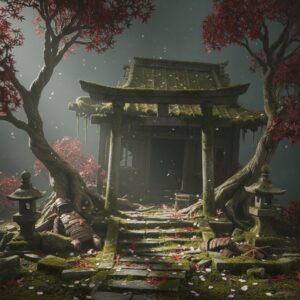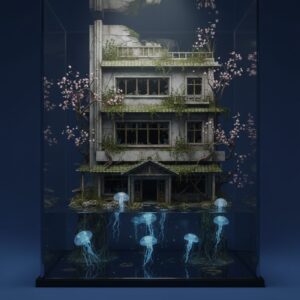
Yo, what’s the deal with Japan’s urban exploration scene? You’ve seen the pics flooding your feed, right? A grand piano collecting dust in a derelict school hall, a roller coaster being swallowed by a forest, an entire village of thatched-roof houses returning to the earth. It’s hauntingly beautiful, a whole vibe. But look closer. Notice what’s missing? There’s no graffiti, no smashed windows for the sake of it, no trash-strewn floors. The explorers in the photos, if you see them at all, are like ghosts—silent, observant, almost reverent. It feels less like the rebellious trespassing you see in the West and more like a quiet pilgrimage to a forgotten shrine. And that’s the disconnect, the question that hits you: Why? Why is the Japanese approach to exploring ruins, or `haikyo` (廃墟) as it’s known, so profoundly different? It feels like there’s a secret rulebook everyone got but you. And honestly? You’re not wrong. This isn’t a guide on how to find these places—major faux pas, we’ll get to that. This is your decoder ring for the silent, unwritten protocols of haikyo. It’s about understanding the deep cultural software running in the background that turns a simple act of exploration into a profound meditation on time, memory, and the Japanese soul. Let’s get into the deep lore.
To truly grasp this profound meditation, it’s essential to understand the underlying cultural concept of mono no aware.
The Prime Directive: A Ghost in the Machine
At the core of the haikyo ethos lies a phrase familiar to urbex communities around the world: “Take nothing but pictures, leave nothing but footprints.” But in Japan, this is more than a catchy motto for enthusiasts; it represents a fundamental philosophy, an unwavering spiritual commandment. To violate it is to miss the entire purpose of the practice. This is not about possession or conquest. It’s about bearing witness. The aim is to enter a place frozen in time and leave it exactly as you found it, preserving that delicate stillness for the next quiet visitor. You are a ghost, a fleeting observer passing through a memory. A ghost doesn’t steal, doesn’t cause damage, and doesn’t even leave behind a scrap. This principle of radical non-interference is the essential key to embracing the haikyo mindset.
More Than a Relic: The Soul of an Object
From a Western viewpoint, an abandoned item is often seen simply as an object—lifeless, its function gone, now just decaying matter. While serious explorers often frown on souvenir-taking, it occurs because the item is perceived as detached from context, a free piece of history. The Japanese cultural outlook operates on a different wavelength. Deeply rooted in Shinto and Buddhist beliefs is a form of animism that endows objects, places, and even ideas with a spiritual essence. This subtle current runs throughout the culture.
Mono no Aware: The Beautiful Sadness of Transience
To truly grasp this, one must understand `mono no aware` (物の哀れ), a profound concept in Japanese aesthetics roughly meaning “the pathos of things” or “a gentle sadness at their passing.” It’s the sensation felt when watching cherry blossoms fall, their beauty heightened precisely by their brevity. Haikyo embodies mono no aware. You’re not there simply to see a “cool ruin”; you’re there to experience the weight of time, to witness the quiet final chapter of a place’s existence. The peeling paint, a student’s notebook left open on a 1988 desk, the silent machinery on a factory floor—each narrates a story of what once was. Taking a souvenir is like tearing a page from that narrative. Rearranging objects for a photo is akin to altering a sentence. It breaks the authenticity of that moment, that perfect, melancholic beauty. You aren’t a participant in the decay; you are a witness to time’s slow, relentless passage. Your role is to feel it, document it, and leave the scene untouched for the next person to experience that same deep, moving sadness. It’s an unspoken pact to preserve not just the physical space but the emotional and temporal integrity it holds.
Tsukumogami: The Soul of Your Toaster
Delving deeper, Shintoism—the indigenous religion of Japan—embraces the concept of `yaoyorozu no kami` (八百万の神), the eight million spirits inhabiting everything from rivers and mountains to trees. This belief extends in folklore to man-made objects. A tool or item that reaches a hundred years is said to acquire a spirit, becoming a `tsukumogami` (付喪神). Though few literally believe their old television has a soul, the cultural echo of this idea is strong. It fosters profound respect for objects, a sense that things which have served a purpose hold a kind of life and history deserving of honor. An abandoned hospital is not merely empty beds and rusted medical gear. It holds countless stories of birth, death, healing, and suffering. A piano in a forgotten school auditorium isn’t just wood and strings; it is the resonance of every song ever played on it, every student who practiced for the festival. To damage or remove these items is, in a subtle cultural way, a form of desecration. It disrespects the “life” of the object and the human memories embedded within it. From my experience immersed in East Asian cultures, this parallels the reverence for ancestral objects in China, but with a distinctive Shinto animistic character. You are not merely trespassing on property; you are entering a place filled with dormant spirits, and proper conduct requires moving with humility and respect.
The Sound of Silence: Meiwaku and the Art of Invisibility
If you watch videos by Japanese haikyo explorers, the first thing you notice is the silence. The narration, if present, is barely a whisper. Footsteps are light. Doors are opened slowly to avoid creaking. This stealth is practical, of course—you don’t want to get caught. But it goes far beyond that. The silence represents a form of respect for the place’s atmosphere. You are entering a tomb of memories, and loud noises, raucous laughter, or shouting feel deeply inappropriate, like yelling in a library or a cathedral. The aim is to achieve invisibility, blending with the silence and dust.
The Cardinal Sin: Don’t Cause Meiwaku
To grasp the obsession with stealth and low-impact exploration, you must understand one of the strongest forces in Japanese society: the fear of causing `meiwaku` (迷惑). `Meiwaku` translates as “trouble,” “annoyance,” or “bother,” but these words don’t fully convey its cultural significance. Causing `meiwaku` means inconveniencing others, disrupting social harmony, or being a burden. It is one of the greatest social sins. Society is structured to minimize `meiwaku`, from silent commuters on trains to complex systems of gift-giving and apologies. How does this relate to haikyo? Getting caught is the ultimate form of `meiwaku`. It’s not just a personal issue. If you’re caught, you trigger a chain reaction of problems. You cause `meiwaku` for the property owner, who must file a police report and possibly enhance security. You cause `meiwaku` for local residents disturbed by the disturbance. You cause `meiwaku` for the police, who must spend their time handling you. Most importantly, you cause `meiwaku` for the entire haikyo community. Your error could lead to tighter security, fences, and welded doors, spoiling the site for everyone else who follows the rules. This sense of shared responsibility is immense. In a more individualistic culture, the attitude might be, “If I get caught, it’s my problem.” In Japan, it’s, “If I get caught, I have failed my community and caused trouble for others to fix.” The shame connected to this is a far stronger deterrent than legal consequences. This is why the unwritten rules are observed so rigorously—they are protection against committing the grave sin of `meiwaku`.
The Social Contract of Trespassing
This brings a compelling paradox. Haikyo, at its core, is illegal—trespassing. Yet the community’s internal rules revolve around being a model citizen even while breaking the law. It’s a sort of social contract with the society being technically transgressed. The unspoken agreement is: “I will break this one rule (trespassing), but I will strictly follow all other social rules. I will be quiet, clean, respectful, cause no damage, and create no `meiwaku`.” This delicate balance is crucial. That’s why explorers often carry out not only their own trash but also any litter they find. It’s about leaving the place better, or at least no worse, than they found it as a way of apologizing for their ghostly presence. It’s a way of saying, “I know I’m not supposed to be here, but I promise to be the most respectful and conscientious trespasser you’ve ever encountered.”
The Gatekeepers: Why Secrecy Is the Highest Form of Care
So you’ve come across an incredible photo of a decaying mountain shrine or an abandoned theme park, and you’re eager to discover its location. You dive into the comments and type the forbidden question: “Location?” You might receive a polite refusal, but more often, you’ll face complete silence. Your comment will be ignored or deleted. In the world of Japanese haikyo, asking directly for a location is the biggest social blunder you can make. It immediately marks you as an outsider who doesn’t understand.
Protecting the Sanctuary from the Masses
This strict secrecy isn’t about elitism, though it can sometimes seem so. It’s a deeply rooted conservation tactic. The haikyo community acknowledges a painful reality: popularity is a death sentence for a ruin. Once a site goes viral, its demise is inevitable. It draws unwanted attention. Vandals come with spray paint, thieves seek scrap metal or antiques, and swarms of disaster tourists trample through, leaving trash and damaging fragile structures. The original, melancholic atmosphere is destroyed. The secrecy acts as a form of collective guardianship. By keeping locations secret, the community shields these vulnerable places from those who would harm them. It serves as a filter. The belief is that if you are truly passionate and respectful, you’ll be willing to put in the effort to discover these places yourself. The hunt is a rite of passage.
The Trail of Digital Clues
The excitement of haikyo doesn’t begin when you climb over a crumbling wall; it starts weeks or months earlier, in front of a computer screen. Research is a central part of the experience. It’s a digital treasure hunt involving piecing together clues. You might begin with a single photo. You analyze the landscape in the background—are those mountains? Is that a particular type of coastline? You examine the building’s architectural style to estimate its age and region. You study old maps, cross-referencing them with modern satellite images on Google Earth, searching for signs of derelict structures. You delve into obscure Japanese blogs from the early 2000s, using translation tools to decode cryptic posts hinting at a general area. This process of digital archaeology is challenging but highly rewarding. When you finally zero in on a location after weeks of searching, the sense of achievement is huge. Being handed a GPS coordinate bypasses the entire experience. It cheapens the discovery and shows you haven’t earned the right to be there. The journey to find the place is as significant as the place itself. It ensures those who arrive have invested time and effort, making them more likely to appreciate what they’ve found and understand the importance of preserving it.
The Craft of the Cryptic Post
This code of silence also shapes how explorers share their discoveries. Look at a Japanese haikyo enthusiast’s social media. The photos are often stunningly artistic, highlighting light, texture, and mood. They are visual poems about decay. The captions are thoughtful, perhaps quoting poetry or reflecting on the passage of time. You won’t find a selfie of them smiling in front of the ruin. You won’t see a detailed account of their adventure. And you will absolutely never find a geotag. They take great care to hide identifying details. A distinctive window frame might be photographed from an angle that conceals the rest of the building. A rooftop view might exclude recognizable landmarks. It’s a whole sub-genre of communication focused on sharing a place’s beauty without revealing its location. It’s a subtle boast, a way of saying, “I discovered this incredible place, and I am a worthy guardian of its secrets.”
Mindset and Materiel: The Explorer as Archivist
The tools an explorer carries reflect their purpose. A typical Japanese haikyo enthusiast’s backpack includes a high-quality camera, a tripod for long exposures in dark interiors, a strong flashlight, spare batteries, and possibly a dust mask and gloves. Notice what’s missing: no crowbars, no bolt cutters, no hammers, no spray paint. The toolkit is designed for documentation, not destruction. The approach is that of a photographer or an unofficial archivist, rather than a vandal.
Forced Entry is a Mark of Defeat
This principle of non-destruction is absolute. If a door is locked, you do not break it down. If a window is boarded up, you do not pry it open. Instead, you search for another way in—an open window, a collapsed wall. If no peaceful entry is available, you turn back. Forcing entry crosses an important line. It changes you from a passive observer into an active intruder. It breaks the fundamental rules of leaving no trace and causing no `meiwaku`. It’s a confession that your wish to see the interior outweighs the integrity of the site itself, opposing haikyo philosophy. Finding a way in without force is part of the challenge, a test of patience and observation. Failing that test means you were not meant to enter that day. You accept this and move on. There is a certain stoicism in this acceptance, reflecting the Buddhist-influenced elements of Japanese culture.
Kuuki wo Yomu: Sensing the Atmosphere of a Place
Another crucial Japanese social skill is at work here: `kuuki wo yomu` (空気を読む), which literally means “to read the air.” In everyday life, it means sensing the mood of a social situation and responding appropriately without anyone speaking. It involves tuning into subtle, non-verbal cues. In haikyo exploration, this skill is applied both literally and figuratively. Literally, you read the physical air of the building: you test floorboards before stepping fully on them, look up at the ceiling to gauge the risk of collapse, and constantly monitor the environment for danger. This is for self-preservation but also out of respect for the building’s fragile condition. Figuratively, you read the emotional “air” of the ruin. Each haikyo has its own unique vibe. An abandoned school might feel nostalgic and innocent; an old hospital, heavy with sadness; a defunct pachinko parlor, gaudy and desperate. Proper etiquette is to move and behave in harmony with that atmosphere. This is why explorers remain quiet and contemplative. They are “reading the air” of the place and adjusting their behavior to match its somber, silent mood. This adds another layer of the deep, intuitive respect that defines the entire practice.
The Gray Zone: Trespassing in a Land of Emptiness
Let’s not idealize this situation too much. We must confront the obvious issue: ultimately, haikyo is illegal. It constitutes trespassing, or `jūkyo shinnyū-tō zai`, and can lead to arrest. So, considering Japan’s reputation as a highly ordered and law-abiding society, why does this subculture remain so vibrant? The explanation lies in the distinctive social and demographic context of modern Japan.
The Akiya Crisis: A Country of Empty Homes
Japan is experiencing a demographic crisis, with a rapidly aging and shrinking population. This has led to a widespread phenomenon of abandoned properties known as `akiya` (空き家). Millions of these vacant houses, schools, factories, and shops are scattered across the nation, from central Tokyo to the most remote mountain villages. Often, the owners have passed away, their heirs reject the property (and the associated tax burdens), or the ownership documents are excessively complicated. These buildings exist in a state of legal and social uncertainty. They are privately owned but publicly neglected. This creates fertile ground for the haikyo subculture to emerge. These ruins are not isolated curiosities but rather visible, haunting symbols of a deep national challenge. They serve as monuments to economic decline, industrial shifts, and population reduction. In a sense, haikyo explorers act as unofficial archivists of this gradual decay, documenting the physical traces of Japan’s post-boom aftermath and creating a visual history of the places abandoned by economic progress.
Honne and Tatemae: The Implicit Understanding
To understand how this illegal activity persists, we must consider one more cultural concept: `honne` (本音), or one’s true feelings and desires, and `tatemae` (建前), the public facade or the image presented to society. The `tatemae` is straightforward: “Trespassing is illegal and should not be done.” This is the official position and what everyone publicly states. The `honne` is far more subtle and complex. It represents an unspoken agreement that exists in a gray area: “Although it’s technically illegal, if an individual or small group enters one of these millions of neglected `akiya`, remains completely silent, causes no damage, creates no trouble, and visits for artistic or contemplative reasons to appreciate its decay, then is any real harm being done?” This delicate balance is what haikyo explorers navigate. Their strict, self-imposed code of conduct is their way of respecting this tacit understanding. Their actions demonstrate awareness of this fragile equilibrium. By being the most respectful, invisible trespassers possible, they remain aligned with the `honne`. However, once someone breaks a window, sprays graffiti, or requires rescue by emergency services, they break the `tatemae`, cause `meiwaku` (disturbance), and invite enforcement actions. These rules aren’t merely about preserving ruins; they are about maintaining the fragile, unspoken social consent that allows the entire subculture to survive in secrecy. It is a high-stakes game conducted in complete silence.