
You’ve seen it. I know you have. That perfect, sun-drenched shot of the Japanese countryside. Deep green forests rising up into soft, rolling hills. Perfectly neat rice paddies shimmering like a thousand tiny mirrors under a huge summer sky. An old, traditional house with a tile roof nestled at the edge of the woods. It’s the world of My Neighbor Totoro, of countless anime and films that radiate a deep, almost painful sense of nostalgia. It feels more real than real life, a perfect memory of a place you’ve never been. And it immediately sparks the question for anyone who’s even a little bit curious about Japan: Is any of this for real? Or is it just a beautifully animated fantasy, the Japanese equivalent of a Disney fairytale castle? The short answer is yes, it’s real. But the long answer is way more complicated and a whole lot more interesting. That idyllic countryside isn’t just a location; it’s a concept, a cultural touchstone, and a living, breathing landscape with a name: satoyama. Understanding satoyama is like finding a key that unlocks a huge part of the Japanese psyche—its relationship with nature, its anxieties about modernity, and its deep, deep yearning for a lost past. This isn’t just about finding pretty photo spots. It’s a deep dive into the very soul of rural Japan, a place where gods, ghosts, and humans have lived in a delicate, hardworking partnership for centuries. So, let’s get into it, and figure out the real story behind the Totoro vibe.
To further explore how this aesthetic influences modern Japanese culture, you can delve into the world of the Mori Girl aesthetic.
What Even Is Satoyama? Breaking Down the Vibe
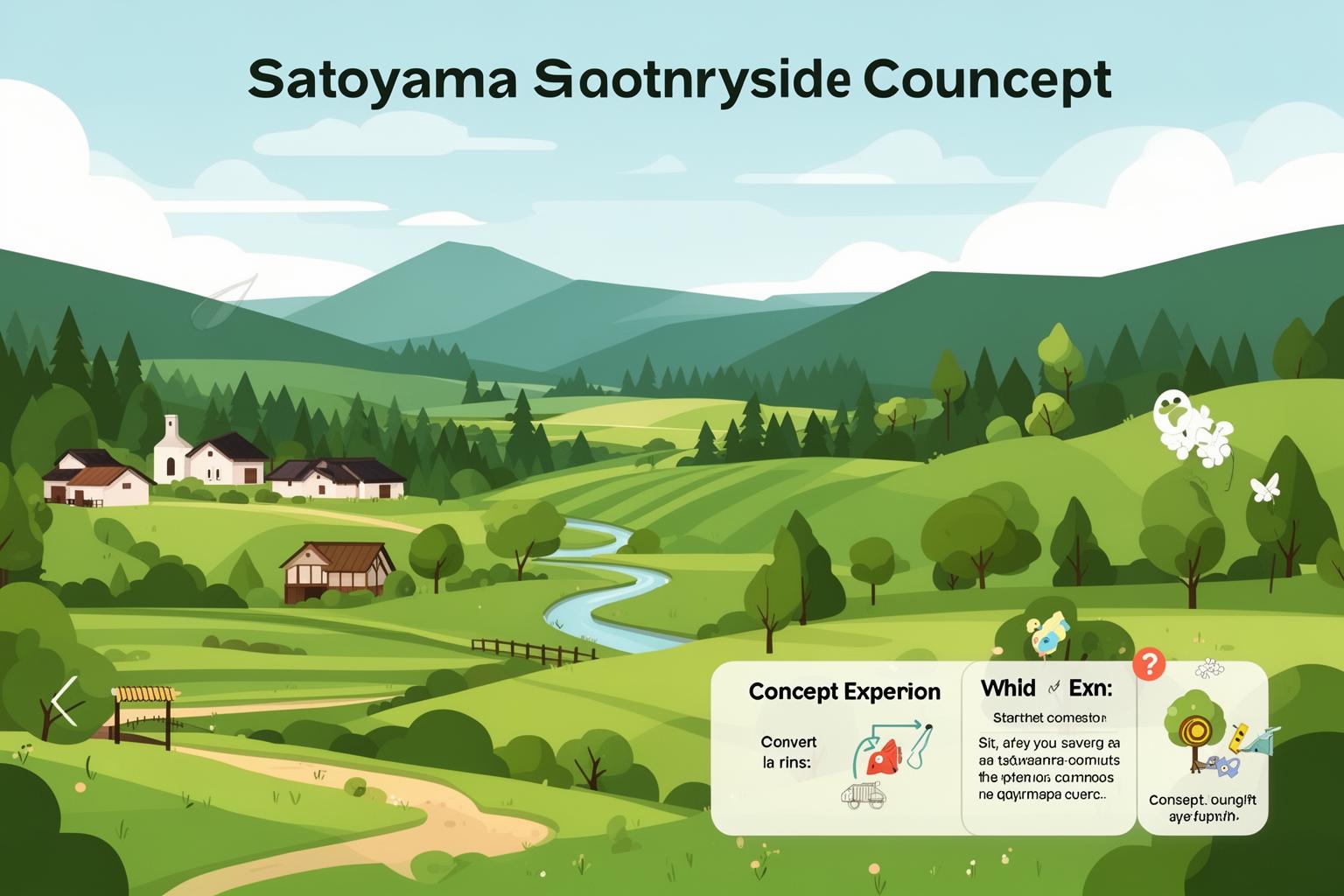
First, let’s clarify the terminology, as “countryside” hardly captures the essence. The term 里山 (satoyama) combines two characters: sato (里), meaning a village or inhabited place, and yama (山), meaning mountain or hill. Literally, it translates to “village-mountain.” But this straightforward translation misses the full meaning. Satoyama isn’t wild, untouched nature, nor is it a modern, industrial farm. It represents something in between—a mosaic of landscapes including rice paddies, vegetable patches, bamboo groves, coppiced woodlands, irrigation ponds, and grasslands, all actively managed and maintained by local residents. Think of it as the buffer zone, the sacred boundary between human village life and the deep mountains of wilderness, traditionally considered the domain of the gods.
More than Simply “Countryside”
To truly grasp the satoyama concept, you need to abandon the Western notion of a clear division between civilization and wilderness. In the satoyama framework, these realms are fundamentally interconnected. This isn’t about humans dominating nature; it’s about a long-standing, sustainable partnership. For centuries, this landscape sustained rural communities. The forests yielded firewood for cooking and heating, charcoal for smithing, and timber for building. The forest floor offered edible wild plants (sansai), mushrooms, and nuts. Grasses provided material for thatch roofs and feed for livestock. The ponds and streams—integral parts of an elaborate irrigation system for rice paddies—harbored fish and frogs. Every fragment of the landscape served a purpose, all tied to human survival. It embodies the ultimate form of living with the land, not simply on it. This system was so efficient and sustainable that it endured for hundreds of years, resulting in a unique ecosystem that is both semi-natural and semi-cultivated. It is a bio-cultural artifact, a landscape literally shaped by generations of human labor, sweat, and creativity.
The Human Factor: A Collaboration with Nature
The true wonder of satoyama, often overlooked, is that human involvement is what enriched its biodiversity. We often assume that human impact on nature is harmful, but in this case, the reverse is true. Consider coppicing: the practice of regularly cutting trees back to their stumps to stimulate new growth. Villagers rotated through forest sections to ensure a steady supply of wood. This consistent pruning opened the forest canopy, allowing sunlight to reach the forest floor. As a result, a diverse variety of wildflowers, grasses, and shrubs thrived, supporting a vast population of butterflies, bees, and other insects. The entire food chain benefited. When coppicing ceased, forests grew dark and dense, causing biodiversity to plummet. The same principle applies to the rice paddies. These artificial wetlands became vital habitats for dragonflies, frogs, and their avian predators. The creation of satoyama was not born from an idealistic environmental philosophy but from a practical, time-tested system of necessity. Care for the mountain, and the mountain cares for you. This symbiotic relationship formed the foundation of rural Japanese culture, influencing everything from local festivals honoring mountain deities to the daily rhythms of life.
The Nostalgia Factor: Why Japan is Obsessed with a Disappearing Landscape
If this landscape was so integral to Japanese life for such a long time, what changed? And why does it now evoke such intense, almost dreamlike nostalgia? The answer lies in a story of enormous, rapid social transformation that reshaped the country in just a few decades. The satoyama depicted in Ghibli films captures a world already disappearing when those movies were made, which is exactly why they resonate so deeply.
The “Furusato” Complex: Yearning for a Hometown You Never Knew
To grasp the satoyama fascination, it’s essential to understand furusato (故郷). While the dictionary defines it as “hometown,” that’s like calling a family heirloom simply an “old object.” Furusato is laden with emotion. It’s a romanticized, idealized image of one’s roots—a place of warmth, community, simplicity, and belonging. After World War II, Japan experienced an economic miracle, industrializing at an astonishing speed. This triggered one of the largest internal migrations in modern history, with millions leaving rural villages for booming coastal cities like Tokyo, Osaka, and Nagoya to work in factories and offices. Although they built new lives, a profound cultural dislocation took hold. For these generations and their descendants, the satoyama landscape became a tangible symbol of their lost furusato. It embodied everything their urban lives were not: a slower pace, seasonal connection, and strong community ties. The image of satoyama—the cicadas buzzing in the summer heat, the scent of woodsmoke in autumn, rice stalks drying in the sun—turned into a powerful national icon of the “good old days.” It transformed into a collective memory, a shared nostalgia for a home many city-dwellers had never truly known. Hayao Miyazaki is a genius, but he didn’t create this feeling; he simply reflected a nation already mourning the disappearance of its own backyard.
From Livelihood to Liability: The Decline of Satoyama
In reality, the satoyama didn’t just fade away peacefully. It was rendered obsolete by the very progress that defined modern Japan. The “Shōwa 30s,” the era from the mid-1950s to the mid-1960s often seen as a golden age, marked the turning point. This was when the close relationship between people and satoyama began to deteriorate. The cause was a perfect storm of technological and economic changes. First came the energy revolution: affordable and convenient fossil fuels and electricity replaced firewood and charcoal. Suddenly, venturing into the mountains to coppice trees was unnecessary, leaving forests, once essential, untended. Then came chemical fertilizers and pesticides, revolutionizing agriculture. While these boosted productivity, they disrupted the delicate ecosystems of the rice paddies. Lastly, economic forces dealt the final blow. Importing timber and food became cheaper than local production. Most critically, young people saw no future in the grueling, low-paying labor of farming and forestry. They left in large numbers for the cities, pursuing education and stable salaries. This migration left villages with aging populations unable to maintain the labor-intensive care satoyama required. Forests grew dark and wild; once-managed bamboo groves turned into dense thickets that choked out native trees. Abandoned rice paddies became overrun with weeds. The human-shaped landscape began to unravel once those hands disappeared. Satoyama shifted from a source of life to a liability—a symbol of a past modern Japan had left behind.
Finding Totoro IRL: Satoyama in Modern Japan
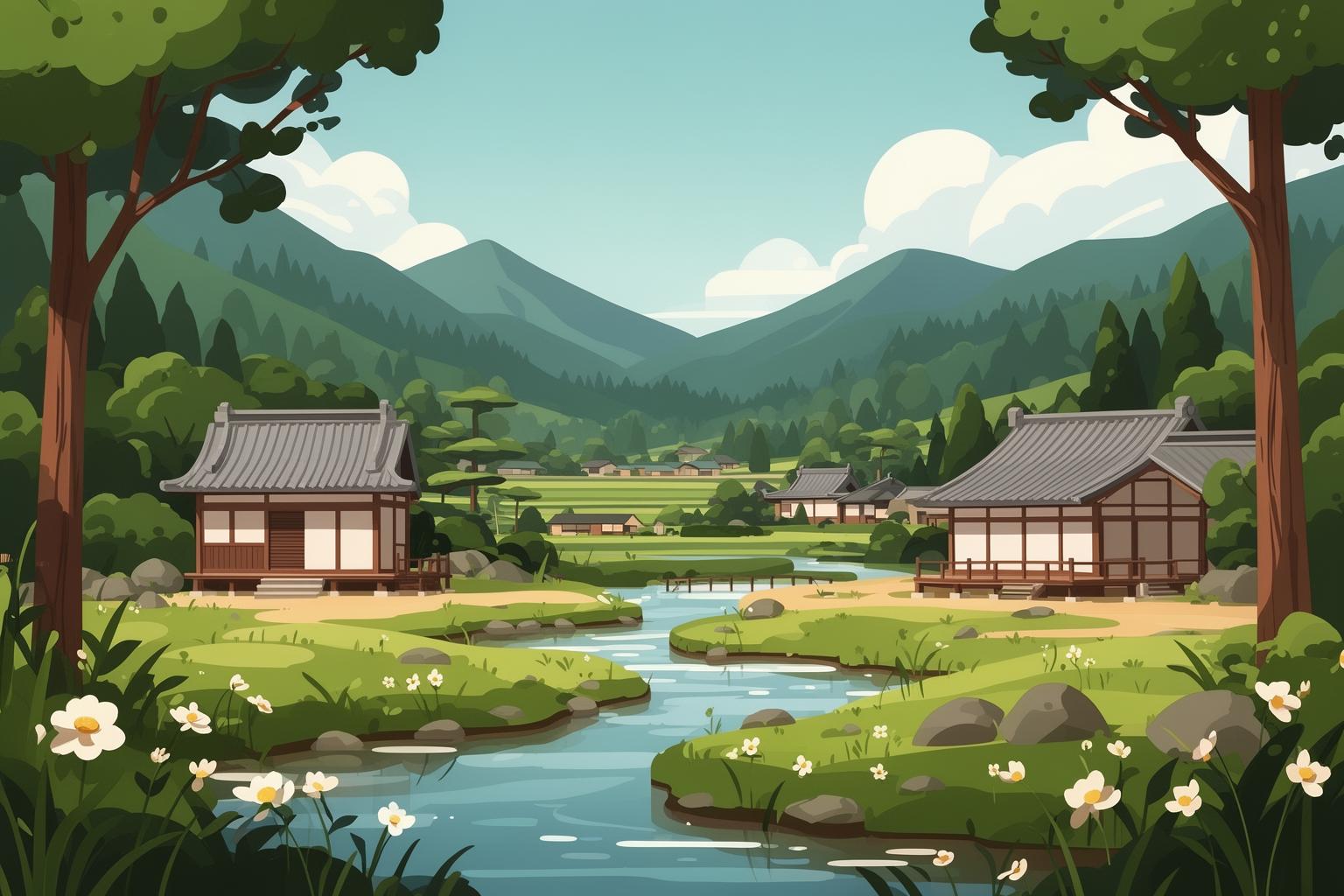
But the story doesn’t end there. Just as it seemed the satoyama was bound to become a forgotten relic, something unexpected occurred. Japan began to recognize what it had lost. A powerful counter-movement started to emerge, driven by a desire to preserve and restore these unique landscapes. The satoyama is experiencing a resurgence—not as a return to the past—but as a reimagined space with fresh meaning and purpose for the 21st century.
The Conservation Comeback
By the 1980s and 90s, scientists and ecologists began raising concerns. They discovered that these human-managed landscapes were actually biodiversity hotspots, harboring far more species than the untouched, old-growth forests deep in the mountains. The mosaic of habitats within a satoyama—forest, grassland, wetland—supported an incredible diversity of life. As this awareness grew, so did a grassroots movement. Local groups, NPOs, and volunteers organized efforts to clear overgrown forests, restore abandoned paddies, and revive traditional management methods. It was a bottom-up initiative, fueled by the same furusato nostalgia, now directed into practical, hands-on activities. Eventually, the government took notice. The Ministry of the Environment launched the “Satoyama Initiative,” a global platform promoting the value of these landscapes worldwide. Suddenly, satoyama was no longer just a nostalgic Japanese concept; it became a globally acknowledged model for sustainable living. It regained pride, but this time the pride was grounded in a deliberate ecological understanding of its worth, not just sentimental memory.
Experiencing Satoyama Today: It’s Not a Theme Park
So, what does this mean for visitors? First, it’s important to set your expectations. You won’t step off a train and find Satsuki and Mei’s house with Totoro waiting in the woods. Experiencing satoyama is a more subtle and rewarding experience. It’s about slowing down and attuning your senses to the rhythm of the landscape. It’s about walking a forest trail and noticing how the light filters through the leaves. It’s about hearing the chorus of frogs in the rice paddies on a summer evening. It’s about observing signs of human presence—a neatly stacked woodpile, a small shrine to a local deity at the base of a tree, or a scarecrow in a vegetable patch. These places aren’t theme parks; they are living communities, and their beauty lies in their quiet authenticity. The best way to experience satoyama is to immerse yourself in it, whether by hiking, biking, or, for the truly dedicated, staying at a farm that welcomes guests.
Where to Look: From Ghibli’s Backyard to Rural Retreats
While satoyama landscapes exist throughout Japan, some areas offer more concentrated or iconic examples. One of the most famous is the Sayama Hills, a sprawling greenbelt on the border of Tokyo and Saitama Prefecture. This is genuinely the place that inspired My Neighbor Totoro. What makes it special is that it’s a remnant satoyama, an island of rural tranquility surrounded by the vast urban sprawl of the Tokyo megalopolis. The Totoro no Furusato Foundation (Totoro’s Hometown Foundation) works to acquire and preserve patches of forest here, and you can walk the same trails that Miyazaki once did. It’s a poignant reminder of how fragile these landscapes are.
For a more dramatic and remote example, consider the Noto Peninsula in Ishikawa Prefecture. It’s famous for its senmaida (literally, “a thousand rice paddies”), stunning terraced paddies cascading down steep slopes to the sea. This is satoyama in its most extreme and sculptural form, a testament to generations of human effort in challenging terrain. It’s a region of tremendous cultural value and a striking example of resilience.
If you want to see satoyama steeped in deep history, Asuka Village in Nara Prefecture is the place. Often regarded as the birthplace of the Japanese nation-state, the entire village is legally protected to preserve its historical landscape. Here, you can cycle past ancient burial mounds (kofun) situated alongside active rice paddies. It feels like a living museum, with the landscape itself as the main exhibit.
Beyond specific locations, the key is to look for signs. A great starting point is often a michi-no-eki, or roadside station. These excellent complexes sell hyper-local produce, crafts, and food. Talking to farmers and seeing what they grow offers a direct window into the local satoyama economy. For a deeper experience, staying in a noka minshuku (farm stay) lets you engage with satoyama life, helping with farm chores and sharing meals with the family. It’s the most direct way to understand that the landscape’s beauty is closely tied to the work that sustains it.
The Satoyama Economy: More Than Just Scenery
The modern revival of satoyama isn’t only about conservation for its own sake. It’s also about building a new, sustainable economy. This is where, as a food enthusiast, I get particularly excited. The satoyama is a treasure trove of exceptional ingredients and culinary traditions. There’s renewed interest in foraging for wild vegetables, the sansai, which have complex, earthy flavors absent from supermarkets. Chefs are celebrating local rice varieties, each with a unique character, grown in paddies nourished by pure mountain streams. Artisanal sake breweries emphasize their connection to the local satoyama, using local rice and the soft, clear water filtering through surrounding forests. This farm-to-table movement creates strong economic incentives to maintain these landscapes. When a unique product from a specific satoyama gains recognition, it adds value beyond just scenery. It also opens new opportunities for younger generations who may not want to be traditional farmers but are passionate about producing high-quality food, running boutique guesthouses, or reviving crafts like charcoal making or bamboo weaving. This is the new satoyama partnership: not merely survival, but the creation of a rich, modern, and sustainable rural culture.
The Deeper Meaning: What Satoyama Tells Us About Japan
Ultimately, the fascination with satoyama goes beyond mere scenic beauty or sustainable agriculture. This landscape serves as a reflection of some fundamental philosophies within Japanese culture. It physically embodies deeply rooted beliefs about time, nature, and humanity’s role in the world. Grasping this insight is essential to truly understanding Japan.
The Impermanence Vibe: Mono no Aware in the Landscape
One of the most important Japanese aesthetic ideas is mono no aware (物の哀れ). This complex concept, often translated as “the pathos of things,” centers on a profound, gentle sadness regarding life’s impermanence. It’s the sentiment you feel when witnessing cherry blossoms in full bloom, aware they will vanish within a week. Their beauty is inseparable from their fleeting nature. Satoyama is mono no aware expressed through a landscape. Its charm depends wholly on seasonal cycles and the steady, rhythmic effort of human labor. Spring marks the planting of rice in paddies mirroring the sky. Summer bursts forth with lush, deep greens and the loud hum of cicadas. Autumn shines with golden harvest hues and crisp, clear air. Winter brings quiet, monochrome stillness with snow-covered fields. This landscape is never still; it is in constant flux. Its beauty is delicate and transient, maintained by a fragile balance that can easily shift. This deeply resonates with a cultural sensitivity that appreciates beauty not in permanence or grandiosity, but in the fleeting, imperfect, and ephemeral.
A Blueprint for the Future?
It is tempting to view satoyama purely as a nostalgic relic from the past, but that misses the point of its modern resurgence. Increasingly, satoyama is perceived not as a retrospective glance, but as a forward-looking blueprint. In a world confronting climate change, biodiversity loss, and urban social isolation, satoyama offers a persuasive model. It demonstrates how human communities can coexist sustainably with their environment, promoting biodiversity rather than diminishing it. It supports local production, community collaboration, and place-based knowledge passed down over generations. The story of satoyama parallels the story of modern Japan itself: one marked by profound loss and rapid transformation, yet also by resilience, adaptation, and a tenacious will to preserve cultural essentials. It is the ongoing dialogue between intense modernity and deep tradition, between the concrete city and the rice paddy. To understand satoyama is to understand that, for Japan, the past never truly disappears. It remains a living presence shaping the future, a reminder that the most sustainable path forward may be found by revisiting the wisdom of the village mountain.