
Yo, let’s have some real talk. You’ve seen it, right? The lush, sun-dappled forests of My Neighbor Totoro. The impossibly green rice paddies, the charming farmhouses, the little shrines tucked away under giant camphor trees. It’s the ultimate Japan aesthetic, the Ghibli-core dream that fuels a million travel fantasies. It feels ancient, timeless, and pure. You see it on Instagram, in anime, in travel brochures, and you think, “This is the real Japan.” It’s a powerful image, a vision of a perfect, harmonious relationship between people and nature. It’s the kind of place where you could totally imagine a giant, fluffy forest spirit waiting for a bus in the rain.
But here’s the tea: that landscape isn’t a fantasy, but it’s also not what you think it is. It’s not untouched wilderness. It’s a man-made masterpiece of sustainable living called a Satoyama. And the most shocking part? It’s quietly, systemically, and rapidly disappearing. The very image of rural Japan that the world has fallen in love with is in a state of crisis. You might visit Japan looking for Totoro’s forest, only to find overgrown bamboo thickets, crumbling farmhouses, and signs warning of wild boars and bears. The gap between the dream and the reality can be seriously jarring. So, what gives? Why is this iconic and culturally vital landscape fading away? The answer isn’t a simple one. It’s a complex story of economic miracles, fossil fuels, social upheaval, and a fundamental shift in how a nation sees itself and its relationship with the land. To get it, we need to look past the Ghibli-tinted glasses and dig into what a Satoyama actually is, what it meant to Japan, and the forces that are now tearing it apart. This isn’t just about losing some pretty scenery; it’s about a culture losing its roots.
While the satoyama landscape is vanishing, you can still experience the awe of Japan’s ancient, untamed nature in its real-life Princess Mononoke forests.
What Exactly is a Satoyama? It’s Not Just ‘The Sticks’
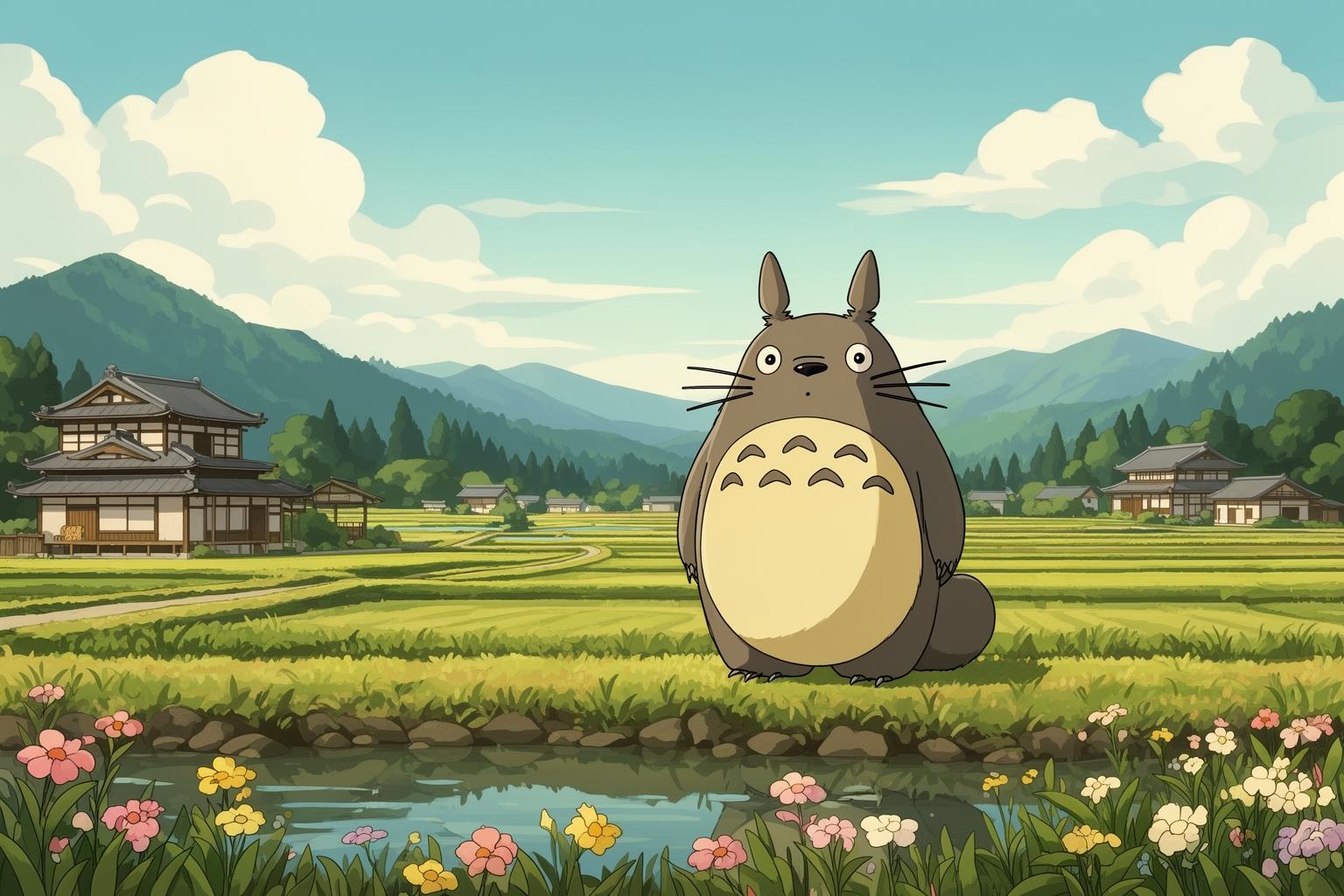
First, we need to get the definition nailed down, because “countryside” doesn’t even come close. The word Satoyama (里山) is a blend of two characters: sato (里), meaning village or inhabited area, and yama (山), meaning mountain or hill. Literally, it means “village mountain.” This is more than just a poetic label; it’s a practical description. A Satoyama is a managed landscape, a buffer zone lying between the deep, wild mountains—the Okuyama (奥山), believed to be home to gods and powerful spirits—and the flat plains, or heiya (平野), where major towns and intensive agriculture were found. It was the space where human life and wild nature intersected, negotiated, and cooperated. For centuries, it was the engine room of rural Japanese society.
Think of it not as a single entity, but as a mosaic of interconnected environments, all shaped by human hands for mutual benefit. On the hillsides, there were coppice woodlands, effectively the village’s power source and supply depot. Villagers periodically cut down trees like oak and chestnut, leaving the stumps to regrow. This coppicing practice provided a sustainable source of firewood for cooking and heating, and charcoal for smithing and other crafts. These forests weren’t dark and eerie; they were bright and open, with sunlight reaching the forest floor, fostering a wide variety of flowers and plants. In turn, this supported diverse insects, birds, and other animals. These woods were also places to forage for wild vegetables (sansai), mushrooms, and nuts—a living pantry.
Next are the rice paddies, the tanbo (田んぼ). These fields weren’t just for growing rice; they were intricate, man-made wetland ecosystems. They played a key role in water management, preventing floods by holding and gradually releasing rainwater. The irrigation channels and ponds—the tameike (ため池)—that supplied them teemed with life: dragonflies, frogs, fish, and freshwater snails. Maintained by farmers, these were biodiversity hotspots. Below the woods lay grasslands, regularly cut to provide fodder for animals like oxen and horses, or thatch for roofing traditional houses. The cut grass and fallen leaves from the forest were collected and used as fertilizer for the fields in a practice called karishiki. This was a completely circular, self-sustaining system—nothing wasted. Every element had a purpose and was connected to every other. Human activity wasn’t destructive; it was what created and sustained this rich, productive, and biologically diverse environment. This is a crucial point often lost in translation. Western environmentalism often emphasizes “wilderness preservation”—the idea that pure nature is nature untouched by humans. The Satoyama concept is the very opposite. It shows that humans can be a keystone species, actively participating in and enhancing the ecosystem. It was a true collaboration, not a hands-off preservation.
A Human-Nature Collaboration, Not Untouched Wilderness
Let’s delve deeper, because this can be a revelation if you’re used to the John Muir perspective. The Satoyama landscape is essentially a product of human labor. Without continuous human care, it disappears. If villagers stopped coppicing, the forests wouldn’t “return to nature” in a positive way. They would become dense, dark, and overrun by a few dominant species like bamboo, which would suffocate other life. The sunny forest floor that supported diverse flowers and insects would vanish, and biodiversity would collapse. If farmers abandoned the rice paddies, terraces would deteriorate, irrigation ponds would silt up, and the balanced wetland ecosystem would be lost. This system depends on a cycle of use. The act of taking—cutting wood, gathering leaves, channeling water—is what keeps it healthy and diverse. This relationship was developed over centuries through trial and error, embodying deep, passed-down local knowledge.
This isn’t to suggest it was a utopian paradise. The work was extremely hard. Life in a traditional Satoyama village followed the unyielding cycle of seasons and land demands. It involved physical toil, from back-breaking spring rice planting to cold, grueling winter charcoal making. But this continual interaction fostered a profound intimacy with the land. People read subtle seasonal signs, knew the properties of different trees, the best spots for certain mushrooms, and local wildlife behaviors. The environment wasn’t a distant “Nature” to visit on weekends; it was part of their home and community. It was their life-support system. This outlook contrasts sharply with the modern urban view of nature as a consumable for recreation or admiration from afar. In the Satoyama, people didn’t consume nature; they participated in it.
This participation demanded strong community cooperation. Managing irrigation, maintaining forest paths, and re-thatching roofs were communal tasks. A Satoyama couldn’t be managed solo. It required shared understanding and collective effort, strengthening social bonds and a sense of place-based identity. This deep integration of community, labor, and environment is what makes Satoyama so special and culturally vital. It’s a living example of a society that achieved a dynamic, sustainable balance with its surroundings. The beauty portrayed in Ghibli films isn’t wild, untamed nature’s beauty; it’s the beauty of a carefully tended garden expanded to a whole landscape. It’s the aesthetic outcome of centuries of mindful, hard work.
The Vibe Check: How Satoyama Shaped Japanese Culture
The influence of the Satoyama extends far beyond merely providing food and fuel. This landscape is deeply interwoven with the essence of Japanese culture, encompassing its spiritual beliefs and aesthetic sensibilities. It served as the backdrop against which much of Japan’s cultural identity was shaped. Living in close harmony with nature’s rhythms, in a world where survival depended on accurately reading the seasons, forged a distinctive national psyche.
The Original Sustainable Lifestyle
Long before terms like “sustainability” and “circular economy” became corporate buzzwords, the Satoyama represented the genuine article. During the Edo period (1603–1868), Japan was largely isolated from the outside world and had to depend almost entirely on its own resources. The Satoyama system was central to this self-sufficiency. It was a model of resource management that, out of necessity, was highly efficient and waste-free. Fallen leaves from the forest nourished the rice paddies as fertilizer. Rice straw was repurposed to make sandals, ropes, and tatami mats. Human waste collected from cities was sold to farmers as valuable fertilizer. Everything served a purpose, and all was returned to the cycle. This practice was not motivated by abstract environmental ideals but by pragmatic survival.
This lifestyle fostered a unique set of values and aesthetics. The Japanese concept of mottainai (もったいない)—a profound sense of regret over waste—emerged directly from this era of resource scarcity. It goes beyond “waste not, want not”; it embodies an ethical and almost spiritual belief that everything has intrinsic value and should be fully utilized. The appreciation of seasonal change, a cornerstone of Japanese art and literature, is another direct outcome of Satoyama life. When your entire existence revolves around the agricultural calendar, you become finely attuned to the subtle shifts in nature: the first plum blossoms budding, the changing songs of cicadas, the particular red hue of autumn maples. These were not simply beautiful sights but vital signals—a natural calendar guiding when to plant, harvest, and prepare for winter. This deep sensitivity to the seasons is reflected in everything from the formal poetry of haiku to the seasonal ingredients used in Japanese cuisine (shun). Even aesthetic concepts like wabi-sabi—the beauty found in imperfection, impermanence, and incompleteness—reflect an appreciation for the natural, unadorned materials and processes rooted in the Satoyama world. The cracked glaze on pottery, the weathered wood of a temple, the moss-covered stone—all echo the textures and realities of a life lived close to the earth.
Where Yokai and Kami Reside
Importantly, the Satoyama was not just a physical environment; it was a deeply spiritual and mythological realm. This was a world where the boundary between humans and spirits was thin. The Satoyama landscape was, and in many ways remains, believed to be inhabited by a vast array of supernatural beings. The deep, untouched Okuyama mountains were home to the mighty, sometimes fearsome kami (gods or divine spirits) of Shinto. The human villages in the heiya were the domain of people. The Satoyama lay between these, the liminal space where the two worlds met and interacted. It was a place of both opportunity and danger, where one might receive a blessing from a nature spirit or encounter a mischievous yokai (monster or phantom).
Hayao Miyazaki’s Totoro perfectly embodies this belief in modern form. He is not a cuddly, Disney-like character; he is the nushi, the forest’s master or guardian. An ancient, powerful, and fundamentally wild being, he operates on a logic beyond human understanding. Satsuki and Mei can see him because they are children, pure of heart, and have shown respect for his domain. Their father, upon moving to the old house, formally greets the great camphor tree, acknowledging the spirit within. This act perfectly illustrates the traditional attitude toward the Satoyama: a blend of reverence, respect, and pragmatic recognition that humans share the space with powerful non-human forces.
This belief system infused the landscape with profound meaning. Certain ancient trees (shinboku), large rocks (iwakura), and waterfalls were considered yorishiro, sacred sites where the kami would descend. Small shrines were erected to honor them. Boundaries and transitional zones were especially potent: the forest’s edge, a hill pass, or a riverbank—places requiring caution. One might encounter a kitsune (fox spirit) playing tricks or a kappa (river goblin) lurking to pull someone into the water. These tales were not merely frightening stories for children but folk wisdom encoded in cultural memory. The kappa story taught children to be cautious around rivers and irrigation ponds; forest spirit tales warned people not to stray from known paths. They served as a safety manual and a code of ecological conduct embedded within the cultural imagination. This animistic worldview, in which divinity and spirits inhabit the entire landscape, is a direct legacy of the Satoyama and a foundational element of the Japanese spiritual psyche.
The Glow-Up and the Ghosting: The Post-War Economic Boom
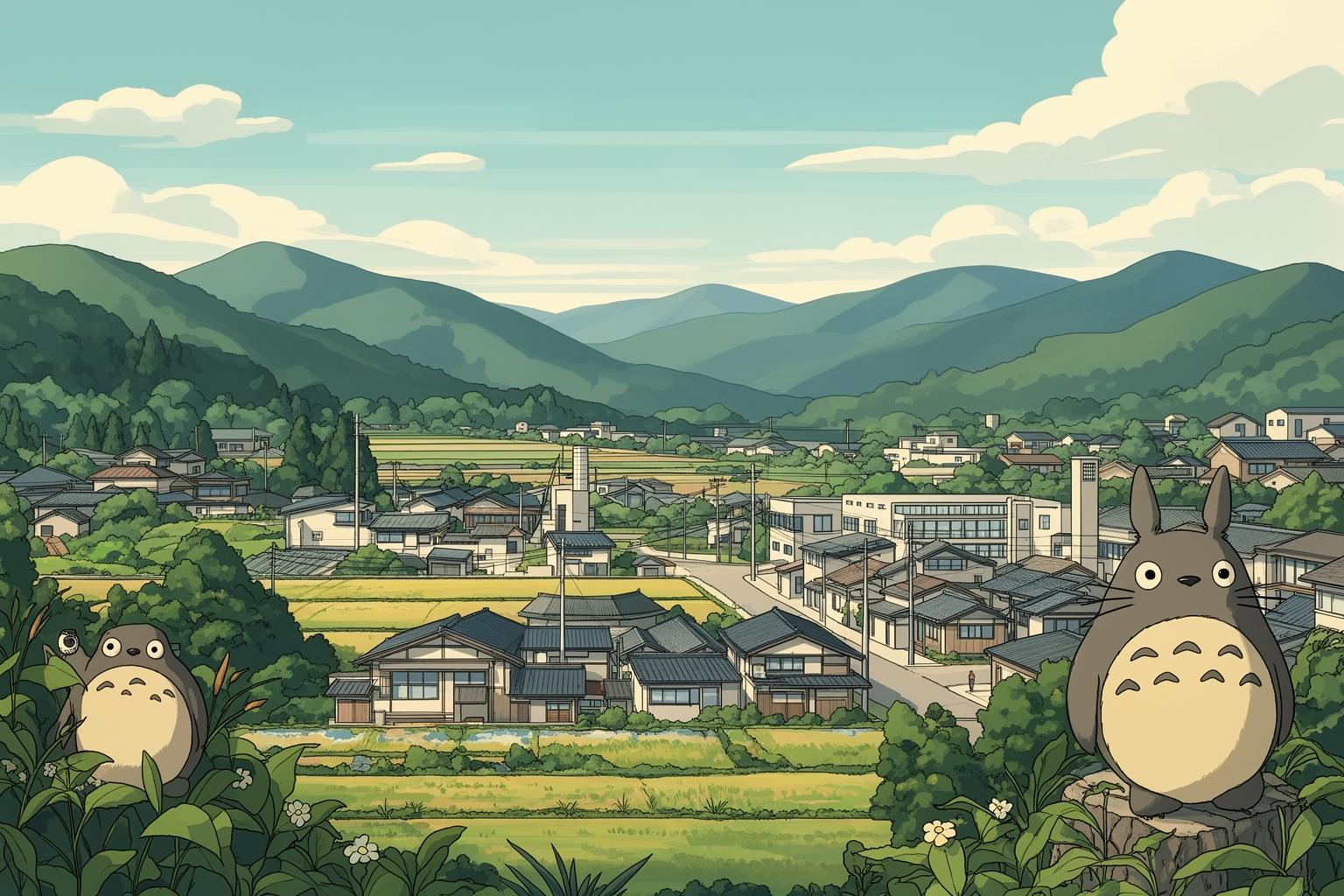
For centuries, the Satoyama system maintained a dynamic equilibrium. However, beginning in the mid-20th century, a series of rapid, profound changes shattered this delicate balance. Japan’s post-war “economic miracle” lifted the nation out of poverty and transformed it into a global industrial powerhouse. Yet, this miracle came at a steep cost, with the Satoyama among the first sacrifices made in the name of progress and efficiency. Its very foundations were methodically dismantled within just a few decades.
The Fuel Revolution: Abandoning Charcoal
The initial and perhaps most devastating blow was the energy revolution of the 1950s and 1960s. For centuries, rural Japan relied primarily on firewood and charcoal, sustainably harvested from the managed coppiced forests of the Satoyama. This system was labor-intensive but renewable. Then, almost overnight, fossil fuels arrived: propane gas for cooking, kerosene for heating, and electricity for lighting all became widely accessible and affordable. Suddenly, the Satoyama forest’s core economic role—supplying fuel—became obsolete. Why spend hours or days cutting wood and making charcoal when you could simply buy a gas canister or flip a switch? The demand for firewood and charcoal plummeted.
Consequently, forest management ceased. The regular coppicing cycle, which had kept the woods bright and biologically diverse for centuries, stopped. The connection between village and mountain was broken. Without economic incentives, the labor-intensive forestry was abandoned. Though rational from an individual household perspective, the ecological consequences were disastrous. The once-open woodlands grew dark and dense. Fast-growing, commercially worthless species like bamboo invaded, creating impenetrable thickets. Sunlight no longer reached the forest floor, and the rich undergrowth of flowers and shrubs supporting a diverse web of life disappeared. The forest’s character shifted from a productive, park-like environment to a neglected, overgrown, ecologically impoverished one. The vibrant Satoyama forest of Totoro’s imaginary began its slow transformation into the dark, unwelcoming woods commonly seen in rural Japan today.
Concrete Jungles and Mass Migration
Alongside the fuel revolution, another monumental social shift unfolded: rapid urbanization. The booming post-war economy created an insatiable demand for labor in the factories and offices of expanding cities. Cities like Tokyo, Osaka, and Nagoya promised opportunity, prosperity, and modern convenience. For rural youth, the choice was clear: remain and face a life of grueling agricultural labor with limited financial reward, or move to the city for a salaried job, a modern apartment, and the excitement of urban life. This led to a mass exodus from the countryside, a demographic tidal wave reshaping the nation. Millions of young people left their ancestral villages, often permanently.
This had a devastating double impact on the Satoyama. First, it drained the landscape of its workforce. Maintaining the Satoyama system required significant human labor—labor no longer available. The aging population left behind—a phenomenon known as kōreika (高齢化), or the graying of society—could not meet the physical demands of forest management, irrigation maintenance, and terraced rice paddy work. Traditional land management knowledge, passed down through generations, began to disappear as younger people disconnected from rural roots. Second, it fostered a profound cultural shift. The city came to symbolize the future, modernity, and success, while the countryside was increasingly seen as backward, inconvenient, and emblematic of a past to be abandoned. The slang of the time reflects this: people left for the city seeking a “brighter life.” The countryside was effectively ghosted in favor of the concrete jungle. This cultural stigma further hindered efforts to draw people back to rural areas, perpetuating a vicious cycle of depopulation and decline.
The Rise of Industrial Agriculture and Imported Goods
The final blows came from agricultural modernization and global trade expansion. The traditional Satoyama farming system, which relied on natural forest fertilizers and communal labor, was replaced by industrial agriculture. Chemical fertilizers and pesticides became widespread, eliminating the need for compost gathered from Satoyama forests. Small, irregularly shaped rice paddies were consolidated into large, rectangular fields suitable for heavy machinery like tractors and rice transplanters. This mechanization reduced labor needs, accelerating rural depopulation. Iconic terraced paddies were often abandoned because they couldn’t accommodate large machines.
Simultaneously, Japan’s economic growth enabled it to import resources cheaply from abroad. Imported timber from Southeast Asia and North America flooded the market, making the local harvesting and management of forests economically unviable. Shiitake mushrooms, once a valued Satoyama forest product, were now imported cheaply from China. The economic logic sustaining the Satoyama for centuries was thoroughly reversed. In nearly every aspect, it became cheaper and more efficient, at least in the short term, to neglect the local environment and import resources from overseas. Each of these developments—the energy shift, urban migration, agricultural modernization, and global trade—eroded the integrated Satoyama system. They severed the essential links between forests, paddies, communities, and the economy. The system didn’t merely fade away; it was actively and systematically dismantled by the forces of modernization.
The Reality Bites: What Happens When a Satoyama is Abandoned?
So, the people departed, and the management ceased. There is a romantic idea, especially within Western environmentalism, that if humans simply withdraw, “Nature” will heal itself and return to an untouched, balanced state. However, this is absolutely not the case with the Satoyama. Being a human-made ecosystem, abandoning the Satoyama does not result in a beautiful rewilding. Instead, it leads to ecological and social collapse. The outcome is not a Ghibli paradise, but a landscape that is both degraded and increasingly hazardous.
Not a Return to Nature, but a Hot Mess
When a coppice forest is left unmanaged, ecological simplification begins. Rather than the open, sunny woodlands of the past, a dark, dense, and tangled thicket develops. A thick canopy blocks sunlight, killing off the diverse understory of plants and flowers. This, in turn, devastates the populations of butterflies, bees, and other insects reliant on them. Bird species shift from those preferring open woodlands to those adapted to dense thickets. In many areas, the biggest issue is the rapid spread of bamboo, especially the Moso variety. Bamboo is highly aggressive, quickly expanding and creating vast, sterile monocultures where almost nothing else can grow. An abandoned bamboo grove is a haunting, silent place—a true ecological desert. This is a stark contrast to the vibrant, life-filled forest seen in Totoro.
The rice paddies suffer a similar fate. Without ongoing care, the earthen terrace walls crumble. Irrigation channels become clogged with debris and silt. The paddies either dry out and become overrun with weeds and scrub or turn into stagnant, swampy wastelands. The delicate wetland ecosystem that supported diverse aquatic life is destroyed. Abandoning farming does not just mean a loss of food production; it also means losing critical habitat for countless species, many endangered in Japan due to the decline of paddy agriculture. The landscape’s ability to regulate water diminishes, increasing the risk of landslides and flash floods during heavy rains and typhoons. The abandoned Satoyama becomes a less resilient, less stable, and far less beautiful environment.
The Human-Wildlife Conflict Gets Real
One of the most immediate and dangerous consequences of Satoyama degradation is the sharp rise in human-wildlife conflicts—a major issue across rural Japan today. Traditionally, the Satoyama served as a vital buffer zone, a transitional area between the deep wilderness of the Okuyama and human settlements of the heiya. It was a landscape actively managed by people, which kept larger, more dangerous animals at bay. As the Satoyama becomes overgrown and depopulated, this buffer disappears. Wild animals such as Japanese macaques, sika deer, wild boars (inoshishi), and even Asiatic black bears are expanding their territories, moving down from the mountains into inhabited areas.
This increase is not necessarily due to exploding animal populations, but because the barrier that once separated their habitat from ours has vanished. Overgrown forests provide cover for undetected movement, and abandoned farms and orchards offer an easy food source. These encounters have become a part of daily rural life. Boars dig up gardens and rice paddies, causing millions of dollars in agricultural damage. Monkeys raid homes and steal food. Most alarmingly, bear sightings in residential areas—and even attacks on people—are becoming more frequent. News reports regularly cover schools canceling outdoor activities or towns issuing bear alerts. This is a direct and tangible outcome of neglecting the Satoyama. The breakdown of the ecological boundary has resulted in the collapse of the physical barrier between humans and potentially dangerous wildlife. The harmony between humans and nature portrayed in Ghibli films has, in reality, deteriorated into a tense and often frightening conflict.
The Social Decay: Akiya and Ghost Villages
Environmental degradation goes hand-in-hand with social decline. As the population ages and dies off, with no young people returning, houses fall into disrepair and are abandoned. These empty homes, called akiya (空き家), are a visible scar on the landscape and a nationwide problem in Japan, numbering in the millions. A vacant house quickly becomes derelict, vulnerable to vandalism or fire hazards. A few akiya on one street can lower property values and the morale of the entire neighborhood. When akiya numbers rise, genkai shūraku (限界集落), or “marginal villages,” emerge—places where more than half the population is over 65. The ultimate stage is the ghost village, where the community ceases to exist altogether.
This social collapse creates a vicious cycle of decline. As the population dwindles, essential services disappear. Local schools close. Grocery stores shut down. Bus services are reduced or eliminated. Life becomes even harder for remaining residents and less appealing to potential newcomers. The social fabric crucial for managing the Satoyama landscape dissolves. Festivals, traditions, and shared knowledge all fade away. Thus, the disappearance of the Satoyama is not only an ecological issue but also a tale of cultural loss, community breakdown, and the vanishing of an entire way of life in Japan. The crumbling houses and overgrown fields stand as monuments to a forgotten bond between people and their land.
The Comeback? The Fight to Save the Ghibli Vibe
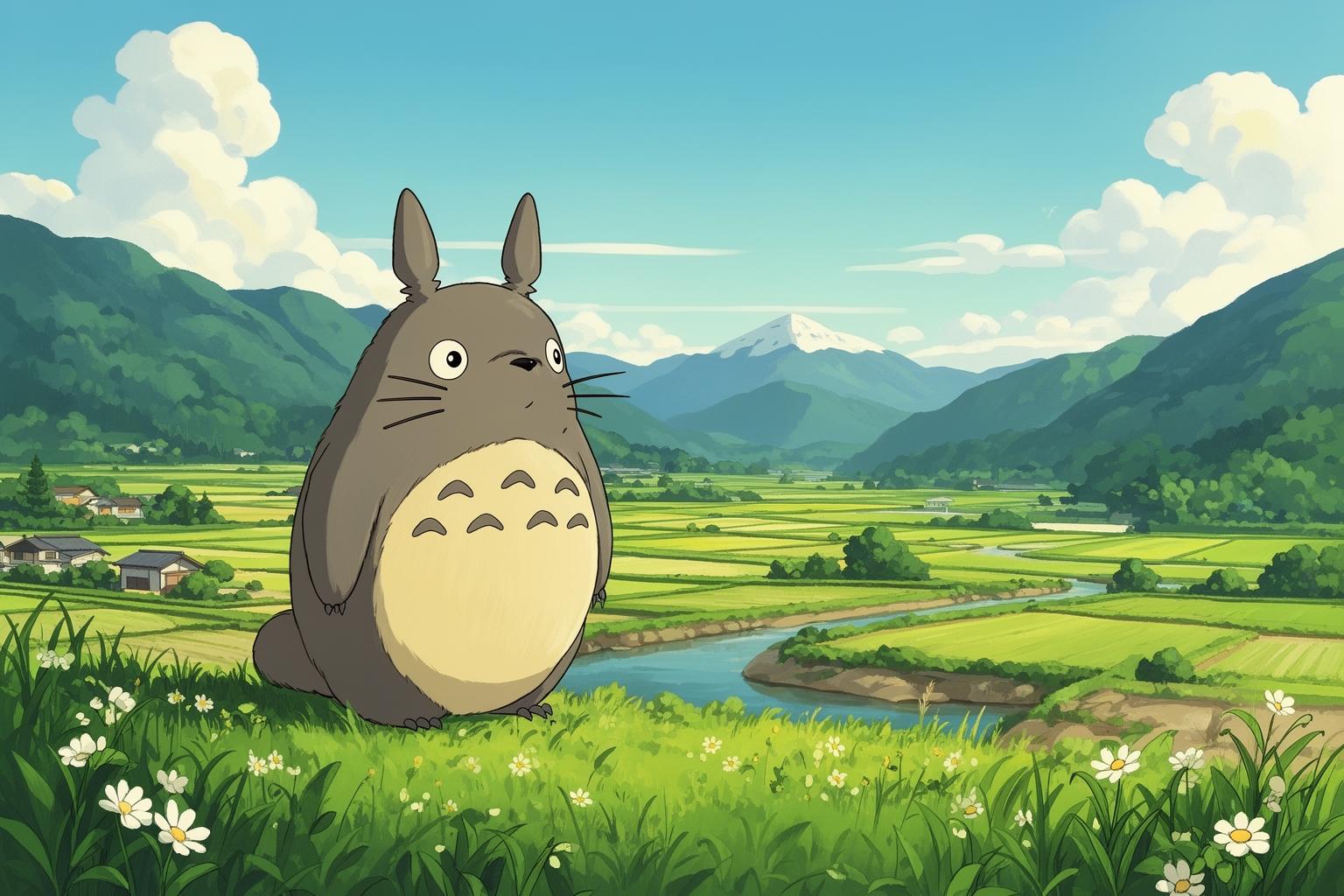
The situation looks quite grim, no doubt. Yet, the story continues. As awareness of the Satoyama crisis has increased, a new movement has arisen to protect these invaluable landscapes. This effort isn’t a large, top-down government program; rather, it’s a determined, passionate, and low-profile grassroots campaign driven by a diverse group of people who believe the Satoyama is too precious to lose. It’s a battle against overwhelming economic and demographic pressures, and while success is uncertain, it signals that the Ghibli dream remains alive.
NPOs and the Volunteer Squad
At the forefront are numerous small non-profit organizations (NPOs) and volunteer groups across the country. These groups are often established by committed locals or by former city residents who relocated to the countryside seeking a different lifestyle. Their work involves the tough, unglamorous, hands-on task of restoration. On weekends, volunteers—a mix of elderly locals, families, and young urbanites—venture into the hills to clear overgrown bamboo groves, a physically demanding job. They are reviving the practice of coppicing to let sunlight return to the forest floor. They repair collapsed rice terraces by hand and restore their irrigation. Some of these revitalized paddies now grow organic rice, often specialty types used in sake brewing, thus adding new economic value to an old tradition.
This movement is not solely about environmental preservation; it’s about rebuilding community. These workdays often conclude with shared meals and camaraderie. They reconnect people with the land and with one another. For urban volunteers, it’s an opportunity to escape the concrete jungle, get their hands dirty, and learn about the source of their food. For the elderly, it’s a chance to impart their traditional knowledge and witness younger generations valuing preservation. Though small in scale and only covering a fraction of Japan’s abandoned Satoyama, these efforts are crucial incubators of knowledge and community, sustaining the skills and spirit of the Satoyama.
Satoyama Capitalism: Can Nostalgia Be Monetized?
Alongside volunteer efforts, a growing movement seeks new economic models to make Satoyama sustainable in the modern era. Often termed “Satoyama Capitalism,” this approach leverages the unique cultural and natural assets of these areas to create new income streams. Ecotourism plays a major role, including guided nature walks, birdwatching tours, and hands-on workshops for traditional crafts like weaving, dyeing, and charcoal making. Farm stays, or nōka minshuku (農家民宿), let tourists experience rural life firsthand, help with chores, and enjoy meals made from fresh local ingredients.
Another strategy is branding and marketing high-value Satoyama products, such as organic rice sold at premium prices, artisanal honey, free-range eggs, and wild foraged vegetables supplied to upscale city restaurants. The story behind these goods—of a healthy landscape and restored community—adds to their value. The challenge, of course, is scale: can these niche boutique businesses generate enough revenue to support whole communities? Are they merely hobbies for a few committed individuals sustained by tourists and wealthy urbanites? Is building a vibrant local economy through monetizing nostalgia realistic? The verdict is still pending. It’s a promising path but no silver bullet. It demands strong entrepreneurial spirit and marketing skills and cannot alone resolve fundamental demographic issues like an aging and shrinking population. It remains a constant struggle to prove these landscapes can be economically viable as well as ecologically important.
The Totoro no Furusato Foundation: Art Inspiring Action
This brings us back to Totoro. The massive success of My Neighbor Totoro in 1988 did more than create a beloved animated classic. It etched the image of the Satoyama into national consciousness just as it was most threatened. It made people aware of what was being lost. Hayao Miyazaki, a dedicated conservationist, became a critical figure in protecting these landscapes. In the 1990s, recognizing that the very area inspiring his film—the Sayama Hills (Sayama Kyūryō) on the Tokyo-Saitama border—was endangered by development, a citizen-led movement began.
This initiative led to the founding of the Totoro no Furusato Foundation (The Totoro Hometown Fund). With Miyazaki’s public backing and contributions, including original Totoro artwork for fundraising, the foundation started purchasing small forest plots to shield them from housing developments. These protected zones are called “Totoro’s Forest.” It stands as a powerful example of how popular culture can translate into direct, tangible conservation efforts. The film provided an emotional connection and a potent symbol around which people could unite. It helped them recognize the value of these seemingly ordinary woods and fields—not as potential real estate, but as priceless parts of their cultural heritage. Saving the Satoyama isn’t just about ecology or economics; it’s about protecting a landscape of the heart—a source of memory and imagination. Totoro gave that landscape a face.
So, Why Should You Care? The Big Picture
At the end of the day, you might view this as a uniquely Japanese tale, a niche environmental issue in a distant country. However, the story of the Satoyama is a global one. It serves as a microcosm of the challenges confronting cultural landscapes worldwide amid relentless globalization, urbanization, and a global economy that values short-term efficiency over long-term resilience. It’s a story about what happens when a society loses its connection to the land that sustained it.
The old Satoyama system epitomized resilience. It endured for centuries, surviving famines, wars, and political upheavals. It was a closed-loop system that met people’s needs while preserving and even enhancing the local ecosystem. Yet, it was not “efficient” by modern capitalist standards. It was labor-intensive and generated limited surpluses. The modern system that replaced it—relying on fossil fuels, industrial agriculture, and global supply chains—is incredibly “efficient.” It can produce vast quantities of food and goods with minimal human labor. But it is also extremely fragile, dependent on cheap oil, stable global politics, and responsible for significant negative externalities: carbon emissions, chemical pollution, biodiversity loss, and the social decline of rural communities.
The fading of the Satoyama forces us to face some difficult questions. What is the real cost of our modern, “efficient” lifestyle? What intangible values—community, tradition, spiritual connection, local knowledge, resilience—do we sacrifice when we prioritize economic growth above all? The idyllic world of My Neighbor Totoro isn’t merely a fantasy setting for a children’s story. It powerfully reminds us of an alternative way of living, a different kind of relationship between humanity and nature. It’s a vision of a world where people are not conquerors of nature, but careful caretakers. The gradual disappearance of the Satoyama serves as a warning. It reveals that such a world is neither timeless nor guaranteed. It is a fragile creation, forged through generations of hard work and profound respect for the land. And once it’s lost, it may be impossible to restore. The effort to save it, even in small ways, is an effort to keep a different possibility alive. It’s a fight to remember that the Ghibli dream was never just a dream; for a very long time, it was reality.