
You’ve seen them. In every major Japanese train station, airport, and roadside rest stop, there are gleaming shops stacked floor to ceiling with exquisitely wrapped boxes. Inside, you’ll find meticulously arranged cookies, delicate cakes, or savory crackers. Tourists might browse, picking up a box or two as a novelty. But if you stop and watch, you’ll see the real customers: Japanese travelers, businesspeople, and families, all buying with a focused intensity. They’re not just casually souvenir shopping. They are fulfilling a critical social duty. This is the world of omiyage, and that beautifully packaged box of snacks is one of the most important things they’ll bring back from their trip.
To the uninitiated, omiyage looks like a simple souvenir. You go somewhere, you bring back a little something. But this translation misses the point entirely. A souvenir is for you—a personal memento, a tangible piece of a memory. An omiyage is for others. It’s a gift, an apology, a social lubricant, and proof of belonging all rolled into one. It is a non-negotiable part of almost any trip, whether for business or pleasure. Forgetting to buy omiyage isn’t just forgetful; it’s a social foul, a subtle signal that you don’t understand or care about your place within the group. This intricate system of giving and receiving edible gifts is a perfect window into the underlying mechanics of Japanese society—a world built on reciprocity, group harmony, and the constant, quiet maintenance of relationships. To understand omiyage is to understand a fundamental aspect of how Japan works.
Exploring Japanese fake food art further reveals the subtle interplay between culinary creativity and the deep-seated social rituals that shape everyday life in Japan.
The Gift That Isn’t Really a Gift
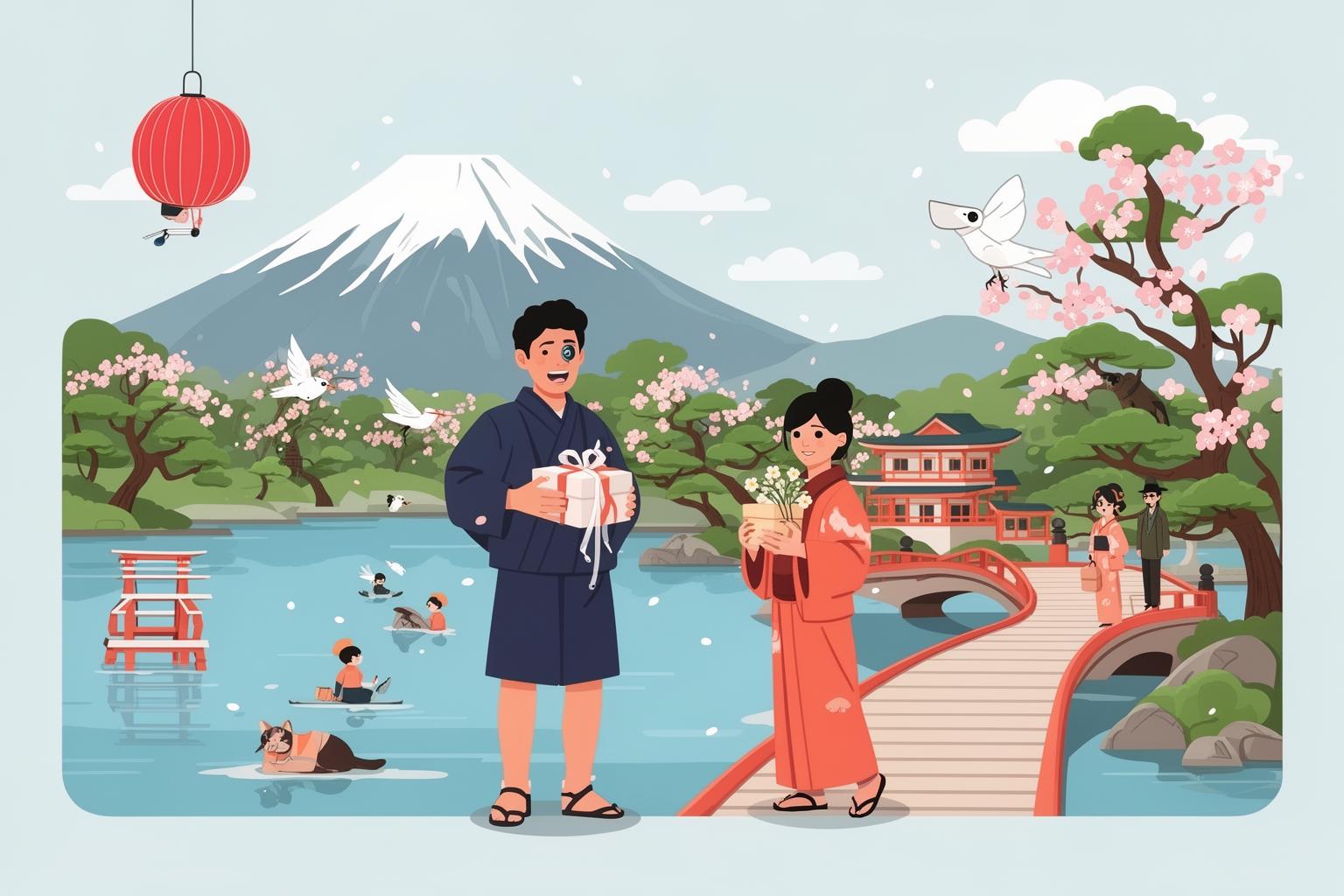
At its essence, the difference between a Western souvenir and a Japanese omiyage lies in the intent behind them. When you purchase a keychain from the Eiffel Tower, you’re mainly buying it for yourself as a memento of your trip. While you might pick up a few extras for friends, it’s usually an afterthought, a spontaneous act. Omiyage, however, is planned from the beginning. The recipients are decided in advance, and the purchase becomes a key part of the travel plan. It’s a task to be completed before returning home.
It’s Not for You, It’s for Us
The primary purpose of omiyage is to share your travel experience with those who stayed behind. But it’s more than just sharing; it’s a gesture of goodwill. By traveling, you temporarily step outside your group—whether it’s your work team, your family, or your circle of friends. You’ve had an experience they haven’t, creating a subtle imbalance. The omiyage helps to close that gap. It’s a tangible way of saying, “Even though I was away enjoying myself or handling business, I was still thinking of you. I’m back now, and I’m bringing a piece of my journey to share, reaffirming my connection to this group.”
This is especially important in the workplace. Taking a day or more off for a personal trip implicitly creates extra work for your colleagues who cover for you. The omiyage acts as a thank you, an apology for the inconvenience, and a way to ease your reintegration into the office environment. It’s a small, edible symbol that helps mend any minor disruption your absence may have caused to the group’s harmony, or wa. It signals your return to the team and your commitment to the collective.
Proof of Travel, Proof of Thought
Omiyage also serves as proof. It’s a physical acknowledgment of your journey. The gift must be a meibutsu, or a famous regional specialty from the place you visited. Bringing back a box of Shiroi Koibito cookies from Hokkaido or Tokyo Banana cakes from Tokyo verifies you were actually there. Offering a generic sweet that can be bought anywhere would defeat the purpose. It shows a lack of thought and fails to convey the essence of the location.
This particularity is vital. The gift carries the story of its origin. When you give someone a box of Yatsuhashi from Kyoto, you’re not just presenting a cinnamon-flavored rice sweet; you’re offering a piece of Kyoto itself. Your colleagues can taste it and briefly connect with your experience. This sharing of a regional flavor is what makes the gesture meaningful. It shows you put care into your choice and honored the tradition, which in turn expresses respect for the recipients.
The Unwritten Rulebook of Reciprocity
Navigating the world of omiyage demands an implicit understanding of a complex set of unwritten rules. Who do you buy for? What kind of item is appropriate? How should it be presented? Mastering this etiquette is an essential part of social fluency in Japan.
The Essential Recipient List
Before deciding what to purchase, a Japanese traveler will mentally review their list of omiyage obligations.
The Office: The Main Obligation
For most working adults, the office is the primary recipient. The usual practice is to buy one large box containing numerous individually wrapped items. This box is intended not for any single person but for the entire team or department. Upon returning to work, the traveler places the box in a communal area, such as the break room or a central table, and makes a quiet announcement like, “I was on a trip, please have some of this.” Colleagues then take one piece throughout the day, often offering a small nod or word of thanks. The key is the individual wrapping. It’s hygienic, easy to distribute, and avoids messy cake cutting or awkward portioning. The system is designed for maximum efficiency and minimal disruption, perfectly reflecting the Japanese office environment.
Family and Close Friends
While the office gift is broad and communal, omiyage for family and close friends is more personal. You might still purchase a box of local sweets, but you may also select something tailored to their tastes—a local craft, a special bottle of sake, or a delicacy you know they’ll appreciate. The obligation is just as strong, but the selection process allows for more individuality. It’s about showing you understand them well.
Neighbors and Social Circles
In some communities, giving omiyage to neighbors (gokinjō-san) is an important way to maintain good relations, especially in closely-knit residential areas. Similarly, members of a club or hobby group may expect a small token after a trip. Each gift reinforces the social connections that form the fabric of daily life.
The Art of Selection
Choosing the right omiyage is a skill, involving a delicate balance of regional authenticity, presentation, and practicality.
Local Specialty or Nothing
As noted, the item must be a meibutsu from your destination. Each region in Japan has its own famous products, and omiyage shops are curated to showcase them. In Fukuoka, you’ll find sweets made with mentaiko (spicy cod roe). In Okinawa, purple sweet potato tarts and brown sugar products are popular. In Hiroshima, the momiji manju, a small maple-leaf-shaped cake, is a common choice. The selection directly reflects your trip, making regional branding paramount.
Packaging Over Product
It is often said in Japan that you are buying the packaging as much as the product. Omiyage boxes are works of art, featuring beautiful designs, elegant calligraphy, and often wrapped in decorative paper tied with a ribbon. This meticulous presentation, or hōsō, is not superficial; it conveys respect and the giver’s sincerity. An attractive, well-designed box elevates the gift, showing the recipient they are valued, regardless of the contents’ cost.
The Importance of Individual Wrapping
The practical aspect of the gift is crucial, especially for the office. The ideal omiyage is a box of cookies, crackers, or small cakes, each individually wrapped in plastic. This approach solves multiple problems: it keeps the food fresh, allows people to take one without touching others, and makes it easy to transport a piece back to their desk. The design arises from the specific needs of a communal, group-oriented environment. Items requiring a knife, plates, or that create crumbs are generally avoided.
The Ritual of Giving
The act of giving and receiving omiyage is itself a small ritual. When presenting the gift, it is common to use a humble, self-deprecating phrase like, “Tsumaranai mono desu ga…” which literally means “This is a boring/insignificant thing, but…” This phrase is not meant to be literal; it is a form of politeness that lowers the status of the gift, so the recipient does not feel overly burdened. It essentially says, “Please don’t feel obligated by this small token.”
The recipient is expected to accept the gift with both hands, express thanks, and perhaps ask a polite question about the trip. This completes the social exchange, reaffirming the bond between giver and receiver.
The Cultural Bedrock of the Omiyage System
Why does the seemingly simple act of giving souvenirs hold such significant meaning? This practice is deeply embedded in fundamental aspects of Japanese culture that emphasize the group over the individual.
Giri and On: A Realm of Obligation
Omiyage exemplifies giri, which can be roughly described as social duty or obligation. It is a powerful element within Japanese society that guides how individuals should behave toward others to preserve social harmony. You owe giri to your boss, coworkers, and family. Bringing back omiyage is more than a kind gesture; it is part of fulfilling that giri. It serves as repayment for the support, patience, or inconvenience caused by your absence. This is connected to the concept of on, or a debt of gratitude. Your group enables you to function, and the omiyage acts as a small interest payment on that social debt.
Reaffirming Uchi-Soto Relationships
Japanese society is organized around the notion of uchi-soto (inside/outside). The uchi refers to your in-group—family, company, or team—while everything else is soto, or outside. When you travel, you temporarily enter the soto world. Bringing back an omiyage is a vital ritual marking your return to the uchi. It functions as a peace offering that says, “I have come back from the outside and bring this gift to reconnect with the group.” This act reasserts your insider status and eases the transition, helping to preserve the group’s boundaries and maintain harmony.
Traces of Ancient Pilgrimages
This tradition traces back to religious pilgrimages. Historically, when travel was rare and challenging, those journeying to renowned shrines or temples like the Ise Grand Shrine were expected to bring back tokens for the villagers who supported their trip. These tokens were often religious charms or talismans (omamori). Over time, as travel became more accessible and secular, these sacred items were replaced by local foods and crafts; however, the fundamental idea endured: you travel on behalf of your community and must bring something back to share the blessings of your journey.
The Modern Omiyage Experience
Though rooted in ancient cultural logic, the practice of omiyage has evolved into a flourishing, modern industry. It operates as a finely tuned system designed to make fulfilling social obligations as convenient as possible.
The Last-Minute Rush at the Station
Stroll through Tokyo Station or Haneda Airport, and you’ll see the omiyage economy in full motion. Large sections of these vast transit centers are devoted to department-store-style arcades offering every imaginable regional specialty. These shops cater mainly to Japanese travelers making their crucial final purchase before returning home, not tourists. The overwhelming variety underscores how seriously this tradition is embraced. The presence of these extensive retail networks proves that omiyage is not a mere optional purchase but an essential concluding step of any trip.
The Social Price of Forgetting
What if you forget? There are no formal penalties, of course. No one will be dismissed or shunned for neglecting to bring back a box of sweets. Yet, the consequences remain real, albeit subtle. Forgetting omiyage brands you as thoughtless, selfish, or perhaps worst of all, culturally unaware. It causes a small fracture in the social fabric, a brief moment of awkwardness. Your coworkers may say nothing, but the missing gesture will be noticed. It implies you don’t value your connection to the group enough to perform this basic act of social upkeep. In a culture that values harmony and nuanced communication, it’s a misstep that can quietly harm your reputation.
Ultimately, that beautifully packaged box of sweets left on the breakroom table is much more than a snack. It symbolizes belonging, acknowledges interdependence, and serves as a carefully performed ritual to preserve balance in a group-oriented society. It is the sweet, edible weight of social duty, reminding you that in Japan, even after returning from a trip, your foremost responsibility remains to those you left behind. It’s a delicious, yet vital, burden.