It’s past midnight in a neon-laced Tokyo backstreet. The boisterous energy of the izakaya, with its endless draft beers and shared plates of grilled skewers, has faded. The second stop, a cramped karaoke box where you all belted out off-key renditions of 80s pop hits, is now just a ringing in your ears. The group huddles on the sidewalk, the initial high of the evening mellowing into a warm, pleasant fatigue. You say your goodbyes, someone hails a taxi, and others make a brisk walk toward the subway station, hoping to catch the last train home. The night is over. But is it?
For many in Japan, this abrupt end feels incomplete, like a book missing its final page or a film that cuts to black before the credits roll. There’s a shared, unspoken sense that one last act is required to properly conclude the proceedings. This is where the culture of shime (〆) comes in. Pronounced “shee-meh,” the character itself means “to close,” “to fasten,” or “to tie up.” And that’s precisely what it is: the ritualistic final chapter of a Japanese night out, a meal or a drink that ties everything up in a neat, satisfying bow.
To the uninitiated, grabbing a heavy bowl of pork-bone ramen after hours of drinking and eating might seem like overkill—a gluttonous impulse. But shime is so much more than a simple late-night snack. It’s a deeply ingrained social ceremony, a buffer between the celebratory chaos of the night (hare) and the return to everyday life (ke). It’s a moment of communal punctuation, a shared, final nod that says, “The night was a success, and now, we officially bring it to a close.” Understanding shime is to understand something fundamental about the Japanese approach to social gatherings: they require structure, clear transitions, and a proper, collective sense of closure.
So, let’s explore this essential culinary ritual. We’ll unpack the anatomy of a typical Japanese night out to see why a formal ending is so necessary, delve into the psychology of why this closure feels so viscerally important, and break down the classic shime menu, from the undisputed king, ramen, to its more refined counterparts. This isn’t just about what people eat; it’s about why they eat it, and what this final, shared bowl truly represents.
The night’s conclusion with shime is just one chapter in Japan’s rich ritual narrative, inviting further exploration of its seasonal devotion to shun as another layer of its cultural tapestry.
More Than Just a Midnight Snack: The Anatomy of a Japanese Night Out
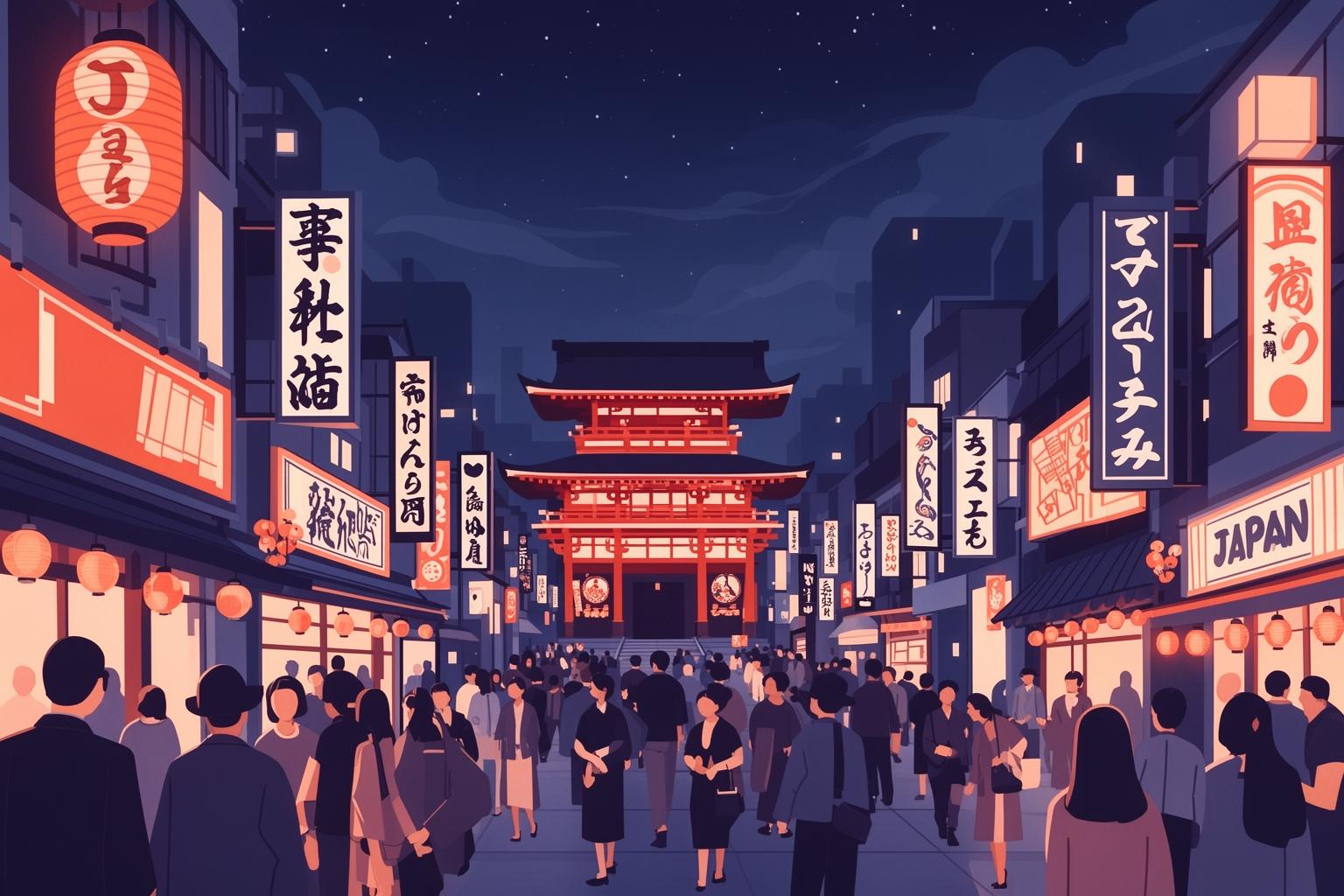
To understand the importance of the end, you first need to recognize the structure of the journey. A night out in Japan, particularly a group event like a work drinking party (nomikai), is seldom a spontaneous, unstructured occasion. It unfolds like a multi-act play, with each act having its own purpose, location, and emotional tone. The shime serves as the grand finale, but its significance is rooted in everything that precedes it.
The First Act: Ichijikai (一次会)
The evening almost always kicks off with the ichijikai, or the “first party.” This is the main event, typically held at an izakaya, a traditional Japanese-style pub offering a wide range of food and drinks. The ichijikai is the most organized part of the night, usually having a fixed start time, with many participants pre-paying for a set course menu and all-you-can-drink options. This is where official socializing takes place: colleagues pour drinks for their bosses, friends reconnect, and the essential social lubrication of the evening is established. The atmosphere is lively and communal, centered around sharing large plates of food—sashimi, karaage (fried chicken), salads, grilled fish, and more. This is the formal gathering, fulfilling the social obligation of the night.
The Second Act: Nijikai (二次会)
As the time at the izakaya comes to an end, the group typically hears the familiar question: “Nijikai, iku?” (“Going to the second party?”). Attendance at the nijikai is optional, often causing the group to split. Those who have early mornings or family obligations tend to bow out. The committed core, however, carries on. The nijikai’s venue usually differs from the first—perhaps a karaoke box, a specialized bar (whisky, sake, cocktails), or a darts bar. The mood here is more casual and relaxed. Hierarchies become less rigid, conversations grow more personal, and the structured nature of ichijikai gives way to a freer, more spontaneous vibe. It’s a self-selecting group of people who mutually agree they’re not ready for the night to end.
The Need for a Coda: Sanjikai (三次会) and Beyond
For the truly tireless, a sanjikai (third party) might even be planned, often at a smaller bar or a club. By this time, the group has usually dwindled to a small fraction of the original attendees. The evening has unfolded as a series of structured events, gradually peeling away social layers and group size. This very structure calls for an equally deliberate conclusion. A night made up of distinct chapters cannot simply stop abruptly; it requires an epilogue. After hours of shared moments, simply drifting apart into the night feels anticlimactic and somewhat disconnected. The momentum of the night demands a conscious, final, collective act to mark its close. This is where the shime takes center stage.
The Psychology of Closure: Why ‘Shime’ Feels So Necessary
The cultural emphasis on a shime goes beyond simply satisfying a rumbling stomach; it is grounded in deeper psychological and social values that prioritize form, transition, and collective harmony. From a Western perspective, where a night might conclude with a casual “Alright, I’m heading out,” the concept of a mandatory final course can seem unusual. However, in Japan, it serves an essential emotional and social purpose.
Finding Form: The Significance of ‘Kata’ (方)
Japanese culture places great importance on kata, meaning “form” or “pattern.” This idea influences everything from martial arts and tea ceremonies to gift-giving and writing business emails. There is a prescribed, correct way of doing things that ensures smoothness, communicates respect, and establishes order. Social gatherings follow this principle too, having a beginning (the opening toast, or kanpai), a middle (the structured party), and a proper conclusion. The shime is the kata for ending a night out. It is the socially accepted script everyone understands. An evening that simply fades away lacks this formality and feels awkward and unresolved, like a handshake left incomplete. By taking part in the shime, everyone silently agrees, “This is the end.” It eliminates uncertainty and allows the group to part on good terms, without anyone feeling like they were the first to leave or that they abandoned the fun too early.
The Bridge from ‘Hare’ to ‘Ke’
Another essential concept is the distinction between hare (ハレ) and ke (ケ). Hare refers to the special, festive, and sacred occasions—moments that differ from everyday life. Festivals, weddings, and nights out with friends all belong to the realm of hare. Conversely, ke represents the mundane, routine world of work, chores, and daily responsibilities. A night of drinking and celebration is a temporary escape from ke into hare. The challenge is that you cannot instantly return to reality; a gentle reentry is needed—a transitional ritual that guides you from one state to the other. The shime fulfills this role. The lively, chaotic energy of bars and karaoke rooms (hare) gives way to the focused, grounding act of eating a bowl of noodles or rice. This liminal moment signals the mood’s sobering, conversations quiet down, and the mind begins preparing for the journey home and the return to the ordinary (ke) awaiting the next day. It acts as a decompression chamber, making the transition smooth and psychologically comfortable.
Reinforcing ‘Wa’ (和): The Final Act of Group Harmony
Lastly, the shime is a crucial tool for preserving wa, or group harmony, a cornerstone of Japanese society. The entire evening is a collective experience, and the shime offers the last opportunity to strengthen that bond. It is a final, simple act performed together. Whether gathered around a small ramen counter or sharing a pot of tea at a table, the group is united in one purpose. This moment of communion eases any lingering awkwardness from the night, reaffirms friendships, and ensures everyone departs on the same positive, contented note. There are no complicated decisions or social maneuvering involved—just the shared pleasure of a warm meal. It is a non-verbal affirmation: “We began this together, and we will end it together.” This final reinforcement of wa helps carry the evening’s good feelings forward and lays the foundation for the next gathering.
The Shime Menu: Choosing Your Final Chapter
While the idea of shime is philosophical, its realization is deliciously tangible. The selection of shime is deliberate; different dishes fulfill different roles and carry distinct meanings. The menu reflects both the night that has passed and the morning yet to come.
Shime Ramen: The Unquestioned Monarch
If shime had a ruler, it would unquestionably be ramen. Late-night ramen shops, or ramen-ya, are a staple in Japan, their red lanterns a welcoming beacon for those seeking a final, satisfying ritual. But why ramen? The reasons are both practical and primal. After a night of drinking, the body longs for salt, fat, and carbohydrates. A rich, savory bowl of ramen delivers all three abundantly. The hearty broth, often a long-simmered tonkotsu (pork bone), coats the stomach, while the noodles provide comforting, carb-heavy ballast. There’s a widespread (though unproven scientifically) folk belief that the noodles and broth help absorb alcohol, easing the next day’s hangover.
The experience itself is a ritual. You squeeze into a tiny, steamy shop, often sitting shoulder-to-shoulder with strangers at a narrow counter. You order from a ticket machine, exchanging a few words with the chef behind the counter. Then, you wait. When the bowl arrives, the world narrows to the steam rising from the broth, the glistening noodles, and the carefully arranged toppings. Conversation fades. The primary sound is the collective, appreciative slurping of noodles—a sign of enjoyment in Japan. It’s a deeply personal moment of satisfaction, yet it happens in a shared space. It perfectly embodies the shime principle: a final, grounding act that is both individual and communal. For many, the rich, nearly overwhelming flavor of shime ramen is the only fitting way to properly close a great night.
Ochazuke: The Gentle and Sobering Option
For those preferring a softer landing, there is ochazuke (お茶漬け). This classic dish is simplicity itself: a bowl of cooked rice topped with ingredients like pickled plum (umeboshi), grilled salmon flakes, or seaweed (nori), over which hot green tea or light dashi broth is poured. If ramen is a roaring fire, ochazuke is a warm, glowing ember.
Choosing ochazuke as your shime sends a different message. It’s a more refined, mature choice. It’s less about indulgence and more about restoration. The warm liquid is hydrating, the rice gentle on the stomach, and the salty toppings subtly replenish electrolytes. It’s a dish that feels cleansing and restorative. You’ll find it on menus at upscale izakayas or quiet, small eateries catering to a slightly older clientele. Opting for ochazuke suggests a desire to end the night gracefully, to sober up thoughtfully, and to wake feeling refreshed rather than battered. It’s the shime for those wanting to conclude the evening with a quiet sigh of contentment, not a final, boisterous shout.
Beyond the Bowl: Sweets and Sips
While savory bowls dominate the traditional shime scene, the culture is not fixed. In recent years, new contenders have arisen, particularly the shime parfait. This trend is especially strong in Sapporo, Hokkaido’s capital, but has spread to other major cities. After a meal—often featuring the local specialty “Genghis Khan” grilled lamb—groups head to dedicated parfait shops that stay open late. These are not simple ice cream sundaes; they are elaborate, architectural creations of gelato, fresh fruit, cake, cream, and delicate garnishes, often enjoyed with coffee or a liqueur.
The shime parfait caters to a different kind of night and clientele. It’s popular with younger crowds and women’s groups and often marks the end of an evening centered more on dining and conversation than heavy drinking. It offers closure through sweetness, a final indulgent treat that feels celebratory and special. Similarly, for some, the perfect shime is not a meal but one last, expertly crafted drink. This might mean slipping into a quiet, dimly-lit cocktail bar for a classic Old Fashioned or a meticulously made gin and tonic. This is the “nightcap” as a formal ritual—a single, high-quality drink savored in peace. It’s a contemplative shime, a moment to reflect on the evening’s conversations before stepping out into the quiet streets.
The Social Dynamics of the Final Bowl
Like many aspects of Japan, the decision to start the shime is seldom made through a straightforward, democratic vote. Instead, it’s a more delicate process—a collective intuition guiding the group toward its final destination. The ritual involves not only eating but also the subtle social dance that precedes it.
It often begins with a suggestion, planted like a seed. As the nijikai winds down, someone might casually say, “K복 ga suita na…” (“I’m a bit hungry…”). This is not a demand but a feeler, sent out to gauge the mood of the group. If others murmur their agreement, the idea starts to take hold. The suggestion typically comes from a senior member of the group (senpai) or the event organizer, who carries the responsibility of seeing the evening to its proper close. Their role is to ensure the kata, the proper form, is followed.
Once consensus is reached, the atmosphere changes. The lively energy of the second party fades, replaced by a sense of shared intent. The walk to the ramen shop or ochazuke spot is usually quieter, the group moving with a comfortable, slightly tired cohesion. Inside, the dynamic shifts as well. The loud, overlapping conversations typical of an izakaya are gone. Talk is minimal and muted. The focus is entirely on the food. Each person inhabits their own space, absorbed in their bowl yet deeply aware of the others’ presence. It’s a comfortable silence born of shared experience.
This last stop also fulfills an important logistical role: it’s the final buffer before everyone must scatter to catch their last train home. The shūden (終電), or last train, is an unyielding deadline that shapes Tokyo nightlife. The shime serves as a natural timer. As the last noodle is slurped or the last grain of rice consumed, someone inevitably glances at their watch, and a quiet urgency settles over the group. The ritual offers a gentle off-ramp, easing the transition not just from socializing but into the practical reality of navigating the city’s transit system. It’s the final moment of togetherness before the dash to the station and the solitary journey home.
A Ritual for a City That Needs to Go Home
The culture of shime is deeply intertwined with Japan’s urban landscape. It flourishes in densely populated cities where late-night eateries abound, hidden in every alley and side street. The existence of countless ramen shops, soba stands, and 24-hour diners makes the ritual possible. It’s a mutually beneficial relationship: nightlife drives the demand for shime, and the presence of shime options enriches the nightlife experience.
Moreover, the ritual is influenced by the practical realities of public transportation. In a city like Tokyo, where most people depend on trains and subways, the shūden acts as a great equalizer, marking a clear end to the night. Unlike car-dependent cultures where people can leave parties individually at any time, the shared deadline of the last train encourages groups to stay together until the very end. Thus, shime becomes an ideal pre-departure ritual, a way to spend the final hour meaningfully before the collective rush to catch the train.
Compare this to how nights often conclude in many Western cities, where the end can be gradual and somewhat chaotic. People leave one by one, and the group’s energy slowly fades until the last few realize the party is over. There’s rarely a distinct moment of closure. The Japanese method, with its orderly progression from ichijikai to shime, feels much more intentional. It frames the evening as a unified, complete event with a clear beginning, middle, and end. This isn’t to suggest one approach is superior, but the shime ritual offers a uniquely fulfilling sense of closure.
It serves as a cultural grace note, a final, thoughtful act that honors the time spent together. In a society that highly values form and harmony, this is the only fitting way to conclude an evening. It’s not just about the food itself, but what the food symbolizes: closure, transition, and a quiet moment of connection. The steam rising from a bowl of ramen on a cold night represents more than warmth; it is the tangible expression of a social bond being sealed, ready to be reopened on the next occasion. It is the perfect closing statement in the night’s story, assuring that even as everyone goes their separate ways, the shared experience has been properly and satisfyingly concluded.