
You probably have a picture of Japanese food in your head. Maybe it’s a master sushi chef, silent and focused, placing a glistening piece of tuna on a perfectly formed pillow of rice. Perhaps it’s an elaborate, multi-course kaiseki meal, where every dish is a miniature work of art reflecting the season. It’s elegant, it’s refined, it’s expensive. And while that image isn’t wrong, it’s only a tiny, glossy sliver of the full picture. It’s the A-list celebrity of Japanese cuisine, the one that gets all the press.
But what about the food that fuels the 125 million people who actually live here? The stuff they eat after a long day at the office, on a quick lunch break, or when they’re grabbing a bite with friends on a Friday night? That, my friend, is a different world entirely. It’s a world called B-kyu Gurume, or “B-Class Gourmet.” And before you let the name fool you, this isn’t about second-rate food. Far from it. This is about food that is unpretentious, affordable, incredibly delicious, and deeply woven into the fabric of daily life. It’s the steaming bowl of ramen that warms you on a winter night, the savory pancake sizzling on a griddle, the hearty curry that tastes like a hug. B-kyu Gurume is the culinary soul of modern Japan, and to understand it is to understand the country on a much deeper, more honest level. Forget the Michelin stars for a moment; we’re going on a hunt for something far more satisfying.
This exploration of everyday culinary rituals deepening our understanding of Japan’s food scene is complemented by insights into how noodle slurping serves as a mark of respect in the local dining culture.
What Exactly is “B-Class Gourmet”? Decoding the Name
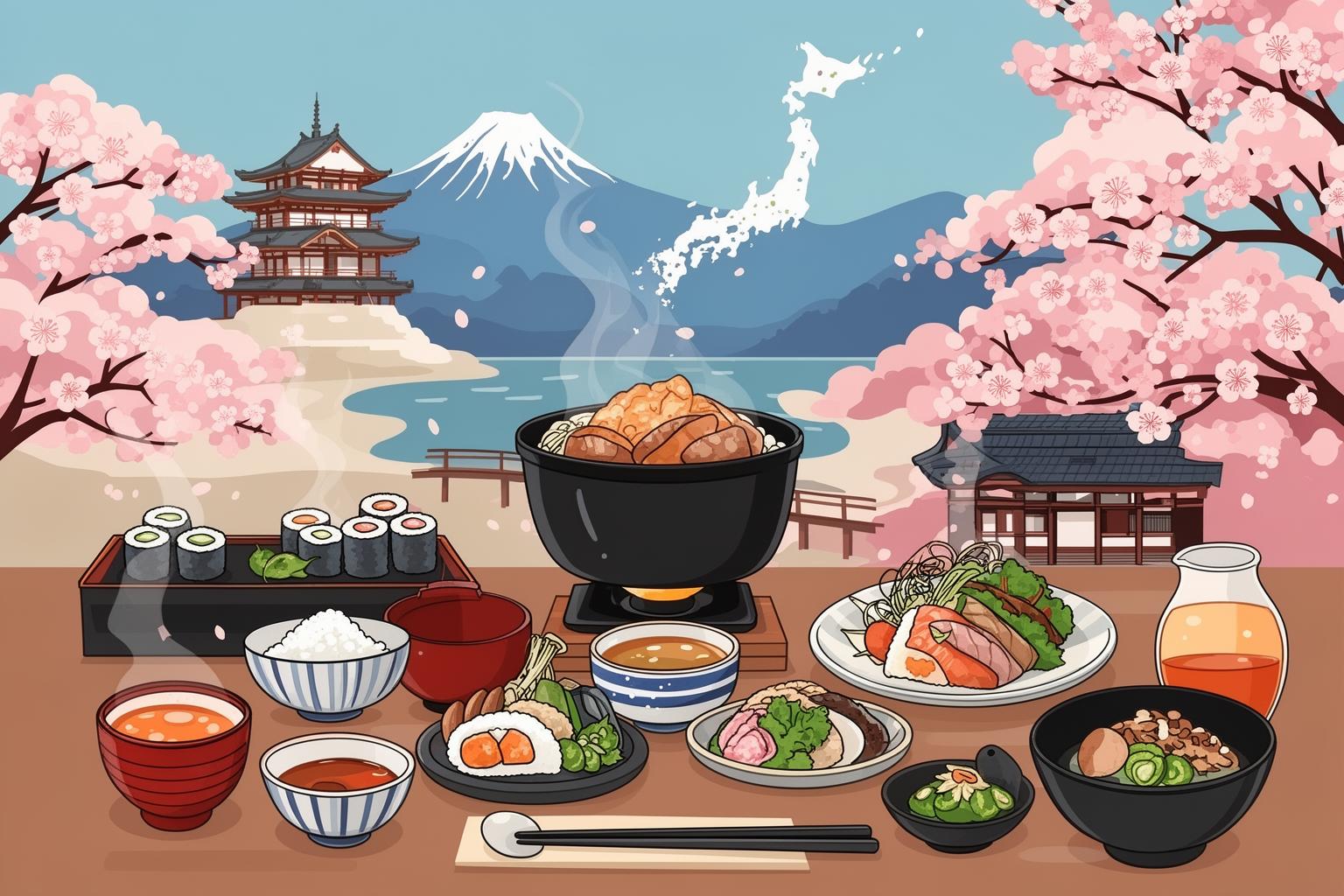
The term B-kyu Gurume (B級グルメ) itself is a delightfully Japanese play on words. It draws from the English film industry notion of a “B-movie”—a low-budget, unpretentious production that can still become a cult favorite. The “gourmet” part is added with a wink of irony. It’s a self-aware label that says, “We understand this isn’t fancy, but we also know it’s fantastic.” It confidently declares quality without the need for white tablecloths or whispered conversations.
Think of it as the clear opposite of A-kyu Gurume. A-Class represents the upscale sushi bars, formal kaiseki inns, and French restaurants with extensive wine lists—places for special occasions, business dinners, and serious culinary pilgrimages. B-Class, conversely, belongs to everyday celebrations. It’s defined by several key traits:
- Affordability: You should be able to enjoy a deeply satisfying meal without flinching at the price. The emphasis is on value, what the Japanese call kosupa (cost performance).
- Deliciousness: This is essential. B-kyu is not a synonym for mediocre. The flavors tend to be bold, straightforward, and comforting. It’s food designed for maximum satisfaction.
- Informality: B-kyu Gurume flourishes in casual environments. Picture cramped ramen shops with counter seating, lively street food stalls beneath train tracks, and no-frills family-run neighborhood eateries passed down for generations.
- Local Identity: Many B-kyu dishes are proud regional specialties, known as gotōchi gurume (ご当地グルメ). Traveling to a new Japanese city often means seeking its unique B-class specialty, whether it’s Fujinomiya’s signature yakisoba or Sendai’s grilled beef tongue.
At its core, B-kyu Gurume is democratic. It’s food for everyone—students, office workers, families. It strips away the formality of fine dining and goes straight to the point: offering a delicious, memorable experience without any pretense.
A Taste of History: The Postwar Origins of Unpretentious Flavor
To truly understand why B-kyu Gurume holds such an important place in Japanese culture, one must look back to the mid-20th century. The food that defines this category didn’t simply emerge overnight; it was shaped amid Japan’s intense postwar reconstruction.
Following World War II, the country lay in ruins but was resolute in its efforts to rebuild. Rapid urbanization brought a surge of workers who needed meals that were quick, affordable, and filling. The subtle, refined flavors of traditional Japanese cuisine often proved impractical for this fast-moving urban lifestyle. There was an urgent demand for nourishment and comfort. During this time, a large influx of new ingredients arrived, especially wheat flour supplied through American aid. This modest ingredient became the cornerstone of a culinary transformation.
Dishes like ramen, okonomiyaki, takoyaki, and gyoza—all now seen as distinctly Japanese—have their roots in this period. They arose from scarcity and creativity. Chinese noodle soups transformed into the uniquely Japanese ramen. Savory pancakes loaded with cabbage and whatever ingredients were on hand became okonomiyaki. These were not ancient family recipes handed down through nobility; rather, they were the inventions of street vendors, small entrepreneurs, and working-class families making the best of limited resources.
As Japan’s economy astonishingly recovered and flourished, these modest dishes endured. They became embedded in the national cuisine. They represented progress and sustained the countless salarymen who were the backbone of the economic miracle. Eating a bowl of gyudon (beef on rice) at a simple counter wasn’t just a meal; it was an act of participating in Japan’s grand, collective effort toward modernization. In this way, B-kyu Gurume is edible history—each slurp of noodles and every bite of a hot dumpling carries the story of a nation rising and crafting a new future.
The Holy Trinity of B-kyu Gurume: Ramen, Curry, and Yakisoba

While the world of B-kyu Gurume is expansive, a handful of undisputed giants lie at its heart. These three dishes are everywhere, cherished, and infinitely adaptable, making them ideal representatives of the entire philosophy.
Ramen: The Endless Pursuit of the Perfect Bowl
Ramen is unquestionably the monarch of B-Class Gourmet. Calling it merely noodle soup greatly undersells it. It is an obsession, a cultural phenomenon, and a fiercely competitive culinary craft. Its evolution from a simple Chinese import to a national symbol showcases Japanese brilliance in adopting and perfecting.
A bowl of ramen is a universe unto itself, built on four key elements: the broth (dashi), the seasoning tare (tare), the noodles (men), and the toppings. The broth is paramount. It is a soul-soothing liquid that chefs devote decades to mastering—a complex alchemy of pork bones, chicken carcasses, dried fish, and secret vegetables simmered for hours, sometimes days, achieving an almost divine umami depth. Regional variations inspire passionate pride. There’s the rich, creamy pork-bone tonkotsu of Kyushu, the robust, fermented soybean paste miso ramen of Hokkaido, and the clear, soy-sauce-based shoyu ramen commonly linked to Tokyo. Each style boasts a loyal following.
The setting matters as much as the soup. A genuine ramen experience means sitting at a narrow wooden counter, watching the chef move with practiced, efficient grace—draining noodles with flair, placing toppings with tweezers, and carefully ladling the precious broth. It’s a meal of focused, solitary delight, accompanied by the communal sound of appreciative slurping. Affordable in price, it’s nonetheless A-grade in craftsmanship.
Kare Raisu: The Nation’s Comfort Food
If ramen embodies obsession, then Japanese curry rice, or kare raisu, embodies pure, unfiltered comfort. Its journey to Japanese tables tells a fascinating tale of globalization. Originally from India, curry arrived in Japan in the late 19th century—not directly, but via the British Royal Navy. The Japanese adapted this thickened, stew-like version as a practical and nourishing meal for their armed forces, before it permeated general society.
Japanese curry differs markedly from its Indian or Thai relatives. It’s thicker, sweeter, and generally milder, with a deep, savory richness that is profoundly comforting. It is the quintessential comfort food, a staple of home kitchens, school cafeterias, and numerous specialty restaurants. The most beloved variant is perhaps katsu kare, a glorious plate of curry topped with a crispy, deep-fried pork cutlet (tonkatsu). This combination is so hearty and flawless, it seems capable of solving any trouble. It is a dish that asks only for enjoyment—a warm, comforting presence in the B-kyu realm.
Yakisoba: The Festival Stall’s Sizzle
Stroll through any Japanese summer festival (matsuri), and you’ll inevitably be drawn to a tempting aroma: the sizzle of noodles, cabbage, and meat hitting a giant iron griddle (teppan). This is the unmistakable scent of yakisoba. Despite its name, it has no connection to buckwheat soba noodles; yakisoba uses wheat noodles, similar to ramen.
Yakisoba’s charm lies in its simplicity and atmosphere. The noodles are fried with thinly sliced pork, cabbage, and bean sprouts, then coated in a sweet and tangy sauce reminiscent of Worcestershire. It’s garnished with powdered green seaweed (aonori), pickled red ginger (beni shoga), and occasionally a fried egg. More than just a dish, yakisoba is an event. It’s prepared in large quantities on teppans at festivals, sports games, and outdoor gatherings. It’s food meant for communal enjoyment and celebration, eaten on the go from a basic plastic tray. Yakisoba perfectly captures the fun, uninhibited spirit of B-kyu Gurume.
Beyond the Big Three: Exploring the Regional Pantheon
The B-kyu universe reaches far beyond just ramen and curry. One of its greatest pleasures is uncovering the distinctive local specialties that each region of Japan has mastered. Here, the idea blends seamlessly with gotōchi gurume, or local gourmet, weaving a rich mosaic of flavors.
The Flour Power of Osaka: Okonomiyaki and Takoyaki
Osaka, renowned for its lively food scene, stands as the undisputed capital of what the Japanese call konamon, or flour-based dishes. Its two most iconic contributions to the B-kyu realm are okonomiyaki and takoyaki.
Okonomiyaki is commonly described as a “Japanese savory pancake.” Its name literally means “grill what you like,” reflecting its highly customizable nature. The base is a batter made from flour, eggs, and shredded cabbage, to which you can add anything from pork belly and shrimp to cheese and mochi. It’s cooked on a teppan, often right at your table, creating an interactive and enjoyable dining experience. Once done, it’s coated with a thick, sweet okonomiyaki sauce, drizzled with Japanese mayonnaise, and topped with bonito flakes that appear to dance in the heat.
Takoyaki, or octopus balls, are another Osakan staple. These bite-sized spheres of batter are filled with a small piece of octopus, pickled ginger, and green onion, then cooked in a special molded pan. Watching a skilled vendor deftly turn the balls with a single pick is a captivating sight. Served piping hot and topped with sauce and bonito flakes, they make the perfect street food snack—crispy on the outside, gooey on the inside.
Donburi: The Humble Bowl That Fuels Japan
The donburi, or rice bowl, is perhaps the most essential element of everyday Japanese cuisine. The concept is simple: a bowl of steamed rice topped with something savory. Yet within this simplicity lies infinite variety. Donburi are the backbone of the B-kyu world, offering quick, filling, and affordable meals for Japan’s workforce.
There’s gyudon, the salaryman’s staple, featuring thinly sliced beef and onions simmered in a sweet soy-based sauce. Major chains serve it around the clock, underscoring its vital role in urban life. Then there’s oyakodon, the “parent-and-child bowl,” a poetic name for a comforting mixture of chicken, egg, and onions simmered together over rice. Katsudon is another favorite—a deep-fried pork cutlet simmered in the same broth and topped with a layer of egg. Each donburi is a complete, satisfying meal in a single bowl, embodying the efficiency and flavor that define B-kyu cuisine.
The B-kyu Mindset: It’s Not Just What You Eat, but How

To genuinely appreciate B-kyu Gurume, you need to embrace its philosophy. This cuisine centers on the pure joy of eating, free from the pressures and expectations of fine dining. The experience itself is just as vital as the food.
It’s about the sensory immersion found in a tiny shop—the steam fogging the windows, the rhythmic clatter of the wok, the enticing aromas drifting from the kitchen. It’s about sitting shoulder-to-shoulder with strangers at a counter, all sharing the simple, genuine pleasure of a good meal. There’s an intimacy and focus here that a spacious, quiet restaurant can’t replicate.
Above all, the B-kyu mindset celebrates kodawari—the relentless, almost obsessive pursuit of perfection in a single craft. The elderly couple who have dedicated fifty years solely to making gyoza, the curry shop owner who has honed his secret spice blend over decades, the ramen master who can gauge the exact state of his broth by smell alone. These are true artisans, whose lifelong dedication transforms a humble dish into something extraordinary. This is the secret alchemy of B-kyu Gurume: it elevates inexpensive, everyday food with top-tier passion and skill.
Finding Your Own B-kyu Bliss
The wonderful thing about B-kyu Gurume is its ubiquity. It’s not tucked away in exclusive spots; instead, it’s waiting to be discovered in the most ordinary places. The best way to find it is by following the locals. Look for small, unassuming eateries with lines out the door during lunchtime. Explore a yokocho (side alley) or check out the spaces beneath the train tracks (gado-shita), which often hold treasure troves of delicious, no-frills establishments.
Don’t be deterred by the absence of English menus or pictures of plastic food in the window. These are often signs that you’ve found the right spot. Be adventurous. Point to what the person next to you is eating. The quest for great B-kyu Gurume is a journey of personal discovery. It’s about finding that one little curry shop or the perfect bowl of ramen that becomes your place, a spot that feels like a delicious secret you’ve uncovered.
So, by all means, enjoy your mind-blowing sushi experience. Savor that exquisite kaiseki dinner. But don’t let that be the whole extent of your culinary adventure in Japan. To truly connect with the country’s heart, you need to taste its soul. Pull up a stool at a crowded counter, order a dish you’ve never heard of, and listen to the sizzle and slurp of everyday life. That is the world of B-kyu Gurume, where you’ll discover the true, unpretentious, and utterly delicious taste of modern Japan.