
You feel it before you see it. The moment you push aside the heavy noren curtain and step into a proper Japanese noodle shop, the air changes. It’s thick with the savory promise of pork broth that’s been simmering for days, the sharp tang of bamboo shoots, and the earthy aroma of soy sauce. The narrow space is a hive of focused activity. A chef, head wrapped in a hand towel, moves with the fluid economy of a master, plunging noodles into boiling water and draining them with a theatrical flourish. Customers are hunched over their bowls, a study in concentration. And then you hear it: a chorus of loud, uninhibited slurps echoing through the steamy room. For the uninitiated, the sound can be jarring. In many cultures, it’s the soundtrack of bad table manners, a noise you’re taught from childhood to suppress. Your first instinct might be to cringe, to wonder if you’ve stumbled into a place where all politeness has been abandoned. But here, in the heart of a ramen-ya, a soba-ya, or an udon shop, that sound means the exact opposite. It’s not rudeness; it’s a ritual. It’s a complex, multi-layered signal of appreciation, a practical tool for flavor, and a direct line of communication to the person who crafted your meal. This isn’t just noise. This is the sound of respect.
Japanese dining rituals extend beyond the artful slurping to inventive settings like a hidden underground food paradise that redefines the local culinary experience.
The Functional Genius of the Slurp

Before considering the cultural significance, it’s crucial to recognize that slurping is, at its core, a highly practical technique. It arises from the essential nature of Japanese noodles: they are served piping hot. The chef’s aim is to deliver a bowl at its absolute peak—a fleeting moment when the broth is most fragrant and the noodles hold their ideal texture. Waiting for it to cool is a culinary mistake, causing the noodles to become a soft, lifeless mush. Slurping is the clever solution to this thermal challenge.
Cooling the Inferno
Consider the physics involved. When you use chopsticks to lift a bundle of noodles from the steaming broth and bring them to your mouth, you’re not just lifting noodles. As you inhale sharply, you create an airflow that rushes in alongside them. This rapid influx of cooler ambient air envelops the hot noodles during their brief journey, cooling them just enough to prevent burning your tongue and palate. It acts as a built-in cooling system allowing you to begin eating right away, moments after the bowl is set before you. This ensures you enjoy the noodles as the chef intended: with the ideal, chewy, slightly firm bite known as koshi. Without slurping, you’d have to take small, cautious bites or wait, and in the world of noodles, waiting is a cardinal sin. The dish deteriorates with every passing second. Slurping is your means to race against time and savor the meal at its perfect state.
A Symphony of Flavor and Aroma
Beyond temperature regulation, slurping fundamentally enhances how you experience flavor. Much of what we perceive as taste is actually aroma, detected by the olfactory receptors in our nasal passages. Eating quietly delivers taste to your tongue but misses a significant part of the sensory experience. Slurping functions like a sommelier aerating a fine wine. By inhaling air along with the noodles and broth, you vaporize aromatic compounds and draw them into your nasal cavity. Suddenly, the flavor intensifies: the deep, fatty richness of a tonkotsu pork broth, the delicate smoky notes of bonito flakes in a dashi, the fermented complexity of miso—all these nuances are amplified and unlocked through aeration. You don’t just taste the broth; you inhale its very essence. This transforms eating from a flat, tongue-only experience into a full, three-dimensional immersion of taste and smell. The combination of hot noodles, a coating of rich broth, and the rush of air creates a perfectly flavor-saturated mouthful that cannot be matched by polite, silent eating.
A Non-Verbal Conversation with the Chef
In Japan, where indirect communication and unspoken understanding are often valued, slurping becomes a powerful means of expression. In the cramped space of a noodle shop, it serves as the most genuine and immediate feedback a customer can offer. The interaction takes place not through words, but through sound.
The Sound of Appreciation
Picture the scene from the chef’s point of view. He is the taisho, the master of the shop, standing amid a cloud of steam for hours, focused on a myriad of precise, repetitive tasks. He doesn’t have time to ask every customer, “How is everything?” nor does he need to. He only has to listen. A silent restaurant is a chef’s worst fear, as it suggests indifference or, even worse, disappointment. But a dining room filled with the steady, hearty sounds of slurping becomes a symphony of success. Each slurp is a wordless exclamation of oishii—delicious. It tells the chef that his broth is perfectly balanced, his noodles are cooked just right, and his customers are fully immersed in the joy of the meal. It is a visceral, audible expression of gratitude. In a culture where overt, individual praise can sometimes disrupt group harmony, the collective chorus of slurping creates a shared atmosphere of enjoyment—a communal message of satisfaction that envelops the entire space.
Respect for the Craft
This audible enjoyment also serves as a profound demonstration of respect for the chef’s artistry. A bowl of ramen is not merely a random combination of ingredients; it represents the result of immense effort and skill. The broth may have been simmered for 12, 24, or even 48 hours. The noodles may be custom-made for the shop, their thickness and curliness designed to perfectly embrace the soup. The chashu pork is marinated and slow-cooked with painstaking care. Every element is intentional. By slurping, you show that you grasp the urgency of this creation. You engage with it immediately and enthusiastically, honoring the chef’s aim to serve it at its fleeting peak. Letting it sit, picking at it slowly, or eating in silence—though polite in other contexts—might here be seen as disregarding the chef’s craft. The slurp is an active participation in the ritual, signaling that you are not merely a passive diner, but an appreciative connoisseur who recognizes the skill behind the bowl before you.
A Historical and Social Blueprint

Slurping noodles is not a modern practice; its origins are deeply embedded in Japan’s social fabric, dating back centuries to when noodles were the quintessential fast food for a nation on the go.
The Edo Period Origins
This tradition is most closely linked to soba noodles, which surged in popularity during the Edo period (1603-1868). As Edo (now Tokyo) grew into one of the world’s largest cities, it was inhabited by busy artisans, merchants, and samurai who required quick, affordable, and hearty meals. This demand led to the emergence of numerous street-side food stalls, or yatai, serving bowls of soba. Without chairs, patrons stood at the counter, received their bowls, and ate quickly before returning to their tasks. Slurping became the most efficient way to consume the hot noodles rapidly. It was working-class sustenance, eaten with speed and enthusiasm. This context is essential. Unlike the formal and tranquil tea ceremonies or the elaborate multi-course kaiseki meals, noodles were embraced as an informal, lively, and deeply satisfying food for the common people. Slurping became culturally intertwined with the noodles themselves, a tradition handed down through generations.
Understanding the Context: Not a Universal Practice
It is important to recognize that this approval of slurping is highly specific. It does not grant permission to eat every Japanese dish noisily. You would never slurp miso soup directly from the bowl (it is sipped like a cup). You do not slurp rice. Nor do you slurp spaghetti or other Western pasta dishes, an action considered equally impolite in Tokyo as it would be in Rome. This ritual is almost exclusively reserved for Japanese noodles: ramen, soba, udon, and their thinner relative, somen. Such specificity is characteristic of Japanese etiquette, which is deeply situational. What is polite in one setting may be rude in another. The slurp functions as a cultural code specific to the noodle bowl, distinguishing it as a unique culinary experience with its own set of customs and rituals.
How to Slurp: A Practical Guide for the Uninitiated
For many visitors to Japan, the theory is straightforward, but actually putting it into practice can be intimidating. You want to show respect without making a mess or feeling self-conscious. The key is to remember that the aim is enjoyment, not performance.
The Tools and the Technique
First, get comfortable. Use your chopsticks to pick up a manageable portion of noodles—not a large, unwieldy clump. Lift them out of the broth and guide them toward your mouth. There’s no need to raise them high above the bowl; doing so only risks splashing. Bring the bowl a little closer to your face if it helps. As the ends of the noodles enter your mouth, take a short, sharp inhalation of air. Think of it as a quick gasp. The sound naturally results from air and noodles moving swiftly together into your mouth. It’s not a loud, guttural noise from your throat; rather, it’s a higher-pitched sound made at the front of your mouth. You might also want to use the large, flat spoon called a renge to hold some broth and toppings, sipping soup between mouthfuls of noodles. This rhythm—slurping noodles, sipping broth—is the classic way to enjoy the entire bowl.
Don’t Overthink It
The most common mistake beginners make is trying too hard. If you force it, you’re likely to be excessively loud or, worse, splash broth on yourself or those nearby. Japanese diners aren’t judging the volume or pitch of your slurp. A quiet, tentative slurp is perfectly acceptable. The sound itself matters less than eating enthusiastically while the food is hot. Start small and focus on the technique of drawing air in with the noodles. With a bit of practice, it will feel more natural. The ultimate aim is to connect with the food, not to win a slurping contest. Relax and let the sounds of the noodle shop guide you.
The Modern Slurp: Culture Clash and Global Noodle Bars
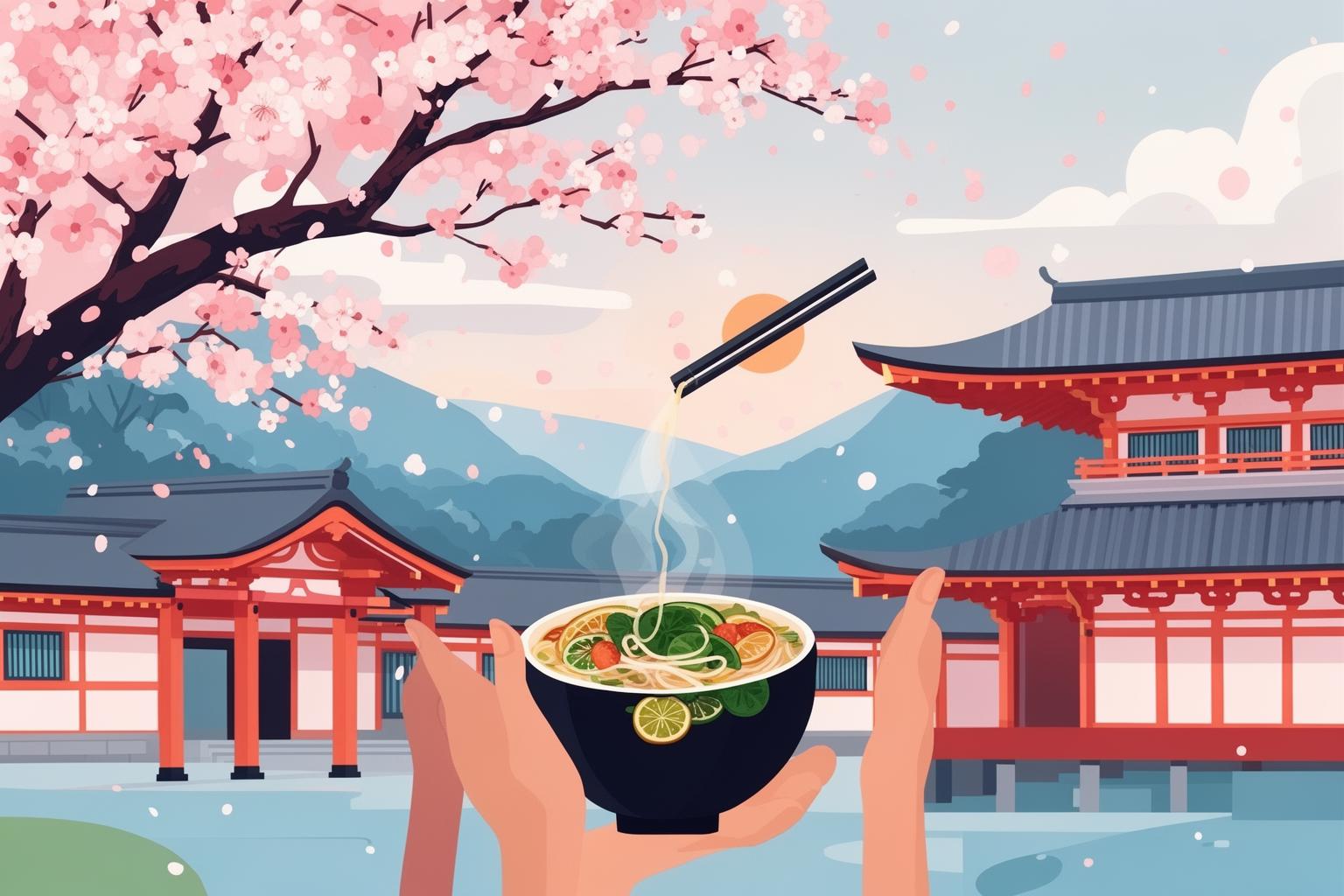
Even within Japan, this long-established tradition is still subject to some debate in the 21st century. As society becomes increasingly globalized and interconnected, cultural norms are continually negotiated and reconsidered.
“Noodle Harassment” and the Changing Landscape
In recent years, a term has surfaced in Japanese media: nu-hara, a shortened version of “noodle harassment.” It describes the discomfort that some people—both Japanese and foreigners—experience from the sound of loud slurping. Although it is mostly seen as a fringe issue and often treated humorously, its presence signals a subtle shift. With more Japanese traveling abroad and increasing numbers of tourists visiting Japan, exposure to diverse cultural etiquette has heightened sensitivity to the noise. In a society that greatly values consideration for others, a small minority has started to question whether this particular sound disrupts the comfort of those nearby. Nevertheless, this debate remains marginal, as the vast majority of Japanese still regard slurping as the proper and normal way to eat noodles.
The Slurp Goes Global
The discussion becomes even more intriguing as authentic ramen shops gain popularity worldwide. Chefs in New York, London, and Sydney carefully replicate traditional Japanese broths and noodles, but the cultural context is harder to transfer. Should diners in foreign countries be encouraged to slurp? Some establishments embrace it, posting signs that explain the tradition and inviting customers to try. Others remain silent, leaving diners to eat according to their local customs. This creates a compelling example of cultural translation. The slurp, a natural and unconscious act in Japan, becomes a deliberate and performative gesture abroad—a mark of authenticity for some, an odd and unpleasant noise for others. It powerfully illustrates that the rituals surrounding food are as integral to the experience as any ingredient in the bowl.
Ultimately, the slurp is much more than a matter of table manners. It is a carefully refined technique to enhance flavor, a strong form of non-verbal communication, and a living cultural tradition. Born of practicality and elevated to an art form, it bridges the gap between the person preparing the food and the one eating it, creating a shared sensory experience in the modest space of a noodle shop. So, the next time you face a perfect bowl of ramen, listen to the sounds around you. Hear the chorus of satisfaction. Then, pick up your chopsticks, take a deep breath, and join in. You’re not being rude—you’re speaking a language of respect, one delicious slurp at a time.