
You feel it before you see it. First, it’s the sound—a low, rhythmic chanting that seems to vibrate up from the ancient stone path itself. Then comes the smell: the sharp, clean scent of cedar and cypress from the surrounding forest, gradually overwhelmed by something more primal and acrid. It’s the smell of pine resin burning, thick and heavy in the humid July air. Finally, you see the light. Not the gentle glow of temple lanterns, but a furious, dancing orange that flickers between giant trees, casting monstrous shadows that writhe against the mountainside. This is the Nachi no Ogi Matsuri, commonly known as the Nachi Fire Festival. And it is, without a doubt, one of the most intense, dangerous, and spiritually charged rituals you can witness in Japan.
This isn’t your typical summer festival of cotton candy and goldfish scooping. Forget polite processions and curated beauty. This is a raw, elemental display of faith happening in one of the most sacred landscapes in the entire country: the heart of the Kumano mountains. For one day each year, on July 14th, the deities of the Kumano Nachi Taisha, one of the three great shrines of the region, make their annual pilgrimage back to their original home, the magnificent Nachi Waterfall. To guide and purify their path, men dressed in white carry colossal, 50-kilogram torches ablaze with divine fire. It’s a spectacle of controlled chaos, a divine inferno that purges impurities and reaffirms a bond between humanity and nature that is thousands of years old. To understand this festival is to understand something fundamental about the spiritual bedrock of Japan—a world where gods are not distant figures in the sky, but powerful, living forces dwelling in waterfalls, mountains, and trees.
This intense, communal ritual stands in stark contrast to the quiet, personal experience of Japan’s ‘hitorimeshi’ culture.
The Sacred Geography of Kumano
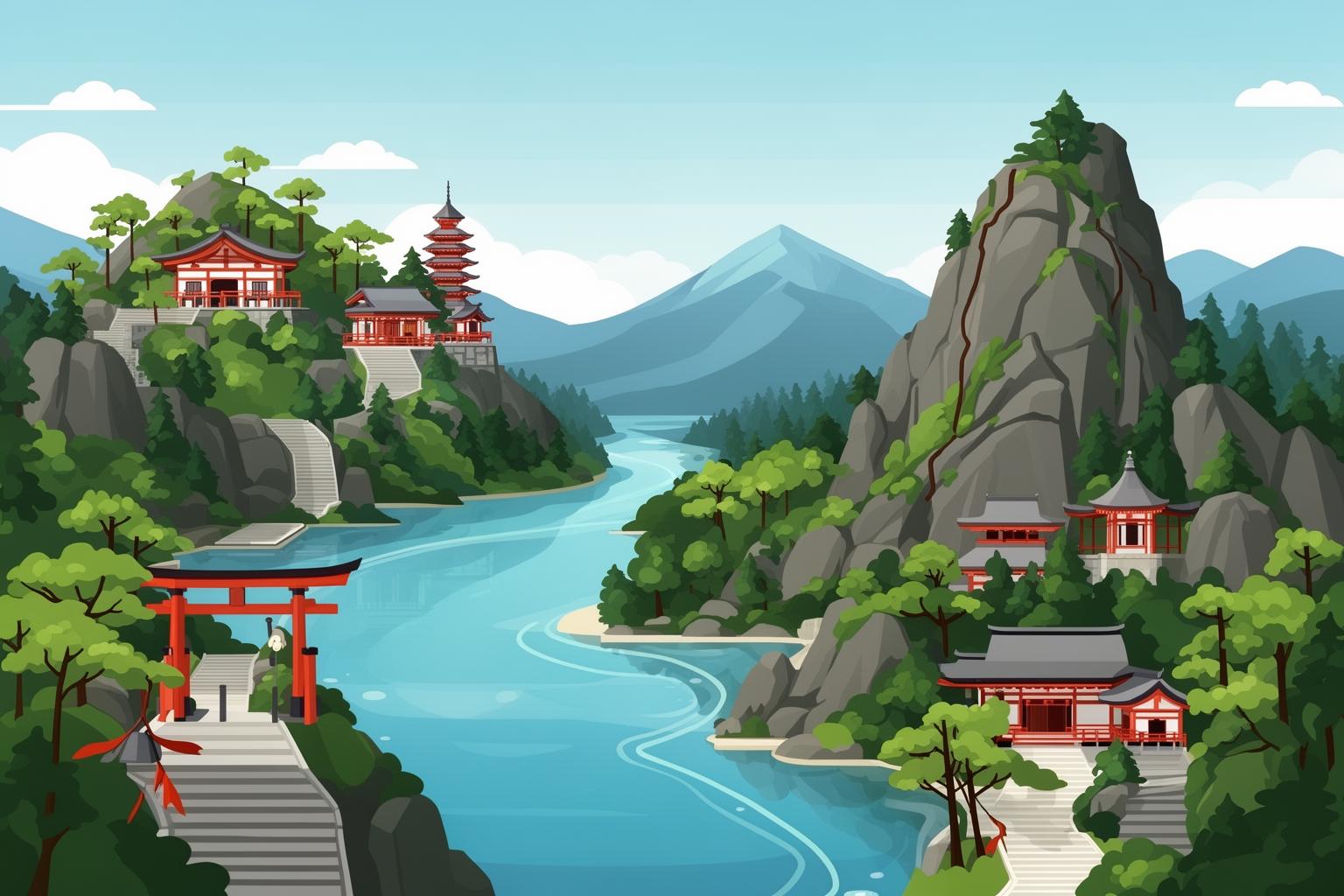
To truly appreciate the fire, you must first understand the ground on which it burns. The festival does not occur in isolation; it is the culmination of a pilgrimage and the focal point of a landscape so spiritually significant that it has been recognized as a UNESCO World Heritage site. This place is Kumano, a rugged, mountainous region on the Kii Peninsula, regarded as Japan’s mythical “Land of the Gods” for well over a thousand years. For centuries, emperors, samurai, and humble peasants alike have traversed the winding, often perilous pilgrimage routes known as the Kumano Kodō. Their destination? The Kumano Sanzan, a trio of Grand Shrines: Hongu Taisha, Hayatama Taisha, and the centerpiece of our story, Nachi Taisha.
What sets Kumano apart is its profound connection to nature worship. Long before organized religion arrived, people here revered the formidable power of the natural world. They saw divinity, or kami, in the towering rock formations, the ancient, twisted trees, and most notably, the waterfalls cascading down the mountainsides. Nachi Taisha is unique in that it openly coexists with its resident deity. The shrine complex is nestled halfway up a mountain, looking out over the Pacific Ocean, but its spiritual heart is Nachi no Taki, Japan’s tallest single-drop waterfall. Plunging 133 meters in a steady, powerful stream, this waterfall is not merely a backdrop for the shrine; it is the shrine’s original deity, embodying the god Hiryū Gongen. The shrine buildings we see today were built to formally house the kami, but everyone acknowledges that their true home and raw source of power lie in that unceasing torrent of water.
This is also a place where religious boundaries beautifully blur. As Buddhism spread through Japan, it did not displace the native Shinto beliefs in Kumano. Instead, the two traditions merged in a process called shinbutsu-shūgō, or the syncretism of kami and buddhas. The Shinto gods of Kumano were viewed as manifestations, or gongen, of Buddhist deities. For example, the god of the waterfall is also considered a form of Kannon, the bodhisattva of compassion. This layering of beliefs makes the entire area feel deeply profound. Thus, the Nachi Fire Festival is not merely a Shinto ritual; it is an event born from this rich, blended spiritual heritage—a physical expression of reverence for both the natural world and the enlightened beings of the Buddhist pantheon.
The Ritual Unveiled: Deities on the Move
The festival itself is a narrative, a sacred drama unfolding across the shrine grounds. The storyline is straightforward: the twelve deities enshrined at Nachi Taisha undertake their annual visit to their original home at the base of the Great Waterfall. Yet, this is far from a casual walk. Every step, every object, every chant carries centuries of profound meaning.
The Twelve Gods and Their Ogi Mikoshi
The central figures of this drama are the twelve kami of Kumano. Early in the day, priests conduct solemn rituals to transfer these deities’ spirits from their permanent shrines into temporary vessels called Ogi Mikoshi. These are not the heavy, ornate, house-like portable shrines seen at other festivals. Rather, they are enormous, fan-shaped structures, soaring over six meters tall and adorned with red fabric, mirrors, and fans. They stand as magnificent, abstract representations of the Nachi Waterfall itself, their tall frames echoing the cascade, mirrors capturing light as water reflects the sun. When you see these twelve Ogi Mikoshi lined up, you are essentially witnessing the divine presence of the gods, ready to begin their journey. As they sway and tilt when carried, they take on a strange, living quality, as if breathing with anticipation.
Bearers of the Flame: The O-Taimatsu
Another key element is the men who carry the fire. Clad in simple white robes and traditional headwear, they bear responsibility for the festival’s most iconic feature: the O-Taimatsu, or great torches. These are no ordinary torches. Each is a massive, tightly bound bundle of Japanese cypress slats, weighing between 50 and 60 kilograms. Before the main procession begins, the bearers carry their torches to a sacred fire where they are ignited. Lighting the torch represents a transfer of energy; it transforms the wood into a piece of the divine, purifying flame. Their role is vital. These men serve as guardians and purifiers of the path, running ahead of the gods to cleanse the route with intense heat and sacred smoke, removing any spiritual impurities or evil influences that might obstruct the deities’ passage. Their duty demands both reverence and immense physical effort.
The Cry of “Hariya! Hariya!”
A festival of such scale is never a silent event. The air bursts with sounds that are both ordered and wild. As the torchbearers hoist their fiery burdens onto their shoulders and the Ogi Mikoshi carriers prepare to move, a chorus of shouts and chants breaks out. These guttural, powerful calls seem to spring from deep within the participants’ beings. They are not mere cheers; they are spiritual invocations, cries designed to raise energy, sharpen focus, and create a sonic shield against negative forces. The rhythmic calls form a soundscape as integral to the purification as the fire itself. This combination transforms the atmosphere from a simple procession into a total sensory immersion in a sacred event. The roaring flames, rhythmic chants, and murmuring crowd together generate a potent, hypnotic effect.
The Climax on the Stone Steps
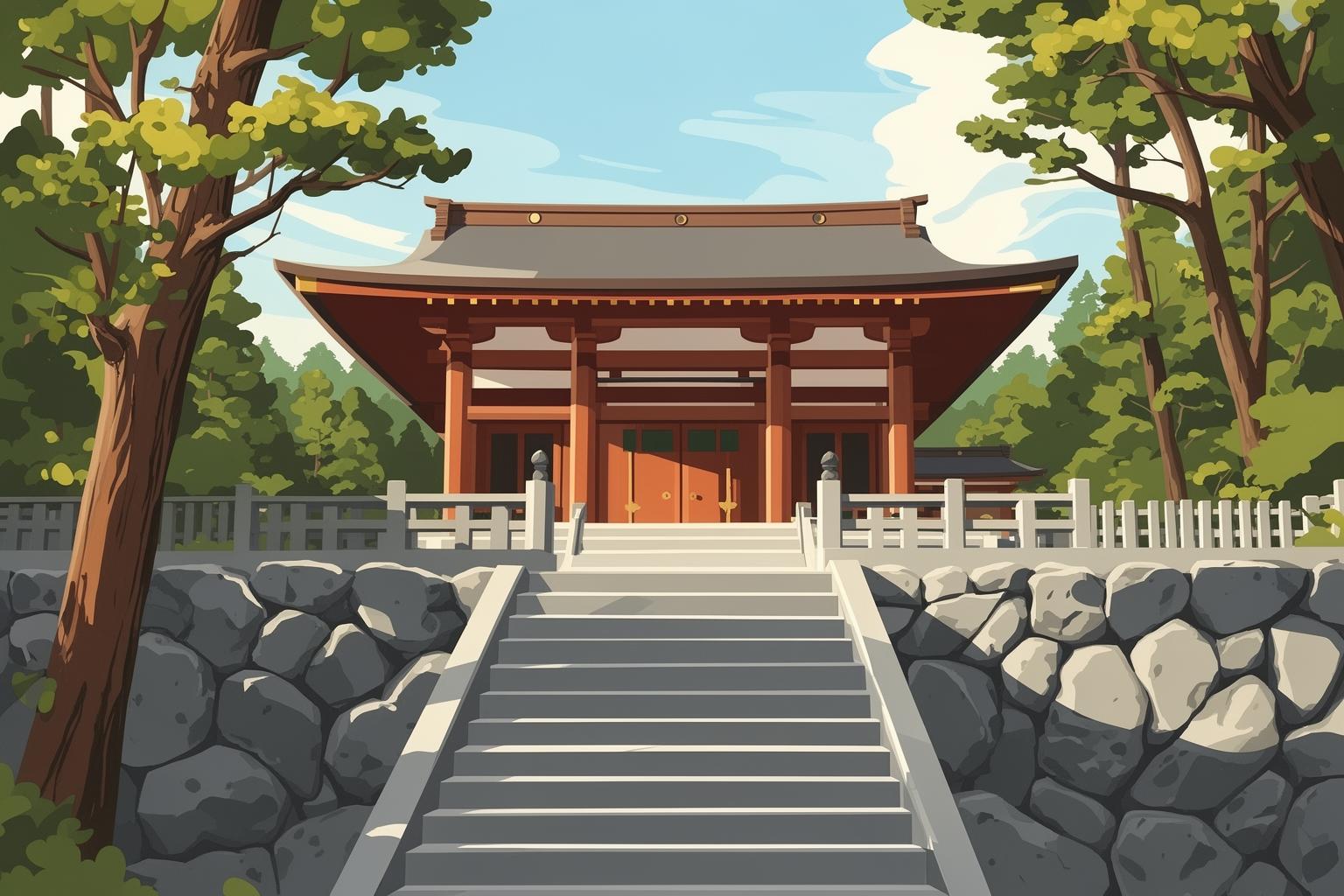
The entire festival culminates in one explosive, breathtaking moment: the procession down the steep, moss-covered stone staircase leading from the main shrine buildings toward the waterfall. This is where the divine inferno is fully unleashed. The narrow path, lined with towering cedar trees, is packed with spectators who have waited for hours.
At the signal, the torchbearers begin their descent—twelve of them, one for each god. They don’t walk; they run, staggering under the immense weight of the flaming torches. They hoist the fiery columns into the air, spinning and brandishing them, shouting with primal energy. Sparks and embers rain down, creating a river of fire flowing down the mountain. The heat is intense, a physical wave washing over the crowd. You can feel it on your face and arms and see the sweat pouring from the participants, often just inches from the flames they carry. The scene looks utterly chaotic—a beautiful, terrifying danger.
Then come the gods. The twelve Ogi Mikoshi, swaying precariously, follow the path cleared by the fire. The torchbearers run past the divine fans, their flames dangerously close to the sacred objects they are meant to purify. This is the heart of the ritual: a dynamic, perilous dance between purifiers and the purified. The fire burns away all spiritual defilement from the past year, ensuring the kami return home in absolute purity. For the men carrying the torches, it’s a test of strength, courage, and faith. One careless moment could cause serious injury or disrespect to the gods. They push their physical limits to fulfill a spiritual duty.
Watching this is witnessing something truly primal. Surrounded by the roar of fire, urgent chants, and thick smoke, you are transported back in time. This isn’t a reenactment; it’s a living, breathing ceremony as ancient and vital as the forest itself. The spectacle is overwhelming—a sensory overload that bypasses rational thought and speaks directly to a more instinctive part of the human spirit.
A Primal Connection to Nature
When the embers die down and the final chant fades away, the fundamental question persists: why this ritual? Why fire, and why a waterfall? The answer is found at the core of Shinto, the indigenous faith of Japan. Shinto is essentially a form of nature worship. Its gods, the kami, are not distant, otherworldly beings but the spirits residing within the natural world. A majestic mountain, an ancient tree, a powerful river—these are not just objects but divine entities deserving of reverence.
The Nachi Fire Festival stands as the ultimate expression of this belief. It is a conversation between two of nature’s most potent and primal elements. The waterfall, Hiryū Gongen, symbolizes the life-giving, cleansing, and enduring power of water. It is a constant presence, a source of life for the entire region. Fire, conversely, represents energy, passion, destruction, and, most importantly, purification. In many cultures, fire serves as a mediating force between the human and divine realms. Its smoke carries prayers heavenward, and its heat consumes the profane, leaving only the sacred behind.
During this festival, humans channel one elemental force to honor another. They wield the sacred fire to purify the path for the water deity. This act reaffirms the profound, symbiotic bond between humanity and the divine powers of nature. It’s a physical testament that human life depends on and is intertwined with the natural world. Participants aren’t merely performing a tradition; they are participating in a raw, physical act of devotion. They feel the weight of the torch, the heat of the flames, the strain in their muscles. This physical involvement makes the spiritual concept of purification tangible. It’s not just a belief; it’s something sensed deep within the body.
More Than a Spectacle: The Weight of Tradition
It might be easy to dismiss the Nachi Fire Festival as merely a theatrical spectacle for tourists. However, that would be a serious misinterpretation of what is truly happening. The men carrying the torches and bearing the Ogi Mikoshi are not performers. They are local residents—fishermen, shopkeepers, office workers—from the Nachikatsuura area. For them, this event is not entertainment; it is a sacred duty, a responsibility handed down through generations.
Taking part in the festival is both an honor and a tremendous burden. The physical challenges are clear, demanding months of preparation and conditioning. Yet, the spiritual responsibility is even weightier. These men are entrusted with the safety and purity of their local gods. The survival of this centuries-old tradition rests quite literally on their shoulders. This inherited sense of duty is what gives the festival its true essence. It imbues the occasion with an authenticity and gravity that no staged performance could ever achieve.
This deep connection to community and ancestry is what sustains ancient rituals like this in modern Japan. It serves as a powerful counterbalance to the isolation of contemporary life, grounding individuals in a shared past and collective purpose. In participating, they honor not only the gods but also their ancestors who performed the same ritual on the very same stone steps. They create a living link connecting the past, present, and future of their community. This is why, despite the inherent dangers and great effort required, the tradition persists with such passion and intensity.
The Nachi Fire Festival is a vivid, striking reminder that Japan is not just a land of quiet Zen gardens and tranquil tea ceremonies. It is also a place of raw spiritual energy, where faith is not always whispered but sometimes shouted, and where reverence is expressed not only through reflection but through fire, sweat, and sheer physical will. Standing on that mountainside as a river of flame cascades down the path is to witness a direct connection to Japan’s ancient soul. As the final torch is extinguished and the smoke dissipates, all that remains is the deep, resonant roar of the waterfall—the god, purified and powerful, at home once more.