You’ve probably been asked before what your “last meal” would be. It’s a dramatic question, designed to reveal something essential about a person through their ultimate culinary desire. Most people name something extravagant or deeply personal—a perfect steak, their grandmother’s lasagna. If you asked a certain generation of Japanese people, you might get a surprising answer: a plate of spaghetti glistening with a sweet, tangy ketchup sauce, or a perfectly formed omelet covering a mound of fried rice. This isn’t the food of Michelin stars or ancient tradition. This is yōshoku, and it’s one of the most honest and revealing cuisines in Japan.
To find it, you have to step into a kissaten. Forget the minimalist, third-wave coffee shops of today. A true kissaten is a time capsule from the Showa Era (1926-1989). You push open a heavy wooden door with a small brass bell, and the modern world falls away. The air is thick with the scent of dark-roast coffee and a faint, lingering whisper of cigarette smoke from decades past. The light is low, filtered through stained-glass lampshades. The seats are worn velvet booths in shades of burgundy or forest green. A master, usually an older man in a crisp shirt, presides over the counter, meticulously preparing coffee with siphons that look like lab equipment. And on the menu, nestled between the specialty coffee blends and melon sodas, is the heart of the matter: a list of dishes that look Western but taste uniquely, unmistakably Japanese.
This is the world of yōshoku, a category of food that literally translates to “Western food” but is anything but. It’s a parallel culinary evolution, a fascinating story of adaptation, aspiration, and nostalgia served on a plate. It’s the food that fueled Japan’s post-war economic miracle, eaten in the quiet, smoky corners where deals were made, novels were written, and romances blossomed. Understanding yōshoku isn’t just about understanding a menu; it’s about tasting a specific moment in history when Japan was looking outward to the West while simultaneously forging a powerful new identity of its own.
Readers intrigued by Japan’s culinary evolution can further uncover the contrasting layers of history and modern taste as seasonal ingredients transform local dining traditions in seasonal culinary insights.
What Exactly is Yōshoku? More Than Just a Meal
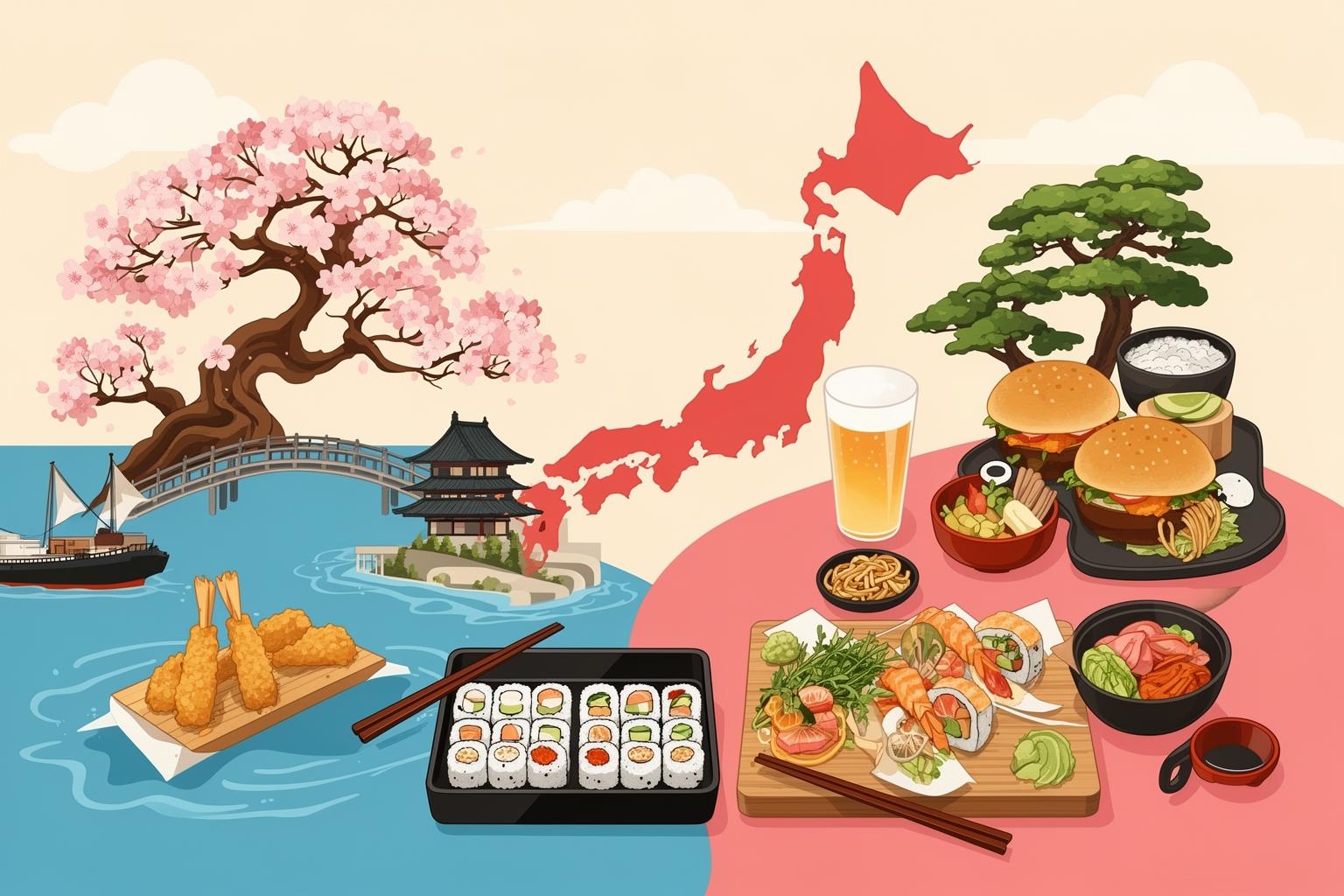
First, let’s address a common misconception. Yōshoku is not merely Western food prepared in Japan. You won’t find an authentic carbonara or a perfectly medium-rare steak frites on a traditional yōshoku menu. Instead, you’ll discover a collection of dishes influenced by Western cuisine but entirely reinvented through a Japanese perspective, adapted for the Japanese palate and intended to be eaten with rice.
Think of it as culinary translation. A group of Japanese chefs took Western culinary classics—like spaghetti, croquettes, cutlets, and omelets—and were tasked not just with translating the ingredients, but with transforming them to fit a different culture. They didn’t merely substitute components; they reimagined the entire structure of the meal.
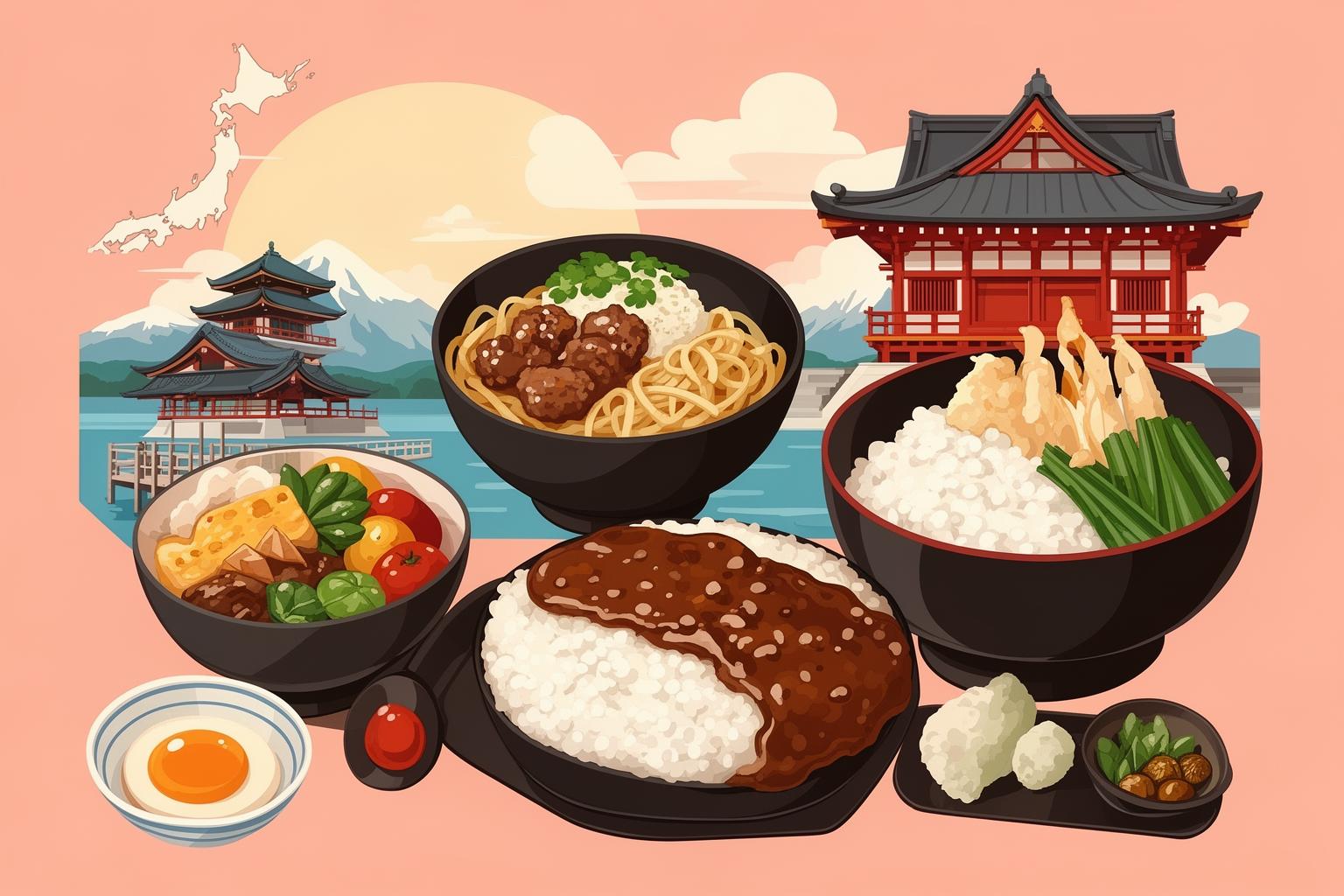
The best-known examples sound like a list of comfort-food favorites. There’s Naporitan, a spaghetti dish made not with a slow-simmered tomato sauce but with ketchup, onions, green peppers, and sausage slices. There’s Omurice, a fluffy omelet draped over fried rice flavored with chicken and ketchup, often topped with a decorative swirl of ketchup. You’ll find Hambāgu, a juicy, bun-less Salisbury steak made from a mix of ground pork and beef, covered in rich demi-glace sauce and served with rice and a simple salad. And then there’s Kare Raisu (curry rice), which evolved from the British take on Indian curry into a thick, mild, stew-like gravy that has become one of Japan’s most beloved national dishes.
These dishes share several common characteristics. The flavors tend to be milder and sweeter than their Western originals. Umami plays a crucial role, often introduced through sauces like demi-glace or Worcestershire. Most importantly, they are almost always designed to be enjoyed with a bowl of white rice, the essential foundation of the Japanese meal. A pork cutlet isn’t just a cutlet; it’s tonkatsu, breaded with crunchy panko and served with rice, shredded cabbage, and a thick, fruity sauce. It’s a complete, self-contained set meal—a concept central to Japanese dining.
A Recipe Born from History: The Meiji and Post-War Origins
Yōshoku did not simply emerge out of nowhere. Its origins are intricately linked to Japan’s dramatic and often tumultuous interaction with the outside world over the past 150 years. This cuisine was born from two significant historical upheavals: the Meiji Restoration and the post-World War II period.
The Meiji Restoration: Opening the Door Wide
For more than two centuries during the Edo Period, Japan remained mostly isolated. Then, in 1868, the Meiji Restoration swung open the doors. A new government, determined to modernize the country and rival Western industrial powers, launched a period of rapid change under the motto bunmei kaika (“Civilization and Enlightenment”). Embracing Western technology, governmental systems, fashion, and even cuisine was regarded as a patriotic act, a means to strengthen Japan and avoid colonization.
Initially, yōshoku was exclusive to the elite. It was served in elegant Western-style hotels and upscale restaurants in Tokyo and Yokohama, striving to faithfully replicate French or British dishes. Emperor Meiji himself began publicly consuming beef and dairy to encourage his subjects to follow suit, breaking a centuries-old Buddhist prohibition against eating four-legged animals. This early yōshoku was aspirational and foreign—a symbol of Japan’s emergence on the global stage.
The Showa Era Shift: From Luxury to Everyday Comfort
It was during the post-war Showa Era that yōshoku truly found its identity and became a food for the masses. The American occupation introduced a fresh wave of Western influence, but this time it was different—not the refined cuisine of French diplomats, but the practical, everyday fare of American GIs. Ingredients such as canned goods, ketchup, and processed meats became increasingly accessible.
In the aftermath of war, Japan was rebuilding, and an urban class of salarymen, students, and office workers was taking shape. They needed places to gather, work, and eat beyond their often cramped homes. The kissaten answered this need. These coffee shops became the city’s unofficial living rooms and workspaces. To encourage customers to linger, they had to offer more than just coffee—they needed to serve food.
Yōshoku fit perfectly. It felt modern and refined—a small taste of the prosperous Western world Japan aspired to join. Yet it was comforting, affordable, and perfectly adapted to local tastes. Chefs, working with limited ingredients and a profound knowledge of Japanese flavors, crafted the dishes we now know as classics. Naporitan pasta arose from the necessity of using ketchup in place of scarce tomato puree. Omurice transformed simple rice and eggs into an elegant, satisfying dish. Yōshoku became the nourishment for Japan’s economic rise, embodying the flavor of progress and quiet hope.
The Kissaten as a Stage for Showa Life
The story of yōshoku is deeply connected to the space where it is most famously enjoyed: the kissaten. These establishments were never merely places to grab a quick caffeine fix. They were carefully crafted environments, stages set for the dramas of everyday urban life.
More Than Coffee: The “Morning Service” and Lunch Sets
Two key innovations established the kissaten‘s significance in Japanese society. The first was the “Morning Service,” or mōningu sābisu. For the price of a single cup of coffee, patrons received a small complimentary breakfast—usually a thick, fluffy slice of toast (shokupan), a hard-boiled egg, and a tiny side salad. This simple yet brilliant idea transformed the kissaten into the essential starting point for the salaryman’s day.
The second innovation was the lunch set. At midday, kissaten offered a yōshoku dish such as Naporitan or Hambāgu, paired with soup, salad, and coffee for an affordable price. This provided office workers with a much-needed midday respite. It was a moment of civilized calm amid a hectic day—a chance to enjoy a meal that felt like a small luxury without straining the budget. The kissaten lunch became an institution, a reliable and comforting ritual woven into the rhythm of city life.
A Haven of Aspiration and Escape
Beyond the food, the atmosphere of the kissaten was its greatest appeal. They were true third spaces. In an era of small, crowded apartments, the kissaten offered a place to be alone in public. One could read the newspaper undisturbed for hours. Quiet business meetings could be held, shielded from street noise by dark wood paneling and classical music softly playing on a high-end sound system. They were venues for secret dates, for students cramming for exams, for aspiring writers working on their manuscripts.
Eating yōshoku in this setting was an essential part of the experience. The meal matched the mood—introspective, slightly formal, and infused with a sense of participating in a modern, cosmopolitan culture. It represented a manageable, domesticated version of the West. Ordering a plate of spaghetti allowed one to feel worldly without confronting unfamiliar flavors or dining customs. It was comfort and aspiration, all served on one plate.
Deconstructing the Classics: A Culinary Glossary of Nostalgia
To truly appreciate yōshoku, it helps to take a closer look at some of its most iconic dishes. Each one narrates a small story of creativity and cultural fusion.
Naporitan: The Ketchup-Coated Icon
Perhaps no dish represents yōshoku more than Naporitan. The tale—possibly apocryphal but too good to overlook—credits its creation to Shigetada Irie, head chef at the Hotel New Grand in Yokohama, shortly after the war. He noticed American GIs mixing spaghetti with ketchup and was inspired to craft a more refined version suited to the Japanese palate. The secret lies in it not being just ketchup—it’s a sauce based on ketchup, sautéed with onions, green peppers, and mushrooms, accompanied by slices of wiener sausage or bacon. The spaghetti is deliberately soft, pre-cooked then pan-fried, offering a comforting, tender texture that contrasts sharply with the Italian ideal of al dente. Naporitan embodies resourcefulness. It is a proud, flavorful statement that “authenticity” alone doesn’t define a good dish.
Omurice: The Comforting Embrace
Omurice is the essence of culinary comfort. Its name is a classic Japanese portmanteau of omu (omelet) and raisu (rice). The dish features fried rice seasoned with chicken and ketchup, then either wrapped in or topped with a thin, expertly cooked omelet. The finishing touch is often a decorative squiggle of ketchup or a pool of rich, brown demi-glace sauce. The true skill lies in the omelet—it should be tender and just barely set. Some modern renditions present a half-moon omelet atop the rice, sliced open at the table to let the soft, scrambled interior flow over the rice like lava. Often linked to childhood, it’s a meal that mothers would make for their kids. It showcases Japanese ingenuity in elevating simple ingredients through technique and presentation into something both comforting and beautiful.
Hambāgu: The Familiar Stranger
Do not mistake this for an American hamburger. The Hambāgu is a tender, juicy patty made from ground meat (usually a blend of beef and pork for flavor and moisture), mixed with sautéed onions, panko breadcrumbs, and egg. It is pan-fried and served without a bun, typically on a hot iron plate alongside vegetables and, of course, a bowl of rice. The crowning element is the sauce, often a rich, savory demi-glace. This dish takes the American concept of hamburger steak and fully integrates it into a Japanese meal. It’s hearty, satisfying, and has become a staple not only in kissaten but also across family restaurants nationwide.
Cream Soda: The Jeweled Dessert
No kissaten experience would be complete without dessert, and the quintessential choice is Cream Soda. This isn’t just a simple mix of soda and syrup found elsewhere. The Japanese Cream Soda is an aesthetic delight: a tall, elegant glass filled with brightly vibrant green melon-flavored soda, topped with a perfect scoop of vanilla ice cream and crowned with a gleaming red, almost fluorescent maraschino cherry. It’s a drinkable piece of Showa-era pop art—sweet, colorful, slightly artificial, and brimming with a sense of cheerful, uncomplicated fun. It’s the perfect whimsical finish to a nostalgic meal.
The Enduring Allure: Why We Still Crave Yōshoku
In a country obsessed with culinary perfection and global gastronomic trends, you might assume yōshoku and the old-fashioned kissaten have vanished. Many have, replaced by Starbucks and “authentic” Italian trattorias. Yet, many have also survived, passionately cherished by regulars and discovered anew by a younger generation.
Its endurance boils down to one powerful ingredient: nostalgia. For older Japanese, enjoying a plate of Hambāgu in a dimly lit kissaten is a direct connection to their youth. It’s the flavor of a more hopeful era, of a country rising and shaping a new future. It’s the taste of first dates, long conversations over coffee, and the quiet dreams of a younger self.
For younger generations who never lived through the post-war boom, yōshoku and kissaten culture resonate with the current fascination with the “Showa retro” aesthetic. In a fast-paced digital world, the slow, analog atmosphere of a kissaten offers a welcome retreat. It feels authentic in a different way—not to a foreign culture, but to their own recent past. It’s an opportunity to connect with a history visible in old films and family photo albums.
Ultimately, yōshoku signifies a unique, confident moment in Japan’s cultural history. It emerged during a time when Japan was deeply engaged in a dialogue with the West, but rather than merely imitating, it absorbed, adapted, and created something entirely new. It’s a cuisine defined not by its foreign origins but by its Japanese transformation. It’s a delicious testament to the idea that identity isn’t about being purely one thing or another, but about the beautiful, complex things that flourish in between.
So next time you’re in Japan, walk past the gleaming cafes and look for a place with a faded sign and dark wooden door. Step inside, settle into a velvet booth, and order a plate of Naporitan. You won’t just be having lunch—you’ll be tasting the story of a nation—its resilience, creativity, and half-remembered dreams.