
When you think of spring in Japan, you probably picture cherry blossoms. You imagine delicate pink petals drifting on a warm breeze, picnics under blooming trees, and a general sense of pastel-colored relief after a long winter. And you wouldn’t be wrong. But there’s another side to the season, a taste that’s far from sweet and delicate. It’s a flavor that’s sharp, earthy, and unapologetically bitter. This is the world of sansai, the wild mountain vegetables that are foraged and celebrated as the true, unvarnished taste of spring.
For many outsiders, the Japanese reverence for these often intensely bitter plants can be baffling. In much of the world, bitterness is a flavor we’re conditioned to avoid, a signal of something unripe, unpleasant, or even poisonous. We breed it out of our vegetables, chasing sweetness and uniformity. Yet here, from late March through May, people will pay a premium for a small plate of gnarled, deep-green shoots at a high-end restaurant, or spend a weekend clambering up muddy mountain slopes to find them. This isn’t just about eating your greens. It’s a deep-seated culinary ritual, a way of consuming the very essence of the changing season. It’s a purposeful shock to the system, designed to awaken the body and spirit from the slumber of winter. To understand sansai is to understand a core tenet of Japanese food philosophy: that flavor is not just about pleasure, but about purpose, place, and time.
Beyond the striking freshness of sansai lies a broader culinary creativity in Japan, highlighted by innovative creations like gourmet convenience store desserts that redefine familiar flavors.
A Catalog of the Wild

First, let’s clarify: sansai (山菜), meaning “mountain vegetables,” doesn’t refer to a single plant. It’s a broad and diverse group of wild, edible plants that emerge in mountains and fields as the snow melts. These plants are the first signs of green pushing through the cold, damp earth, carrying the mineral-rich, untamed vitality of their surroundings. Though there are hundreds of types, a few standouts regularly appear on menus and in homes nationwide, each with its own unique character.
Fukinoto: The First Herald of Spring
Often the earliest to emerge, sometimes even breaking through snow patches, is fukinoto (蕗の薹). This is the flower bud of the butterbur plant, resembling a small, tightly wrapped green cabbage no larger than a thumb. Its taste delivers a potent, aromatic bitterness so intense it can seem almost medicinal, with a complex, floral aftertaste that lingers. Eating fukinoto is akin to receiving an official, invigorating announcement that winter has ended. Due to its strong flavor, it’s most famously prepared as fuki-miso, a condiment where the minced bud is slowly cooked with miso, mirin, and sugar. The resulting paste is a sublime blend of bitter, sweet, and savory, typically served with rice or as a tofu topping.
Warabi and Kogomi: The Ferns
As the season advances, fiddlehead ferns start to unfurl. The most common is warabi (蕨), or bracken fern. Its tightly coiled head, resembling a violin scroll, is a classic spring symbol. Warabi has a slightly slippery texture and a milder, earthy bitterness compared to fukinoto. However, it contains a natural toxin, ptaquiloside, so it can’t be eaten raw. It requires a careful, traditional preparation called aku-nuki (which we will discuss later) to make it safe and tasty. This essential ritual only adds to its allure; it’s a food that demands respect and expertise.
A gentler relative is kogomi (こごみ), or ostrich fern. Its bright green coils are more compact, and unlike warabi, it lacks toxins, so it can be cooked directly. Its flavor is much milder, offering a pleasant crunch with a subtle, asparagus-like taste accompanied by a touch of wild bitterness. Kogomi is often an introductory sansai for newcomers, commonly served in tempura or dressed simply with a sesame sauce (goma-ae).
Taranome: The King of Sansai
Arguably the most esteemed is taranome (タラの芽), the bud of the Japanese angelica tree. Known as the “king of sansai,” this shoot grows from a thorny, formidable stalk, making harvesting a prickly challenge. The payoff, however, is a complex and deeply gratifying flavor. It features a nutty, slightly resinous note and a rich, buttery texture when cooked. The bitterness is evident but beautifully blended, serving as a base rather than an assault. Taranome is almost exclusively served as tempura. The quick, high-heat frying crisps the outer leaves to a shattering crunch while steaming the inside to creamy perfection. A plate of taranome tempura, seasoned with just a pinch of salt, is one of the great, fleeting indulgences of Japanese spring.
The Philosophy of Bitterness: Waking Up the Body
The celebration of these flavors extends well beyond mere culinary preference. It is deeply rooted in a traditional understanding of the body’s connection to the seasons. From the standpoint of traditional East Asian medicine, which has profoundly shaped Japanese food culture, winter is a time of accumulation. To endure the cold, we consume heavier, richer foods; our bodies slow down, storing energy and fat. By the time spring arrives, the system is thought to be sluggish and burdened with the remnants of this winter dormancy.
This is where bitterness, or nigami (苦味), plays a role. The bitter compounds in sansai—polyphenols, alkaloids, and other phytonutrients—are believed to serve as natural stimulants. They are said to awaken the digestive system, cleanse the liver, and purify the blood, effectively cleansing the body from within. In this perspective, the bitter taste is not an unfortunate byproduct; it is the essential purpose. It is the remedy the body needs to transition from winter’s dormancy to spring’s vitality.
This idea is embodied in the Japanese saying, 「春は苦みを盛れ」(haru wa nigami o more), meaning “In spring, fill your plate with bitterness.” This dietary principle has been handed down through generations. That sharp bitterness signals to the body that it’s time to awaken, shed its winter layers, and prepare for the energetic months ahead. As someone knowledgeable about Traditional Chinese Medicine, I see a clear parallel here. In TCM, bitter foods are linked with clearing heat and draining dampness—functions that perfectly align with the concept of a spring cleanse.
The very term for the harshness in these vegetables, aku (アク), holds a dual meaning. It refers to the astringent, sometimes toxic elements present in plants, but can also mean scum, lye, or impurity. The process of aku-nuki, or removing this harshness, is thus both a physical cooking technique and a symbolic act of purification. By removing the aku from the vegetables before eating, you are metaphorically purging the aku from your body.
From Mountain to Plate: The Ritual of Preparation

Unlike cultivated vegetables, sansai rarely involve a straightforward purchase at a supermarket. Their journey to the table is an essential part of their significance, steeped in ritual and a profound connection to the natural world.
Sansai-tori: The Hunt
For many, especially in rural Japan, the season begins with sansai-tori (山菜採り), or mountain vegetable foraging. This is not a casual walk in the forest. It is a hunt that demands deep local knowledge handed down through generations. Foragers must know the terrain intimately— which slopes catch the morning sun, where water lingers after the snow melts, and which trees shelter the best ferns. They need to identify plants with absolute certainty, since edible varieties often grow near poisonous look-alikes.
There’s an unwritten code of conduct. You never take everything from a patch, always leaving enough for the plant to regenerate and for other foragers. You move with an awareness of the environment, respecting that you are a guest in the home of wild animals, including bears, which are also emerging from hibernation hungry. This act of foraging physically connects a person to the season and the land. The food doesn’t just appear, wrapped in plastic; it is earned through effort, knowledge, and respect.
Aku-nuki: The Taming of the Wild
Once gathered, many sansai require the essential step of aku-nuki to tame their wildness. This is not a single method but a variety of techniques tailored to each vegetable. For warabi, this traditionally involves boiling the ferns and then soaking them overnight in water stirred with hot wood ash. The alkalinity of the ash-water neutralizes toxins and softens the bitterness. Other vegetables may simply need blanching in salted water, while some are soaked in cold water for hours or even days, with the water changed regularly.
This process is slow and deliberate. It cannot be rushed. It stands as a testament to the patient ingenuity of generations who discovered how to transform these harsh, potentially harmful plants into safe and nourishing food. In a world of instant gratification, the inevitable pause of aku-nuki is a ritual on its own. It invites a moment of reflection and appreciation for the ingredient, turning cooking into a collaboration with nature.
The Final Plate: Simplicity and Respect
After all this effort, the final cooking methods are often refreshingly simple. The aim is not to conceal the vegetable’s unique character but to highlight it. Tempura is a favorite because the hot, lacy batter offers a crunchy, savory contrast to the bitterness while perfectly preserving the vegetable’s texture. Other common preparations include ohitashi, where blanched greens are steeped in a light, umami-rich dashi broth, and aemono, where they are dressed with ingredients like sesame paste, miso, or tofu. These simple methods exemplify a key principle of Japanese cuisine: respect for the ingredient. The chef’s role is to mediate, not to dominate, allowing the wild flavor of the mountain to speak for itself.
A Taste of Place and the Fleeting Season
Eating sansai is the ultimate expression of shun (旬), the Japanese concept of peak seasonality. This isn’t the extended, month-long season of strawberries or asparagus. The shun for a specific mountain vegetable may last only a week or two in a particular region. It is a fleeting, ephemeral delight that cannot be duplicated or imported. It is intensely local and deeply seasonal.
This imparts sansai with a profound sense of terroir. The kogomi from Yamagata’s mountains will taste distinct from that gathered in Nagano. It carries the unique mineral fingerprint of the soil, water, and air where it grew. To eat it is to savor a specific mountainside at a precise moment in time. This serves as a powerful counterpoint to the placeless, seasonless character of the modern global food supply. It reconnects you with the physical world and its natural cycles.
For this reason, a spring visit to a rural ryokan (traditional inn) is often marked by a multi-course kaiseki dinner showcasing a succession of locally foraged sansai. Each dish is a small, artful reflection of the surrounding landscape. In the city, specialty restaurants and izakaya proudly present the day’s catch of wild vegetables, their appearance on the menu a temporary and celebrated occasion.
The Modern Palate and the Future of Foraging
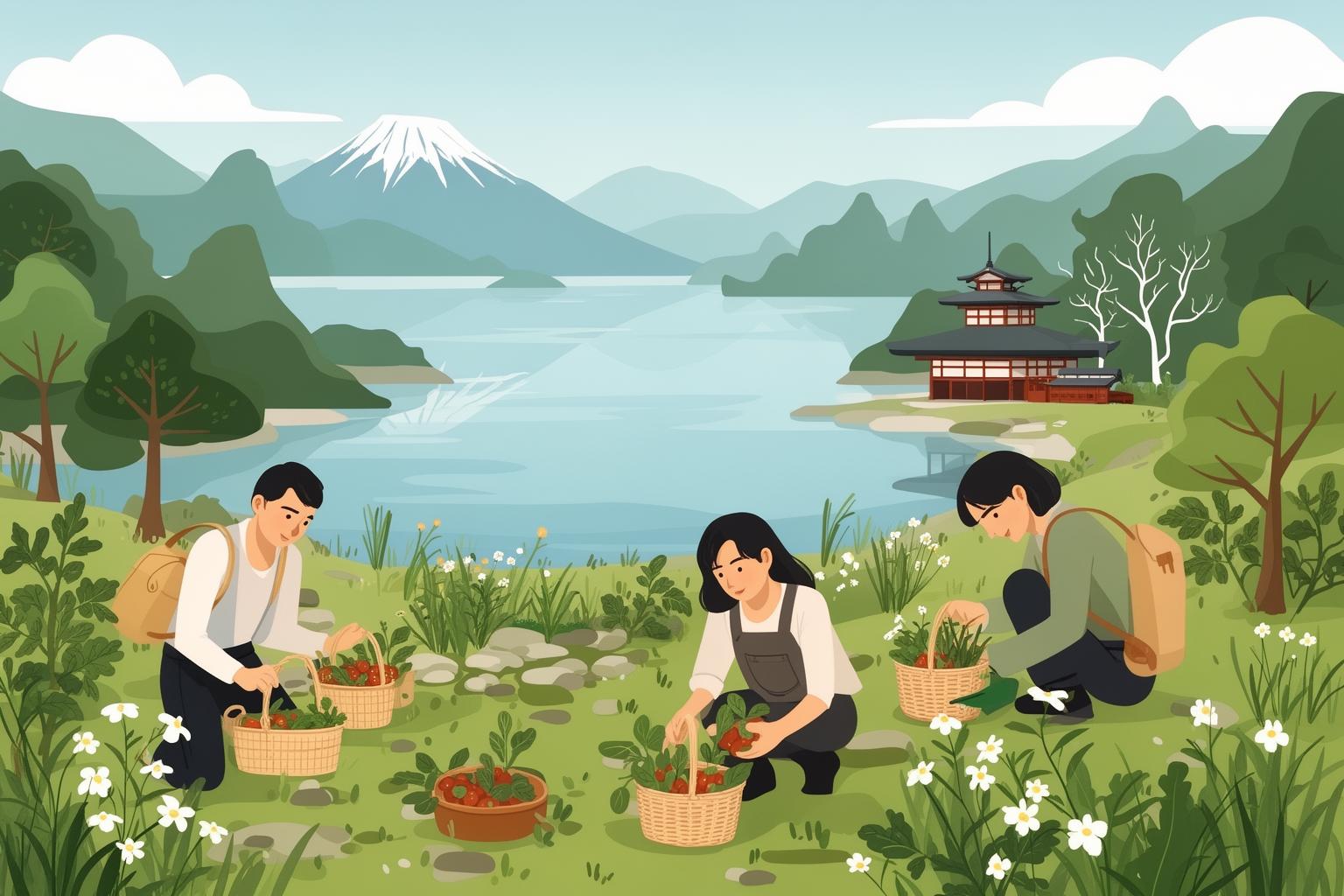
Like many traditions, the culture of sansai is under pressure from the modern world. Japan’s aging and shrinking rural population means there are fewer custodians of traditional foraging knowledge. Many young people, raised in cities on a diet favoring milder, sweeter flavors, often find the assertive bitterness of sansai challenging to their palate.
Yet the tradition is far from dying. In fact, there is a renewed and growing interest. A younger generation of chefs, both in Japan and abroad, is embracing wild and foraged ingredients, celebrating their distinctive flavors and sustainable qualities. Food-savvy travelers and urban residents are seeking authentic rural experiences, including guided sansai-tori tours. The very wildness that once made sansai a food of necessity now makes it a luxury and a symbol of purity and connection to nature in an increasingly processed world.
It remains a taste that requires a certain maturity of the palate to fully appreciate. It invites you to move beyond the simple comfort of sweetness and salt to find beauty in complexity and challenge. It’s an acquired taste, but the acquisition is the point. Learning to love bitterness is learning to appreciate a fuller spectrum of flavor and, by extension, a deeper spectrum of life.
So, while cherry blossoms may be the most visible symbol of Japanese spring, the true, profound taste of the season is found in the bitter bite of a wild mountain vegetable. It’s the flavor of snowmelt and damp earth, of stored energy finally breaking free. It’s a taste that doesn’t just please the senses—it awakens them.