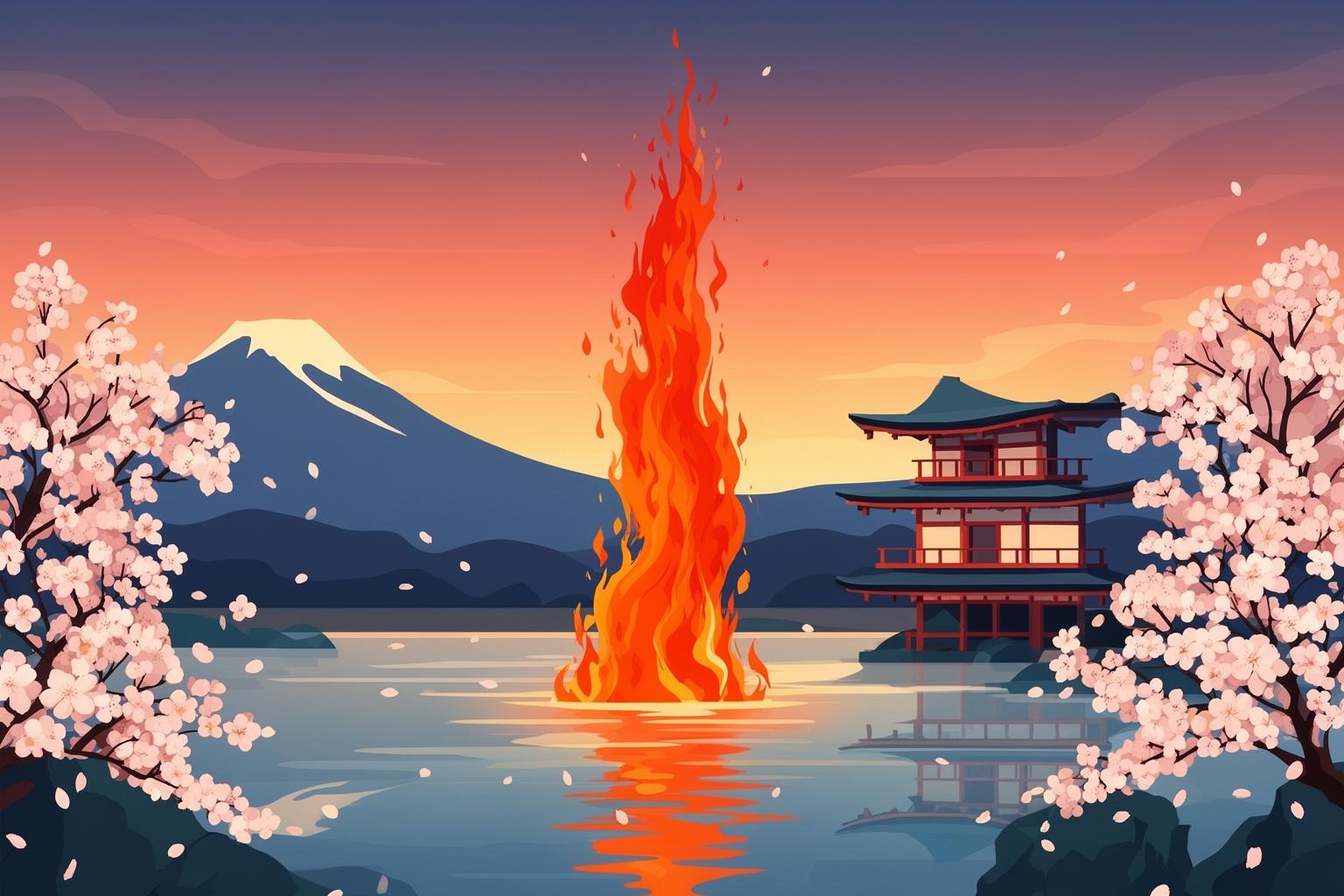
When you picture fireworks in Japan, you probably imagine something elegant and expansive. You see a thousand delicate chrysanthemums blooming against a velvet summer sky, their colors reflecting in the eyes of a crowd sighing in collective awe. It’s a beautiful, polished, and somewhat distant spectacle. You watch it happen way up there. Now, I want you to erase that image. Instead, picture a man, dressed in simple festival clothing soaked in water, standing his ground as he holds a cannon. Not a metaphorical cannon, but a meter-long tube of bamboo packed with black powder. He braces, a fuse is lit, and suddenly he is no longer holding a tube. He is holding a pillar of raw, screaming fire. A roaring inferno erupts from the top, showering him and everything nearby in a torrent of molten orange sparks. The sound is a physical force, a deafening blast that seems to tear a hole in the night. He doesn’t flinch. He holds on for a full twenty seconds until, with a final, gut-thumping boom, the bottom of the tube blows out.
This is Tezutsu Hanabi, or hand-held fireworks. And it is absolutely nothing like the pyrotechnics you know. This isn’t a show designed for your passive entertainment. It’s a raw, visceral, and deeply dangerous ritual, a tradition stretching back nearly 500 years. It’s a form of prayer, a rite of passage, and a profound test of courage, all rolled into one explosive package. To witness it is to feel the heat on your face from fifty meters away and to understand that some traditions aren’t meant to be safe or comfortable. They’re meant to be felt, right down to your bones. So, what drives someone to willingly embrace a column of fire? The answer lies deep in the spiritual and cultural soil of a specific part of Japan, where gunpowder is not just for celebration, but for communion.
Delving further into Japan’s multifaceted heritage, a stroll through Yokocho alleys offers an immersive encounter with urban traditions that mirror the raw intensity of age-old rituals.
What is a Pillar of Fire?
Before diving into the reasons behind it, let’s first examine what a tezutsu is. It is an impressive object, beginning as a thick section of giant bamboo, known as mōsōchiku, carefully chosen and dried over several years to endure immense pressure. The tube is then tightly wrapped with thick straw rope, or nawa, which not only strengthens it but also adds a beautiful, rustic craftsmanship to the piece. Inside this tube, artisans or even the participants themselves meticulously pack a volatile mixture of black powder and iron filings. The finished product weighs several kilograms and feels dense and substantial in your hands. It is far from a toy; it is a vessel of controlled chaos.
When lit, the tezutsu does more than just emit sparks upwards. It releases a fierce, multi-sensory barrage. The initial flame can soar ten to twenty meters high, forming a solid column of glowing energy. The sound is not a mere pop or bang but a continuous, earth-shaking roar, much like a jet engine at close range. This is followed by a shower of sparks: the iron filings in the gunpowder produce a cascade of dazzling, dripping fire that rains down on the holder. Participants are, naturally, drenched in water and wear protective clothing, yet the experience remains intensely physical. They are engulfed by heat, light, and sound.
Holding the firework demands great strength and a specific, braced stance to absorb its recoil. You grip it firmly against your hip, away from your face, and lean into it. Throughout the burn, which can last up to thirty seconds but feels like an eternity, the holder becomes a living statue amid a storm of fire. There is no letting go. Dropping the tezutsu would be catastrophic—a sign of weakness, disrespect, and extreme danger for everyone nearby.
The climax of this display is the hane. Just as the main pillar of fire fades, a tremendous explosion erupts from the bottom of the tube, blowing out its base with a concussive boom and a final flash of light. This is not a malfunction but the grand finale. A loud, clean hane signifies a well-crafted firework and a successful offering. The sound is believed to drive away evil spirits, and its success brings good fortune to the holder and their community. The silence following this final blast is as profound as the noise preceding it.
Forged in Prayer and Gunpowder
The story of Tezutsu Hanabi is one of ritual and faith rather than mere entertainment. Its origins date back over 450 years to the Higashi-Mikawa region of present-day Aichi Prefecture, an area historically important for the production and use of gunpowder. Firearms were first introduced to Japan in the mid-16th century, and the warlords of this region, including the great Tokugawa Ieyasu who later unified Japan, quickly mastered their use. Gunpowder was primarily a tool of war.
Yet, as with many potent forces in Japan, its purpose was gradually reinterpreted and woven into spiritual life. The tradition is believed to have started as a form of smoke signal or noroshi. However, these fire and smoke displays soon evolved into ritual offerings, or hōnō, dedicated to the local Shinto deities. Instead of destruction, the power of gunpowder was harnessed for creation—to produce a magnificent and awe-inspiring spectacle worthy of the divine.
The fireworks became a key element of shrine festivals, especially those praying for a plentiful harvest, the community’s well-being, and the warding off of evil. In Shintoism, fire is a powerful purifier. The intense light, thunderous sound, and shower of sparks were thought to cleanse the area of malevolent spirits and impurities. Holding the firework was also an act of personal purification, a physical trial demonstrating one’s sincerity and devotion.
Each festival is dedicated to a particular shrine, and the tezutsu are regarded as direct communication with the resident deity. The pillar of fire serves as a visible prayer, a message of thanks for past blessings and a plea for ongoing protection. This is why the tradition remains so raw and personal. It is not performed by anonymous technicians at a distance but by the men of the community, for their families, neighbors, and gods. It is an inherited duty and an honor, a direct connection to the faith and fears of their ancestors.
The Craftsman’s Path: From Bamboo to Fire
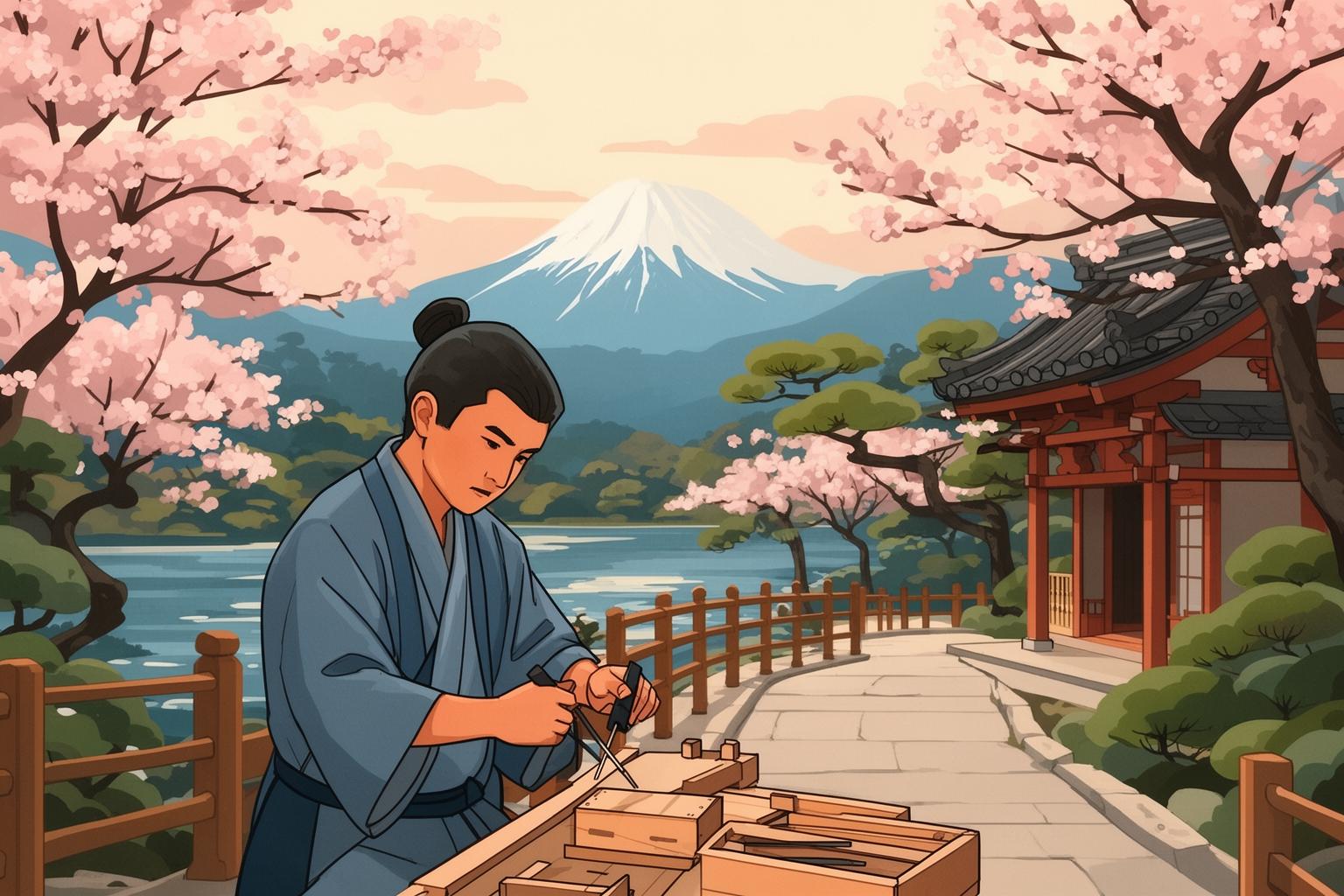
One of the most profound aspects of Tezutsu Hanabi is that the journey doesn’t start on the night of the festival. It begins months, sometimes even a year, earlier with the crafting of the firework itself. In many traditional preservation societies, participants are expected to make their own tezutsu under the careful guidance of a master. This process is just as much a part of the ritual as holding the finished product.
The first step is selecting the right bamboo. It must be of a specific age and thickness, harvested at the proper time of year, and then dried for several years to eliminate all moisture. Any flaw in the bamboo could cause it to burst unpredictably. Once chosen, the tough nodes inside the bamboo are drilled out, forming a hollow tube. This tube is then carefully wrapped in straw rope, a process that takes hours and demands immense precision and strength to ensure the bindings are tight enough to withstand the explosion.
Next comes the most critical and hazardous phase: packing the gunpowder. This is done by hand, layer by layer, using specialized tools to compress the powder to the correct density. It is a slow, deliberate process requiring absolute focus. A mistake here—an air pocket or uneven mixture—could result in a catastrophic failure during the festival. The men who carry out this task do so with a reverence and concentration that borders on meditation. They are not merely building a firework; they are infusing their intentions, prayers, and spirit into the vessel.
By making their own tezutsu, participants develop a deep understanding of the power they are about to wield. It fosters respect and dispels arrogance. This hands-on process ensures the tradition is passed down not merely as a set of instructions, but as a living, tactile skill. It connects each man to a long lineage of craftsmen before him and enriches the significance of the final act. When he holds that pillar of fire, he is holding the culmination of his own labor, patience, and dedication.
The Moment of Ignition: A Rite of Passage
On the night of the festival, the air is dense with anticipation, smoke, and the scent of sulfur. The participants, members of local ren (groups or associations), gather dressed in their traditional attire. They typically wear thick cotton happi coats, white shorts, and tabi footwear. Crucially, their clothes and hair are repeatedly soaked with water to protect against sparks. While it does little to ease the heat, it prevents them from catching fire.
Before the main event, there is often a procession to the local shrine. The completed tezutsu are placed before the altar to be blessed by a Shinto priest. This ritual formally consecrates them, transforming them from mere fireworks into sacred offerings. It is a moment of quiet reflection before the spectacle begins.
Then, the moment arrives. One by one, the men enter the designated area. An assistant, often a senior member of their group, approaches with a flaming torch. The participant braces himself, locking the tezutsu against his side, and gives a nod. The fuse is lit. For a brief moment, there is only a fizzing sound, and then the world erupts.
The holder must endure the full force of the blast. He is engulfed in a volcano of his own making. Sparks, some the size of marbles, ricochet off his body. The ground beneath him trembles. The intense sensory overload is overwhelming, yet the goal is to remain as still and composed as possible, displaying pure grit and control. It is a battle of will against a primal force of nature.
For many young men in these communities, participating in Tezutsu Hanabi for the first time is an important rite of passage. It is a public demonstration of their courage, dedication to their hometown’s traditions, and their transition into adulthood. To successfully hold the tezutsu and endure the final, deafening hane is to prove one’s mettle. You can see the mix of fear and exhilaration on their faces—and the immense pride that follows when the fire dies down and they remain standing, smoke curling off their bodies, ears ringing in the sudden silence.
More Than a Spectacle: The Fire Within

From an outsider’s perspective, it might be easy to dismiss Tezutsu Hanabi as nothing more than a reckless act of bravado. However, doing so would overlook its true significance. For those involved, the ritual holds profound personal and communal meaning. Above all, it serves as a form of purification, or misogi. Immersing oneself in sparks and enduring the intense heat and deafening roar is believed to cleanse both body and spirit of misfortune and impurities gathered throughout the year.
Moreover, it acts as a powerful means of community bonding. The preservation societies that conduct these events are close-knit groups where knowledge is passed down from father to son, from seasoned participant to newcomer. Both the preparation and the event fortify social connections and reinforce a shared identity grounded in a distinctive local heritage. At a time when many local traditions in Japan are disappearing, Tezutsu Hanabi remains a vibrant and crucial element of the cultural fabric in the Mikawa region, serving as a wellspring of civic pride.
For the individual, holding the tezutsu can be a profoundly personal experience. Participants engage for various reasons: to pray for the health of an ill family member, to express gratitude for a child’s birth, to commemorate a significant life milestone, or simply to challenge themselves and feel connected to something greater than themselves. The inherent danger is not a flaw but a feature. By facing genuine risk, they reach a heightened state of awareness, a moment of pure, undistracted presence. In that blaze of fire, distraction vanishes, leaving only the individual and the roaring flame.
The final hane explosion signifies the successful delivery of these prayers. The thunderous blast carries the wishes of both individual and community to the heavens. Conversely, a failed hane—a dud—is seen as a bad omen, indicating the prayer was not accepted. This adds a spiritual weight to the entire event, serving as a reminder that the outcome is never fully assured.
Witnessing the Inferno: Where and How
To witness this incredible tradition firsthand, you need to visit its heartland: the Higashi-Mikawa region of Aichi Prefecture, east of Nagoya. While smaller festivals take place in the area, the undisputed highlight is the Toyohashi Gion Festival, held annually on the third weekend of July. It is one of the most renowned and spectacular showcases of Tezutsu Hanabi in all of Japan.
The event is centered at Yoshida Shrine in Toyohashi, where hundreds of hand-held fireworks are lit throughout the evening. The atmosphere is electrifying. Expect large crowds, as this is an immensely popular local celebration. It isn’t a polished, tourist-friendly event with comfortable seating or ideal viewpoints. Instead, it is a living, breathing, and chaotic community ritual.
Arrive early to secure a good viewing spot. Spectators are kept at a safe distance, but you will still feel the explosive power reverberate in your chest. The air becomes thick with smoke, and you will likely end up dusted with a light layer of ash by night’s end. It’s all part of the experience. Other notable tezutsu festivals occur in nearby cities like Toyokawa and Shinshiro, usually during the summer months.
When you attend, remember what you are witnessing. This isn’t simply a fireworks display. It’s a prayer, a test of endurance, and a 450-year-old dialogue between a community and its gods, expressed through fire and thunder. Observe the expressions of the men holding the fireworks. Observe the community that supports them. You will see something much deeper than just a dazzling light show.
Tezutsu Hanabi is a visceral, almost startling reminder that some traditions are not meant to be tamed. In a world that constantly attempts to reduce risk and sanitize experience, this ritual stands as a bold testament to the power of courage, faith, and community. It is the opposite of a distant, passive spectacle. It is immediate, intimate, and dangerous. This tradition isn’t simply observed; it is held tight in the hand, a roaring pillar of fire that purifies the soul and ensures that the spirit of the past continues to burn brightly into the future.