You’ve probably seen fireworks. We all have. They’re the punctuation mark at the end of a national holiday, the loud, chaotic climax of a big celebration. Think New Year’s Eve over Sydney Harbour or the Fourth of July in the States. It’s a party. People are cheering, music is blasting, and the explosions are a relentless, percussive assault on the senses designed to elicit a simple, joyous “Wow!” It’s fun, it’s loud, and it’s fundamentally about celebration.
Then there’s a Japanese fireworks festival, a hanabi taikai. And if you’ve ever been to one, you know it’s a different species entirely. The first thing you notice is the sound. It’s not just the explosions; it’s the silence in between. You’re sitting on a tarp by a riverbank, shoulder-to-shoulder with thousands of people, and in the moments of darkness, a hush falls over the crowd. The air is thick with the sweet, smoky scent of gunpowder and the humid languor of a Japanese summer night. A single rocket ascends with a soft whistle, a rising line of light against the inky canvas. It reaches its apex, pauses for a breath, and then blooms into a perfect, silent sphere of color. In that moment, the collective sound from the crowd isn’t a wild cheer, but a soft, unified gasp of admiration: “Ahhh…” Followed by a murmur, almost a prayer: “Kirei…” Beautiful.
This isn’t a party. It feels closer to a religious service. It’s a shared, contemplative experience that seems to tap into something much deeper than simple entertainment. So, why is that? Why does a Japanese fireworks show feel less like a raucous festival and more like a spiritual ritual? It’s because, in Japan, that’s exactly what they are. Hanabi (literally “fire flowers”) are not just pretty lights; they are an art form steeped in history, a seasonal marker tied to the Buddhist view of life and death, and a communal ceremony that plays out according to unspoken cultural rules. To understand a hanabi taikai is to understand something essential about the Japanese soul: a profound appreciation for transient beauty and a deep connection to the spirit world.
This profound appreciation for transient beauty is a thread that runs through many Japanese arts, much like the dedication seen in the work of a true ramen master.
A Brief, Explosive History: From Warfare to Warding Off Evil
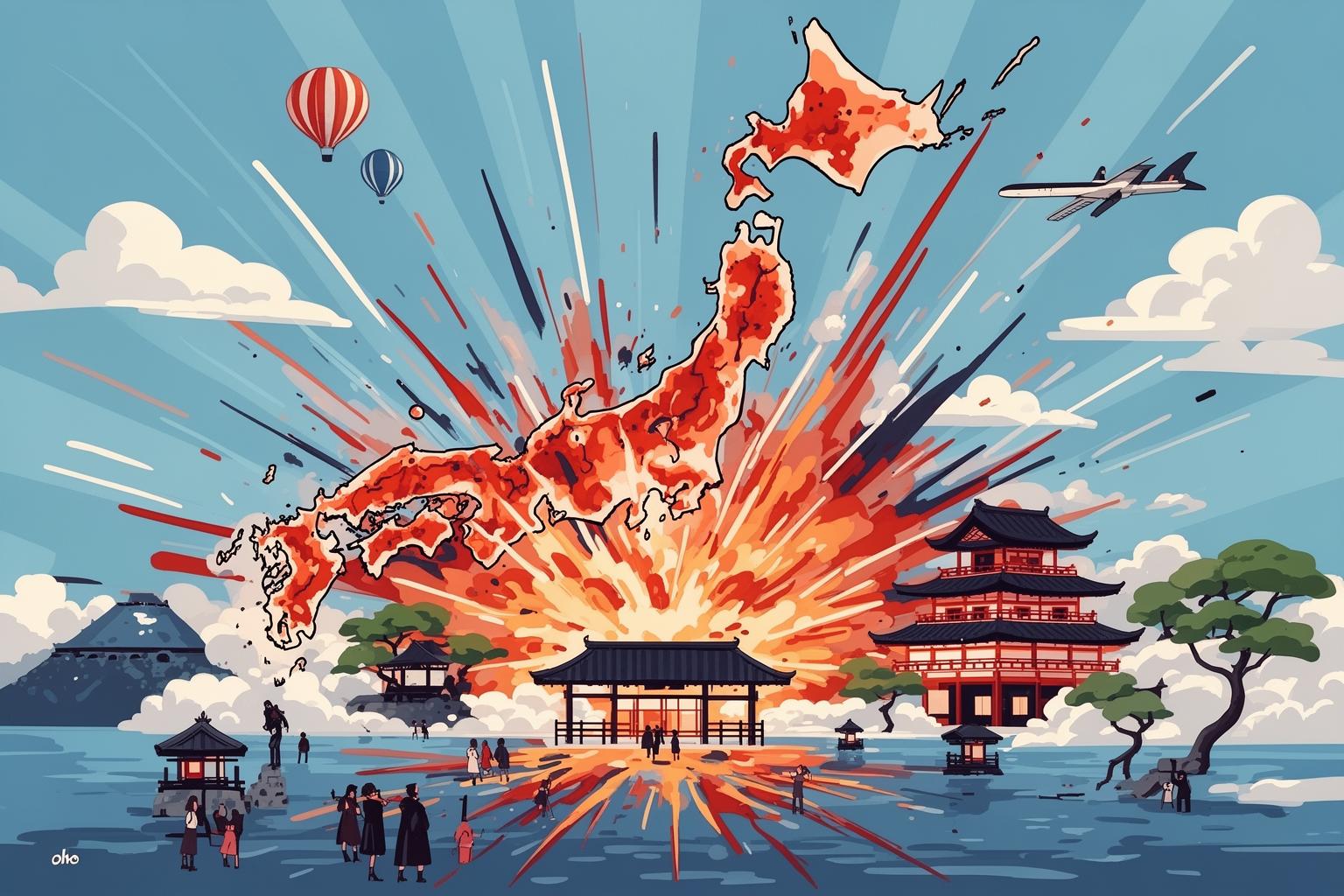
To understand the spiritual significance of Japanese fireworks, one must trace their origins. They did not emerge from a desire for entertainment; instead, they were born out of plague, famine, and the need to soothe the spirits of the deceased. The story begins, as is often the case in Japan, in the city of Edo, the vibrant metropolis we now know as Tokyo.
The Edo Period Origins
Gunpowder and the fundamental technology for fireworks were introduced to Japan through traders from China and Europe during the 16th and 17th centuries. For a long time, fireworks remained a novelty enjoyed exclusively by feudal lords and the aristocracy. However, in 1733, this changed dramatically. The previous year had seen the devastation of the Kyōhō famine, and a deadly cholera epidemic swept through Edo, taking an estimated 900,000 lives. The city was engulfed in collective mourning and fear.
In response, the eighth Tokugawa Shogun, Yoshimune, ordered the first major public fireworks display over the Sumida River. This event, called the Ryōgoku Kawabiraki (River Opening), was officially held to mark the start of the boating season. Yet, everyone was aware of its deeper meaning. It was a vast, city-wide ritual with two significant spiritual purposes. First, it served as tamashii no tomurai, a ceremony to grieve and comfort the souls of the many dead. Second, it acted as an akuryō-barai, a ritual to repel the evil spirits and diseases believed responsible for the suffering. The loud explosions and dazzling bursts of light were intended to purify the city and banish darkness.
From the beginning, public fireworks in Japan were closely tied to themes of life, death, and the spirit realm. They were a spectacle born from tragedy, an effort to discover beauty and hope amid profound loss. This event also sparked a famous tradition. Two rival pyrotechnic guilds, Tamaya and Kagiya, competed for the crowd’s applause from opposing riverbanks. Spectators would shout the name of the guild whose fireworks they favored, and the calls of “Tamayaaa!” and “Kagiyaaa!” echoing across the water became part of the experience—a tradition that still persists in some form today.
The Craftsmanship of Light: The Pyrotechnician as an Artisan
This solemn origin story profoundly influenced the craft’s evolution. Unlike in the West, where fireworks often aimed for the loudest bang or a chaotic shower of sparks, in Japan the emphasis shifted to aesthetics and perfection. This transformed the hanabi-shi (fireworks master) into a respected artisan, a shokunin comparable to a swordsmith or potter.
Japanese fireworks are globally celebrated for their unique qualities, which stem directly from this artistic devotion. The most coveted form is the perfectly spherical shell, which bursts into a flawless orb of light. Achieving this is extraordinarily challenging. Each tiny pellet of chemical compound, known as a hoshi (star), must be meticulously packed by hand within the shell to ensure a symmetrical explosion. Western shells tend to be cylindrical, resulting in more irregular, fountain-like effects.
Moreover, Japanese fireworks are renowned for their intricate designs and color changes. A single shell might bloom as a red peony, then shift to sparkling gold, and finally fade into a gentle blue. This level of precision requires knowledge passed down through generations from master to apprentice. The aim is not merely to create a fleeting display, but to paint a tableau in the sky—to fashion a single, perfect, ephemeral work of art. This dedication elevates the firework beyond a mere explosive to an object of profound cultural significance, deserving of the quiet reverence it commands.
The Seasonal Soul: Hanabi and the Japanese Summer
If the history of hanabi provides its spiritual foundation, its position in the calendar gives it emotional depth. In Japan, the four seasons are more than just shifts in weather; they form the essential rhythm of life, art, and culture. Fireworks, without a doubt, embody the very soul of summer.
Marking the Passage of Time
Japanese summer is an intense, almost overwhelming sensory experience. The stifling humidity, the loud chorus of cicadas (semi), the flavor of shaved ice (kakigōri), the sight of people clad in lightweight cotton yukata—these all define the season. A hanabi taikai is the ultimate climax of this experience, an event eagerly awaited all year. It signals the height of summer, a collective moment of pause before the gradual transition into autumn.
Here, a key Japanese aesthetic principle comes into focus: mono no aware. This phrase is difficult to translate directly but refers to a gentle, bittersweet awareness of the fleeting nature of things. It’s the feeling evoked by cherry blossoms in bloom, knowing they will disappear within a week. It celebrates the beauty in impermanence. A firework perfectly embodies mono no aware: it ascends, reaches an instant of stunning, flawless beauty, then vanishes forever, leaving only a faint wisp of smoke and an afterimage on your retina. That fleeting, almost painful beauty is what makes it so moving. It’s a dazzling, hundred-meter-wide metaphor for summer’s brevity, and indeed, for life itself. The beauty lies not just in the light, but in the fact that the light is already fading.
The Obon Connection: Fireworks for the Ancestors
This link to life and death becomes even clearer through the timing of many major fireworks festivals. Most occur in late July and August, overlapping with Obon, one of the year’s most significant spiritual observances. Obon is a Buddhist festival dedicated to honoring the spirits of ancestors, believed to return during this period to visit their living relatives.
Families come together, return to their hometowns, clean ancestral graves, and leave offerings of food and flowers. At Obon’s conclusion, rituals guide the spirits back to the afterlife, often involving fire. You might have seen pictures of lanterns floated down a river (tōrō nagashi) or the massive bonfires on Kyoto’s mountainsides during the Gozan no Okuribi festival. These are all types of okuribi, or “sending-off fires.”
This reveals another, deeper role of the hanabi taikai. The fireworks act as a grand, spectacular okuribi. Their light and sound serve to guide ancestral spirits safely back to the other side. This adds a profound layer of meaning to the event. The crowd is not merely watching a show for entertainment; they are, consciously or unknowingly, partaking in a nationwide ritual of remembrance and farewell. They create a beautiful display not only for themselves but for the souls of their loved ones. This transforms the riverbank into sacred ground and the night sky into a temporary bridge between the world of the living and the dead.
The Collective Gaze: A Shared, Silent Ritual
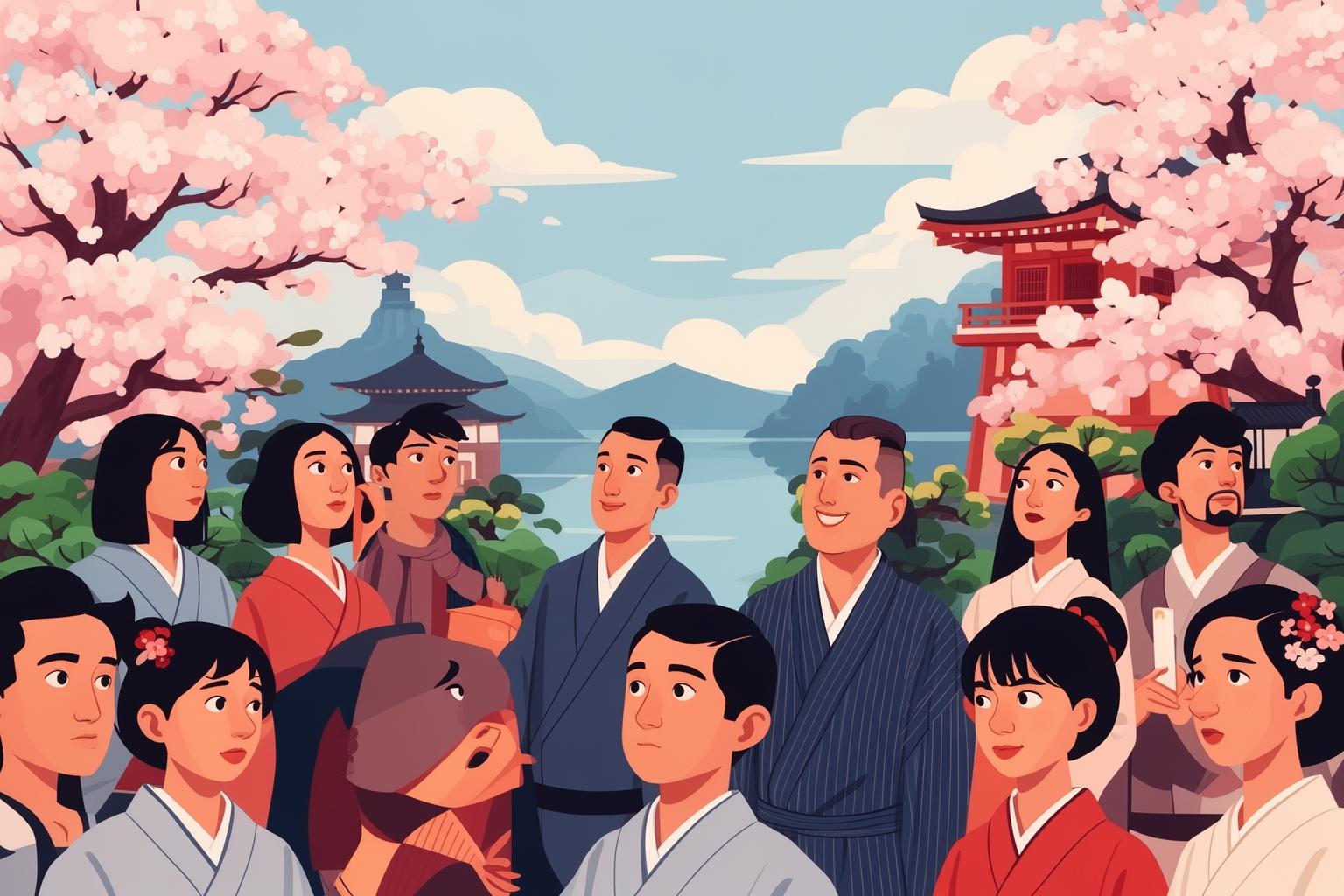
Perhaps the clearest indication of the spiritual essence of hanabi lies in the way people observe them. The etiquette and ambiance of a Japanese fireworks festival are shaped by an unspoken code that emphasizes a collective, respectful experience rather than individual celebration.
The Anatomy of Appreciation
Though securing a spot can be fiercely competitive, once the display starts, a unique calm envelops the vast crowds. Unlike Western events, where people might talk, laugh, and move about during the show, in Japan the focus is unwavering. Attendees sit on their blue tarps, often gathered quietly with family or friends, their faces turned toward the sky. This collective gaze is powerful, fostering a sense of unity as thousands share a singular, transcendent moment.
This shared silence is deeply meaningful. It enables each individual to have a private experience while simultaneously being part of a larger communal one. Interruptions are not random outbursts but rather patterned, collective responses. The soft “Ahhh…” at a firework’s bloom expresses shared awe, and the quiet “Kirei…” is a collective acknowledgment of beauty. It becomes a dialogue between the crowd and the sky, guided by the artistry of the hanabi-shi. It feels more like a congregation than a mere audience.
The Language of Light: Understanding the Pauses
The structure of a Japanese fireworks display is essential to this contemplative mood. It is not a nonstop, chaotic barrage but a carefully choreographed performance with a distinct rhythm and pace. Central to this is the concept of ma (間). Often translated as “negative space” or “pause,” ma is more than mere emptiness—it is an interval in time and space charged with energy and anticipation, the silence between notes that gives music its meaning.
A hanabi master excels in the art of ma. After launching a single, magnificent shell, they allow the darkness to linger. They extend the silence, building tension and anticipation among the spectators. This pause lets viewers absorb the beauty they have witnessed, let the afterimage fade, and prepare for the next explosion. It refreshes the palate. This deliberate timing transforms the display from a simple succession of bursts into a narrative arc featuring moments of tension, climax, and quiet reflection. The darkness is not a void but an essential part of the performance.
The Cry of “Tamaya!”: A Call to the Void
What about the traditional shouts of “Tamaya!”? Although the original rivalry has long ended (the Tamaya guild caused a major fire and was expelled from Edo), the custom of shouting the pyrotechnician’s name—or simply “Tamaya!”—endures. It is akin to calling out “Bravo!” at an opera, a knowledgeable sign of admiration for a skillfully executed shell.
Yet it carries something more primal. In those moments of shared silence following a stunning burst, a lone voice shouting into the darkness feels profoundly human. It is a personal reaction to an impersonal, cosmic-like event. It acknowledges the human craft behind the divine spectacle, bridging the divide between silent, passive observers and the grand, fleeting art above. This connection completes the bond between the earthbound crowd and the flowers of fire in the sky.
More Than a Firework: Symbolism in the Sky
Ultimately, the spiritual significance of hanabi stems from the symbolism woven into the fireworks themselves. The Japanese don’t simply perceive abstract bursts of color; they see culturally meaningful images and natural motifs painted across the night sky, each bearing its own history and significance.
Chrysanthemums and Willows: The Forms of Meaning
The names of various firework types are richly poetic and often inspired by the natural world, especially flowers. This is why they are called hanabi, or “fire flowers.”
The finest achievement of the craft is the kiku (chrysanthemum). The chrysanthemum holds great symbolism in Japan, representing the imperial family, longevity, and renewal. An ideal kiku firework features a perfectly spherical burst with delicate, orderly trails of light radiating outward like the petals of the flower. Many shells are crafted to leave a lasting, glowing center, forming the “pistil” of the flower.
Another popular type is the botan (peony), with thicker, more vividly colored petals of light. The peony symbolizes wealth, honor, and bravery. Then there is the yanagi (willow). Unlike others, this firework doesn’t explode outward but cascades downward, with shimmering trails of gold or silver that linger in the air, softly drifting like the branches of a weeping willow tree. The yanagi is perhaps the ultimate expression of mono no aware, its gentle, graceful descent evoking a poignant sadness.
By assigning these names and forms, the hanabi-shi elevates the fireworks. The display transforms into a kind of celestial ikebana, a flower arrangement in the sky. The audience isn’t simply witnessing explosions; they are watching chrysanthemums, peonies, and willows bloom and fade in the darkness, connecting this human-made spectacle to the venerated rhythms of the natural world.
A Moment of Impermanence, A Promise of Renewal
Taken as a whole, the hanabi taikai reveals itself as a rich tapestry of cultural, historical, and spiritual threads. It is a ritual that functions on many levels at once. It reenacts the original ceremony to mourn the dead and repel evil. It marks the seasons, compelling a shared reflection on the beauty of impermanence—the essence of mono no aware. It serves as a spiritual observance, a grand okuribi to guide ancestral spirits during Obon.
It also showcases the dedicated craft of shokunin, where mastery and the pursuit of perfection become an art form. Moreover, it is a deeply communal ceremony grounded in collective focus and the meaningful silence of ma. The life cycle of a single firework—the quiet ascent into darkness, its brilliant and flawless bloom, and its slow, elegant fade back into nothingness—is a powerful, recurring sermon on the nature of existence.
So the next time you see a Japanese firework silently blossom in the summer sky, remember that you are witnessing more than a chemical reaction. You are part of a ritual—a moment of shared meditation on life, death, and the beauty that exists precisely because it is fleeting. It’s not the end of a celebration; it’s the quiet, beautiful conclusion of a prayer, carried on the scent of smoke and the shared memory of a light that has already vanished.