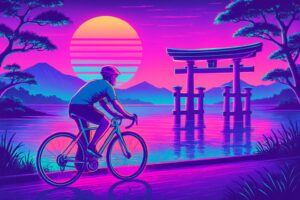
Hey everyone, Sofia here! So, picture this: you’re scrolling through your feed, and it’s all Japan. One second, it’s the sensory overload of Shibuya Crossing, a bajillion people moving in perfect, chaotic harmony. The next, it’s a lone monk sweeping leaves in a Kyoto temple garden, pure, distilled calm. It’s a whole vibe, but it’s also, like, mega confusing, right? How can a place be so incredibly extra and so profoundly simple at the same time? It’s a question that totally lived in my head rent-free. I’d see these images of hyper-detailed bento boxes, crazy Harajuku fashion, and then… a single, perfect piece of pottery in an otherwise empty room. What gives? My journey to understand this led me not to a crowded train or a bustling city center, but to the humble bicycle. Specifically, to the idea of minimalist cycling. It sounds simple, maybe even a little boring, but trust me, it’s the key. It’s how I finally got that “Oh, now I get it” moment. This isn’t just about a bike ride; it’s a rolling exploration into the Japanese soul, a way to understand why this fascinating country is the way it is. We’re about to peel back the layers of complexity by stripping everything down to the bare essentials: two wheels, a simple path, and an open mind. Let’s roll.
This approach is perfectly embodied by Japan’s iconic utility bicycle, the mamachari.
The ‘Why’ Behind the Wheels: Deconstructing Japanese Minimalism
Before we even consider hopping on a bike, we need to clear up one thing. Japanese minimalism isn’t what you might expect. It’s not the cold, sterile, all-white style featured in Scandinavian design magazines. And it’s definitely more than just decluttering your life because Marie Kondo advised you to. That’s merely the surface. The true essence is a philosophy so deeply embedded in Japanese culture that most people don’t consciously think about it; they simply live it. It’s a worldview shaped by ancient spiritual beliefs, geographical necessities, and centuries of history. Grasping this is essential to understanding the minimalist ride.
Beyond Marie Kondo: Historical Foundations
To truly comprehend it, we need to go back—far back. The roots of this mindset are a blend of spiritual ideals and practical, real-world limitations. It’s a philosophy not embraced because it was fashionable but forged through Japan’s unique history and geography.
The Influence of Zen Buddhism
First and foremost is Zen Buddhism. When it came from China centuries ago, it found fertile ground. Zen isn’t about elaborate rituals or scripture memorization. It emphasizes direct experience, mindfulness, and discovering enlightenment in the everyday. The core concept is to strip away the non-essential—the mental clutter and distracting desires—to perceive the true nature of reality. Consider a Zen rock garden, like the one at Ryoan-ji in Kyoto: just fifteen rocks and raked gravel. That’s it. Yet, in its simplicity, it’s profound. It urges you to slow down, observe carefully, and find meaning in emptiness. This principle of subtraction—finding more in less—radiated from monasteries into all areas of Japanese culture. It’s evident in the art of ikebana (flower arranging), where the space between flowers is as vital as the flowers themselves. It’s present in the tea ceremony, where every movement is intentional and free of flourish. This isn’t about plainness; it’s about potency. It’s a cultural operating system focused on clarity and focus, echoed in the steady, rhythmic spin of a bicycle pedal. The objective is to quiet both external noise and internal chatter.
The Edo Period Challenge: Scarcity as Strength
Let’s get practical. For over two centuries—from the 17th to the 19th century—Japan closed its borders during the Edo period. This isolation, combined with Japan’s mountainous terrain and limited arable land and resources, fostered a culture of extreme resourcefulness. You couldn’t simply order more from elsewhere. Waste was more than a bad habit; it was a threat to survival. This is where the concept of mottainai (もったいない) arises. It’s a deep regret over waste. You hear it everywhere in Japan; it’s what your grandmother might say if you leave a single grain of rice behind. It expresses something like “what a waste!” but carries a much deeper, almost spiritual significance. This mindset encouraged remarkable innovation in creating items that last and serve multiple functions. Homes were small and adaptable, with sliding paper screens (fusuma) to reconfigure rooms. Bedding was a futon that could be rolled and stored during the day, freeing the room for other uses. A single piece of cloth, the furoshiki, could wrap gifts, carry groceries, or serve as a handbag. This wasn’t a lifestyle choice but a necessity. This history instilled a preference for durability, functionality, and efficiency. It’s a philosophy that favors one well-crafted tool over many cheap, disposable ones. This is the DNA behind the minimalist cyclist’s gear—each item must justify its place.
Shintoism and the Reverence for Space (Ma)
Lastly, there’s Shinto, Japan’s indigenous religion. Shintoism is animistic, believing that gods or spirits (kami) inhabit natural objects—mountains, trees, waterfalls, even uniquely shaped rocks. This fosters a deep respect for nature and, crucially, for space itself. In Shinto, emptiness isn’t a void; it’s space filled with potential and energy. This is the idea of ma (間). Ma is the interval, the pause, the space between things that gives them form and meaning. You see it in traditional architecture, where the uncluttered tatami mat rooms offer calm. You hear it in traditional music, where the silences between notes express as much as the sounds. You see it in calligraphy, where the blank parts of the paper are essential to the artwork. Ma is the breath that animates the form. On a minimalist bike ride, you become keenly aware of ma: the open road ahead, the vast sky above, the fresh air filling your lungs. You’re not just passing through a landscape; you’re engaging with the meaningful space around you. The ride shifts from focusing on the destination to embracing the freedom and clarity that come from being a small, moving part within a vast, meaningful emptiness. It’s a deeply spiritual sensation, even for those who aren’t religious. It’s the feeling of finding your place in the world, unburdened by possessions.
Gearing Up (Or Down): The Philosophy of the Minimalist Kit
So, we’ve nailed down the philosophical foundation. Now, let’s shift focus to gear—or rather, the scarcity of it. In a world obsessed with constant upgrades, carbon-fiber everything, and countless tiny gadgets promising to make your ride 2% more efficient, the Japanese approach to cycling essentials feels refreshing. It’s a masterclass in intentionality. Every item, from the bike itself to the snack in your pocket, is selected with a purpose that transcends its basic function. It’s not about owning the best; it’s about having exactly what you need, and nothing extra. This is where minimalist philosophy becomes practical, authentic, and, honestly, quite stylish.
The Bike Itself: An Extension of the Self
Naturally, the bike is the heart of the experience. What’s intriguing in Japan is the diversity of what a “bike” can mean and how each type reflects a different aspect of minimalist values. It’s not a one-size-fits-all scenario. The choice of bike is a statement of intention, reflecting the rider’s personal philosophy and their relationship with their environment. It’s a tool, a work of art, and a companion all at once.
Function Over Flash: The Rise of the Mamachari
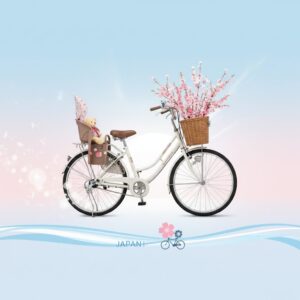
If you’ve been to Japan, you’ve seen them everywhere, quietly gliding along sidewalks and through narrow alleys. The mamachari (ママチャリ), or “mom’s chariot,” is the unsung hero of Japanese urban cycling. These bikes are heavy, steel-framed, single-speed (or sometimes three-speed, for those feeling fancy) workhorses, equipped with a front basket, rear luggage rack, and built-in kickstand. They may be objectively uncool—but they perfectly embody functional minimalism. A mamachari isn’t a status symbol. Nobody brags about their new mamachari. It’s simply a tool designed for practical tasks: getting to the station, carrying groceries, or ferrying kids to preschool—with zero fuss and maximum reliability. Built to endure rain, years of use, and easy repairs, these bikes elevate practicality to an art form. They reject the notion that daily tasks require specialized, expensive equipment. The mamachari teaches the core lesson of minimalist cycling: the best tool is the one that does the job without drawing attention to itself.
Craftsmanship and Longevity: The Keirin and Custom Frame Culture
At the other end of the spectrum lies the world of Keirin racing and bespoke bicycle frames. Keirin, a major track cycling sport in Japan, features professional riders revered like rock stars. Their bikes are elegant, minimalist steel frames with no brakes and fixed gears. Each component adheres to the exacting standards of the NJS (Nihon Jitensha Shinkōkai), the sport’s governing body. This dedication to quality has nurtured a culture of shokunin (職人)—master artisans devoted to perfecting their craft. Legendary frame builders handcraft steel frames that are considered functional masterpieces. Choosing a custom, hand-built frame is a minimalist act in itself—an embrace of individuality over mass production and disposable consumerism. It’s an investment in one perfect, tailor-made object that fits like a glove and, with care, lasts a lifetime. The philosophy is “buy once, buy for life.” It’s not about owning a shiny new bike every year but about forging a deep, lasting bond with a single exquisitely made partner on your journey.
Stripping It Down: Single-Speed and Fixed-Gear Culture
Between the utilitarian mamachari and the artisan Keirin bike lies the urban single-speed and fixed-gear scene, especially prevalent in cities like Tokyo and Osaka. To outsiders, riding a bike with one gear (often without brakes, relying on your legs to stop) in a hilly city might seem crazy. But it’s about the philosophy again. A single-speed bike is mechanically simple—fewer parts to maintain and fewer things to break. This simplicity is liberating. Even more, it demands a different style of riding. There’s no shifter to ease a climb; you must anticipate terrain changes, decide if you have momentum to power through, or stand and grind. It forges a direct, unmediated connection between rider, bike, and road. No technology buffers the experience—it’s just you and your effort. This mindfulness aligns closely with Zen philosophy. You can’t zone out; you must stay present. It’s a physical challenge that sharpens the mind, transforming a simple commute into a daily practice of focus and engagement.
What’s in the Bag? The Art of Essentialism
Once you’ve picked your bike, the next question is what to bring. A minimalist cyclist’s pack is a study in elegance. It’s a carefully curated collection of multifunctional, high-quality items—nothing superfluous. Packing becomes a meditation—a process of asking, “Do I really need this?” It’s about preparedness without excess, finding freedom in traveling light. Each item tells a subtle story about Japanese culture.
The Tenugui Towel: The Ultimate Multi-Tool
If you could pack only one thing, make it a tenugui (手ぬぐい). This simple, rectangular printed cotton cloth is the Swiss Army knife of Japanese textiles. It’s far more than a towel. Thanks to its thinness and unhemmed edges, it dries quickly—perfect for wiping sweat on hot days. But that’s just the start: soak it and tie it around your neck to stay cool; use it as a headband to keep hair away; make a bandage or sling; wrap your bento or souvenirs using the furoshiki technique; filter water debris in emergencies; or use it as a dust mask in tunnels. The patterns range from traditional ukiyo-e prints to modern graphics, making it a piece of portable art. The tenugui represents minimalist design at its peak: one simple, lightweight, beautiful object with seemingly limitless uses. It embodies the principle of maximizing function from minimal form.
Bento and Onigiri: Fueling the Ride, Mindfully
Nourishment is vital, but you won’t see many Japanese cyclists downing neon sports drinks or sugary gels. Their approach to nutrition is just as intentional. The typical fuel is a humble bento (弁当) box or a few onigiri (おにぎり). A bento is a single-serving, home-packed or takeout meal showcasing compact, balanced nutrition—not merely a sandwich in a box but a thoughtfully arranged combination of rice or noodles, protein, and assorted pickled or cooked vegetables, all presented beautifully. It’s a complete, satisfying meal in a tiny, reusable container. Simpler still, onigiri—rice balls wrapped in seaweed and filled with salty or sour ingredients like pickled plum (umeboshi) or salted salmon—are the original energy bars: portable, delicious, and made from wholesome ingredients. Eating is a different experience, too. It’s not about rapid refueling but taking a mindful pause—perhaps under a cherry tree or by a river, savoring the view. You unwrap your food, admire its appearance, and eat slowly. The break is part of the ride—a moment of gratitude, rest, and connection to your surroundings.
The Omamori Charm: The Intangible Essential
Here’s a fascinating detail: among the rigorously pared-down essentials, cyclists often carry an omamori (お守り)—a small, brocaded silk pouch from Shinto shrines or Buddhist temples containing prayers or sacred inscriptions. Each omamori serves a specific purpose—traffic safety, good health, success. Cyclists frequently tie one to their handlebars or saddlebag. From a purely practical standpoint, it’s dead weight—doing nothing physical. Yet culturally, it’s one of the most vital items to carry. It acknowledges that not everything is within our control. It symbolizes humility and respect for luck and fate. This spiritual essential highlights a key aspect of Japanese minimalism: it’s not a cold, heartless quest for efficiency but a process of clearing clutter to make space for what truly matters—sometimes intangible. Carrying an omamori brings peace, protection, and a sense of spiritual connection on your journey. It reminds us that the most important parts of a ride are often invisible and immeasurable.
The Ride as a Moving Meditation: Finding Zen on the Road

So you have your simple, perfect bike, and your bag contains only the essentials. You’re ready to ride. This is where the philosophy shifts from theory to practice. This is where you truly feel it. A minimalist bike ride in Japan isn’t about athletic achievement. It’s not about covering miles rapidly or setting personal records. It’s a form of moving meditation. It’s about using the simple, repetitive motion of pedaling to quiet the mind and heighten the senses. It’s about turning a physical activity into a spiritual practice, discovering a state of flow where the line between you, your bike, and the surrounding world begins to blur.
Scenery as Scenery, Not a Selfie Backdrop
One of the biggest mindset shifts a minimalist ride demands is in how you perceive the world around you. In today’s hyper-visual, social media-driven culture, we often reduce beautiful landscapes to mere backdrops. Our thoughts fixate on the photo, the post, the caption. The experience becomes secondary to documenting it. The minimalist ride reverses that narrative. It urges you to see the world not as something to be captured, but as something to be fully experienced with all your senses, in the present moment.
The Shimanami Kaido: A Journey, Not a Race
Consider the Shimanami Kaido as the perfect example. This 70-kilometer cycling route links Japan’s main island Honshu with Shikoku, crossing six smaller islands connected by stunning bridges. It’s consistently ranked among the world’s top cycling routes, and for good reason. But what sets it apart isn’t just the breathtaking views of the Seto Inland Sea. It’s the design of the route. A blue line runs along the road its entire length, so you literally cannot get lost. No GPS, no map—you simply ride. The route is mostly flat, with gentle climbs up to each bridge. It’s not meant to challenge you physically; it’s designed to delight you. The goal isn’t to finish quickly; it’s to savor the journey. You pass small fishing villages where time feels frozen. You ride past citrus groves, their fragrance lingering in the air. You can stop at a local shop for gelato made from island-grown lemons. You can pull over and watch boats drift on glittering water. The Shimanami Kaido teaches you to slow down. By removing the mental strain of navigation and intense effort, it frees your mind to simply observe, be present, and absorb the beauty around you. It’s an exercise in pure, unfiltered experience.
Embracing Imperfection: Wabi-Sabi on Two Wheels
Another key concept you’ll encounter is wabi-sabi (侘寂), a uniquely Japanese aesthetic and worldview focused on embracing transience and imperfection. It’s the belief that profound beauty lies in things that are imperfect, impermanent, and incomplete. It’s the charm of a cracked teacup, a mossy stone, or a rusted bike frame. It opposes the polished, flawless, mass-produced aesthetic of modern life. Cycling perfectly embodies wabi-sabi. No ride will be flawless—the weather might change and drench you, you might get a flat, or the pavement might be cracked and rough. A wabi-sabi mindset views these not as obstacles but as authentic textures of the experience. You learn to appreciate the beauty of a weathered wooden signpost or the patina on an old guardrail. You might come across a small unattended farm stand with a simple coin box—a touching testament to trust and community. These are details missed by a faster, goal-driven mindset. Wabi-sabi teaches you to find joy not despite imperfections, but because of them. It’s a freeing philosophy that lets you release control and accept the journey as it unfolds.
The Rhythm of the Pedals, The Stillness of the Mind
As you settle in, something remarkable happens. The constant mental chatter begins to fade. Worries about work, endless to-do lists, digital noise—they all grow quieter. The simple, physical rhythm of pedaling becomes a mantra, a focal point allowing your mind to reach a rare calm and clarity.
Achieving Mushin (No Mind)
In Japanese martial arts, there is the concept of mushin no shin (無心の心), often shortened to mushin, meaning “the mind without mind.” It describes a flow state where the body acts seamlessly without conscious thought. A swordsman in mushin doesn’t plan each move; he just moves. It’s complete unity of mind and body, effortless action. This is the ultimate aim of minimalist cycling. On a simple bike along a simple path, riding becomes second nature. You’re not thinking about gear shifts or suspension adjustments. You just pedal. Your breathing syncs with your leg rhythm. Freed from mental burdens, your mind becomes still. You cease to be a person riding a bike; you become the act of riding itself. The external world remains, but your relation to it changes. You notice subtle shifts in the wind, birdsong, the sun’s warmth on your skin—all without conscious thought. This is the Zen of cycling, a deeply meditative, restorative state that can leave you clearer and more refreshed than a week of vacation.
The Social Contract of the Road: Harmony in Motion
Your inner calm reflects the external social environment. Cycling in Japan is remarkably orderly and peaceful, thanks to two cultural principles: wa (和), meaning harmony and social cohesion, and meiwaku (迷惑), the idea of avoiding trouble or inconvenience to others. These principles shape all social interactions and are evident on the bike path. Cyclists generally keep left. Bells are used sparingly, as polite “excuse me”s rather than aggressive signals. They give wide space to pedestrians. There’s an unspoken agreement that everyone shares this space, and everyone is responsible for keeping it peaceful and safe. This creates a ride free from the stress and conflict common in other countries’ cycling. You’re not fighting for space; you’re flowing with others. This social minimalism—moving through the world without causing disruptions—is as important as the physical minimalism of your gear. The ride becomes a practice in being a respectful community member, a quiet dance of mutual respect as beautiful as the scenery itself.
Beyond the Bike: How Minimalist Cycling Reflects Modern Japan
This entire philosophy—this immersive exploration of simplicity, mindfulness, and intentionality on two wheels—is far more than just a quaint pastime. It’s not some relic from the past. Rather, it stands as a powerful and deeply relevant response to the pressures of modern Japanese life. It’s a quiet act of rebellion, a means of finding balance amid extremes. Understanding why people choose this path reveals much about the contemporary Japanese psyche and the tensions that shape it. It serves as the final piece of the puzzle, linking a simple bike ride to the larger questions about life in Japan today.
An Antidote to Hyper-Convenience
Japan is undeniably one of the most convenient places on the planet. Vending machines on every corner dispense everything from hot coffee to cold beer. The train system is a marvel of punctuality. Convenience stores, or konbini, operate 24/7, offering tasty food, bill payment services, and clean restrooms. Daily life here runs with extraordinary ease and efficiency. Yet this hyper-convenience has its downsides. It can turn you into a passive consumer of your own life. Everything is done for you, handed to you, simplified for you. Minimalist cycling is a deliberate choice to resist this trend.
Pushing Back Against the Vending Machine Nation
Opting to ride a bike—especially a simple one—is choosing intentional inefficiency. It takes longer. It demands physical effort. You’re vulnerable to the elements. You must carry your own food and water rather than buying them from the nearest machine. Why would anyone opt for this? Because it’s empowering. It’s a way to reclaim agency. In a world engineered to be frictionless, it reintroduces some much-needed friction. It declares a desire to engage with the world directly, rather than through the veneer of convenience. The satisfaction of arriving under your own power, feeling muscles burn and wind on your face, is something no convenience can replicate. It’s a way to feel alive and connected to your body and surroundings in ways modern life often discourages. Each day, it’s a small choice favoring the real over the easy.
The ‘Disconnect to Reconnect’ Phenomenon
Life in Japan can be socially intense, laden with complex etiquette, strong pressures to fit in, and long working hours. The digital realm adds a constant layer of connection and expectation. In such an environment, true solitude is hard to come by. A solo bike ride offers one of the few socially acceptable escapes to disconnect completely. On your bike, you are unreachable. Emails go unanswered. Conversations are unnecessary. It becomes a protected bubble of personal time and space. This act of severing ties with social and digital demands allows for deeper self-reconnection. It’s a moment to process thoughts, let the mind wander, or simply rest. A mental reset button. For many, a weekend ride is not merely exercise; it’s therapy—a way to shed the week’s accumulated stress and restore equilibrium. It functions as a vital pressure relief valve in a high-strain society.
The Aesthetic of Simplicity in a World of Kawaii Overload
Here we return to the original paradox. The culture that gave rise to the maximalist, colorful, anything-goes explosion of kawaii culture and Harajuku street style also champions the stark, unadorned simplicity of Muji. How do these two extremes coexist? Because they represent different responses to the same underlying societal pressures. They are two distinct escapes from the rigidity and conformity typical of Japanese society.
From Harajuku to Muji: The Duality of Japanese Aesthetics
Consider this: Japanese society highly values group harmony and rule-following, which can feel restrictive. One way to cope is by crafting a personal world of fantasy, color, and expressive decoration—the kawaii realm. It’s an escape into a joyful, vibrant, highly individualized aesthetic standing in sharp contrast to a uniform, rule-bound daily life. The other path is the opposite: a retreat into emptiness, calm, and radical simplicity. This is the domain of Muji, Zen gardens, and minimalist cycling. It’s about finding freedom through subtraction—creating uncluttered, serene mental and physical space. These are two sides of the same coin, a yin and yang of aesthetic expression. The minimalist cyclist simply chooses subtraction as the way to peace and personal expression. They are not turning away from color or fun; they are seeking a different kind of beauty—one that is quiet, understated, and profoundly personal.
A Lifestyle Choice, Not Just a Hobby
Ultimately, this leads to the most crucial point. The Zen of minimalist cycling is about far more than a few hours of weekend activity. It embodies a broader life philosophy. The person who delights in a simple, mindful bike ride is often the same one who appreciates a well-crafted cup of tea, a perfectly organized, uncluttered home, and a meal made from a few high-quality ingredients. These are individuals who consciously prioritize experiences over possessions, quality over quantity, and mindfulness over distraction. For them, the bike is not just transport; it is a tool for living a particular kind of life—a vehicle for a philosophy that discovers profound beauty and deep fulfillment in being present. And that, truly, is a lesson that lasts well beyond the ride. It’s a way of moving through the world, one thoughtful, deliberate pedal stroke at a time.