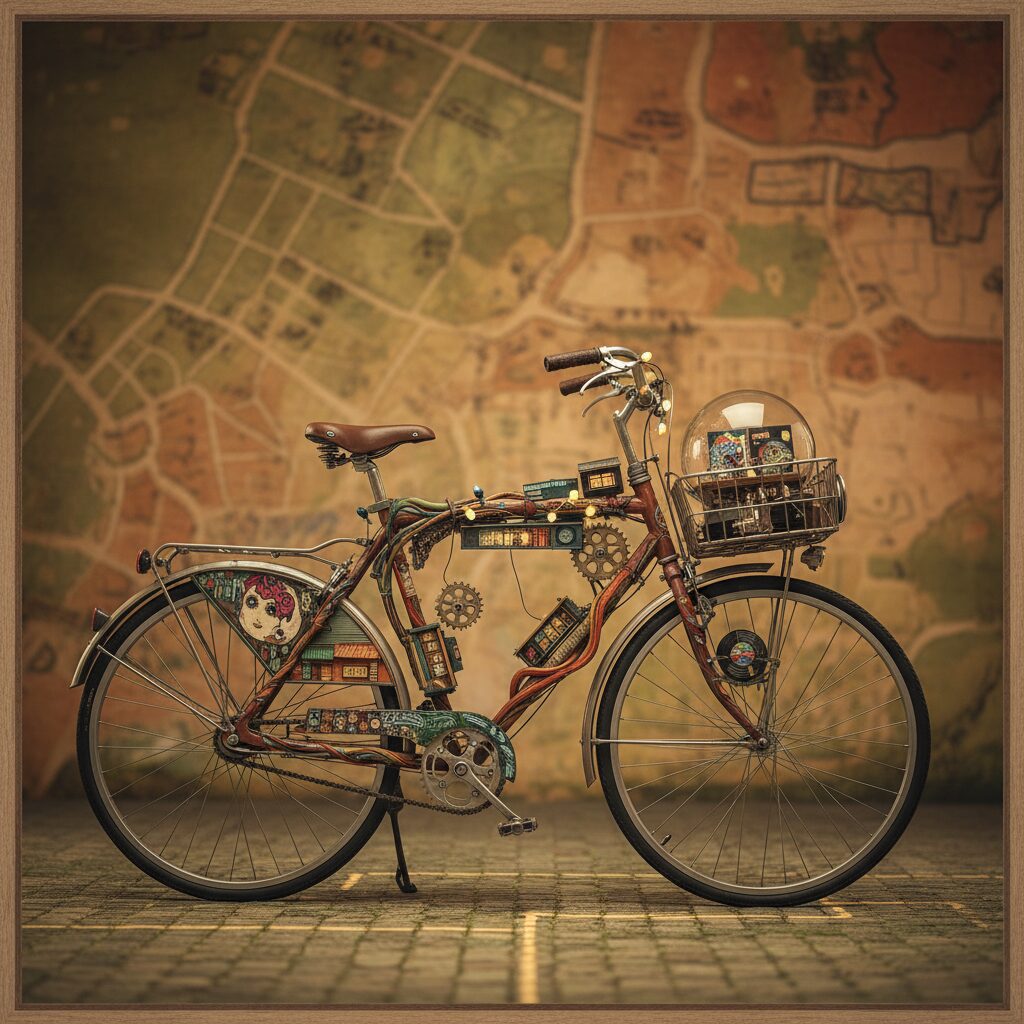
Yo, let’s get one thing straight. The Tokyo you see plastered all over your feed—the one with the Shibuya Scramble turning human movement into a hypnotic light show, the Shinjuku skyscrapers piercing the clouds like a sci-fi dream—that’s just the highlight reel. It’s the high-octane, hyper-efficient, caffeine-fueled version of the city. It’s epic, no cap. But it’s also a performance. It’s Tokyo on its A-game, optimized for a global audience. But what about when the city clocks out? When it loosens its tie and trades the bullet train for a beat-up bicycle? What’s the real, unfiltered vibe? You might think you’ve seen it all after a week of temple-hopping and robot cafes, but if you’ve never gotten deliberately lost in the tangled veins of Shimokitazawa, you’ve missed the city’s actual pulse. This isn’t about chasing the next big tourist spot. This is for the return visitor, the one who’s asking, “Okay, but what’s really going on here?” Shimokitazawa, or ‘Shimokita’ as the locals call it, is the answer. It’s Tokyo’s designated chill zone, a sprawling, chaotic hub of vintage threads, indie rock, and a pace of life so laid-back it feels like a different dimension. And the key to unlocking this dimension? It’s not a train pass. It’s a set of two wheels. The humble bicycle is the official vehicle of this counter-culture haven, and understanding why tells you everything you need to know about the deeper currents of Japanese youth culture and the city’s ongoing battle for its own soul.
To truly ride like a local in Shimokitazawa, you’ll want to master the unspoken rules of the ‘mamachari’.
The Birth of the Unplanned Cool: How Shimokita Dodged the Matrix
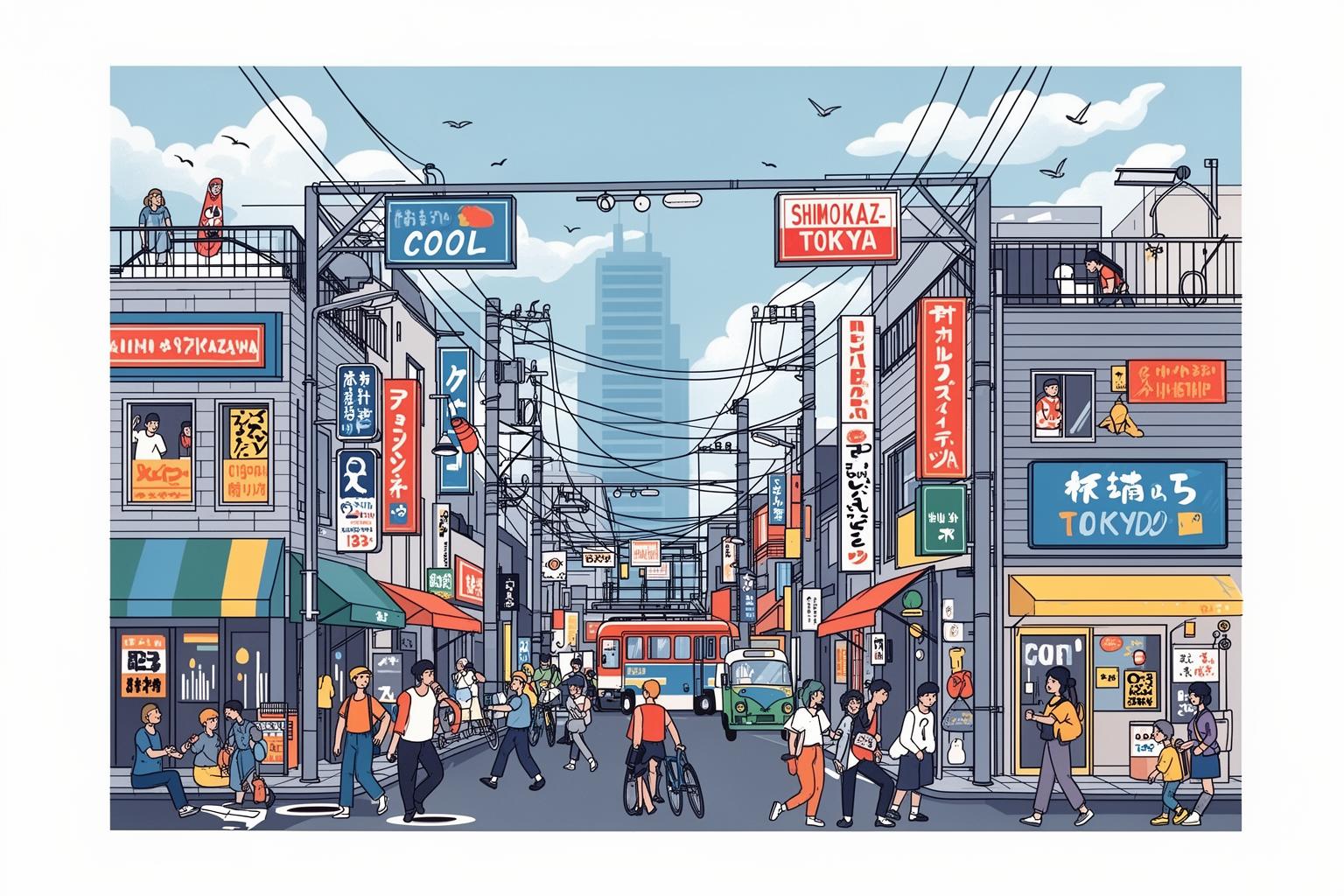
To truly understand Shimokita, you need to recognize that its coolness doesn’t come from clever design; rather, it stems from the absence of one. While other major Tokyo hubs like Shibuya and Shinjuku were carefully planned and shaped by large corporations and government urban projects, Shimokitazawa simply… emerged. It grew naturally, like a resilient weed pushing through the concrete of Tokyo’s ultra-modern grid. This messy, accidental growth forms the foundation of its character and is why it feels so uniquely different from the rest of the city. It stands as a living museum of an alternative Tokyo path, one guided by people and necessity instead of corporate master plans.
A Tale of Two Train Lines and Lots of Mud
Let’s go back to the post-World War II period. Tokyo was a city clawing its way out of the ruins. Reconstruction was rapid, intense, and largely driven by Japan’s powerful private railway companies. These companies weren’t just transportation providers; they were empire builders. Firms like Tokyu and Seibu extended their lines from the city center and alongside the tracks, constructed department stores, housing complexes, and entire lifestyles. They created destinations. Take Shibuya, for instance — a masterpiece of Tokyu Corporation’s urban vision. It’s a carefully designed ecosystem that moves people seamlessly from train to store to office and back again.
Shimokitazawa tells a very different story. It wasn’t a destination; it was a junction—specifically, a muddy, undeveloped plot where two independent private lines, Odakyu and Keio, happened to intersect. There was no overarching corporate vision here. It was a functional transfer point and a geographical coincidence. In the mid-20th century, it was mostly farmland and open fields. Without a dominant corporate force, no one bothered to level the land or impose a tidy, orderly grid. The streets followed old farming paths, winding and twisting without regard for modern traffic logic. This initial neglect, this ‘oversight’ amid Tokyo’s grand redevelopment, became the key factor in shaping the Shimokita we see today. Its maze-like streets aren’t a charming design choice; they are a historical artifact of being overlooked. And in that neglected space, something unique was allowed to thrive.
The Economics of a Creative Rebellion
Because Shimokitazawa lacked the prestige and infrastructure of its more polished neighbors, land was affordable. And where cheap rent exists in a major city, two groups invariably gather: students and artists. This is an urban constant, from Greenwich Village in New York to Montmartre in Paris. Shimokita attracted students from nearby universities like Meiji and the University of Tokyo’s Komaba campus. Along with them came aspiring musicians with battered guitars, actors rehearsing lines in tiny six-tatami-mat rooms, and painters seeking inexpensive studio space. This influx of creative, ambitious, and cash-strapped young people generated a distinctive economic ecosystem born not of luxury but of necessity.
This is the essence of Shimokita’s DNA. The thrift stores didn’t open because vintage suddenly became trendy; they opened because students and artists simply couldn’t afford new clothes. The cozy, cramped izakayas and cheap curry shops flourished because their patrons needed to eat on a tight budget. The legendary live music venues, or ‘live houses,’ weren’t state-of-the-art concert halls; often, they were dingy basements with sticky floors — the only affordable places for new bands to perform. It was a self-sustaining cycle. A musician would finish their part-time job, purchase a 500-yen outfit from a thrift store, eat a cheap bowl of ramen, and then play a show for an audience of fellow artists and students living the same reality. This wasn’t a lifestyle choice; it was just life. The ‘indie atmosphere’ wasn’t a deliberate aesthetic; it was the raw reality of economic hardship. This grassroots, user-generated culture is what makes Shimokita authentic. It wasn’t built for tourists or consumers; it was built by and for a community that needed a place on the margins of Tokyo’s shiny, expensive mainstream.
More Than a Commute: Decoding the Shimokita Bicycle Vibe
If you spend more than ten minutes in Shimokita, the sheer number of bicycles immediately stands out. They’re everywhere—leaning against graffiti-covered walls, clustered in huge groups outside the station, and gliding silently through the narrowest alleyways. Across most of Tokyo, bicycles serve as practical tools—methods to get from your home to the nearest train station, the classic ‘last mile’ solution. But in Shimokita, a bike is more than that. It’s a declaration. It acts as the unofficial uniform of the neighborhood’s spirit. It symbolizes a conscious choice to operate on a different wavelength, to reject the city’s obsession with speed and efficiency in favor of something more personal and human-scaled. Here, cycling culture is not merely about transit; it’s a fundamental part of the neighborhood’s identity and a tangible expression of its countercultural soul.
The ‘Chari’ as Your Main Character Arc
First, let’s talk about the typical Japanese bicycle, the mamachari—literally ‘mom’s chariot.’ These sturdy, utilitarian bikes come with a basket upfront and a rack at the back, designed for grocery trips and ferrying kids to school. They form the backbone of suburban Japanese life, epitomizing practical domesticity. They are, frankly, uncool. What you find in Shimokita is the evolution, or more accurately, the rebellion against the mamachari. Here, the bicycle—or chari in slang—becomes an extension of one’s personality. You’ll spot vintage Fuji road bikes from the ‘80s, sleek custom fixed-gear bikes (‘fixies’) with no brakes, retro cruisers with wide handlebars, and even wildly painted, tricked-out mamacharis. The bike is more than a transport method; it’s a critical accessory, as essential as a thrifted jacket or a rare pair of sneakers.
Riding a bike through Shimokita gives you what the youth call ‘main character energy.’ You’re no longer a passive passenger shuffled through the city’s veins by the train system. Instead, you actively navigate your surroundings, making choices at every turn. Do you take the main street or slip into that narrow alley that might be a shortcut? Do you stop at that new coffee stand you just spotted or keep riding? Cycling here encourages a slower, more attentive way of experiencing the neighborhood. You catch the small details invisible from a train window or car: the intricate sticker art on a lamppost, posters advertising a local theater play, the sound of a guitar drifting from an open window. You become a part of the street-level tapestry—an actor on stage rather than a mere spectator. In a city like Tokyo, this slower pace is a radical act, and the bicycle is the tool that makes it possible. It’s a deliberate disentanglement from the relentless rush of the metropolis.
A Rebellion on Wheels Against Tokyo’s Clockwork Precision
Tokyo’s entire social and economic life revolves around the train. The train schedule is revered, and the movement of millions daily through its arteries is a marvel of synchronized human flow. Punctuality is more than a virtue; it’s a moral imperative. This system is astonishingly efficient, yet it enforces a rigid rhythm on life. You live by the timetable, walk at the prescribed pace, and stand exactly where instructed on the platform. It’s a life of controlled, predictable motion.
The Shimokita cyclist quietly rebels against this. By choosing a bike, they claim autonomy. They break free from the tyranny of schedules and are not bound by the last train. This freedom is heightened by Shimokita’s unique layout. As mentioned, the streets are a tangled, narrow maze—a nightmare for cars but a paradise for bicycles. It’s a network of endless possibilities, shortcuts, and secret paths. The neighborhood’s infrastructure naturally favors bicycles over cars, discouraging speed and bulk, while rendering train routes irrelevant once inside Shimokita’s heart.
This isn’t just about convenience; it’s a philosophical choice. Opting for the bike is a vote for different values: spontaneity over schedules, exploration over efficiency, individual agency over collective order. It’s a way of saying, “I will move through this city on my own terms, at my own pace.” Amid the hyper-organized fabric of Japanese society, this small act of choosing a bicycle becomes a subtle yet powerful statement of independence.
The Gospel of Second-Hand: Why Old Clothes Are the New Gold
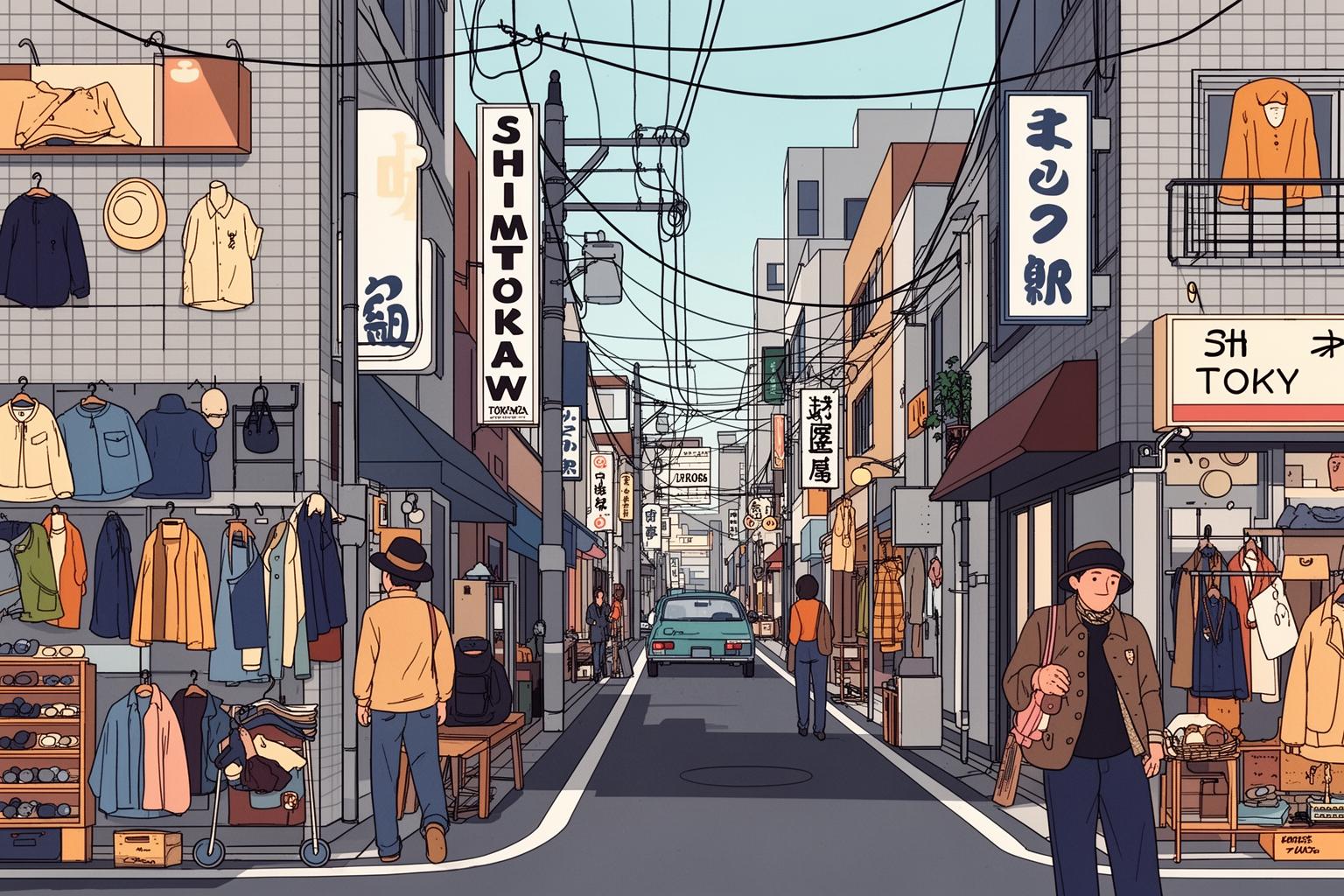
Stroll down any street in Shimokitazawa, and you’ll encounter an overwhelming abundance of second-hand clothing stores. These shops are the heart of the neighborhood’s economy and its distinctive style. From small, carefully curated boutiques focusing on 1960s European dresses to large warehouse-style stores where clothes are sold by the kilogram, thrifting dominates the local market. For visitors, especially those from countries dominated by fast fashion, the intense passion for used clothing can be puzzling. Is it simply because it’s inexpensive? Or is it a hipster trend? The truth is far more nuanced. Shimokita’s fascination with vintage and second-hand garments represents a complex cultural phenomenon that rejects mass-produced uniformity, honors history and craftsmanship, and illustrates how subcultures develop and sustain themselves.
It’s Not About Being Broke, It’s About Being Woke
Let’s address the most common misconception immediately: Shimokita’s thrift culture isn’t mainly driven by financial hardship. Japan is home to brands like Uniqlo, GU, and Muji—offering stylish, high-quality, and remarkably affordable new clothing. Nobody has to shop second-hand out of sheer economic need. Thus, choosing to do so is a deliberate statement. It’s a conscious decision to opt out of the mainstream fashion cycle. In a society that traditionally values group harmony and conformity—seen in everything from school uniforms to the unwritten dress code of ‘salaryman’ office workers—crafting a unique personal style from discarded clothes of past decades becomes a bold form of self-expression.
Every vintage piece is inherently unique. It carries history and a story. This resonates with a subtle Japanese aesthetic sense, similar to wabi-sabi, which finds beauty in imperfection, transience, and the signs of age. A denim jacket from the 1970s, perfectly faded and worn to a soft finish, holds a character and soul that a brand-new, mass-produced jacket cannot match. It embodies a rejection of disposability. In a fast fashion world where garments are worn briefly then discarded, vintage clothing stands for durability, quality, and timelessness. While it’s certainly a sustainable choice, it’s primarily an aesthetic and philosophical one. You aren’t just purchasing clothing; you’re curating your identity from a rich visual archive of the past.
Kodawari in the Wild: The Art of the Treasure Hunt
To grasp the magic of Shimokita’s thrift scene, you must understand kodawari. This Japanese term has no exact English equivalent, but it essentially denotes a deep, passionate, and almost obsessive dedication to a craft, detail, or specialized area. The owners of Shimokita’s top vintage stores embody kodawari. They are more than just resellers; they act as archivists, historians, and curators. Many make frequent trips to the United States and Europe, meticulously hand-selecting every item they sell. They seek specific brands, eras, and cuts.
This transforms shopping from a mundane task into an exhilarating treasure hunt. Visitors don’t come looking for a particular item, like “a blue button-down shirt.” They come to explore. You might enter a store specializing in 90s American college sweatshirts, where the owner can share the history behind the university logo. Another shop might be a sanctuary for 80s British punk rock, featuring perfectly distressed leather jackets and rare band tees. This degree of specialization creates a vibrant, diverse shopping experience. Each shop is a microcosm with its own distinctive perspective. The joy lies in rummaging through the racks and the thrill of finding that one perfect, unexpected piece that feels like it was meant just for you. This contrasts sharply with the algorithm-driven, personalized online shopping experience. It’s analog, tactile, and rich with serendipity. It demands effort, knowledge, and a bit of luck, which makes the discovery all the more fulfilling.
The Ecosystem of Style
These thrift stores aren’t isolated businesses; they form the cornerstone of a complex, self-sustaining cultural ecosystem. They supply the wardrobe for the neighborhood’s entire creative community. Consider this: a young musician moves to Shimokita attracted by affordable rent. They need a ‘look’ that reflects their band’s sound but don’t have much money. So, they visit the thrift stores and assemble an identity from vintage Levi’s, faded tour shirts, and worn Dr. Martens. After performing at a local venue like Shelter or Three, their distinctive style catches the eye of a photographer for an indie fashion magazine like FRUiTS or TUNE. That photographer shoots them for a street style spread. Once published, the photo inspires others to come to Shimokita to replicate the look, driving more customers back to the thrift stores. It’s a perfect, self-sustaining cycle. The clothes fuel the art, and the art fuels the fashion. This intricate network is what makes the culture here so resilient and authentic. It’s a closed system where every element—the music, fashion, theater, and cafes—supports and enriches the others. These thrift stores don’t just sell clothing; they provide the raw materials for identity creation and power the engine of the entire subculture.
The Redevelopment Question: Can You Manufacture Authenticity?
For decades, Shimokitazawa existed in a state of beautifully preserved chaos. Its charm stemmed from its grittiness, inconvenient layout, and organic, grassroots culture. But nothing lasts forever, especially not in a city as dynamic as Tokyo. In recent years, Shimokita has undergone a massive, transformative redevelopment centered on the ambitious project of sinking the Odakyu train line underground. This engineering feat solved the notorious fumikiri (railroad crossing) problem, which used to paralyze the neighborhood for long periods, but it also left a large, open-air scar through the community’s heart. What has been built on that scar has sparked a fierce debate about Shimokita’s future and poses a universal question: Can you bottle, brand, and sell a vibe? Can a corporation manufacture authenticity?
Paving Paradise: The Undergrounding of the Odakyu Line
For a long time, the railroad crossings were a defining feature of the Shimokita experience. The constant clanging of warning bells, the lowering gates, and the resulting halt of all pedestrian and vehicle traffic were, objectively, a major inconvenience. Yet they imposed a unique rhythm on the neighborhood, creating forced pauses in your day—moments when you had no choice but to stop and look around, watch the train pass, and see the faces of those waiting on the other side. It was a shared, communal nuisance that everyone understood. When the tracks were finally moved underground in 2013 and the following years, it was celebrated as a modern engineering triumph. But it also erased a fundamental part of the neighborhood’s character. More importantly, it created a large, valuable strip of vacant land—a blank canvas for the landowner, Odakyu Electric Railway Corporation, now free to develop.
Mikan, Reloaded, and the Rise of the ‘Clean’ Shimokita
The redevelopment resulted in sleek, modern complexes like Mikan Shimokita, Reload, and Bonus Track. These are not the ramshackle, slightly grimy buildings of the old Shimokita. Instead, they feature architectural sophistication, clean lines, artisanal coffee shops, trendy restaurants, and boutique stores. On the surface, they appear flawless. They incorporate elements of the ‘indie’ aesthetic—exposed concrete, minimalist design, abundant greenery, and spaces for pop-up shops and community events. Reload, for example, consists of individual, separated storefronts linked by open-air walkways, mimicking the feel of wandering through a small village. Mikan is a sleek, multi-level facility built directly beneath the elevated Keio line tracks, packed with fashionable eateries and co-working spaces. Bonus Track offers a charm reminiscent of community parks. By every objective measure, these are pleasant, well-designed spaces.
But for those familiar with the old Shimokita, something feels… off. The chaos has been organized. The grit power-washed away. Spontaneous energy replaced by carefully curated programming. The new developments feel less like a neighborhood and more like a theme park version of one—it’s ‘Indie Culture: The Experience.’ The shops are beautiful, but rents are high, meaning tenants are well-funded startups and established brands rather than struggling artists. It’s a sanitized version of the culture it tries to replicate. The aesthetic of rebellion and non-conformity has been co-opted and sold back as a premium lifestyle product.
The Battle for Shimokita’s Soul: A Vibe on Life Support?
So, the big question: Did this redevelopment kill Shimokita? The answer is a nuanced ‘no, but…’. The old Shimokita still exists. You just have to venture a bit further from the station, slip into the smaller side streets untouched by redevelopment. The cramped live houses, dusty record shops, and eccentric vintage stores run by quirky old men remain. But these are now islands, surrounded by vast new, polished, and undeniably more commercialized spaces. There is a palpable tension between old and new. You might see kids decked out in meticulously curated vintage outfits sipping 800-yen craft coffees in a minimalist café, just steps away from a dive bar unchanged since the 1980s. The two worlds coexist, for now.
The real risk is a slow replacement. As property values rise, aging shop owners may find it more lucrative to sell their land to developers than to pass their businesses to heirs. The cheap apartments that once housed generations of artists are being demolished and replaced with expensive, modern units. The economic conditions that allowed Shimokita’s unique culture to flourish are being systematically eroded.
Yet, hope remains. Tokyo is a city of constant destruction and rebirth. Shimokita has always been a youth haven, and today’s generation is not a passive consumer. They actively remix new and old, creating their own culture amid this changing landscape. They might start an evening in a trendy new spot at Reload and end it in the mosh pit of a grimy live house. Shimokita’s soul was never in its buildings but in the spirit of its people—a spirit of independence, creativity, and community outside the mainstream—that is resilient. The neighborhood’s future remains unwritten. It may have lost some of its chaotic innocence but has gained a complex new identity as a living laboratory in the ongoing struggle between subculture and commerce. Even in its polished form, it remains one of the most fascinating places to watch Tokyo’s future unfold.