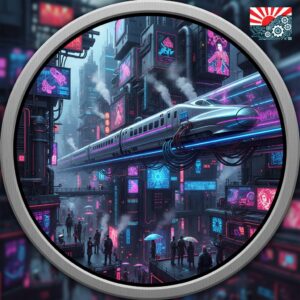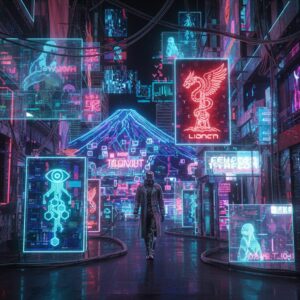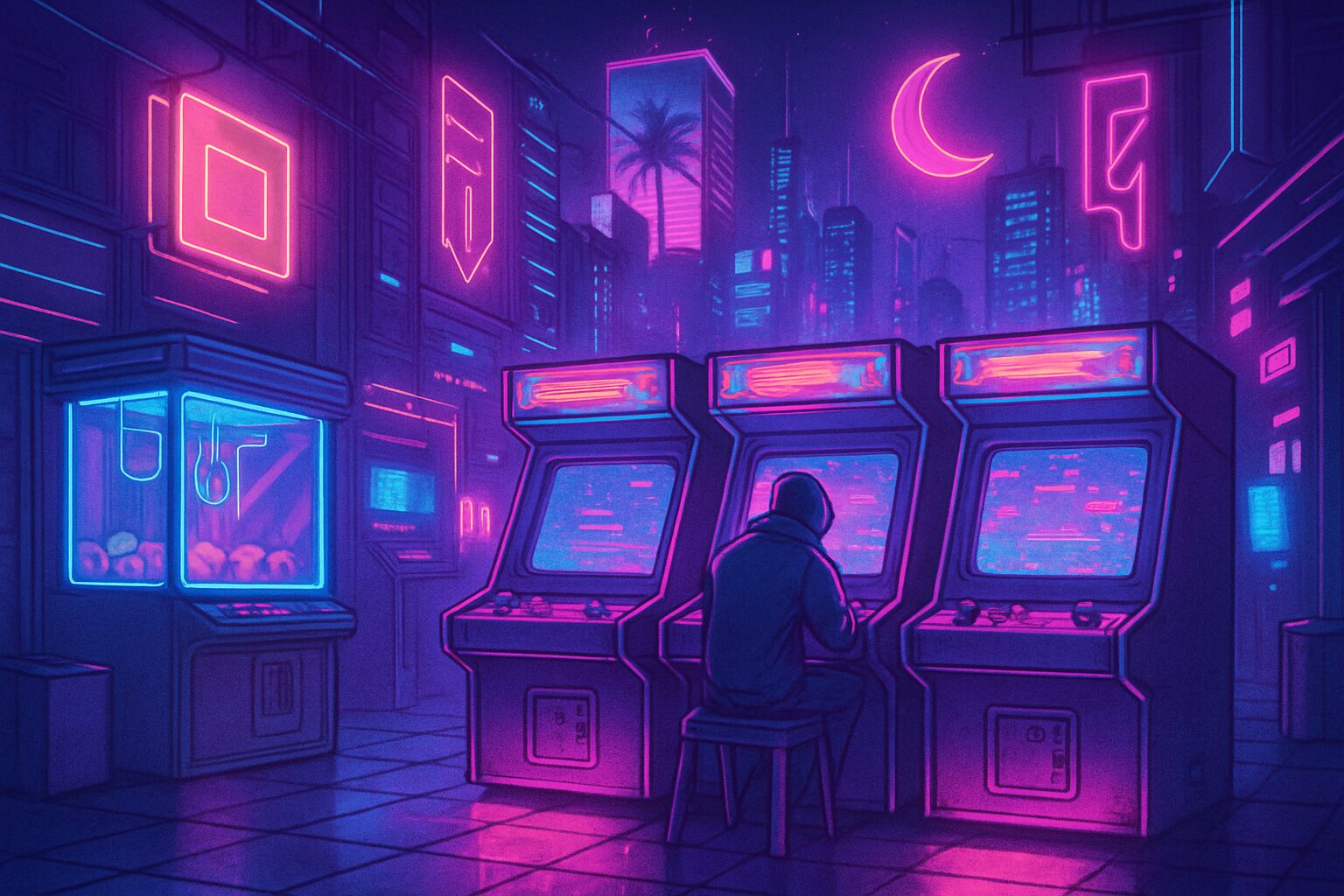
Step out of the orderly calm of a Tokyo street and push through a set of sliding glass doors. The world you enter is not merely a room with games; it is an assault on the senses, a cathedral of controlled chaos, and a living, breathing artifact of modern Japanese culture. This is the Japanese game arcade, or ge-sen (game center), a place where the glow of a thousand screens carves worlds out of the darkness and the cacophony of digital sound effects creates a symphony unlike any other. For decades, these spaces have served as more than just entertainment venues. They are social hubs, training grounds for digital athletes, and accidental archives of technological dreams. They are, in essence, cyberpunk sanctuaries, tangible manifestations of a future imagined in the 1980s, still humming with electric life in the present. Here, under the perpetual twilight of the neon glow, you don’t just play games; you step into a different current of Japanese life, one that flows faster, louder, and brighter than the world outside.
To understand the gravity and cultural significance of these places, one must experience them firsthand. They are scattered across every major city, beacons of light in sprawling urban landscapes. While Akihabara is the globally recognized mecca, these neon-drenched halls of play are a fundamental part of the urban fabric everywhere from Osaka’s Den Den Town to the quiet neighborhood shotengai arcades. Let us anchor our journey in the heart of it all, a representative nexus of this vibrant culture.
For a deeper dive into another iconic cyberpunk landmark, explore the retro-futuristic world of Nakano Broadway.
The Aura of the Arcade: A Symphony of Light and Sound
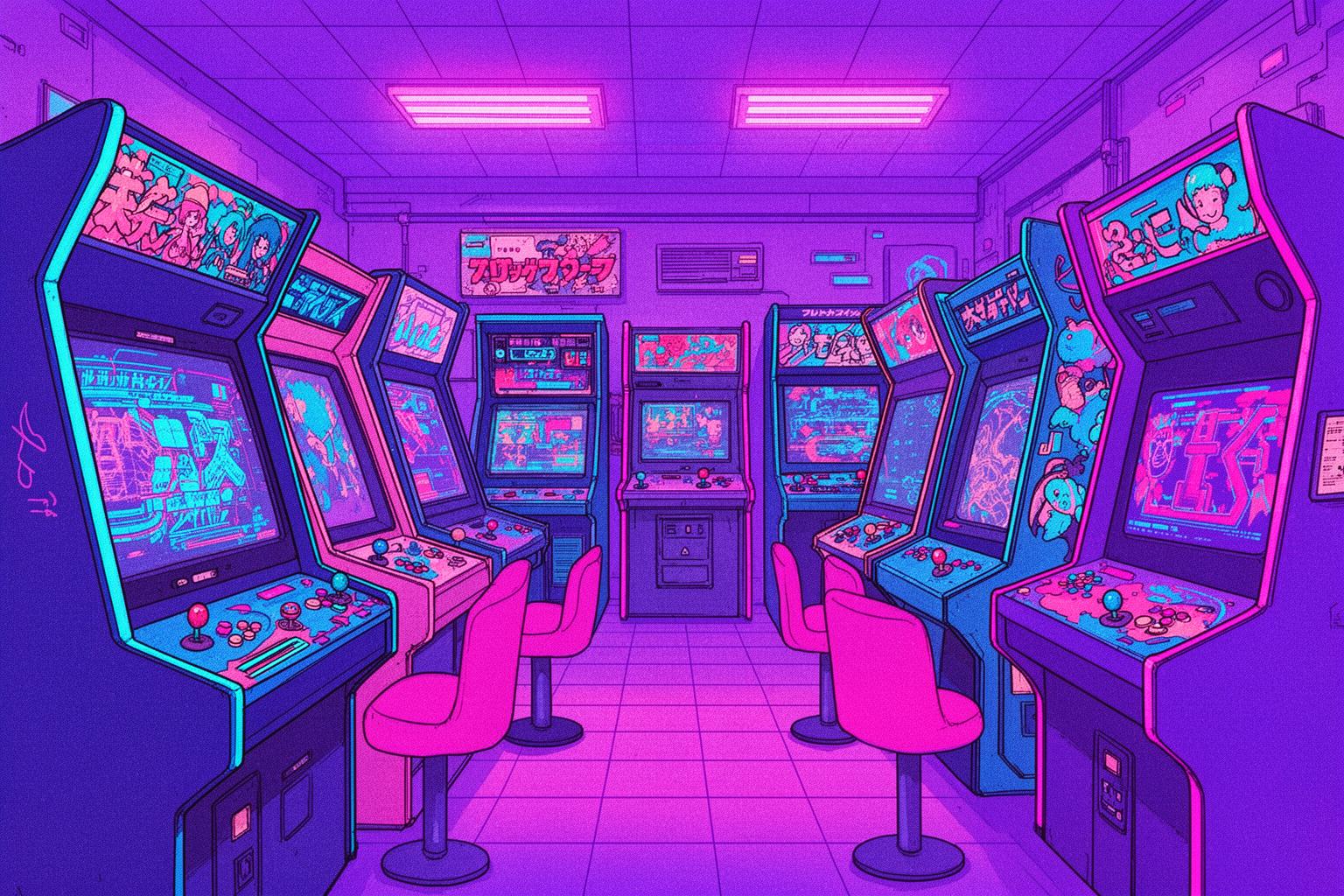
Before playing a single game, the very first thing to do in a Japanese arcade is simply to be. Stand by the entrance and let the atmosphere envelop you. It is a baptism of pixelated light and digital sound. The air itself feels different—thick with the low hum of electricity, the clatter of tokens, the triumphant fanfares of a high score, and the frantic, explosive noises of virtual combat. Unlike the quiet reverence of a temple or the gentle murmur of a cafe, the arcade is a space that embraces noise. It is a purposeful, overwhelming chorus, where each machine adds its own melody and rhythm to a larger, chaotic whole.
Visually, it’s an exercise in controlled vertigo. Aisles are lined with towering machines, each a monolith dedicated to a single digital experience. The overall lighting remains dim, a constant dusk that lets the screens take center stage. This is a world painted in phosphor and neon. The dazzling flashes of fighting game special moves, the sparkling jewels of a puzzle game, the hypnotic motions of a rhythm game’s interface—they all blend together, reflecting off polished floors and the focused faces of players. It’s this specific quality of light, this dense, electronic glow, that defines the arcade’s cyberpunk identity. It feels futuristic, not in the sterile, minimalist way often shown in modern science fiction, but in a grittier, more textured, and ultimately more human manner. It’s the future as a thick, layered, and overwhelming metropolis of information and stimulation.
There is also a particular smell—a unique mix of plastic, ozone from the CRT monitors in older machines, and the faint, clean scent of floor polish. It’s a nostalgic aroma for those who grew up in these spaces, a sensory trigger for countless hours spent mastering combos or chasing a coveted plush toy in a crane game. For first-time visitors, this sensory triad—the sound, the light, the smell—is the arcade’s true introduction. It conveys the intensity and immersive nature of the experience before you even touch a joystick.
A Living History: From Invader Houses to Digital Arenas
To fully appreciate the modern Japanese arcade, one must understand its deep roots in the nation’s post-war history. These venues did not simply appear overnight; they gradually evolved. Their origins trace back to rooftop amusement parks atop department stores and the modest pinball parlors of the 1950s and 60s. However, the true explosion of arcade culture came in 1978 with the release of Taito’s Space Invaders. The game became a national sensation, so popular that it was rumored to have caused a shortage of 100-yen coins across Japan. Coffee shops and storefronts were quickly transformed into single-game parlors called “Invader Houses,” marking the birth of dedicated video game spaces.
Early arcades were often dark, smoky, and predominantly male—a stark contrast to the brighter, more diverse environments seen today. They were regarded as somewhat seedy spots, frequented by delinquents and salarymen seeking escape. Yet, as technology advanced during the golden age of the 1980s with classics like Pac-Man and Donkey Kong, the arcade’s image began to change. Companies such as Sega and Namco expanded the possibilities of arcade gaming, introducing elaborate, sit-down cabinets that allowed players to simulate driving a car, flying a fighter jet, or piloting a giant robot. These “taikan” games, or “body-sensation” games, offered experiences that home consoles of the time could not replicate.
This became the arcade’s key survival strategy. As home gaming systems grew increasingly powerful in the 1990s and 2000s, threatening to render arcades obsolete, the ge-sen doubled down on what made it unique. It was not just the game itself, but the physical machine that connected players to the digital world. This explains the incredible variety in hardware. From the massive, pod-like cockpits for mech simulators such as Gundam Extreme Vs., to the sleek white cabinets of the Street Fighter series that have become global icons, and the light-gun peripherals for shooters like Time Crisis. There are the giant drum kits for Taiko no Tatsujin, pressure-sensitive dance pads for Dance Dance Revolution, and multi-button, turntable-equipped consoles for the beatmania IIDX series. Each machine is a custom piece of hardware, a specialized portal to its own universe.
This emphasis on the physical experience also fostered a distinctive social environment. In an era dominated by online multiplayer, where opponents are anonymous screen names, arcades preserved a tangible co-presence. The person you competed against in a fighting game was sitting just a few feet away. You could observe their reactions, feel the tension in the air, and share a respectful nod after a match. This nurtured close-knit, localized communities around particular games, turning arcades into modern-day dojos where skills were refined, rivalries born, and masters revered. Spectators would gather around particularly intense matches, their collective gasps and cheers blending into the arcade’s ambient soundtrack. This social aspect remains a vital part of the arcade’s lasting appeal.
The Cyberpunk Cathedral: Where Fiction Meets Reality
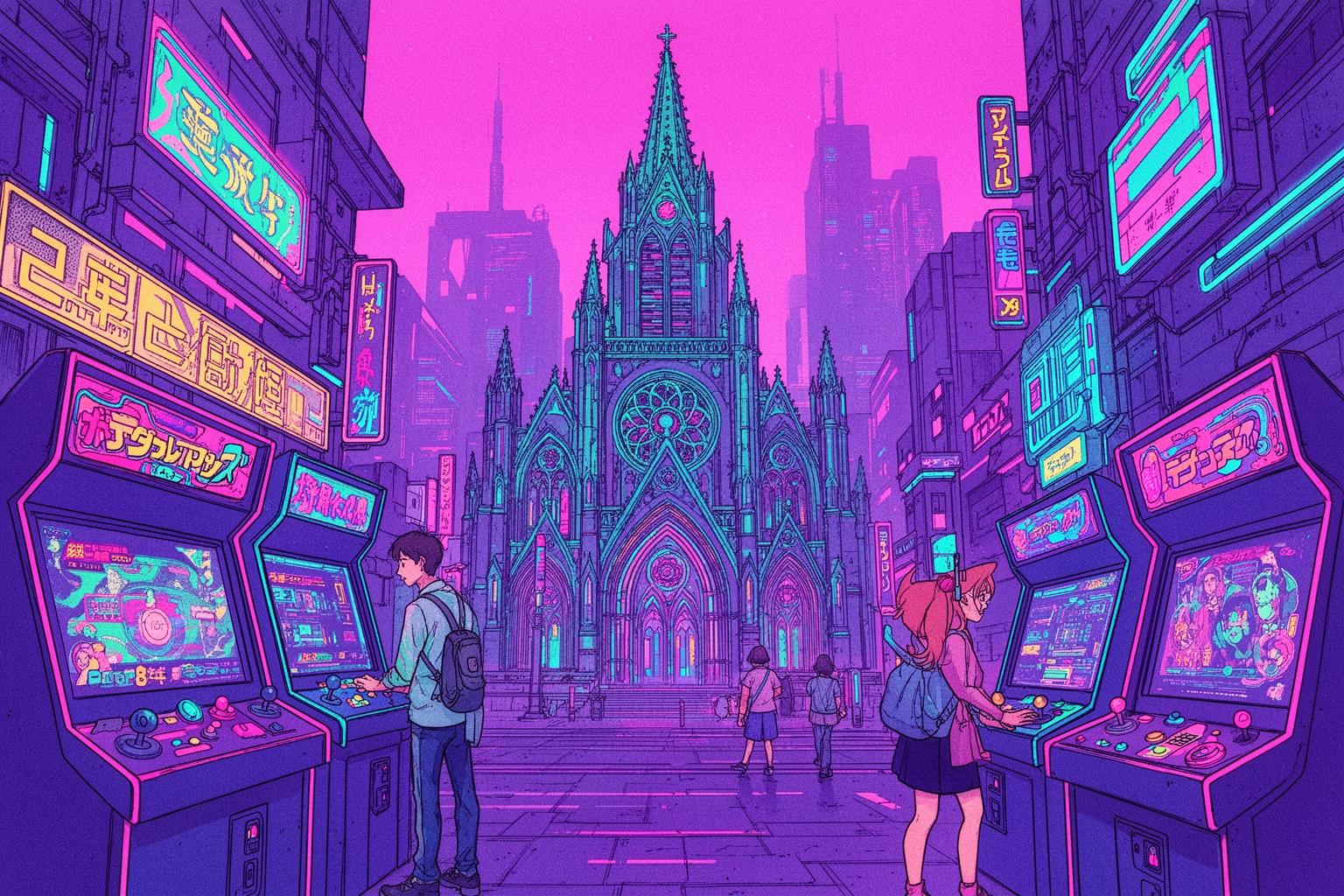
The aesthetic of the Japanese arcade is so powerful that it has become a foundational element of the cyberpunk genre. Walking through a multi-story arcade in Shinjuku or Akihabara means stepping into the living inspiration behind films like Blade Runner and anime such as Akira and Ghost in the Shell. Towering buildings covered in advertisements and glowing signs, narrow alleys, a sense of vertical density, and the ubiquitous neon light—they are all present. The arcade serves as a microcosm of the cyberpunk city.
Inside, the connection becomes even clearer. The player is physically connected to the machine, their consciousness wholly focused on navigating a digital reality. The line between human and machine blurs. Observe a skilled rhythm game player: their movements are a blur of precise, almost superhuman actions, their minds perfectly in sync with the flood of information on the screen. It is a stunning, symbiotic performance—a dance between the organic and the electronic. This captures the essence of cyberpunk—the merging of humanity and technology within a dense, overstimulated urban environment.
Moreover, the games themselves often explore cyberpunk themes. Futuristic cityscapes, giant robots, dystopian storylines—they echo and amplify the aesthetic of the space they occupy. The arcade becomes a self-referential loop, a place where you can live out the fantasies inspired by the very environment around you. It is a form of escapism, but one deeply embedded in the technological and architectural reality of modern Japan.
That is why calling these places “sanctuaries” feels fitting. For many, they offer refuge from the pressures and strict social structures of the outside world. Inside the arcade, social status, age, and occupation matter less than skill and dedication. It is a meritocracy of reflexes and pattern recognition. In the anonymous glow of the screen, you can be a hero, a champion, a master. This transformative power—the ability to inhabit another reality—makes the arcade profoundly meaningful for its devoted visitors. It is a church where the idols are digital, the hymns are chiptunes, and prayers are answered with a perfect combo or a new high score.
Navigating the Neon Labyrinth: A Player’s Guide
For those unfamiliar, entering a large Japanese arcade can feel intimidating. The wide range of games and the vibrant atmosphere can easily overwhelm. However, with some guidance, it can turn into one of the most unforgettable parts of a trip to Japan.
First, it helps to know the layout. Most large arcades span multiple floors, with each level usually dedicated to a specific type of game. The ground floor almost always features UFO catchers, or crane games. These areas are bright, noisy, and packed with a vast array of prizes, from popular anime figures and giant plush toys to snacks and even household items. They’re designed to catch the eye and attract casual visitors. This is a perfect place to begin. For just 100 or 200 yen, you can test your luck. A good tip: watch others play first. Staff often arrange the prizes in certain ways, and observing successful players can reveal how to win. Don’t hesitate to ask the staff for assistance; if you’ve been trying for a while, they may adjust a prize to make winning slightly easier.
As you go up, you’ll likely encounter floors focused on music and rhythm games. Here, you’ll witness amazing displays of skill. Games like maimai, with its circular, washing-machine-like interface, CHUNITHM, featuring aerial sensors, and the aforementioned beatmania IIDX, offer captivating experiences. The players aren’t just pressing buttons; they’re performing. This floor often serves as a social hub, with players cheering each other on and exchanging tips. Even if you don’t play, it’s worth spending some time here just to enjoy the performance.
Fighting games usually occupy their own section, often on higher, sometimes hazier floors. This area represents the core of competitive arcade culture. Rows of cabinets for titles like Street Fighter 6, Tekken 8, and Guilty Gear -Strive- can be found here. The typical setup is a “face-to-face” cabinet, where two players sit opposite each other. Etiquette matters here. If a player is seated on one side with a 100-yen coin placed on their screen side, it signals they’re looking for a challenger. To join, take the other seat and insert your coin. This silent system of communication has been in place for decades.
Other floors might include card-based arcade games, very popular in Japan, retro games that evoke nostalgia from the 80s and 90s, or large-scale multiplayer games. Be sure to explore each floor, as each offers a unique atmosphere and community. The top floors sometimes contain photo booths, or purikura, which are a cultural phenomenon especially favored by students. These booths let you take and heavily edit photos with friends, creating unique and often amusing souvenirs.
Practically, you’ll need plenty of 100-yen coins. Every arcade has change machines that break down 1,000-yen notes and even 5,000 or 10,000-yen bills into coins. In recent years, many machines—particularly those from major chains like GiGO and Taito Station—accept IC cards such as Suica or Pasmo, allowing you to tap your card to pay, which is very convenient. The noise level can be intense, so if you’re sensitive to loud sounds, bringing earplugs is a smart idea. They can make a lengthy visit much more comfortable.
Beyond Akihabara: Finding Your Local Arcade Sanctuary
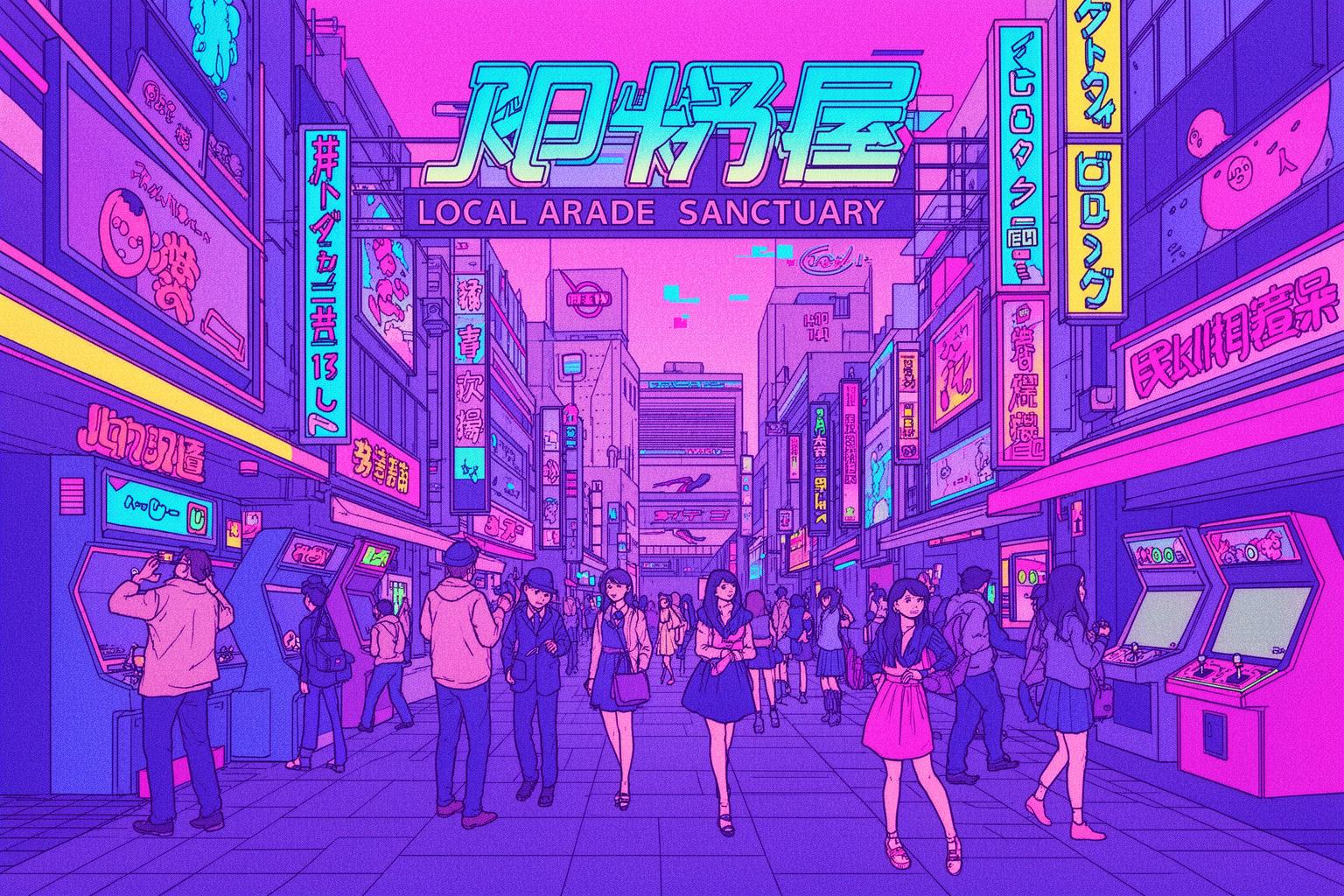
While Akihabara is undeniably the heart of arcade gaming, it is far from the only place to immerse yourself in this culture. In fact, some of the most charming and genuine arcade experiences can be discovered well away from the tourist-packed streets of “Electric Town.”
In Tokyo, neighborhoods like Nakano and Koenji offer a unique twist. Nakano Broadway, renowned for its maze-like array of manga and anime shops, also contains several smaller, specialized arcades. These often attract a dedicated crowd, focusing on particular genres such as fighting games or “shmups” (shoot ’em ups). Koenji, celebrated for its punk rock vibe and vintage clothing stores, hosts a few gritty, old-school arcades that evoke a nostalgic feel. These spots have stickier floors, denser air, and a palpable passion for classic games.
Beyond Tokyo, Osaka’s Den Den Town in the Nipponbashi district stands as a strong competitor to Akihabara. It boasts a similar density of electronics shops, anime stores, and multi-level arcades. The atmosphere in Osaka is often described as more relaxed and less commercial than Tokyo’s, and this extends to its arcade scene as well. Here, you’ll find huge Taito Stations and Namco arcades alongside smaller, independent venues tucked away in side streets.
Yet, perhaps the most rewarding experiences come from discovering a small, local ge-sen tucked into a lesser-known city or suburban shopping arcade (shotengai). These establishments serve as true community hubs. You might see elderly locals expertly playing a medal game (a gambling-like game favored by older players), while nearby, high school students battle it out in the latest fighting game. Though these smaller arcades lack the overwhelming scale of their big-city counterparts, they provide insight into the everyday significance these spaces hold in Japanese life. They act as a “third place” for all ages—a familiar, welcoming spot that is neither home nor work or school.
So, while visiting a flagship arcade in Akihabara is essential for its impressive spectacle, be sure to stay alert as you travel across Japan. That unassuming doorway with a faded sign and muffled digital sounds might just lead you to a more intimate and authentic arcade experience.
A Final Coin
The Japanese arcade is a resilient institution that has withstood the rise of home consoles, mobile gaming, and the challenges posed by a global pandemic. Although some iconic venues have unfortunately closed in recent years, the culture itself remains vibrant. It endures because it offers something that cannot be downloaded or streamed: a physical space, a tangible community, and an immersive sensory experience of dazzling, digital intensity.
Visiting an arcade is more than just playing a game; it is stepping into a living piece of cultural history, a dynamic social environment, and a real-world embodiment of a futuristic vision. It’s a place to witness exceptional skill, feel the collective energy of a crowd, and lose yourself in a flood of light and sound. So, when you find yourself in Japan, seek out these neon havens. Exchange a note for a handful of coins, pick a machine that draws you in, and for a few minutes, become part of the electric, cyberpunk heart of the city. You might not achieve a high score, but you will surely leave with a memory as vivid as the screens themselves.