Alright, fam, let’s have a real talk. You’ve done the temples, you’ve mastered the train system, and you’ve eaten so much ramen you’re pretty sure your blood type is now officially tonkotsu. You’re a repeat traveler, a seasoned pro. But have you truly dived into the loudest, most chaotic, most brilliantly electric corner of Japanese culture? I’m talking about the game center, the ge-sen, the Japanese arcade. Forget the dusty, sad-looking arcades you might remember from back home. This ain’t that. This is a multi-story, sensory-overload theme park dedicated to the art of play. It’s where salarymen become drift kings, where high school students settle scores with pixelated fireballs, and where you can experience the closest thing to a real-life Mario Kart race, complete with banana peels and blue shells. It’s a full-on vibe, a nostalgic hit that screams 2010s energy while being utterly, unapologetically modern. The first time I stepped into one, dragging my curious kid along, the wall of sound and light hit me like a physical force. It felt less like a building and more like I’d just been teleported into the internet. It’s a place where the digital world bleeds into the real one, and for the price of a few 100-yen coins, you get a front-row seat. This is your guide to navigating that beautiful, brilliant chaos, to finding the ultimate nostalgic showdowns, and to understanding why these glowing palaces are an unmissable part of the Japan experience.
For a deeper dive into the neon-soaked aesthetic that defines these spaces, explore the cyberpunk heart of Shinjuku after dark.
The Vibe Check: What a Japanese Arcade Feels Like
Before you even play a single game, you have to soak in the atmosphere. It’s an experience all on its own. Trying to describe a Japanese arcade is like attempting to explain a color to someone who can’t see. It’s a full-body sensation, a complete sensory immersion that you need to feel to truly grasp. It’s not just about what you see or hear; it’s about the very air, which seems to crackle with digital energy and intense human focus. It’s a place of stunning contradictions—deeply personal yet public, overwhelmingly loud yet demanding profound concentration, futuristic yet richly nostalgic.
A Symphony of Chaos
The first thing that strikes you is the sound. It’s an absolute wall of noise. But it’s not merely noise; it’s a complex, layered symphony of digital life. You’ll catch the triumphant jingles of a prize won, the booming bass and high-energy J-pop from the rhythm game area, the roar of virtual engines from racing simulators, and the percussive clatter of hundreds of 100-yen coins feeding into hungry machines. Each game cabinet has its own distinctive soundtrack on a loop, a siren call to attract players. All these individual sounds blend into one overwhelming yet somehow harmonious cacophony. Moving from floor to floor, the symphony shifts. The ground floor is usually dominated by the cheerful, enticing sounds of crane games. Go up a level, and you find the intense, percussive beats of fighting games. Ascend further, and the thunderous, heart-pounding rhythms of music games literally shake the floor beneath your feet. It’s a living soundscape, continually shifting and pulsing with players’ rhythms. It’s loud, yes, but it’s the sound of pure, unfiltered fun.
Bathed in Neon and Pixels
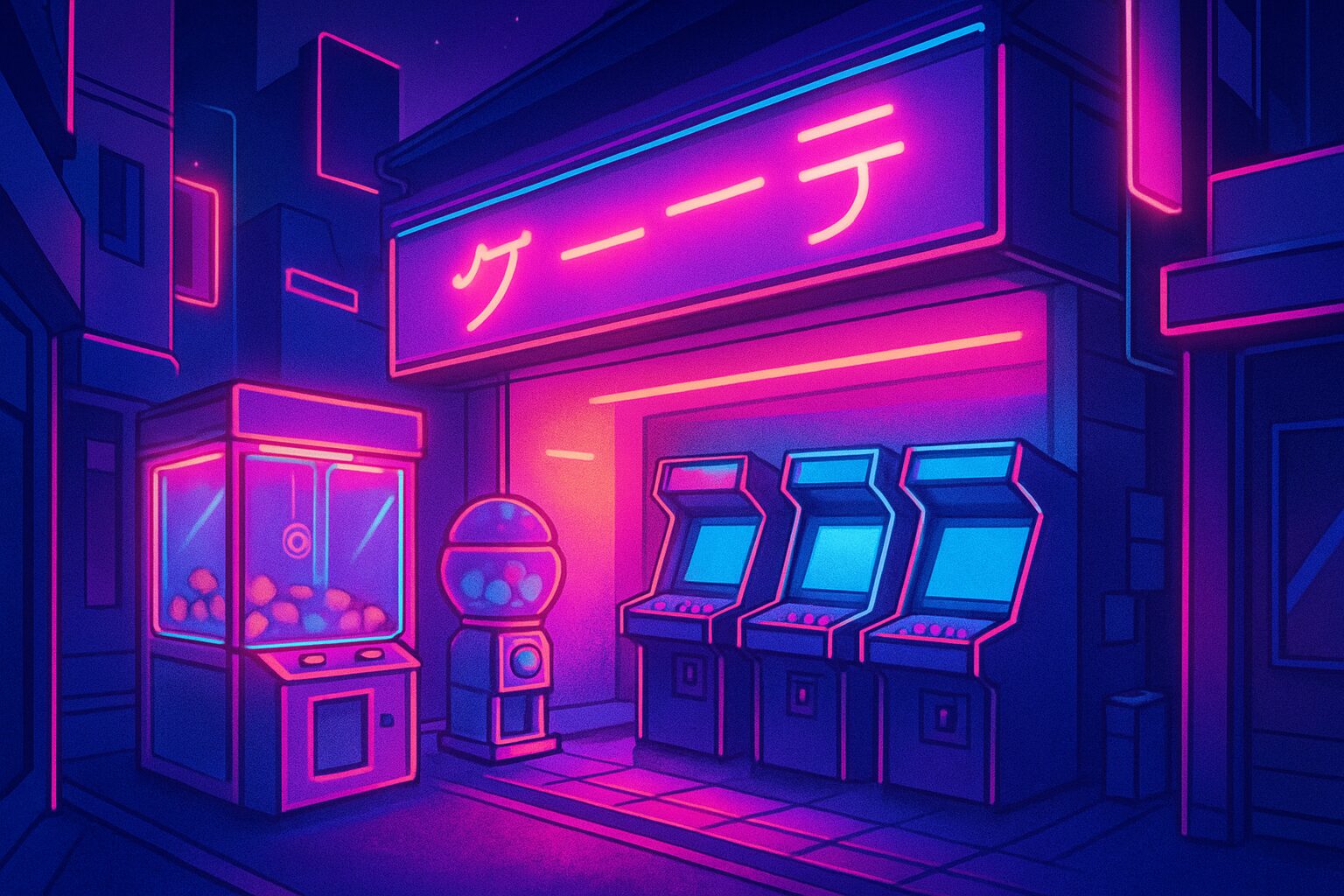
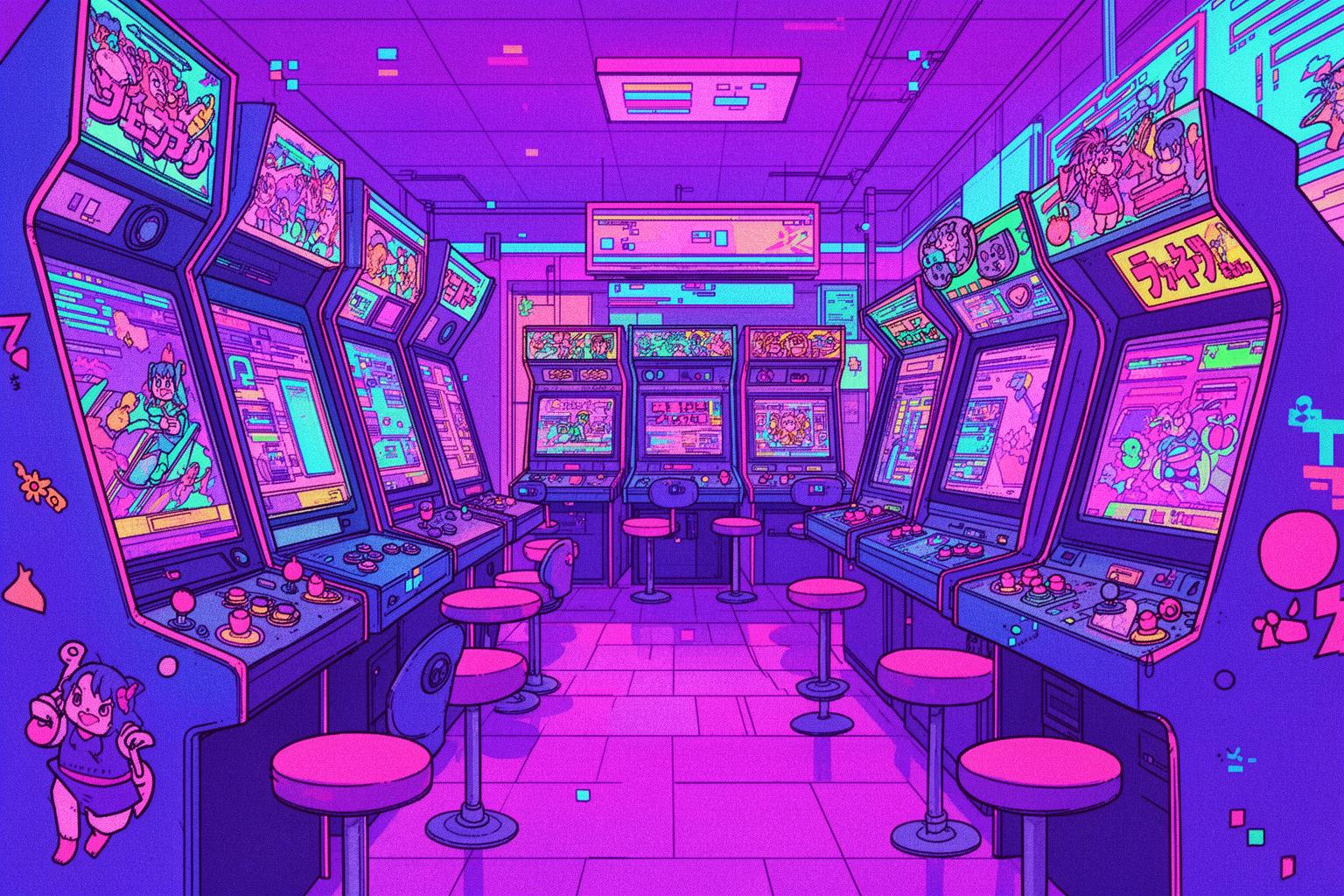
Visually, Japanese arcades are a masterpiece of controlled chaos. Most are deliberately kept dark, not to feel dingy, but to make the screens and lights stand out. The entire space glows from thousands of high-definition screens, flashing LEDs on game cabinets, and vibrant neon signs suspended from the ceiling. It feels like stepping into a scene from Blade Runner. The machines themselves are works of art. Sleek, futuristic racing pods with bucket seats and multiple screens surround you. Rhythm game cabinets pulse with colored lights synced to the music. The crane game areas are dazzling treasure troves, with perfectly lit glass cases displaying the most coveted prizes. Everything is crafted to catch your eye, to pull you in, to make you want to play. The sheer density of visual information is staggering, yet it all contributes to a unified, immersive world that feels completely detached from the city streets outside.
The Energy is Electric
What truly makes an arcade special, though, are the people. You’ll see a remarkable cross-section of Japanese society. A businessman in a full suit, tie loosened, skillfully drifting around a corner in Initial D. A group of high school girls in their uniforms, laughing loudly as they decorate their purikura photos. A young couple working together, planning how to win a giant Pikachu plush from a UFO catcher. And then there are the pros. The rhythm game masters, moving with fluid, dance-like precision that amazes, drawing a small crowd in awe. The fighting game veterans, their hands a blur over buttons and joysticks, locked in battles of reflex and strategy. There’s a powerful shared energy in the air. While most games are solo endeavors, you’re surrounded by hundreds of others on their own quests for high scores. It’s a space of intense individual focus that somehow creates a communal vibe. You can feel the collective concentration, frustration, exhilaration. It’s a place to be alone, together.
The Main Quests: Your Arcade Hit List
Okay, you’ve absorbed the vibe. Now it’s time to play. A modern Japanese arcade is a feast of gaming genres, each delivering a unique experience you simply can’t replicate at home. From heart-pounding races to challenging rhythm tests, there’s a game for every mood and skill level. This is where you experience real-life Mario Kart moments and much more. Choosing where to begin can be overwhelming, so let’s explore the must-try genres that define the modern ge-sen.
The Ultimate IRL Showdown: Racing Games
This is at the heart of that 2010s nostalgic dream. The racing game section is where you fulfill your high-speed fantasies. Forget your console controller; these are full simulators. The ultimate group experience is Mario Kart Arcade GP DX. You sit in a kart-shaped seat, and a camera snaps your photo to superimpose over your character’s face, making the race personal and hilarious. The steering wheel provides real feedback, vibrating on rough patches and jolting when you’re hit. You’ll be shouting with friends as you launch green shells and dodge lightning bolts. It’s pure, chaotic fun.
For the more serious racers, the duology of Wangan Midnight Maximum Tune and Initial D The Arcade rules supreme. Wangan Midnight is a tribute to Tokyo’s street racing culture on the Shuto Expressway. You receive a special BanaPassport card to save progress, buy, tune, and customize your car across many playthroughs. You’re not just playing a game; you’re building a reputation. The sense of speed is thrilling, and battling another player in a high-speed duel through Tokyo’s digital tunnels and bridges is intense. Initial D, inspired by the famous manga and anime, focuses on the art of drifting on perilous mountain roads. Its physics reward skilled cornering and perfect drifts. The cabinets often feature a real gear stick, requiring coordination that’s immensely satisfying to master. These games go beyond quick plays; they are deep, engaging hobbies with dedicated communities.
Feel the Beat: The World of Rhythm Games (Oto-ge)
If racing games are the arcade’s adrenaline, rhythm games are its heart. Known as oto-ge in Japanese, this genre is a cultural phenomenon. It tests timing, coordination, and musicality, making it mesmerizing to watch and addictive to play. The variety is vast, and each game delivers a distinct physical experience.
The most iconic is Taiko no Tatsujin, the legendary drumming game. Using two large taiko drum controllers and drumsticks, you strike the drums in time with the notes on screen. The song list blends J-pop, anime themes, video game music, and classical pieces. It’s instantly accessible and cathartic. Perfectly hitting drums on a favorite song is pure joy.
Then there are the more futuristic, complex games. maimai DX features a circular screen surrounded by buttons, resembling a high-tech washing machine. Players tap, hold, and slide their hands across the screen and buttons in a dance-like rhythm. CHUNITHM uses a flat panel controller similar to a piano keyboard, but above it are motion sensors detecting hand movements in the air, adding a new dimension to gameplay. Sound Voltex looks like a spaceship cockpit, with buttons, BT and FX knobs, and lasers. These games have steep learning curves, but watching skilled players is like watching a virtuoso musician and professional dancer simultaneously. The community is serious; many players bring gloves for grip and hand protection, study charts and patterns online, and treat the skill with deep respect, often bowing silently to the machine after a flawless run.
The Thrill of the Claw: UFO Catchers & Crane Games
Welcome to the most addictive arcade section. Crane games, known as UFO catchers in Japan, are a national obsession. The glass cabinets hold a constantly changing assortment of prizes, many exclusive to arcades. These aren’t cheap, generic stuffed animals but high-quality, limited-edition anime figures, giant fluffy plushies of Sanrio and Pokémon, quirky home goods, elaborate snack boxes, and even electronics. Winning is not just about the prize but about mastering the machine—it’s a puzzle of physics and timing.
A few unwritten rules boost your chance of success. First, observe others: which machines are paying out and how players approach the prizes. Second, pick prizes already precariously near the chute—a gentle nudge might topple them in. Third, recognize that claws vary: some have strong two-prongs, others weaker three-prongs, so adapt your strategy. But the most important tip is don’t hesitate to ask for help. If you’ve been trying a prize in a tough spot, call a staff member (“Sumimasen!”). They’re often very helpful and may reposition the prize for you, increasing your chances. It’s not cheating; it’s part of the service. This tip can be a game-changer.
Old School Cool: The Retro Rewind
While the large, flashy arcades are fantastic, retro arcades hold a special place in Japanese gaming culture. These smaller, dimmer, underground-feeling spots, like the legendary Mikado in Takadanobaba, Tokyo, are living gaming museums. Here, rows of impeccably maintained candy cabinets from the 80s and 90s await. You can play classics exactly as intended: Street Fighter II Hyper Fighting, Dodonpachi, Metal Slug, Puzzle Bobble. The atmosphere is thick with nostalgia and once cigarette smoke, though that’s now rarer. The clientele is different too; you’ll see veteran gamers whose movements are economical and precise, players who have spent decades mastering these titles. It’s a chance to connect with gaming’s roots and appreciate the timeless charm of pixel art. For returning travelers who grew up with these games, retro arcades offer a meaningful and emotional pilgrimage.
Your Field Guide to the Concrete Jungle: Where to Find the Best Arcades

Knowing what to play is one thing, but knowing where to go is quite another. The arcade experience can vary greatly depending on the neighborhood. Each district in a major city like Tokyo has its own unique character, and its arcades reflect that. Searching for the perfect ge-sen is all part of the adventure.
Akihabara: The Electric Heartbeat
Let’s begin with the undisputed mecca of all things otaku and gaming: Akihabara. This is the epicenter. Stepping out of Akihabara Station, you’re immediately immersed in the sights and sounds of gaming. The main street, Chuo Dori, is lined with towering, multi-story arcades run by giants like GiGO (formerly SEGA) and Taito. These buildings are vertical entertainment palaces, with each floor dedicated to a different type of game. The ground floor draws you in with a sea of UFO catchers, the next several floors focus on the latest online-connected fighting and card games, higher up is a pulsing temple to rhythm games, and so forth. Akihabara is where you go for sheer scale and variety. It’s overwhelming in the best way possible. On Sundays, when the main street is closed to traffic, the area turns into a pedestrian paradise, and the sounds from the open-fronted arcades spill out, creating an unforgettable atmosphere. It’s not just the big chains, either. Nestled in the side streets are smaller, more specialized arcades, including some of the best retro spots. You could easily spend an entire day, or even a whole trip, exploring Akihabara’s arcades.
Shinjuku & Shibuya: The Urban Playground
If Akihabara is a hardcore gamer’s paradise, the arcades in Shinjuku and Shibuya serve as a socialite’s playground. These arcades blend seamlessly into the vibrant cityscape and are popular stops during a night out. They tend to be brighter, more open, and perhaps a bit more mainstream than those in Akihabara. You’ll find a stronger focus on group-friendly games like Mario Kart and Taiko no Tatsujin, as well as large purikura sections and endless rows of tempting crane games. Landmarks such as Taito Station near Shinjuku’s south exit, or the arcades scattered around Shibuya Crossing, act as social hubs. People drop in before a movie, after dinner, or while waiting for friends. The vibe is less about serious competition and more about casual, spontaneous fun. These arcades offer a fantastic introduction to arcade culture and are extremely convenient to access from almost anywhere in the city.
Ikebukuro: The Hidden Gem
For those wanting to venture slightly off the beaten path, Ikebukuro presents a compelling alternative. Although it has its share of large GiGO and Taito arcades, the area has a distinct personality. Known as a major hub for female otaku culture, the UFO catcher prizes and game themes often cater to this crowd, featuring characters from popular anime and mobile games aimed at women. Yet the true highlight of Ikebukuro for arcade enthusiasts is Round1. This is more than just an arcade; it’s a massive entertainment complex. The Round1 branch in Ikebukuro includes not only a vast selection of arcade games but also bowling alleys, karaoke rooms, billiard tables, and a “Spo-Cha” facility that offers an astonishing variety of sports and activities—from batting cages to roller skating—all for a flat hourly fee. It’s a place where you can easily spend an entire day, making it a perfect rainy-day choice for families or groups of friends.
Beyond Tokyo: The Local Ge-sen
For the truly seasoned traveler in Japan, one of the greatest pleasures is discovering a local arcade, the ge-sen, in a smaller city or a quiet suburban neighborhood. These places feel worlds apart from the tourist-heavy hubs of Tokyo. Here, you’ll find a genuine community. The games might be a bit older, the prizes less flashy, but the atmosphere is pure and authentic. You’ll spot the same high school kids every day after school, or the same elderly couple playing their favorite medal game for hours on end. This is where arcades aren’t tourist attractions but neighborhood gathering spots—a third space between home and work or school. Visiting a local arcade in a city like Fukuoka, Sapporo, or even a smaller town provides an honest, unfiltered glimpse into everyday Japanese life and reveals the enduring role these places play within their communities.
The Unspoken Rules: Arcade Etiquette 101
Japanese arcades are extremely welcoming, but, like many elements of Japanese culture, they have unwritten rules of etiquette. Following these not only shows respect but also makes your experience smoother and more enjoyable. It’s all about being considerate of other players who are there to seriously enjoy their hobby.
Your Yen, Your Passport
Most arcade games operate with 100-yen coins, which are essential to the arcade experience. It’s a good idea to keep a small supply on hand. Don’t worry if you run out; every floor has change machines that break 1,000-yen, and even 5,000 or 10,000-yen bills, into fresh stacks of 100-yen coins. Increasingly, modern machines—especially those from major developers like SEGA, Taito, and Bandai Namco—accept Japan’s rechargeable IC cards such as Suica or Pasmo. You simply tap your card on the reader to pay, which is very convenient. Serious players of specific games often use dedicated cards like BanaPassport or Aime. These save game data, unlock new content, and track progress, turning the game from a one-time session into an ongoing journey.
Respect the Player
This rule is paramount. If you spot a machine with a drink, phone, wallet, or even a pack of tissues on the console or stool, do not touch it. This universally signals “I’m still playing.” The player has stepped away briefly—to get change, use the restroom, or take a short break—and the machine is reserved. Playing on it constitutes a major faux pas. Similarly, while it’s fine to watch someone play, especially if they’re skilled, avoid “ghosting”—standing right behind them and looking over their shoulder. This can be quite distracting and is considered impolite. Give them ample personal space so they can focus on their game.
Waiting Your Turn
For popular new machines or classic fighting games on busy nights, a line often forms. Look for a row of chairs or stools next to the machine. If none are provided, simply queue up in a single, orderly line behind the players. The general guideline is one coin, one turn. If you win and continue playing, that counts as part of your turn. Once your game ends, step aside and let the next person in line play. It’s considered poor etiquette to “renko,” or chain multiple games by inserting more coins if people are waiting behind you. If no one is waiting, feel free to play as long as you want—but always stay aware of others who might be waiting their turn.
Practical Strats for Your Arcade Run
A bit of planning can enhance your arcade adventure significantly. Knowing when to visit, what to anticipate, and how to prepare can transform a good outing into an unforgettable one. Consider this your pre-mission briefing.
Timing is Everything
The vibe of an arcade shifts dramatically throughout the day. If you want to practice a new rhythm game or get ample uninterrupted attempts at a tricky UFO catcher, visit on a weekday afternoon. The arcades tend to be quieter, mostly filled with dedicated regulars and the occasional student. On the other hand, if you want the full, electrifying atmosphere, head there on a Friday or Saturday night. That’s when arcades are at their busiest, loudest, and most energetic. The floors will be packed, noise levels will peak, and the communal energy is unmistakable. This is the ideal time for people-watching and absorbing the culture. Also, keep in mind that many arcades, especially in entertainment districts, stay open late, often until midnight or beyond, making them a perfect post-dinner outing.
Fueling Up and Facilities
The general rule is not to bring outside food or drinks into an arcade. However, staying hydrated during an intense gaming session is essential, so you’ll find vending machines on nearly every floor offering a wide range of beverages. A significant improvement in recent years has been the change in smoking policies. Arcades used to be notoriously smoky, which could be off-putting for many visitors. Thanks to stricter regulations, most major arcades are now completely non-smoking or have smoking confined to small, sealed glass rooms. This has made the environment much more pleasant and family-friendly.
Bringing the Fam
As a parent, I’m always searching for activities that entertain both me and my child, and arcades definitely fit the bill. The key is managing the experience. The ground floors are usually a kid’s paradise, filled with crane games featuring cute prizes and simple, fun games. Titles like Taiko no Tatsujin and Mario Kart are excellent for all ages. However, the upper floors, with their loud music and intense competitive games, can be overwhelming for young children. It’s also important to be aware of curfews: Japanese law prohibits minors under 16 from being in an arcade after 6 PM unless accompanied by an adult, and all minors under 18 must leave by 10 PM. Staff do enforce these rules, so they’re important to keep in mind.
A Japanese arcade is much more than just a place to play games. It’s a cultural hub, a social space, a living museum of digital art, and a vibrant, glowing, wonderfully chaotic celebration of play. It’s where you can witness incredible skill, join in entertaining group competitions, and maybe, if lucky, win an enormous plush prize. It connects you to a nostalgic past and offers a glimpse into a uniquely Japanese future. So next time you’re walking down a street in Shinjuku or Akihabara and hear that symphony of chaos spilling out from a brightly lit entrance, don’t just pass by. Step inside. Grab some change, pick a game that grabs your attention, and for a little while, lose yourself in the neon glow. It’s a side quest you won’t regret taking. Go for that high score.