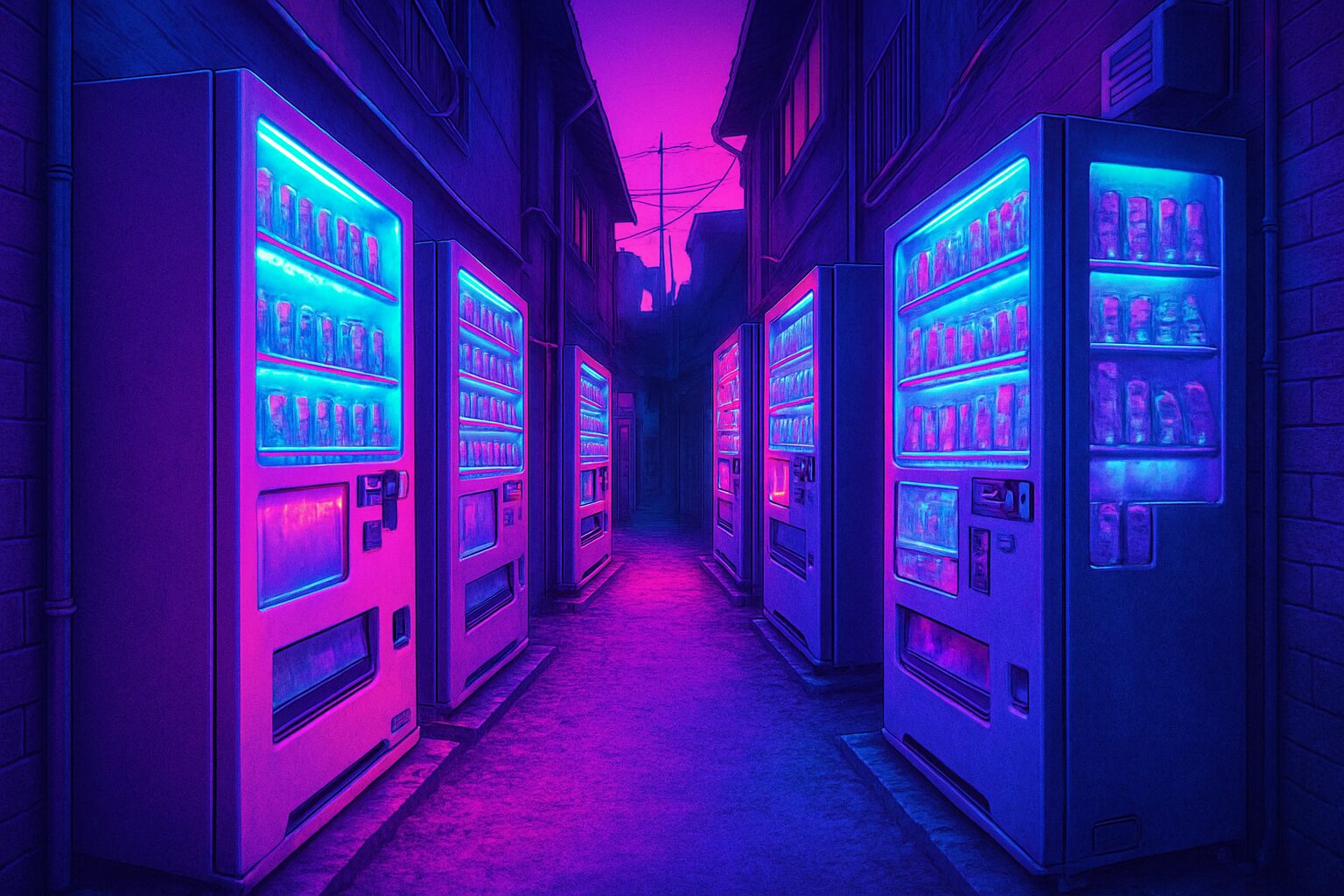
What’s the deal, fellow explorers? Emily here, your guide to all things delicious and mind-blowing in Japan. Let’s talk about Tokyo. You picture it, right? The massive crowds at Shibuya Crossing, the serene temples, the towers scraping the sky. But what if I told you the real magic, the true cyberpunk heart of this city, isn’t in the main attractions? It’s tucked away, humming quietly in the side streets. It’s glowing. It’s waiting for you. I’m talking about Japan’s vending machine alleys, or as the locals say, the jihanki corners. Forget what you know about vending machines. This ain’t your sad, office-breakroom-chips-and-soda situation. This is a whole other level. These alleys are glowing, neon-drenched sanctuaries, buzzing with a quiet energy that feels ripped straight from a sci-fi movie. They are vibrant oases of convenience, culinary surprises, and pure, unadulterated aesthetic. It’s where the city’s futuristic pulse meets its quiet, everyday rhythm. Stepping into one is like finding a secret level in a video game, a glitch in the matrix that rewards the curious. It’s a different kind of urban exploration, one that’s less about landmarks and more about the vibe, the flavor, and the quiet moments of wonder you can find when you dare to wander off the beaten path. These spots are more than just places to grab a drink; they’re cultural touchstones, technological marvels, and, believe it or not, some of the best foodie destinations you’ll stumble upon. So, grab some yen, keep your eyes peeled, and get ready to dive into the neon glow. This is where Japan’s future and past collide in the most brilliant, delicious way possible.
For another glimpse into Japan’s neon-drenched, futuristic side, explore the vibrant world of its cyberpunk game arcades.
The Vibe Check: Decoding the Jihanki Glow
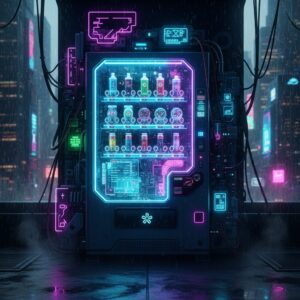
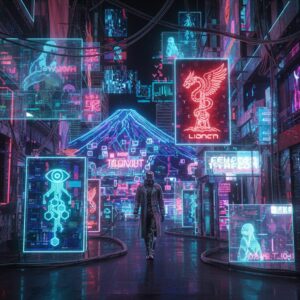
Before you even make a purchase, you have to just stand there and take it all in. The atmosphere in a vending machine alley, especially after dark, is truly electric. It’s a sensory experience uniquely Japanese. First, there’s the light. Each machine acts as its own small beacon, casting vibrant pools of color onto the pavement. You see the cool blue of Pocari Sweat next to the warm, inviting yellow of a hot corn soup machine, which blends into the fiery red of a Coca-Cola logo. When a whole row lines up, these colors merge and swirl, transforming the narrow space into a dreamlike, Blade Runner-style palette. If it’s just rained, forget about it—the reflections on the wet asphalt intensify the effect, creating an incredible, shimmering neon world at your feet. It’s so visually captivating that you’ll find your camera out before you even realize it.
Then, there’s the sound. It’s not silent. A constant, low-level hum fills the air—the noise of refrigeration units, heaters, and electronics all working in harmony. It’s a strangely soothing white noise, the sound of the city itself breathing. This hum is interrupted by the iconic sounds of a transaction: the satisfying clink-clank of coins dropping into the slot, the whirring of the machine as it selects your item, and the final, heavy thump as your purchase falls into the retrieval slot. It’s a mechanical symphony instantly recognizable to anyone who’s spent time there. You’ll hear the fizz of a freshly opened soda, the crinkle of snack wrappers, and maybe the quiet chatter of other late-night visitors who, like you, have come to this bright little pocket of light and convenience. It’s a shared, unspoken experience — everyone here for the same reason: a small, simple, and satisfying moment in the heart of a sprawling metropolis.
The smell is part of the experience too. In modern alleys, it’s mostly clean and neutral, with maybe a faint hint of ozone from the lights. But in older, retro spots or locations serving hot food, the air is rich with incredible aromas. You might catch the savory, salty scent of dashi broth from a hot udon machine, the sweet, buttery smell of a toasting sandwich, or the unmistakable fragrance of freshly brewed canned coffee. These scents mingle with the cool night air, creating a comforting, nostalgic atmosphere. It’s the smell of a quick, warm meal on a cold evening, a simple pleasure that carries a quiet depth. The vibe is a blend of solitude and community. You can be completely alone with your thoughts, wrapped in the glow, or standing shoulder-to-shoulder with salarymen grabbing coffee after a long day, students gearing up for study, or couples sharing a late-night ice cream. It’s a democratic space; everyone is welcome, and the machines serve all without judgment, 24/7. It feels safe, futuristic, and deeply, authentically Japanese.
Future Shock vs. Retro Rewind: Two Sides of the Vending Coin
Not all vending machine alleys are the same. They range from the ultra-modern and futuristic to the charmingly nostalgic and retro. Exploring both is essential to grasp the full breadth of this fascinating subculture. Essentially, you’re choosing between stepping into a sci-fi film or a time machine—and honestly, you need to experience both. Each provides a distinct yet equally captivating encounter, revealing different stories about Japan’s connection with convenience, technology, and memory. The modern alleys showcase Japan’s relentless innovation, while the retro spots serve as a heartfelt homage to a past era, lovingly preserved by passionate communities. It’s the contrast between a sleek touchscreen interface and a chunky, satisfying push-button—one offers a glimpse of tomorrow, the other, a taste of yesterday.
Glitching in the Matrix: Tokyo’s Neon Corridors
This is the cyberpunk dream you’ve seen in photos, but a million times better in reality. Head to Tokyo’s bustling centers like Akihabara or Shinjuku and explore the backstreets. Here, vending machine alleys are dense, vibrant, and packed with the latest, wildest offerings you can imagine. Akihabara, the electric town, is ground zero for this scene. Entire walls of gachapon machines line the streets, dispensing everything from tiny, detailed anime figurines to miniature, working replicas of household appliances. The constant sound of people turning the dials and capsules dropping fills the air—an addictive treasure hunt.
Beyond the toys, the drink machines are just as wild. Sure, there are the usual sodas, but also energy drinks with unusual flavors, drinkable jellies, vitamin-fortified waters, and limited-edition seasonal beverages gone within weeks. The true highlights are the food machines. We’re talking devices that serve hot cans of oden, a savory Japanese stew with fish cakes, daikon radish, and eggs—yes, hot stew in a can, and it’s surprisingly authentic. Machines selling hot ramen, fried chicken, french fries, and even hot dogs are also common. The technology is incredible; you insert your money and within minutes receive a steaming hot meal. The aesthetic screams future: digital screens with animated ads, crisp LED lighting, and an atmosphere reminiscent of a spaceship’s galley. It’s clean, efficient, and endlessly intriguing. You half expect Harrison Ford to turn the corner in search of a bowl of noodles. Exploring these alleys feels like being an urban hacker uncovering the city’s hidden cheat codes for a quick, affordable, and fascinating bite.
A Portal to the Past: The Sagamihara Time Capsule
Now, take a step back and shift into reverse. For a completely different yet equally amazing experience, seek out the retro vending machine spots. The most famous is at a used tire shop in Sagamihara, a bit of a journey from central Tokyo but absolutely worth it. This location isn’t an alley; it’s an expansive, open-air museum of automated culinary history—a passion project filled with lovingly restored machines from the Showa Era (1926–1989). Entering this space feels like passing through a time portal. The machines aren’t sleek or digital; they’re clunky, mechanical beasts with faded paint, analog displays, and large, satisfying buttons that make a ker-chunk when pressed.
The atmosphere here is pure nostalgia, even if it’s not your own. The air smells of toast and noodles, and the hum of the old machines is deeper and more resonant. Families with children, groups of bikers, and curious travelers like myself gather, their faces glowing with awe and childlike delight. The food is the star. You absolutely must try the hot toast sandwich machine: insert coins and watch as the foil-wrapped sandwich toasts under glowing heating elements, then drops down steaming hot, tasting of sweet, simple nostalgia. Then there’s the udon and soba noodle machine, with its charming little digital countdown that delivers a steaming bowl of delicious noodle soup, complete with fried tofu or tempura, in under 30 seconds. It’s a marvel of vintage engineering. You can also find glass-bottled Coke from a machine that feels straight out of the 1960s, or even order a full bento box. Eating food from these machines, perched on a simple bench at a tire shop, is one of the most soulful and authentically Japanese experiences. It’s a testament to mottainai—the spirit of avoiding waste—and a deep respect for things built to last. It’s more than just a meal; it’s a taste of history.
Gourmet in a Box: The Unbelievable World of Vending Machine Cuisine
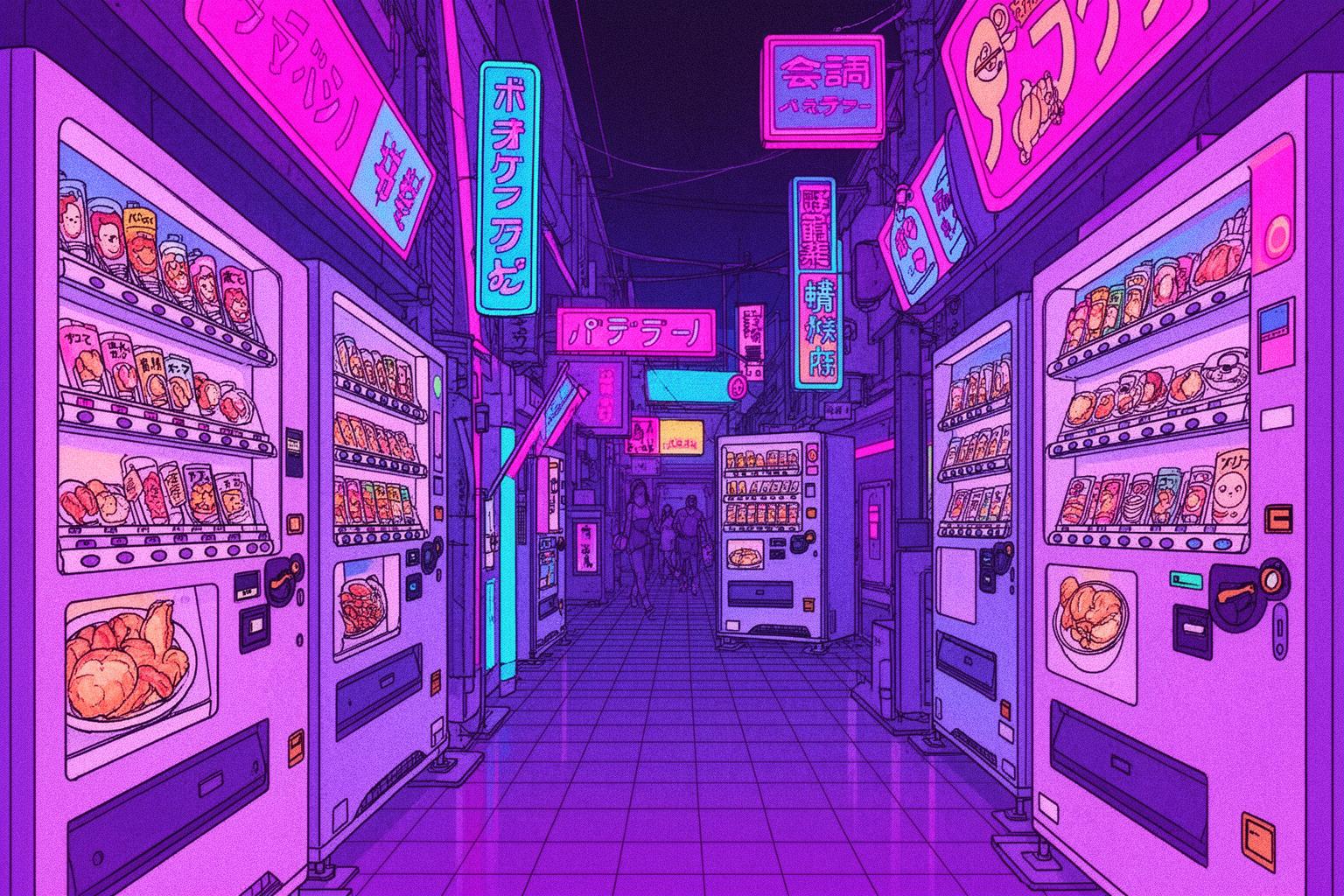
As a foodie, I was initially doubtful. How good could food from a vending machine truly be? The answer: surprisingly, incredibly good. Japan’s vending machine cuisine, or jihanki meshi, is a culinary universe in itself, founded on quality, innovation, and a meticulous dedication to perfection. It offers a journey that spans from the comforting and familiar to the intriguingly unusual. The sheer diversity is astonishing, and it forms a vital part of the experience. In theory, you could eat all three meals of the day exclusively from vending machines and enjoy a distinct, delicious experience each time. The secret lies in the high quality of the products and the remarkable engineering of the machines, designed to preserve, heat, or chill items flawlessly.
The Elixir of Life: Hot and Cold Drinks
Let’s begin with the basics: drinks. This is where every vending machine adventure starts. Japan boasts the highest number of vending machines per capita in the world, with most dedicated to beverages. The variety is astonishing. On a hot, humid summer day, nothing refreshes quite like an ice-cold green tea, a fruity Calpis water, or a bottle of Pocari Sweat for rehydration. Yet, the real revelation is the hot drink selection during the colder months. Machines with red labels beneath the product display indicate heated items. The idea of a hot drink in a can or bottle might seem odd at first, but it’s brilliant. On a chilly day, holding a warm can of Royal Milk Tea or a rich, dark coffee is pure comfort. The undisputed champion of hot canned drinks, however, is corn potage—a creamy, sweet corn soup often containing whole corn kernels at the bottom. Shaking it up and sipping it warm is a uniquely Japanese comfort ritual. It’s like a warm embrace in a can, and I’m not exaggerating. You’ll also find hot lemonades, hot cocoa, and even hot ginger ales. This simple innovation makes an enormous difference.
From Snacks to Full-Blown Feasts
Beyond drinks, the snack options are virtually endless. Machines offer everything from classic potato chips and chocolate to traditional Japanese snacks like rice crackers and dried squid. Ice cream vending machines are a summer lifesaver, providing a stunning variety from classic vanilla cones to matcha-flavored ice cream bars and mochi ice cream. But the true marvel happens when you move from snacks to full meals. Hot food machines, both vintage and modern, are where the real excitement lies. For instance, the retro toastie machines in Sagamihara deliver perfectly simple ham and cheese or pizza toast—they’re crispy, gooey, and utterly satisfying. The noodle machines are another marvel—the udon comes in a light, flavorful dashi broth that tastes far better than expected. It’s a genuine, hearty meal. In more advanced machines, you can find takoyaki (octopus balls), karaage (Japanese fried chicken), and even rice bowls with a variety of toppings. Some vending machines even sell fresh eggs, bags of rice, and bottles of cooking dashi, turning them from mere snack stops into miniature automated grocery stores. Specialty machines go even further—I’ve seen ones offering fresh crepes, baked sweet potatoes, and even upscale French cuisine in jars, prepared by local restaurants. The spirit of innovation is boundless, continually expanding the possibilities of what can be offered from a box.
The ‘Why’ Behind the ‘Buy’: Japan’s Vending Machine Culture
Why are there so many vending machines in Japan? It’s a question every visitor wonders about, and the answer lies in a fascinating combination of cultural, social, and economic factors. This phenomenon is not just a random oddity; it reflects the fundamental principles of Japanese society. Understanding this gives you a deeper appreciation for the glowing alleyways filled with these machines.
First, Japan’s exceptionally low crime rate allows vending machine operators to install expensive, cash-filled machines almost anywhere with minimal concern about vandalism or theft. This solid foundation of public safety and mutual respect supports the entire vending machine network, highlighting a remarkable level of societal trust.
Second, there is a strong focus on convenience and efficiency. In a fast-paced country where people often work long hours, especially in urban areas, convenience is paramount. Vending machines provide 24/7 service without requiring human staff. Need coffee at 4 AM before a long shift? There’s a machine for that. Forgot a drink for your child’s school lunch? There’s one nearby. This ongoing effort to simplify and streamline daily life is a signature trait of modern Japan. This also aligns with the nation’s passion for automation and robotics. Vending machines, as reliable and efficient automated workers that never tire or err, are among the earliest and most widespread examples of this.
Demographically and economically, Japan’s high population density combined with a shrinking workforce makes labor-saving devices like vending machines appealing for businesses. Moreover, Japan has traditionally been a cash-based society, with 100 and 500 yen coins making vending machine transactions easy and convenient since people almost always carry the right change.
Perhaps the most intriguing reason is cultural: a form of “non-confrontational service.” For those who are shy or prefer to avoid social interaction just to purchase a drink, vending machines offer a quick, anonymous solution. It’s a private transaction perfectly suited to a culture that values personal space and privacy. As a result, these machines populate the landscape from bustling city centers to the most remote rural roads, each silently glowing as a testament to the Japanese way of life.
Capture the Current: A Guide to Vending Machine Photography
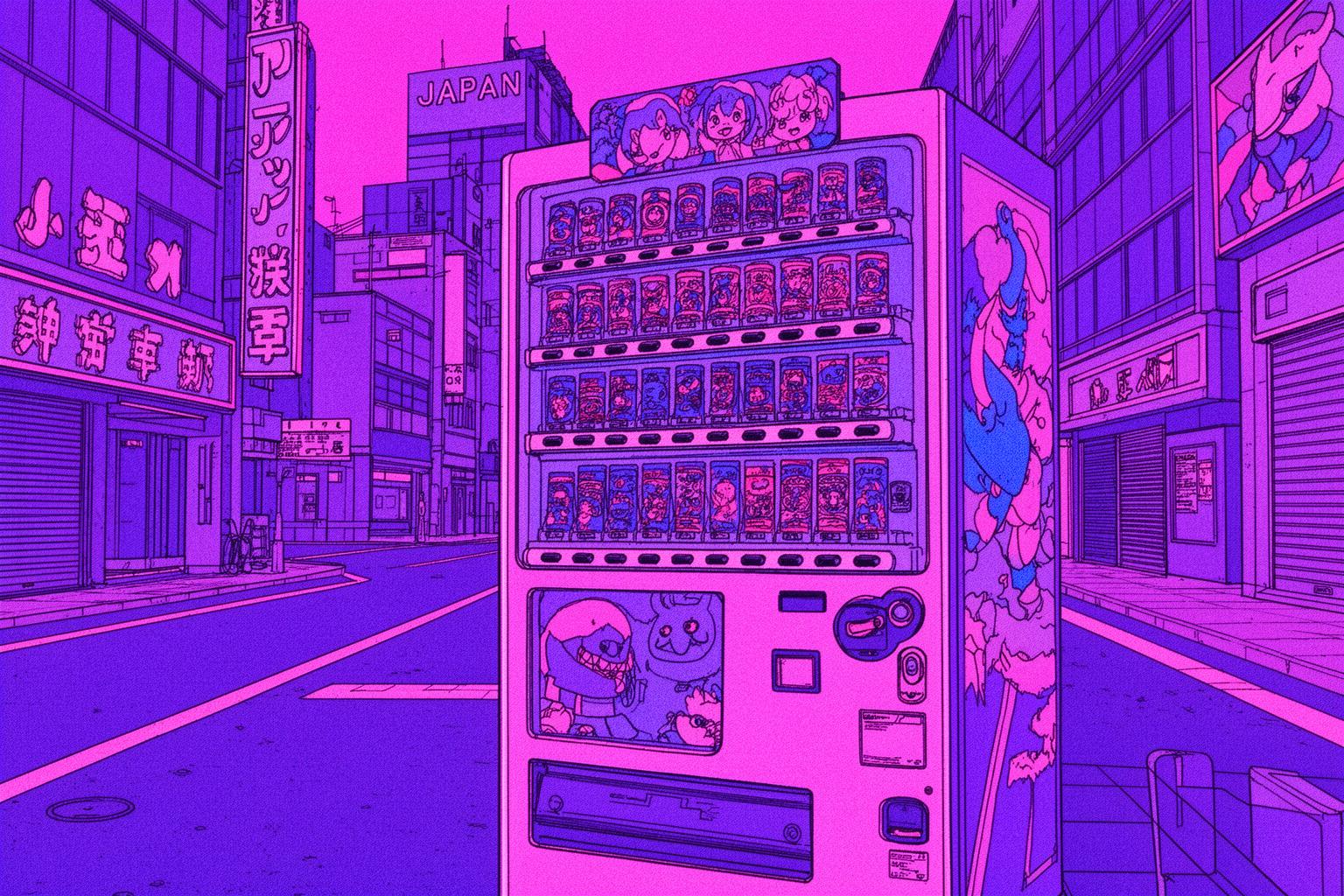
For any photographer, whether a casual phone snapper or a serious professional, Japan’s vending machine alleys offer a visual playground. The aesthetic is so striking and cinematic that it’s nearly impossible to take a bad photo. However, with a few tips, you can transform your shots from simple snapshots into evocative, atmospheric masterpieces that truly embody the cyberpunk spirit of these locations.
First, shoot at night—this is essential. The magic happens after dark when the machines become the main light source. The contrast between the deep shadows of the alley and the vibrant, multicolored glow of the machines creates that iconic cyberpunk vibe. Don’t fear the darkness; use it to frame the light, adding mystery and depth. Rain is a photographer’s best friend. A freshly wet pavement reflects neon colors like a mirror, producing stunning, symmetrical compositions. Puddles are a blessing—crouch low to capture an upside-down reflection of the entire alley for a surreal effect. Slight distortions in the reflections enhance the glitchy, futuristic mood.
Focus on composition. These often narrow alleys lend themselves to creating leading lines that draw the viewer’s eye further into the scene. A straight-on shot down the corridor of machines can be very impactful. Alternatively, try shooting from a low angle looking up to make the machines appear monolithic and imposing, like towers of light in the darkness. Don’t just photograph the machines; incorporate a human element. A solitary figure bathed in glow, looking at their phone or buying something, adds scale and narrative, making the scene feel alive and relatable. Capture details like steam rising from a hot drink in cold air or condensation on a cold bottle during humid summers—small touches that greatly enhance atmosphere.
Adjust your camera settings by experimenting with white balance to enhance colors. Cooler, bluer tones can underscore the futuristic feel, while warmer tones evoke nostalgia and warmth. Use a wider aperture to create a shallow depth of field, blurring backgrounds and making a single machine or person stand out. Most importantly, experiment. Wander around, seek unique angles, and capture details: the texture of buttons, the designs on cans, the light falling on a discarded bottle. Each alley has its own character and story. As a photographer, your role is to listen with your eyes and tell it.
Your Urban Explorer Starter Pack
Ready to explore the neon-lit world of jihanki alleys? Great. Here are some practical tips to help make your urban adventure smooth, successful, and incredibly fun. First and foremost, bring cash—especially coins. While many newer machines accept IC cards like Suica or Pasmo, many, particularly the older retro ones, only take coins. It’s essential to have plenty of 100-yen and 10-yen coins on hand. Carrying a 1000-yen bill is also helpful since most machines provide change, but trying to use a 10,000-yen bill will likely lead to frustration.
Finding these spots is part of the fun. They aren’t always marked on maps. The best way to discover them is simply to wander. In popular neighborhoods like Shinjuku, Shibuya, or Akihabara, start by walking down the smaller side streets branching off the main roads. Keep an eye out for that distinctive glow. You’ll often find clusters of machines hidden in small recesses between buildings or down narrow passages you might otherwise overlook. Be curious—if a street looks interesting, explore it. That’s often how the best finds happen. For well-known retro locations like the one in Sagamihara, some planning is needed since they are usually outside the city center. A quick online search for ‘retro vending machines Japan’ will guide you, and Google Maps is your best tool for getting there.
There’s a subtle etiquette to keep in mind. Although these are public spaces, many are near residential areas. Be considerate of noise, especially late at night. Don’t linger too long if it’s crowded, and allow others to make their purchases. The most important rule: clean up after yourself. Every vending machine area has recycling bins nearby, usually sorted for PET bottles, cans, and sometimes glass. Please use them. Leaving empty cans on the ground is a significant faux pas in Japan, a country known for its cleanliness. Respect the space and leave it as tidy as you found it.
Finally, dress appropriately. You’ll be doing plenty of walking, so comfortable shoes are essential. Always have a camera or your phone ready—you never know when you’ll turn a corner and discover the most photogenic alley you’ve ever seen. Stay open-minded, be adventurous, and don’t hesitate to try something unusual. That odd jelly drink or can of hot soup might turn out to be the best thing you taste all day. The joy is in the discovery.
Embrace the Glow
There’s something genuinely special about Japan’s vending machine alleys. They are much more than just a convenient way to grab a drink. They serve as microcosms of Japanese culture, highlighting its innovation, reverence for tradition, dedication to quality, and distinctive urban aesthetic. They offer quiet refuges in a hectic world—small pockets of light and warmth that are always there for you, day or night. To me, they embody the true spirit of exploration. It’s not about checking off sights or visiting famous landmarks. It’s about the excitement of discovery, the delight of the unexpected, and the beauty found in the most ordinary places.
So, on your next trip to Japan, I encourage you to look beyond the temples and towers. When night falls and the city glows, take a walk. Step off the main road. Follow that subtle, colorful light at the end of a shadowed street. You might discover your own hidden cyberpunk sanctuary—a spot where you can sip a hot can of coffee, watch the world pass by, and feel, even for a moment, like you’ve stepped into the future. Or perhaps the past. In Japan, sometimes they are one and the same. Now, go find your glow.