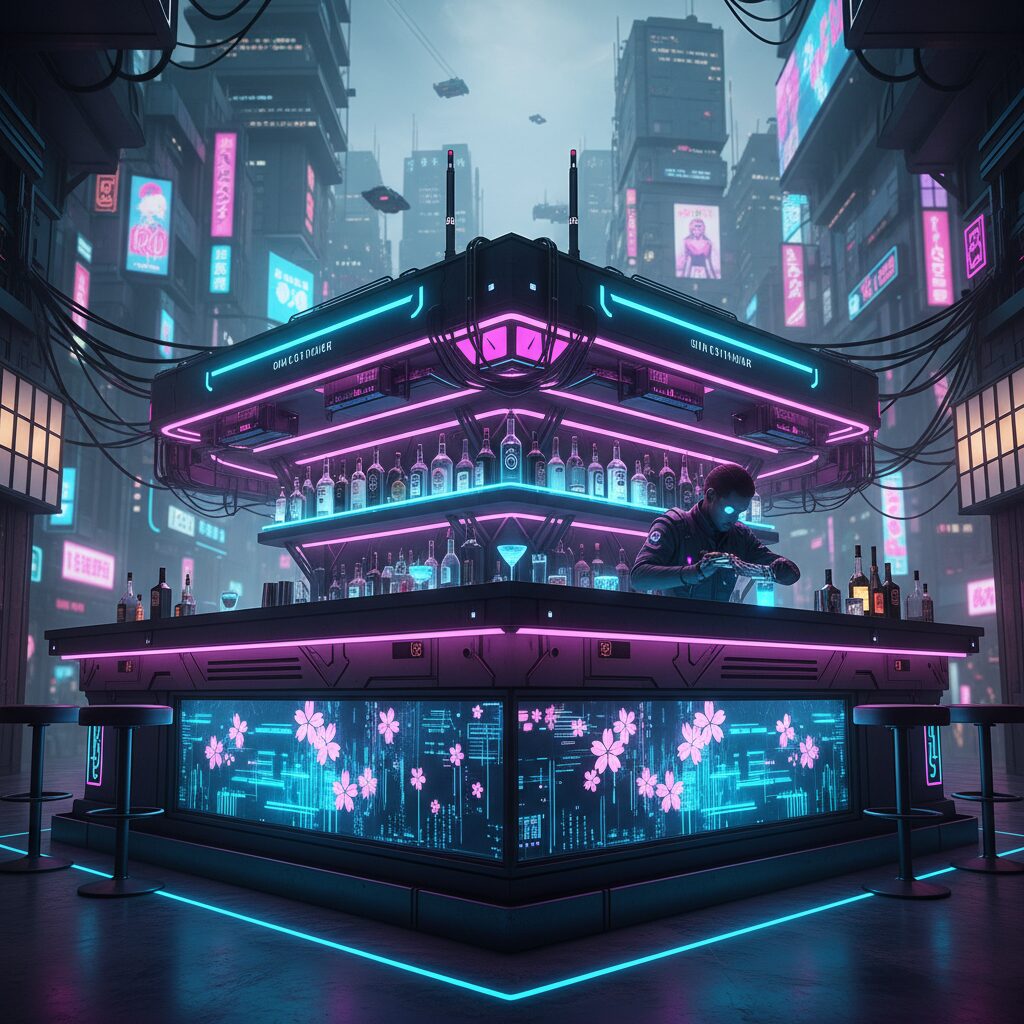
Yo, what’s the deal with Japan? You scroll through your feed and it’s all cherry blossoms and ancient temples one second, and the next it’s a full-on dive into a neon-drenched, Blade Runner-esque cityscape. You see these tiny, impossibly cool bars, glowing in back alleys, looking like they were ripped straight from an anime cel. You think, “Is this real? Is it just for tourists? Or is there something deeper going on?” And honestly? That’s the right question to ask. Because these cyberpunk gin joints aren’t just a theme park ride. They’re a whole mood, a living aesthetic, and a window into the modern Japanese soul. It’s this wild mashup of future-forward tech dreams and a deep, almost obsessive respect for the past. You step inside one of these places, leaving the chaotic symphony of a Tokyo street behind, and you’re not just entering a bar—you’re stepping into a vibe that’s been brewing for decades. It’s high-tech and low-life, meticulously crafted and comfortably worn-in, all at the same time. You’re expecting a simple drink, but you get a full-blown cultural experience that leaves you with more questions than answers. Why this specific aesthetic? Why the sudden obsession with craft gin in the land of sake and whisky? And why does the bartender treat making your G&T with the same reverence as a tea master? Let’s get into it, because understanding these bars is understanding a key part of Japan’s post-modern identity. It’s not just about getting a good drink; it’s about decoding the matrix of a culture that’s perpetually living in the future and the past, all at once.
This immersive, high-tech aesthetic isn’t confined to bars, as you can also experience it in Japan’s neon-drenched arcades.
The Cult of Small Spaces: Why Size Doesn’t Matter
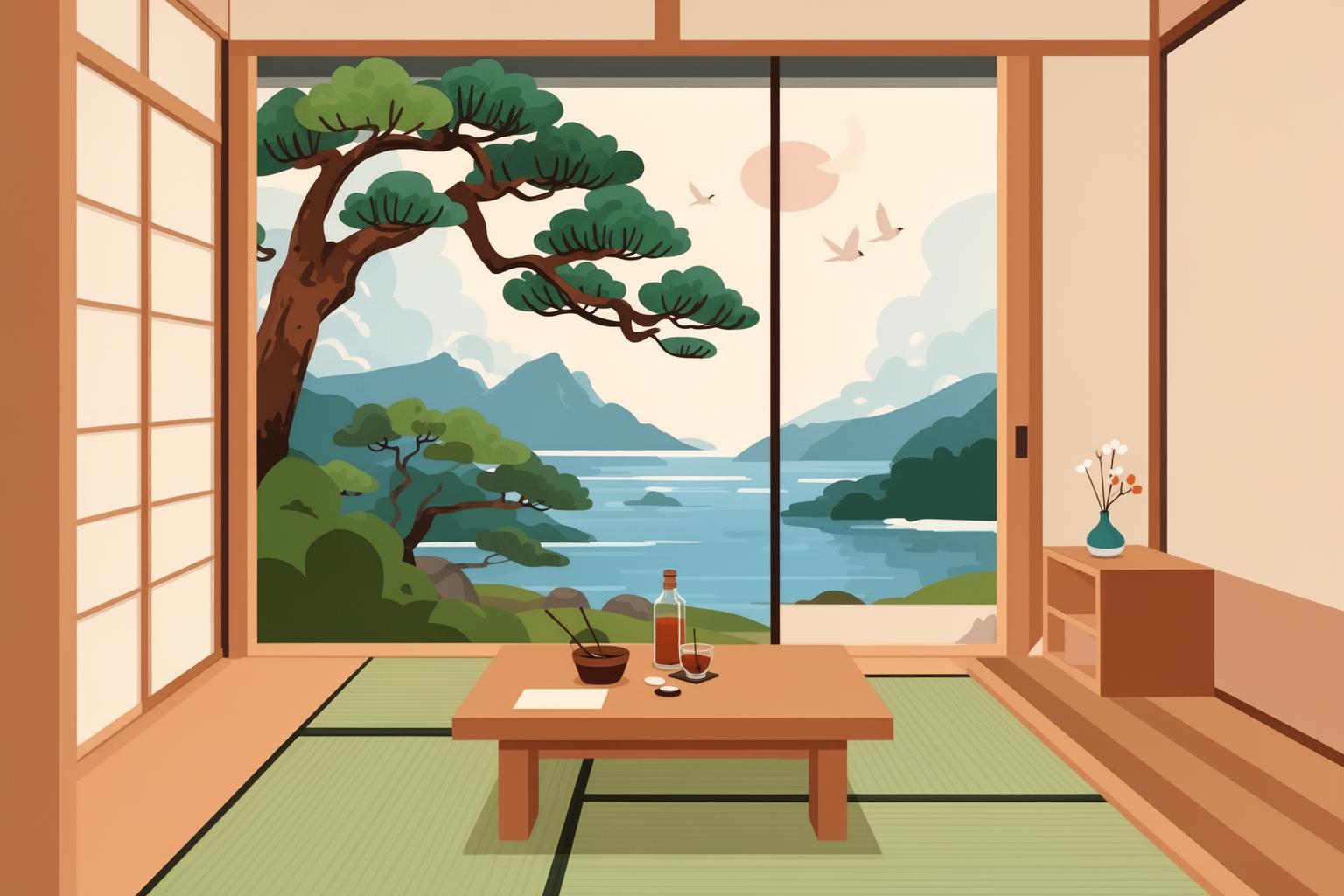
One of the first things that strikes you when you discover one of these bars is how absurdly tiny it is. We’re talking about spaces that might hold eight people at most. In the West, a bar that small might be viewed as a failure or financially unfeasible. In Tokyo, it’s a statement. This isn’t a flaw; it’s a feature, deeply rooted in Japanese urban history and philosophy. To understand it, you have to look far back.
Echoes of Edo and the Yokocho
Tokyo, once called Edo, has been one of the world’s most densely populated cities for centuries. During the Edo period (1603-1868), millions lived packed into a vast wooden metropolis. Space was the ultimate luxury. People adapted to living, working, and socializing in extremely close quarters. This fostered a culture where small, specialized shops and eateries thrived. You wouldn’t go to a large supermarket; you’d go to the tofu guy, the fish guy, the rice guy—each a master of their small domain. This tradition continues in the yokocho—narrow back alleys filled with tiny bars and restaurants still found across Japan, such as Shinjuku’s Golden Gai or Omoide Yokocho. These were more than just drinking spots; they were intimate communities, extensions of the working class’s homes. Today’s cyberpunk bars are spiritual successors to these spaces. They’ve traded the gritty, post-war Showa-era atmosphere for a sleek, futuristic vibe, but the core idea remains: creating a world within a world, a tiny refuge from the urban chaos.
The Bar as a Micro-Universe
The small size serves a vital purpose. It fosters intimacy and focus. There are no distractions—no blaring TVs showing sports, no large crowds. It’s only you, a few patrons, the bartender, and the drink. The environment is carefully curated. The lighting is dim and purposeful, the music is selected with care, and every single item, from the glassware to the coasters, is chosen intentionally. This is more than aesthetics; it’s a philosophy. It embodies the concept of wabi-sabi—finding beauty in imperfection and transience—filtered through a modern, technological perspective. The scuffs on the metal countertop, the hum of a neon sign, the precise arrangement of glowing bottles—all contribute to a unique, immersive atmosphere. The bar isn’t just a room; it’s a meticulously designed installation. In a city as overwhelming as Tokyo, these micro-universes offer a sense of control and a curated reality. For the duration of your drink, you exist within the bartender’s vision. This level of detail makes the space feel meaningful and personal, a sharp contrast to the anonymous, sprawling city outside.
The Shokunin Spirit in a Bottle: Japan’s Craft Gin Revolution
So you find yourself in this tiny, futuristic space, glancing at the menu. It’s gin. Page after page of it. Japanese craft gin. Ten years ago, this would have been unimaginable. Japan was known for sake, shochu, and world-renowned whisky. Gin was a foreign spirit, merely a base for simple cocktails. So, what changed? The answer lies in one of the most fundamental aspects of Japanese culture: shokunin.
Mastering and Perfecting: The Art of Adaptation
Shokunin roughly means “artisan” or “craftsman,” but it encompasses much more. It’s a profound philosophy of dedicating one’s life to mastering and perfecting a single craft. It represents a social obligation—a duty to produce the absolute best work possible for the benefit of society. This ethos is evident throughout Japan, from the sushi master who trains for decades to the carpenter who can join wood without nails. For centuries, Japan has followed a pattern of adopting foreign concepts, mastering them, and elevating them into uniquely Japanese art forms. Consider Zen Buddhism from China, ramen from China, or whisky from Scotland. In each instance, Japanese artisans took the original, deconstructed it, grasped its essence, and rebuilt it with Japanese techniques and sensibilities, often surpassing the original in refinement and quality. Craft gin is simply the latest chapter in this ongoing tradition. Japanese distillers didn’t just choose to imitate London Dry; they asked, “How can we create a gin that is unmistakably, quintessentially Japanese?”
Terroir in a Glass: Botanicals as Identity
The answer lies in the botanicals. Rather than relying solely on the traditional juniper, coriander, and angelica root, Japanese distillers looked to their own local landscapes. They began infusing their gins with ingredients central to Japanese cuisine and culture. We’re talking about yuzu, the intensely aromatic citrus fruit; sansho pepper, which imparts a tingling, numbing sensation; sakura blossoms and leaves for a subtle floral touch; gyokuro and sencha green tea for an earthy bitterness; and even hinoki (Japanese cypress) wood for a resinous, forest-like aroma. Each gin becomes a liquid expression of a specific place and season. A gin from Kyoto might be elegant and floral, evoking the city’s ancient temples and gardens. A gin from Okinawa might incorporate local ingredients like goya (bitter melon) or shekwasha (a tart citrus), reflecting the subtropical islands. Drinking these gins isn’t just about tasting a spirit; it’s about experiencing a region. It’s a form of liquid terroir. This deep connection to locality and seasonality is essential to Japanese aesthetics. The bartenders in these cyberpunk dens act as gatekeepers to this world. They don’t simply pour you a gin; they share its story, explaining the origins of its unique botanicals and the philosophy behind the distillery that crafted it.
Neo-Tokyo IRL: Decoding the Cyberpunk Aesthetic
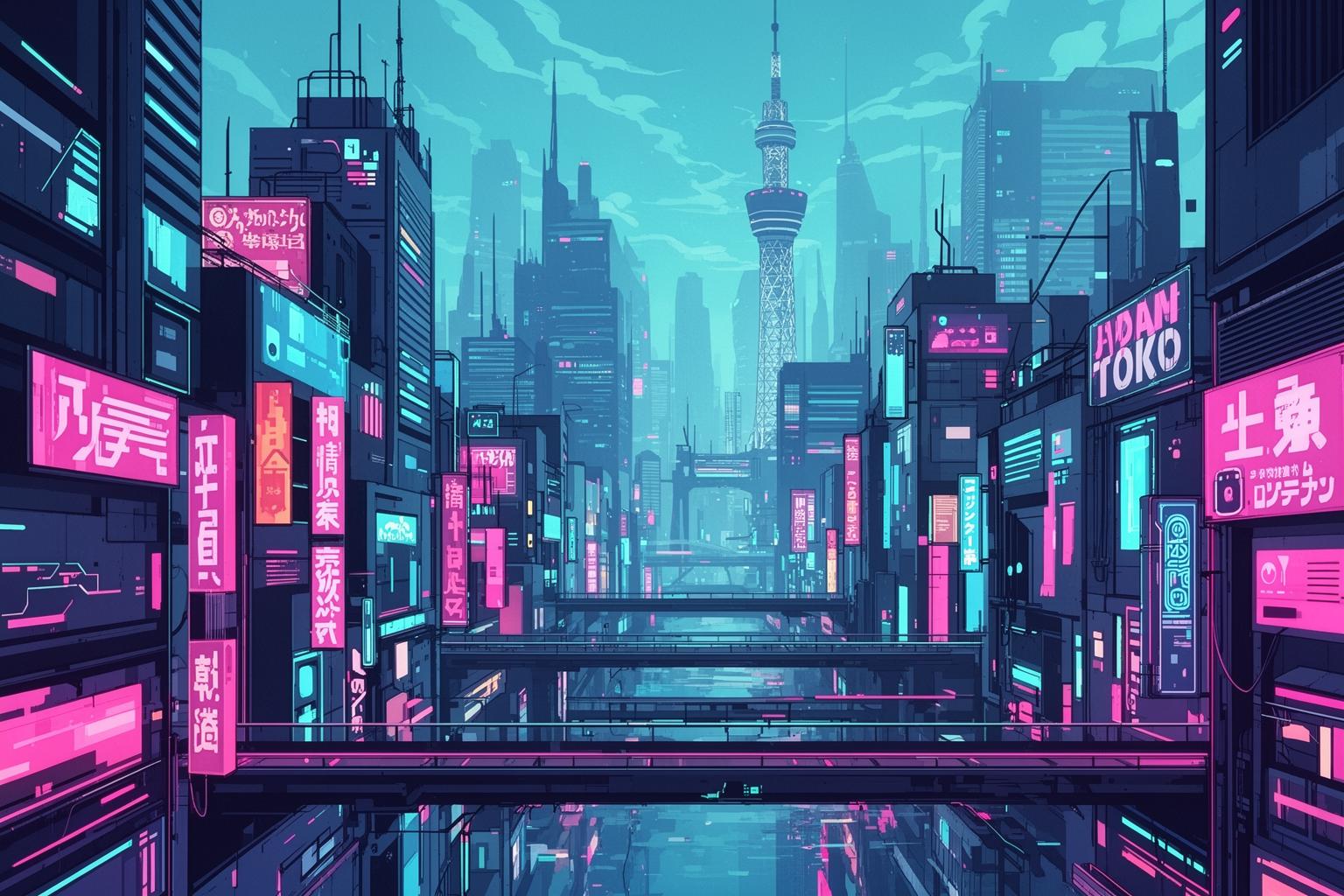
Alright, so we have these tiny, meticulously designed spaces and this incredibly nuanced, localized gin. But why the cyberpunk theme? Why the neon lights, the exposed wiring, and the rain-soaked alley atmosphere? It’s not just because it looks cool on Instagram. This aesthetic directly reflects Japan’s recent history and its complex relationship with technology and the future.
The Ghost in the Machine: Memories of the Bubble Economy
To grasp the Neo-Tokyo look, you have to revisit the 1980s. This was Japan’s “Bubble Era,” a time of extraordinary economic boom. The country was an economic powerhouse, and it felt as if the future had arrived. Tokyo was a city brimming with limitless ambition, erecting futuristic skyscrapers and pioneering innovative technologies. This era birthed the classic cyberpunk anime and manga like Akira and Ghost in the Shell. These works were more than fantasy; they mirrored the realities and anxieties of the period. They portrayed a future where technology dominated, corporations replaced governments, and humanity wrestled with its place in a hyper-advanced yet spiritually hollow world. Then, in the early 1990s, the bubble burst. The economy collapsed, ushering in the “Lost Decades.” The unrestrained optimism of the 80s vanished, but the aesthetic it inspired endured. The cyberpunk vision of the future—slick and high-tech externally, but gritty and decaying underneath—suddenly seemed eerily prophetic. Today’s cyberpunk bars directly tap into this nostalgia. They serve as a physical embodiment of that distinct, 80s-inspired vision of the future. It’s a future that never fully materialized, a dream now remembered with a blend of fondness and melancholy. The aesthetic acts as a form of cultural memory, a way to inhabit a past fantasy of how the present was imagined.
Dystopia as Comfort Food
It may sound strange, but for many people, there’s a certain comfort in this dystopian vision. In a world that often feels chaotic and unpredictable, the cyberpunk aesthetic presents a world governed by clear rules, even if they’re bleak. It’s a realm of shadows, secrets, and hidden meanings. Everything is deliberate. The dim lighting, the intricate cocktails, the silent bartender—all contribute to a feeling of being “in the know,” part of a hidden world. This resonates in a society where conformity and public harmony (wa) hold great importance. These bars provide a safe space to indulge in the fantasy of being a lone wolf, an outsider, a protagonist in one’s own neo-noir story. It offers a temporary escape from the stresses of everyday life into a highly stylized, cinematic reality. The cyberpunk motto “high tech, low life” perfectly captures the experience of living in modern Tokyo: surrounded by cutting-edge technology and convenience, yet still grappling with a sense of individual struggle or alienation. These bars don’t just acknowledge that feeling; they aestheticize it and transform it into a comforting, immersive experience.
The Bartender as Master: A Performance of Precision
The final element of the experience is the person behind the bar. You’ll notice they often differ from their Western counterparts. They may not be talkative or openly friendly, and might even avoid much eye contact. Their attention is unwavering, fully concentrated on the task at hand: crafting your drink. This focus can be mistaken for coldness or aloofness, but it actually represents a distinct form of Japanese hospitality known as omotenashi.
The Silent Ritual of Omotenashi
Omotenashi is commonly translated as “hospitality,” yet it doesn’t mean being friendly in the Western sense. Rather, it’s about anticipating a guest’s needs and fulfilling them seamlessly, without the guest having to ask. It’s selfless, meticulous, and often conducted quietly. The bartender’s work embodies omotenashi. Every movement is deliberate and efficient, perfected over years of practice. From carving ice—often into a perfect sphere or diamond—to measuring spirits, and to stirring or shaking the cocktail, each step is part of a silent ritual. This is not merely mixology; it’s a form of performance art. The bartender showcases their mastery and shokunin spirit. Their silence isn’t dismissive; it’s a gesture of respect for you, the ingredients, and the craft itself. They are creating a flawless moment for you, demanding their full and absolute concentration. You become a spectator in their theater.
The Drink as the Destination
In this setting, the cocktail is more than just a means to an end — it is the end itself. It represents the culmination of the entire experience: the thoughtfully designed space, the story behind the craft gin, and the bartender’s ritualistic performance. The emphasis is on savoring the drink in its purest form. This is why people often sit alone at these bars, quietly watching the bartender and enjoying their drink. It’s a meditative experience. Bars like Bar Trench in Ebisu, with its apothecary atmosphere and emphasis on absinthe and herbal cocktails, perfectly illustrate this. The bartenders are true masters of their craft, and patrons come to witness that expertise. The drink served is expected to be impeccable, a perfectly balanced creation reflecting the care and intention poured into the entire establishment. You’re not merely paying for alcohol; you’re investing in a moment of curated perfection, a refuge from the chaos of the outside world into a place where everything is exactly as it should be.
More Than a Drink: A Cultural Synthesis
So, when you slide into a seat at one of these glowing, cyberpunk gin bars, you’re not merely finding a spot to drink. You’re connecting to a complex cultural network of ideas deeply rooted in Japanese society. You’re settling into a space whose small size reflects centuries of urban density and the philosophical elegance of the micro-universe. You’re savoring a spirit that embodies the shokunin ideal of mastering and adapting a foreign craft, a gin that carries the flavor of a distinct Japanese landscape. You’re enveloped in the neon glow of a nostalgic, imagined future—a dream from the ’80s that still shapes the nation’s self-image. And you’re witnessing a master carry out a silent, flawless ritual of hospitality that prioritizes precision over pleasantries. It’s a lot to absorb for what seems like a simple gin and tonic. But that’s the point. In Japan, especially in these bars, a simple thing is rarely just simple. It’s a melding of history, philosophy, and aesthetics. It’s not merely a trend or theme. It’s a sincere expression of a culture wrestling with its past, present, and a future it has long envisioned. Understanding this is what makes the drink taste so much richer. It’s the real deal—a vibe earned, not merely crafted. And it’s absolutely worth it.