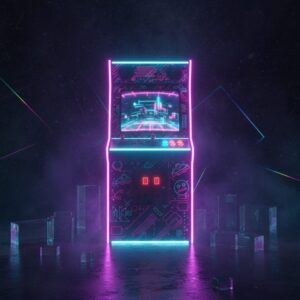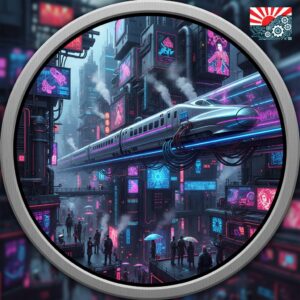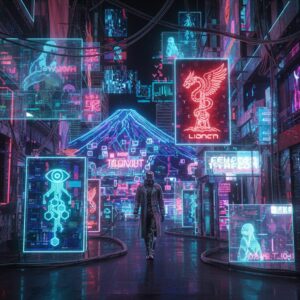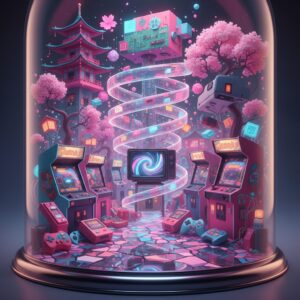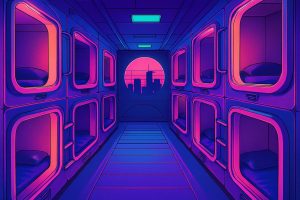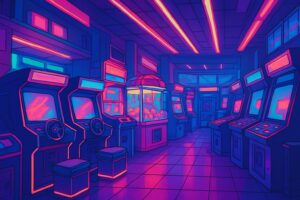
Yo, what’s the real deal with karaoke in Japan? For real though. You’ve probably seen the vids flooding your feed—dudes in suits absolutely screaming power ballads after a long day at the office, friend groups vibin’ hard to the latest anime openings in a room that looks smaller than a walk-in closet. It’s a whole aesthetic, a legit mood. But let me drop some real talk: it goes so much deeper than just grabbing a mic and hoping you hit the high notes. This is not, and I repeat, not your local pub’s awkward open mic night where everyone’s judging your song choice. Nah, this is about carving out your own private universe, a pocket dimension of sound and light, right in the pulsating heart of a city that literally never sleeps. It’s a fundamental part of the urban Japanese experience. And now? That whole concept has gone full-on sci-fi, leveling up into something straight out of a cyberpunk anime. We’re talking about sleek, futuristic pods, immersive neon dreams, and the very real possibility of losing all track of time while you live out your main character fantasy. Bet. This is the new wave, the evolution of escapism. So buckle up, because we’re about to dive deep into the world of futuristic karaoke pods and unpack why they’re more than just a place to sing—they’re a reflection of modern Japan itself.
If you’re vibing with this futuristic aesthetic, you’ll definitely want to explore the accidental dystopia of Tokyo’s cyberpunk alleys next.
The OG Vibe: Why Private Boxes Became a Thing
Before we even get to discussing stepping into a high-tech sound capsule, you need to know the origin story. Why the fascination with private rooms? Why not just have a large open bar where everyone sings together? To understand this, you have to grasp the physical and social environment of a Japanese metropolis. It’s all about space, sound, and the subtle art of not disturbing the person next to you.
Escaping the Crowding: The Urban Demand for Private Space
Consider this: major cities like Tokyo or Osaka are densely packed. Like, unbelievably sardine-can cramped. Millions of people live stacked on top of and beside each other in apartments that, compared to Western standards, are extremely compact. The walls can feel paper-thin, and it’s common courtesy to assume your neighbor can hear you sneeze, let alone try to belt out the chorus of a rock anthem. This reality shapes a significant part of Japanese social etiquette. There’s a strong cultural emphasis on wa (和), meaning harmony and group cohesion. A critical aspect of maintaining this harmony is avoiding meiwaku (迷惑), the act of bothering or inconveniencing others. Making a lot of noise at home? That’s peak meiwaku. It’s simply not acceptable.
So, there’s this built-up energy, this urge for self-expression, but your personal living space offers no outlet. Where do you go when you want to be loud, chaotic, and unapologetically yourself? You can’t do it at home. You can’t do it on the train. You can’t do it while walking down the street. This societal pressure cooker creates a desperate need for a release valve, a ‘third space’ designed explicitly for letting loose. Enter the karaoke box. It’s more than just a room; it’s a soundproof sanctuary, a personal scream room, a judgment-free zone where the rules of quiet public behavior are temporarily lifted. Once that door closes, you step into a different world where you can be as loud and expressive as you wish without anyone giving you the side-eye. It’s a total, necessary vibe shift from the constant, low-level stress of urban life.
From Snack Bars to Soundproof Sanctuaries
It’s pretty wild to realize karaoke didn’t originally start in these private boxes. The original karaoke scene was in sunakku (スナック), small, cozy neighborhood bars often run by a ‘Mama-san.’ In these spots, a patron would stand up and sing in front of everyone—the whole bar was the audience. It was public, communal, and required either confidence or a few drinks’ worth of liquid courage. While that style still exists, everything changed with the invention of the karaoke box in the 1980s.
Shipping containers were literally converted into small, soundproof rooms equipped with karaoke gear. It was a revolutionary concept that perfectly met a latent cultural need. The transition to private rooms addressed the deep-seated feeling of hazukashii (恥ずかしい), or embarrassment, many people feel performing in front of strangers. Not everyone is a natural performer. Many just want to have fun with friends without the pressure of being watched or judged by strangers. The private box democratized karaoke. Suddenly, it wasn’t about being a good singer anymore. It became about sharing an experience with your chosen group—friends, colleagues, family. You could sing badly, laugh about it, and make memories in a sealed space. This shift from public performance to private party unlocked karaoke’s massive popularity across all demographics in Japan. It became the default social activity, the go-to plan for after-work parties, weekend hangouts, and even dates.
Leveling Up: The Evolution into Futuristic Pods
Thus, the private box became the norm. For decades, the model was straightforward: gather a group, reserve a room, and sing for a few hours. But culture is never static, especially in Japan. As social norms evolved and technology progressed, the karaoke experience started transforming into something new—something more personal, and ultimately, something that seems pulled straight from a sci-fi novel.
“Hitori-Kara” and the Emergence of the Solo Experience
The next pivotal shift in the karaoke world was the rise of hitori-karaoke (一人カラオケ), or “solo karaoke.” The concept of going to a karaoke box alone might seem odd, even somewhat lonely, to those from other cultures. Isn’t karaoke meant to be a group activity? But in Japan, it made perfect sense and quickly became a huge trend. Why? Because it fulfills the need for a personal pressure-release valve, but this time, without any social obligations.
Going with friends is enjoyable but comes with its own set of unspoken rules. You have to share the mic, pick songs that everyone might know, and maintain the energy. A hitori-kara session offers pure freedom. It’s your personal training ground. Want to sing the same obscure B-side from your favorite band ten times straight to master a tricky bridge? Go ahead. Need to rehearse a song for an upcoming work party so you don’t feel awkward? This is your practice room. Just want to scream out your stress after a rough week without explaining anything to anyone? This is your therapy. It’s not about loneliness; it’s about radical self-care and enjoying a hobby without compromises or judgment. The industry, always attuned to consumer behavior, noticed this emerging trend and said, “No problem.” Renting an entire party room for one was inefficient. The market demanded a new solution—a space designed and optimized for the solo enthusiast. And thus, the karaoke pod was born.
The Aesthetic is the Experience: Cyberpunk Visions and Neon Escapism
This is where things become truly futuristic. The rise of solo-focused karaoke wasn’t just about creating smaller rooms. It prompted a complete reinvention of the entire experience. If the goal is a deeply personal, immersive session, then the environment itself must enhance that. Karaoke was no longer just about singing; it became about full immersion and escapism. You’re not simply renting a room; you’re entering a fantasy.
The design of these new pods draws heavily from Japan’s deep reservoir of pop culture imagery. Picture the vast, neon-lit cityscapes from iconic anime like Akira or Ghost in the Shell. Imagine the sleek, high-tech interfaces from Japanese video games. This visual style is shorthand for “the future.” The new wave of karaoke pods taps directly into this aesthetic, creating spaces that feel less like rooms and more like personal command centers or spaceship cockpits. Every detail is crafted to make you forget the outside world. The lighting isn’t merely a ceiling bulb; it’s a dynamic system of programmable LEDs that can sync with the music. The interface is not a clunky remote with sticky buttons, but a responsive, glowing touchscreen tablet. The focus shifts from purely auditory to multi-sensory. You’re not just singing in a box; you’re stepping into an alternate reality for a few hours—a personalized cyberpunk movie scene where you are the star.
Case Study: Immersing in the “Neo-Kara” Experience
To truly grasp this, imagine visiting a venue we’ll call “Sound Capsule Shibuya.” From the moment you leave the street, the atmosphere feels different. The entrance isn’t a bright, welcoming lobby staffed by smiling attendants. Instead, sleek, minimalist self-service kiosks greet you. Low lighting and glowing neon strips guide your path on the floor. The air hums softly with ambient electronic tones. You select your preferences on the touchscreen—a 60-minute solo session—and pay with your transit card or phone. No cash, no interaction. The machine prints a small receipt with a QR code and your pod number: C-308. A digital map on the screen highlights the way, glowing brighter on the floor to lead you.
You walk down a corridor resembling a futuristic space station more than a karaoke spot. The walls are dark, metallic, punctuated by glowing pod numbers. You reach C-308, scan your QR code, and the door slides open with a soft hiss. You step inside, and the door seals behind you silently.
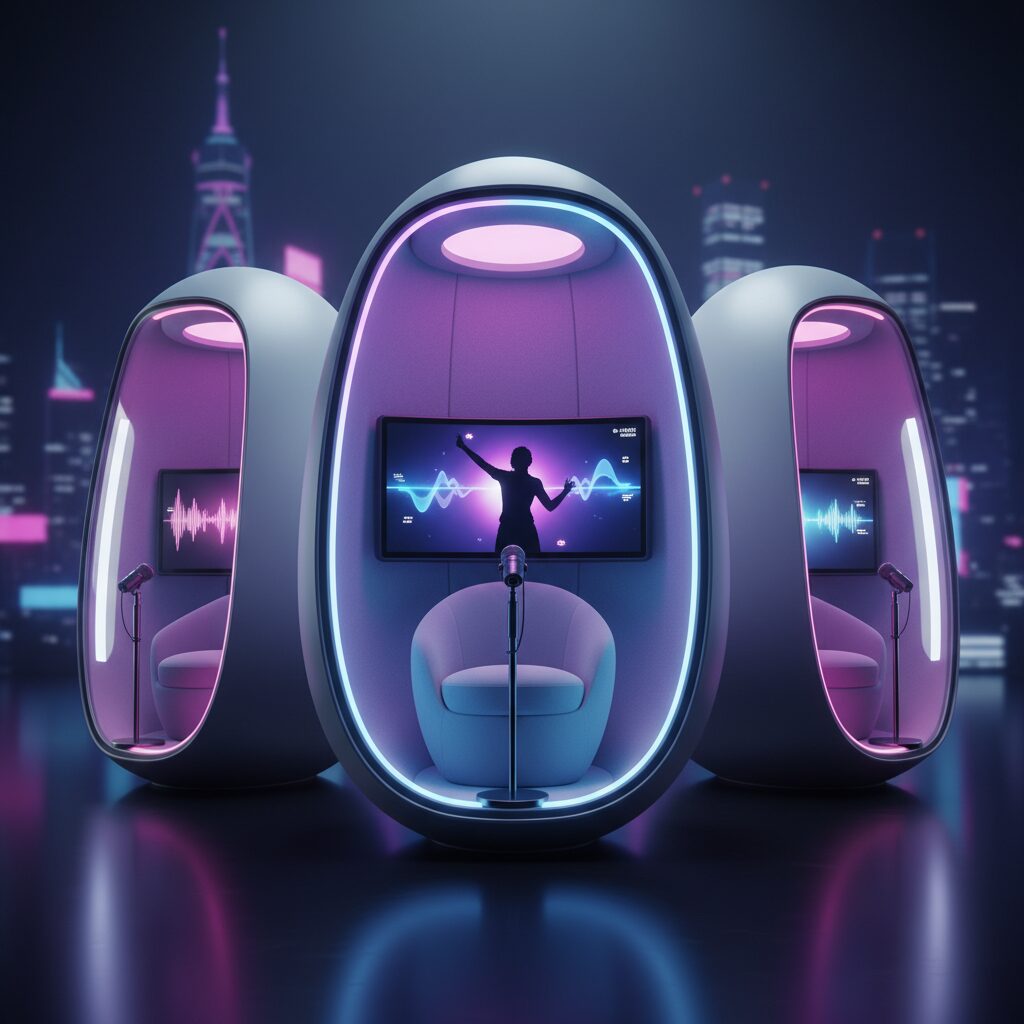
It’s not just a room—it’s a cockpit. The compact space is designed for one, with a plush, high-backed chair reminiscent of a gamer’s or pilot’s seat. Instead of a TV on the far wall, a massive curved monitor envelops your peripheral vision. No loud, tinny speakers here. Instead, a pair of high-fidelity, professional-grade studio headphones hang in a recessed charging dock beside the chair. This innovation pipes sound directly into your ears, making the experience intimate and detailed. Every nuance of the backing track and your voice is crystal clear.
Built into the armrest is the control panel—a sleek glass touchscreen glowing with a refined user interface. This is your mission control. You can browse a library of hundreds of thousands of songs, naturally, but it goes far beyond that. You can adjust the reverb, echo, and EQ of your voice in real time. You can pitch-shift the song up or down with a swipe. A ‘Vocal Guide’ mode displays a real-time pitch graph on the main screen, turning staying on key into a game. You can change the pod’s interior lighting from a color wheel on the tablet—choose a cool blue for a sad ballad or a pulsating red for a rock anthem. The wraparound screen behind the lyrics doesn’t just show generic videos; it displays dynamic, AI-generated abstract visuals that react to the rhythm and intensity of the music. Some songs even feature an animated concert crowd, making you feel like you’re performing live on stage.
Thirsty? No need to leave or call anyone. Use the tablet to order a drink from a digital menu. Moments later, a small light blinks beside a tiny hatch in the wall. You slide it open, and your drink awaits, delivered seamlessly. Maximum immersion, minimal disruption. Every element is carefully crafted to keep you locked into your personal fantasy, to make you forget the time, the city outside, and even yourself—for a little while.
The “Why” Behind the Pod: A Cultural Deep Dive
This all sounds incredibly fascinating, but the real question is why it developed this way. These high-tech pods are not merely a novelty; they represent a perfect convergence of several deeply rooted Japanese cultural traits. They are the logical outcome of the direction Japanese society, technology, and entertainment have been heading for years.
The Gamification of Everything
If there’s one key thing to understand about modern Japanese culture, it’s the passion for gamification. Everyday activities are often transformed into games with points, levels, and rewards. This is evident in point cards used at nearly every store, stamp rallies (sutanpu rarii) where people collect stamps from various locations to win prizes, and the incredibly intricate mechanics of mobile games that dominate daily commutes. It’s a method of adding an element of fun, challenge, and measurable progress to otherwise mundane tasks.
Karaoke has long been a prime example of this. The scoring system is the clearest feature. It’s not just a subjective evaluation of your singing; it’s a detailed algorithmic assessment of your pitch, timing, and vibrato, resulting in a score out of 100. People take this seriously, competing with friends or striving to beat their personal best. It transforms singing from a purely artistic act into a quantifiable skill, essentially a rhythm game played with your voice.
The futuristic pods represent the next-generation console for this game. The high-tech interfaces, real-time pitch guides, and detailed post-song analytics that break down every element of your performance all embrace this gamified mindset. The experience is designed to be as engaging and addictive as a video game. You’re not just singing; you’re grinding for a high score, trying to unlock the coveted ‘100-point’ achievement. The immersive environment and responsive controls make the feedback loop of ‘sing–score–improve’ deeply satisfying.
Perfecting the Art of Being Alone, Together
This may be the most intriguing and perhaps perplexing cultural concept for outsiders. Japanese society is highly group-oriented, yet there is also great emphasis on individual space and non-interference, even within group settings. This creates a unique social dynamic often described as being “alone, together.” Imagine people sitting in a café, each absorbed in their own book or phone, while sharing a common space. Or a group of friends riding the train in comfortable silence. There’s a shared presence without the pressure of constant interaction.
Traditional karaoke boxes already cater to this by providing groups with a private space away from the public. The pod system extends this concept to a new level of precision. Picture visiting a place like “Sound Capsule Shibuya” with your friends. Instead of all crowding into one room, each person checks into their own personal pod. You still get the social benefits of a group outing—you arrive together, meet in the lobby, and leave as a group—but the core activity is fully individualized. You have complete control over your song choices and your vibe. No more waiting 30 minutes for your turn on the mic. No more feeling pressured to sing popular hits when you’d prefer an obscure indie track. Yet you’re not entirely isolated. The system lets you link your pods. You can see your friends’ scores on a shared leaderboard, send messages, or even start a ‘linked duet’ where you sing together from separate capsules with your voices mixed in your headphones. It’s the ultimate customization of a social experience: all the freedom of a solo session combined with the low-pressure community of a group hangout. This is a quietly brilliant solution to a distinctly Japanese social challenge.
The Economics of Space and Time
Lastly, it’s important not to overlook the business logic, a powerful driver of innovation. In a city where commercial real estate is exorbitantly expensive, maximizing space efficiency is crucial. Traditional karaoke venues need various room sizes to accommodate different groups, and a large party room sitting empty on a Tuesday afternoon represents lost revenue. Solo pods exemplify spatial optimization at its best. A dozen high-turnover solo pods can fit within the footprint of two large party rooms. This allows businesses to tap into the growing and profitable market of solo customers, office workers on lunch breaks, and people simply looking to pass an hour.
The entire pod experience is also engineered to affect your perception of time. Pricing is typically structured in blocks—30 minutes, 60 minutes, or a ‘free time’ package lasting several hours. The pod environment is deliberately timeless. There are no windows to the outside world. The immersive screen and customizable, hypnotic lighting are designed to draw you in and make you lose track of time. The seamless interface and nearly infinite song library ensure there are no natural stopping points. This is an incredibly effective way to encourage you to extend your session. Your 30-minute trial easily slips into an hour, then 90 minutes. They’re not just selling you a room to sing in; they’re selling you a time warp, a temporary escape from reality you’re willing to pay for, minute by minute.
Where to Find This Vibe and What to Expect
Alright, so you’re convinced. You want to step into the future and enjoy your own personal sci-fi singing adventure. It’s a worthy pursuit, but you need to know what to look for. Not all karaoke spots are made equal.
Telling the Real Deal from the Classic Box
First, it’s important to note that the classic, slightly worn karaoke party room is still very much around and has its own undeniable charm. However, if you’re specifically searching for the futuristic pod experience, you’ll want to know the right terms. In Japanese, look for places labeled ヒトカラ専門 (hitori-kara senmon), meaning a ‘solo karaoke specialty shop.’ This is your best bet. Chains like ‘1Kara’ (ワンカラ) are known for pioneering this style. Also, look out for phrases like 最新機種導入 (saishin kishu dounyuu), meaning ‘ featuring the latest models,’ which typically indicates newer, more advanced rooms and interfaces.
Location-wise, focus on the most competitive, youth-oriented entertainment districts. Areas like Shibuya, Shinjuku, and Akihabara in Tokyo are hotspots for karaoke chains constantly innovating to attract customers. You’re much more likely to find these cutting-edge pod systems there than in quiet residential neighborhoods.
A Quick Guide to Your First Pod Experience
Once you’ve found a promising spot, here’s how to navigate it. The reception is often partly or fully automated. You’ll use a touchscreen to pick your plan. Key choices include the duration (30 minutes is a good starting point) and time of day. Pro-tip: weekday daytime rates are much cheaper than evenings or weekends. You may also be asked to choose a plan that includes a drink bar, called ドリンクバー (dorinku baa), or a ‘one-drink order’ system. The drink bar usually offers great value, with unlimited soft drinks, coffee, and tea from a self-serve machine.
After paying and receiving your receipt or entry card, head to your assigned pod. Inside, your first step will be to put on headphones and grab the microphone. The control system is almost always a tablet or touchscreen device. It can feel a bit daunting at first since the default language is Japanese, but there’s nearly always an option to switch to English. From there, you can search songs by title, artist, or use the ‘ranking’ feature to find popular tunes. Don’t hesitate. The point is that no one can hear you. Start with a song you know well to get comfortable, adjust the audio settings, and just immerse yourself in the experience. Soon enough, a warning will flash on the screen to let you know your time is almost up, and you’ll wonder where the last hour went.
So yes, the whole thing is deep. Deeper than your average pop ballad. These neon-lit pods aren’t just a quirky Japanese novelty. They represent a cultural statement—a thoughtful, elegant response to the unique pressures and desires of modern urban life in Japan. They answer the question of how to be yourself, how to unwind, and how to find a slice of peaceful solitude in a city of 35 million. They’re a pressure valve, a training dojo, a personal concert hall, and a spaceship cockpit all wrapped into one hyper-efficient, beautifully crafted package. It’s Japan in a nutshell: super high-tech, wonderfully weird, surprisingly solitary, and absolutely unforgettable. The next time you see a video of someone vibing inside a tiny glowing box, you’ll understand. They’re not just singing a song. They’re logging out of the real world and stepping into their own. And honestly? That’s a mood.