
The first time you feel it, it’s deeply unsettling. Not the violent, movie-style lurch, but the subtle, liquid roll of a minor earthquake. You’re in a Tokyo high-rise, and for a few seconds, the solid world beneath you becomes a fluid, untrustworthy thing. You glance around, expecting panic, but you see none. The cashier at the convenience store barely looks up from the register. Office workers pause their typing for a moment, gaze at the ceiling as if listening, and then, with a silent consensus, resume their work. The train conductor might make a calm announcement, a voice of practiced reassurance. This isn’t stoicism for its own sake; it’s the surface-level expression of a deep, culturally ingrained philosophy known as bōsai.
To translate bōsai (防災) as simply “disaster preparedness” is to miss the forest for the trees. It’s like calling the Mediterranean diet just “eating fish.” The English phrase implies a checklist: buy batteries, store water, have a go-bag. In Japan, bōsai is a pervasive mindset, a set of social rituals, and a constant, low-humming conversation between a nation and its volatile geography. It’s less about preventing disaster—a futile ambition on an archipelago straddling four tectonic plates—and more about cultivating the resilience to endure it. It’s a philosophy built not on the hope of conquering nature, but on the sober acceptance of its immense, unpredictable power. This isn’t about living in fear. It’s about living with awareness, a profound understanding that the ground beneath your feet is not as permanent as it seems, and that survival depends on community, preparation, and a healthy respect for the forces you can never truly control.
A History Written in Scars and Resilience
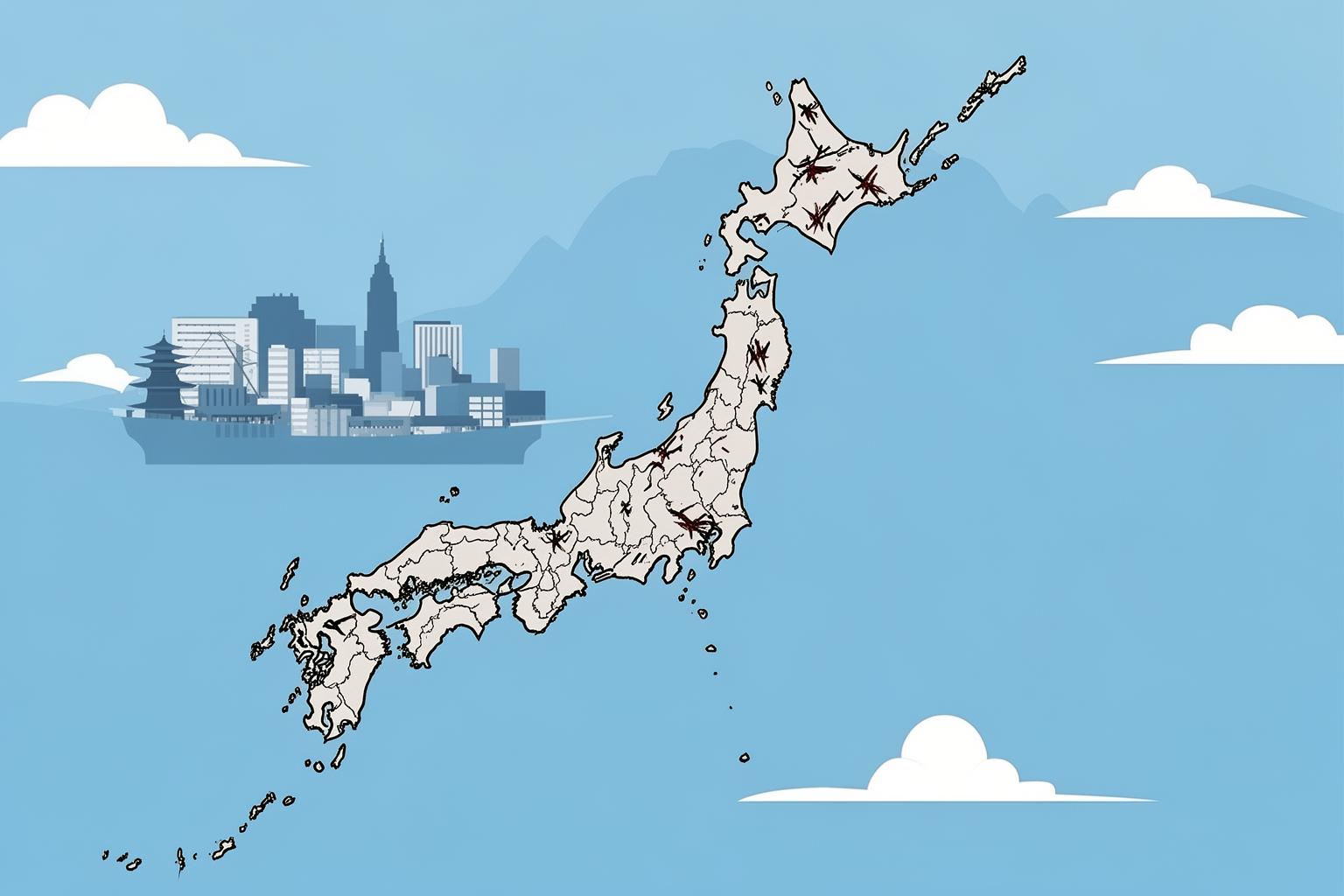
To truly understand Japan, one must grasp its geography. The nation is a striking, contradictory blend—a land of tranquil temples and volcanic fury, of meticulously tended gardens and earth-shaking tremors. Positioned on the Pacific Ring of Fire, it lies within a geological hotspot responsible for the vast majority of the world’s earthquakes and active volcanoes. This is not a mere abstract scientific fact; it is the essential reality that has shaped Japan’s history, culture, and psyche for thousands of years.
Each generation faces a defining disaster, a collective trauma that delivers harsh lessons. These events are far from mere historical notes; they are foundational experiences deeply embedded and institutionalized in the national consciousness. They explain the persistent drills and seemingly repetitive safety measures.
The Great Teacher: Kantō, 1923
The Great Kantō Earthquake of 1923 was modern Japan’s first major catastrophe. Striking the Tokyo-Yokohama metropolitan region with a magnitude of 7.9, the initial tremor was just the beginning. Occurring just before noon, as countless families prepared lunch over charcoal and gas stoves, the predominantly wooden and paper homes instantly ignited. Firestorms, fanned by fierce winds into raging infernos, engulfed the cities. In one tragic incident in downtown Tokyo, around 38,000 people seeking shelter in an open area were incinerated within minutes by a fire tornado.
More than 100,000 lives were lost. The destruction was total. But the aftermath was equally formative. The disaster revealed the vulnerabilities of a modernizing nation. It wasn’t only buildings that collapsed; the social order faltered as well. Amid the chaos, xenophobic rumors spread rapidly, sparking vigilante massacres of Korean residents. This grim episode reminds us that social breakdown can be as devastating as structural collapse. The lessons were indelibly etched into the national memory: fire is as deadly as the quake itself, infrastructure must be rebuilt with resilience in mind, and societal unity is the ultimate safeguard against chaos. Modern Tokyo’s urban design—with its wide boulevards serving as firebreaks and numerous designated evacuation parks—is a direct outcome of this harrowing event.
The Wake-Up Call: Kobe, 1995
For decades following World War II, Japan’s engineering achievements became a source of pride. The country constructed earthquake-resistant skyscrapers and a bullet train system admired worldwide. This fostered a measure of complacency, with the belief that modern technology had largely solved the earthquake problem. The Great Hanshin-Awaji Earthquake of 1995 in Kobe shattered that illusion.
Though less powerful in magnitude than the Kantō quake, its shallow focus directly beneath a densely populated urban area caused catastrophic damage. Elevated expressways, once seen as symbols of strength, toppled sideways. Buildings—including hospitals and city offices meant to be safe—collapsed into rubble. Over 6,400 people perished. The Kobe quake served as a brutal reckoning. It exposed that building codes from the 1970s and early 1980s were dangerously insufficient. It also revealed a critical flaw in the official response: the central government was slow to react, and for the first crucial 72 hours, ordinary citizens—neighbors digging through debris with bare hands—carried out the majority of rescue efforts.
This led to two major shifts: first, a nationwide, large-scale retrofitting of buildings and infrastructure to meet far stricter seismic standards; second, a renewed emphasis on community preparedness. The principles of self-reliance (jijo), mutual aid (kyōjo), and public assistance (kōjo) became the new guiding ethos. The government acknowledged that it could not be everywhere at once, making local communities the essential first responders. The growth of volunteerism in Japan can be directly traced to these citizen-driven rescue efforts amid Kobe’s devastation.
The Unthinkable: Tōhoku, 2011
If Kobe was a wake-up call, the Great East Japan Earthquake on March 11, 2011, was a paradigm shift. This disaster reached an almost unimaginable scale. A magnitude 9.0 quake—the strongest ever recorded in Japan—triggered a massive tsunami that obliterated hundreds of kilometers of coastline. Entire towns vanished. Nearly 20,000 individuals were killed or reported missing.
This was a sōteigai event—one that surpassed official expectations. Meticulously constructed seawalls, some exceeding ten meters in height, were overwhelmed by waves reaching up to forty meters. The tsunami caused not only physical destruction but also a triple meltdown at the Fukushima Daiichi Nuclear Power Plant, compounding a technological catastrophe onto a natural disaster.
3/11 was deeply humbling. It demonstrated that even the most prepared nation can face natural forces beyond anticipation. The event transformed the national discourse on bōsai (disaster prevention). Attention shifted from simply building higher walls to fostering more resilient communities. The concept of multilayered defense became paramount, encompassing not only physical barriers but also robust evacuation protocols, clear routes to high ground, and a culture of immediate escape. The now-famous “Kamaishi Miracle,” where schoolchildren, drilled relentlessly in the principle of “tsunami tendenko” (run for your life, don’t wait for others), fled to higher ground and guided their community to safety, became a national model of effective disaster education.
Bōsai Beyond the Go-Bag: A Daily Practice
What truly distinguishes Japan’s approach is how deeply bōsai is embedded in everyday life. It is not merely a niche concern for survivalists; it functions as a public utility, a civic responsibility, and a constant, subtle presence. It operates across all layers of society, from individuals to the national government.
The Education of Preparedness
In Japan, disaster education begins almost as soon as children start walking. Every school, from kindergarten through high school, regularly conducts comprehensive evacuation drills (hinan kunren). On September 1st, the anniversary of the Great Kantō Earthquake, the entire nation observes Disaster Prevention Day. Sirens sound, and millions of people—students, office workers, government employees—practice safety procedures. These drills are far from superficial. Children learn to dive under their desks at the first sign of shaking, protecting their heads with padded hoods that frequently double as seat cushions. They rehearse silent, orderly evacuations to designated safe zones, memorize emergency supply locations, and familiarize themselves with routes to higher ground.
This relentless repetition serves a vital purpose: it builds muscle memory. In the chaotic confusion of an actual disaster, people do not rise to the moment; they fall back on their training. The goal is to make the correct response instinctive, replacing panic with practiced action. This educational groundwork cultivates a population that innately understands the risks and shares a common language of survival.
Engineering for Survival
Strolling through any major Japanese city, you are surrounded by feats of seismic engineering. The country’s building codes are among the most rigorous worldwide and are continually revised based on new earthquake experiences. Modern Japanese architecture is not about erecting rigid, immovable structures; rather, it is about designing buildings that move with the earth.
Three core principles prevail: taishin, seishin, and menshin. Taishin involves reinforcing pillars and walls to withstand shaking. Seishin entails installing dampers—essentially large shock absorbers—within a building’s framework to dissipate earthquake energy. The most sophisticated concept is menshin, or base isolation. Entire buildings rest on massive bearings made of laminated rubber and steel, allowing the ground to shift violently underneath while the structure above remains comparatively steady.
Consider the Tokyo Skytree. This 634-meter broadcasting tower exemplifies bōsai engineering. Its stability derives from a combination of a deep, tripod-style foundation and a central concrete pillar—a modern take on the shinbashira, the central pillar in ancient wooden pagodas that enabled them to withstand centuries of earthquakes. The tower is engineered to sway rather than resist, absorbing seismic energy in a controlled, flexible manner.
Community as the First Line of Defense
Arguably the most crucial and least visible element of bōsai is the community. Following a major disaster, emergency responders are inevitably stretched thin. Roads may be blocked, communication networks disrupted. For the initial 24 to 72 hours, your closest neighbors become your lifeline.
This principle is institutionalized through local neighborhood associations, or chōnaikai. These groups maintain local ties and coordinate community-level disaster responses. They conduct drills teaching residents to use fire extinguishers and operate emergency water pumps. They manage community stockpiles of food, water, and medical supplies kept in schools or parks. They also keep lists of vulnerable individuals—such as the elderly or disabled—who may need help during evacuation.
This system fosters a strong sense of shared responsibility. You are expected to know your neighbors, not merely out of courtesy but because your lives may ultimately depend on one another. In times of crisis, the social fabric becomes a literal safety net. This focus on mutual aid (kyōjo) is a powerful counterbalance to the individualism that can be perilous during disasters.
The Philosophy: Accepting, Not Fighting, Nature
Beneath the drills, building codes, and community stockpiles lies a deeper philosophical current. Japan’s approach to disasters is deeply shaped by the country’s oldest indigenous beliefs and a long history of confronting impermanence.
Shintō and the Power of Nature
Shintō, Japan’s indigenous religion, is a form of animism. It does not propose a single, all-powerful deity, but rather a world filled with countless kami—gods, spirits, or essences dwelling in natural phenomena. A towering mountain, an ancient tree, a powerful waterfall, and even a destructive typhoon or earthquake can all be seen as manifestations of kami. This worldview nurtures a profound reverence for nature, along with a deep respect for its capacity for violence. Nature is not viewed as a gentle, benevolent force to be subdued. Instead, it is a powerful, amoral presence—capable of both breathtaking beauty and terrifying destruction.
This attitude does not lead to passivity, but to a different kind of engagement. If you cannot control the kami of an earthquake, you must learn to live in a way that honors its power. You build flexible houses, teach your children how to seek shelter, and come together as a community to recover. It is an approach grounded in adaptation and humility, rather than the arrogance of domination.
The Proverb of Preparedness
A well-known Japanese proverb perfectly captures the bōsai spirit: 「天災は忘れた頃にやってくる」 (Tensai wa wasureta koro ni yatte kuru), which means: “A natural disaster strikes just when you have forgotten about it.”
This is not a fatalistic caution, but a call for ongoing vigilance. It reflects the human tendency toward complacency. After years of calm, it’s easy to let preparedness lapse, to believe the worst will not happen again. The proverb acts as a cultural reminder that the risk is always present. This is why drills are frequent, public service announcements continue on television, and the memory of past disasters is intentionally preserved. Forgetting is the greatest danger of all.
From Control to Coexistence
This philosophy subtly contrasts with a more Western, Promethean urge to conquer nature. While Japan certainly constructs massive dams, concrete riverbanks, and towering sea walls, there is a cultural acceptance that these are ultimately temporary solutions. The ultimate aim is not to defeat nature, but to coexist with it. This involves the concept of ukeireru, meaning to accept or receive a situation. It is not passive resignation, but clear-eyed acceptance of reality as the foundation for constructive action.
You acknowledge that earthquakes will occur. Therefore, you design buildings to withstand them. You accept that tsunamis pose a threat. Therefore, you establish clear evacuation routes to higher ground. This acceptance enables a more pragmatic and sustainable approach to risk, shifting the focus from impossible prevention to feasible mitigation and resilient recovery.
The Modern Face of Bōsai
Today, this ancient philosophy is enhanced by state-of-the-art technology. Japan possesses the world’s most advanced Earthquake Early Warning (EEW) system. A network of over a thousand seismometers detects the initial, faster-moving P-waves of an earthquake and instantly issues alerts before the more damaging S-waves arrive. This provides people with anywhere from a few seconds to over a minute of warning—enough time to drop, cover, hold on, or halt a high-speed train.
When a significant earthquake strikes, this system springs into action. Alarms sound on every mobile phone. Television broadcasts are promptly interrupted with alerts and information. Digital signs in train stations flash warnings. This technological safety net embodies the bōsai principle: using every available tool to reduce harm.
This spirit of preparedness has also influenced consumer culture. Visit any large department store or home goods shop such as Tokyu Hands or Muji, and you’ll find a dedicated bōsai section. Here, you can purchase pre-packaged emergency kits (hijō mochidashi bukuro). But these are much more than simple bags filled with batteries and bandages. They include everything from emergency rations and water purification tablets to portable toilets, hand-crank radios that also charge phones, and thermal blankets. The products are thoughtfully designed, compact, and often stylish. This commercialization is not viewed as fear-mongering; rather, it is considered a public service that makes preparedness accessible, convenient, and a normal part of household routines.
What the World Misunderstands
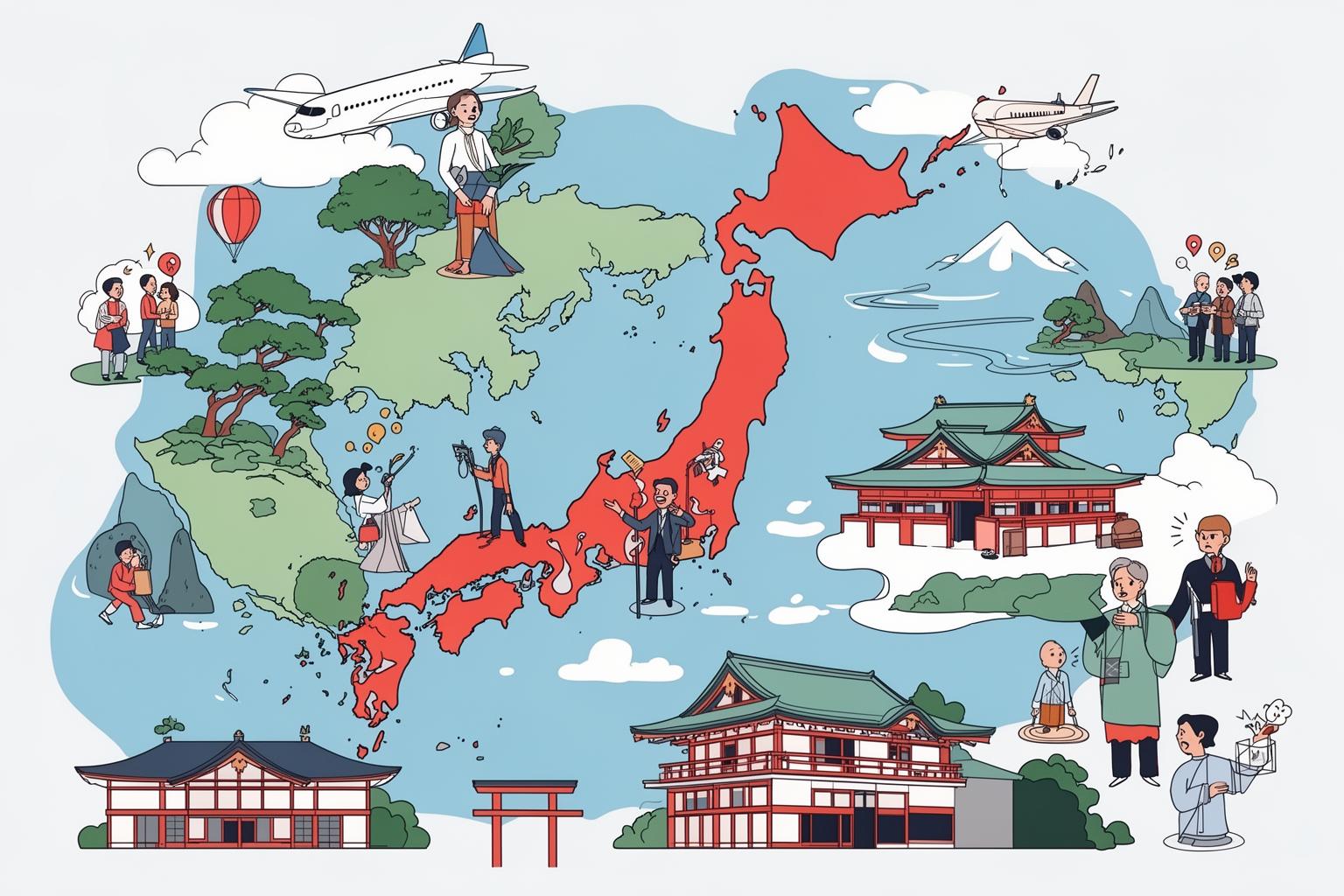
From an outsider’s perspective, the images of calm and order following a Japanese disaster can be easily misunderstood. The sight of people patiently queuing for water or quietly waiting in evacuation shelters is often attributed to a vague stereotype of Japanese stoicism or conformity, but this overlooks the true meaning.
This orderliness does not indicate a lack of emotion; rather, it is a practical, socially ingrained strategy for collective survival. Panic is a luxury no one can afford when resources are limited and the environment is hazardous. Individual emotional outbursts are suppressed for the benefit of the group because a calm, coordinated response is demonstrably more effective. It enables the efficient distribution of aid, prevents secondary disasters such as stampedes, and maintains the social cohesion essential for recovery.
Moreover, it is a serious error to assume that Japan is simply “good at disasters.” Each major event is a story of profound failure and painful lessons learned. The authorities were unprepared for the scale of the Kobe earthquake. The combination of corporate negligence and regulatory failure at Fukushima was a national embarrassment. The country is far from perfect; however, it is relentless in its process of self-examination after failures. Every disaster report is an unflinching account of what went wrong, leading to new laws, technologies, and procedures. This culture is not about being invulnerable; it is about becoming anti-fragile—learning, adapting, and growing stronger from each blow.
Living in Japan means living with a constant, quiet awareness of this fragility. It is reflected in the emergency kit by the door, the evacuation map on the neighborhood bulletin board, the gentle sway of an apartment building during a minor tremor. Bōsai is the intricate, centuries-old response to a terrifying question: How do you build a home on land that is fundamentally unstable? The Japanese approach is neither to flee nor to fight a battle that cannot be won. It is to learn, prepare, adapt, and build a society resilient enough to bend without breaking—a culture that knows how to rise up together every time the ground begins to shake.